“It’s your fiction that interests me. Your studies of the interplay of human motives and emotion.”
— Isaac Asimov, I, Robot
Asimov’s seminal story is about the allure and potential ramificationsof perfecting humanity through sentient technology—what we nowcall post-human or transhumanism. And like all of the finest works ofscience fiction, the book is at heart a philosophical tract. Questioningkey assumptions about the nature of life itself, through a discoursewith the consciousness of advanced robots, Asimov ultimately queries what it is to be human. For the past four decades, the acclaimedJapanese artist Hajime Sorayama has been asking the same questions.
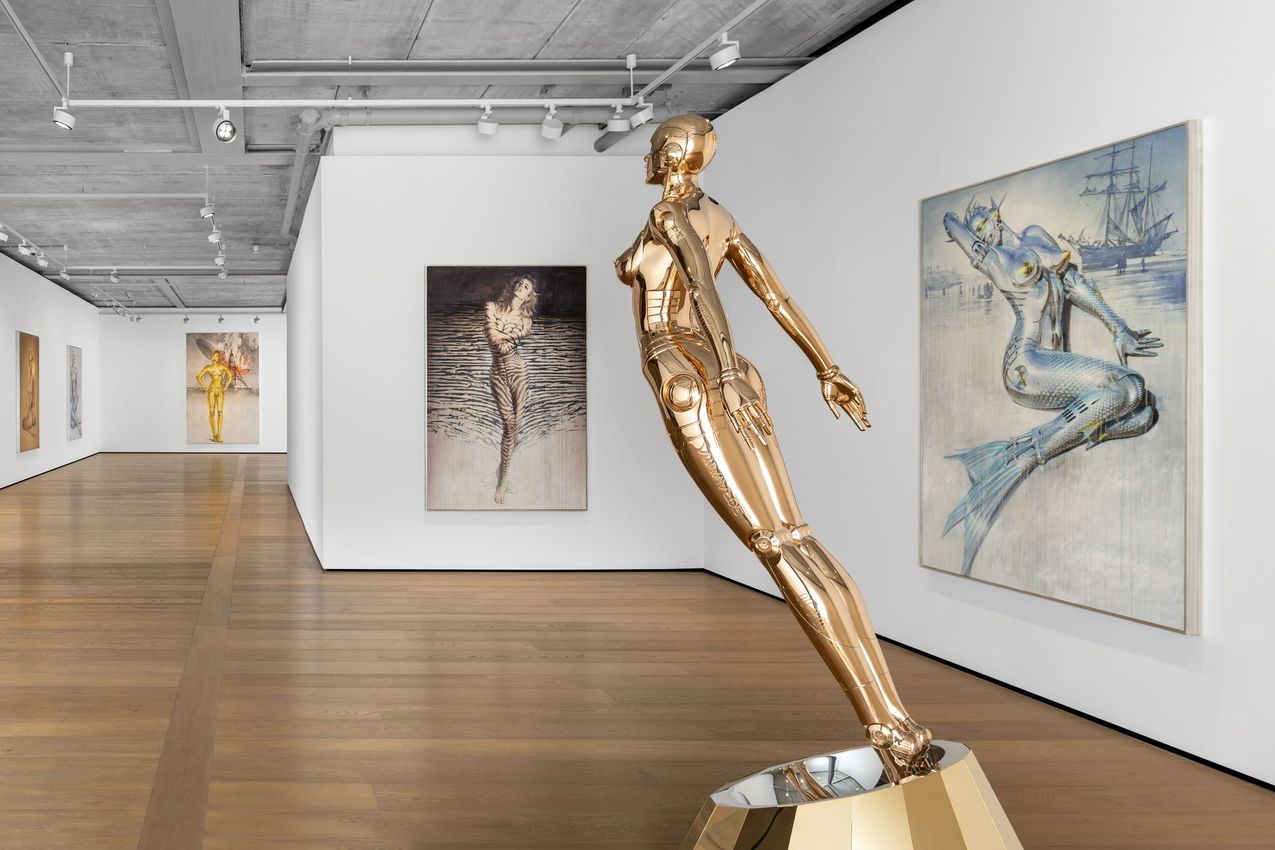
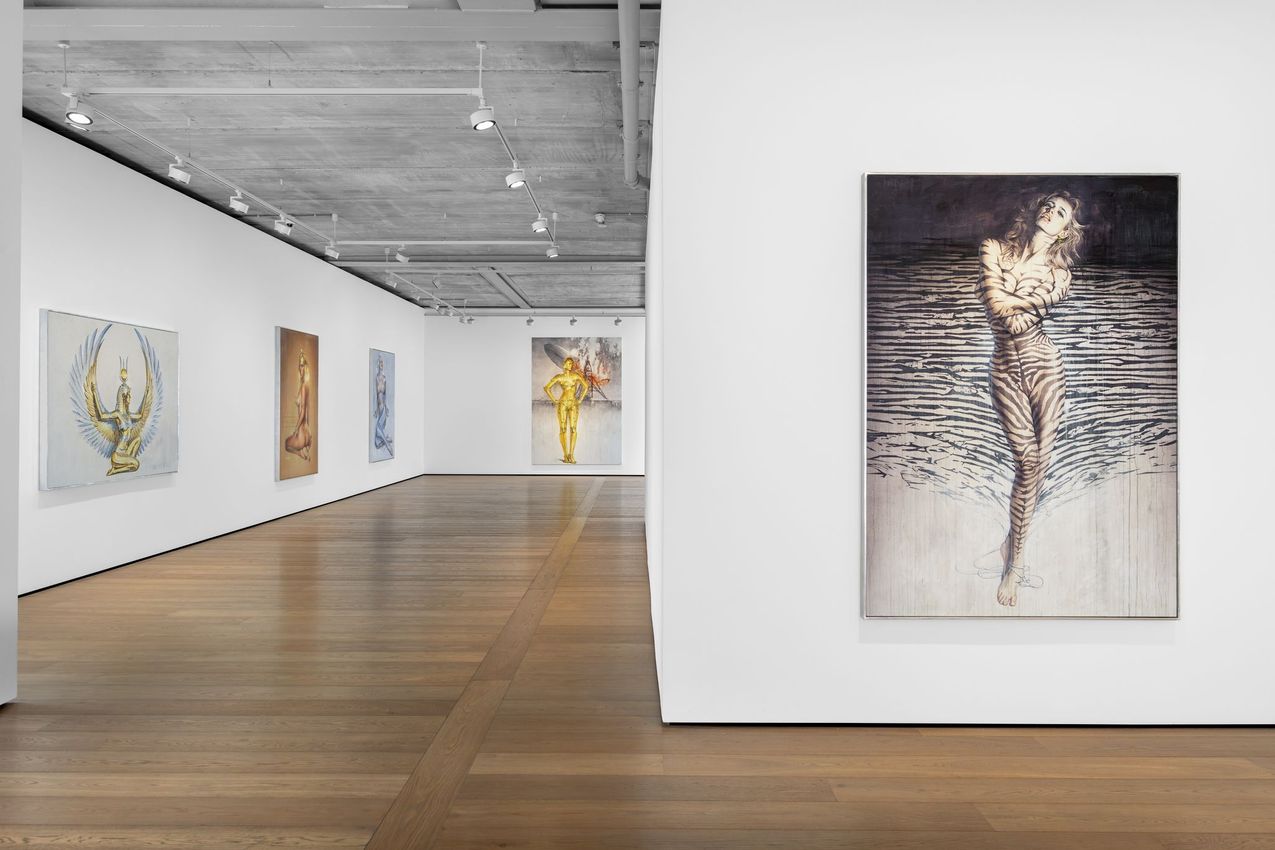
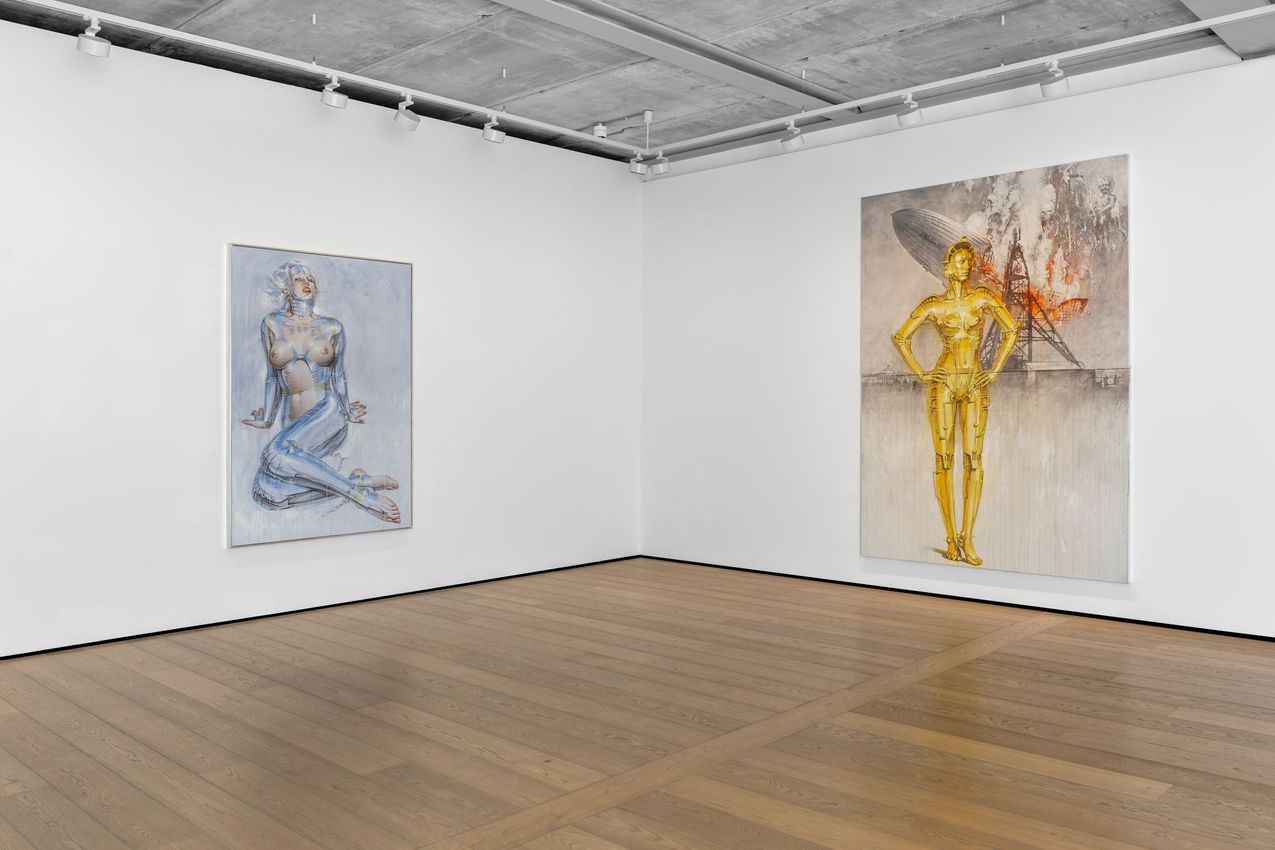
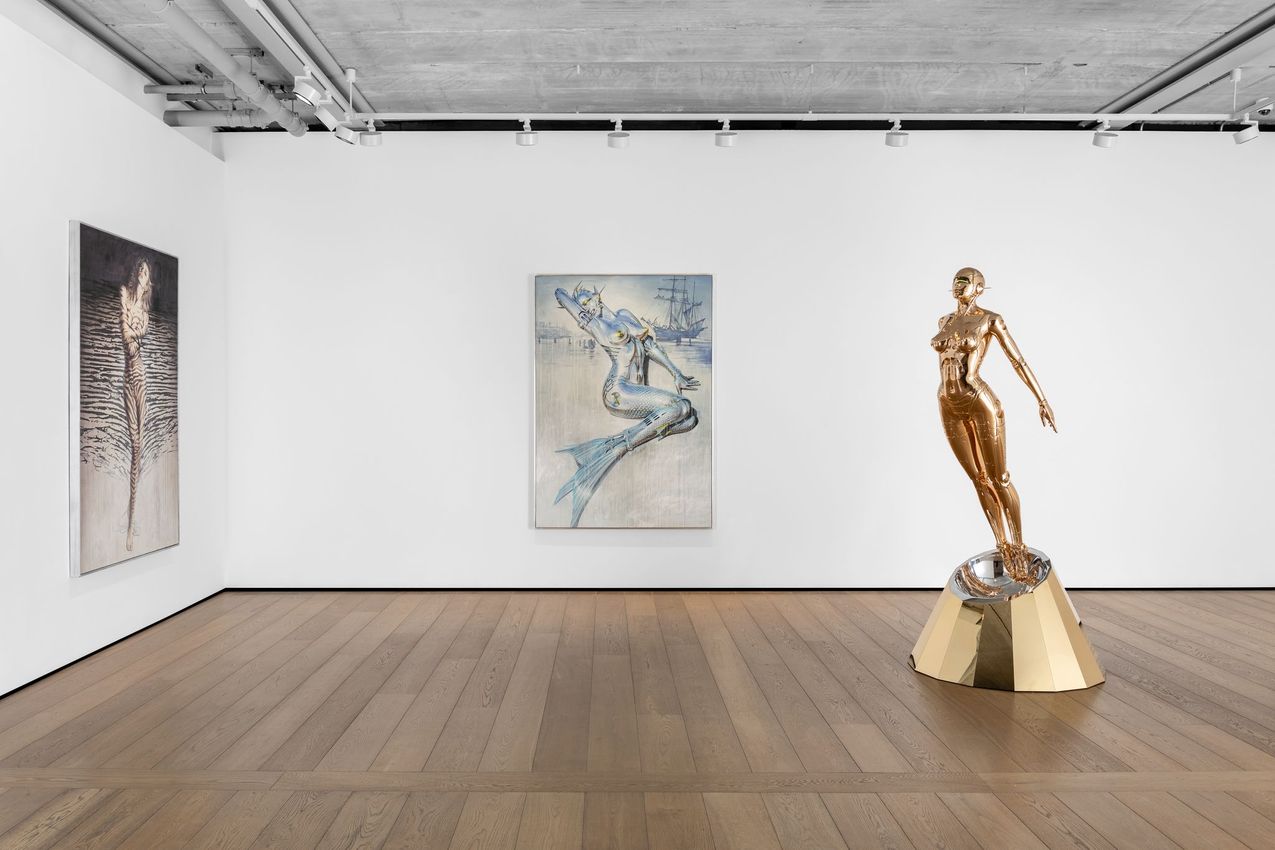
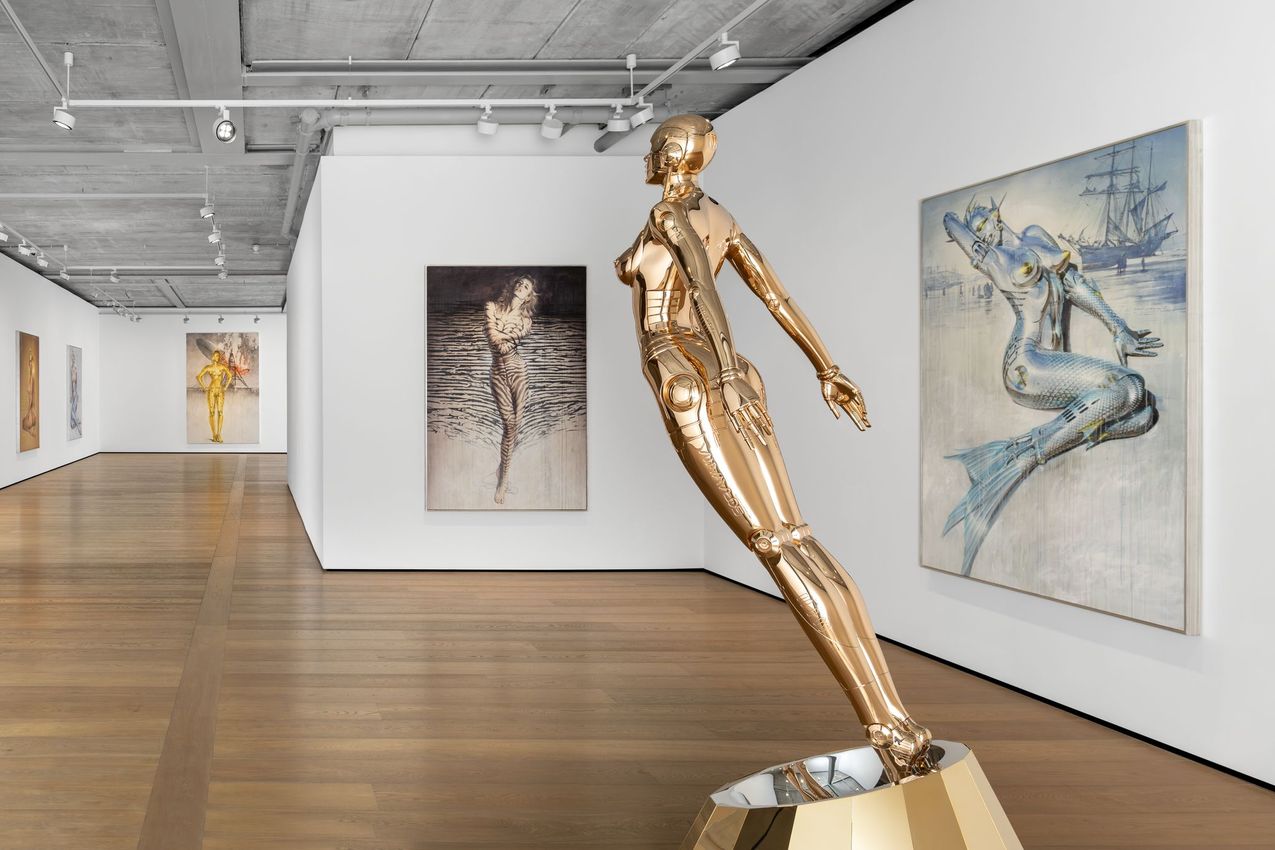
Sorayama’s ongoing Sexy Robots series ponders the alluring, intimidating imaginary of a cyborg human, merging woman and droid,fleshy anatomy and flashy armour, in a cheeky and unsettling continuum from the Hollywood pin-up to the fantastical future. In his finelyrendered, sleek and striking mixed media works on canvas—themselves a seamless hybrid of digital and analog mediums—and hisiconic sculptural works in steel, Sorayama channels aesthetic visionsfrom Bert Stern to Mel Ramos, Brancusi to Rolls Royce, Egypt to theOscars.
Throughout his decades-long career, Sorayama has seen the worldchange around him—or rather, catch up with him. His visionary earlyart practice—as well as his award-winning robotics design work—now seem prescient. But in balance with the narrative and symbolicpull of the futuristic transmogrifications, the materiality of the worksand their compositional lexicon complexifies that vector. By drawing on centuries and even millennia-old painting conventions, frommythic maidens and goddesses of ancient Greece and the Renaissance to the glamor photography of Hollywood’s Golden Age and theBarbarella-esque fantasy of the erotic future, Sorayama contextualizes his entreprise within an array of cultural settings. However, he inturn disrupts this legacy with the introduction of digital print and photographic elements, so that the works, in their physical form, embodythe same kind of hybridity as his subjects and his ideas.
His work is animated by both erotic nostalgia and aspirational futurism. Through acrylic and digital print works on canvas, Sorayamaportrays sexualized archetypes of Western feminine beauty and power (Marilyn Monroe, Joan of Arc, Jane Russell; mermaids, goddesses,muses) with an inside-out take on the art history of the male gaze.Call it the sexuality of the singularity, but consider, as the artist does,whether it becomes more or less complex to engage the post-humanwoman, the cyborg female, as an object of fear and desire?
Furthermore, the works ask us to consider the traditional and subverted status of beauty in art and in sexuality—and to what degreebeauty even means the same thing to humans and robots.
What is more beautiful—the impossibly smooth metal or the softness of plump flesh? The flaws that make an individual, or the attainment of a flawless uniformity? What if the most beautiful beingwas also the most fearsome—the hybrid, the otherworldly, the both?What if all of this soul-seeking philosophy becomes clouded by theheady rush of physical attraction? When you want them, what do youreally want, exactly? What if it’s all a trap?
Sorayama lives and works in Tokyo, Japan, his birthplace and wherehe graduated from Tokyo’s Chubi Central Art School. His time in Hollywood and especially his work in science fiction graphics, becamethe inspiration for his iconic work, the internationally acclaimed SexyRobot series, which has been running since 1978. Featured in permanent collections such as the Museum of Modern Art (New York)and the Smithsonian Institution (Washington, DC), he is the rare artistwho is equally celebrated by prestigious institutions, fashion houses,erotic publications, as well as the multi-national technology corporations.
— Shana Nys Dambrot, art critic, curator, and author
Press release courtesy Almine Rech
Japanese born, Hajime Sorayama graduated in 1969 from Chubi Central Art School in Tokyo. He started his career in advertising before freelancing in Hollywood, where he helped to produce visuals for sci-fi films. His works of female images, pursuing of robot and eroticism are well known both inside and outside of Japan.


Almine Rech London will showcase curated presentations of works by artists from the 20th and 21st centuries and will be open Tuesday through Friday, from 10am to 6pm, with Monday and Saturday visits available by appointment.

A respected voice in contemporary art discourse.
Focusing on ambitious storytelling and insightful art-world commentary. Ocula Magazine publishes in-depth interviews, critical essays and timely analysis on the artists, exhibitions and ideas driving the global art world.
Learn more about Ocula Magazine
Showcasing the best of the art world.
Ocula partners with galleries from around the world to highlight their artists, artworks and exhibitions. Gallery membership is by application and invitation, with each member vetted by an independent panel.
Learn more about Ocula Membership

Specialises in the sale of major artworks.
Led by a team with deep ties to the world’s leading auction houses, galleries and collectors. Ocula’s advisory team offers bespoke services to high-net-worth clients from around the world who are looking to acquire the best of contemporary and modern art.
Learn more about our team and services