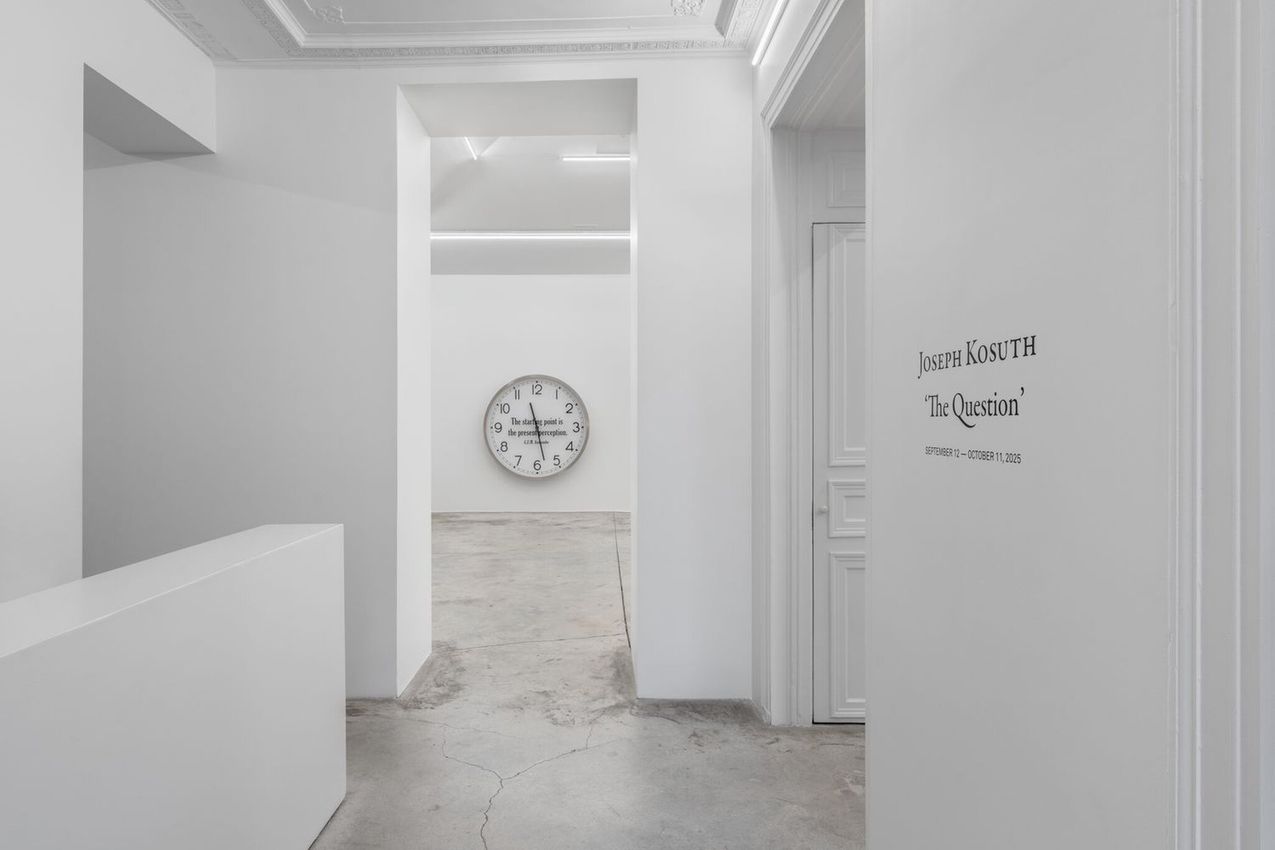
Almine Rech Paris, Turenne is pleased to present Joseph Kosuth’s fourth solo exhibition with the gallery, on view from September 12 to October 11, 2025.
“Musil was wary of the pragmatic reduction to which the complexity of our experiences is subjected by language. He wanted his writing to reflect the discontinuity that characterises much of our lived experience.”—Joseph Kosuth
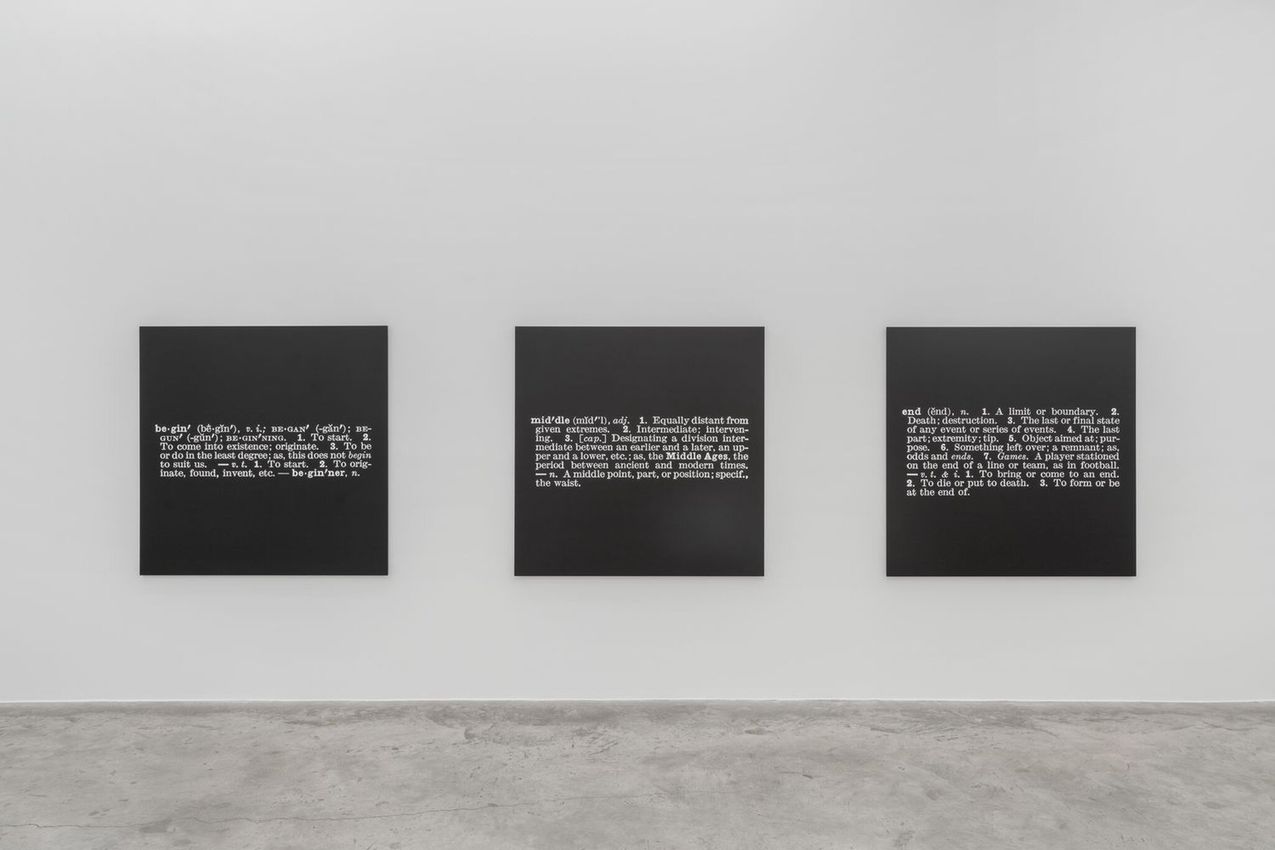
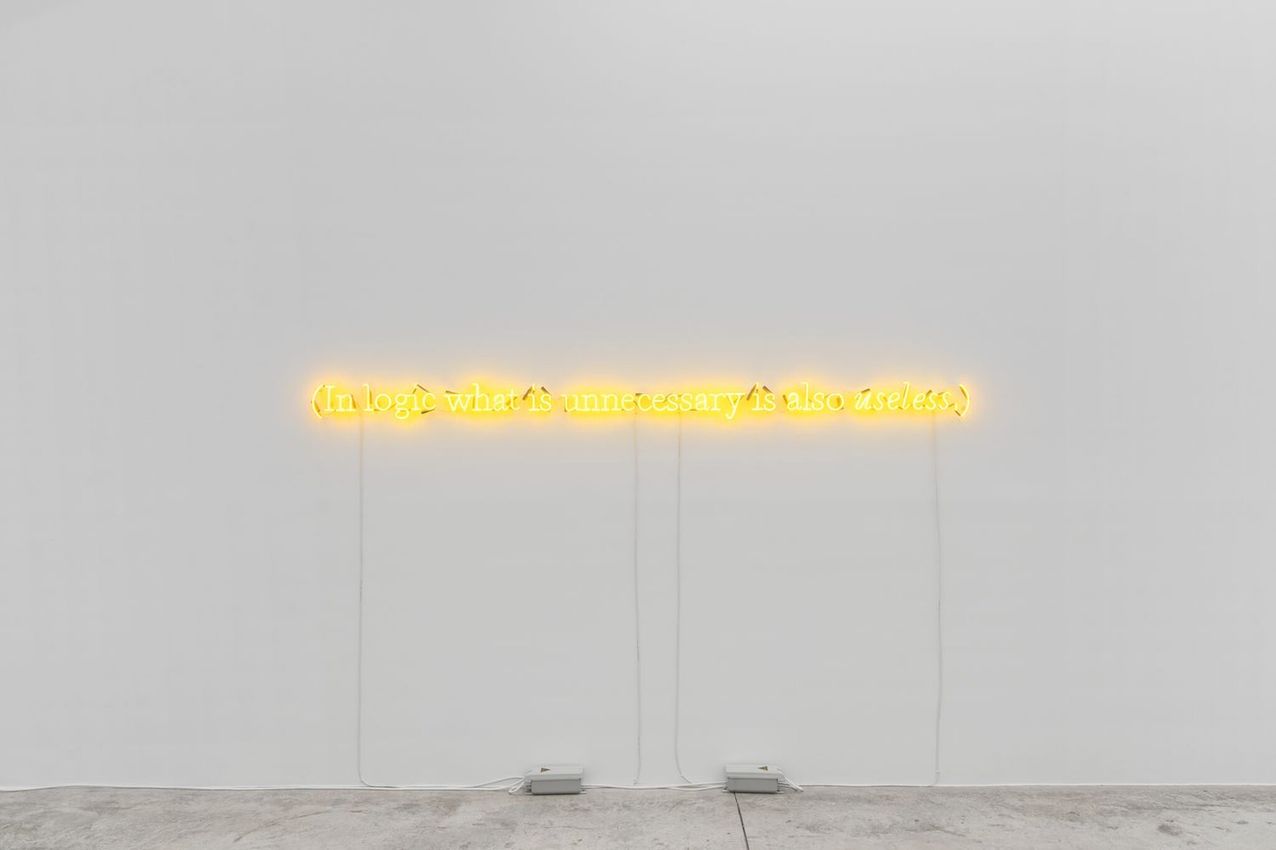
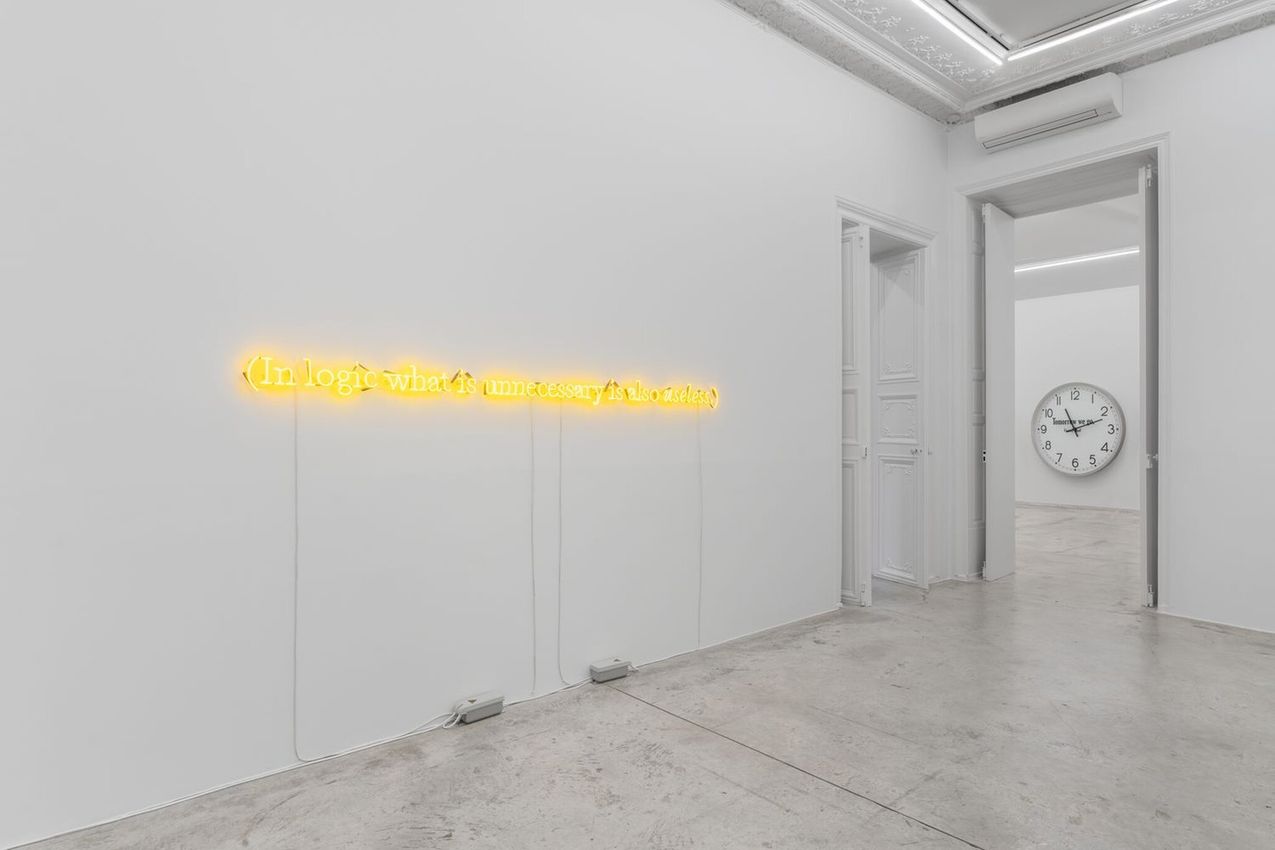
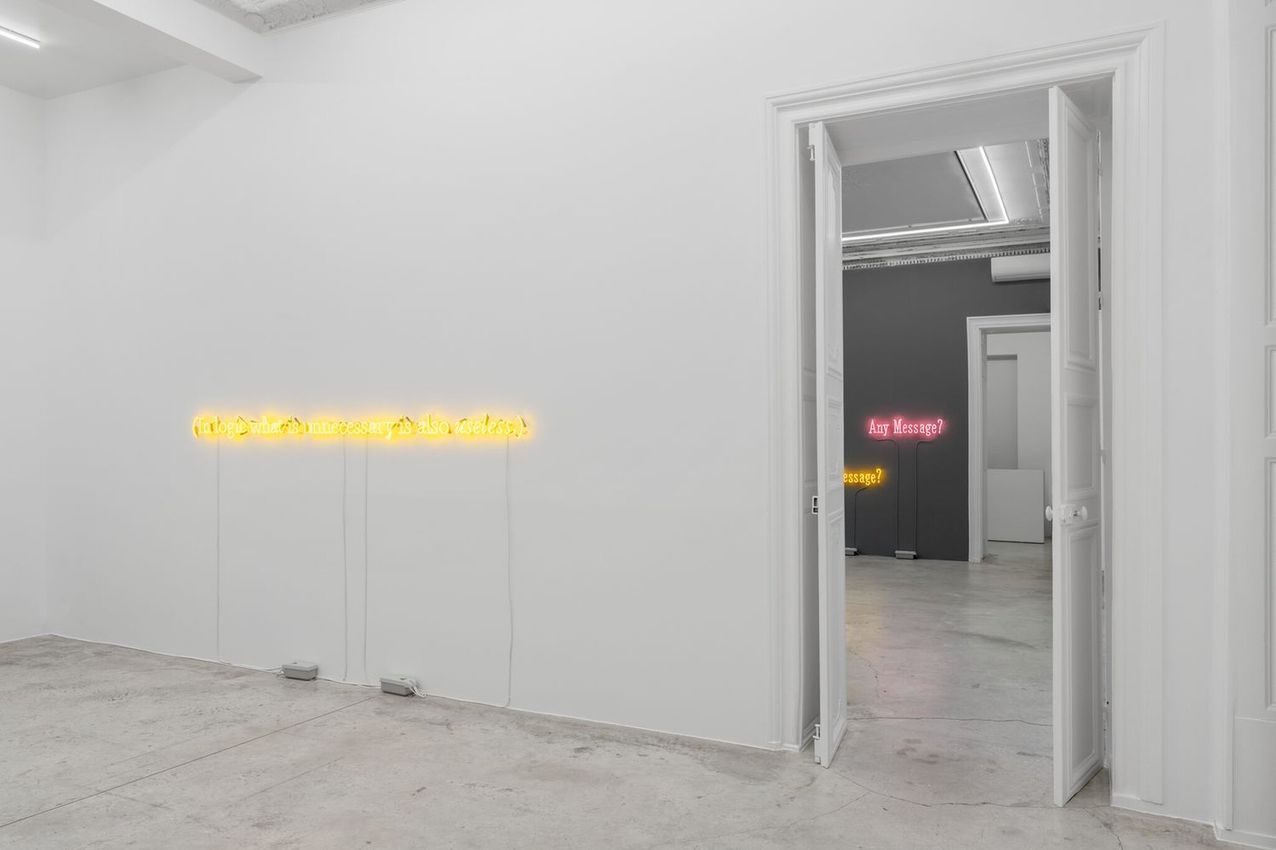
Joseph Kosuth’s exhibition at the Almine Rech gallery in Paris is secretly and deeply moving. We are confronted with both older works (1988) and more recent ones, whose selection and spatial composition are of extreme relevance both to the artist and to the imperilled society in which we live.
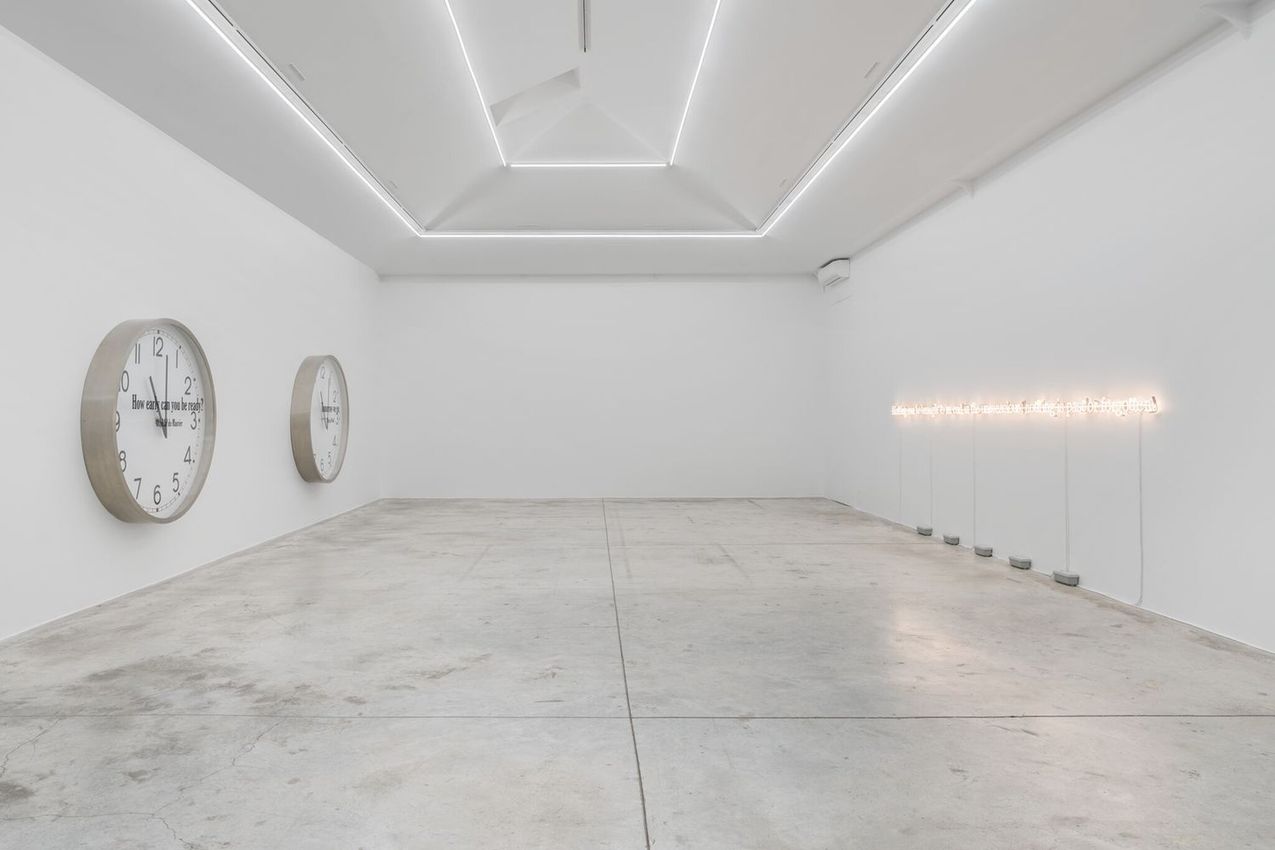
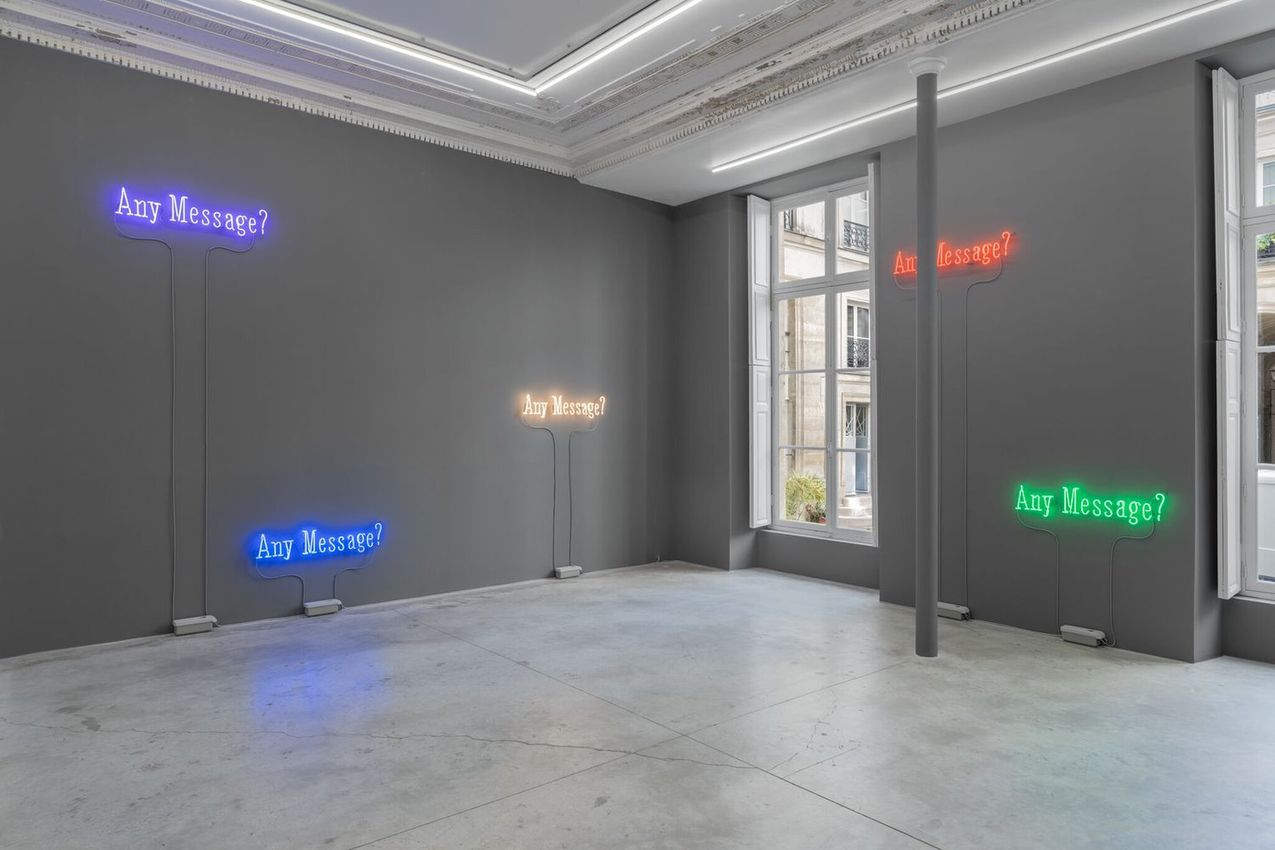
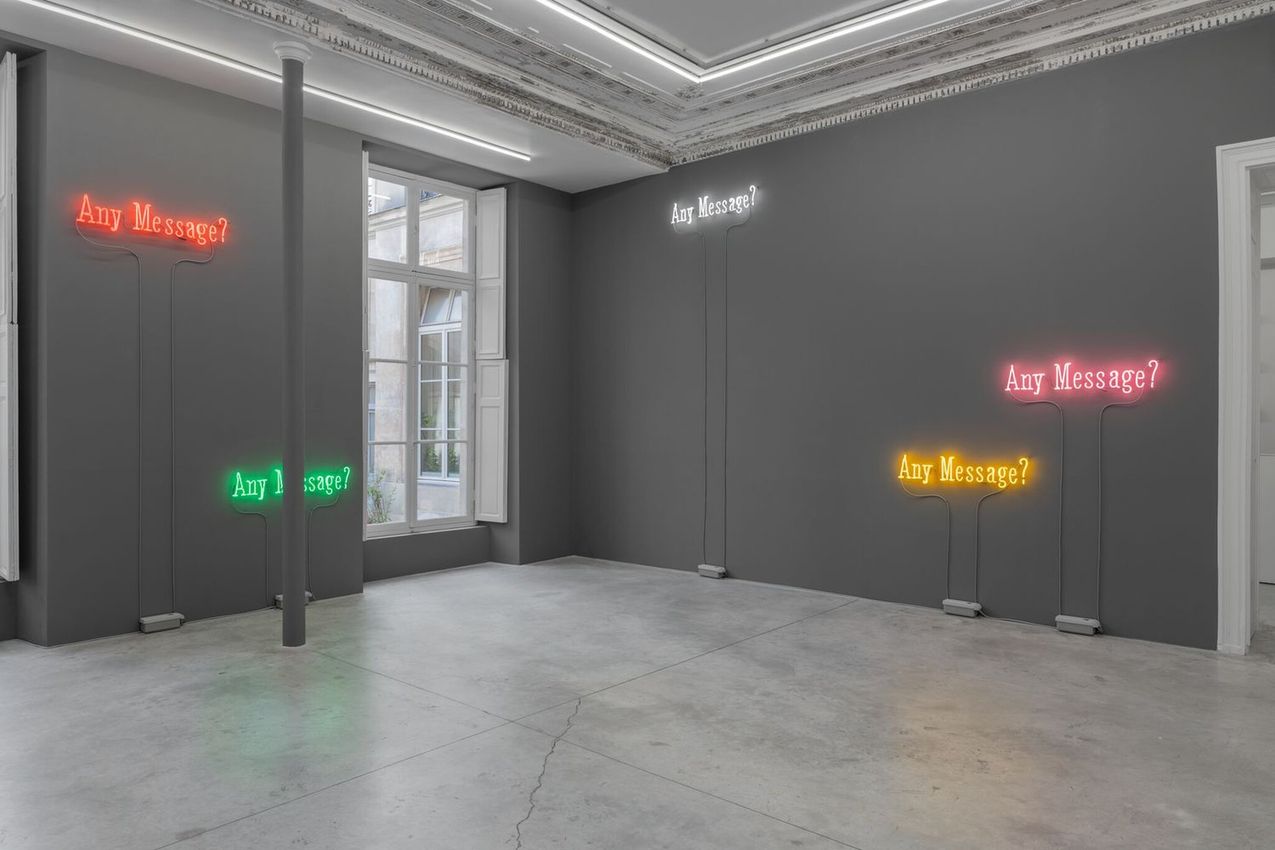
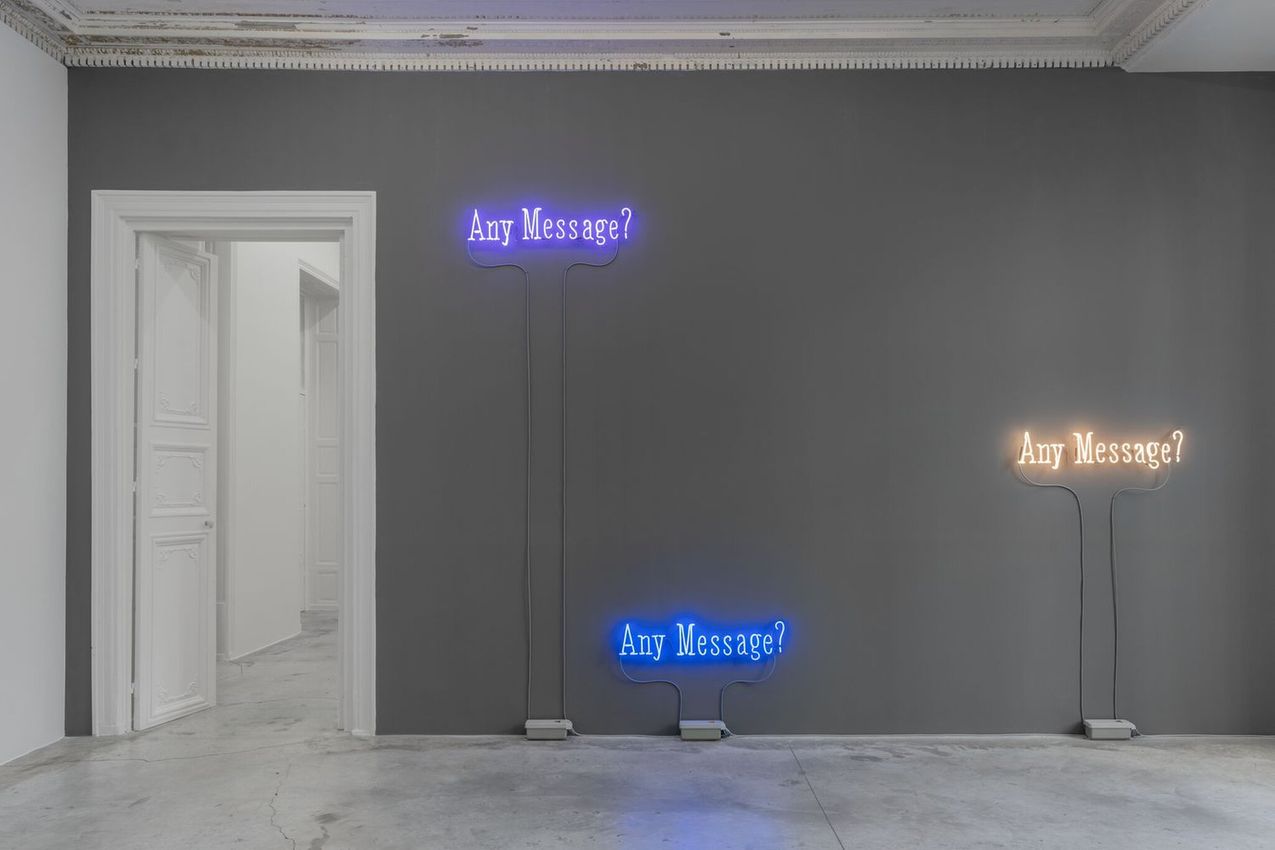
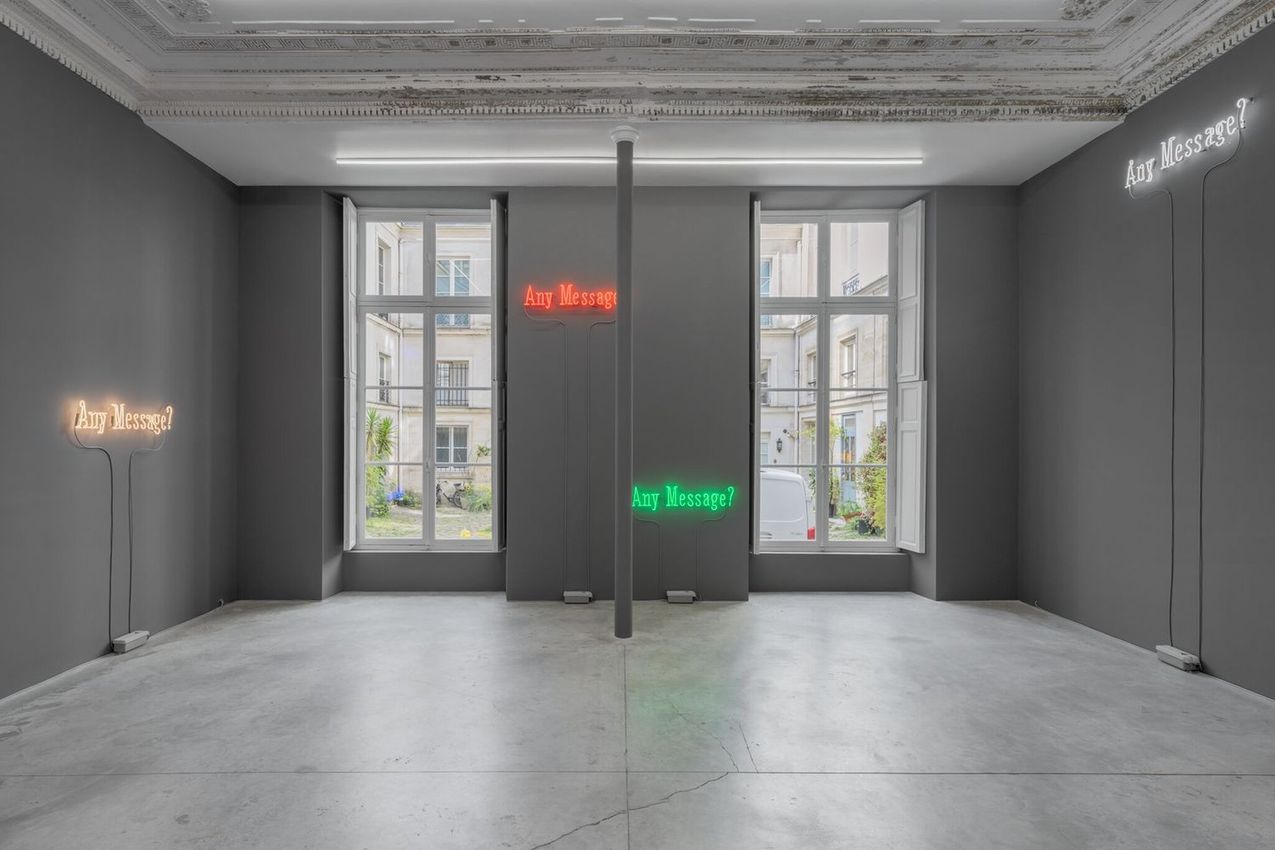
Naturally, in keeping with the principles of his creation and his thinking, there is no rhetoric, no discourse, but rather a repeated enigmatic question, in cold white, warm white, yellow, green, cobalt blue, orange and purple neon: Any message? The answer is not formulated, and yet, based on the question, the meaning begins to unfold. It projects us into Joseph Kosuth’s essential experience, which is to “work on the relationships between relationships.”
He points out these relationships in the Any Message pieces with George Orwell’s 1984, which I find increasingly and profoundly accurate in terms of the evolution of our societies. From hypothesis to the advent of reality, this movement is far from over, as suggested by the subtlety of the relationships established in this exhibition.
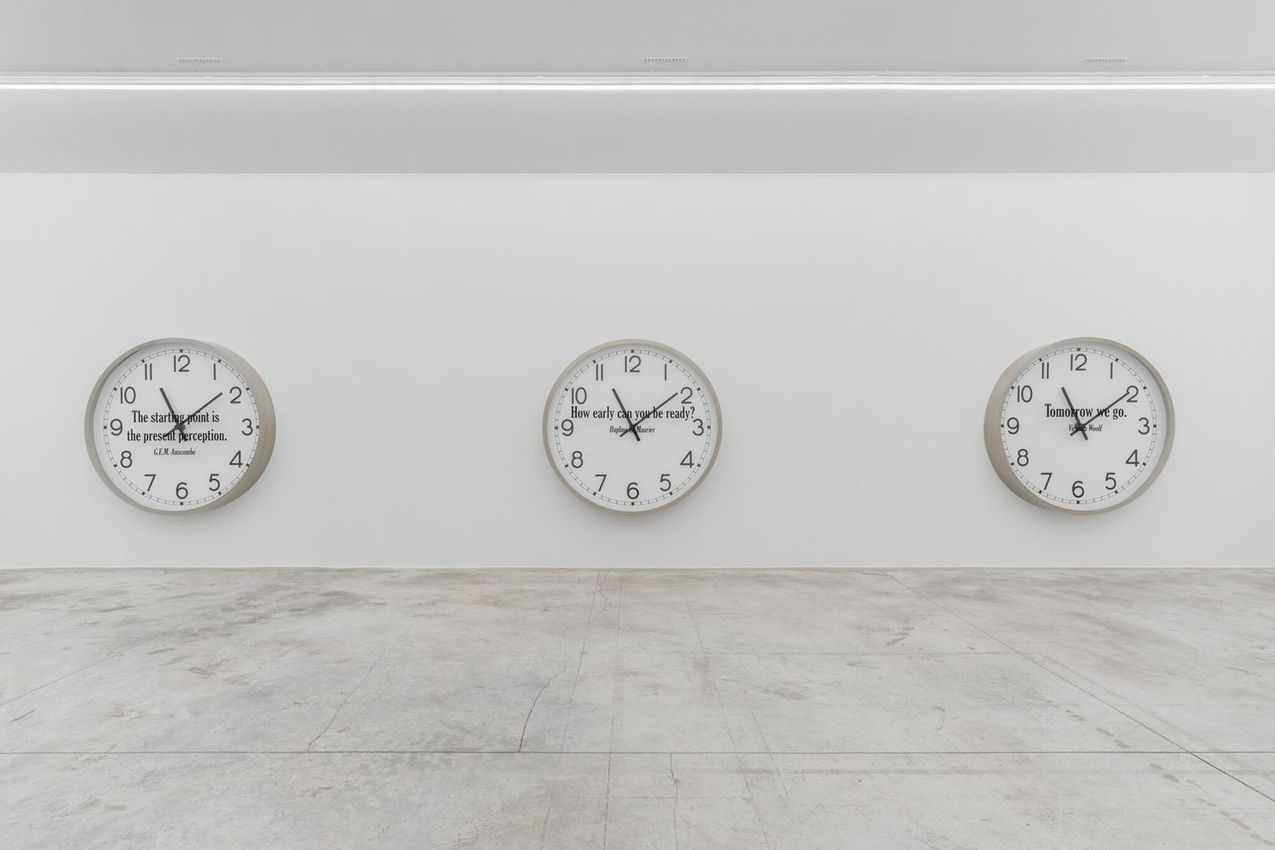
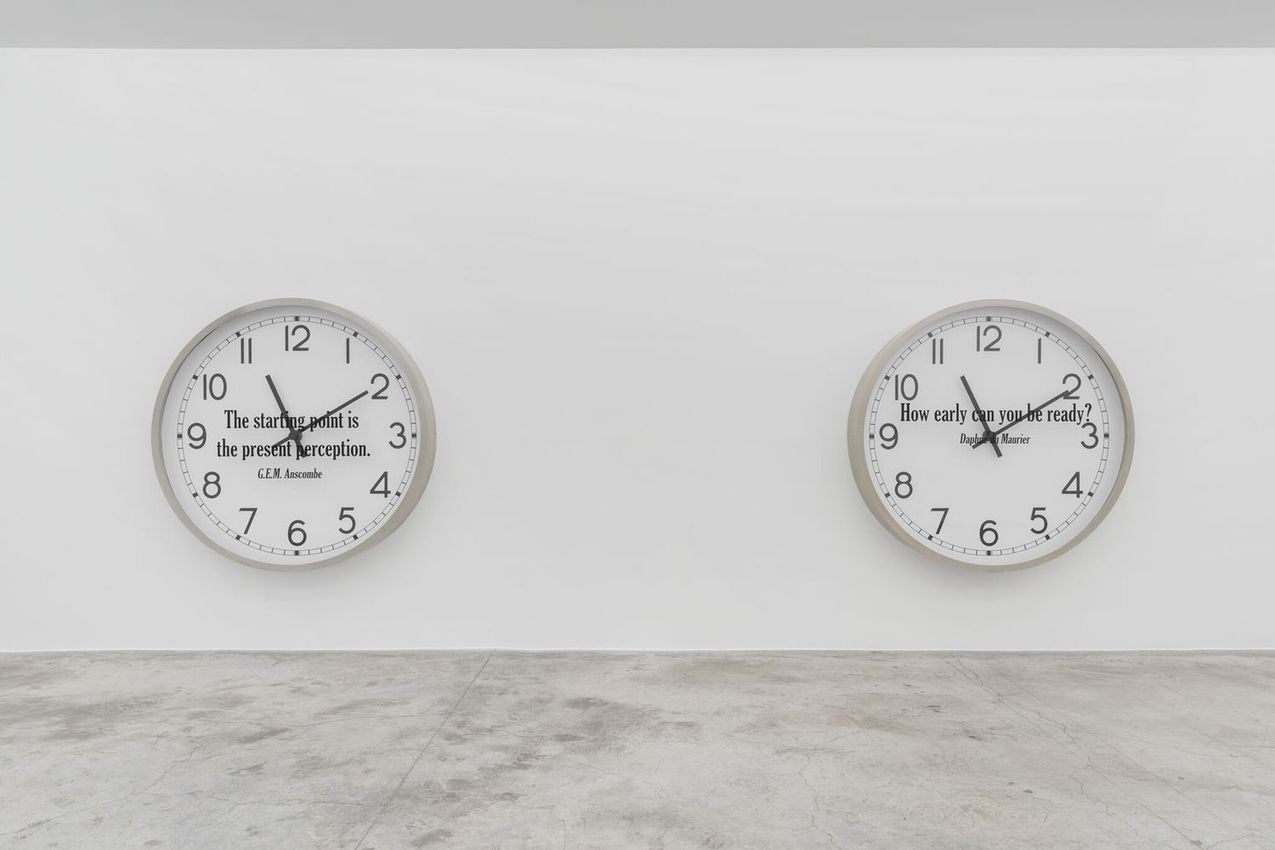
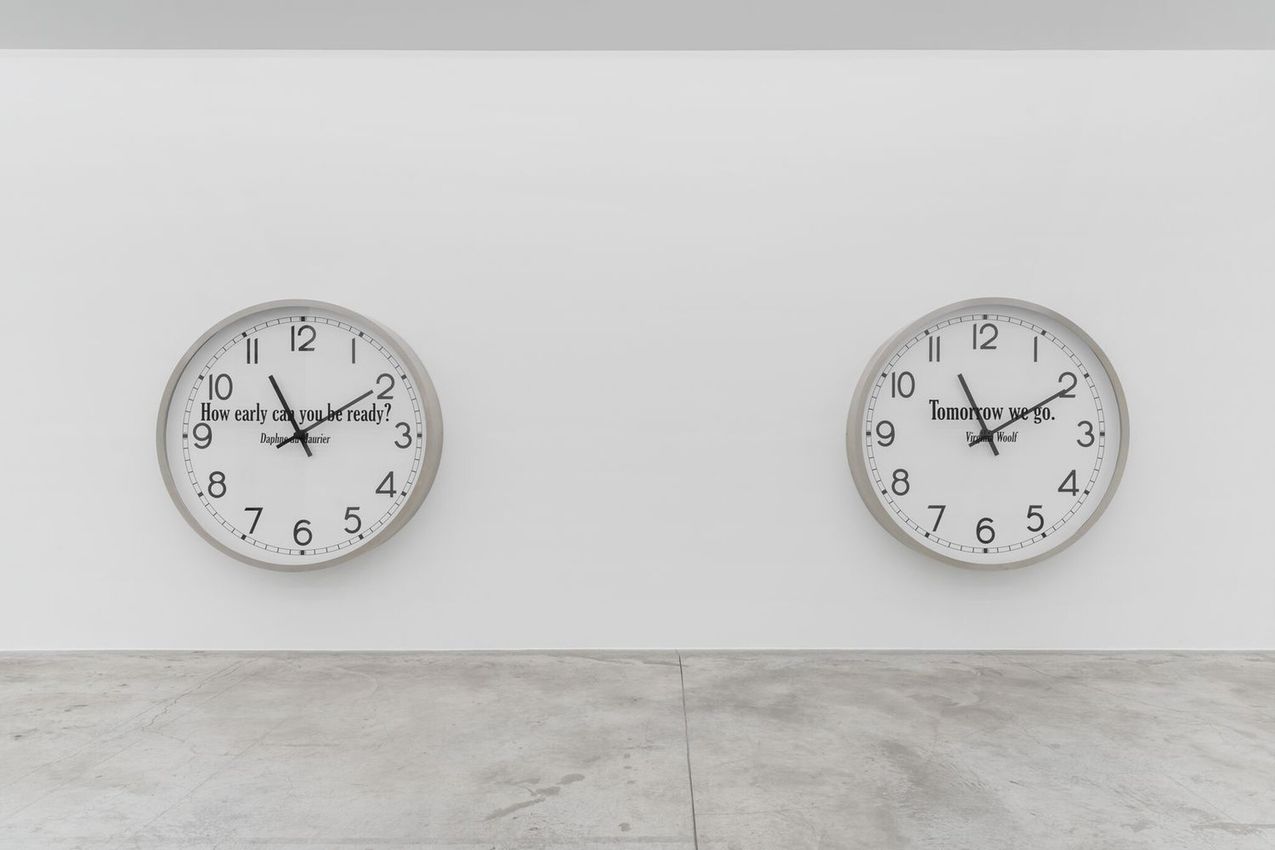
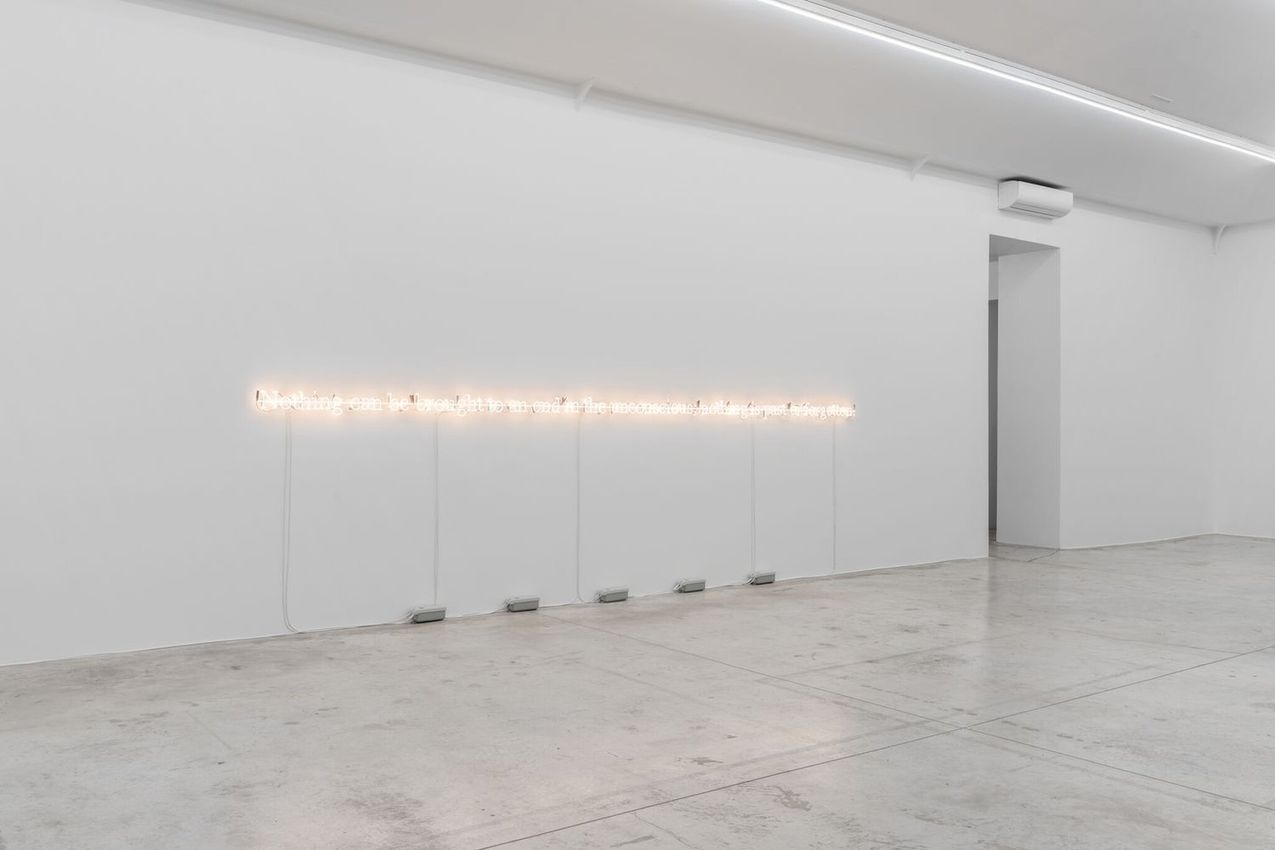
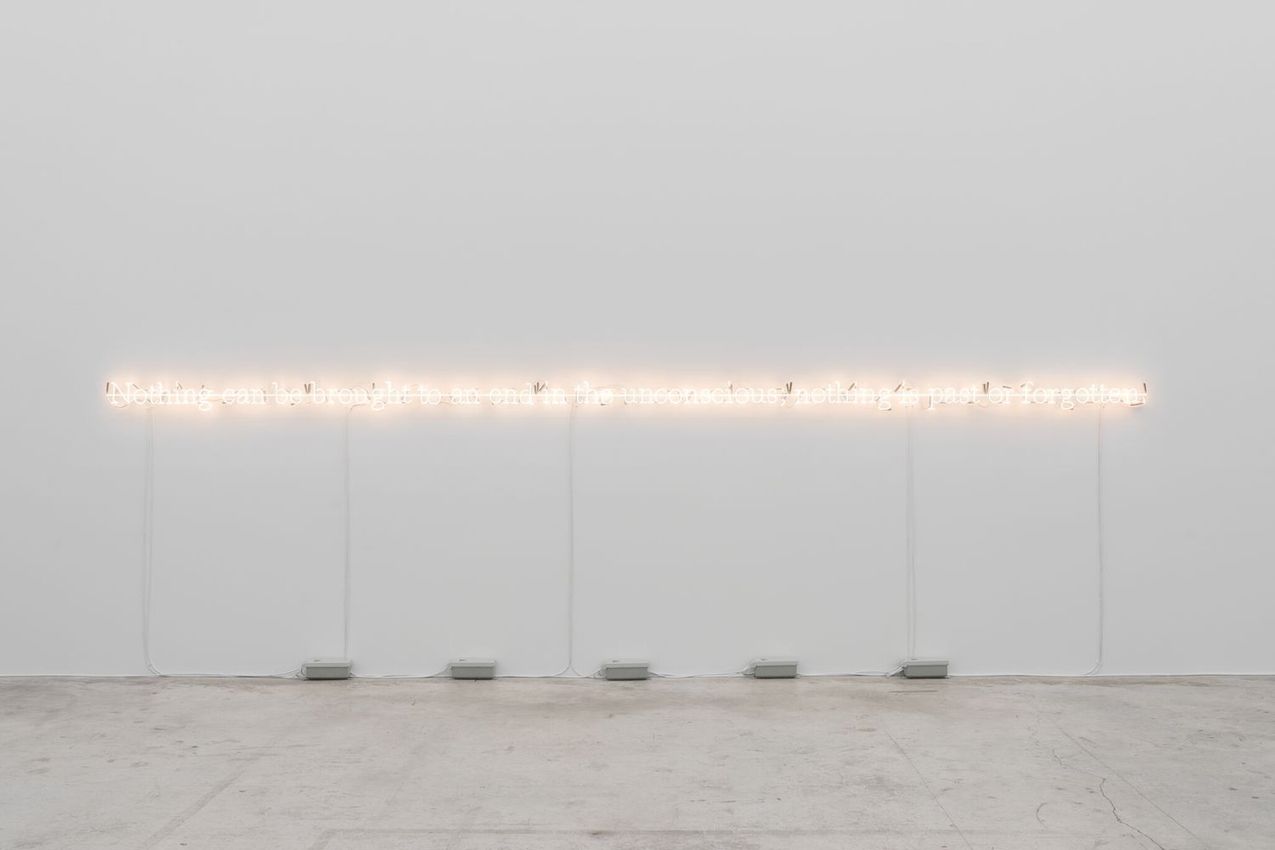
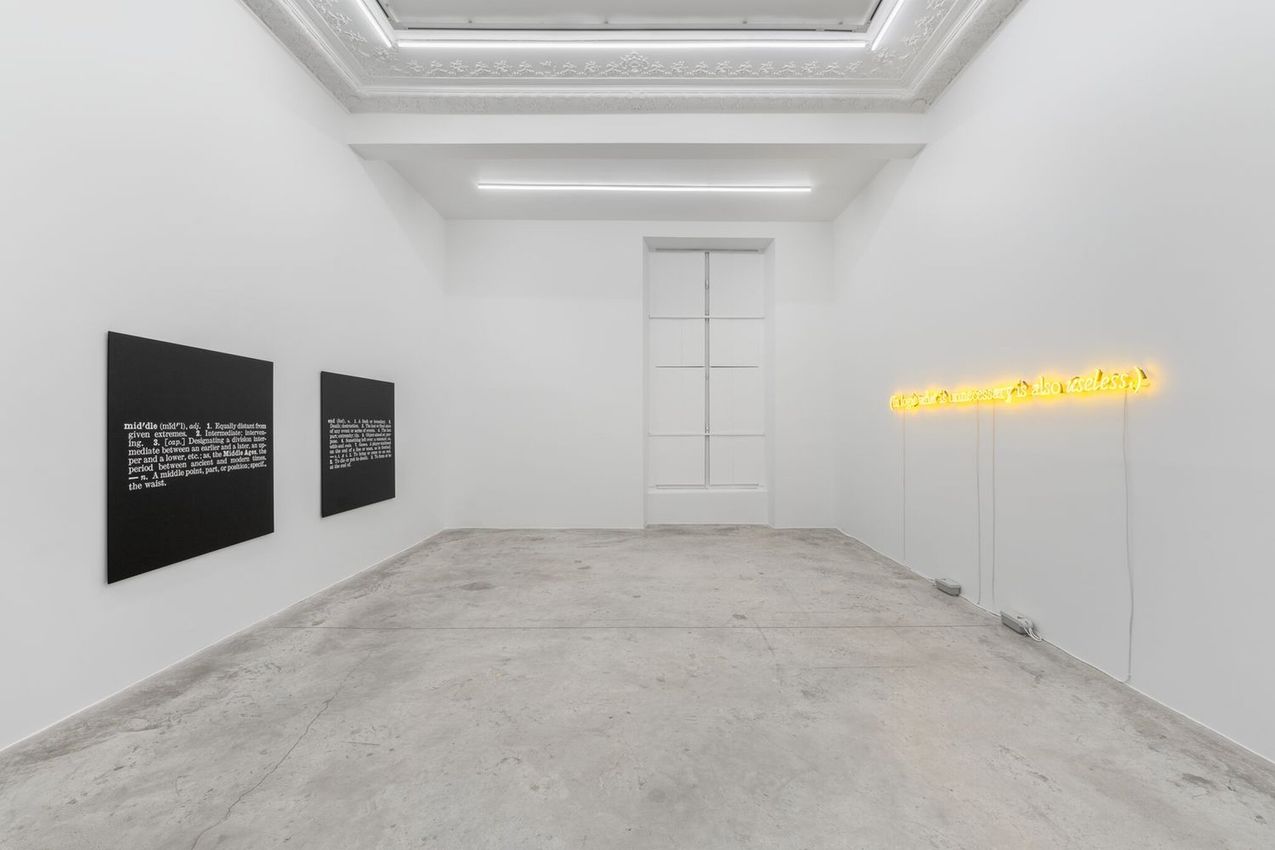
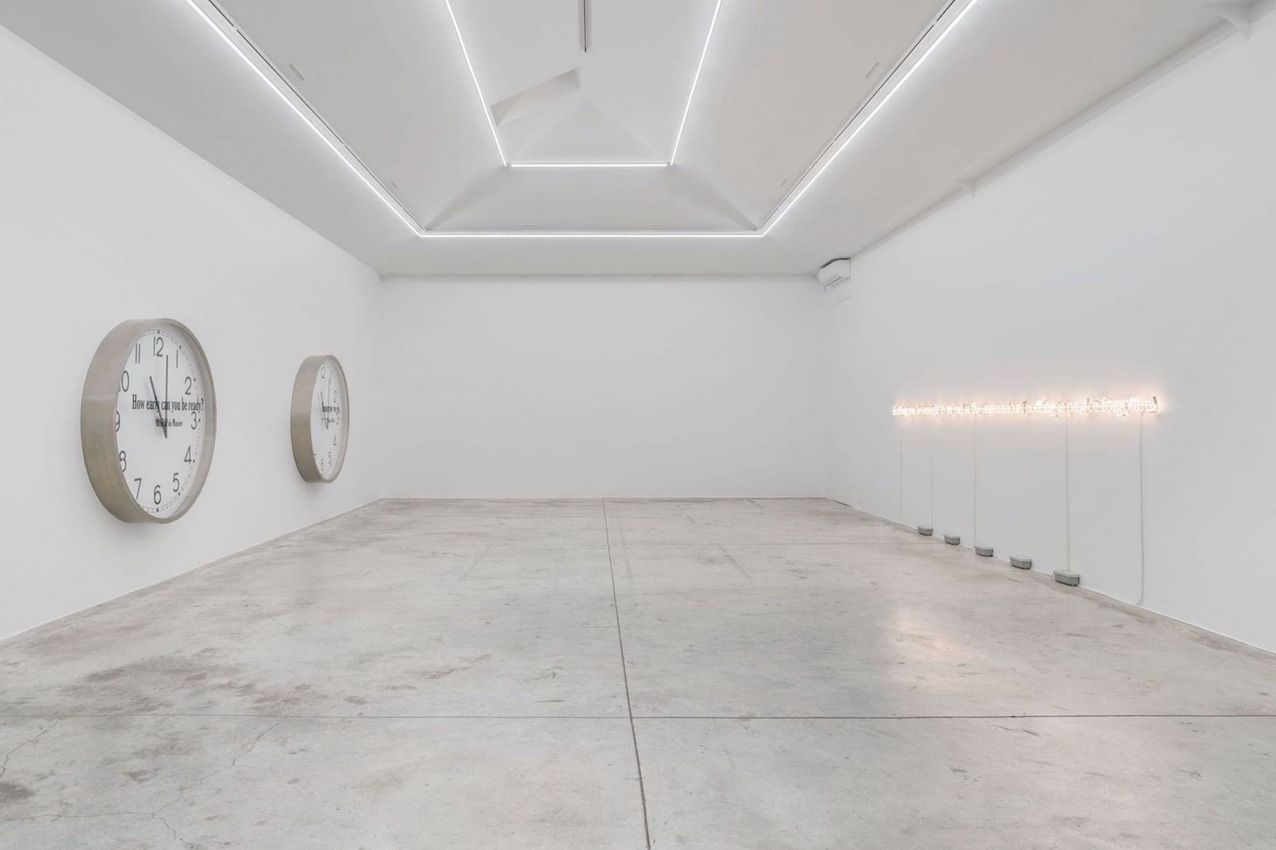
Thus, on a long, warm white neon sign, I read “Nothing can be brought to an end in the unconscious; nothing can cease or be forgotten,” a phrase created in neon “in relation” to the thinking of Sigmund Freud. It opens up the present, that of our existences as a determining factor in our lives. A present that the unconscious constantly renews, carrying the passage of time. That of reality as well as that of dreams, that which nourishes our lives as well as that which is within or before us. We do not know whether this time exists even though we give it substance, through a principle of measurement that induces situations, positions and interpretations. With it, are we not, as Joseph Kosuth points out, constantly comparing a beginning, a middle and an end, shaped by the gap between them? Any message? The answer is one of comparison, which allows each of us to existentially and concretely experience a concept that is an act. In his works, Joseph Kosuth uses clocks to physically and mentally immerse us in the rotation of the hands. The one that can begin with the statement: ”The starting point is the present perception,” a clock imagined in collaboration with this sentence by G.E.M. Anscombe, one of Wittgenstein’s three executors. The questions raised by the works in this exhibition are those experienced by an artist when the view of the world around him is no longer enough in itself. Is the artist’s intention not to logically and, I believe, poetically construct an exhibition that offers us the essence of this meaningful experience, traversed by time?
We are contemporaries of Joseph Kosuth, inhabiting our lives, our cities, projections of ourselves, in relation to the thinking that constructs us. Joseph Kosuth associates the sentence: ”How early can you be ready?” by Daphne Du Maurier to another sentence: ”Tomorrow we go.” by Virginia Woolf. Any message? A question that the artist asks himself and that he asks us to test our presence, our materiality in architectures such as Venice, New York or Paris, where he has just created Forme Appliquée, a work on the ground, at 4 Place des Victoires, in the midst of all the other floors within a memorable site, animated by the political and dreamlike myths of this city. Using a logical, mathematical, geometric model, he has created an architectural, utilitarian pavement, which for the Baudelairean walker, that of Walter Benjamin, becomes a springboard giving rise to a thought without end, with infinite combinations, in this historic and dated neighbourhood. I imagine that on this walk, from the Marais to the Palais Royal, for secular passers-by as well as today’s city dwellers, this experimentation with meaning, the city and time will make us alert, mobile and alive beings, in 2025 more than ever.
— Olivier Kaeppelin
Alongside this work, the artist’s book Application Formée is currently in production and will be published by Leal Torres in collaboration with Artconcept in late 2026. Thanks to the expertise of the Atelier du Livre d’Art et de l’Estampe de l’Imprimerie nationale, Joseph Kosuth has chosen to reproduce an identical copy of a work dating from 1722 by Reverend Father Sébastien Truchet (Méthode pour faire une infinité de desseins différens, avec des carreaux mi-partis de deux) and to use its composition and writings as his space of intervention. Jean-Christophe Ballot’s photographs will be accompanied by essays by Olivier Kaeppelin and Dominique Perrault.


Joseph Kosuth is a key figure in the redefinition of the art object that took place during the 1960s and 70s with the formulation of Conceptual art, which questions art’s traditional forms and practices, as well as the assumptions surrounding them. To do this, Kosuth was among the first to employ appropriation strategies, texts, photography, installations and the use of public media, as well as to write the earliest theoretical texts supporting it. With Kosuth, art itself is essentially a questioning process. As a result, all aspects of the activity of art has been reconsidered, from the function of objects to the role of the exhibition itself. Since the 1960s the elements in his work have all been employed from other contexts: philosophy, literature, reference books, popular culture, scientific theory and so on. He utilises our inherited meanings to construct a new meaning of his own.


Almine Rech opened its doors on April 1st, 1997 in the 13th arrondissement in Paris. The gallery was founded on an axis of California Minimal, Perceptual art and Conceptual art, representing artists such as James Turrell, John McCracken and Joseph Kosuth.

A respected voice in contemporary art discourse.
Focusing on ambitious storytelling and insightful art-world commentary. Ocula Magazine publishes in-depth interviews, critical essays and timely analysis on the artists, exhibitions and ideas driving the global art world.
Learn more about Ocula Magazine
Showcasing the best of the art world.
Ocula partners with galleries from around the world to highlight their artists, artworks and exhibitions. Gallery membership is by application and invitation, with each member vetted by an independent panel.
Learn more about Ocula Membership

Specialises in the sale of major artworks.
Led by a team with deep ties to the world’s leading auction houses, galleries and collectors. Ocula’s advisory team offers bespoke services to high-net-worth clients from around the world who are looking to acquire the best of contemporary and modern art.
Learn more about our team and services