Almine Rech, Matignon is pleased to present ‘Laurie Simmons: Black & White’, the artist’s first exhibition with the gallery, on view from October 18 until December 20, 2025.
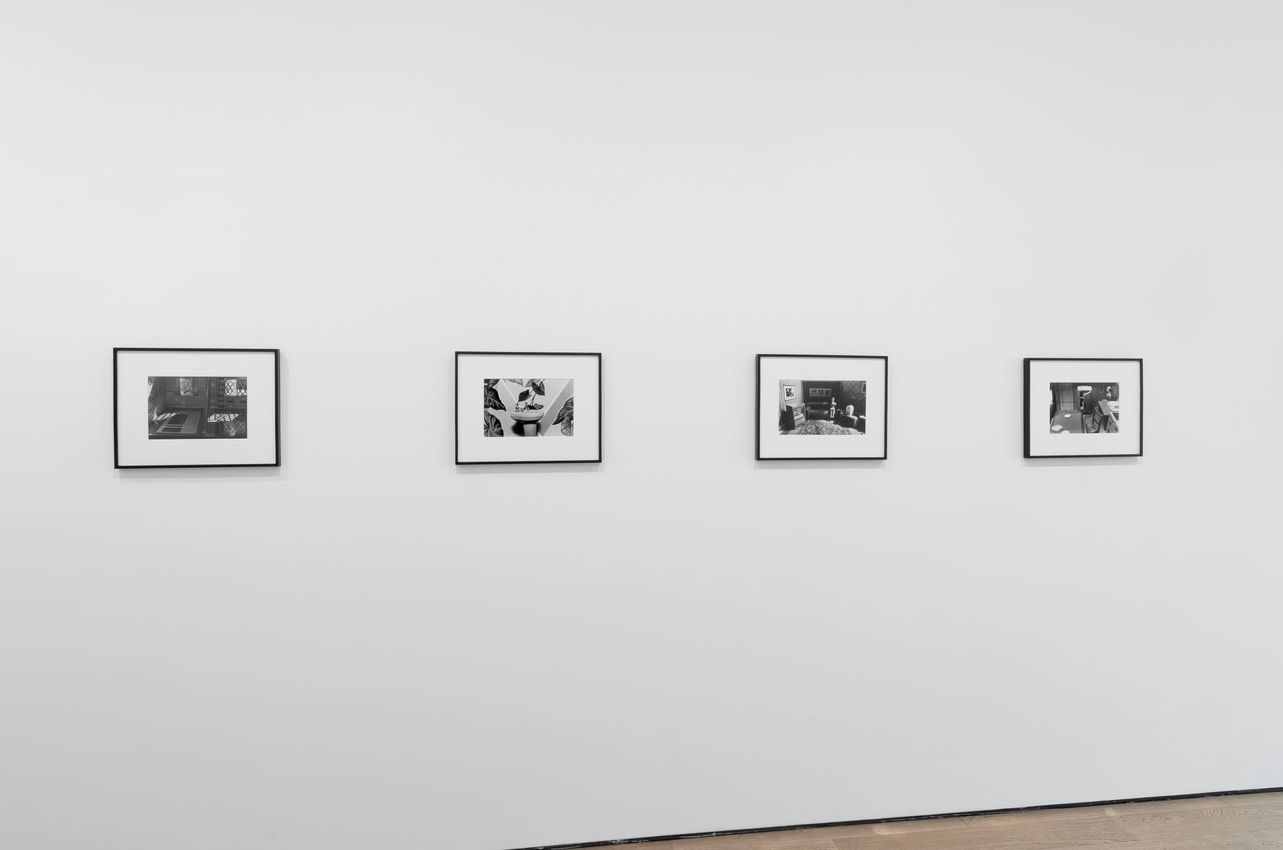
The inspiration for Laurie Simmons’s first photographs came from a surprising source: Gordon Matta-Clark’s building cuts. Simmons, raised in Long Island during the 1950s and early 1960s, grew up in a traditional suburban household, shaped by that era’s rigid gender roles. When she learned about Matta-Clark’s reconfigured suburban house (Splitting, 1974), she realized that destabilizing this totem of domesticity could provide her a way to examine the cultural norms it embodied. So in 1976 she bought a 1950s tin dollhouse, staged it with toy furniture and wallpaper swatches, and photographed the tiny rooms through its cutaway back wall. Occasionally she placed it in a brief patch of sunlight that appeared each morning in her studio. In those photographs, a careful viewer might notice squares of light in the shape of dollhouse windows — sunbeams within a sunbeam. If you’ve ever seen documentation of the daylight streaming through Matta-Clark’s 1975 cut piece at the Chelsea piers, the effect is doubly evocative.
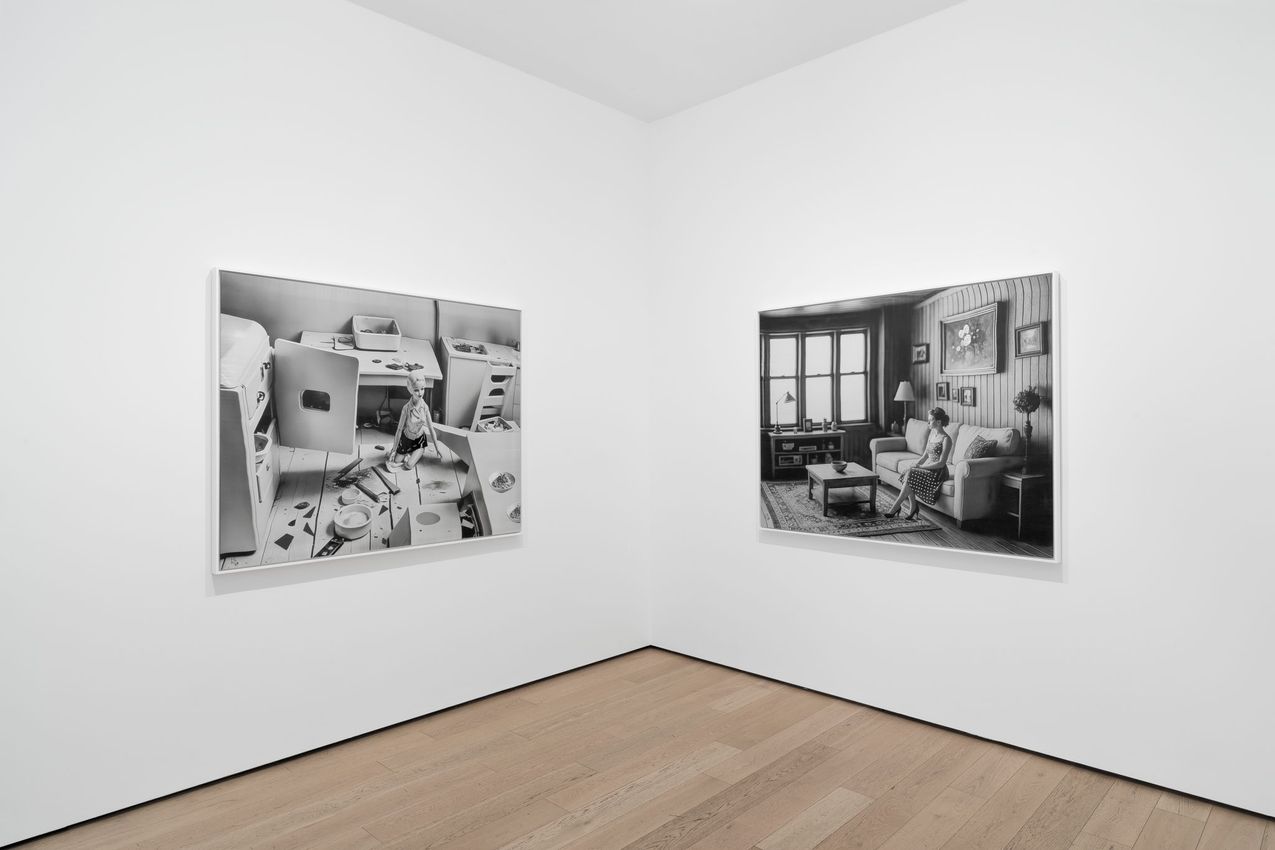
For this solo exhibition, her first at Almine Rech, Simmons is showing several of these 1976 photographs, the genesis of all the art she has made since. (Color photographs from the series were first exhibited in her 1979 solo show at Artists Space in New York.) In Sink/Ivy/Wallpaper, a bathroom sink stands before a wall patterned with an ivy-and-trellis motif. It’s photographed at eye level, as if by someone about to wash their hands, but the sink’s fixtures are too small, the wallpaper’s pattern too bold. Our eyes, unsettled by this scale disparity, soon recognize them as a miniature sink and a full-scale wallpaper swatch. In the photograph Woman Listening to Radio, a similar camera angle places us in a living room with a toy homemaker from the 1950s. Her lidless eyes stare blankly, her plastic body stiff on the sofa at the heart of her suburban dream home.
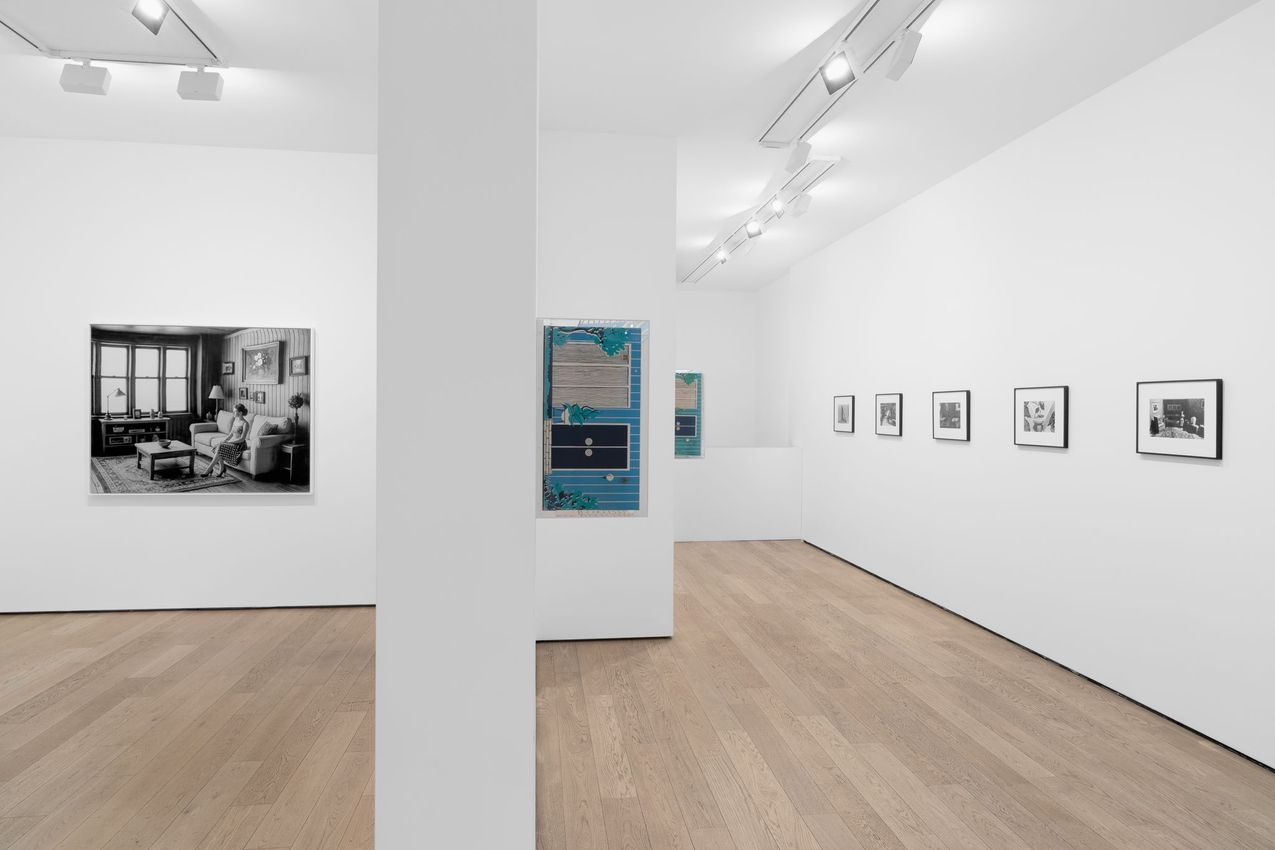
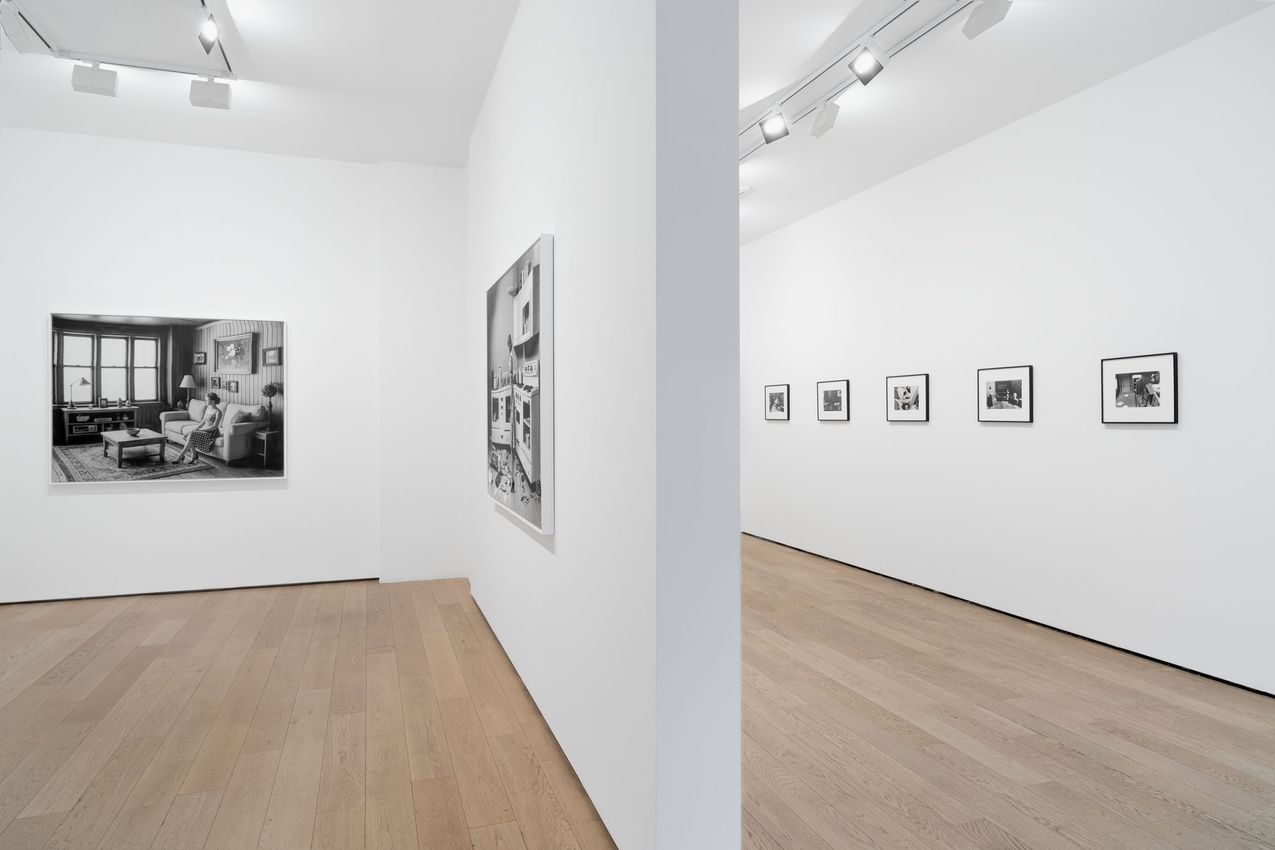
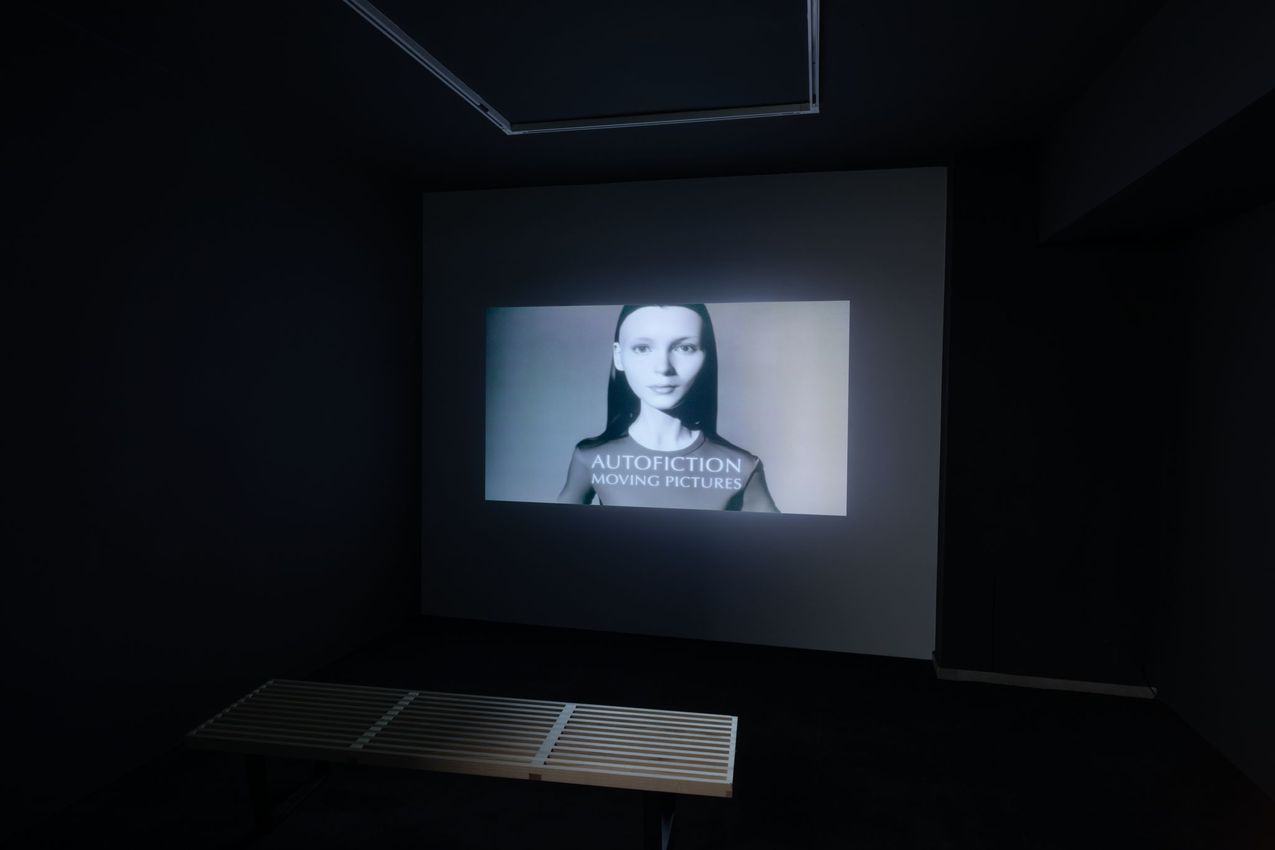
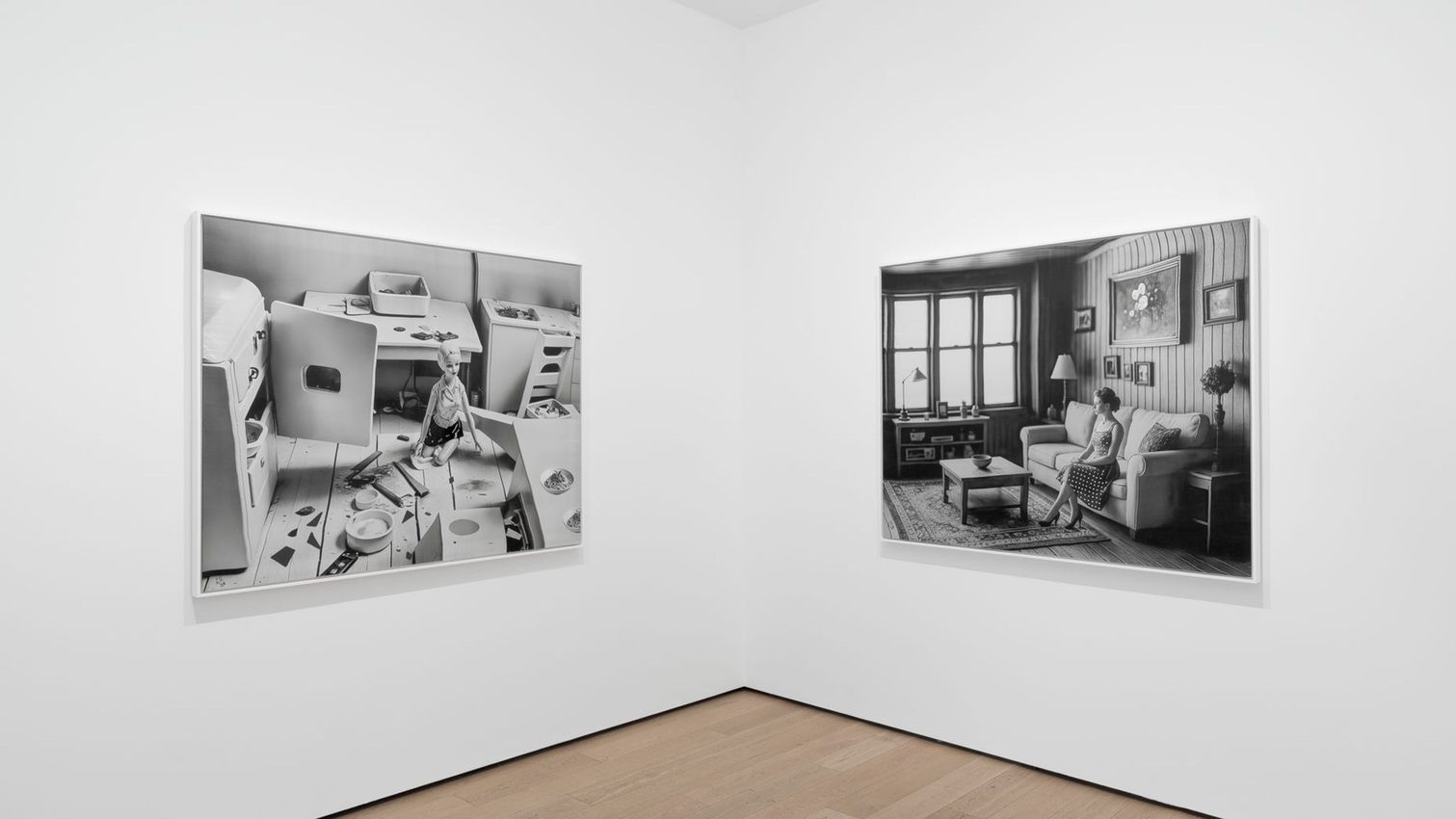
An equivalent scenario plays out in Autofiction: Black & White/Living Room (Woman Sitting Alone) (2025) but with very different results. Made in collaboration with a text-to-language image generator, Simmons’s Autofiction paintings are uncanny renditions of her past personas. For the latest chapter in this alternative history, she revisits her stand-ins from the early dollhouse photos, mimicking their black and white palette and 1950s fashions. But the new compositions are littered with AI glitches — a very contemporary form of alienation — further destabilizing these figments of traditional domesticity. Accompanying the paintings is a new Autofiction video, which the artist narrates through her computer-generated avatars.
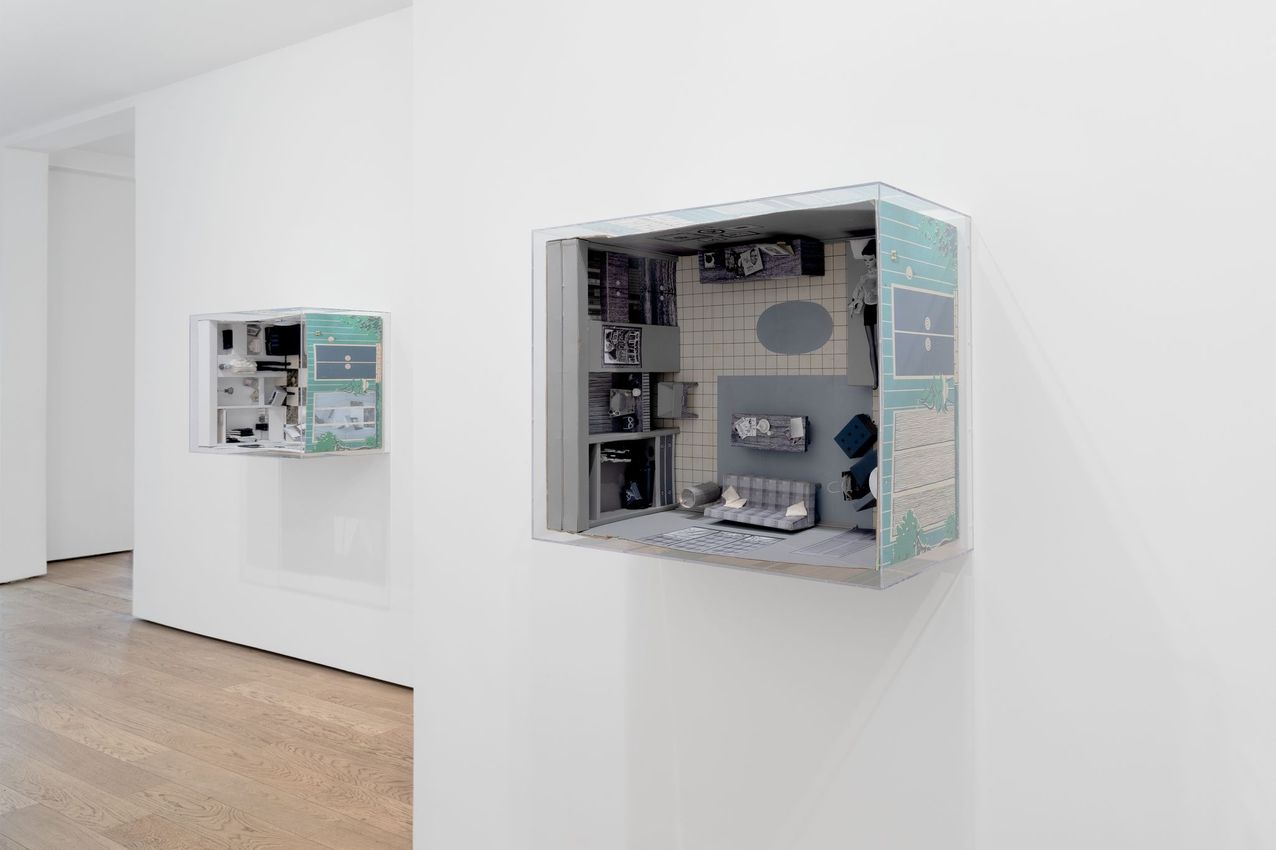
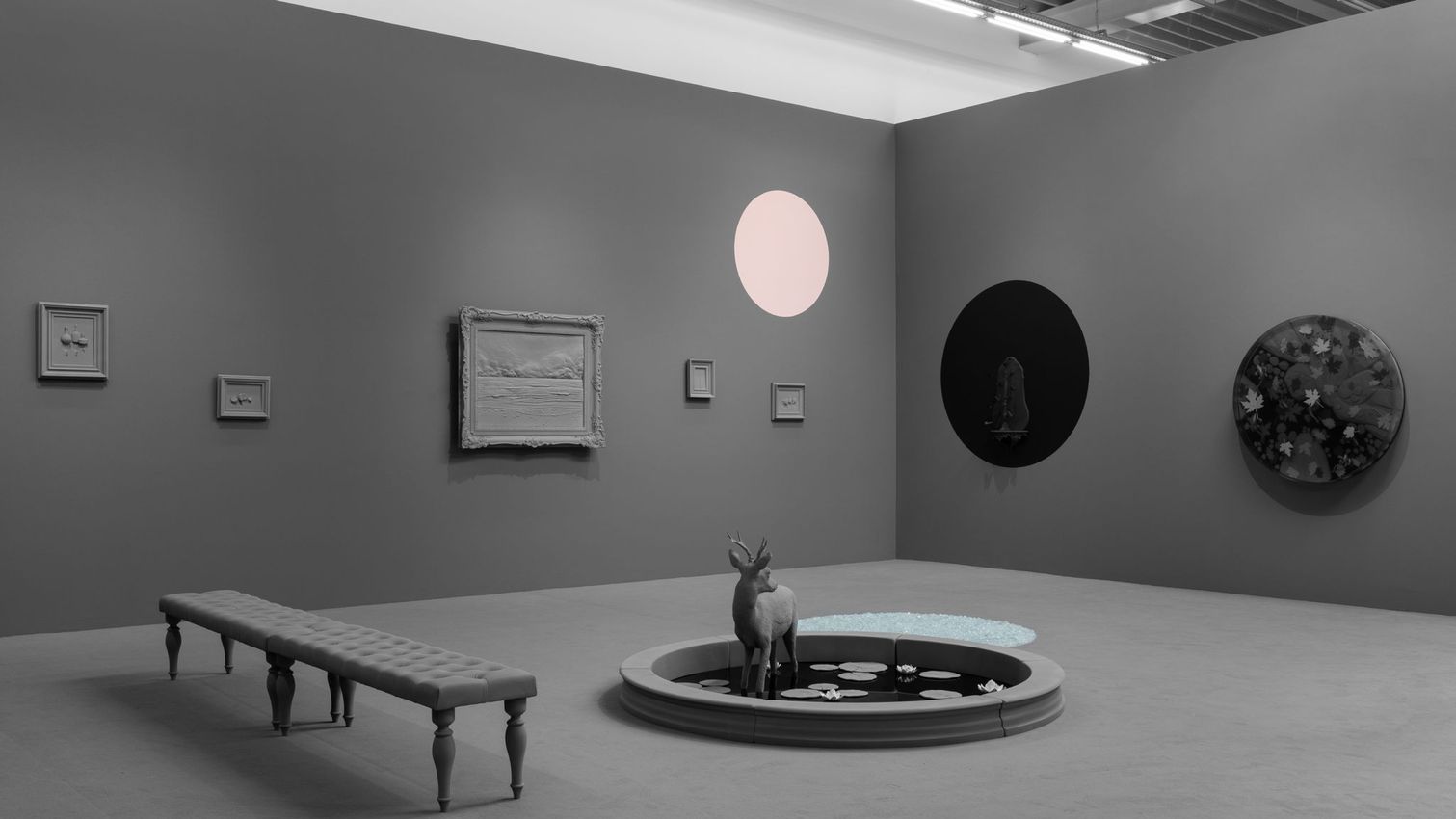
The exhibition also includes two new wall reliefs from Simmons’s Deep Photos series, which she began in 2020. These two sculptures offer a very different angle on the dollhouse interior: an overhead view, with the floors tilted up ninety degrees. Instead of the suburban family home, each diorama depicts what appears to be a studio apartment. Deep Photos: Black & White/Barbie Dream House (Ken) (2025) and Deep Photos: Black & White/Barbie Dream House (Barbie) (2023), as their titles suggest, are made with the original Barbie Dream House, which was released in 1962 and made entirely of cardboard and paper. After tracking down the secondhand dollhouses, Simmons used white, gray, and black paints to completely cover the original yellow, blue, Barbie-pink interiors, adding grisaille furnishings and dolls to complete the achromatic scene. Black and white images are familiar signifiers of the past, but grayscale sculptures take us by surprise, which is entirely in keeping with Simmons’s approach to her source material.
The final work in the exhibition is a sculpture of a subject that has reappeared in her work repeatedly since the late 1980s: cake. Tilted up ninety degrees like the Deep Photos sculptures, this heavily frosted cake protrudes from the wall on a gray stand. In the 1970s and 1980s, Simmons lived in SoHo and often ate at FOOD, the artist-run restaurant co-founded by Gordon Matta-Clark. She did not attend the November 1974 performance at which he unveiled a cake shaped like a Monopoly house and sliced it for the audience. Simmons’s cake takes a more familiar form (circular, with black and white frosting), but it too has been cut, and the V-shaped intersect gives us a view of the inside. This gravity-defying confection is one more example of what has been called Simmons’s fiction of interiority — a feminism that recognizes gender as a phenomenon lived through a body, with all its injuries and pleasures.
— Craig Garrett, writer
Courtesy Almine Rech.


Laurie Simmons is an American artist, photographer, and filmmaker known for elaborately staged images that use dolls, props, interiors, and other stand-ins to probe identity, gender, domesticity, and the constructed nature of images in contemporary art and visual culture. Associated with the Pictures Generation, her works are psychologically charged, political and subversive, and her work has been shown in important institutions globally.


Almine Rech opened its doors on April 1st, 1997 in the 13th arrondissement in Paris. The gallery was founded on an axis of California Minimal, Perceptual art and Conceptual art, representing artists such as James Turrell, John McCracken and Joseph Kosuth.

A respected voice in contemporary art discourse.
Focusing on ambitious storytelling and insightful art-world commentary. Ocula Magazine publishes in-depth interviews, critical essays and timely analysis on the artists, exhibitions and ideas driving the global art world.
Learn more about Ocula Magazine
Showcasing the best of the art world.
Ocula partners with galleries from around the world to highlight their artists, artworks and exhibitions. Gallery membership is by application and invitation, with each member vetted by an independent panel.
Learn more about Ocula Membership

Specialises in the sale of major artworks.
Led by a team with deep ties to the world’s leading auction houses, galleries and collectors. Ocula’s advisory team offers bespoke services to high-net-worth clients from around the world who are looking to acquire the best of contemporary and modern art.
Learn more about our team and services