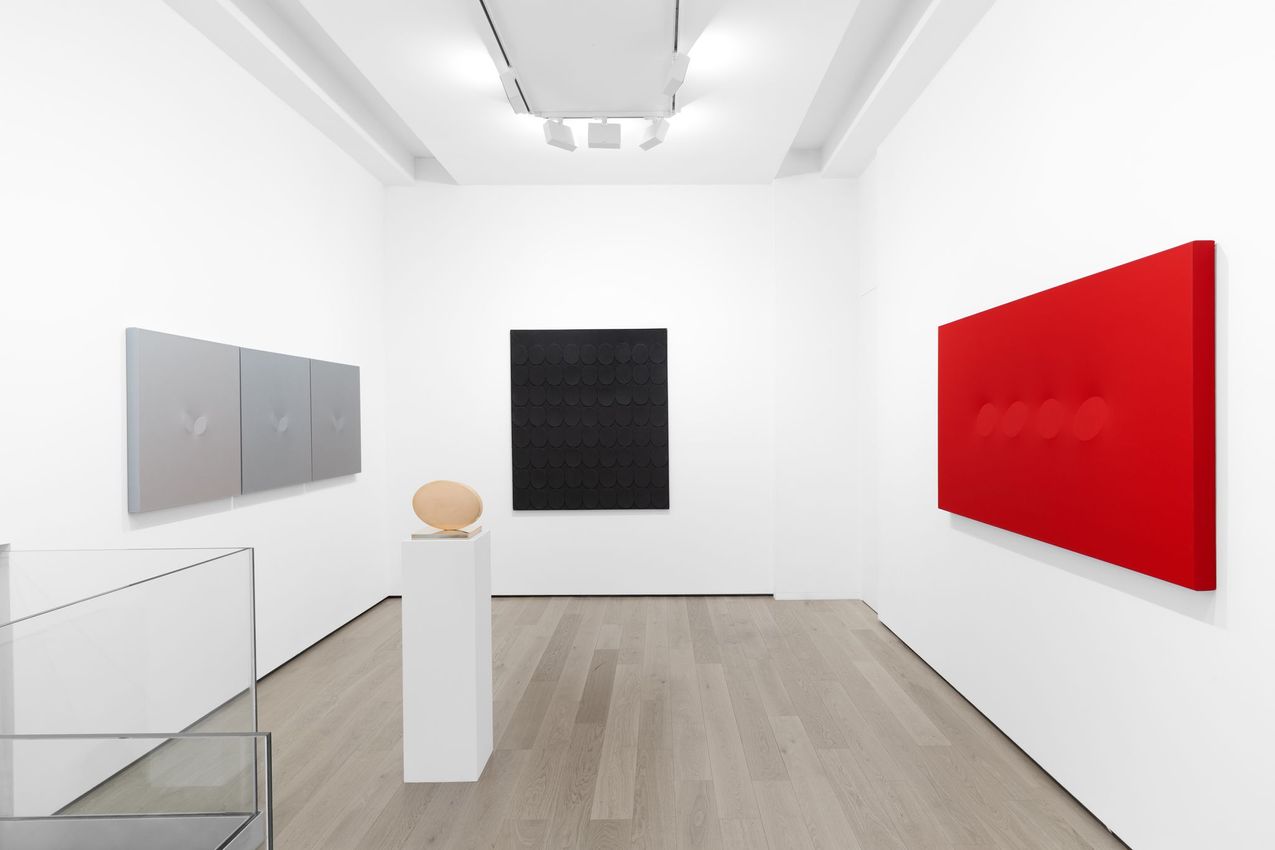
The career of Turi Simeti (1929–2021) spanned the history of Italian art in the second half of the twentieth century. From 1961 onwards, his art was based on abstraction, monochromes, and oval motif. Without deviating from these concepts, Simeti established a radical language that he continued to develop over six decades.
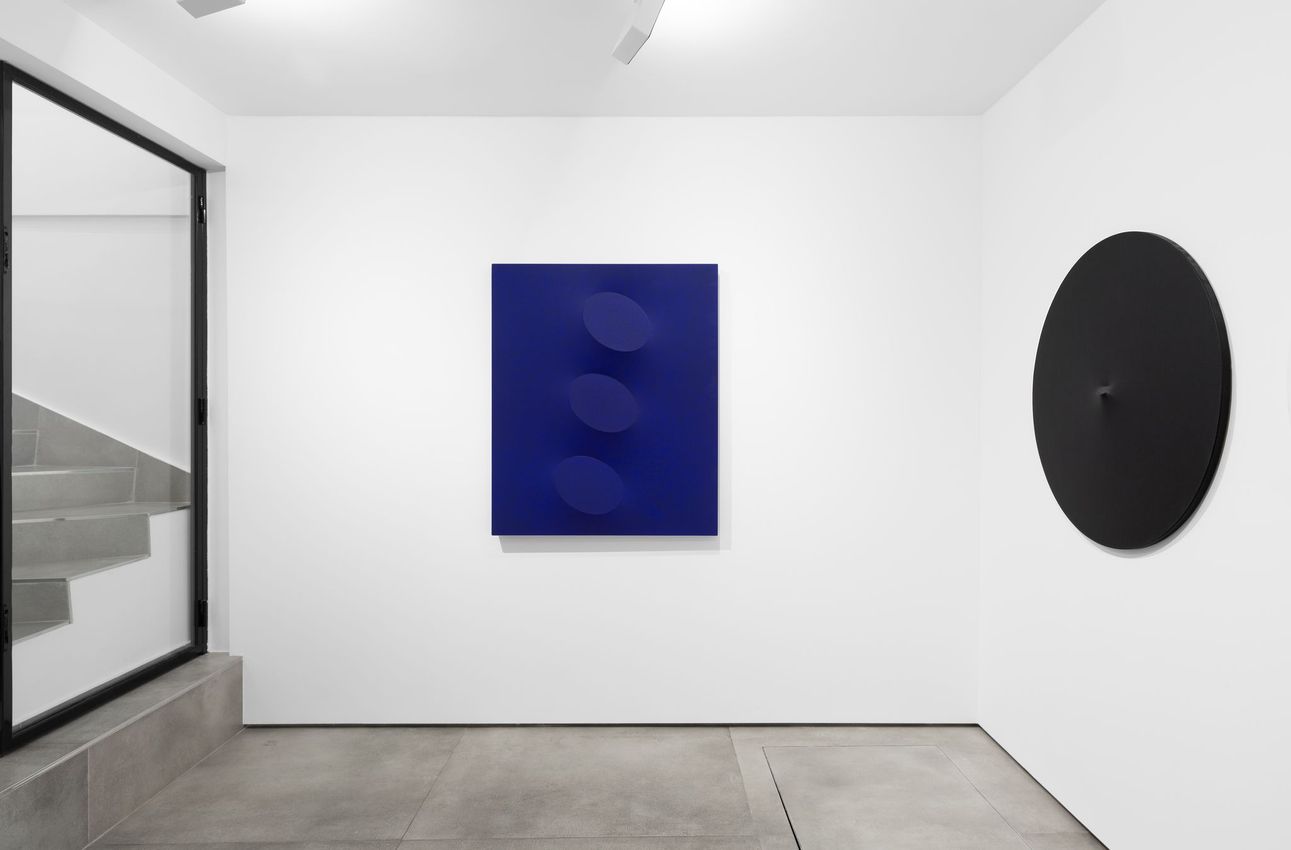
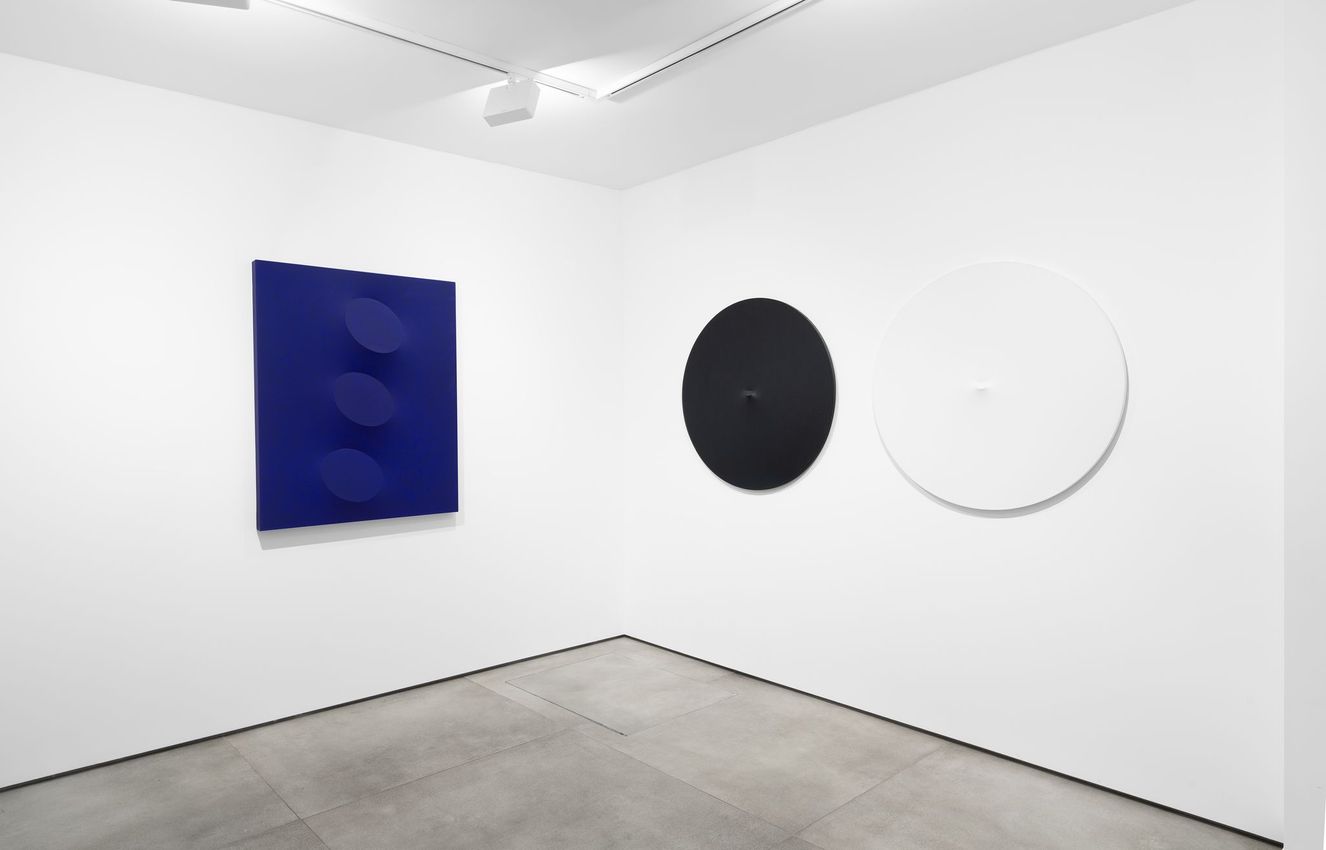
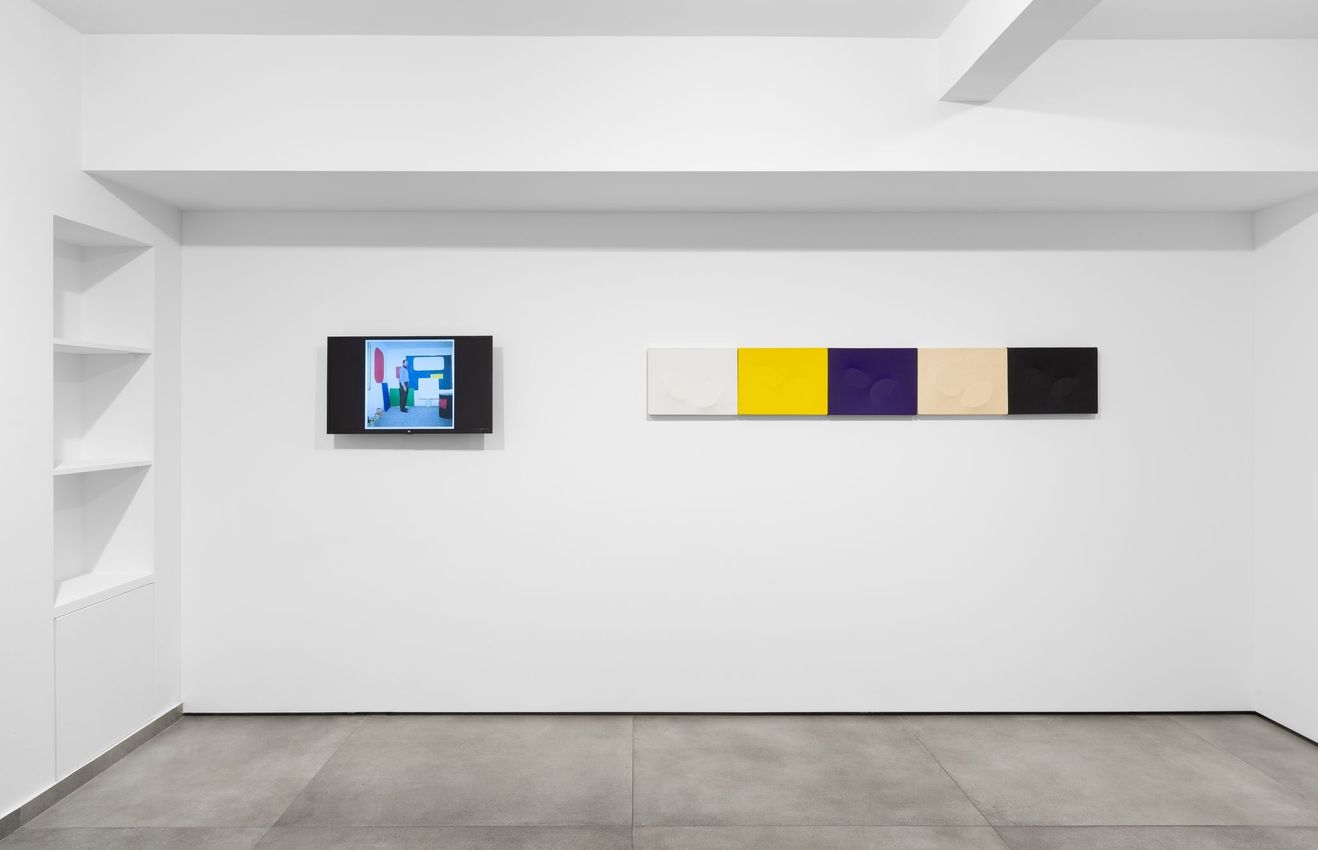
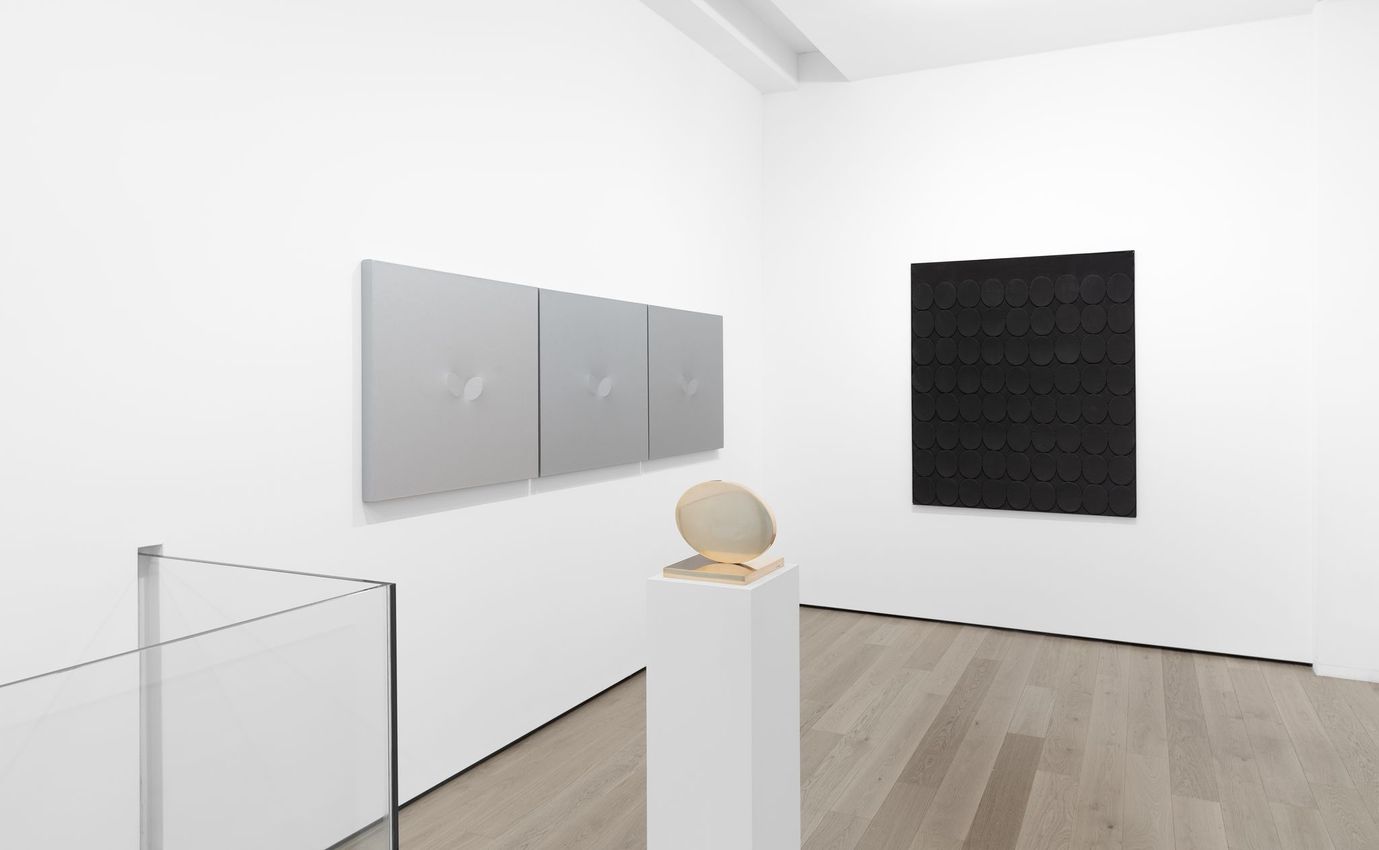
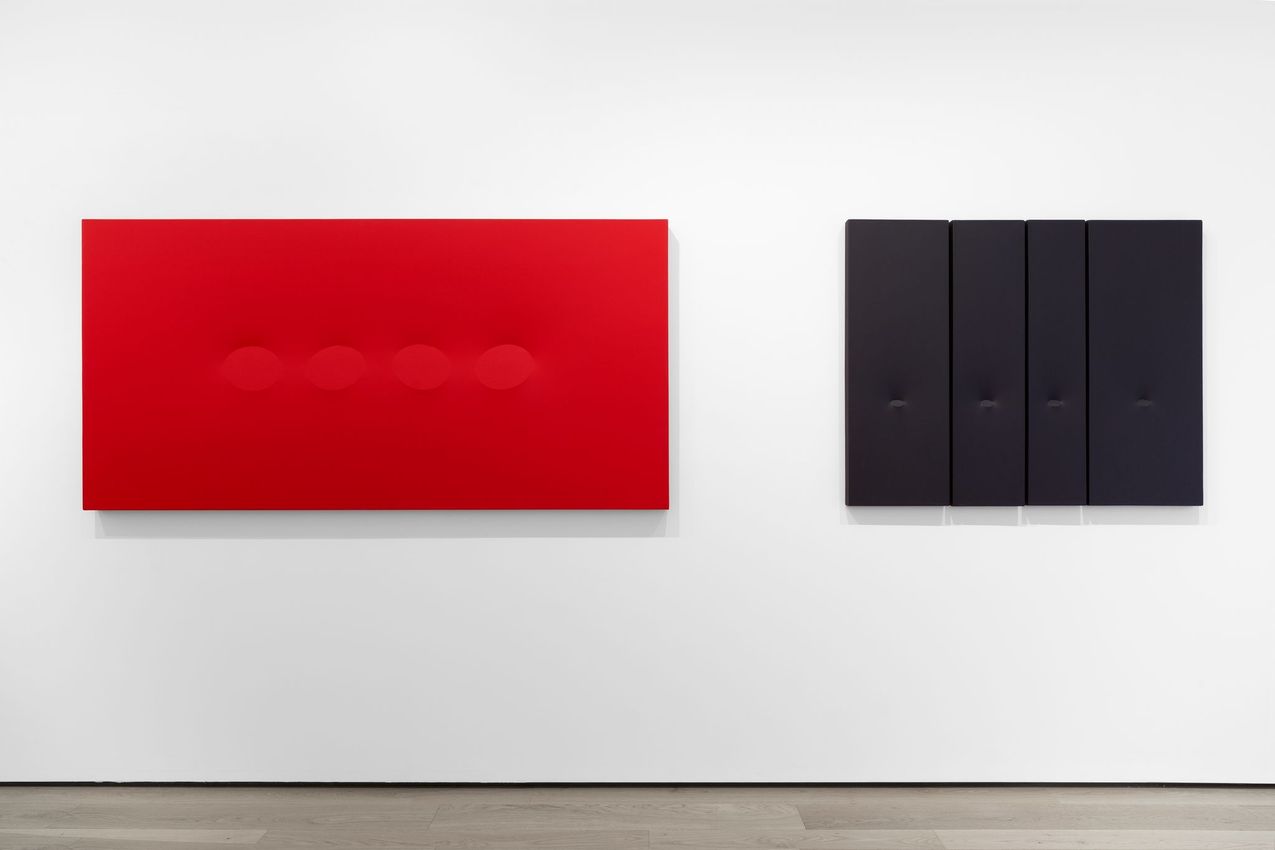
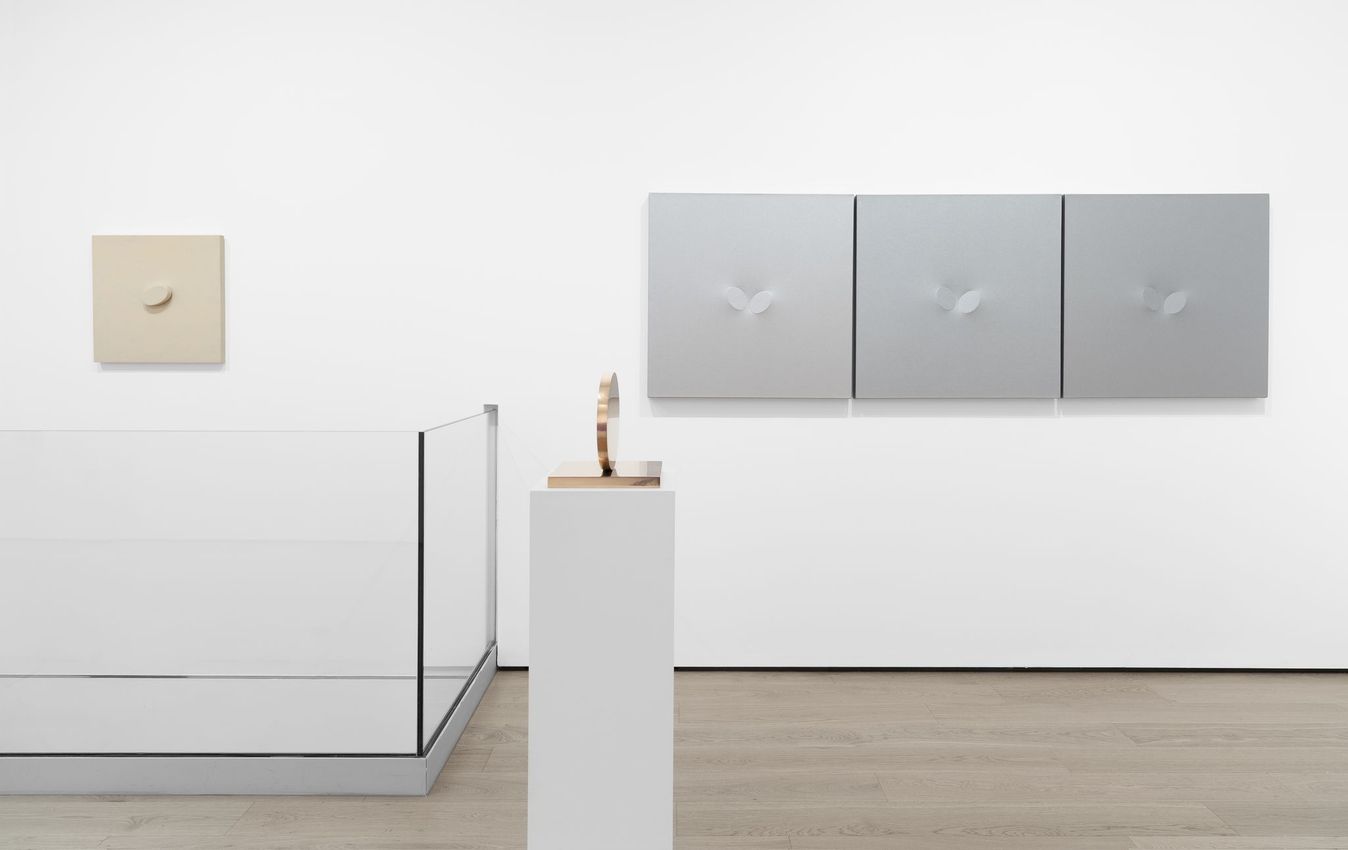
Turi Simeti: Monochrome Adventure is the first solo show of the artist’s work in France since his death in the spring of 2021. An homage to this Sicilian artist, who settled in Milan beginning in the mid-60s, it offers a journey through sixty years of his art, highlighting the constants and variations of his work in its formats, motifs, and colours, up to one of his very last paintings, 3 ovali blu, 2020. Marked by the masterful presence of Lucio Fontana, the monochrome adventure in Milan in the 60s and 70s had Turi Simeti as one of its central figures, along with Agostino Bonalumi, Enrico Castellani, Dadamaino, and Paolo Scheggi. Their aim was to reduce painting to its most elemental parts: colour and form.
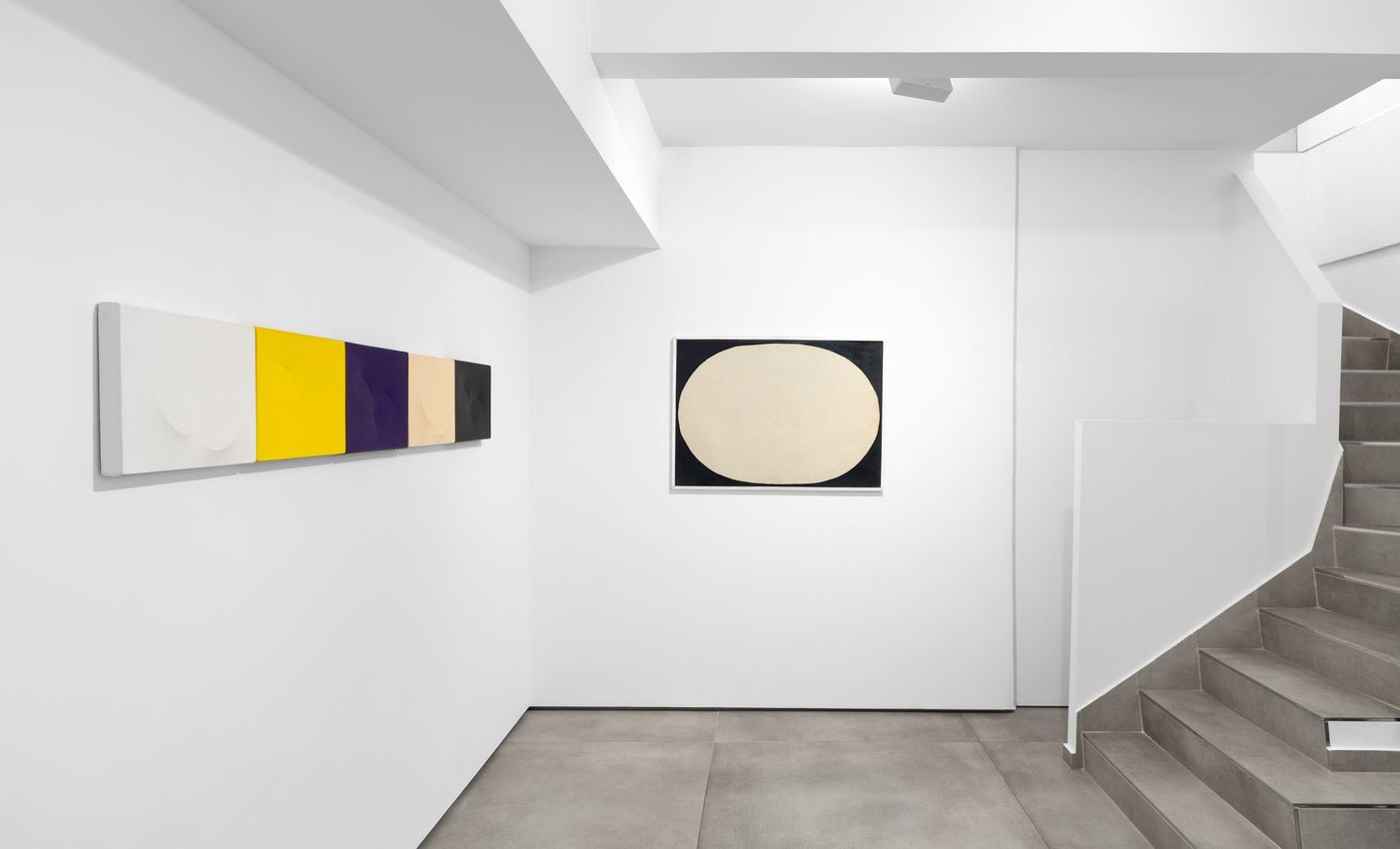
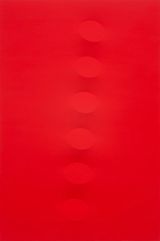
For Simeti, this form would be the oval, the ultimate essential shape, which he first stuck to the canvas (72 ovali neri, 1962) and then placed underneath it (Polittico nero, 1979) to create a three-dimensional painting, playing with forms in positive and negative space, and even writing the word ‘oval’ on one of his early drawings (Ovale, 1965).
This use of shape in painting, which was a way of leaving behind the traditional flatness of the canvas, was a common concern in the early 60s, shared also in a figurative perspective by Pino Pascali and Cesare Tacchi in Rome, the city where Turi Simeti began his artistic career.
The artist would explain his choice to create shape in painting in this way: ‘The three-dimensional area of the painting created from the inside toward the outside and vice-versa offers shifts of light with infinite possibilities and variations. In this way, light completes the artwork and at the same time transforms it, giving it harmony and colour.’ The motif of the oval or ellipse thus creates tension between perceptual variations of the canvas. In this way, Simeti’s work paralleled the abstract themes of avant-garde groups of the period in various countries: in Italy with Nuova Tendenza (arte programmata), in Germany (ZERO) or in Holland (Nul). He showed his work with these groups on several occasions (‘ZERO avantgarde’ at Lucio Fontana’s studio in Milan and Galleria del Cavallino in Venice, 1965), which contributed to his reputation outside Italy. His international connections were solidified when he moved to New York in 1967 and stayed for some time, making contacts with the American art scene.
Close to Milanese artists such as Vincenzo Agnetti, Enrico Castellani, Gianni Colombo, and Grazia Varisco, Simeti maintained this minimalist commitment to a form that can be perceived under the surface of the canvas like a fundamental sign pursuing its artistic radicalness. He never departed from the aesthetic direction he chose. The only variations over the years would be the size of the ovals, their number, and their rhythm, as Simeti continued his ongoing exploration of the perpetually changing effects of light on the surface of the canvas (Polittico colorato, 2006; 6 ovali argento, 2018).
In 1979, years after the 1968 earthquake that destroyed the small town of Gibellina in Sicily, not far from Alcamo, Turi Simeti’s hometown, the artist, along with many other Italian figures (including Carla Accardi, Pietro Consagra, Fausto Melotti, Alessandro Mendini, and Nanda Vigo) was commissioned to create a work to be placed in the new Gibellina, built just a few kilometers from the former town, which is today covered by Il Grande Cretto (1984–2015) by Alberto Burri. Simeti, who had already experimented with sculptural space by adding dimensionality to the canvas (and sometimes displaying his work on the ground), created Scultura per Gibellina in white marble. This discreet, human-sized work is located off of a public square and symbolizes the idea of the rebirth of the town with the oval shape that can be perceived in its center.
This exhibition of Turi Simeti’s work allows us to reconsider its place in the monochrome adventure that took place in the second half of the twentieth century in Italy and around the world, inviting us to a spatial and meditative experience of painting.
Text by Valérie Da Costa, art historian, art critic and curator. Courtesy Perrotin.
Born in 1929 in Sicily, Turi Simeti settled in Rome in 1958, where he regularly visited Alberto Burri’s workshop. He started painting and made his debut amongst the artists of the Art Informel movement. In 1960 in Milan, Simeti met Fontana, Manzoni, Castellani and Bonalumi. In this climate of vibrant dialogue, the artist took part in the changes occurring at that time in European art history. Simeti’s first Milanese years led to a considerable number of experiences where the surface of his canvases became a space to be conquered with radical elements, drawn both from minimalism and the notion of the monochrome. Simeti creates in his works different types of tension on several formats, frequently relying on small-scale canvases to produce startling dimensions. Employing the motif of the oval, he has attempted to develop an irregular writing system that liberates the surface of the canvas from the principles of materiality, allowing nothing but silence.


Almine Rech opened its doors on April 1st, 1997 in the 13th arrondissement in Paris. The gallery was founded on an axis of California Minimal, Perceptual art and Conceptual art, representing artists such as James Turrell, John McCracken and Joseph Kosuth.

A respected voice in contemporary art discourse.
Focusing on ambitious storytelling and insightful art-world commentary. Ocula Magazine publishes in-depth interviews, critical essays and timely analysis on the artists, exhibitions and ideas driving the global art world.
Learn more about Ocula Magazine
Showcasing the best of the art world.
Ocula partners with galleries from around the world to highlight their artists, artworks and exhibitions. Gallery membership is by application and invitation, with each member vetted by an independent panel.
Learn more about Ocula Membership

Specialises in the sale of major artworks.
Led by a team with deep ties to the world’s leading auction houses, galleries and collectors. Ocula’s advisory team offers bespoke services to high-net-worth clients from around the world who are looking to acquire the best of contemporary and modern art.
Learn more about our team and services