


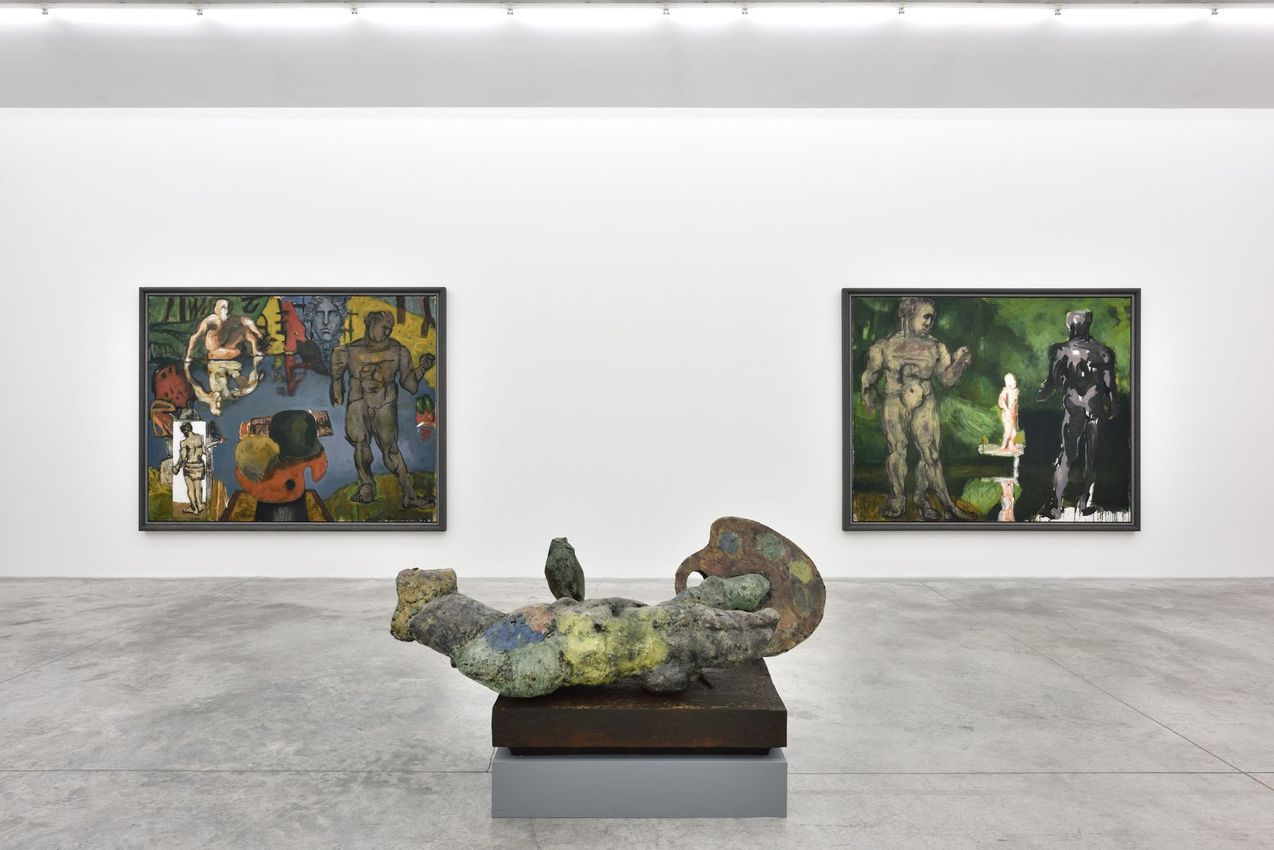
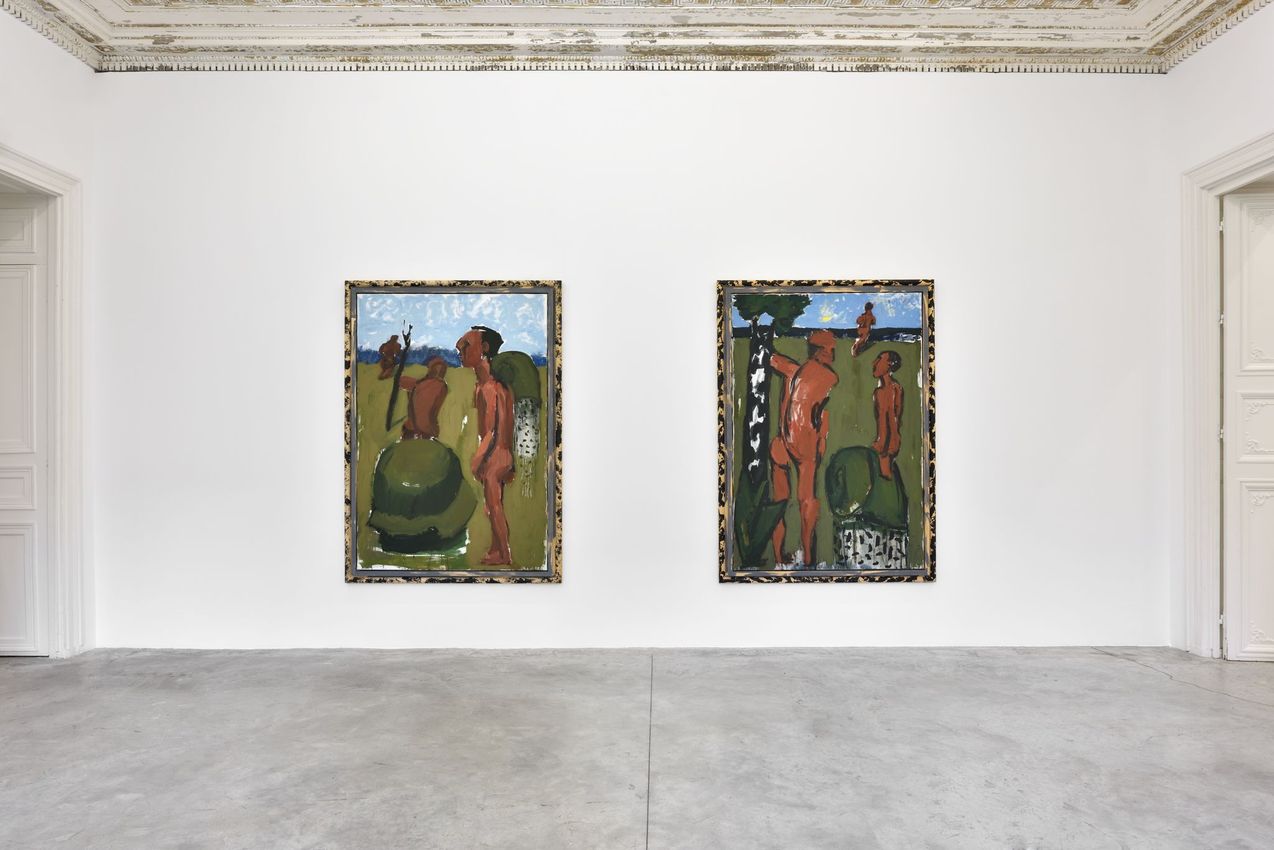
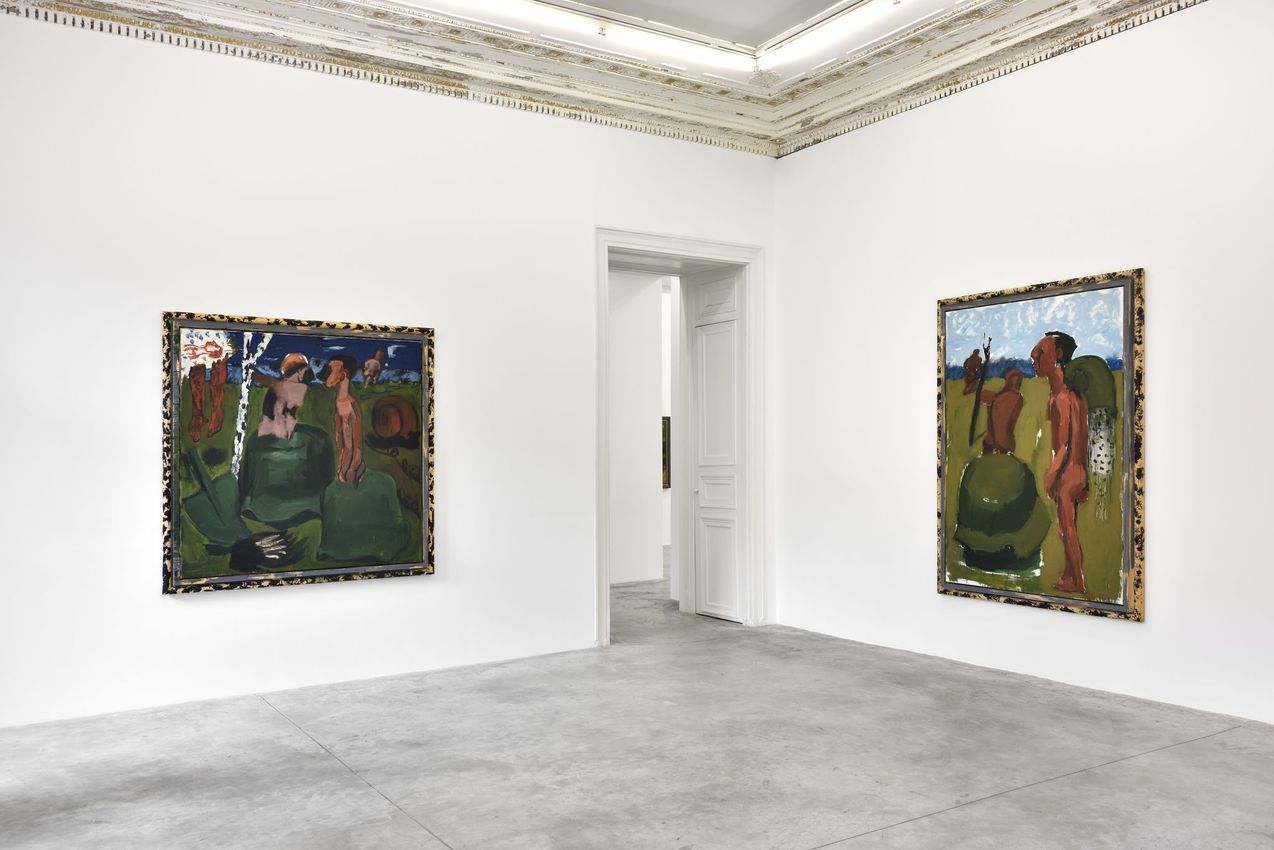
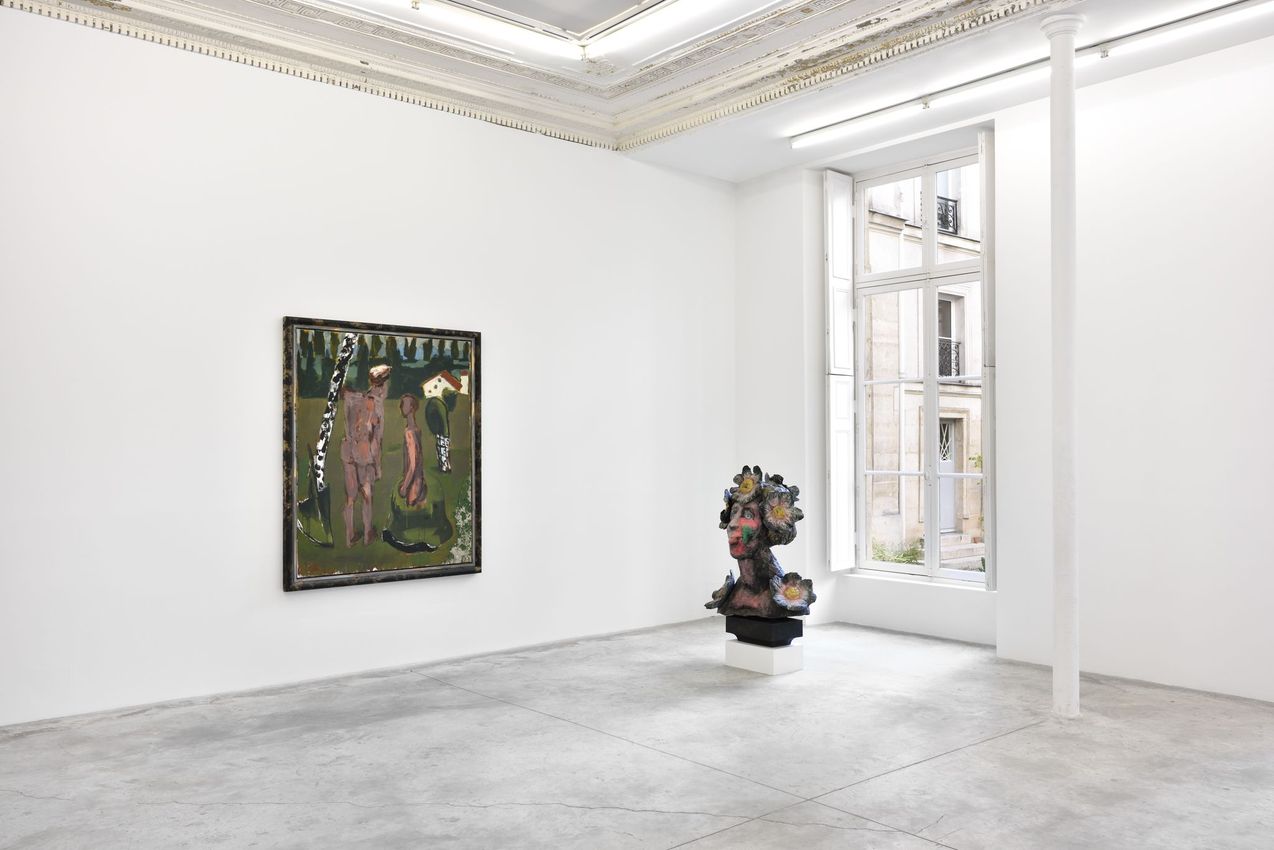
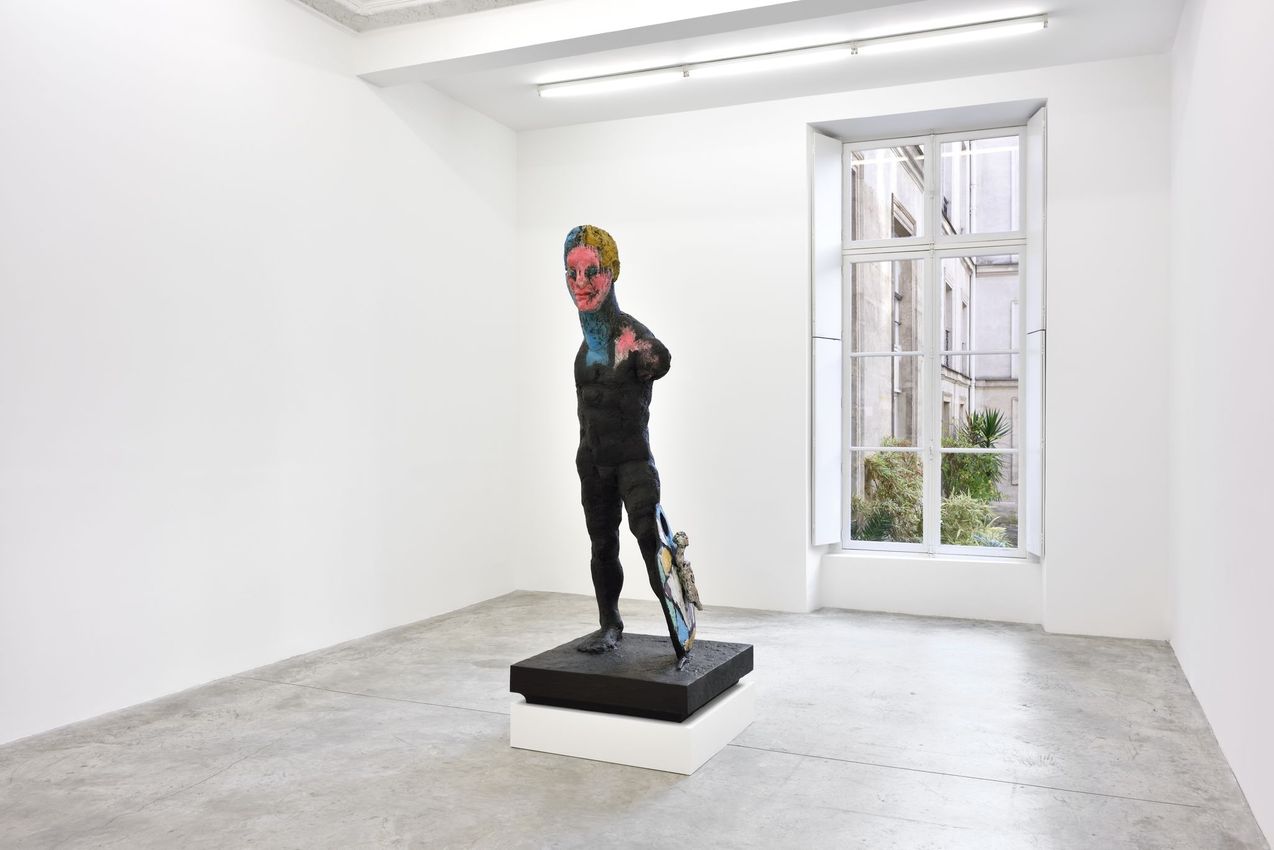
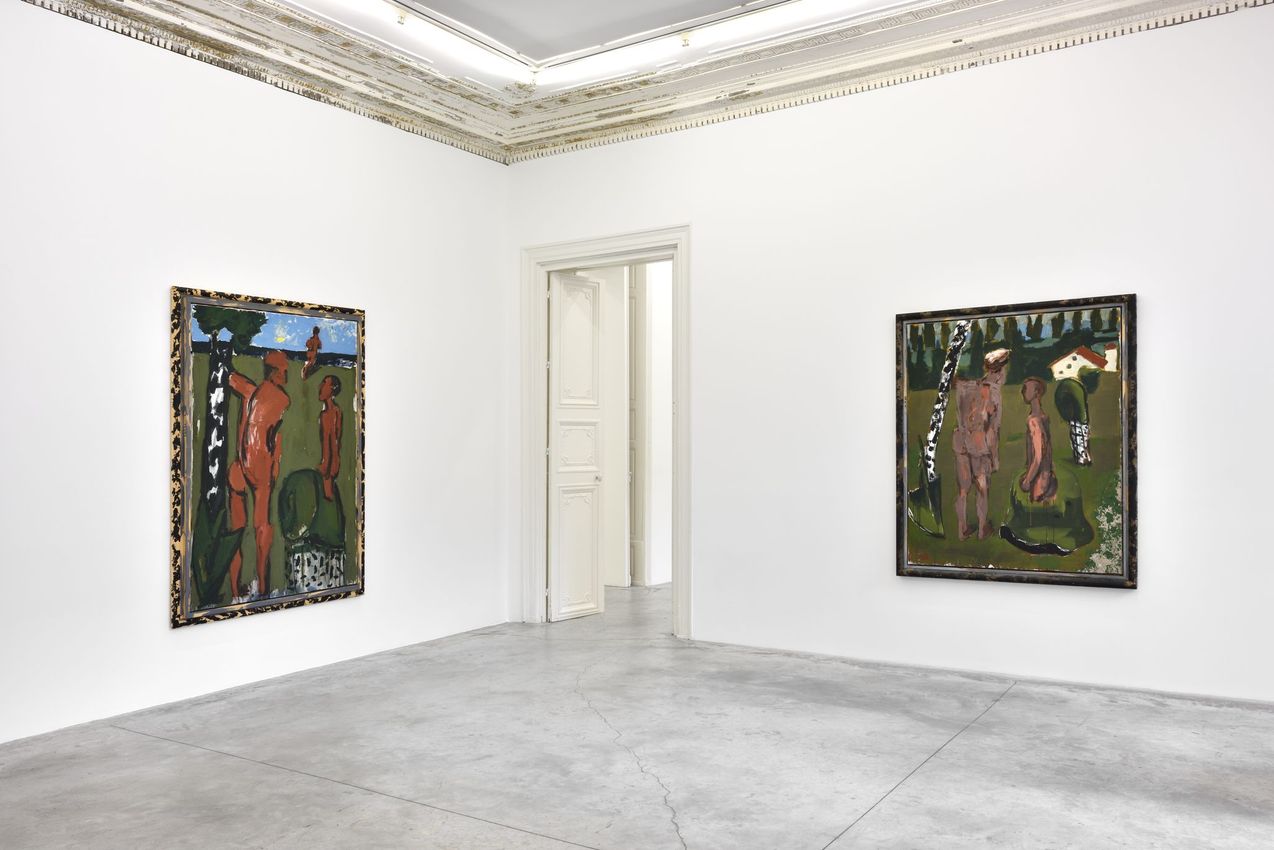
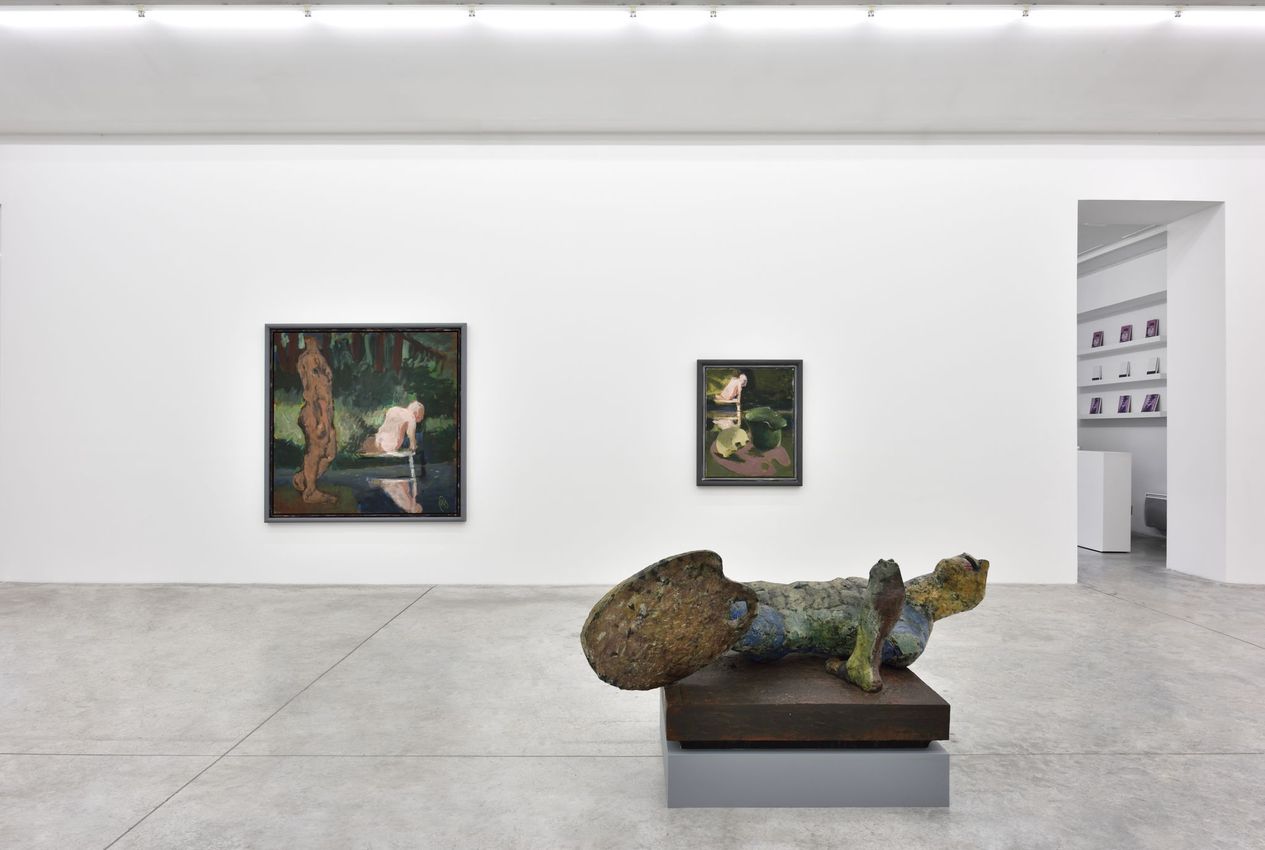
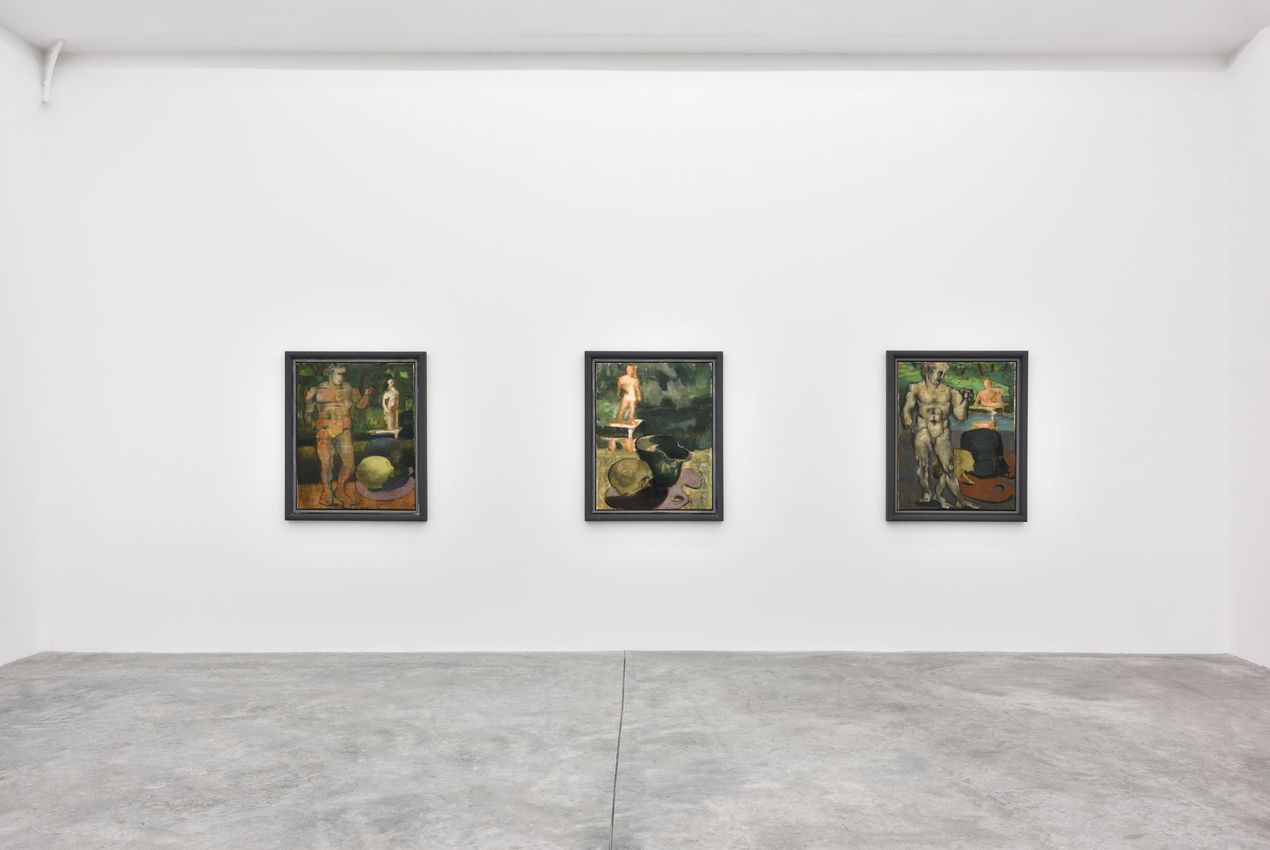
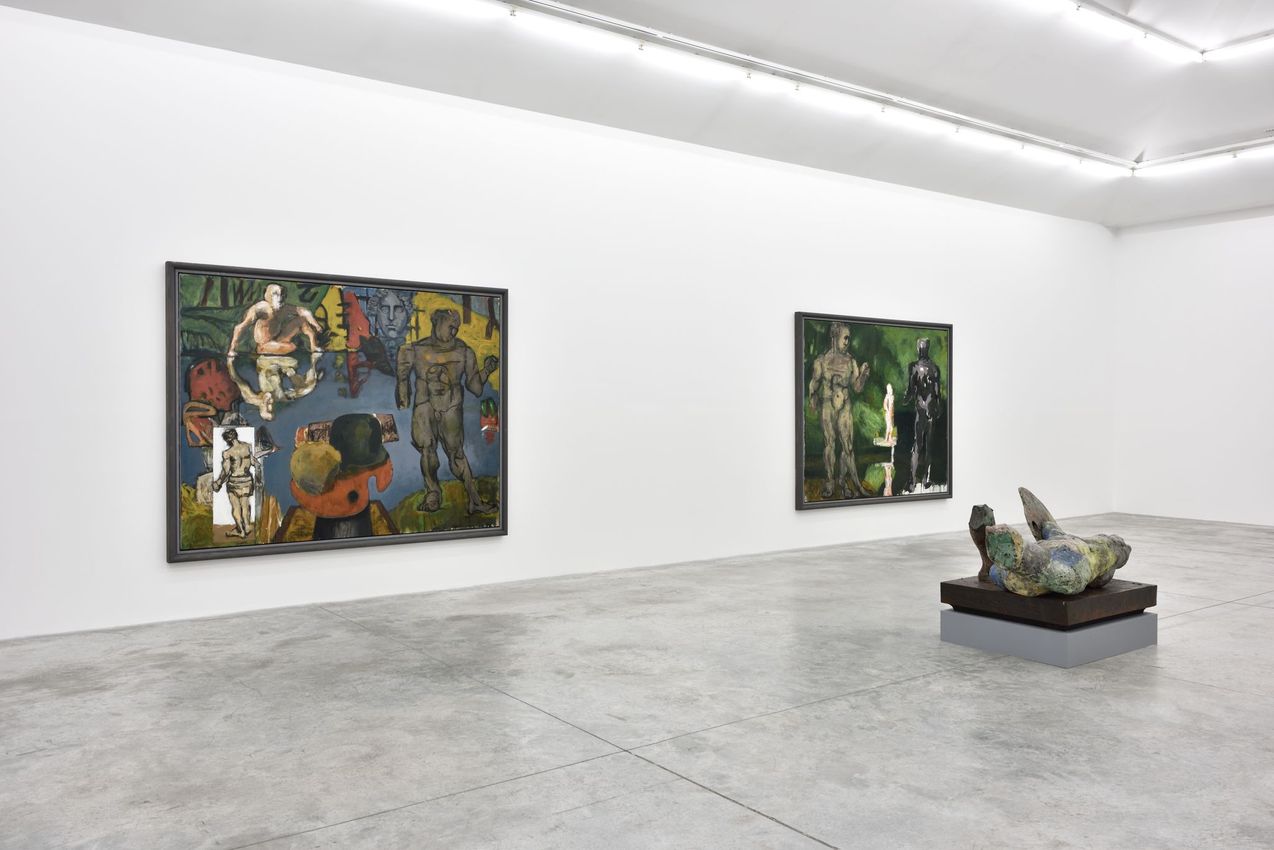
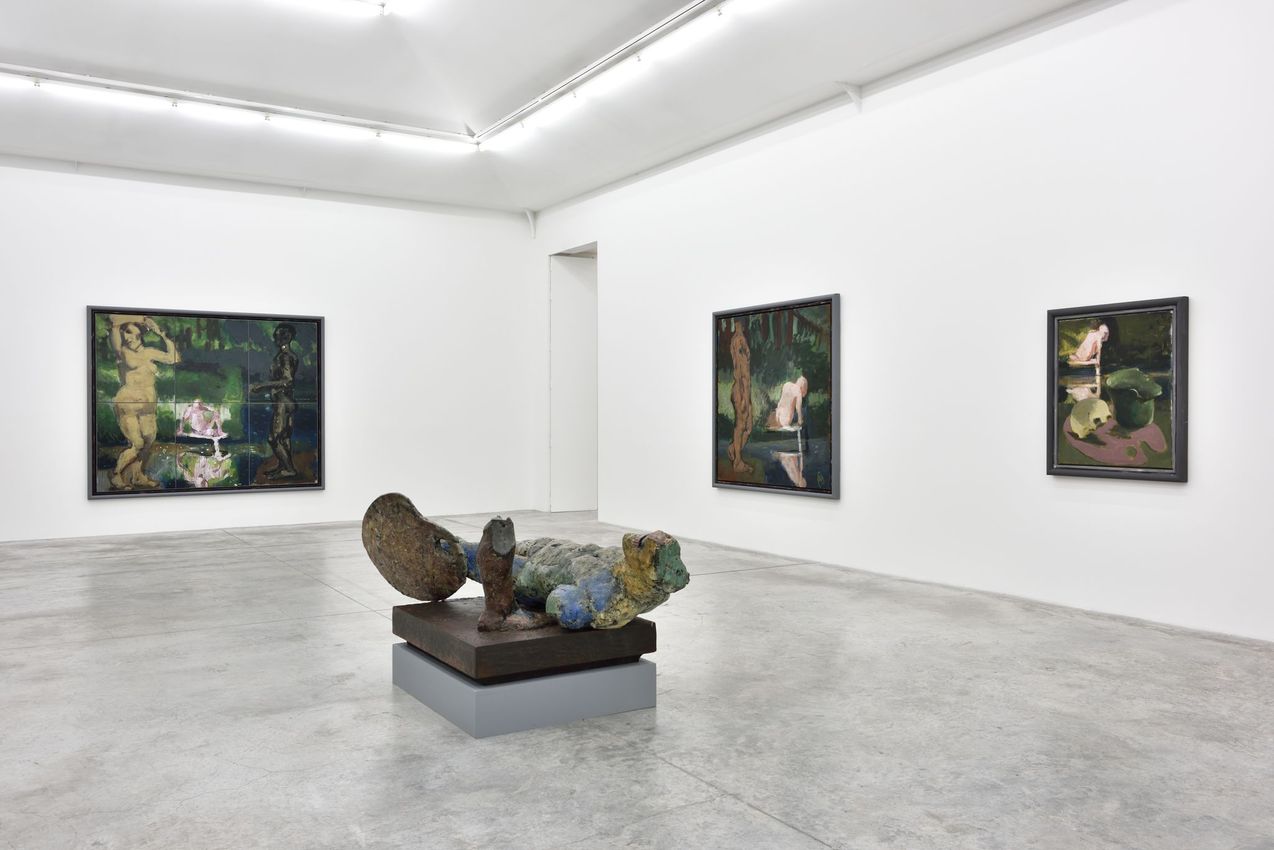
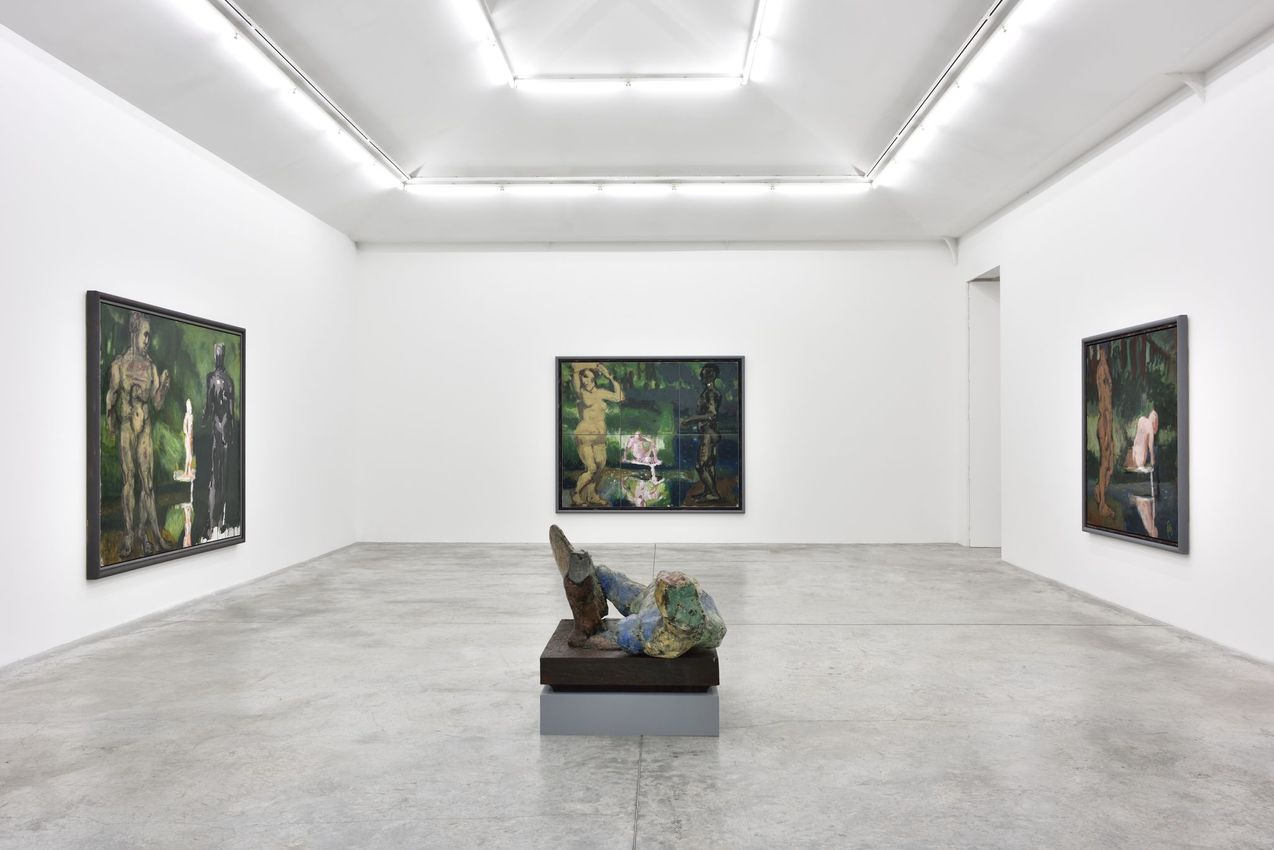
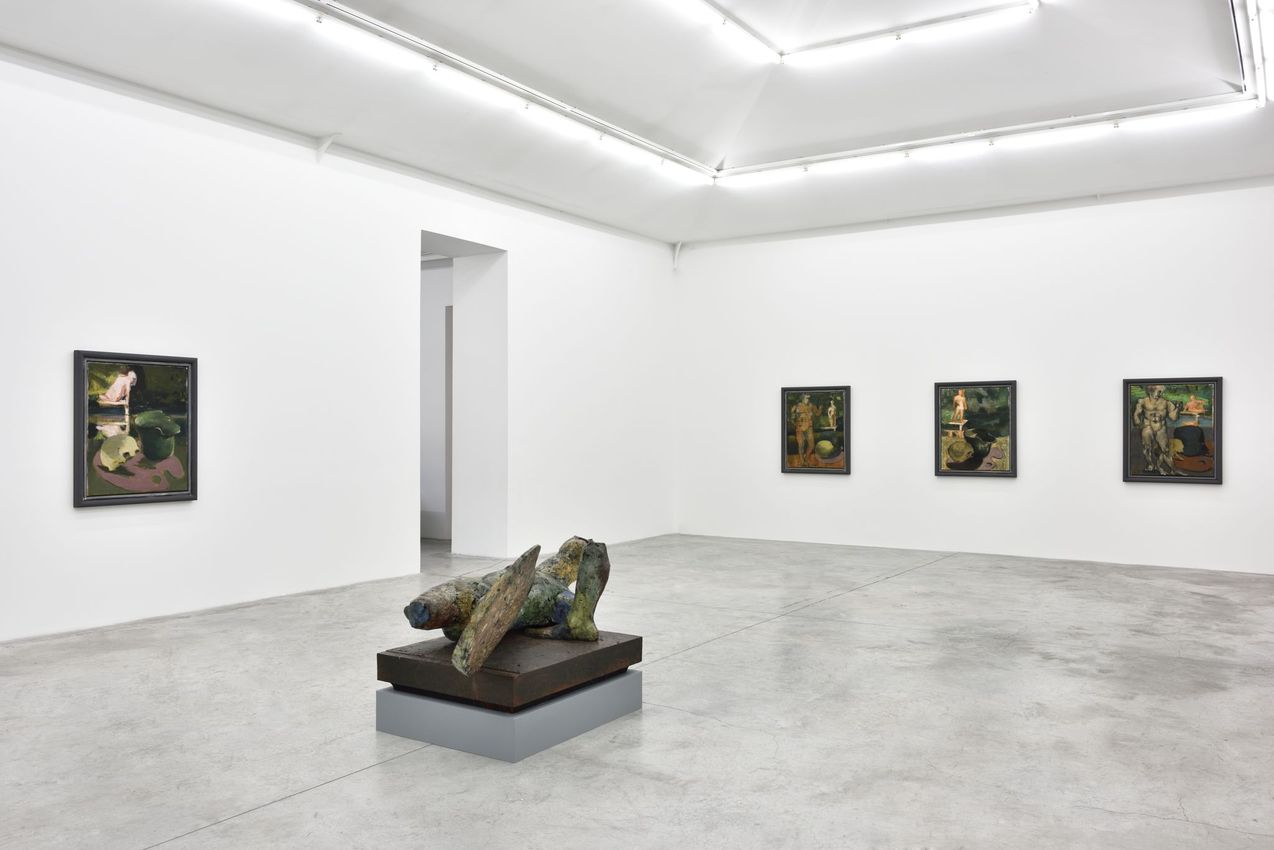
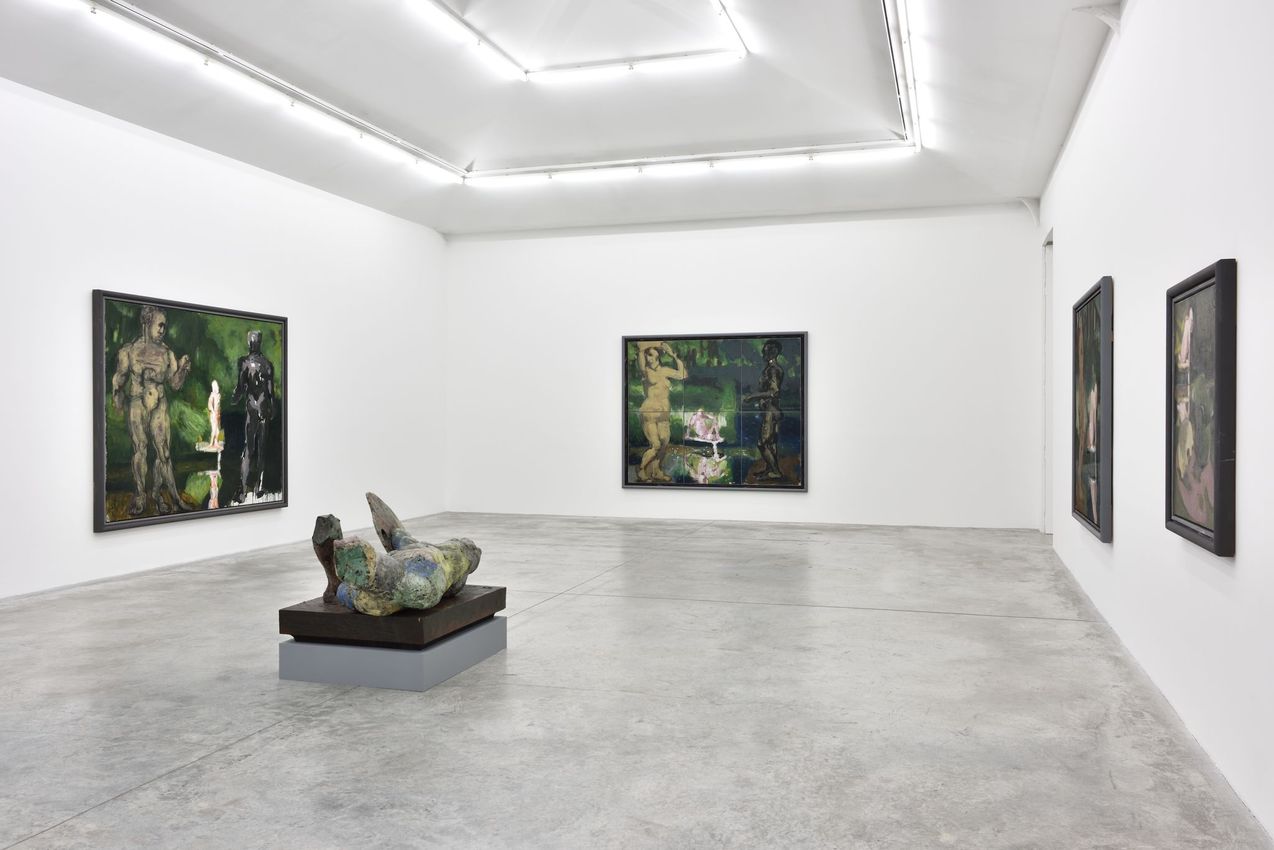
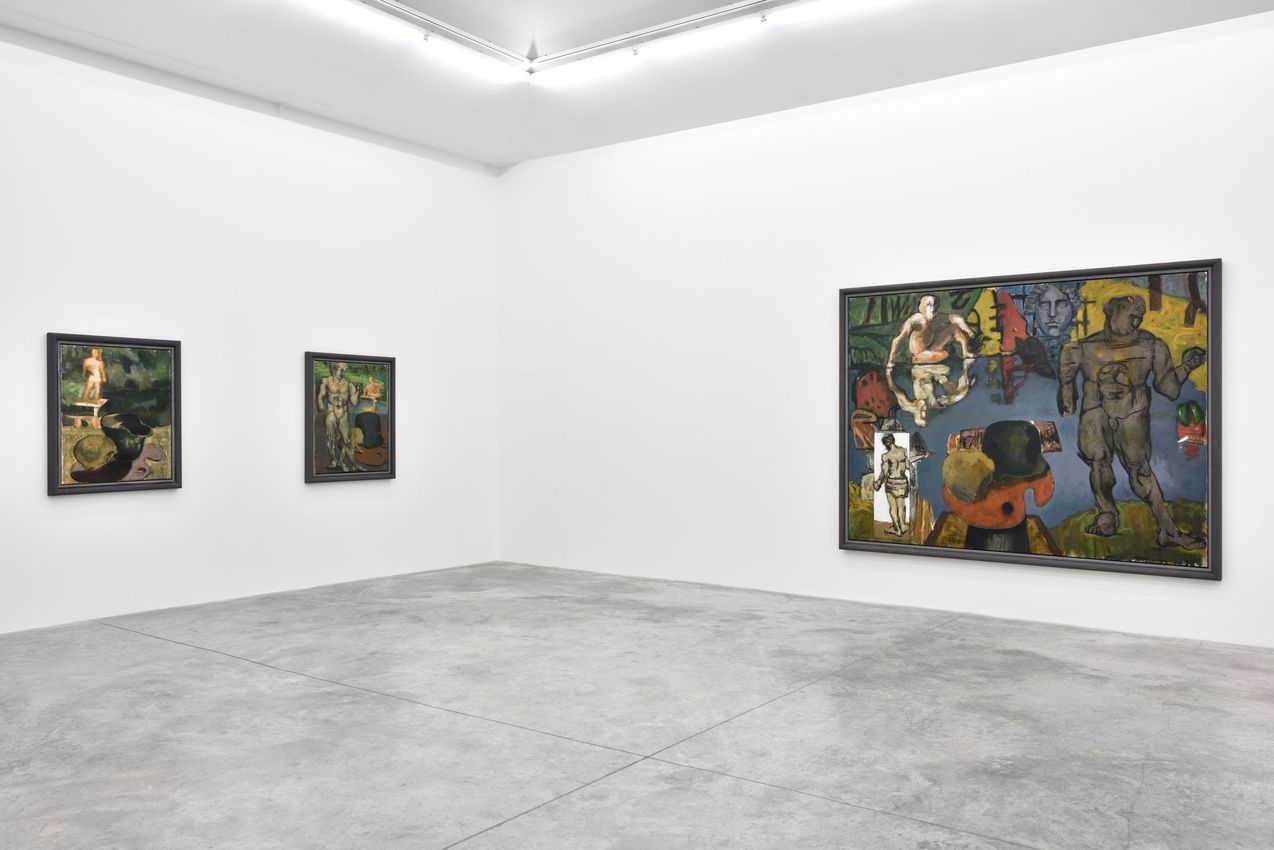
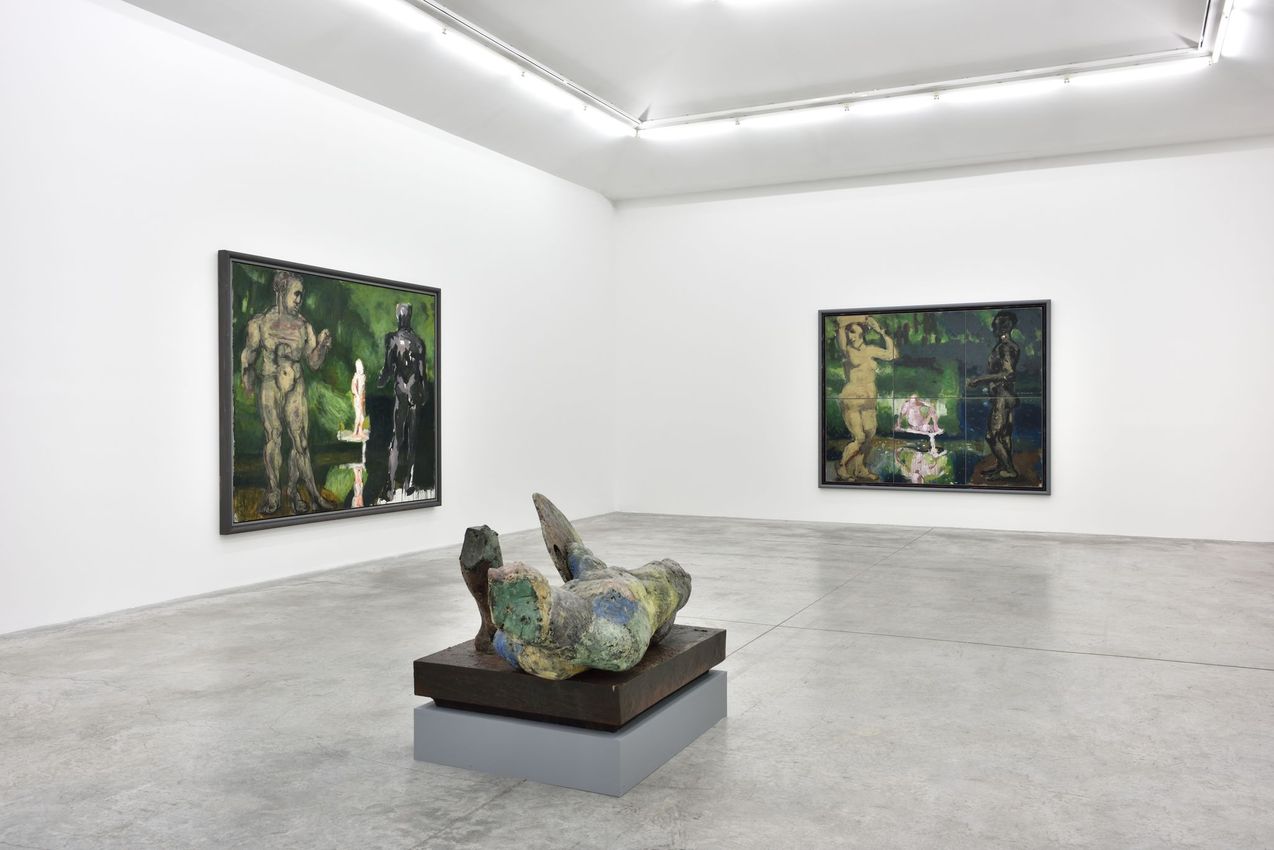
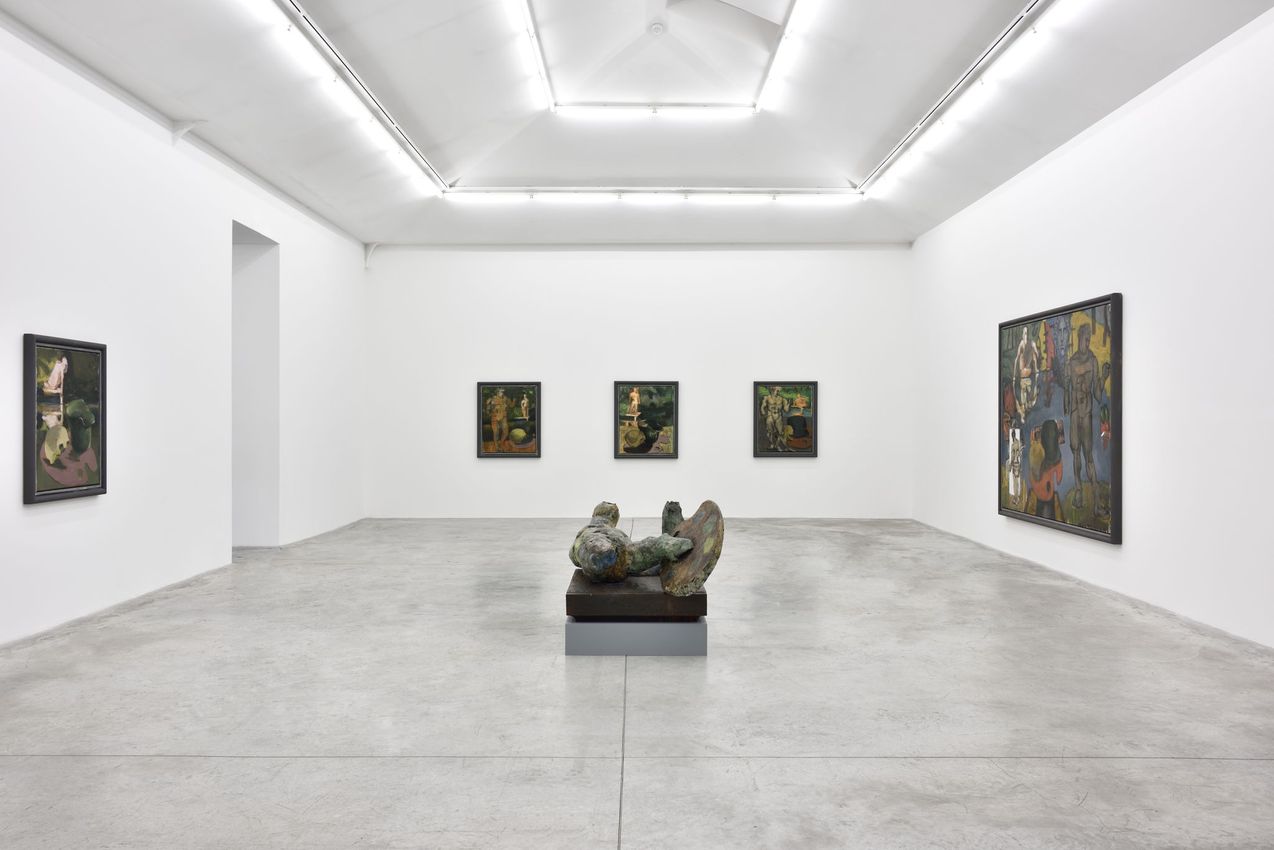
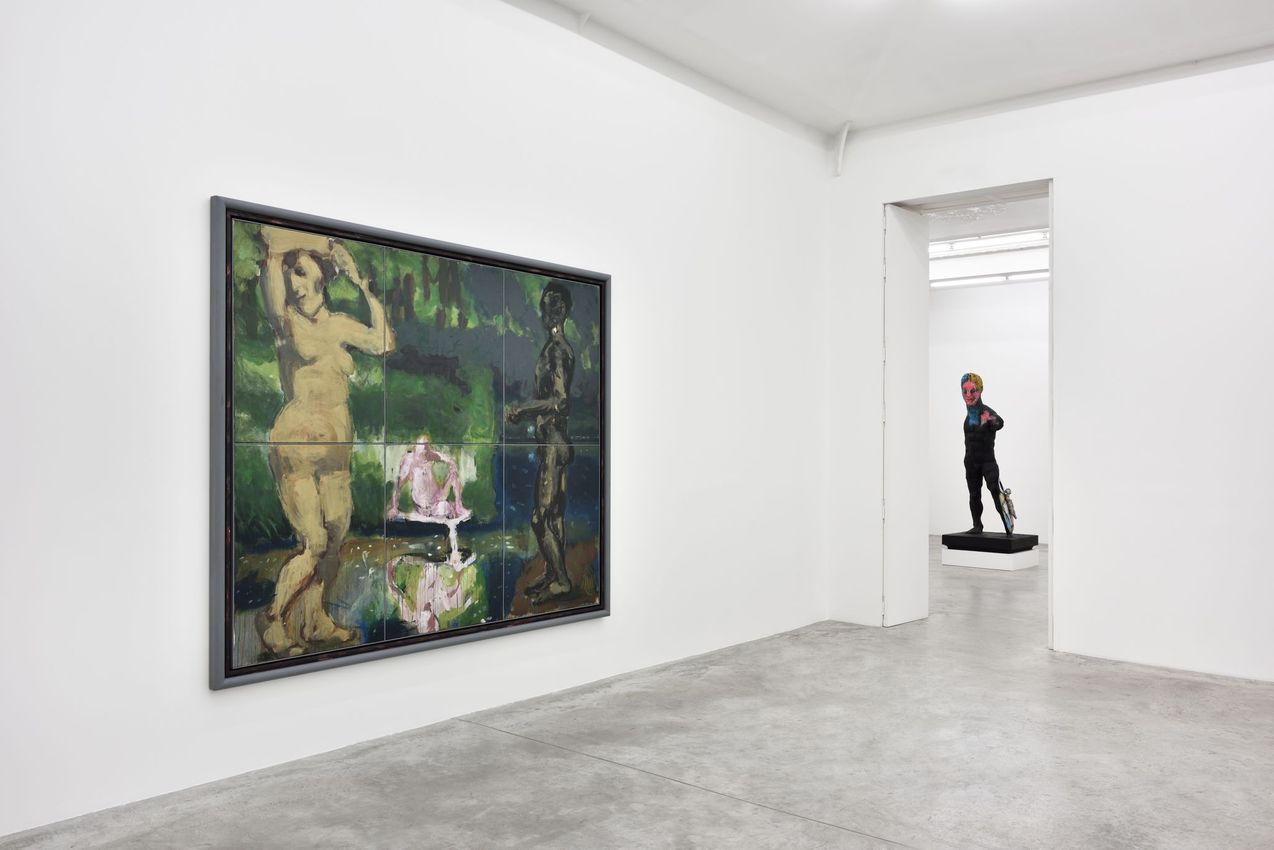
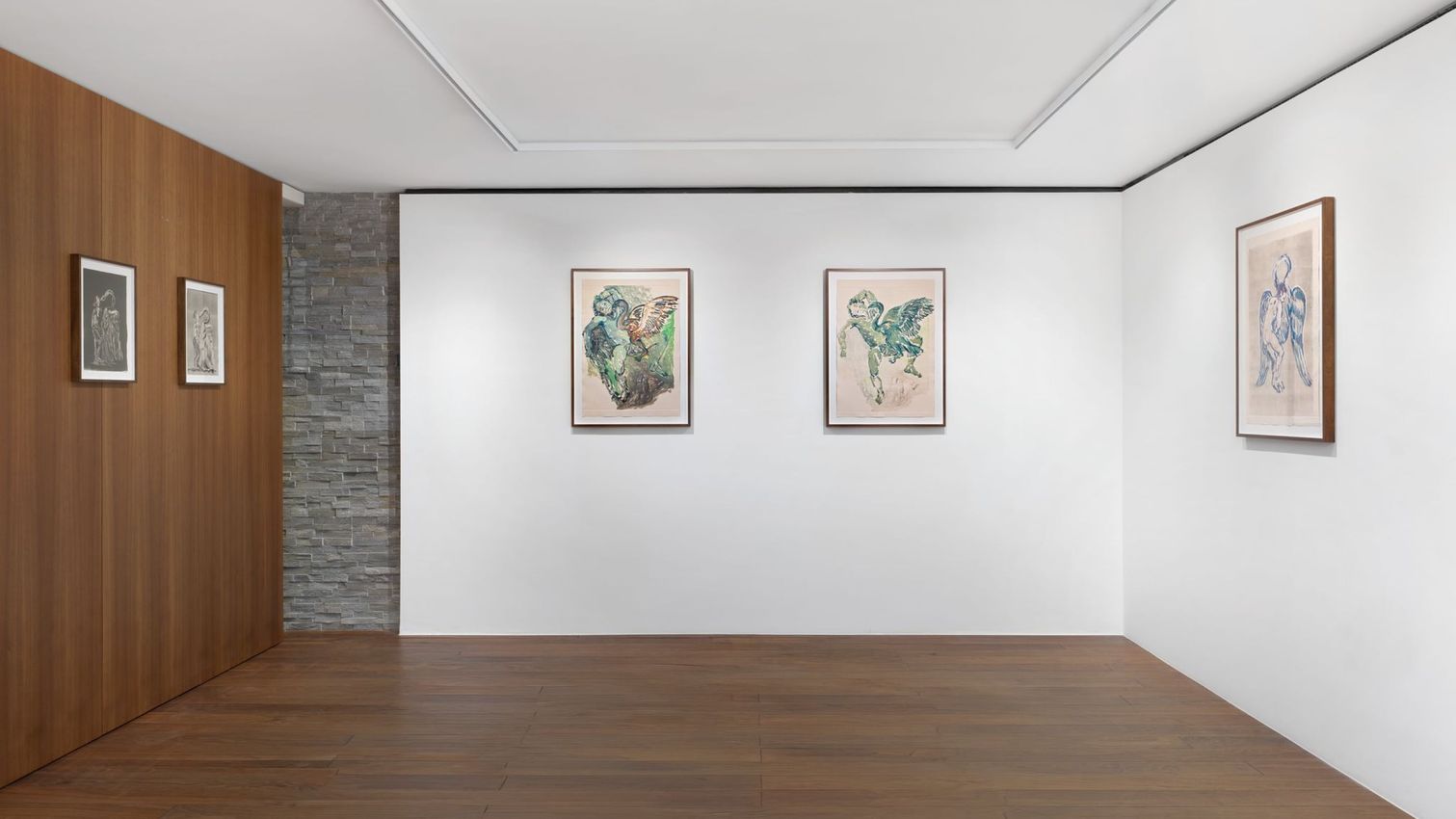
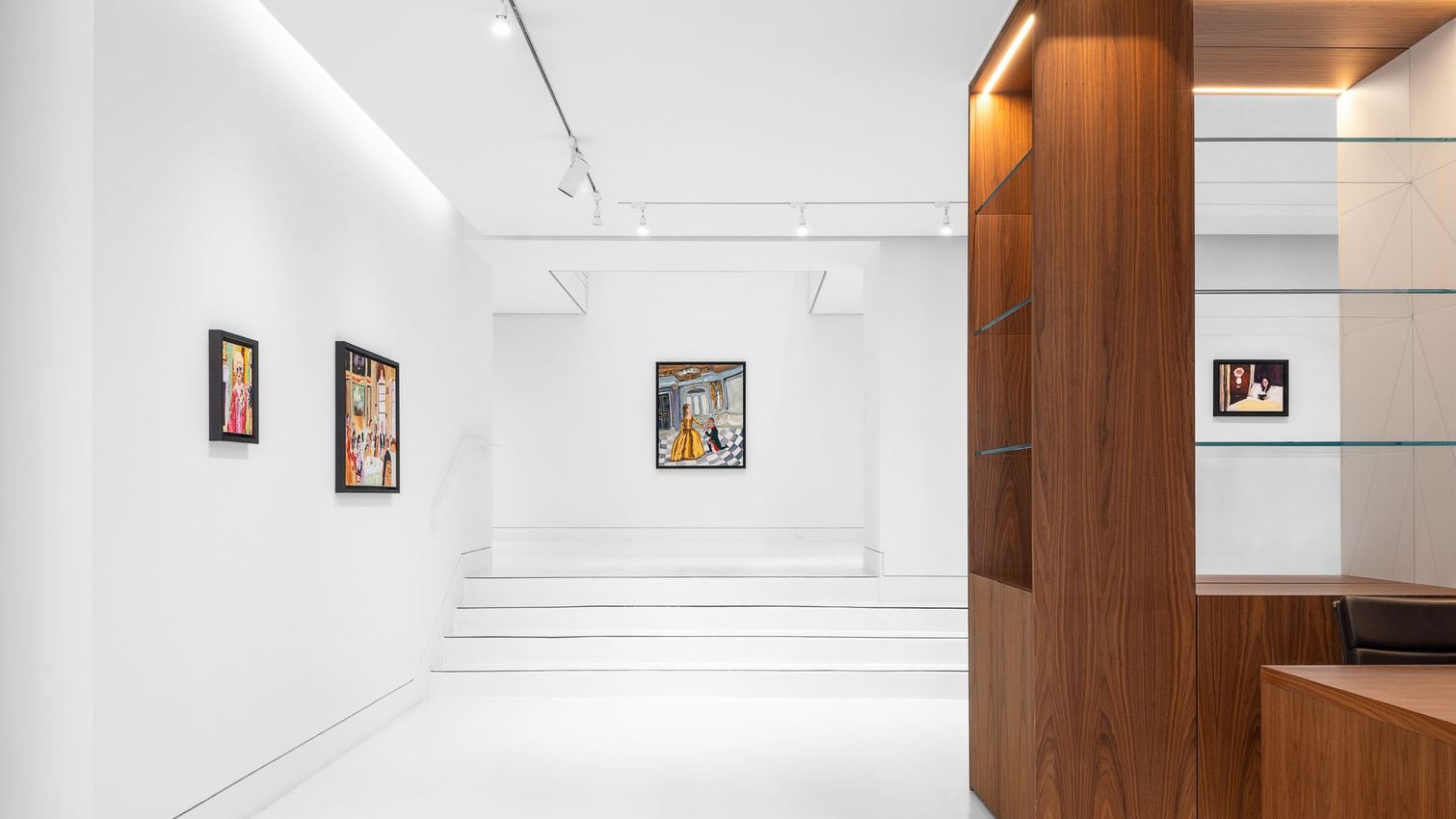
Almine Rech Gallery is delighted to present the second solo exhibition by Markus Lüpertz with the gallery, including sculptures and paintings from 2008 to 2018.
Markus Lüpertz came of age in postwar West Germany during the late 1950s, fascinated by cinema. He recalls that movies inspired the serial aspect of his work, his development of individual motifs in multiple variations. Lüpertz had a surprising insight: ‘Cinema was always painting an image several times simultaneously.’ He referred to the slight differences we perceive, film frame to film frame, viewed in sequence—analogous to the material differences that appear between one of Lüpertz’s paintings and another of a closely related configuration. As in cinema, so in Lüpertz’s studio: ‘One painting leads to the next.’ His many variations of a theme—such as pastoral scenes, figures in classical poses, or reveries on an artist’s palette—amount to more than the sum of the individual works in the series. They establish continuity, like a film, also like the painter’s own creative life. Yet each work, isolated in a frame, has its own affective and formal complexity.
Lüpertz’s images combine cultural evocation with material invention. To a palette, he joins a skull and a helmet to form a still-life arrangement; these objects, thematically rich, interact not only as cultural references but as contours, shapes, and colours. In works of a similar spirit, Lüpertz might include a turtle, a serpent, an officer’s cap, a snail, a bird’s wing, or even a rowboat (as in Palette (Arcadien) Gold (2018)). The rowboat itself evokes the theme of Arcadian paradise, which links Lüpertz’s art to German predecessors of the nineteenth century, such as Hans von Marées, as well as to artists of the Renaissance and Baroque. His pastoral settings derive from his experience of the watery land around Märkisch Wilmersdorf, outside Berlin, where he maintains a studio. The Märkisch landscape, the artist’s present environment, links his pictorial fantasies of the past to his everyday existence.
Interpretive narratives applied to Lüpertz’s art eventually fail, the victim of his sensory excess and thematic contradiction. He is an artist of powerful instinct, whose pictorial strategies defy the single-mindedness of our habitual critical constructions. Hyperactivity, both physical and mental, is his norm. His polychromed sculptures are as dynamically and evocatively composed as his paintings. More an artist of action than of contemplation, he is constantly reenergied by the multiple works at various stages of progress that populate his studios.
With centuries of Western culture channeled into him, Lüpertz expresses this mass of information in new forms, suited to contemporary sensibility. ‘Painting is culture,’ he says, ‘and who says culture says substance of the world. ... Without painting the world is only consumed, it is not perceived.’ What, finally, do we perceive? ‘It is not a concept, it is a feeling.’ Lüpertz demonstrates that, yes, painting and sculpture convey the wisdom of the ages, but first, they are arts of feeling.
Text by Richard Shiff. Courtesy Almine Rech Gallery.
Born in Liberec (formerly Reichenberg), Bohemia, in 1941, the artist fled as a child with his family to West Germany’s Rhineland. As a teenager, he attended the School of Applied Arts in Krefeld. A truncated period at the Kunstakademie Düsseldorf and a short spell in Paris introduced him to art history’s methods and masterpieces, but it was only on moving to West Berlin in 1962 that he found an artistic community in which he would flourish–Georg Baselitz, A.R. Penck, and Jörg Immendorff among them–and quickly emerged as a force to be reckoned with in German post-war art.


Almine Rech opened its doors on April 1st, 1997 in the 13th arrondissement in Paris. The gallery was founded on an axis of California Minimal, Perceptual art and Conceptual art, representing artists such as James Turrell, John McCracken and Joseph Kosuth.

A respected voice in contemporary art discourse.
Focusing on ambitious storytelling and insightful art-world commentary. Ocula Magazine publishes in-depth interviews, critical essays and timely analysis on the artists, exhibitions and ideas driving the global art world.
Learn more about Ocula Magazine
Showcasing the best of the art world.
Ocula partners with galleries from around the world to highlight their artists, artworks and exhibitions. Gallery membership is by application and invitation, with each member vetted by an independent panel.
Learn more about Ocula Membership

Specialises in the sale of major artworks.
Led by a team with deep ties to the world’s leading auction houses, galleries and collectors. Ocula’s advisory team offers bespoke services to high-net-worth clients from around the world who are looking to acquire the best of contemporary and modern art.
Learn more about our team and services