



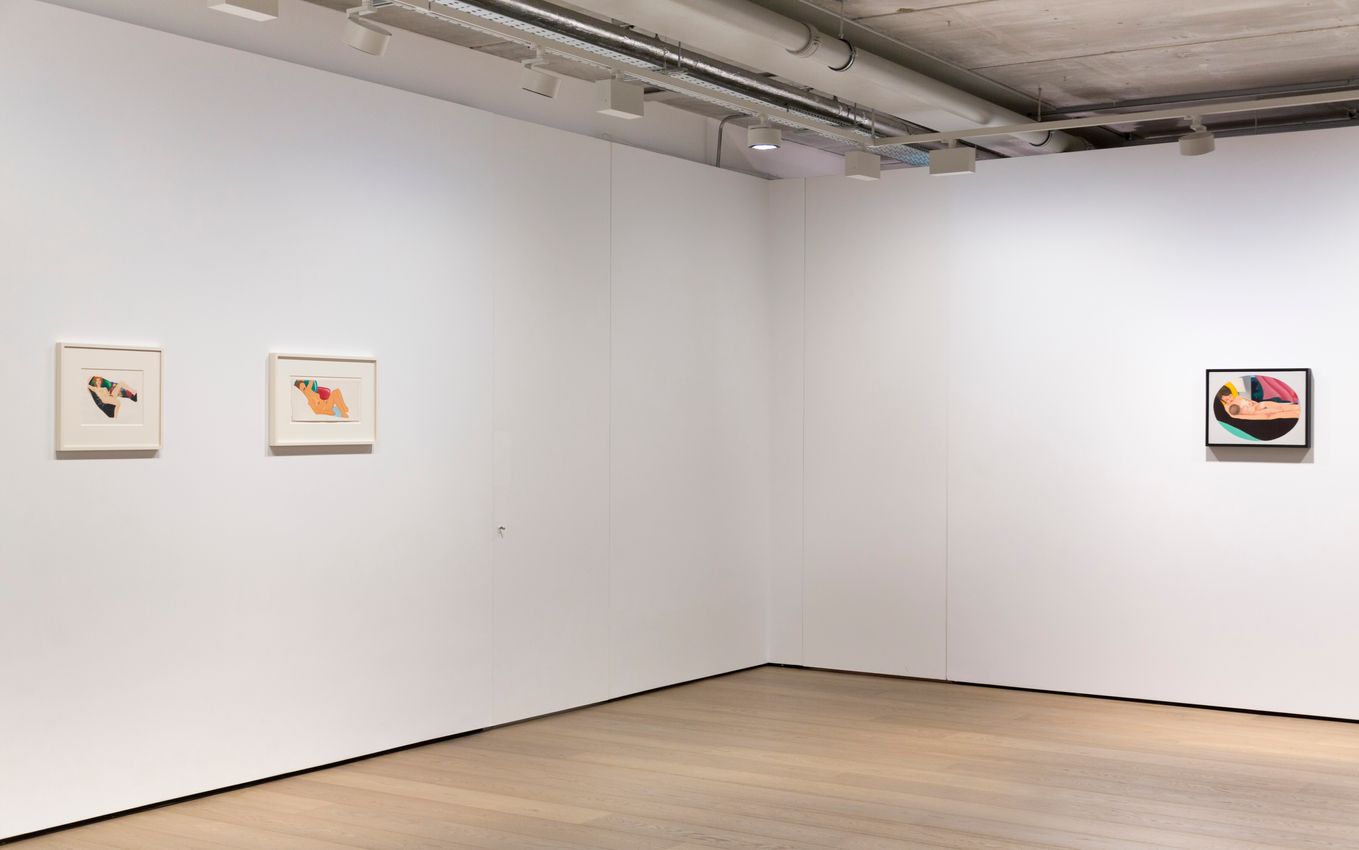
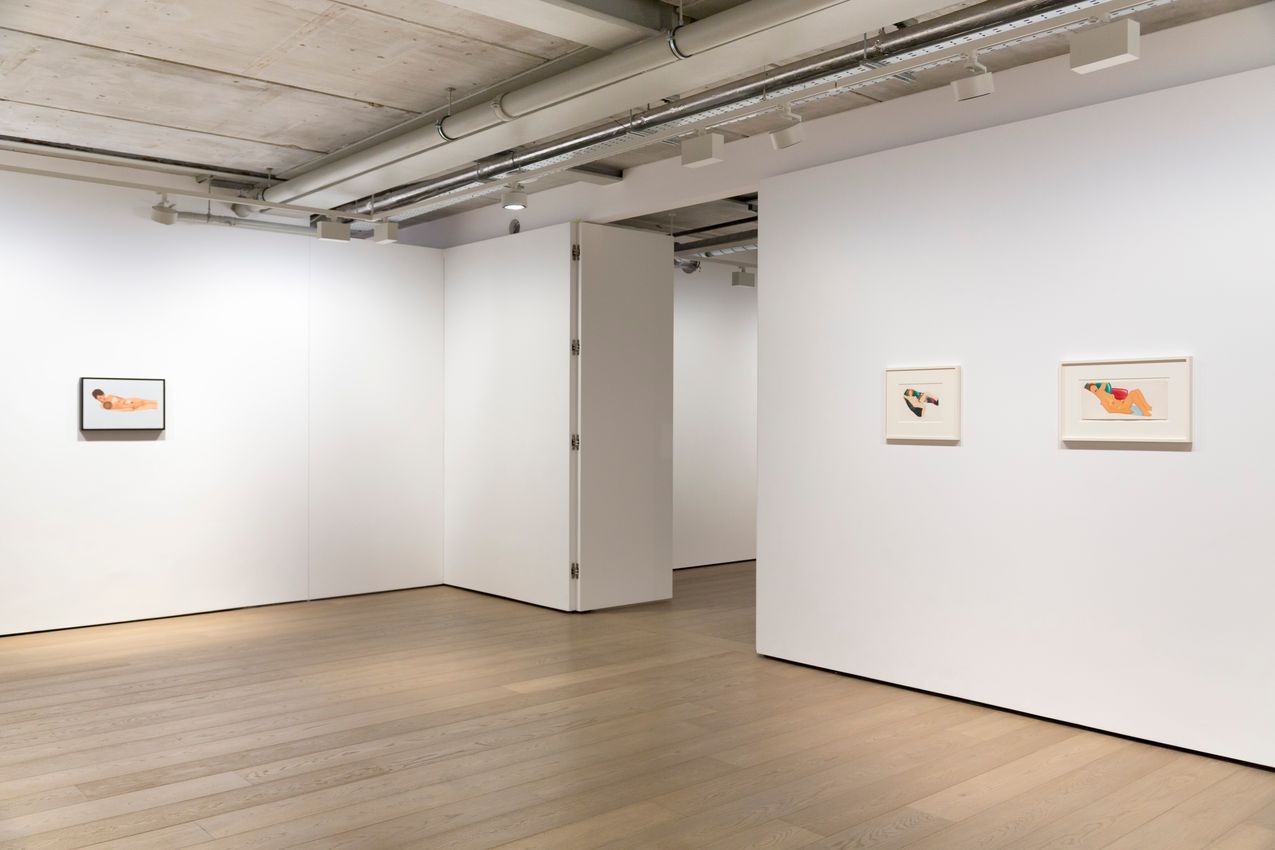
Almine Rech Gallery and Gagosian are pleased to announce two concurrent and related exhibitions of works by Tom Wesselmann in London. Organized in partnership with The Estate of Tom Wesselmann, both exhibitions highlight the bold approach to scale and color, art history and erotic representation that make Wesselmann one of the most inventive Pop artists of his time.
‘Over the years, I’d gotten excited about scale...I wanted to deal with these big shapes; so I came in closer and closer on the nude...That was really when my work began.’ —Tom Wesselmann
Wesselmann first gained critical acclaim in the early 1960s for his Great American Nude series. Many of these lounging female subjects, with pouted lips and tan lines, were painted in patriotic red, white, and blue, combining the prototypes of Western figure painting—from Titian to Matisse—with the high voltage of American advertising. After the Great American Nude paintings, Wesselmann shifted his focus, exploring more intimate, close-up views of the nude in the Bedroom Paintings.
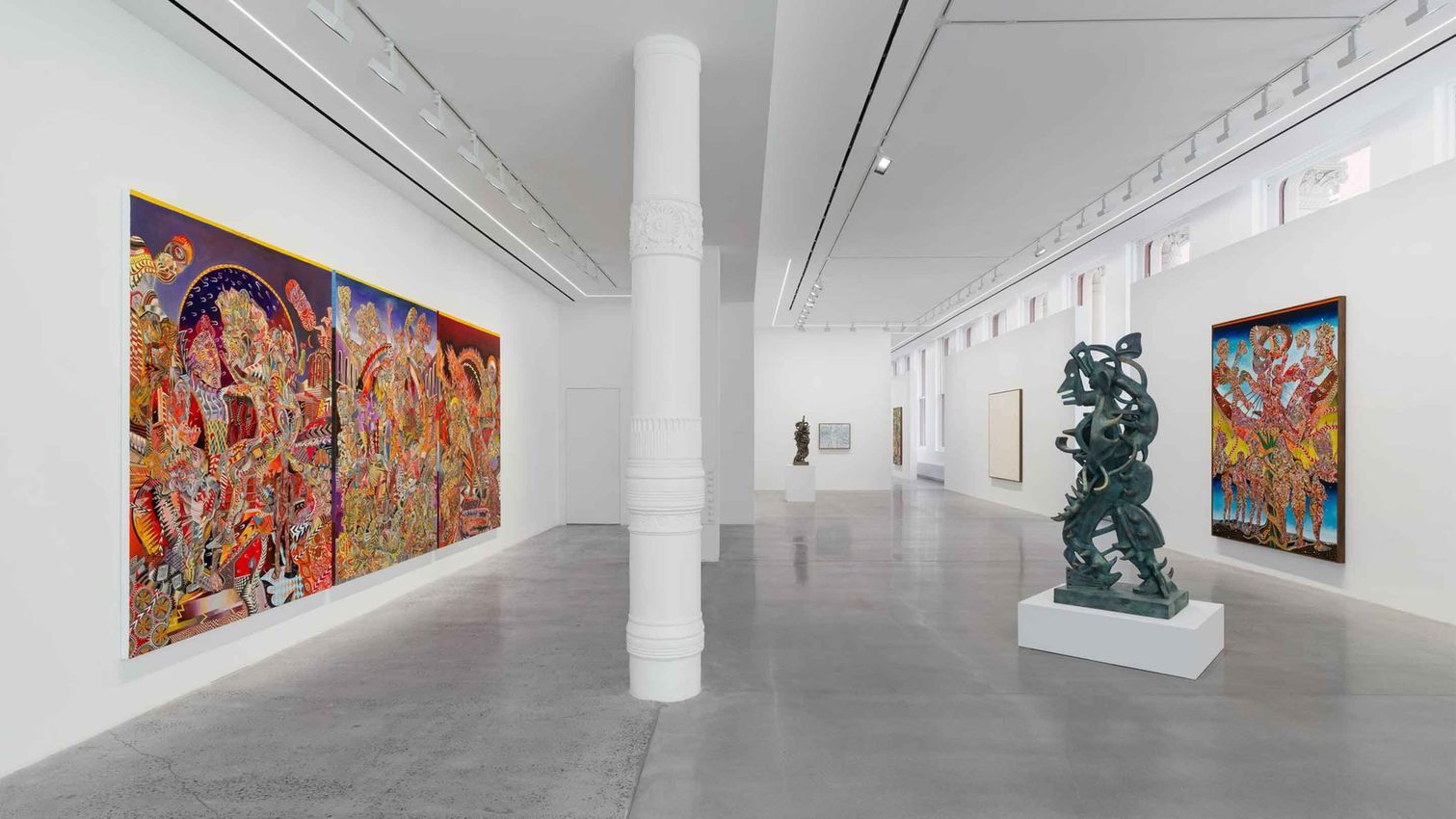
At Gagosian, a selection of Bedroom Paintings made between 1968 and 1983 reveals the full breadth of the series that Wesselmann considered so central to his oeuvre. Fragments of the human body, such as a hand or a breast, are juxtaposed with objects common to the bedroom—a light switch, flowers, the edges of pillows and curtains. These large-scale compositions draw attention to the abstract properties of each depicted form, the interlocking positive and negative shapes evoking the technique of collage in areas of sharp delineation, bold color, and softly rendered detail. In Bedroom Painting #63, 1983, the bedroom is framed by a female nude, her arm, torso, and thigh forming a triangular window. Although she is not at the center of the image, her presence is unmistakable, determining the complex shape of the canvas.
‘The first time I broke the rectangle, it seemed like a big deal, even though it had been done for years in advertising.’ —Tom Wesselmann
At Almine Rech Gallery, the key work Nude with Lamp, 1977-80 is accompanied by related paintings and works on paper. For Wesselmann, Nude with Lamp posed two challenges: the eccentric shape of the canvas and the chiaroscuro of the nude in shadow. While his first shaped canvases were determined by the silhouette of a single depicted object, as in the Smoker series, later works such as Nude with Lamp are shaped according to their own logic, rather than that of the painted image, utilizing the blank space of the bare wall behind. Repurposing the formal elements of advertising, such as shaped posters and cutouts, Wesselmann complicates the relationship between his female figures and their environments, their long, tanned legs often appearing to extend beyond the two-dimensional surface. After Great American Nude #100, 1973, his titles became more descriptive, even personal, sometimes naming the model, as in Pat Nude or Barbara and Baby, detailed studies of which are included in this exhibition. Wesselmann commented that these works were ‘his first attempts to be emotionally touching, on levels other than sexual.’
Tom Wesselmann was born in Cincinnati in 1931, and died in New York in 2004. His work is featured in museum collections worldwide, including Tate, London; Museum für Moderne Kunst, Frankfurt; Hamburger Kunsthalle, Germany; Museum Ludwig, Cologne; Albertina, Vienna; Berardo Museum, Lisbon; Museo Thyssen-Bornemisza, Madrid; Museum of Modern Art, New York; Albright-Knox Art Gallery, Buffalo, NY; Museum of Contemporary Art, Los Angeles; Museum of Contemporary Art North Miami, FL; Hirshhorn Museum and Sculpture Garden, Washington, D.C.; High Museum of Art, Atlanta, GA; Israel Museum, Jerusalem; and Hara Museum of Contemporary Art, Tokyo. Recent institutional exhibitions include Museo d’Arte Contemporanea di Roma, 2005; Tom Wesselmann DRAWS, The Kreeger Museum, Washington, D.C., 2011; Beyond Pop Art: A Tom Wesselmann Retrospective, Montreal Museum of Fine Arts, Quebec (2012, traveled to Cincinnati Art Museum, OH; and Denver Art Museum, CO, through 2014); and Pop Art and Beyond: Tom Wesselmann, Virginia Museum of Fine Arts, Richmond, VA, 2013.
Tom Wesselmann was born in Cincinnati, Ohio, on February 23, 1931. He attended Hiram College in Ohio from 1949 to 1951 before entering the University of Cincinnati. In 1953, his studies were interrupted by a two-year enlistment in the army, during which time he began drawing cartoons. He returned to the university in 1954 and received a bachelor’s degree in psychology in 1956. During this time, he decided to pursue a career in cartooning and so enrolled at the Art Academy of Cincinnati. After graduation he moved to New York City, where he was accepted into the Cooper Union and where his focus shifted dramatically to fine art. He received his diploma in 1959.


Almine Rech London will showcase curated presentations of works by artists from the 20th and 21st centuries and will be open Tuesday through Friday, from 10am to 6pm, with Monday and Saturday visits available by appointment.

A respected voice in contemporary art discourse.
Focusing on ambitious storytelling and insightful art-world commentary. Ocula Magazine publishes in-depth interviews, critical essays and timely analysis on the artists, exhibitions and ideas driving the global art world.
Learn more about Ocula Magazine
Showcasing the best of the art world.
Ocula partners with galleries from around the world to highlight their artists, artworks and exhibitions. Gallery membership is by application and invitation, with each member vetted by an independent panel.
Learn more about Ocula Membership

Specialises in the sale of major artworks.
Led by a team with deep ties to the world’s leading auction houses, galleries and collectors. Ocula’s advisory team offers bespoke services to high-net-worth clients from around the world who are looking to acquire the best of contemporary and modern art.
Learn more about our team and services