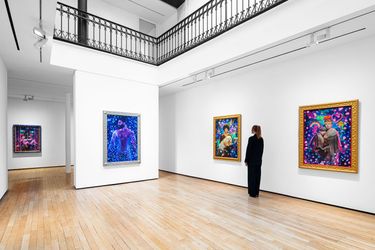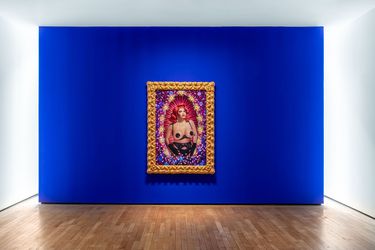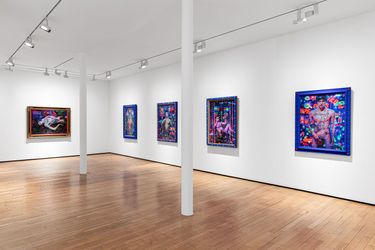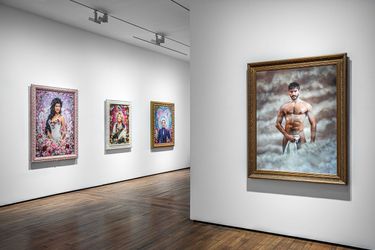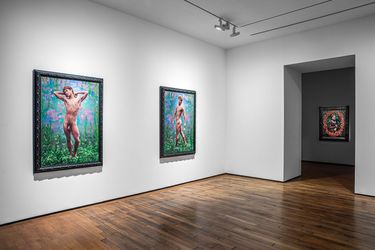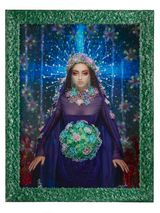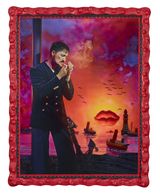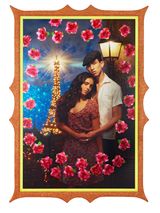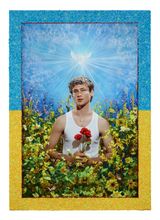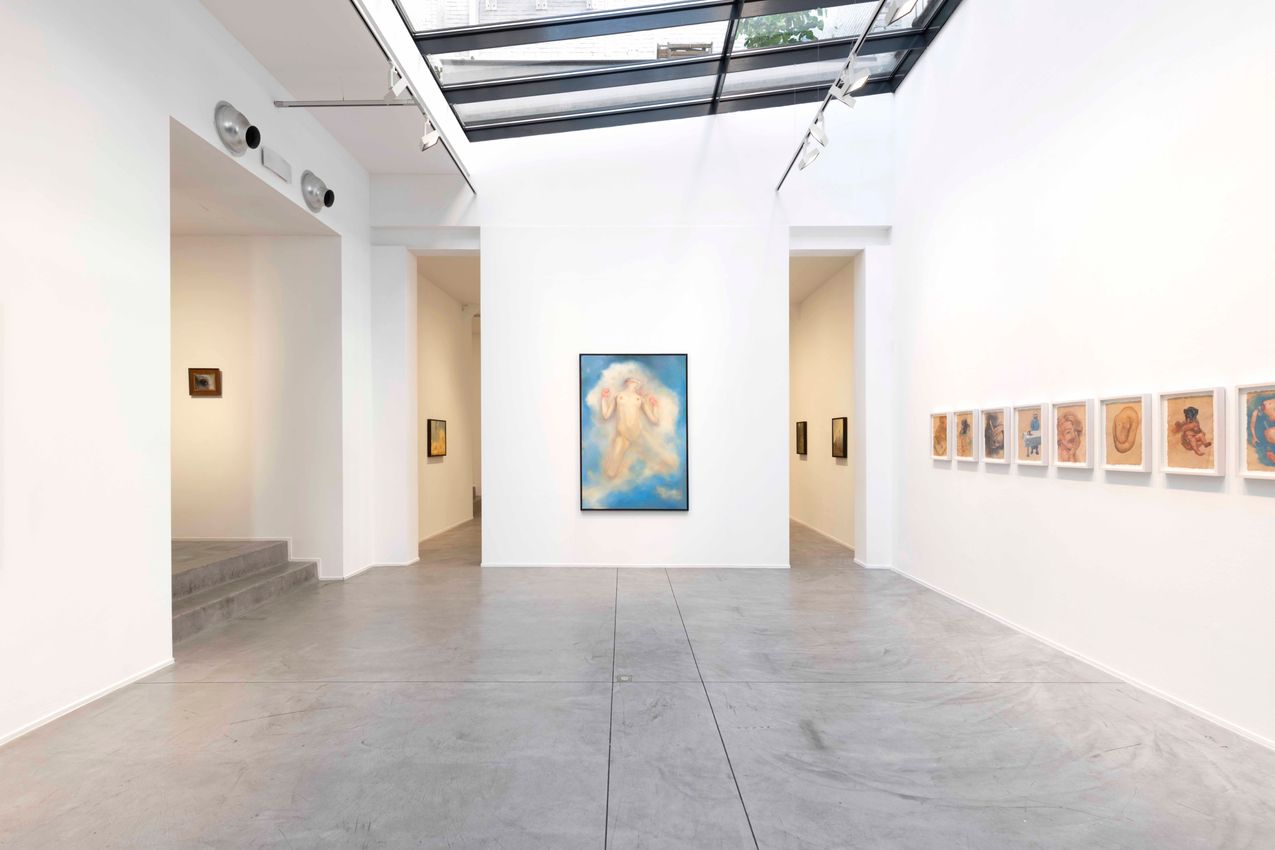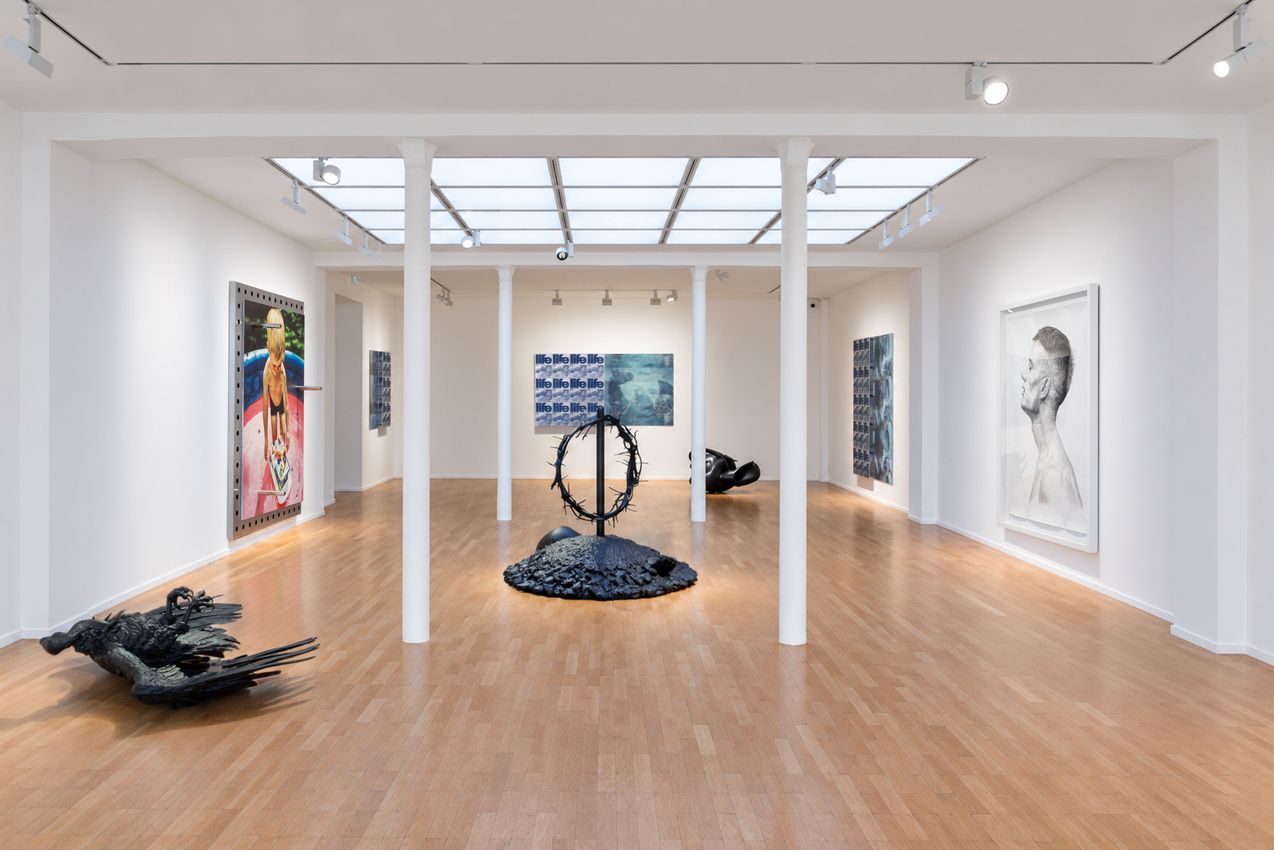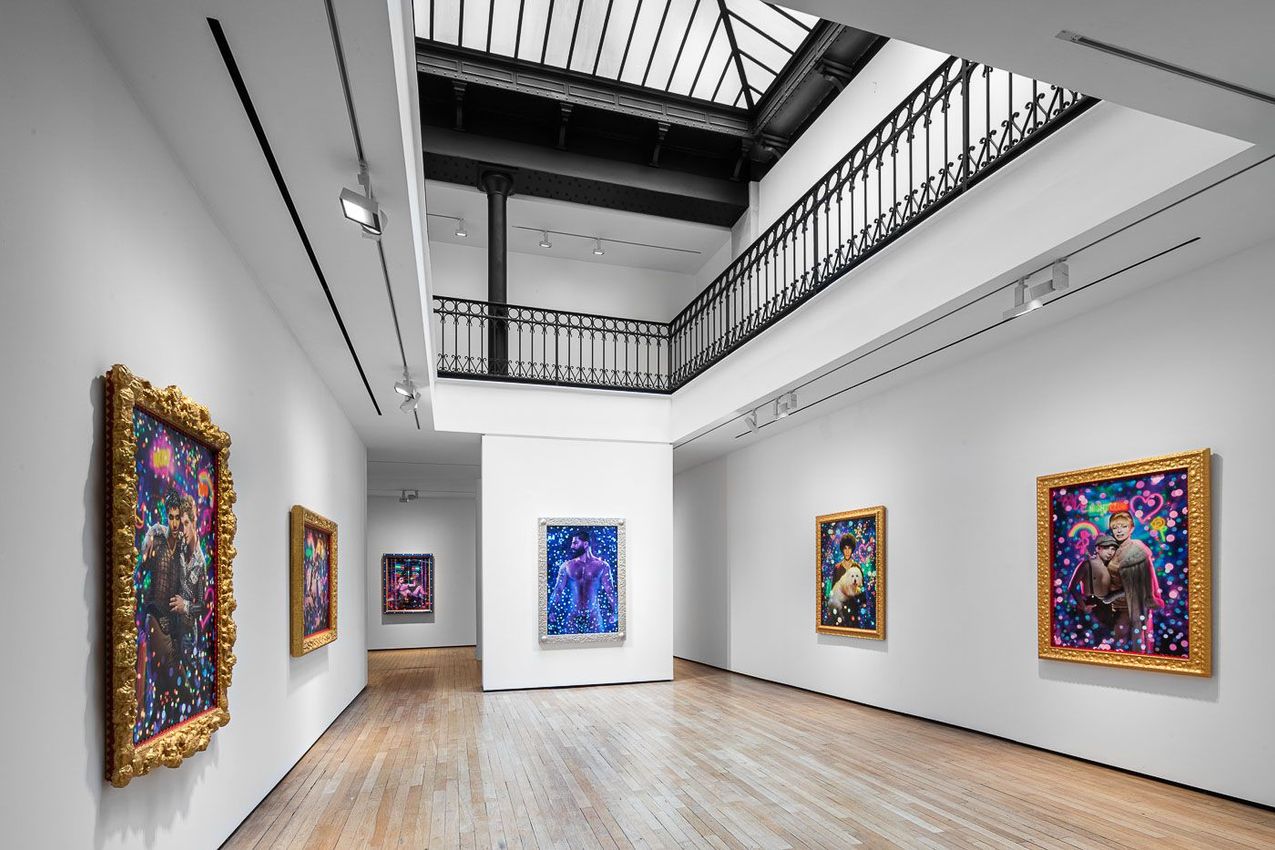
Pierre et Gilles have been producing works together for over forty years, creating dreamlike portraits at the crossroads of painting and photography. Their latest exhibition, Nuit électrique / Electric Night, underscores the duo’s longevity, the role they play as portraitists of the era and pioneering explorers of LGBTQIA+ questions. Nevertheless, when we reach the point of thinking we know Pierre et Gilles by heart, they inevitably manage to surprise us. Their new paintings, created over the last two years, show us the artists laughing at their iconic status with a gallery of nocturnal, off-beat portraits.
In 1976 the couple formed by photographer Pierre and painter Gilles began to develop a unique language where references to pop culture and art history rub shoulders, resulting in a marvellous, subversive, unusual and engaged body of work. Their new, previously unseen series is haunted by a synthetic neon glow, infused with the light of the underworld and artificial paradises. Euphoric nostalgia for the heyday of the Palace, the mythical Paris nightclub they are so frequently linked to, or disenchantment with a world where all the battles have possibly been won? Pierre et Gilles populate the works with some of their favourite characters: sailor, angel, rascal and urchin. Characters who are placed in undefined, shady spaces which could be a nightclub, fairground or cabaret. Their models, some naked, some tattooed, couples in love and disheartened singles, form a seductive, joyful and vaguely unsettling throng. In the midst of this gay, trans, cross-cultural youth, Pierre et Gilles put two self-portraits into the mix. One, imbued with solemn melancholy, shows them as separate. The other depicts them as lively retirees in an old-fashioned picture-postcard setting. Playing on the ambiguities of different registers, Pierre et Gilles lay claim to their camp universe with a good dose of humour. They are also implicitly portraying a shadowy world, a depiction oscillating between optimism and disillusion.
As a counterpoint, Pierre et Gilles unveil two portraits of their long-standing muses: Amanda Lear as a boulevard theatre actress, and Isabelle Huppert as a majestic Mary Stuart. The portraits provide a contrast that spotlights the originality of the new way Pierre et Gilles are working with light. The use of harsh artificial lighting that never dims but transfigures characters is one of the most radical aspects of their recent practice. It can be read as a powerful metaphor for resistance to the passing of time that levels everything, existences as well as combats. What degree of benevolence has the LGBTQI+ community succeeded in garnering after over half a century of societal progress? What place and consideration is there today for people on the margins of society?


Pierre was born in 1950 in La Roche-Sur-Yon, Gilles in Le Havre in 1953. They are internationally renowned artists who have been producing works together since 1976, creating a world where painting and photography meet. Their art is peopled by their friends and family, anonymous and famous, who appear in sophisticated life-size sets the artists build in their studio. They meticulously apply paint to the photographs once printed on canvas. Accomplished image creators, Pierre et Gilles have built up an extraordinary contemporary iconography on the frontier between art history and popular culture.


The gallery was founded in 1966 by Daniel Templon, who was then only 21. It first opened rue Bonaparte, in Saint-Germain-des-Prés in Paris, before moving in 1972 to its current location, rue Beaubourg, in the Marais, close to the Pompidou Center, which opened in 1977. Daniel Templon first gained recognition by exhibiting conceptual and minimal artists such as Martin Barré, Christian Boltanski, Donald Judd, Joseph Kosuth, Richard Serra. In the seventies and eighties, Daniel Templon was one of the pioneers of the contemporary art and introduced many important American artists to the French public: Dan Flavin, Ellsworth Kelly, Willem de Kooning, Frank Stella, Andy Warhol. The gallery quickly became one of the references in contemporary art in France. In 1972, Daniel Templon and Catherine Millet co-founded the monthly art magazine ART PRESS.

A respected voice in contemporary art discourse.
Focusing on ambitious storytelling and insightful art-world commentary. Ocula Magazine publishes in-depth interviews, critical essays and timely analysis on the artists, exhibitions and ideas driving the global art world.
Learn more about Ocula Magazine
Showcasing the best of the art world.
Ocula partners with galleries from around the world to highlight their artists, artworks and exhibitions. Gallery membership is by application and invitation, with each member vetted by an independent panel.
Learn more about Ocula Membership

Specialises in the sale of major artworks.
Led by a team with deep ties to the world’s leading auction houses, galleries and collectors. Ocula’s advisory team offers bespoke services to high-net-worth clients from around the world who are looking to acquire the best of contemporary and modern art.
Learn more about our team and services