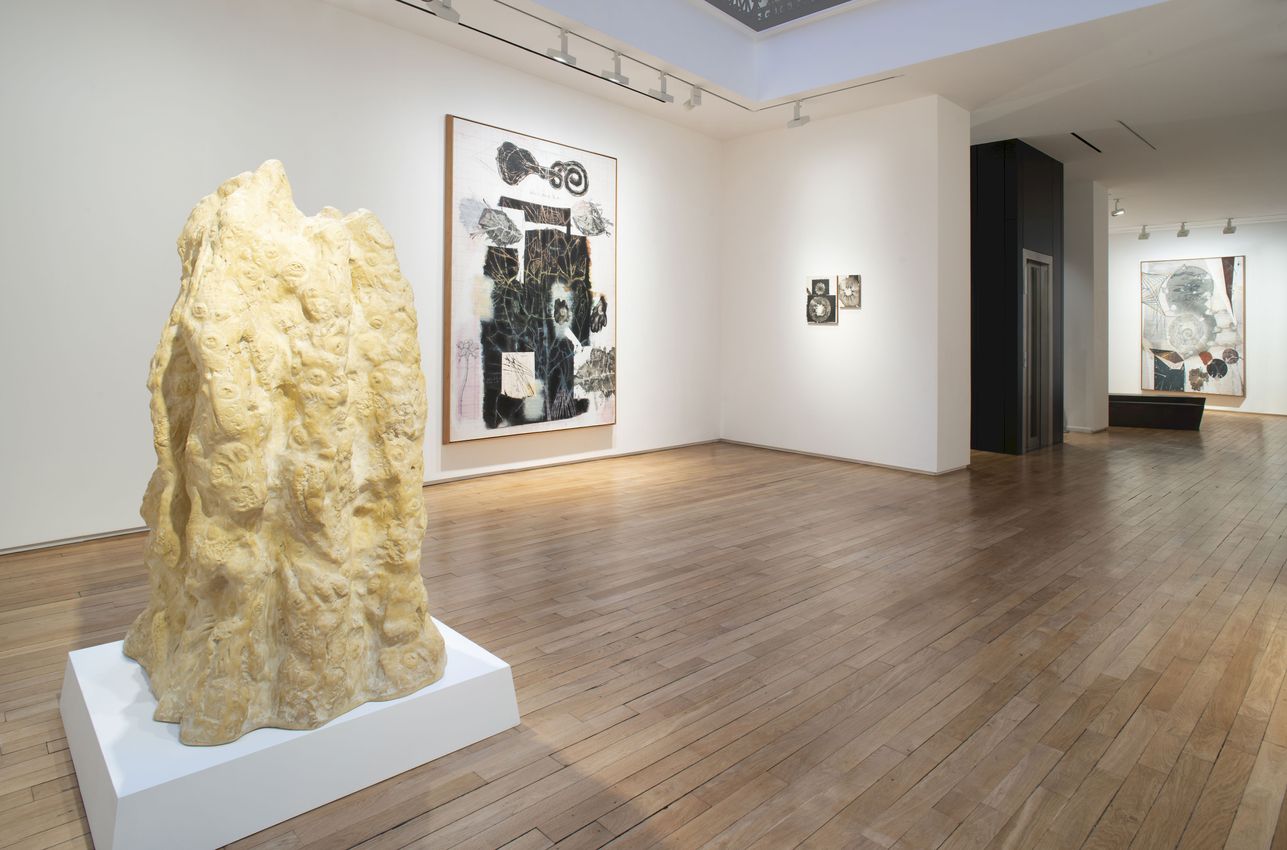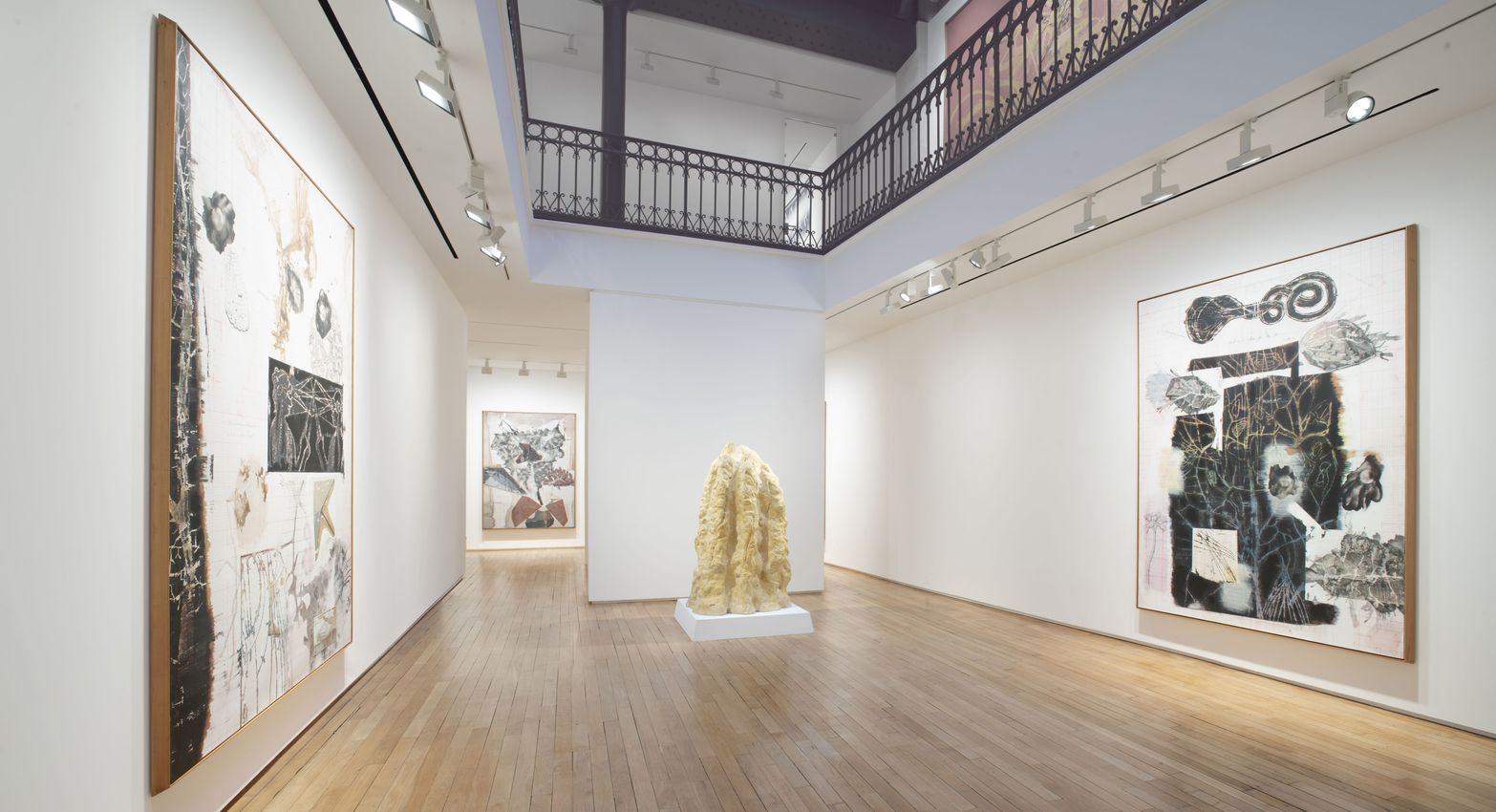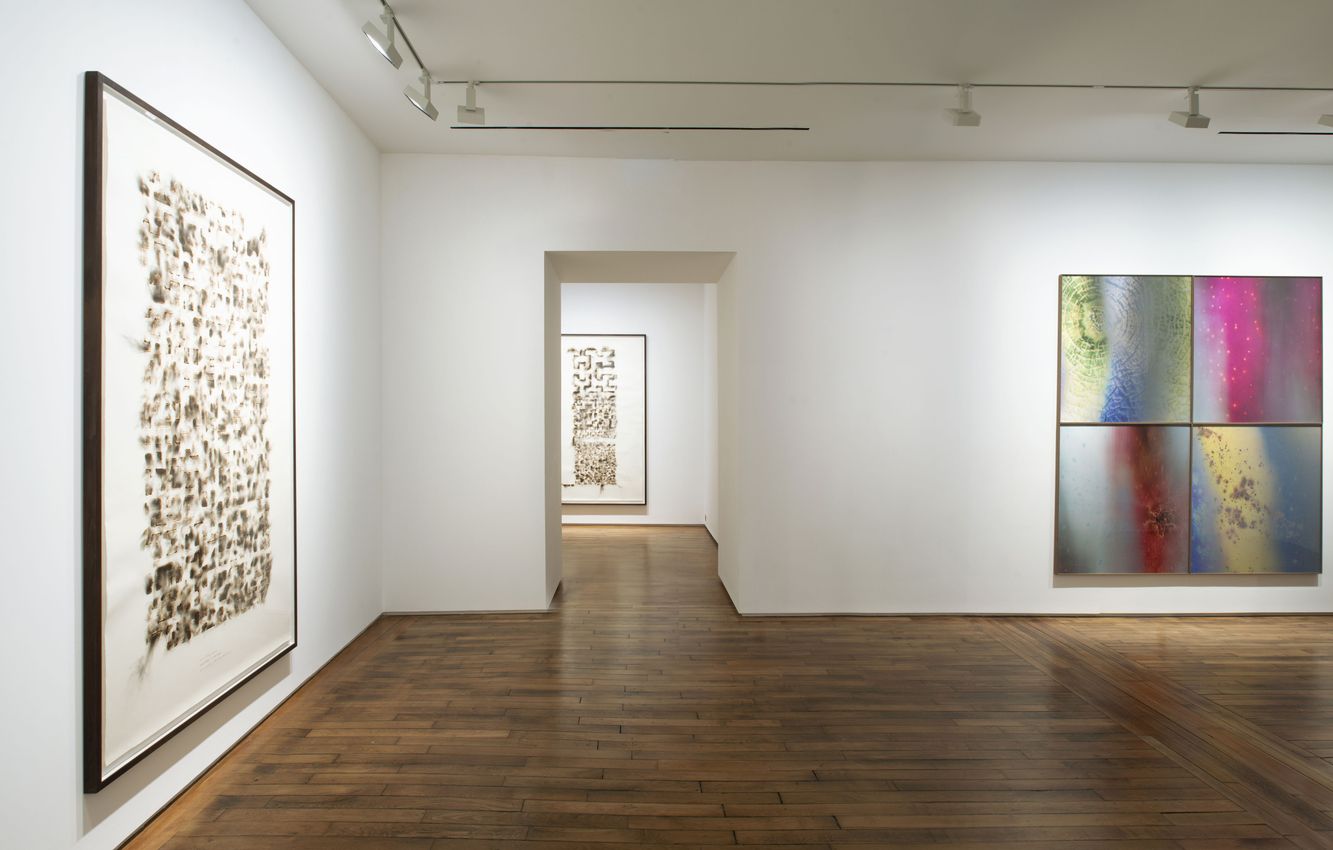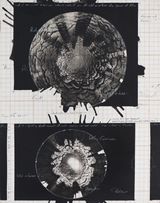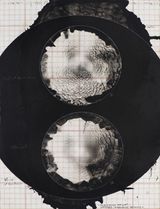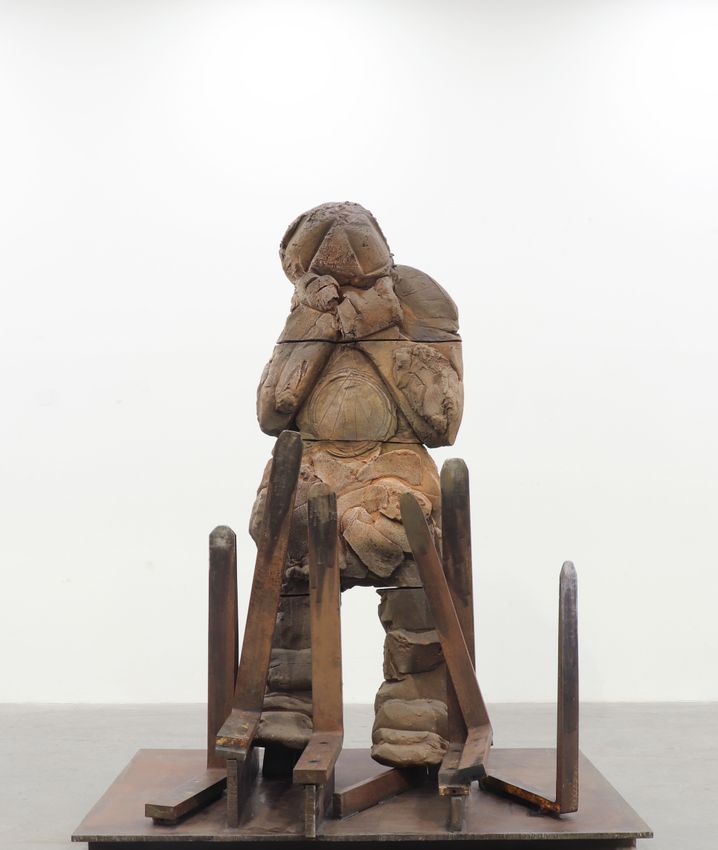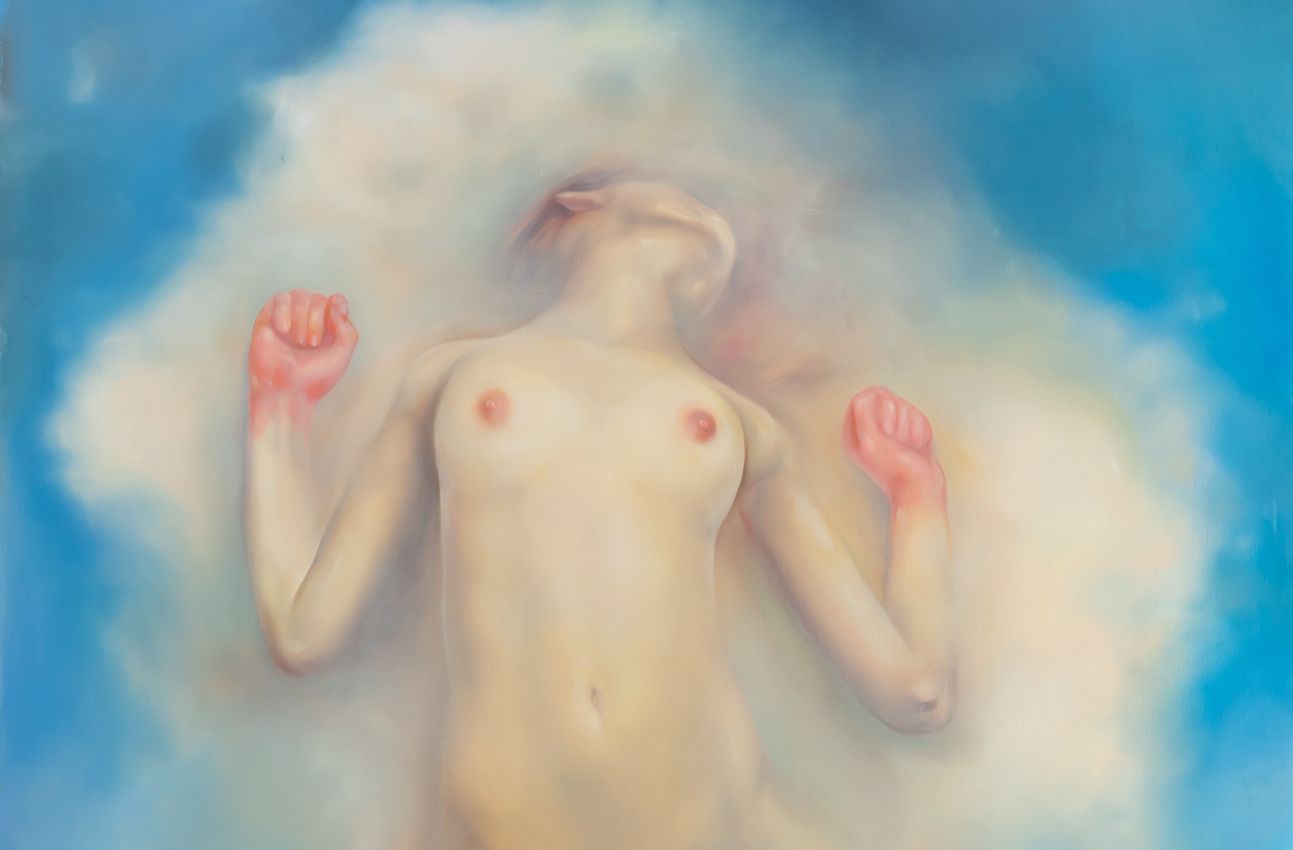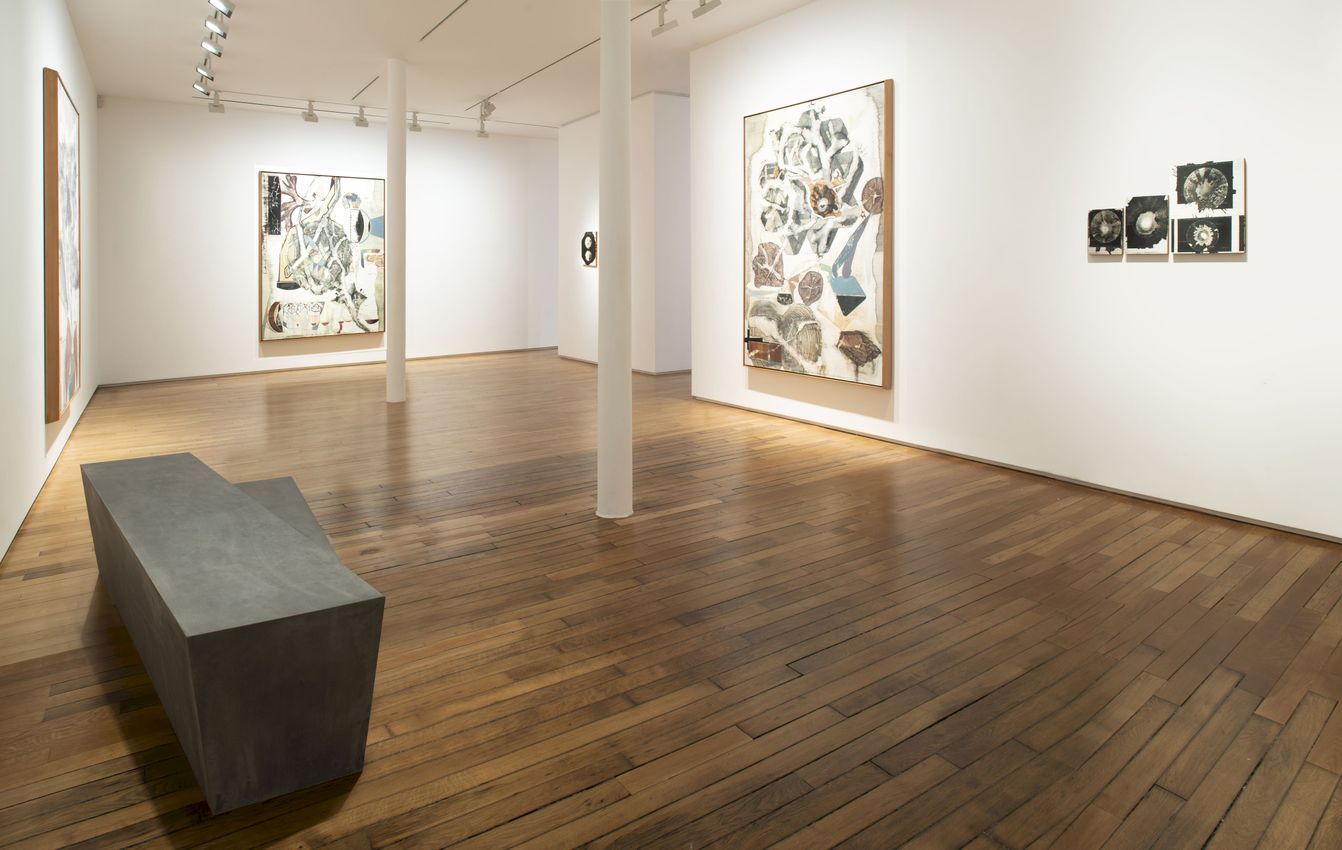
Born in 1974, Jitish Kallat is one of the best known and respected artists from India on the international scene. For over twenty years, his wide-ranging and deeply reflective work has drawn an imaginary map connecting the everyday to the cosmic. Phase Transition is Jitish Kallat’s third solo exhibition in Paris and marks the artist’s return to painting after close to a five-year hiatus from the medium. For the past five years, Kallat’s long-standing engagement with the ideas of time, transience, sustenance and the cosmological took the form of large elemental drawings, and investigative animation videos, photo-works and sculptures.
Jitish Kallat currently lives and works in Mumbai. Kallat’s work has been exhibited widely across the world ; key solo exhibitions at museums include Philadelphia Museum of Art (2016), CSMVS Museum, Mumbai (2016), Art Gallery of New South Wales, Sydney (2015), San José Museum of Art (2013), the Ian Potter Museum of Art, Melbourne (2012), Dr. Bhau Daji Lad Museum, Mumbai (2011), and Art Institute of Chicago (2010).
He has also exhibited in numerous group exhibitions at venues including Tate Modern, London (2001), Palais des Beaux-Arts, Brussels (2006), ZKM Museum, Karlsruhe (2007); Art Gallery of Ontario, Toronto (2007), Martin Gropius Bau, Berlin (2008), Mori Art Museum, Tokyo (2008), Museum Tinguely, Basel and Musée national d’art moderne-Centre Pompidou in Paris (2011), and the Museum of Contemporary Art Australia, Sydney (2016). He has participated in a number of international biennale exhibitions including the Havana Biennial (2000) and the Gwangju Biennale (2006).
Jitish Kallat was the curator and artistic director of the Kochi-Muziris Biennale (2014), and participates in its 2018 edition
Born in 1974 in Mumbai, Jitish Kallat is one of the most promising artists of his generation. Jitish Kallat’s work, imbued with autobiographical, political and artistic references, forms a narrative of the cycle of life in a rapidly changing India. Weaving together strands of sociology, biology and archaeology, the artist takes an ironic and poetic look at the altered relationship between nature and culture.


The gallery was founded in 1966 by Daniel Templon, who was then only 21. It first opened rue Bonaparte, in Saint-Germain-des-Prés in Paris, before moving in 1972 to its current location, rue Beaubourg, in the Marais, close to the Pompidou Center, which opened in 1977. Daniel Templon first gained recognition by exhibiting conceptual and minimal artists such as Martin Barré, Christian Boltanski, Donald Judd, Joseph Kosuth, Richard Serra. In the seventies and eighties, Daniel Templon was one of the pioneers of the contemporary art and introduced many important American artists to the French public: Dan Flavin, Ellsworth Kelly, Willem de Kooning, Frank Stella, Andy Warhol. The gallery quickly became one of the references in contemporary art in France. In 1972, Daniel Templon and Catherine Millet co-founded the monthly art magazine ART PRESS.

A respected voice in contemporary art discourse.
Focusing on ambitious storytelling and insightful art-world commentary. Ocula Magazine publishes in-depth interviews, critical essays and timely analysis on the artists, exhibitions and ideas driving the global art world.
Learn more about Ocula Magazine
Showcasing the best of the art world.
Ocula partners with galleries from around the world to highlight their artists, artworks and exhibitions. Gallery membership is by application and invitation, with each member vetted by an independent panel.
Learn more about Ocula Membership

Specialises in the sale of major artworks.
Led by a team with deep ties to the world’s leading auction houses, galleries and collectors. Ocula’s advisory team offers bespoke services to high-net-worth clients from around the world who are looking to acquire the best of contemporary and modern art.
Learn more about our team and services