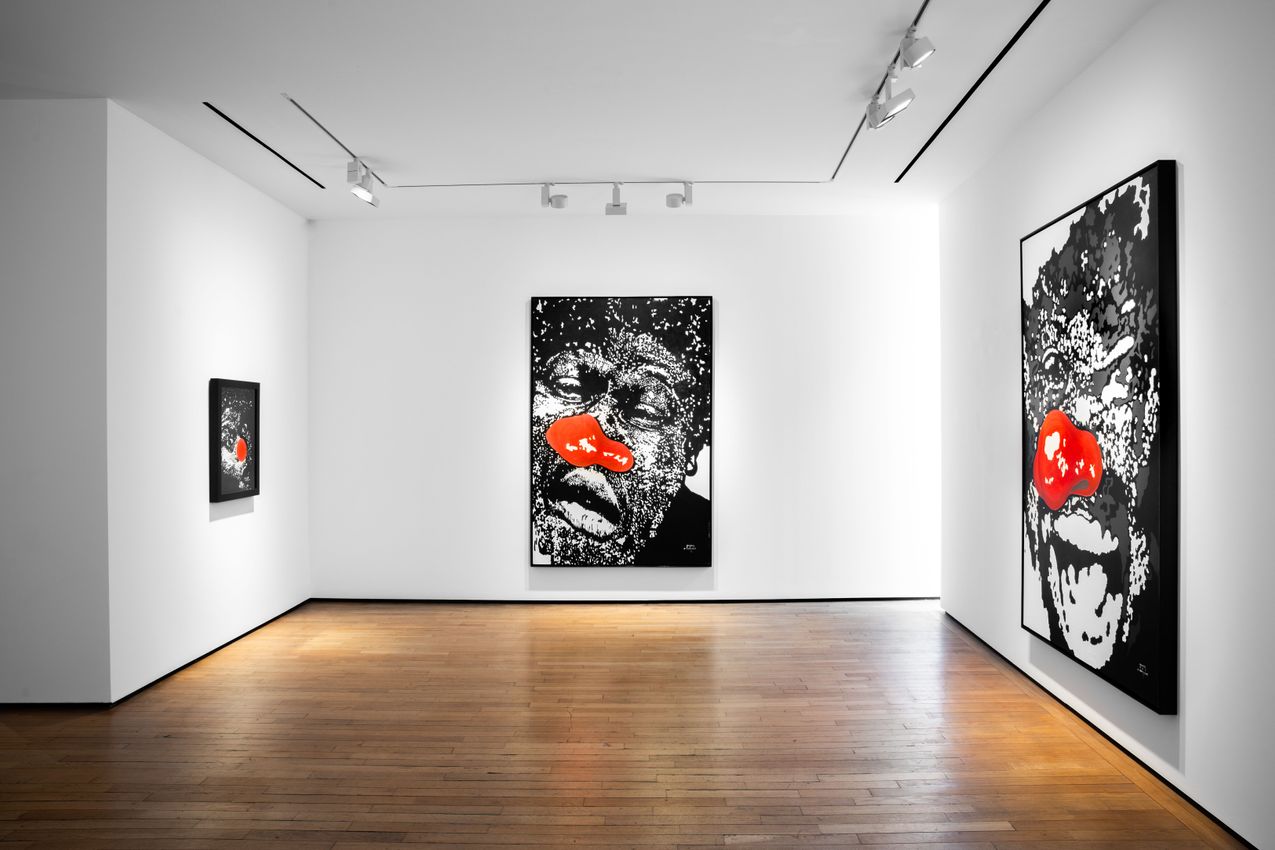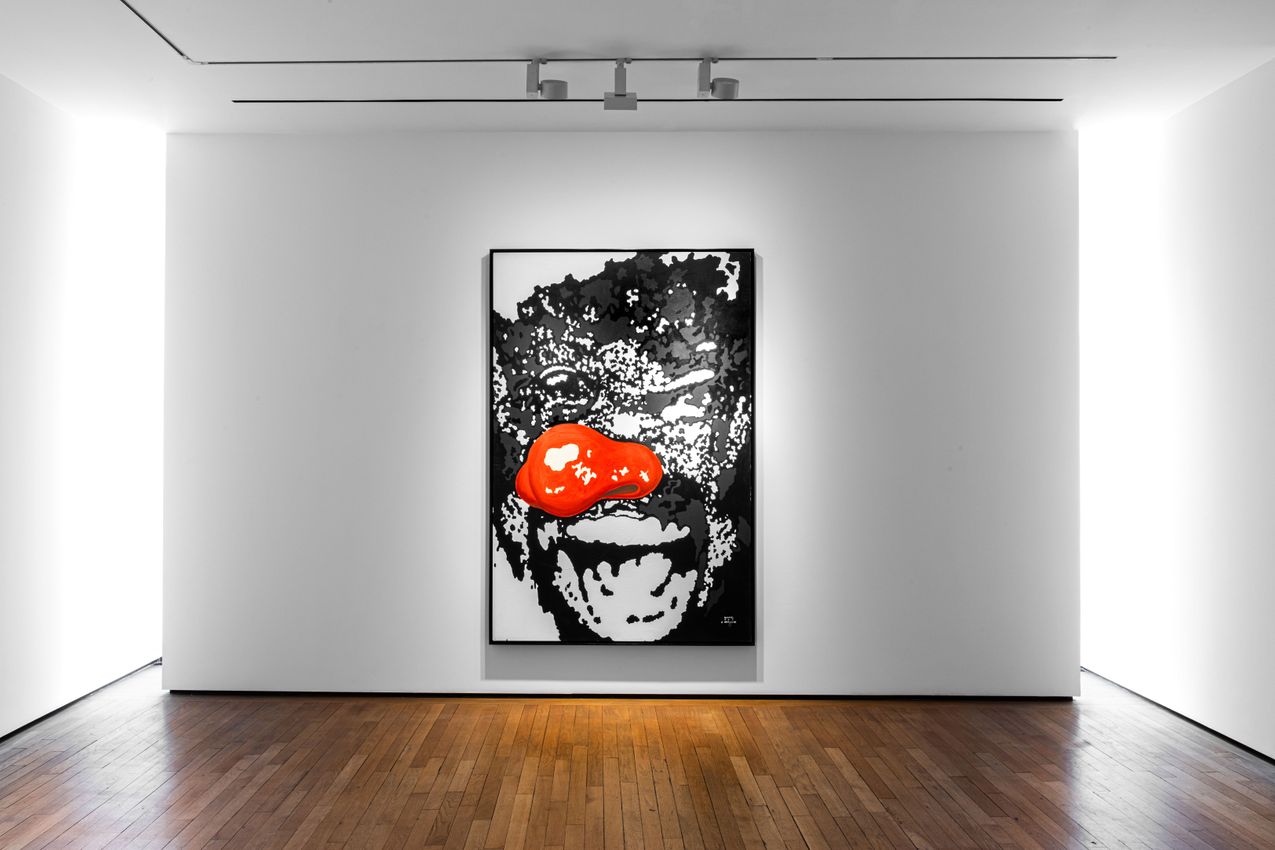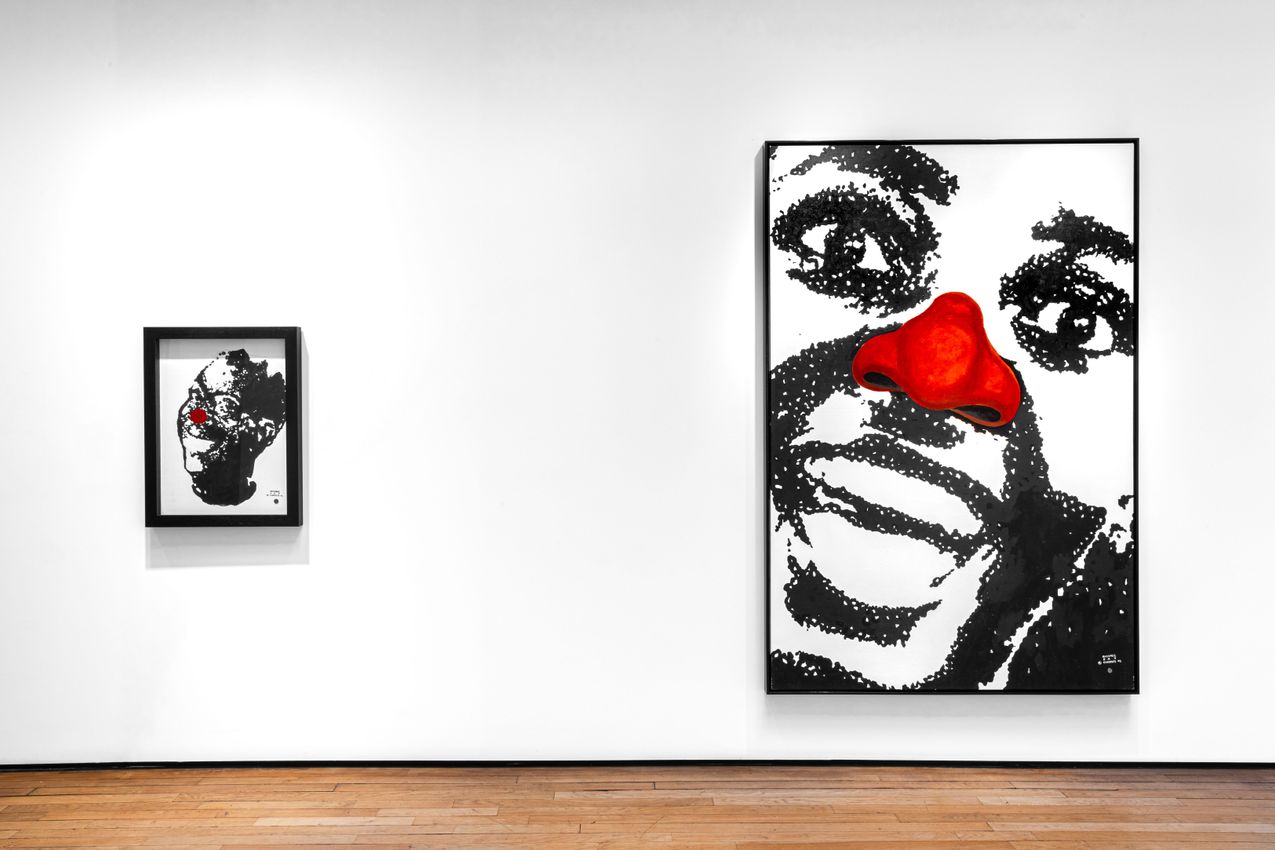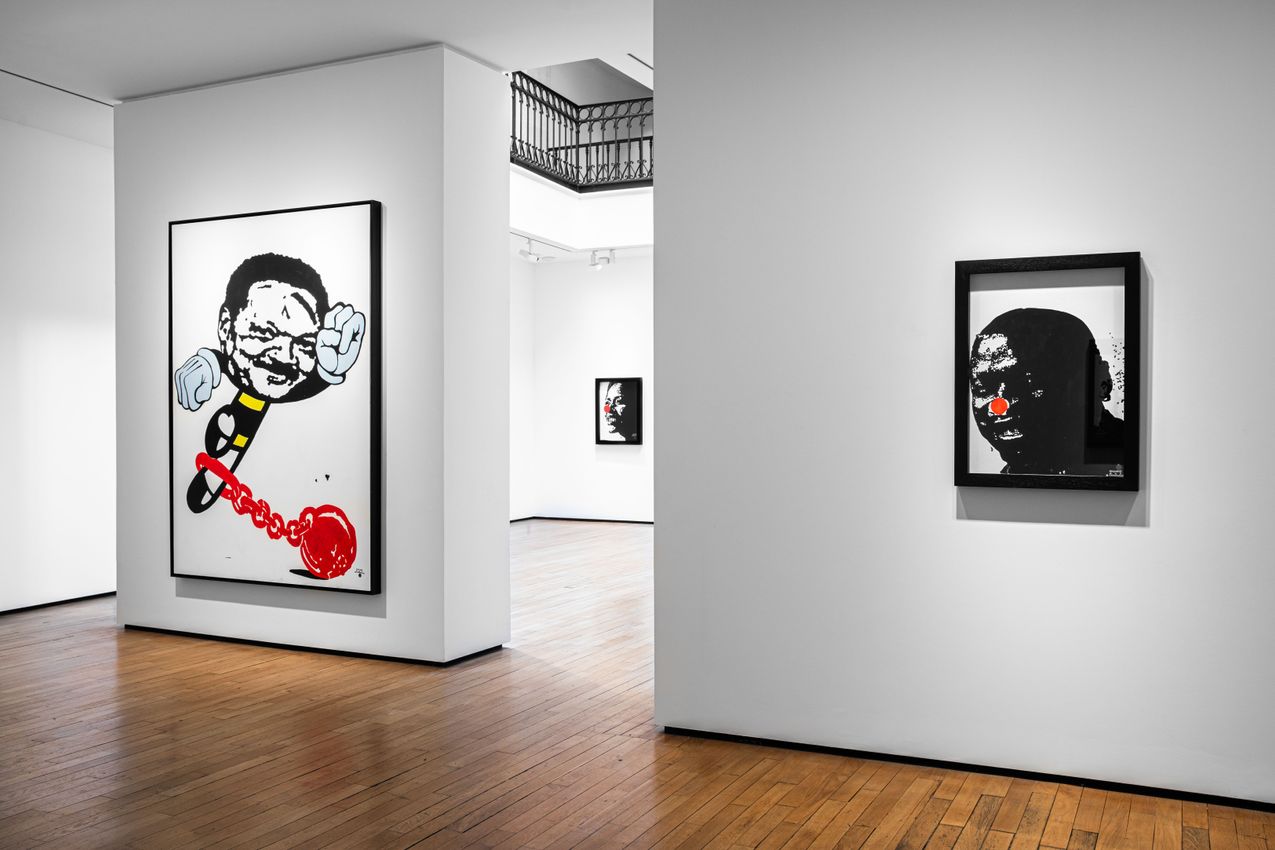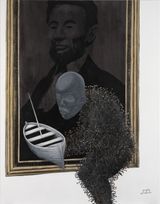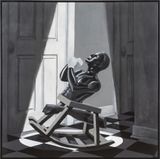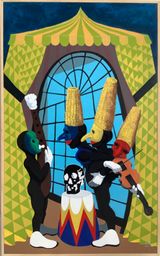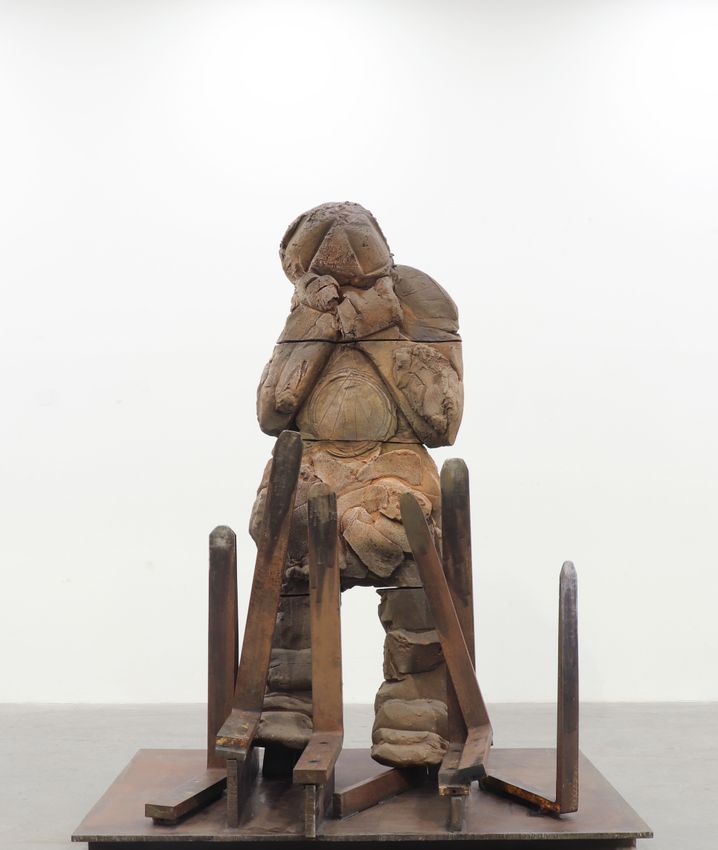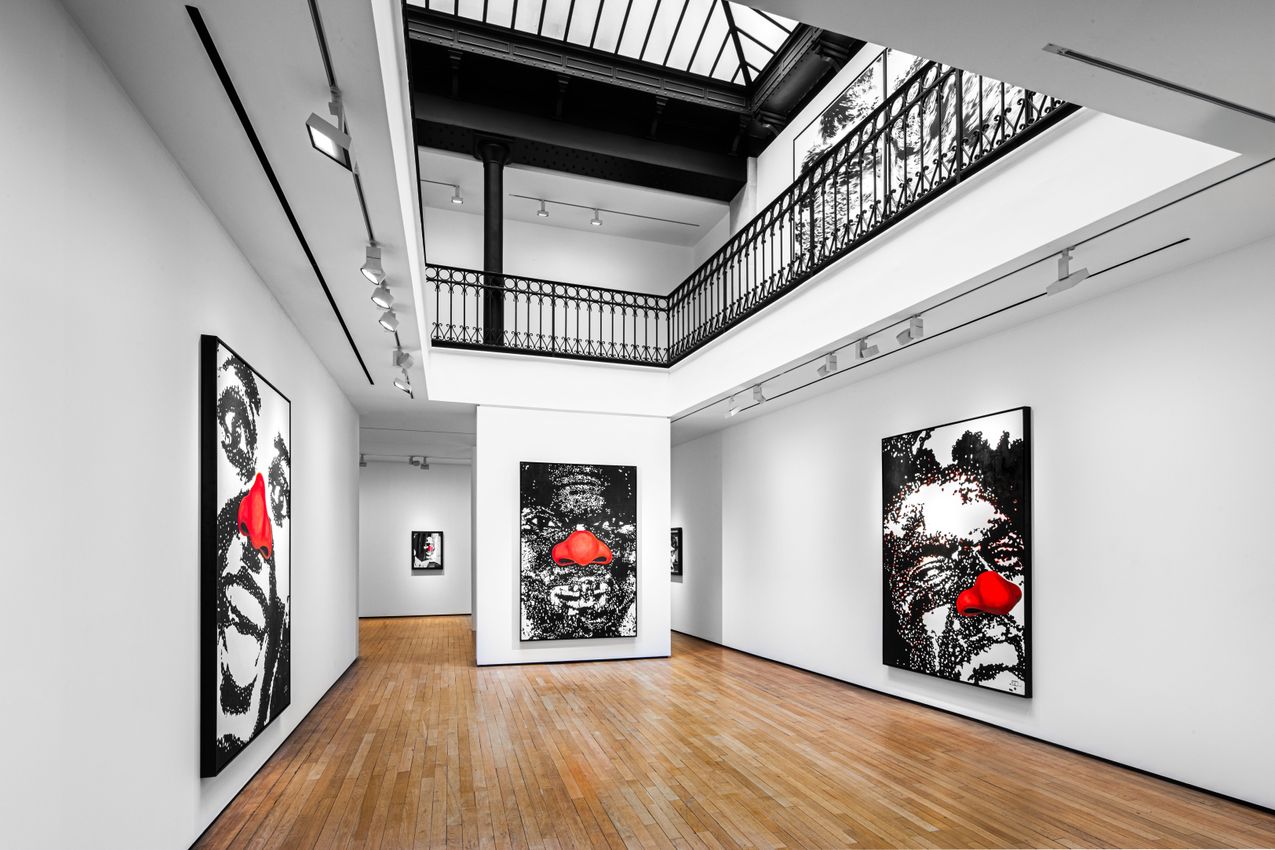
‘Afrochemistry’ features a series of five large canvases and twelve small red nose portraits on cardboard centring on the representation of black identity.Since the 1990s, Michael Ray Charles has become a widely recognised artist with a pioneering approach to investigating African-American questions. He draws on his inexhaustible fund of energy and capacity to transcend linguistic, cultural and geographic boundaries to create visual archives that stand as a personal chronicle of an African-American history rooted in both terror and light, freedom and slavery, racism and humanity, guilt and responsibility.With Afrochemistry, Charles delicately juggles between idea and image to explore the way African-Americans are represented physically and the resulting moral prejudices. The figures depicted in close-up radiate a feeling of depth and truth that has the disconcertingly powerful effect of questioning our perceptions and emotional connection with others. The features Charles gives the faces, as expressive as they are static, not only offer an examination of sensitive social issues but also serve as a catalyst for social change in modern-dayAmerica.
Born in 1967 in Lousiana, Michael Ray Charles created a sensation when he first emerged on the artistic scene in the nineties. Along side his contemporaries Kara Walker or Kerry James Marshall, he was a pioneer in exploring the representation of African-American communities within American history and pop culture. By appropriating some of the most disparaging imagery of the 20th century, his practise subverts the common perception of identity and racial discrimination. Sometimes painful but always deeply political, his multi-faceted works question the power of images. As his friend the film maker Spike Lee put it in a 1997 interview ‘Michael Ray Charles attacks some serious issues and with a deft humour, which is very hard to do. He makes you laugh while he’s killing you. That’s a real artist.’


The gallery was founded in 1966 by Daniel Templon, who was then only 21. It first opened rue Bonaparte, in Saint-Germain-des-Prés in Paris, before moving in 1972 to its current location, rue Beaubourg, in the Marais, close to the Pompidou Center, which opened in 1977. Daniel Templon first gained recognition by exhibiting conceptual and minimal artists such as Martin Barré, Christian Boltanski, Donald Judd, Joseph Kosuth, Richard Serra. In the seventies and eighties, Daniel Templon was one of the pioneers of the contemporary art and introduced many important American artists to the French public: Dan Flavin, Ellsworth Kelly, Willem de Kooning, Frank Stella, Andy Warhol. The gallery quickly became one of the references in contemporary art in France. In 1972, Daniel Templon and Catherine Millet co-founded the monthly art magazine ART PRESS.

A respected voice in contemporary art discourse.
Focusing on ambitious storytelling and insightful art-world commentary. Ocula Magazine publishes in-depth interviews, critical essays and timely analysis on the artists, exhibitions and ideas driving the global art world.
Learn more about Ocula Magazine
Showcasing the best of the art world.
Ocula partners with galleries from around the world to highlight their artists, artworks and exhibitions. Gallery membership is by application and invitation, with each member vetted by an independent panel.
Learn more about Ocula Membership

Specialises in the sale of major artworks.
Led by a team with deep ties to the world’s leading auction houses, galleries and collectors. Ocula’s advisory team offers bespoke services to high-net-worth clients from around the world who are looking to acquire the best of contemporary and modern art.
Learn more about our team and services