





ROBERT POLIDORI
b. 1951, CanadaRobert Polidori is a Canadian-American photographer renowned for his large-scale, meticulously framed images of human habitats and urban environments. Focused on the psychological resonances of an environment’s history, Polidori’s photographs act as commemorative relics in the wake of natural disasters or human conflict.
His photographic work, including his series documenting Hurricane Katrina’s devastation of New Orleans, the environmental fallout of Chernobyl’s nuclear power plant, and the decline of Beirut’s Hotel Petra in the aftermath of Lebanon’s civil war, has earned him recognition as one of the world’s preeminent practitioners of large-scale photography.
Robert Polidori’s Early Years
Born in Montreal in 1951, Polidori’s family moved to the U.S. in 1960, where his father worked as an engineer for the Air Force and NASA. Beginning university in Florida, Polidori was inspired to study filmmaking and moved to New York City, where he was hired by the avant garde filmmaker, Jonas Mekas, as a theatre manager for Anthology Film Archives. While assisting Mekas, Polidori produced four films that were exhibited in 1975 at the Whitney Museum of American Art. In 1980, Polidori graduated with a Masters in film from State University of New York, Buffalo.
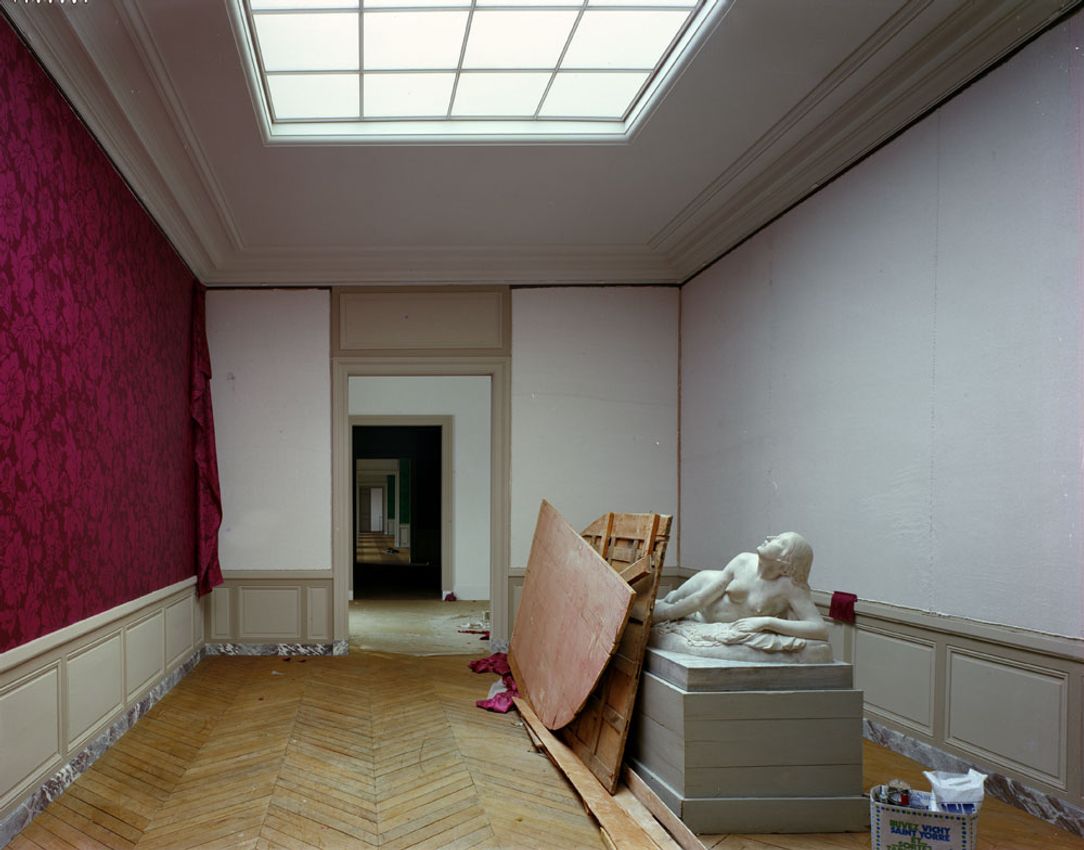
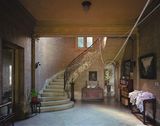
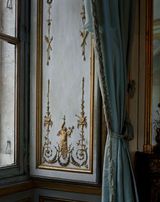
Moving to Paris in 1983, Polidori embarked on his first major project, documenting the restoration of the Château de Versailles. Over a 30 year period, he produced forensic-like photographs that elevated the status of his captured environment to that of ‘memory theatres’. Between 2008 and 2015, Versailles travelled to Edwynn Houk Gallery, Zurich; Flowers Gallery, London; Mary Boone Gallery, New York; and Galerie de Bellefeuille, Montreal. Included as part of Polidori’s retrospective at the Musée d’art contemporain de Montréal in 2009, the series was heralded by curator Paulette Gagnon for how their ‘subtle colours and perfect harmony of line and material seem to endow the image with some of the power and appeal of paintings.’
‘Dendritic Cities’ Series
Polidori worked as a staff photographer for The New Yorker from 1998–2006. During this period, he embarked on a number of projects photographing ‘dendritic cities’—a term he uses to describe the built sprawl of poverty stricken locales. ‘I began this series in 1996 when I chanced upon the auto-constructed settlements in Jabal al Qal’a (Amman Citadel),’ Polidori explains. ‘This whole settlement was constructed within three years by Palestinians espoused from Kuwait in 1991 and I was amazed by the vast and rapid expansion of this new “organic” urban growth.’
Polidori’s exploration of dendritic cities has seen him document the slums of Mumbai, the favelas of Rio de Janeiro, the settlements in Amman, and the fading grandeur of Havana in works such as 60 Feet Road (2016), Dharavi #1 (2008), and Amrut Nagar #3 (2011).
After The Flood
Polidori’s 2006 series, ‘After The Flood’, documented the widespread damage, collapsed infrastructure, and devastated neighborhoods of New Orleans in the wake of Hurricane Katrina. Devoid of people, these works epitomise Polidori’s ability to represent human fragility and identity through the environment he captures. Presented at his well-attended show, New Orleans after the Flood, at the Metropolitan Museum of Art in New York, the series also travelled to Flowers East, London; Nicholas Metivier Gallery, Toronto; Jarach Gallery, Venice; and Arthur Roger Gallery; New Orleans.
Other notable projects include a 2001 series documenting the aftermath of the 1986 Chernobyl nuclear power disaster in Pripyat, Ukraine and the architectural remnants of the abandoned Hotel Petra in the wake of Lebanon’s civil war.
In line with his characteristically poetic framing of interiors, Polidori’s has also undertaken more commercial projects that include capturing the art collection of French fashion designer, Yves Saint Laurent, and the Autumn 2011 campaign of Italian fashion house, Bottega Veneta, at Palazzo Papadopoli in Venice.
Public and Private Collections
Robert Polidori‘s photography is held in a number of public and private collections around the world, including Bibliothèque Nationale, Paris; Château de Versailles, Versailles; Maison Européenne de la Photographie, Paris; Musée d’art contemporain, Montréal; Museum of Fine Arts, Houston; Museum of Modern Art, New York; New Orleans Museum of Art; Centre Pompidou, Paris; J. Paul Getty Museum, Los Angeles; Metropolitan Museum of Art, New York; Victoria & Albert Museum, London; and Walker Art Centre, Minneapolis.
Robert Polidori’s major solo exhibitions include AlUla – Journey Through Time, Corso Vittorio Emanuele II, Milan (2021); Fra Angelico / Opus Operantis, Flowers Gallery, London (2019); Ecophilia / Chronostasis, Paul Kasmin Gallery, New York (2016); 1986–2016 Remembering Chernobyl, Galerie Karsten Greve, Paris (2016); Exteriors and Interiors, Galerie Karsten Greve, Cologne (2015); Versailles, The Memories of Walls, Fontana Gallery, Amsterdam (2014); Versailles, Mary Boone Gallery, New York (2013); La Mémoire des Murs, Galerie Karsten Greve, Paris (2013); Portraits, Edwynn Houk Gallery, New York (2012); Versailles, Flowers Gallery, London (2010); Robert Polidori, Musée d’art contemporain, Montreal (2009); New Orleans after the Flood, Metropolitan Museum of Art, New York (2006); and Chernobyl, Edwynn Houk Gallery, New York (2006).
Robert Polidori’s major group exhibitions include Civilisation: The Way We Live Now, National Museum of Modern and Contemporary Art, Seoul; Ullens Center for Contemporary Art, Beijing; National Gallery of Victoria, Melbourne; Auckland Art Gallery, Auckland; and Musée des Civilisations de l’Europe et de la Méditerranée, Marseille (2019); Frontiers Reimagined: Art that Connects Us, Museo di Palazzo Grimani, Venice (2015); Beyond Words: Photography in the New Yorker, Ullens Centre for Contemporary Art, Beijing (2012); Jonas Mekas / Robert Polidori, Edwynn Houk Gallery, New York (2012); and The Art of Caring; A Look at Life Through Photography, New Orleans Museum of Art (2009).
Polidori has won numerous awards for his photography, including the World Press Award for Art (1998) and the Alfred Eisenstaedt Award for Magazine Photography (1999 and 2000). In 2020, Polidori was the recipient of a Guggenheim Fellowship.
Annabel Downes | Ocula | 2021









Explore Robert Polidori's Exhibitions





Explore and Follow Artists Shaping Contemporary Art
A respected voice in contemporary art discourse.
Focusing on ambitious storytelling and insightful art-world commentary. Ocula Magazine publishes in-depth interviews, critical essays and timely analysis on the artists, exhibitions and ideas driving the global art world.
Learn more about Ocula Magazine
Showcasing the best of the art world.
Ocula partners with galleries from around the world to highlight their artists, artworks and exhibitions. Gallery membership is by application and invitation, with each member vetted by an independent panel.
Learn more about Ocula Membership
Specialises in the sale of major artworks.
Led by a team with deep ties to the world’s leading auction houses, galleries and collectors. Ocula’s advisory team offers bespoke services to high-net-worth clients from around the world who are looking to acquire the best of contemporary and modern art.
Learn more about our team and services