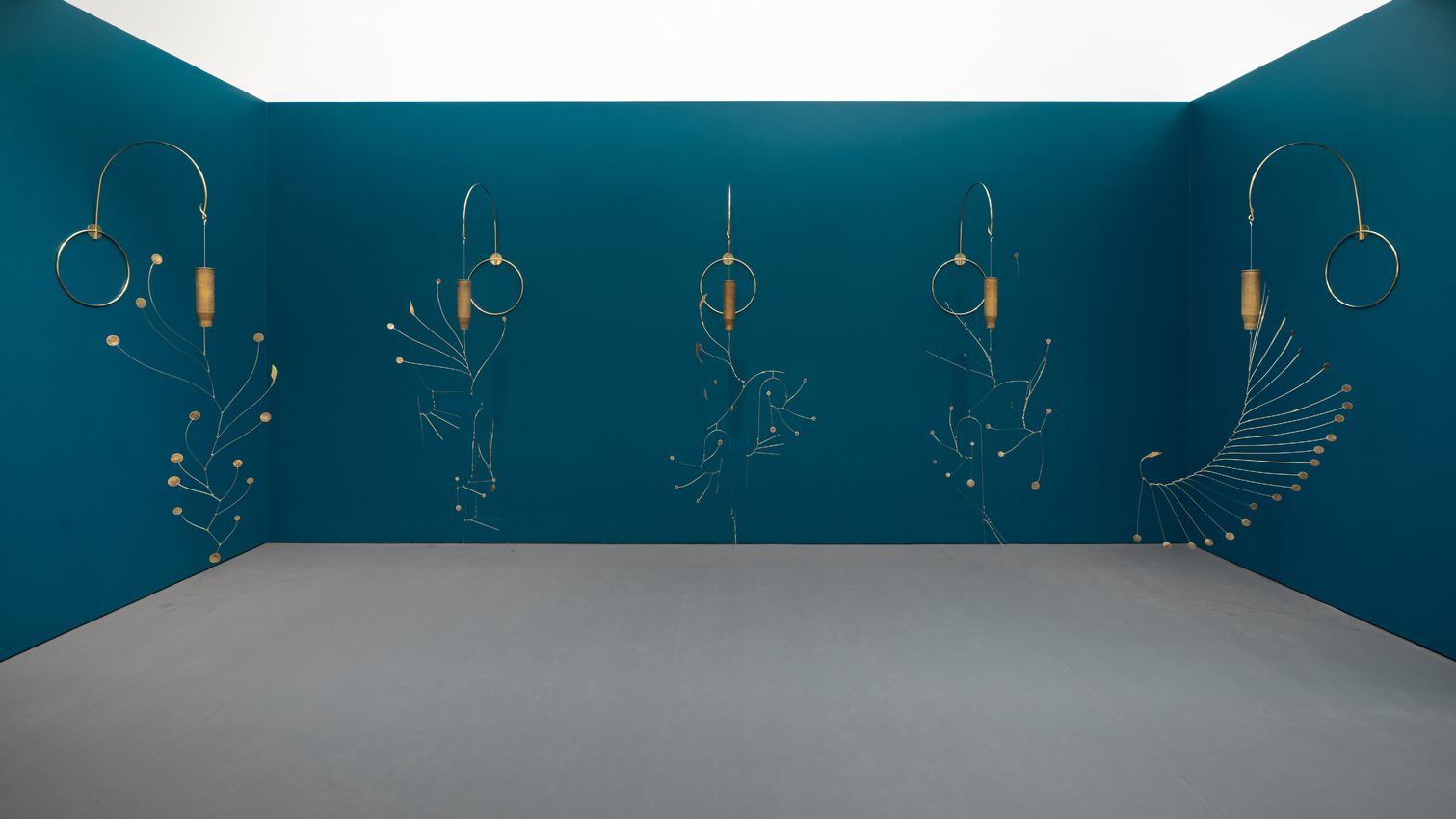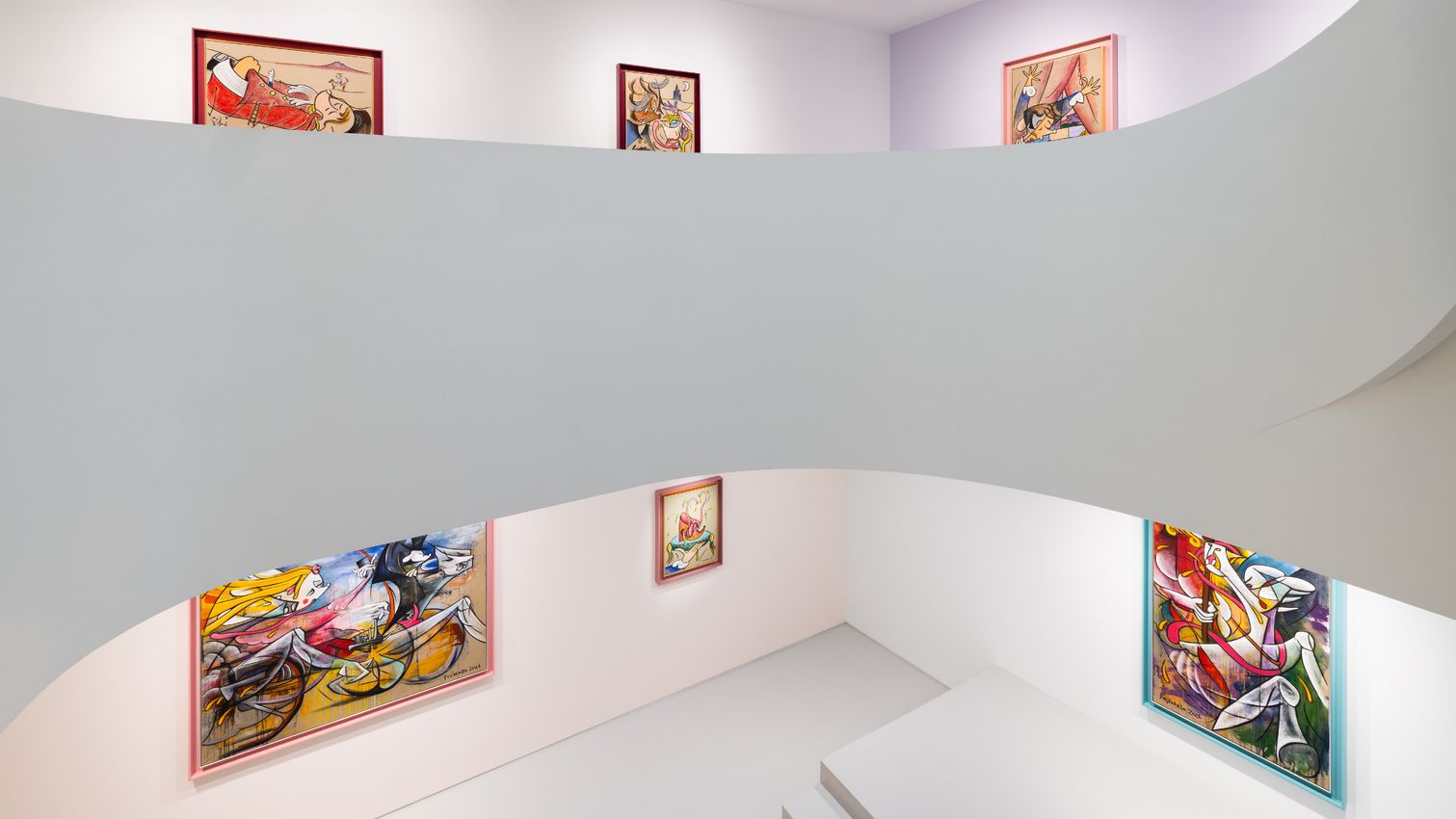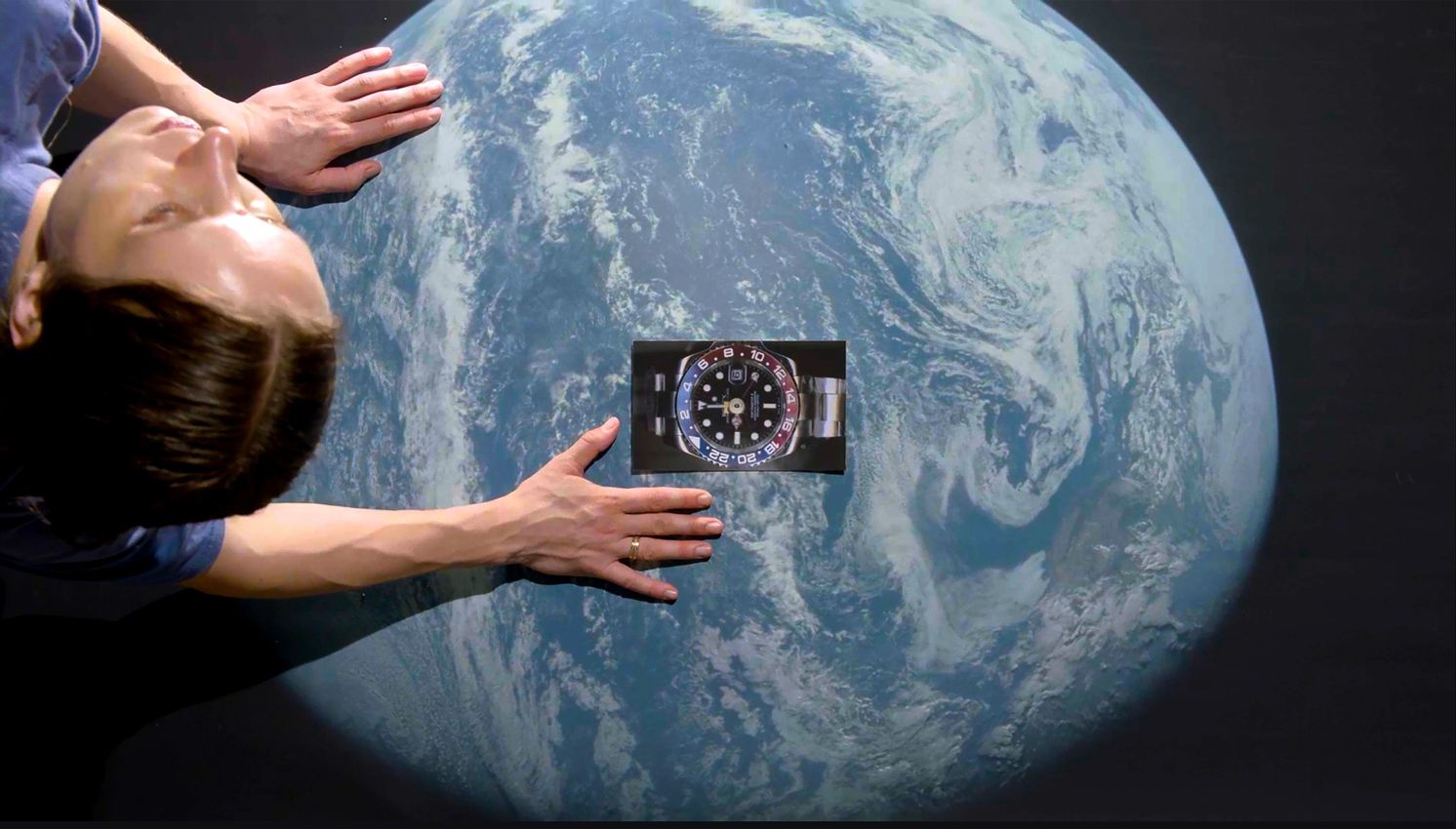
A central motif in the practice of the Finnish artist duo Tommi Grönlund and Petteri Nisunen, who began working together as Grönlund-Nisunen in 1993, is transforming their curiosity about elemental forces such as gravity, magnetism, or radiation into quietly evocative works that convey fundamental principles of these conditions. Grönlund-Nisunen’s works often employ the behaviors of natural elements to communicate specific or generalized physical phenomena. Thus, for example, air or water —in liquid or gaseous form—can become indicators of time, pressure, electrical currents, and/or energy. Similarly, light and sound function in their most basic form—as electromagnetic radiation or sound waves—yet can have an outsized impact. Executed with custom-made or pre-produced industrial materials, their work’s technical appearance is—perhaps paradoxically, but herein lies the very mystery of their work’s transformative power—tied to a visceral experience of curiosity, wonder and cognition.
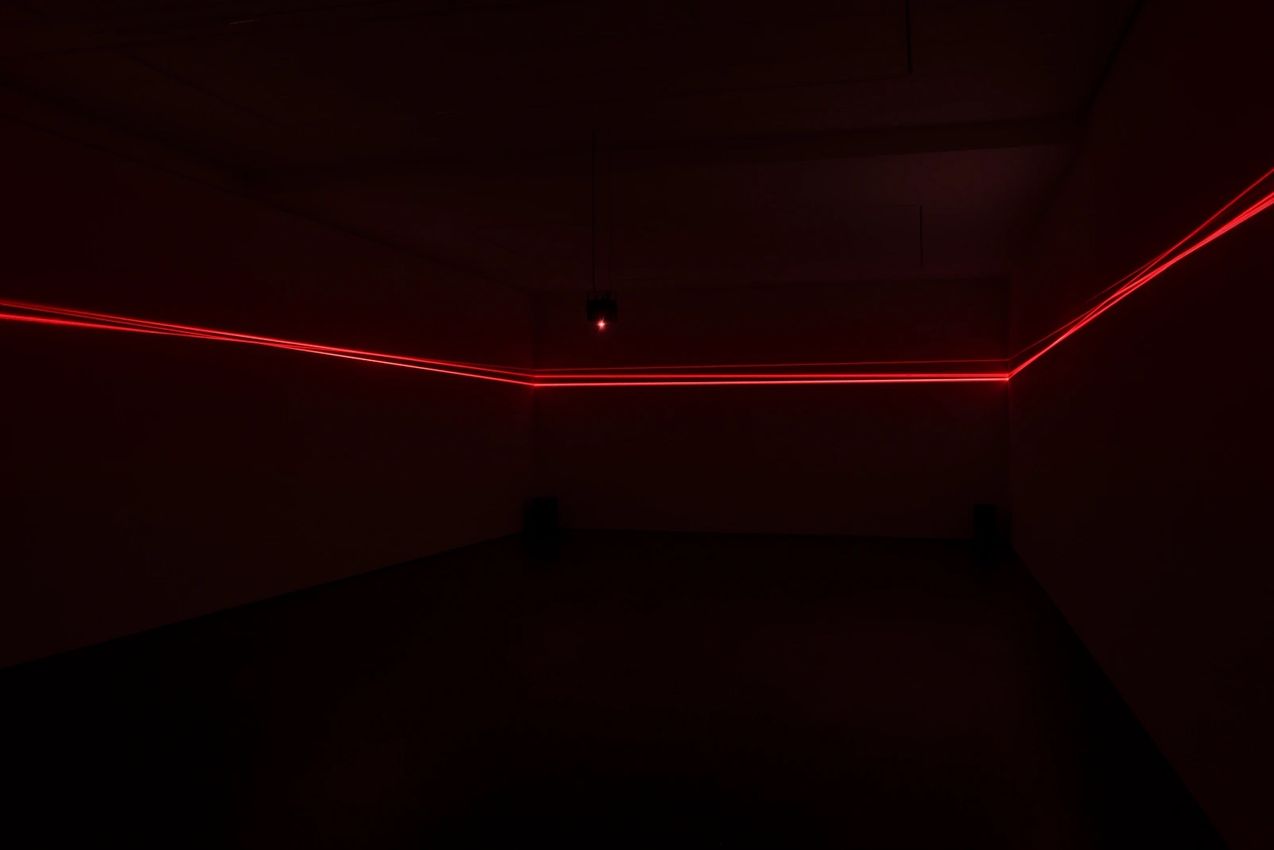
The new work, Scattered Horizon, presents three swaying lines, which hit the walls of the otherwise dark exhibition space. The horizon is generally taken for granted as a singular, fixed occurrence in nature, so the sight of it elevated, tripled and in constant movement can have a slightly disorienting effect. A complementary sound element of three sine wave tones modulating with each other adds another physical sensation, as the low frequency vibrations can be felt in one’s body. In this context, the term ‘immersive’ describes the encounter in a literal sense: engaging visitors in a multi-sensory experience, the work is visible, audible, and palpable. We depend on the stability of our surroundings both physically and psychologically; that is why losing the stabilising horizon line, and adapting to it, can be experienced either as meditative, thrilling or even uncomfortable, depending on the visitor. Scattered Horizon plays on these associations, but also leaves visitors the freedom to explore their physical presence and emotional response.


Esther Schipper founded the gallery in 1989 in Cologne. In 1997 the gallery relocated to Berlin. Through more than three decades of continuous exhibition practice, the gallery has established itself as a major force not only in Germany but in an international context, with offices in Paris and Seoul and representatives in France, Spain, the United States, Latin America, South Korea, Taiwan and China. The gallery holds up to ten gallery exhibitions as well as multiple off-site projects each year and participates in leading art fairs across the globe.

A respected voice in contemporary art discourse.
Focusing on ambitious storytelling and insightful art-world commentary. Ocula Magazine publishes in-depth interviews, critical essays and timely analysis on the artists, exhibitions and ideas driving the global art world.
Learn more about Ocula Magazine
Showcasing the best of the art world.
Ocula partners with galleries from around the world to highlight their artists, artworks and exhibitions. Gallery membership is by application and invitation, with each member vetted by an independent panel.
Learn more about Ocula Membership

Specialises in the sale of major artworks.
Led by a team with deep ties to the world’s leading auction houses, galleries and collectors. Ocula’s advisory team offers bespoke services to high-net-worth clients from around the world who are looking to acquire the best of contemporary and modern art.
Learn more about our team and services