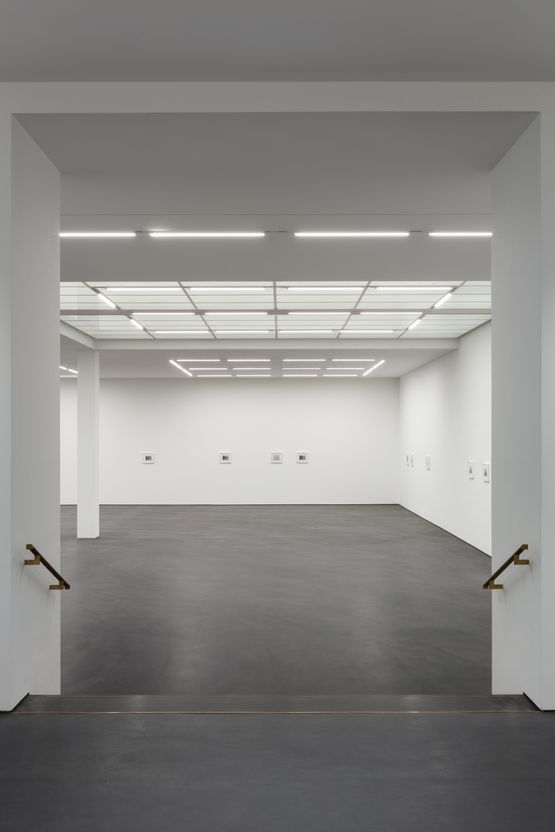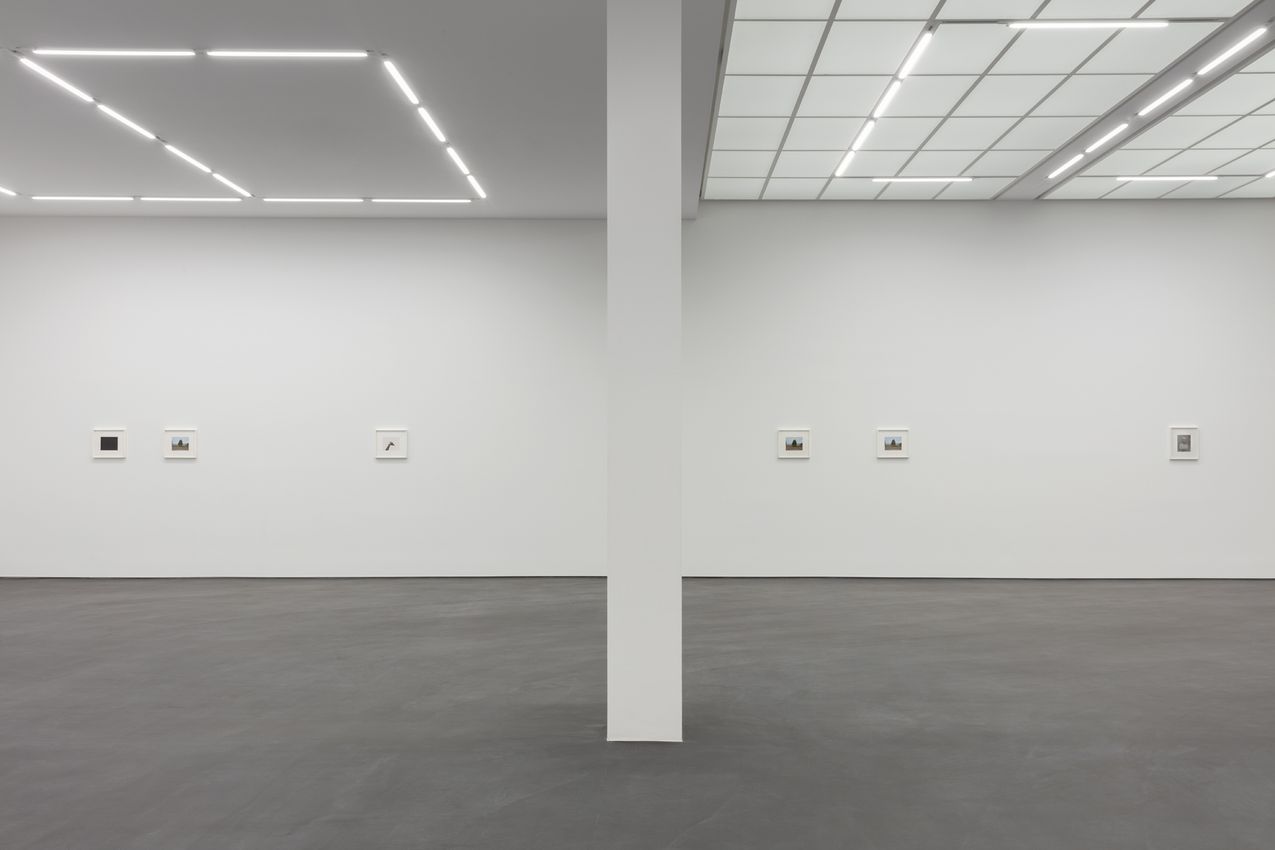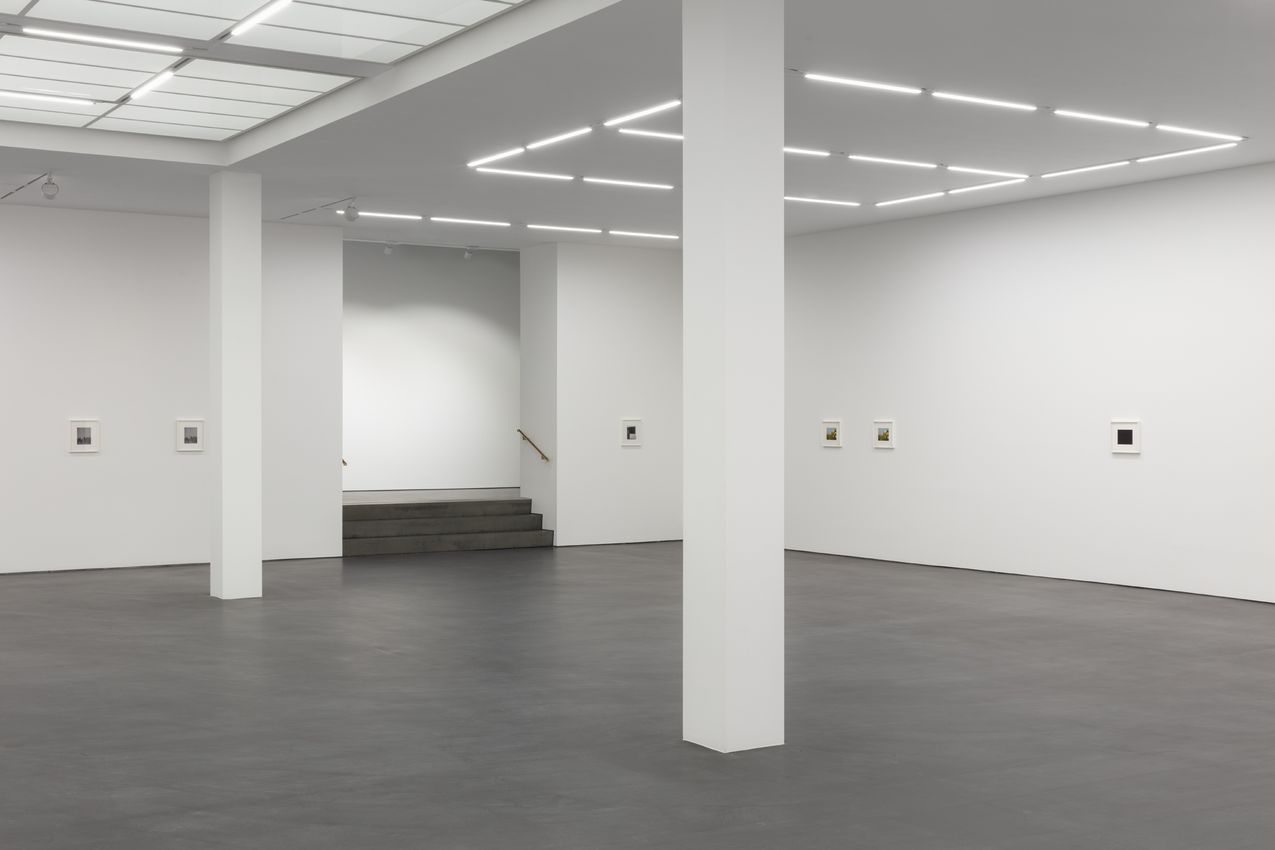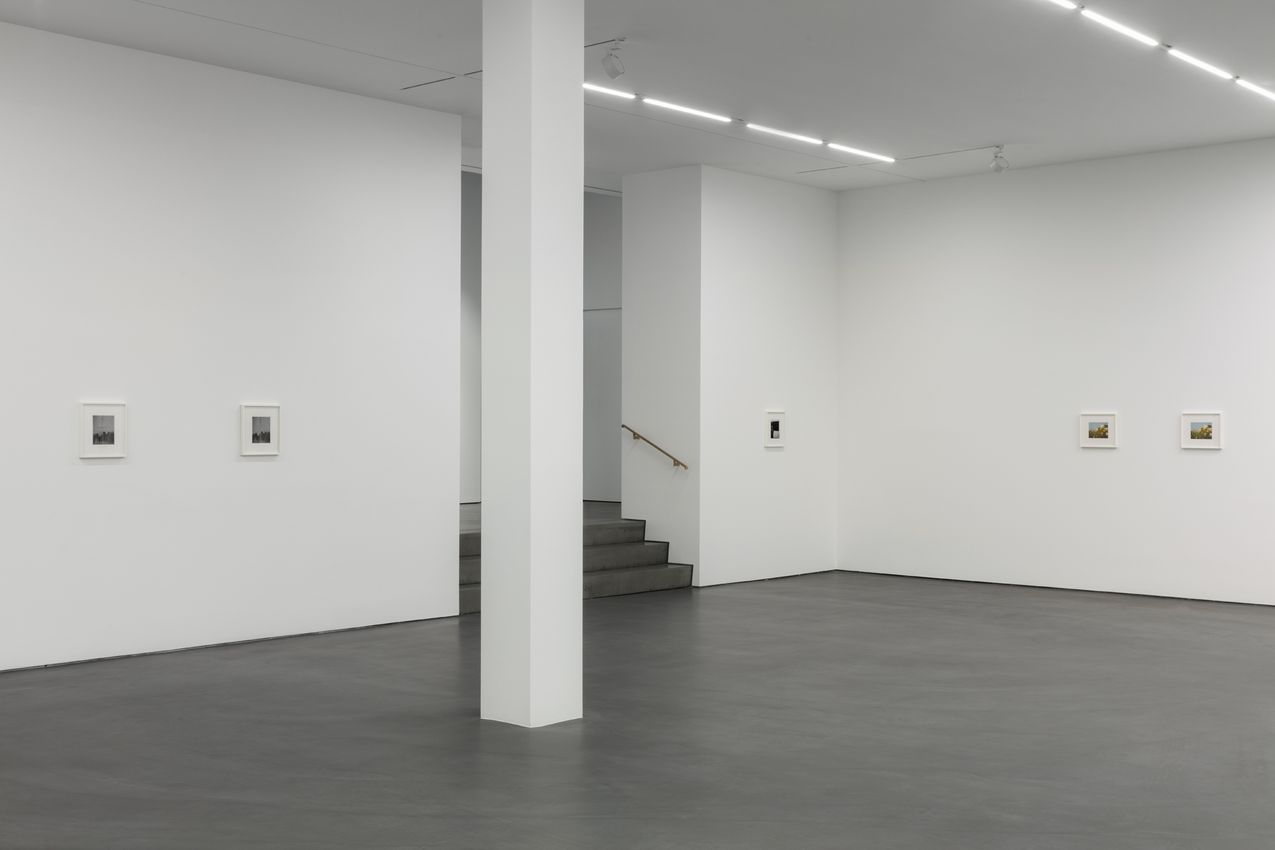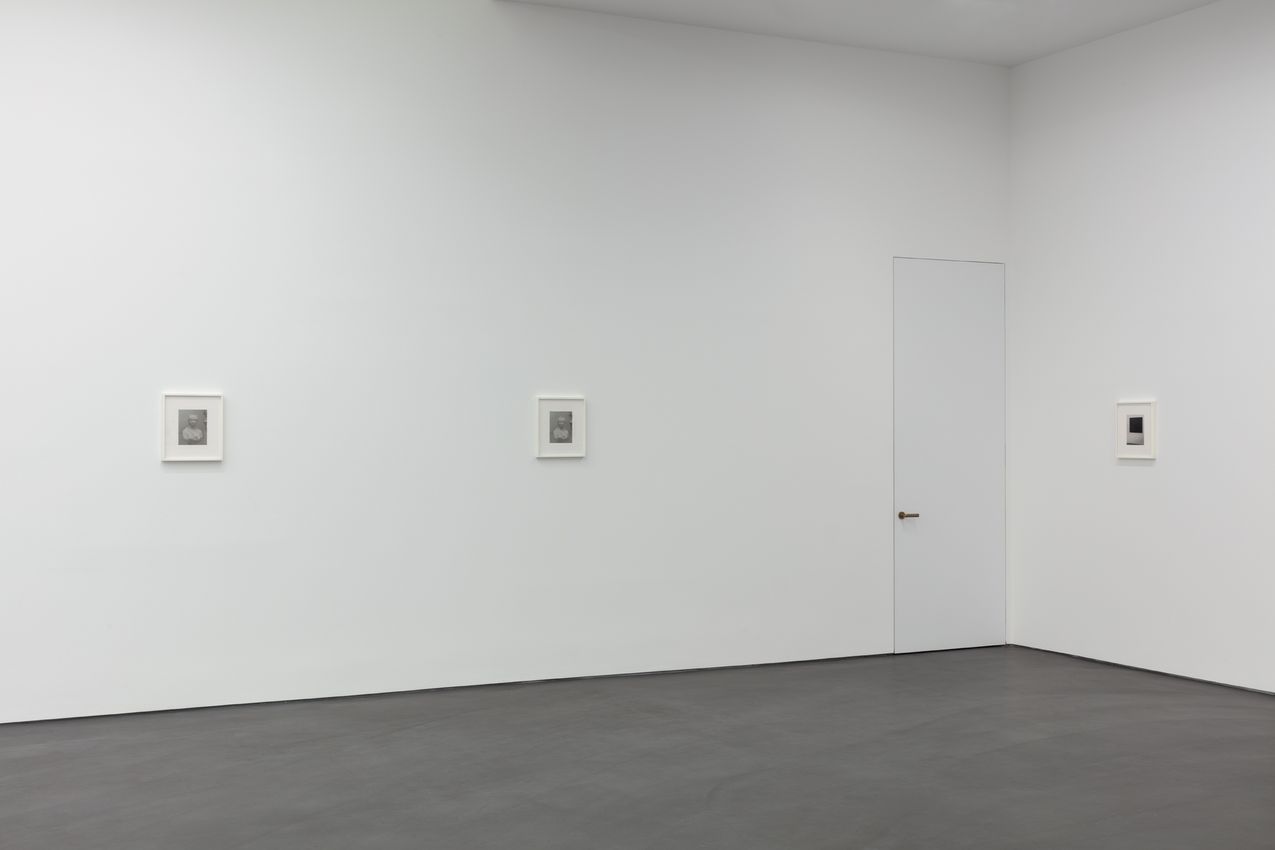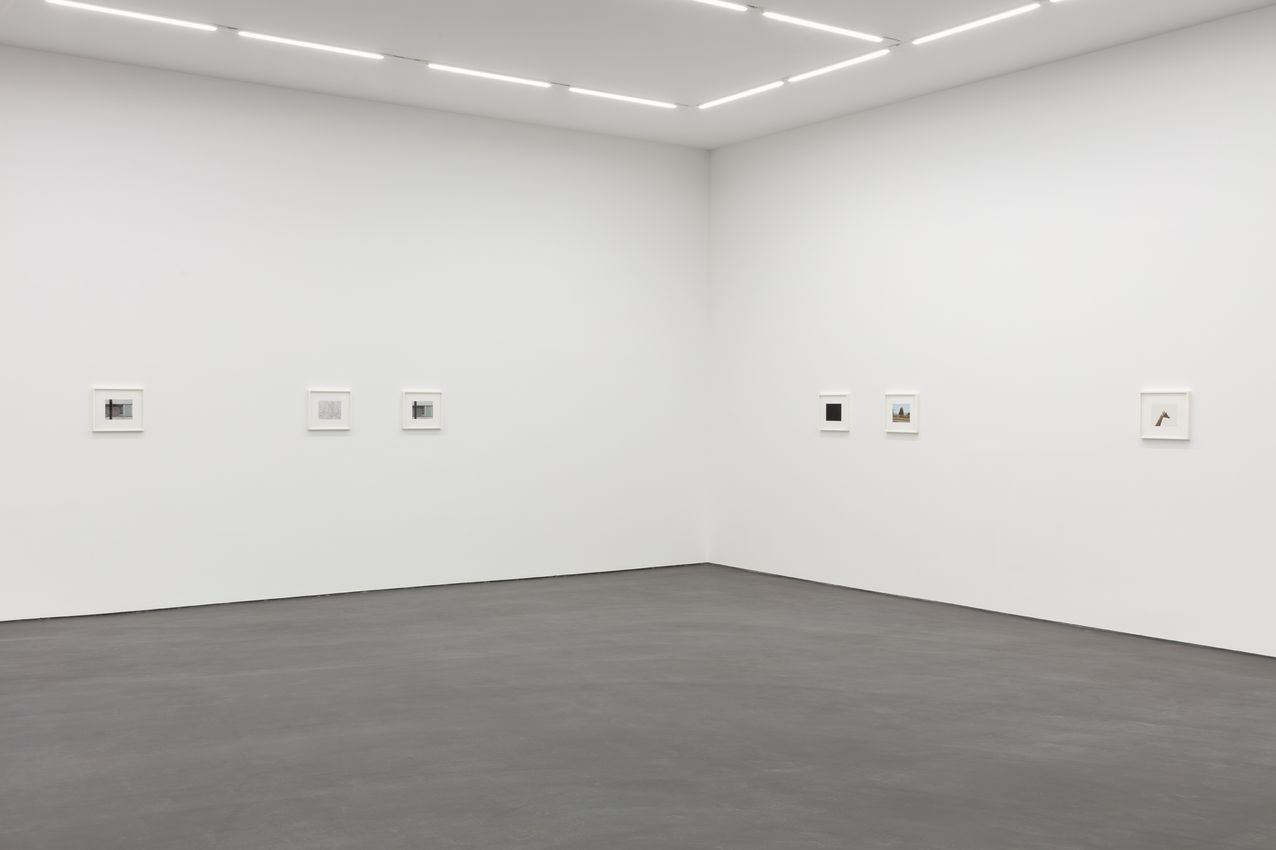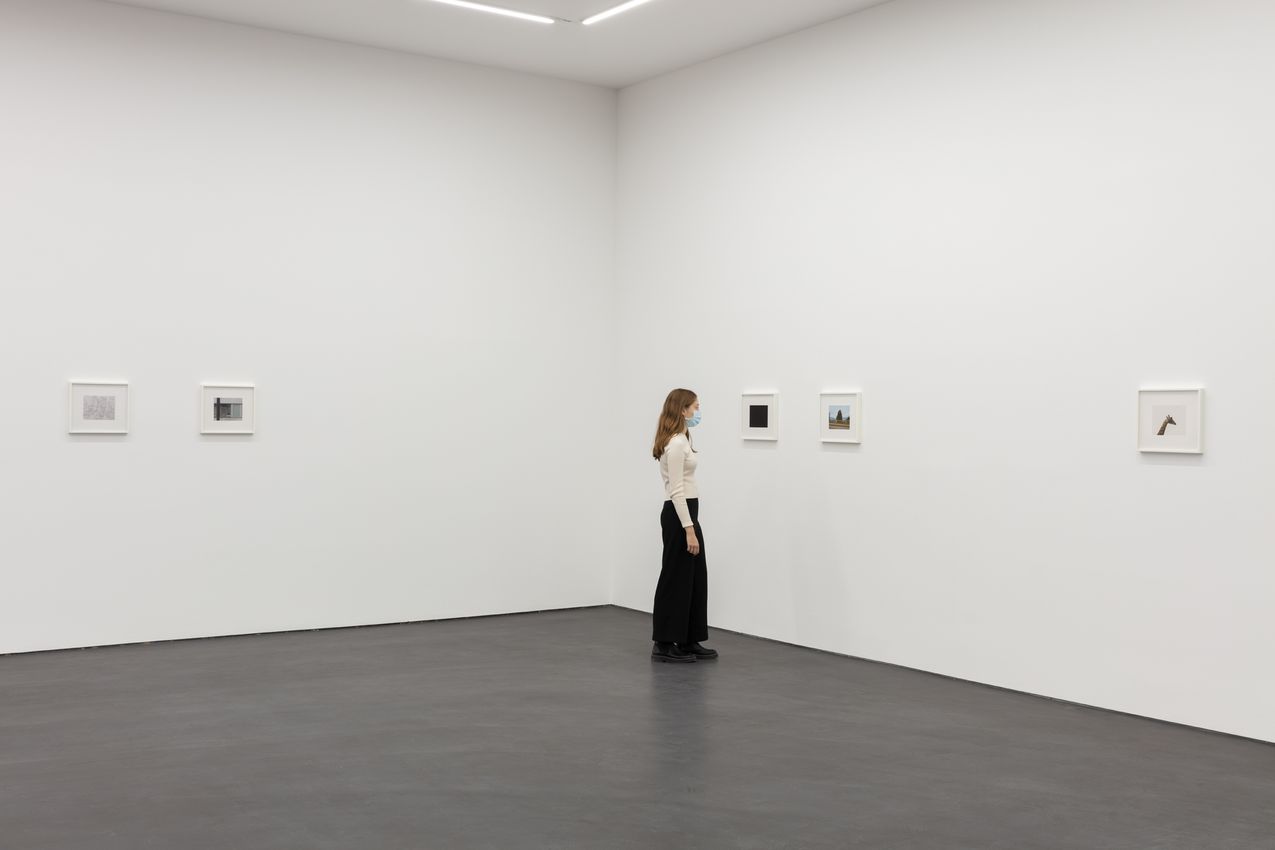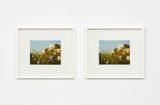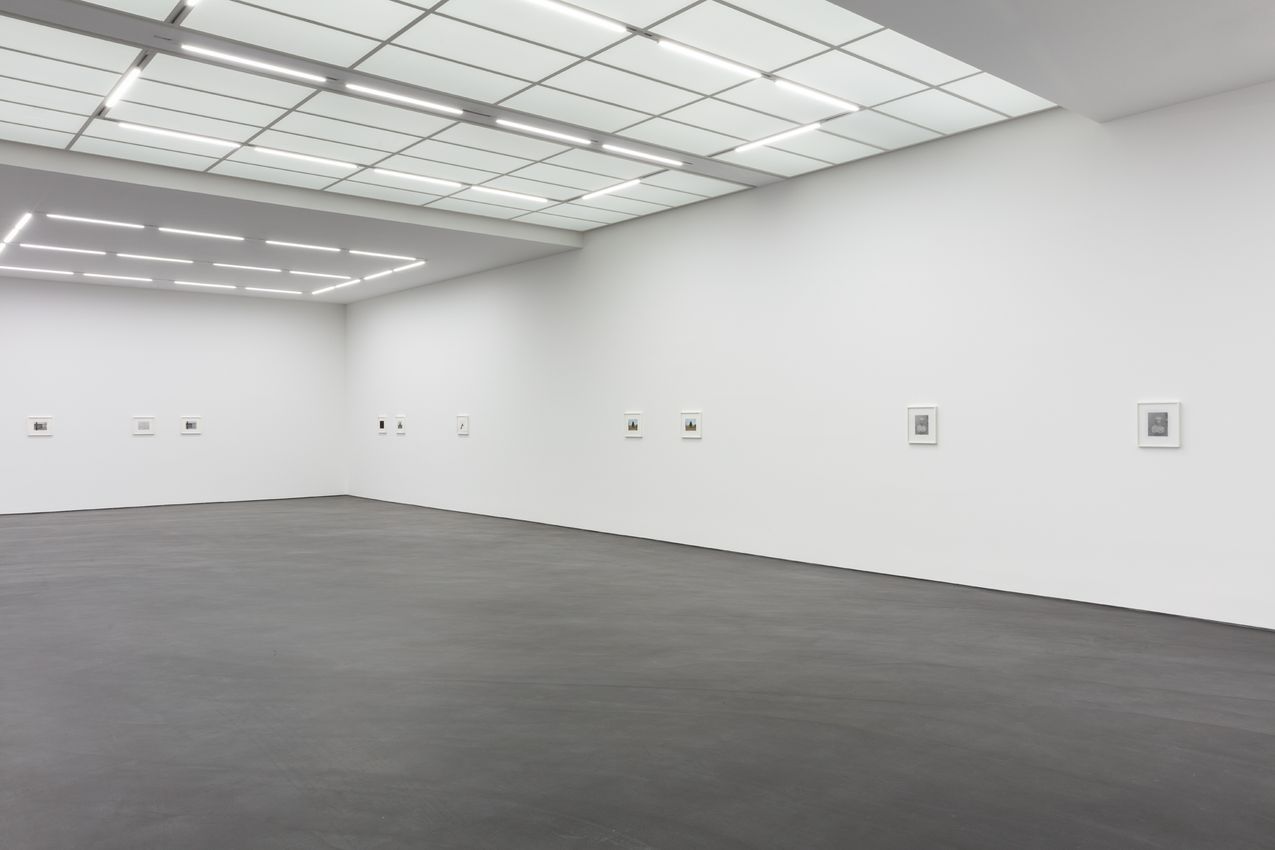
Esther Schipper is pleased to present Andrew Grassie‘s first solo exhibition with the gallery. Entitled Still Frame the exhibition includes 24 new paintings. Both title and number of paintings obliquely acknowledge the conceptual affinity to cinematic story-telling that informs the new body of work. (24 frames per second is the standard ratio in film to create the illusion of seamless movement in human vision.)
Known for small, precisely painted works—their ostensibly unassuming matter-of-factness sometimes masking the often elaborately staged preparation of past projects and their conceptual ambition—with Still Frame Andrew Grassie continues longstanding interests into the status of the image, the nature of memory and contemporary painting.
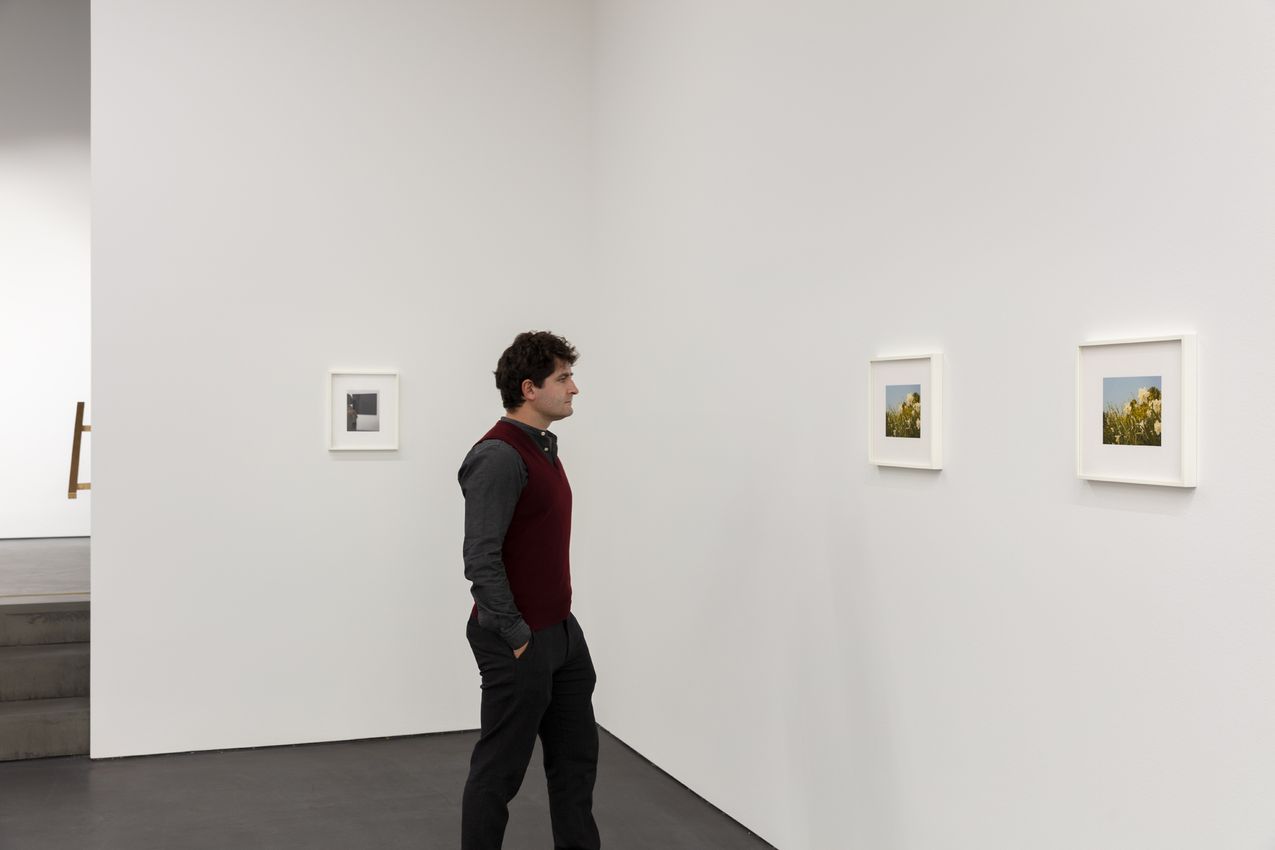
Beginning as an experiment, Grassie chose motifs that had held his attention for reasons he could not always explain: snapshots associated with personal memories, tied to a specific place, a moment in time. Photos from his image archive, many decades old and exuding a vague awkwardness, became sources for these works. Thus, for instance, one painting depicts a bright meadow, but from the ground up: the head of an enormous daffodil seems to hover over us, like a giant blocking our view. Another depicts a car door, opened to a rugged green landscape beyond; others the hazy view of an unremarkable street, or the light reflecting on a windscreen on a rainy night. With each painting the artist responded to a lingering fascination he had not yet resolved but wanted to explore—often painting the same motif multiple times.
Grassie’s paintings effectively shape the observer’s experience of looking. With their tightly framed compositions, his works subtly play with our captivity: what is beyond the daffodils? Visual obstacles reinforce this impression: what vista does the tree on the bridge hide from our gaze? Several of the source images were shot through windows—car, bus or subway—and the resulting glare, haze or scratches (respectively) adds an element of place, even as the windowpane becomes the surface of the painting, like a transparent foil slightly obscuring the view.
The exhibition includes repeated motifs in twos and threes. The delicate pattern of tiny brushstrokes characteristic of tempera painting makes each image clearly unique, yet the repetition of these motifs encourages a close examination. And while this multiplication makes apparent the small differences, it also reinforces the paintings’ affinity to memories: unique experiences, played over in our mind. Drawing on this belatedness of understanding, the exhibition has a dream-like quality: associative, mysterious, and with a stillness that registers with quiet force as meaningful. Yet, there is a restless quality to this stillness that feels cinematic: we half-expect that time might well suddenly speed up again.
Andrew Grassie was born in 1966 in Edinburgh, Scotland. He received a BA (Hons) in Fine Art Painting at St.Martin’s School and a MA in Painting at Royal College of Art. He lives and works in London.
The artist has taught at Anglia Ruskin Art School, Cambridge, Wimbledon School of Art, City and Guilds of London Art School, and held visiting lectures at Manchester School of Art, Edinburgh College of Art,Goldsmiths College of Art, Chelsea School of Art, Royal Academy School of Art, Winchester School of Art,Newcastle Art School and Emily Carr Art School in Vancouver.
The artist’s recent solo exhibitions include: Andrew Grassie – Collected Works, Rennie Collection, Vancouver (2012) and Andrew Grassie: Painting as Document, Talbot Rice Gallery, University of Edinburgh (2008).
Selected group exhibitions include: Le realtà ordinarie, Palazzo de’ Toschi, Bologna (2020); Spring 2019: Collected Works, Rennie Collection, Vancouver (2019); Phase II – Imagining Architecture, Institut Supérieurdes Arts de Toulouse, Toulouse (2018); Fully Awake, blip blip blip, Leeds (2017); Wundercamera: Savannah, Telfair Museum, Savannah (2017); Complicity: Artifice and Illusion, Collyer Bristow Art Galleries, London (2016); Return Journey, Mostyn, Llandudno (2014); Wundercamera, The Holden Gallery, Manchester (2014); Wundercamera, Pitzhanger Manor, London (2013); Summer 2013: Collected Works, Rennie Collection, Vancouver (2013); Government Art Collection – Commissions: Now and Then, Whitechapel Gallery, London (2012); The Story of the Government Art Collection, Whitechapel Gallery, London (2012), and Slow Painting, Museum Morsbroich, Leverkusen (2010).
His work is represented in the collections of Tate, London; Rennie Collection, Vancouver; Government Art Collection, London; Goetz Collection, Munich, and Zabludowicz Collection, London.
Andrew Grassie’s paintings are based on photographs he has taken himself or that he, in some cases, has found. Often they have been elaborately staged, although this effort is veiled by the ostensibly unassuming matter-of-factness the small, precisely painted works exude. The works are executed with tempera, a technique associated with pre-Renaissance panel paintings anteceding the development of oil paint. Tempera dries very rapidly and remains relatively sheer. To create cover and solid colours, many layers are needed.


Esther Schipper founded the gallery in 1989 in Cologne. In 1997 the gallery relocated to Berlin. Through more than three decades of continuous exhibition practice, the gallery has established itself as a major force not only in Germany but in an international context, with offices in Paris and Seoul and representatives in France, Spain, the United States, Latin America, South Korea, Taiwan and China. The gallery holds up to ten gallery exhibitions as well as multiple off-site projects each year and participates in leading art fairs across the globe.

A respected voice in contemporary art discourse.
Focusing on ambitious storytelling and insightful art-world commentary. Ocula Magazine publishes in-depth interviews, critical essays and timely analysis on the artists, exhibitions and ideas driving the global art world.
Learn more about Ocula Magazine
Showcasing the best of the art world.
Ocula partners with galleries from around the world to highlight their artists, artworks and exhibitions. Gallery membership is by application and invitation, with each member vetted by an independent panel.
Learn more about Ocula Membership

Specialises in the sale of major artworks.
Led by a team with deep ties to the world’s leading auction houses, galleries and collectors. Ocula’s advisory team offers bespoke services to high-net-worth clients from around the world who are looking to acquire the best of contemporary and modern art.
Learn more about our team and services