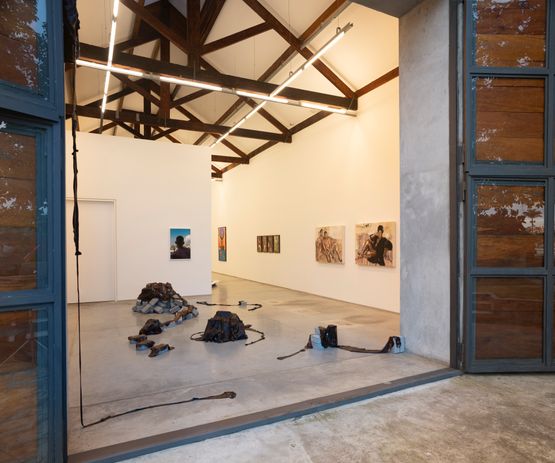
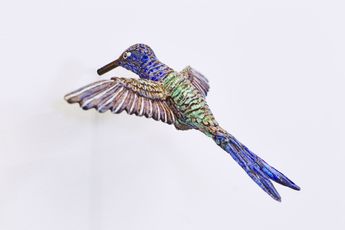
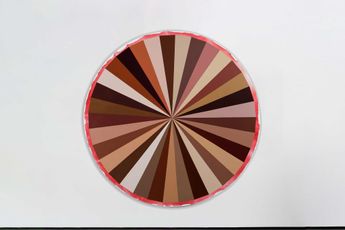
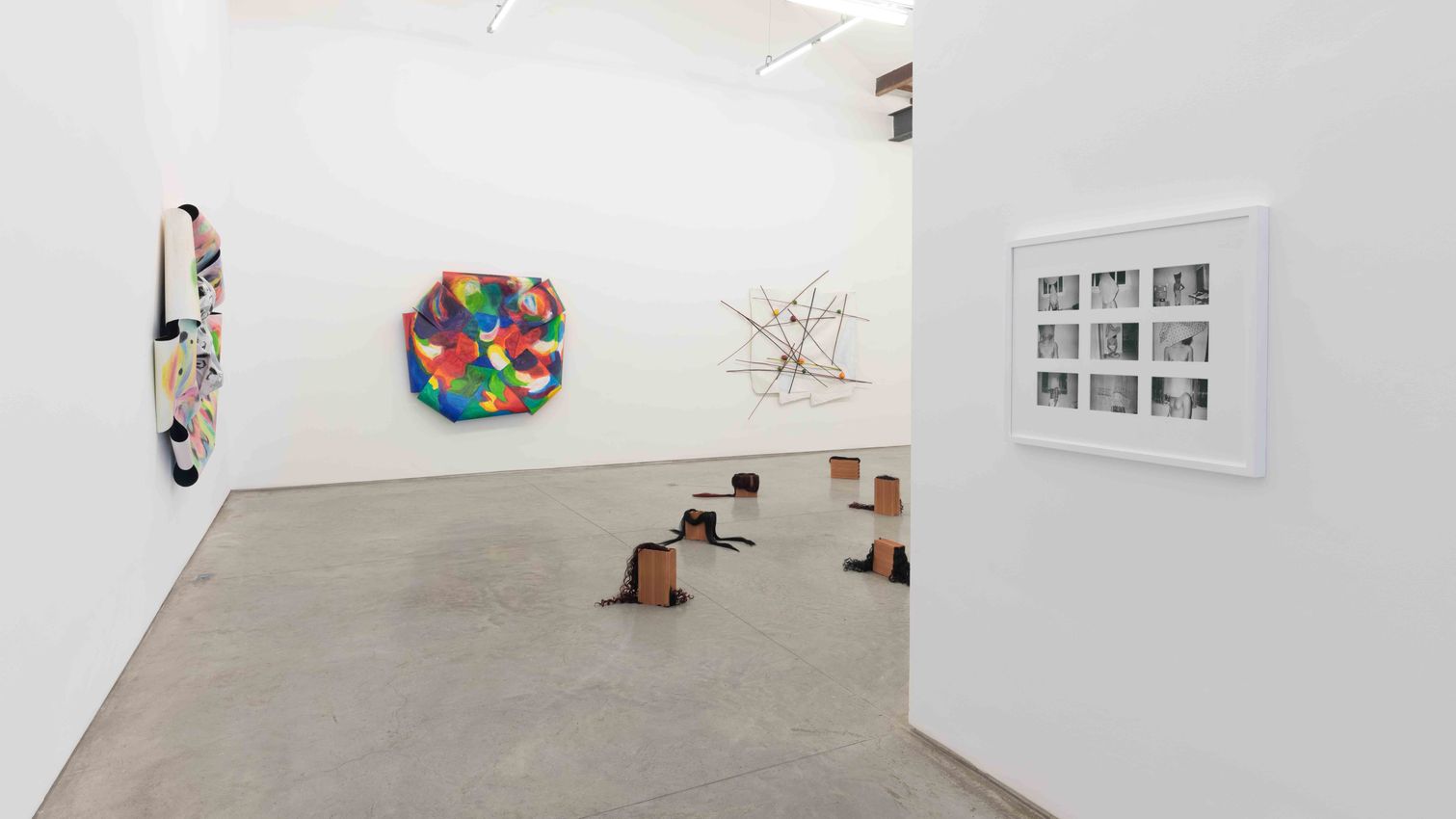
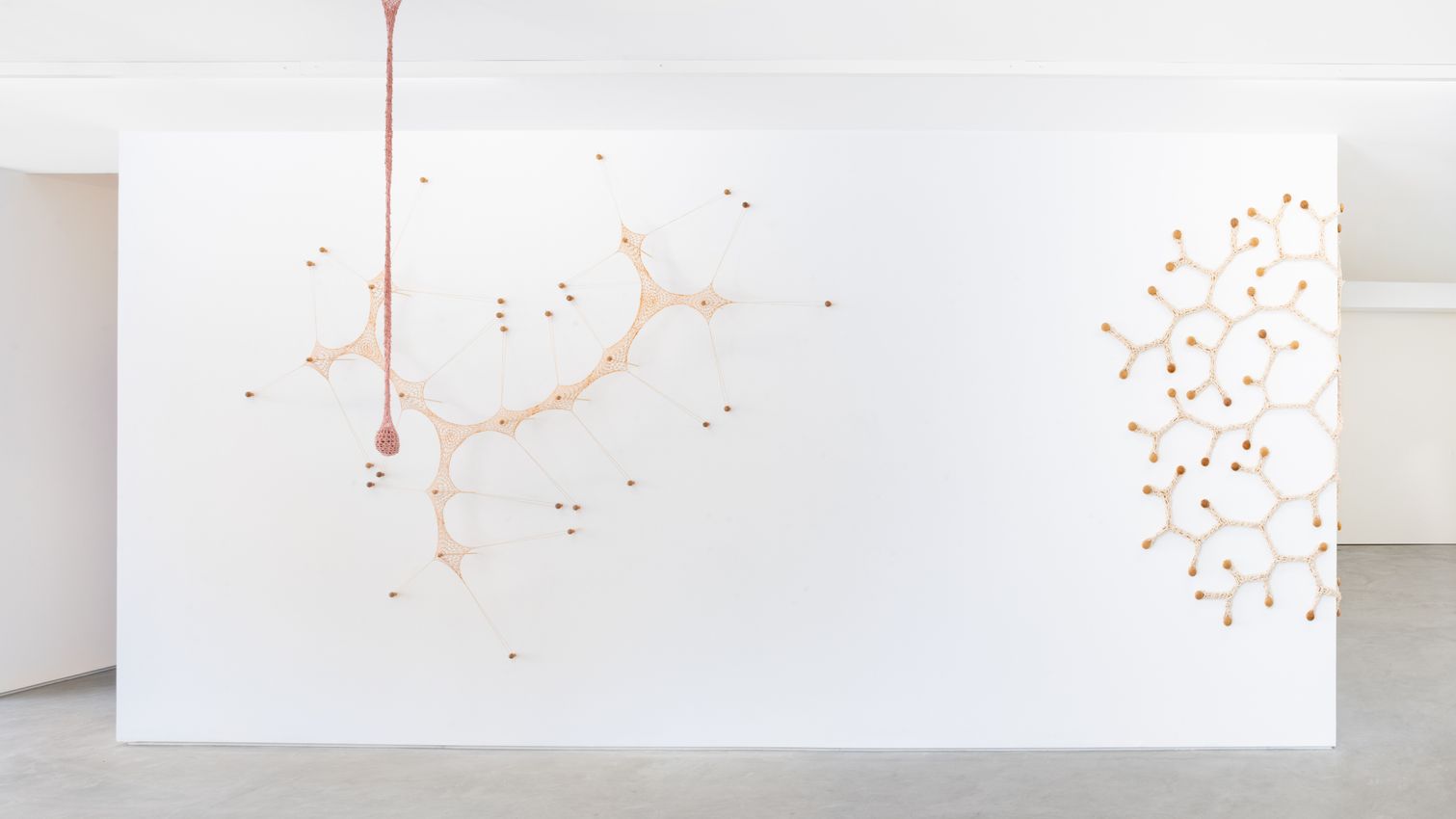
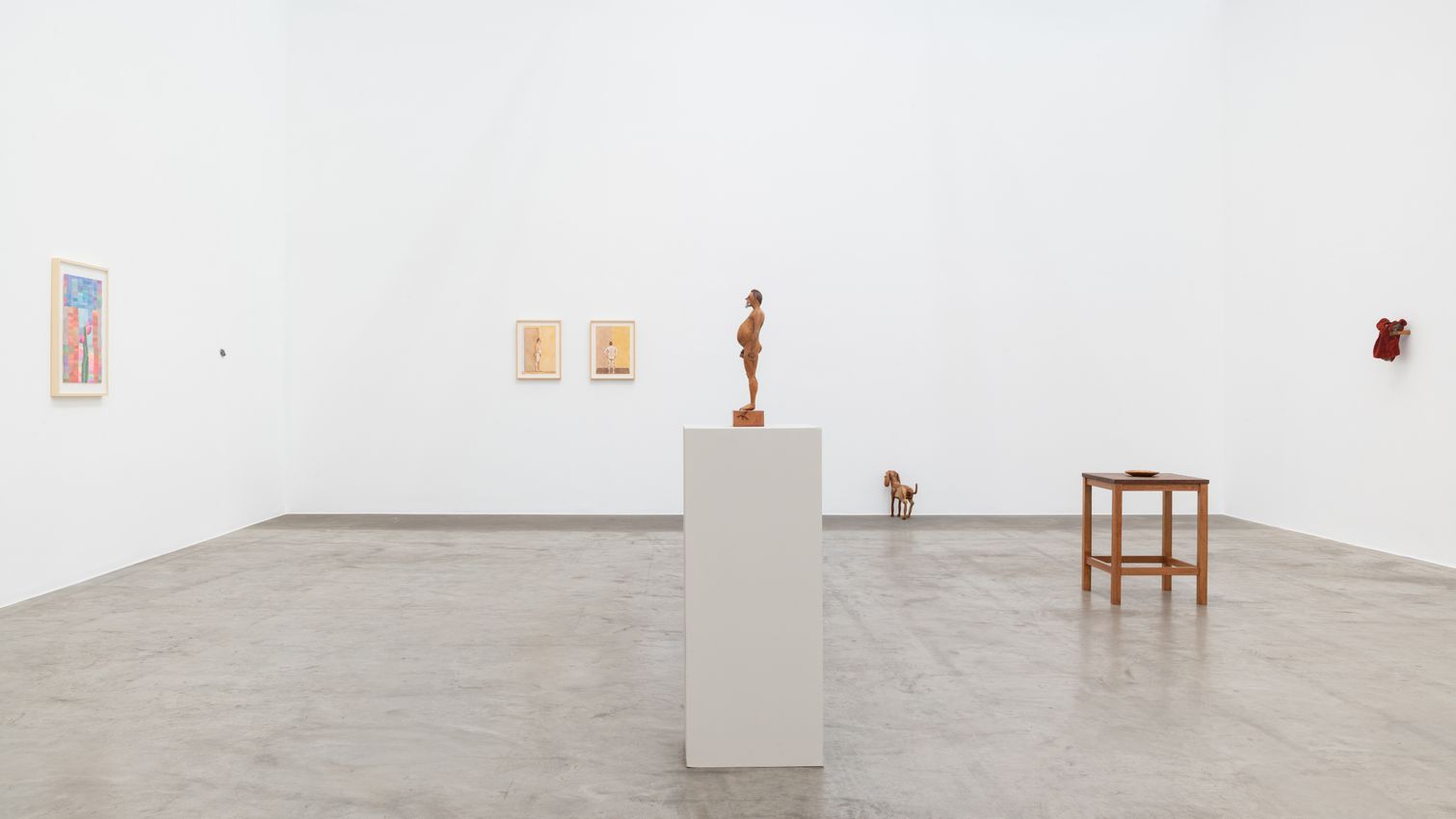
Fortes D’Aloia & Gabriel is delighted to present Escrito no Corpo. The group show curated by Keyna Eleison and Victor Gorgulho proposes a dialogue between the work of young and established artists in tandem with the collection of Abdias Nascimento‘s Teatro Experimental do Negro (TEN).
The idea of a narrative dimension to the body permeates several works in the exhibition, particularly the photo-performances by Ana Beatriz Almeida, Antonio Tarsis, Ayrson Heráclito, Castiel Vitorino Brasileiro and Carla Santana. Through different approaches, these images share the notion of self-writing made possible by the performative act and its multiple forms of documentation. Melissa Oliveira‘s photography, in turn, goes in the opposite direction and attempts to direct the gaze at the Other, understanding this support as a powerful exercise in alterity and the construction of subjectivity.
Video appears as a medium for recording other performative gestures of a similar nature, whether in the search for one’s own reflection as undertaken by Rodrigo Cass in Narciso no mijo, or in the documentation of Diambe’s Devolta action, in which the artist choreographs a circle of fire around of the statue of D. Pedro II, at Tiradentes Square, Rio de Janeiro. The desire to forge other possible historical narratives also surfaces in the painting Mapa de Lopo Homem II by Adriana Varejão, which reminds us of the wounds left by the violence of the Brazilian colonial process, and in the plaster sculpture by Armando Andrade Tudela, evoking the image of a disfigured head in the process of deconstruction. Issues around colonialism are further manifested in the work of Herbert de Paz, who fills the silhouette of a human figure with images of iconographic origin, today widely debated and dissected for their controversies.
The interest in the friction between body and sculpture is also manifested in the work of artist Iagor Peres. He creates a skin-material from a mixture of organic and synthetic matter that stretches through space, resting on concrete blocks. Such absence of the human figure—hinted at by the presence of other devices—is also to be found in Efrain Almeida‘s Vestido, enshrined in a crown of thorns, and in the sculpture by Agrippina R. Manhattan, whose Serpente forges an autobiographical tale.
The narrative of the body reappears in paintings by Panmela Castro and Moisés Patrício. While Castro’s works (from the ‘Vigília’ series) are intimate portraits of people close to the artist, who accompanied her during a pandemic night, the characters in Patrício’s paintings reference the ‘candomblé’ rituals.
A special thanks to Elisa Larkin Nascimento and Ipeafro.
A respected voice in contemporary art discourse.
Focusing on ambitious storytelling and insightful art-world commentary. Ocula Magazine publishes in-depth interviews, critical essays and timely analysis on the artists, exhibitions and ideas driving the global art world.
Learn more about Ocula Magazine
Showcasing the best of the art world.
Ocula partners with galleries from around the world to highlight their artists, artworks and exhibitions. Gallery membership is by application and invitation, with each member vetted by an independent panel.
Learn more about Ocula Membership

Specialises in the sale of major artworks.
Led by a team with deep ties to the world’s leading auction houses, galleries and collectors. Ocula’s advisory team offers bespoke services to high-net-worth clients from around the world who are looking to acquire the best of contemporary and modern art.
Learn more about our team and services