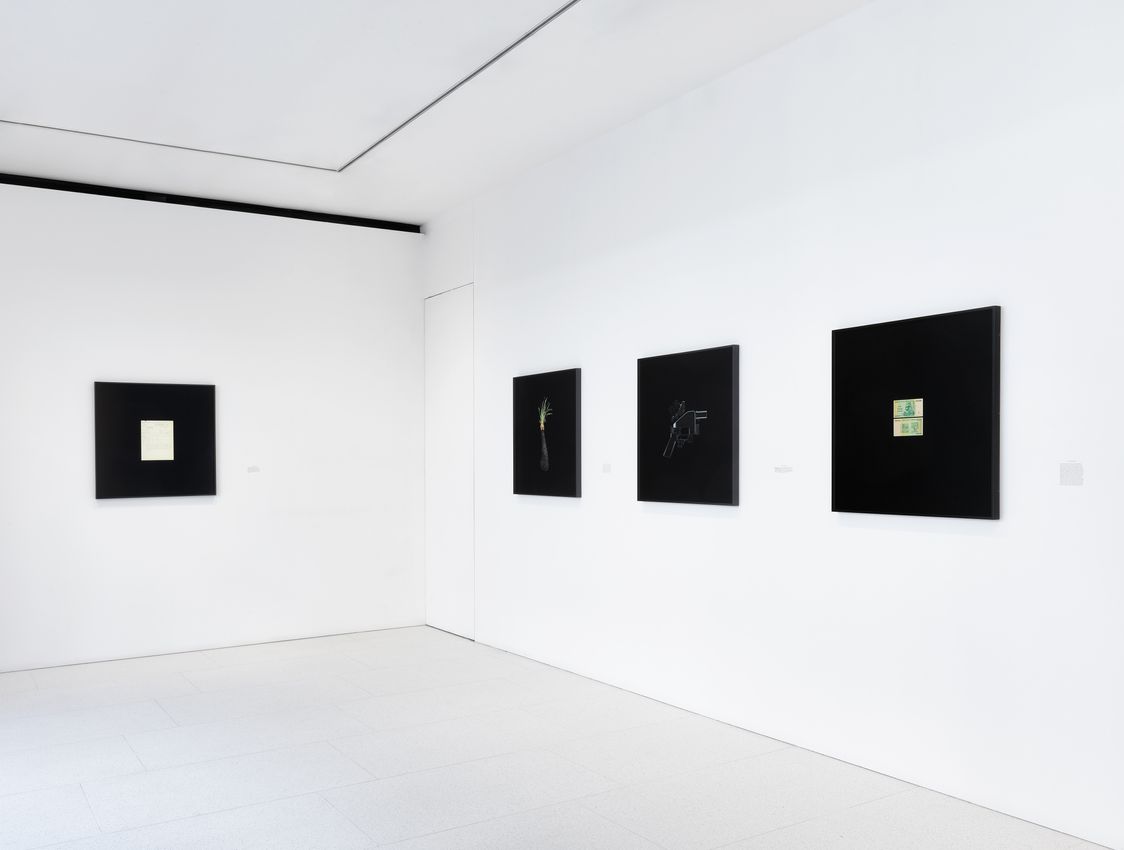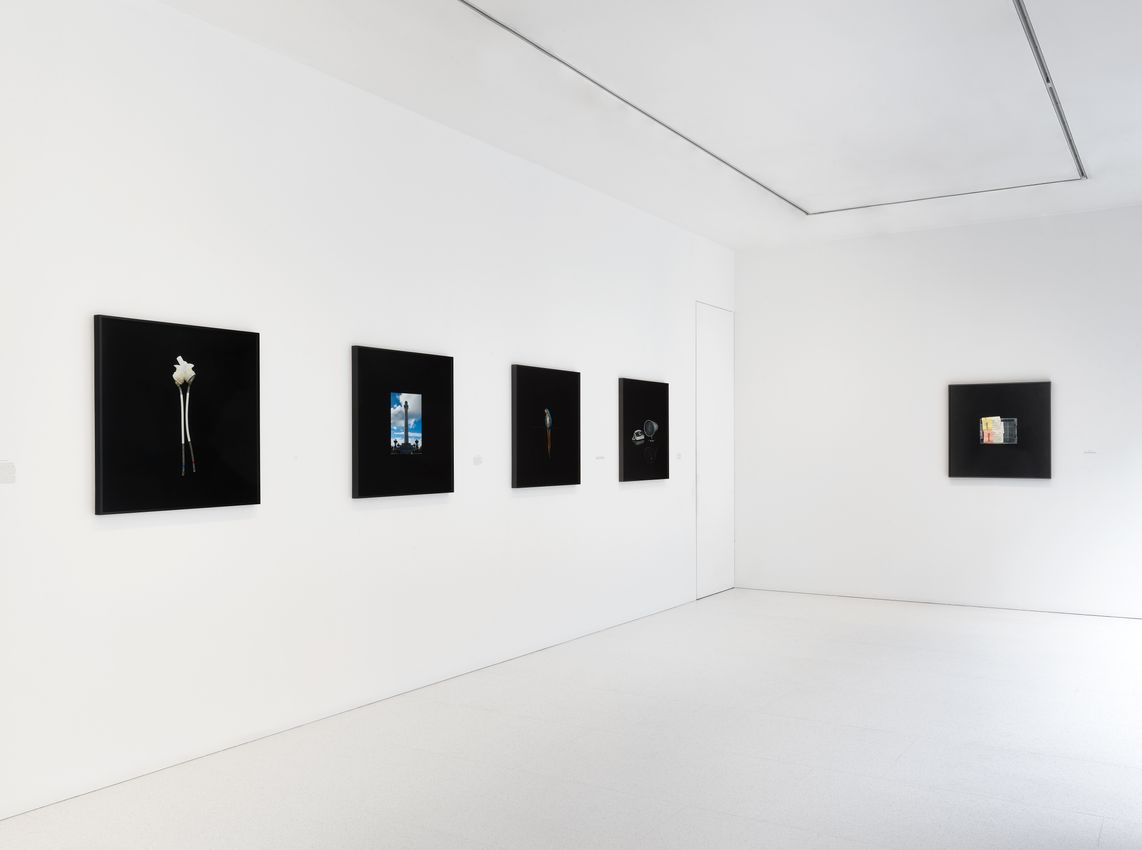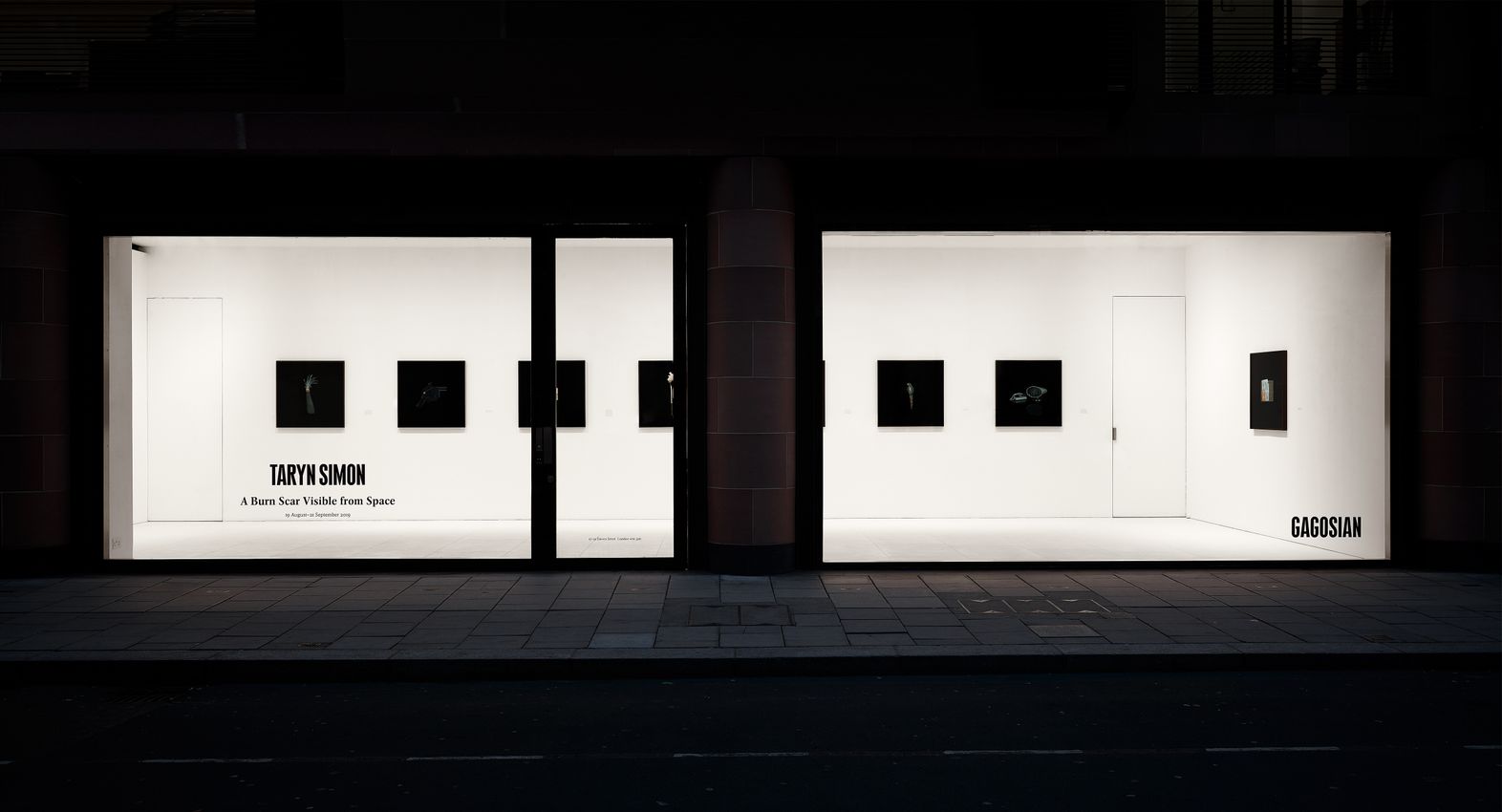
Gagosian is pleased to present A Burn Scar Visible from Space, photographs from Taryn Simon‘s ongoing series ‘Black Square’, begun in 2006.
Pink and yellow slips of paper announce the results of the ballot count in Haringey, London, for the European Union membership referendum; a billion-dollar Zimbabwean banknote marks the rapid decline of the nation’s currency; an empty 80-foot pedestal in New Orleans recalls the sanctioned removal of a statue of Confederate army commander Robert E. Lee by a crew wearing bulletproof vests; a charred palm tree, brought to California from the Canary Islands to populate large residential estates, has both fuelled and survived a devastating wildfire; a Picturephone from 1964, deemed unnecessary at the time of its release, is an obsolete prototype for present-day video communication; and the dark power of 3-D printing is made clear with a gun named The Liberator, the plans for which can be downloaded by anyone with a Wi-Fi connection.
In the ‘Black Square’ photographs, Simon presents objects, documents, and individuals in a black field given the same dimensions as Kasimir Malevich’s 1915 painting of the same name. Selected without any intentional categorisation, Simon’s subjects form a randomised index of human invention and activity. They are fragments of recent history-detached from context and freighted with anxiety.
In 1915, World War I was far from over. Chlorine gas was used as a war weapon for the first time. Pluto was photographed, though not yet discovered. It was the eve of the October Revolution. Malevich described his work-a thickly painted black square, set within a white border-as the ‘icon of [his] era,’ an eclipse for the modern gaze. This description set his painting in direct opposition to (or, perhaps, in alignment with) popular religious icons.
In 2019, icons are to be found not only in a church’s candlelit interior: political leaders, scientists, and activists are icons; the apps and logos on our phone screens are icons. In a mutating echo of Malevich’s Black Square, every major cellular device and digital platform has its own version of a black square emoji, but none agree on what it represents.
Witnesses to both ingenuity and mortality, most of the objects in Simon’s photographs will outlive us all. This is especially true for Black Square XVII, an 80-by-80-by 80 cm cube containing a mass of vitrified nuclear waste that will remain in Russia’s State Atomic Energy Corporation until the year 3015, when it will finally be safe for human observation. Charged with the uncertainties of the future, Simon’s black squares reveal what we have done, and ask what we’ll do next.
Taryn Simon is a multidisciplinary artist who has worked in photography, text, sculpture, and performance. Her practice involves extensive research, resulting in projects guided by an interest in systems of categorisation and classification.


A respected voice in contemporary art discourse.
Focusing on ambitious storytelling and insightful art-world commentary. Ocula Magazine publishes in-depth interviews, critical essays and timely analysis on the artists, exhibitions and ideas driving the global art world.
Learn more about Ocula Magazine
Showcasing the best of the art world.
Ocula partners with galleries from around the world to highlight their artists, artworks and exhibitions. Gallery membership is by application and invitation, with each member vetted by an independent panel.
Learn more about Ocula Membership

Specialises in the sale of major artworks.
Led by a team with deep ties to the world’s leading auction houses, galleries and collectors. Ocula’s advisory team offers bespoke services to high-net-worth clients from around the world who are looking to acquire the best of contemporary and modern art.
Learn more about our team and services