

Press Release

Gagosian is pleased to announce an exhibition of new prints by Bennett Miller produced using a DALL•E image generator. This is Miller’s first exhibition with the gallery.

The works on view in New York emerged after a five-year period in which Miller researched and shot a documentary film about the technological crossroads at which we now find ourselves. Having interviewed numerous figures involved with artificial intelligence (AI)–including Sam Altman, CEO of OpenAI, the San Francisco–based developer of DALL•E–the artist began using the software to reflect on the nature and progression of shifts in the ways we understand representational artwork. The striking results engage the history and format of photography to pose questions around the contingent and enigmatic nature of perception, reality, and truth—an enquiry made newly urgent by revolutionary innovations in computing.

DALL•E—a portmanteau of Salvador Dalí and Pixar’s robot character WALL-E–is a ‘neural net’ that employs a deep-learning algorithm trained to translate written prompts into high-fidelity images. It was launched in 2021 by OpenAI, the company also responsible for ‘large language model’ ChatGPT, which performs a comparable operation with text. As Miller’s project acknowledges, such generators already exert a pervasive and not-uncontroversial influence on education, media, and commercial art and design, complicating debates around authenticity, appropriation, and style to a degree not seen since Postmodernism’s 1980s heyday.

In the prints on view in New York, Miller exploits DALL•E’s ability to generate images in multiple styles and combine different concepts. The program’s revolutionary comprehension of the complex relationships between text and image has made it–along with rival programs such as Midjourney and Stable Diffusion–the source of an increasing amount of editorial illustration, prompting cultural, legal, and economic concerns around originality, plagiarism, and the continuing viability of professional specialisation. Miller’s exhibition heralds a pivotal moment–one that, as the software’s initial flaws are ironed out and its corpus of source material expands, will never be repeated.

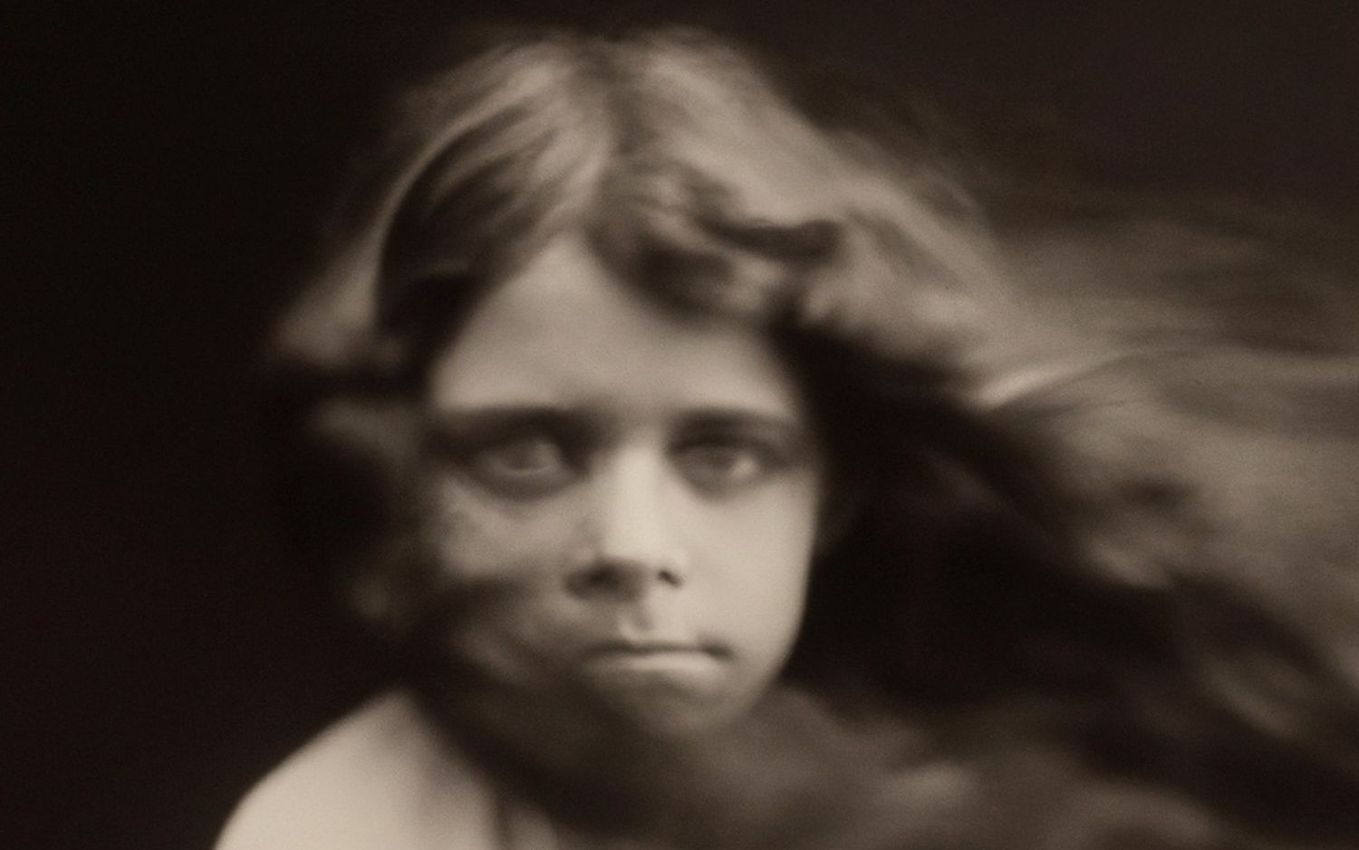
Miller’s new works testify to our crossing of the digital Rubicon. In linking the transformative power of the new technology with the dawn of photography and the birth of mechanical reproduction, they suggest an imminent shift in perception of even greater reach, asking us to reconsider exactly what it means to be human. With their sepia tones and uncanny, fugitive atmosphere, these oneiric works also draw on historical attempts to produce believable images of invented phenomena, including spiritualist photographs and Elsie Wright and Frances Griffith’s shots of the fictional ‘Cottingley Fairies.’ Though Miller’s studies of people and places are hauntingly redolent of late nineteenth- or early twentieth-century America, none of their subjects is wholly ‘real.’

Many of Miller’s works appear to be historical shots of pre-urban landscapes or children. But while hovering on the edge of recognisability, each one ultimately frustrates any attempt at definitive naming or location. Works such as Two Balloons and Wooden Sub (all works 2022) seem to hark back to the technologies of an era now beyond living memory, reconstructing it through impressions that may or may not be scientifically accurate. The anonymity of Mother and Child and eerie haziness of Unknown Cadet, meanwhile, speak to the unreliability of memory—and, by extension, the unreliability of any image-making technology.

As image generators continue to grow in popularity, the issues they raise proliferate. In February alone, Netflix Japan was forced to defend using AI in place of human animators to produce background images for a popular anime, while stock photography firm Getty Images sued Stability AI, Inc., for copyright infringement, accusing the company of mining its collection to train its image generator, Stable Diffusion. Generators are also revealing the influence of AI’s ingrained biases and capacity for disinformation. Revisiting the history of American photography through this embattled contemporary lens, Miller occupies the unstable territory that is already becoming our home.

Read More
About the Artist

Bennett Miller is a sculptor and installation artist from Perth, Western Australia. After spending five years obsessed with mini golf, recreating the Iraqi theatre of war across nine different installations (Golf War, 2003 - 2007), Miller has been working almost exclusively with dachshund dogs. He has staged his large scale performance work 'Dachshund UN' in numerous locations, both nationally (Next Wave Festival, Melbourne, 2010; Now Right Now, PICA, Perth, 2011; Local Positioning Systems, MCA, Sydney, 2012) and internationally (Fierce Festival, Birmingham, UK, 2012). Miller has also held solo exhibitions at IASKA (2006), Canberra Contemporary Art Space (2007) and Chalk Horse (2009). Bennett Miller had a busy 2012, undertaking a residency in New York on behalf of the Australia Council, exhibiting in the first installment of IASKA's Spaced: Art Out of Place at the Fremantle Art Centre and in the prestigious New 12, at ACCA, Melbourne and restaging the Dachshund UN at the MCA in Sydney.

View Artist Profile

Also Exhibiting at Gagosian

About the Gallery
Gagosian is a global network of art galleries specialising in modern and contemporary art with eighteen exhibition spaces worldwide.
View Gallery Profile
Address
976 Madison Avenue
New York
United States
Opening Hours
Tuesday – Saturday
10am – 6pm
(1)
New York 976 Madison Avenue
Gagosian
976 Madison Avenue, New York, United States
+1 212 744 2313
http://gagosian.com

Opening hours
Tuesday – Saturday
10am – 6pm
The art world in focus
