I was l’étranger, the foreigner, I was a refugee, I was stateless.—Christo
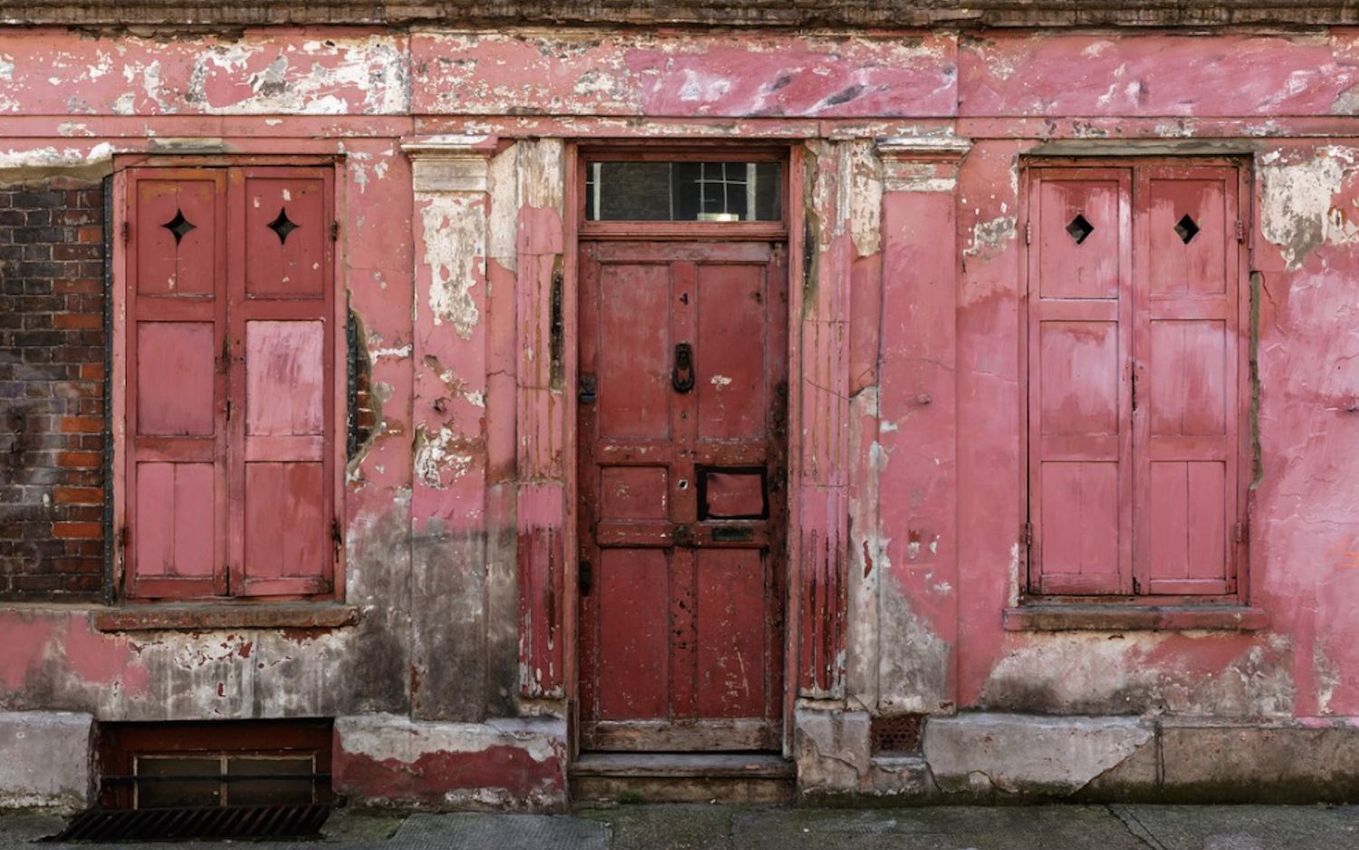
Gagosian is pleased to announce a presentation of early works by Christo at 4 Princelet Street in the Spitalfields area of London, curated by Elena Geuna. The exhibition is the inaugural project in the Gagosian Open series of off-site projects and will remain open every day from October 6 to 22.
Gagosian Open is a new program of ambitious temporary projects sited beyond the walls of the gallery that allows audiences to experience remarkable artworks in unusual contexts. For the first presentation in the series, early works by Christo will be set in dialogue with a Grade II–listed Georgian house in London’s East End. Foreshadowing the artist’s large-scale temporary public projects, these sculptural works see everyday objects veiled in fabric or plastic and bound with rope or twine. They present an artist who, even at this formative stage of his career, was responding creatively to domestic and urban environments, drawing attention to overlooked details by obscuring them from view.
Alluding to the safeguarding of personal belongings, the works, most of which are from the 1960s and 1970s, also speak to ideas of movement, migration, and preservation. The artist’s mixed heritage and experience as a political refugee, daringly escaping Stalin-era Bulgaria to Prague, then relocating to Vienna, Geneva, Paris, and eventually New York, defined him as an eternal wanderer—’l’étranger,’ as he referred to himself. This is echoed by the history of 4 Princelet Street itself as a house that has been home to successive migrant families. The property was first constructed in 1723 to house Huguenot migrants—the UK’s first refugees. The area has since welcomed Irish linen workers, Eastern European Jews, Jews from the Netherlands, and most recently members of Spitalfields’ large Bangladeshi community.
Renowned for their monumental temporary artworks, Christo and Jeanne-Claude, his wife and artistic collaborator, came to effectively redefine the relationship between art and public space, expanding the possibilities of scale and transforming familiar landscapes. Often requiring extensive planning and negotiation, these self-funded projects exist only for brief periods, after which their materials are repurposed or recycled, and the sites restored to their original state.
The inaugural Gagosian Open presentation coincides with an exhibition at Gagosian Basel that gathers other sculptures by Christo alongside preparatory drawings and collages for large-scale projects. Selected Works marks the twenty-fifth anniversary of Christo and Jeanne-Claude’s last project in the city in 1998, when they wrapped 178 trees around the Fondation Beyeler in 55,000 square meters of woven polyester fabric.
**About 4 Princelet Street **As London’s population grew in the early eighteenth century, housing development on what was then the city’s fringe gathered pace. The houses on Princelet Street were home to working Londoners and migrants, particularly the Huguenots, who had been fleeing religious persecution in France since the 1680s and brought industrialised silk-weaving to the neighbourhood. Completed in 1723, 4 Princelet Street was originally home to Sir Benjamin Truman, who was attracted by the building’s proximity to his family’s brewery. By the 1840s, the area was in decline and the house became multiple-occupancy for the remainder of the century. Subsequently, Spitalfields became home to significant Jewish and then Bangladeshi communities.
The terraced house at 4 Princelet Street is a double-fronted, three-story construction with a roof loft, its upper levels featuring the original yellow brick. A rear extension was likely added in the 1800s by silk weavers who lived and worked in the same building and made use of the loft space to optimise available daylight. The building was Grade II listed by Historic England in 1969, with the houses of Spitalfields being designated a Conservation Area in 1976.
In monumental sculptures produced and installed in public sites around the world, Christo and Jeanne-Claude expanded the possibilities of artistic scale and dramatically—but temporarily—transformed familiar landscapes. Employing fabric, rope, barrels, and other commonplace materials to visually alter both urban and rural spaces, their works created shared experiences across the globe. Often requiring many years of planning and negotiation, these projects exist only for a few days to a few weeks, after which their materials are recycled or reused and the sites are restored to their original state. Christo worked collaboratively with his wife Jeanne-Claude from 1961 until her death in 2009.
4 Princelet Street
London
E16QH

A respected voice in contemporary art discourse.
Focusing on ambitious storytelling and insightful art-world commentary. Ocula Magazine publishes in-depth interviews, critical essays and timely analysis on the artists, exhibitions and ideas driving the global art world.
Learn more about Ocula Magazine
Showcasing the best of the art world.
Ocula partners with galleries from around the world to highlight their artists, artworks and exhibitions. Gallery membership is by application and invitation, with each member vetted by an independent panel.
Learn more about Ocula Membership

Specialises in the sale of major artworks.
Led by a team with deep ties to the world’s leading auction houses, galleries and collectors. Ocula’s advisory team offers bespoke services to high-net-worth clients from around the world who are looking to acquire the best of contemporary and modern art.
Learn more about our team and services