



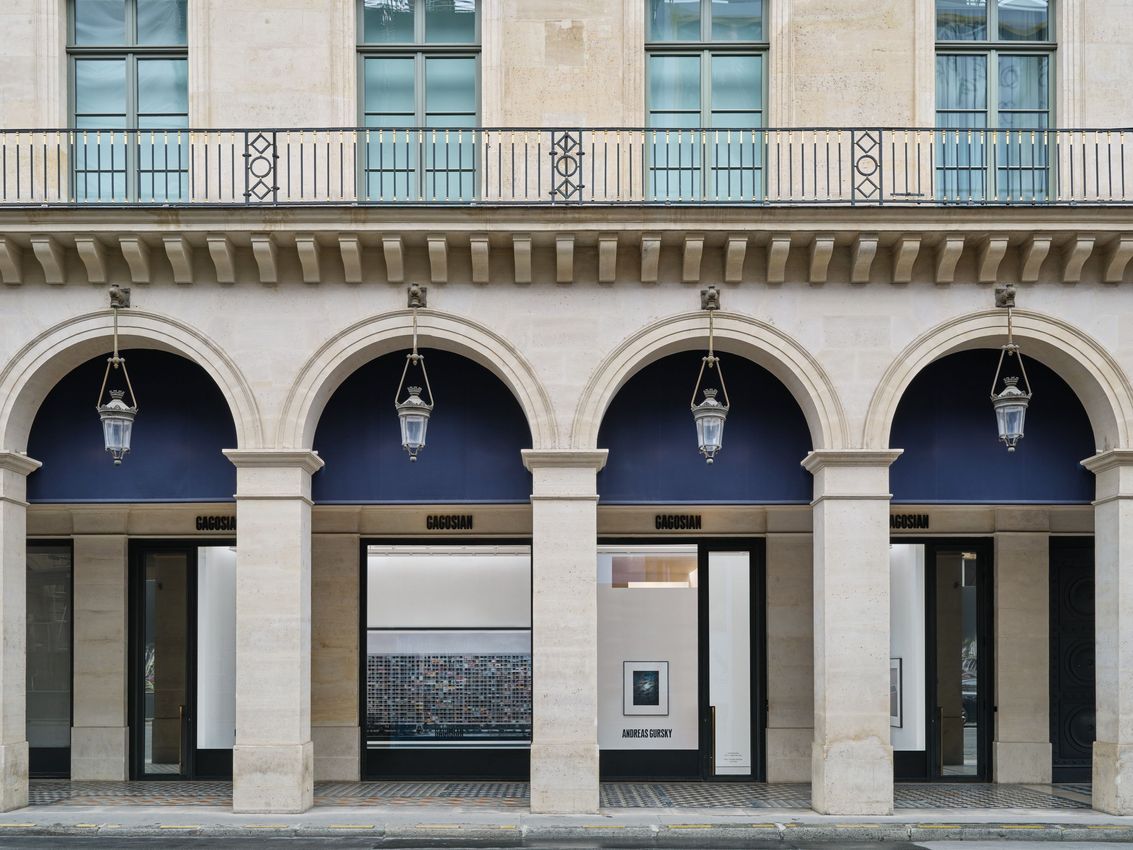
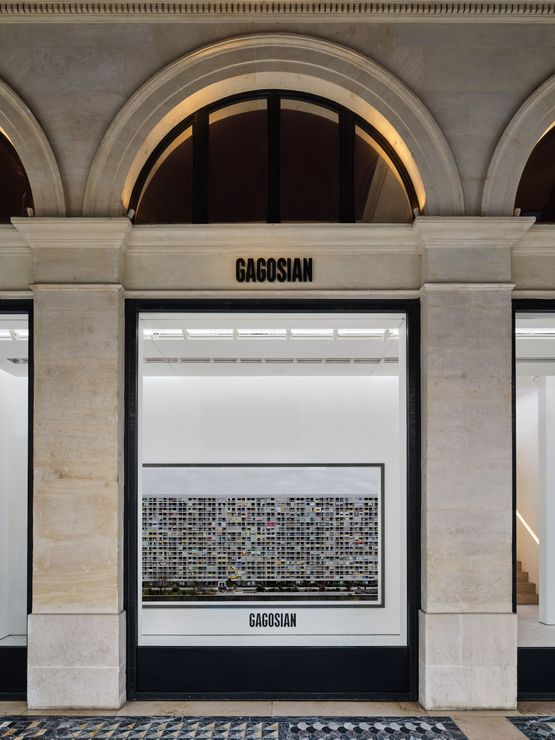
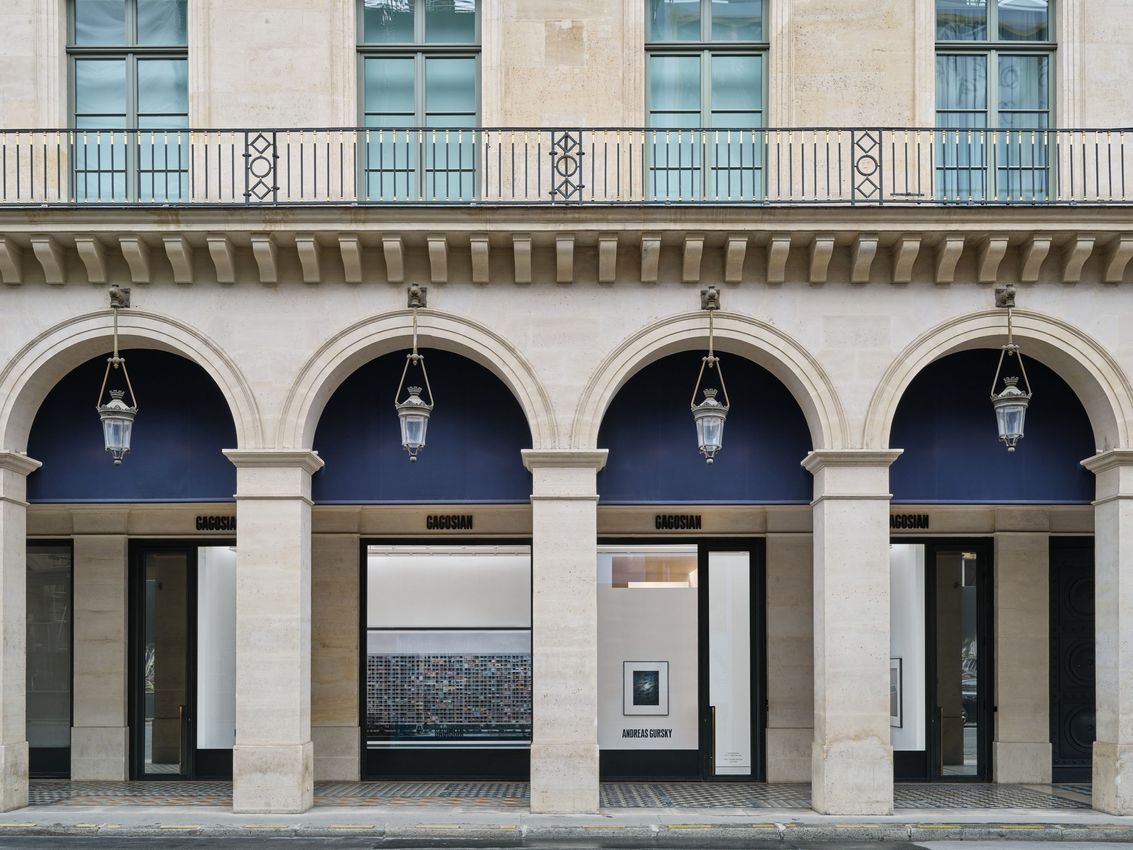
Gagosian is pleased to announce an exhibition of four photographs by Andreas Gursky—two new, one recent, and one from the beginning of his career in 1980—opening at 9 rue de Castiglione, Paris, on June 5, 2025.
Gursky’s photographs evoke the global flow of information, the chaos of contemporary life competing with the classical desire for order. He portrays the visual extremes of the present with objectivity, capturing built and natural environments on a grand scale in richly detailed images comparable to early nineteenth-century landscape paintings. Many have been digitally manipulated, and reveal a sensitivity to the damaging effects of human systems on the natural world.
At the center of the exhibition is Paris, Montparnasse II (2025). Here, Gursky reengages with one of his most significant photographic investigations more than three decades after its original iteration. Produced in 1993, Paris, Montparnasse remains one of Gursky’s most recognizable works, detailing a contemporary structure with a precision that reshaped photography. In Paris, Montparnasse II, Gursky reexamines this image, tracing the changes time has inscribed on the architecture and its occupants. He has altered the composition digitally, integrating subtle shifts in habitation, usage, and character. As with Rhein II (Rhine II) (1999) and Rhein III (Rhine III) (2018), or Aletschgletscher (Aletsch Glacier) (1993) and_Aletschgletscher II_ (Aletsch Glacier II)__(2024), the project presents a critical continuation of a past subject, emphasizing the passage of time and the transformation of the landscape.
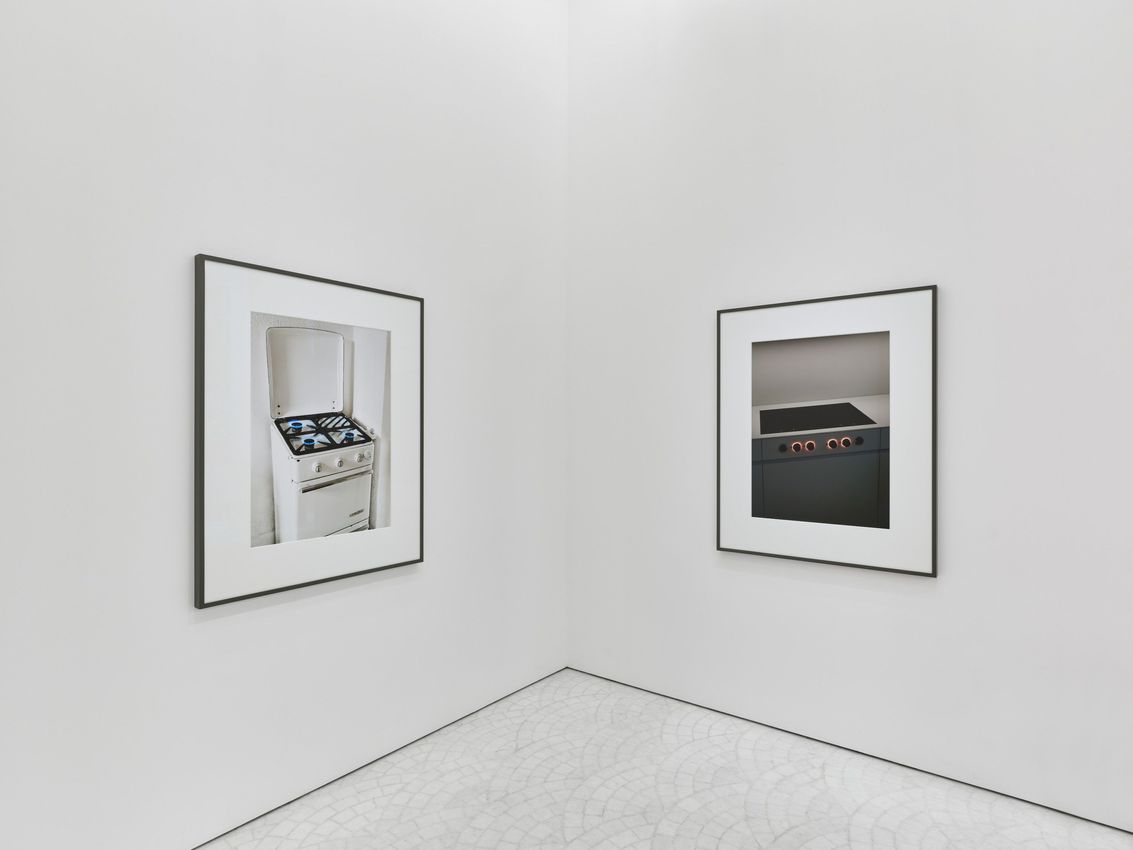
Paris, Montparnasse II is juxtaposed with Gasherd (Gas Cooker)__(1980); a new work, Elektroherd (Electric Cooker) (2025); and one other recent picture, Malediven (Maldives) (2023). The selection of works offers an opportunity to trace Gursky’s influence on photography’s relationship to time, space, and human experience while underscoring the historical character of the exhibition and its central image. Gasherd, one of the artist’s first official photographs, depicts a basic gas stove in the Düsseldorf apartment he shared as a student. The shot of a familiar appliance directs the viewer’s attention to everyday details, suggesting the influence of Bernd and Hilla Becher, Gursky’s teachers at the Kunstakademie Düsseldorf. Elektroherd functions as a contemporary extension of and counterpart to this historical image, picturing an electric induction stove in the artist’s current kitchen—a knowing update that also offers a glimpse into his private life.
Malediven, by contrast, is highly atmospheric. Another bold composition, but one focused instead on an aspect of the natural world, it depicts a cloudy night sky illuminated dramatically by a bright central moon. The work recalls a prevalent theme in German Romanticism and reflects on the interdependence of the environment and human society, a key motif in Gursky’s oeuvre.


‘You never notice arbitrary details in my work. On a formal level, countless interrelated micro and macrostructures are woven together, determined by an overall organisational principle.’—Andreas Gursky


A respected voice in contemporary art discourse.
Focusing on ambitious storytelling and insightful art-world commentary. Ocula Magazine publishes in-depth interviews, critical essays and timely analysis on the artists, exhibitions and ideas driving the global art world.
Learn more about Ocula Magazine
Showcasing the best of the art world.
Ocula partners with galleries from around the world to highlight their artists, artworks and exhibitions. Gallery membership is by application and invitation, with each member vetted by an independent panel.
Learn more about Ocula Membership

Specialises in the sale of major artworks.
Led by a team with deep ties to the world’s leading auction houses, galleries and collectors. Ocula’s advisory team offers bespoke services to high-net-worth clients from around the world who are looking to acquire the best of contemporary and modern art.
Learn more about our team and services