There is in nature a limitless variety of shapes and rhythms from which the sculptor can enlarge his form-knowledge experience.—Henry Moore
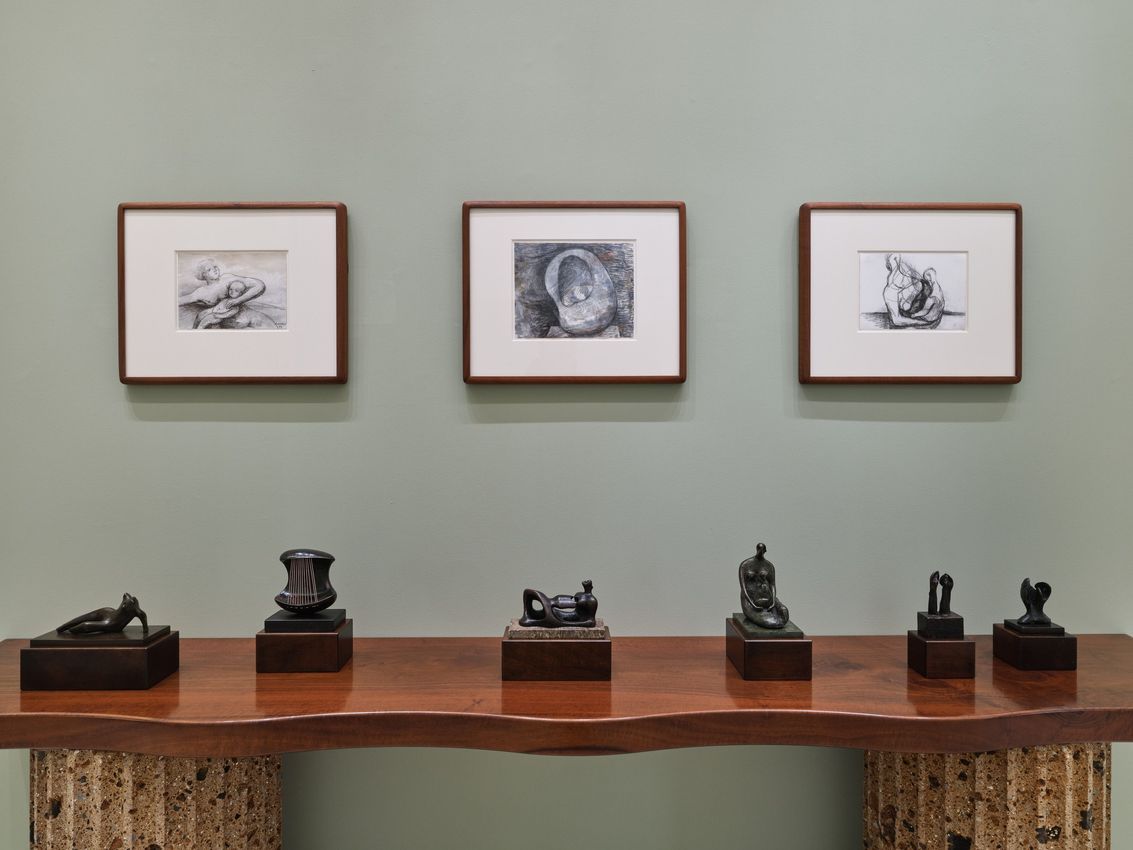
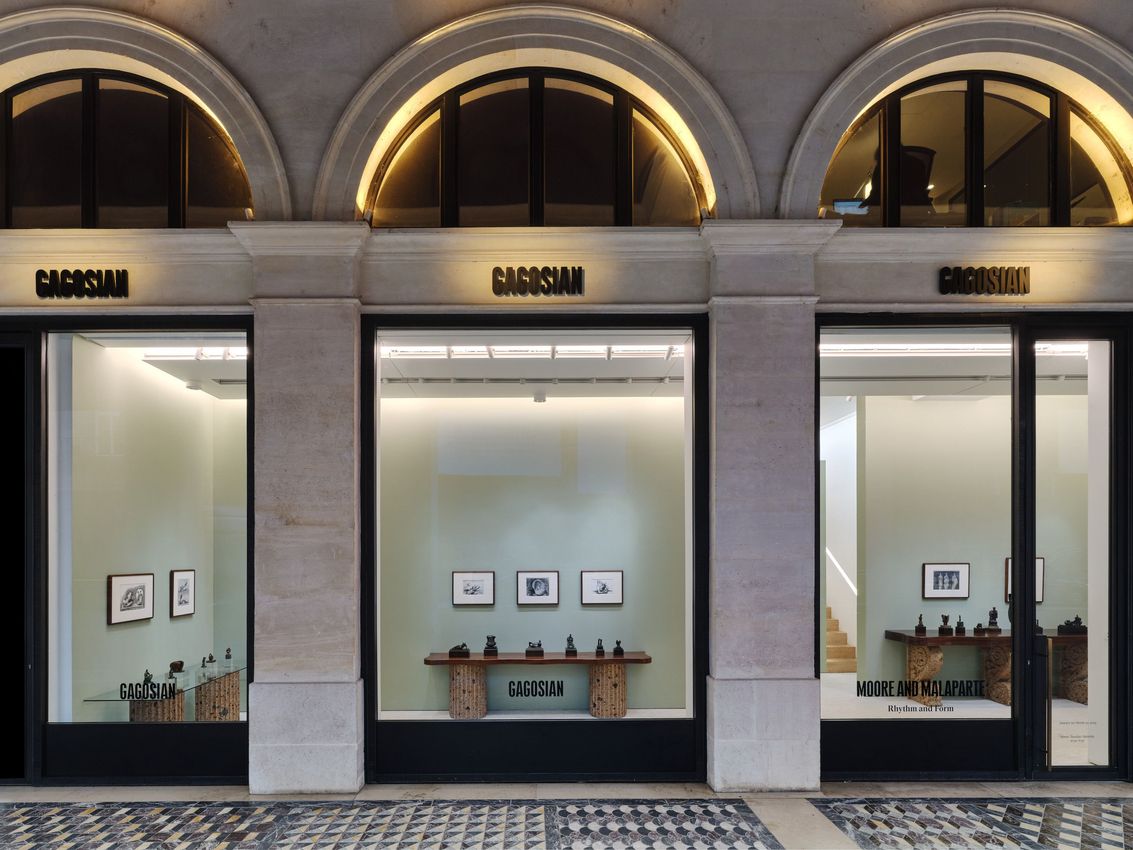
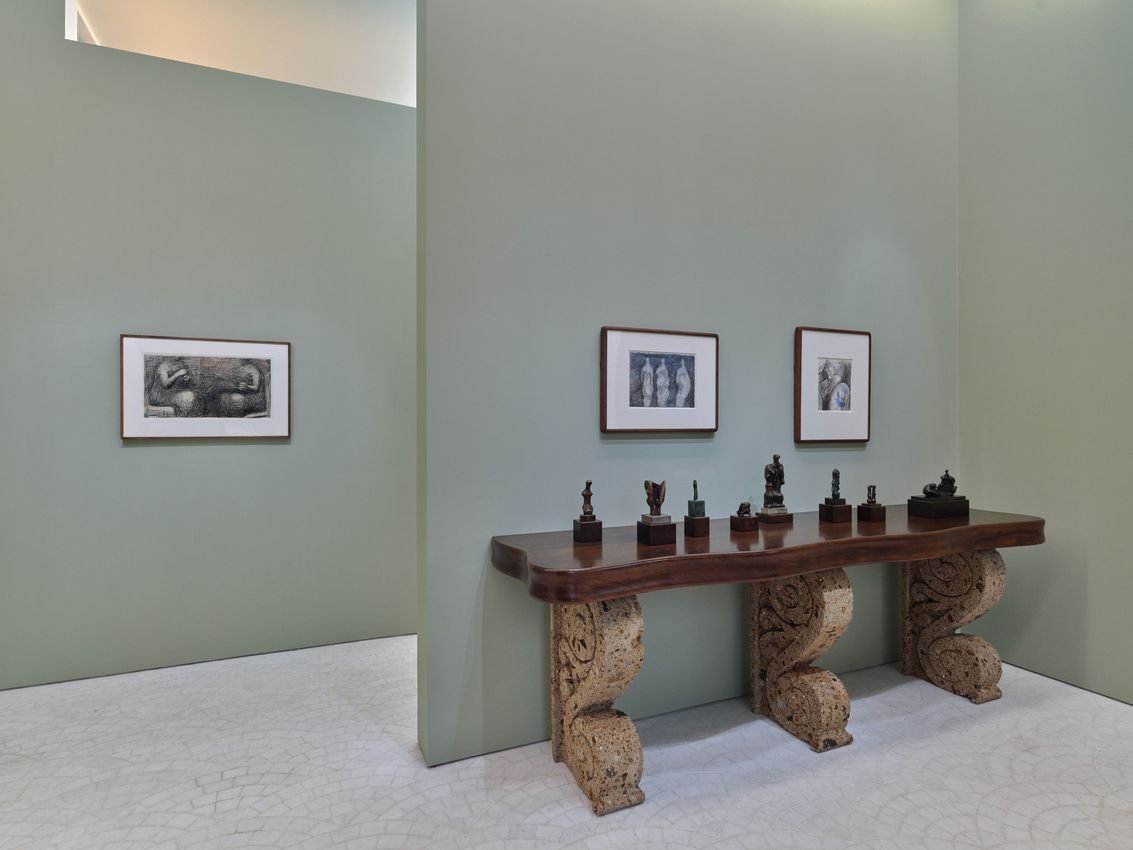
Gagosian is pleased to announce Moore and Malaparte: Rhythm and Form, an exhibition of small-scale sculptures and drawings by Henry Moore in dialogue with three pieces of furniture from Casa Malaparte, two of them exclusive designs. Opening at 9 rue de Castiglione on January 22, 2025, the presentation draws unexpected connections between sculptor and designer, including a fascination with crafting organic forms in tune with the natural world and an immersion in the interaction of these objects with their architectural settings.
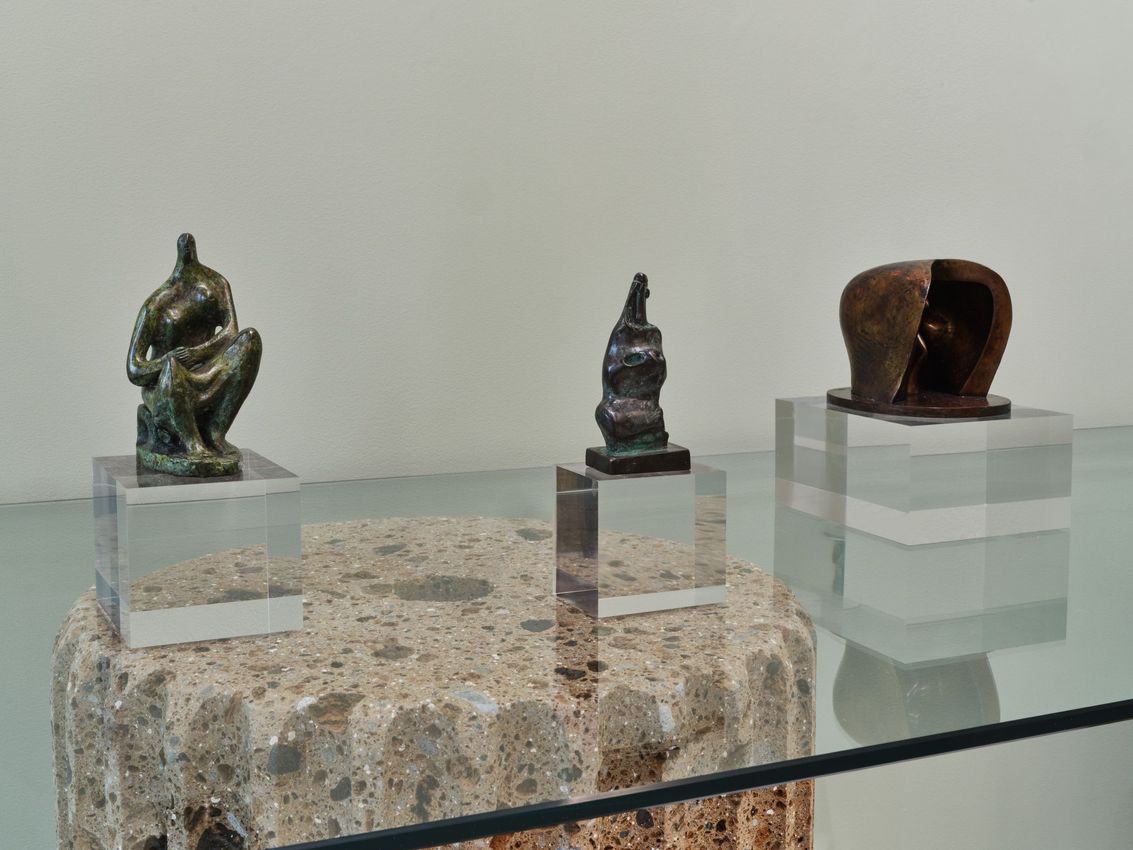
A giant of modern sculpture, Moore reveled in the relationship between art and its environment. In Moore and Malaparte, this connection is brought to life in domestically scaled bronze sculptures featuring themes that recurred throughout the artist’s career. Works such as Reclining Figure (1945) and Seated Woman Holding Child (1982) are shown atop reproductions of furniture from Casa Malaparte, revealing surprising but unequivocable affinities between Moore’s and Malaparte’s approaches to design. Works on paper in ink, pencil, watercolor, and other materials, including Women Winding Wool (1949) and studies for three-dimensional works such as Two Sculptural Ideas (c. 1984), further enrich this dialogue. Many of Moore’s works also reveal an enthusiasm for organic forms and elemental sites, underscoring his perception of the natural world’s concrete reality as the root of abstract explorations—a vision that resonates with Malaparte’s.
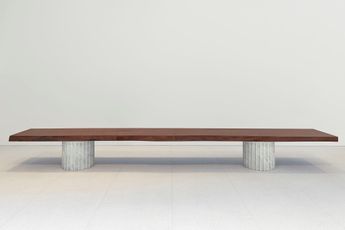
Constructed on the eastern coast of Capri, Italy, Casa Malaparte was designed in 1938 by Curzio Malaparte (the pseudonym of Kurt Erich Suckert), a provocative figure in the Italian avant-garde. A beacon of modernist architecture, it is renowned for its stone flooring and exterior staircase leading to an expansive terrace. The residence’s sculptural physicality and situational vibrancy extends to its furniture, which Malaparte also designed. In 2019, Tommaso Rositani Suckert, Malaparte’s youngest descendant, began making reproductions of these items. The console, console table, and desk on view in Paris are produced from the same materials—glass, tuff stone, and walnut—as the originals in Capri and, like Malaparte before him, Rositani Suckert sourced the finest local materials and artisans for their production.
Additional furniture from Casa Malaparte is on view on the second floor of the gallery at 4 rue de Ponthieu from January 22 to March 27, 2025.


A respected voice in contemporary art discourse.
Focusing on ambitious storytelling and insightful art-world commentary. Ocula Magazine publishes in-depth interviews, critical essays and timely analysis on the artists, exhibitions and ideas driving the global art world.
Learn more about Ocula Magazine
Showcasing the best of the art world.
Ocula partners with galleries from around the world to highlight their artists, artworks and exhibitions. Gallery membership is by application and invitation, with each member vetted by an independent panel.
Learn more about Ocula Membership

Specialises in the sale of major artworks.
Led by a team with deep ties to the world’s leading auction houses, galleries and collectors. Ocula’s advisory team offers bespoke services to high-net-worth clients from around the world who are looking to acquire the best of contemporary and modern art.
Learn more about our team and services