It’s more about harmony and disharmony than making meaning or illustrating a thesis. It’s synesthesia. It’s a feeling. It’s a sound. It’s a vibration.
—Roe Ethridge
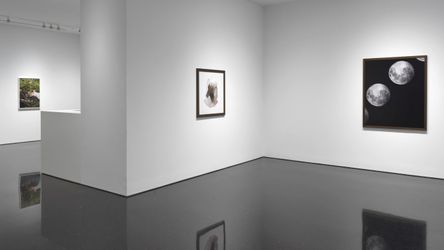
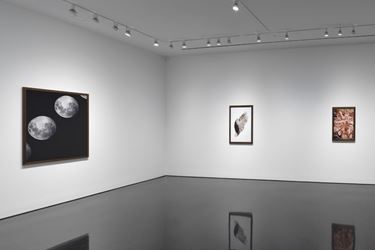
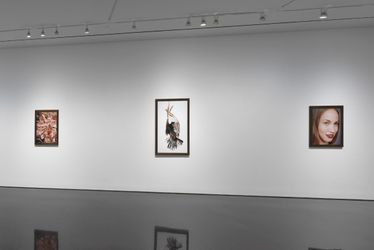
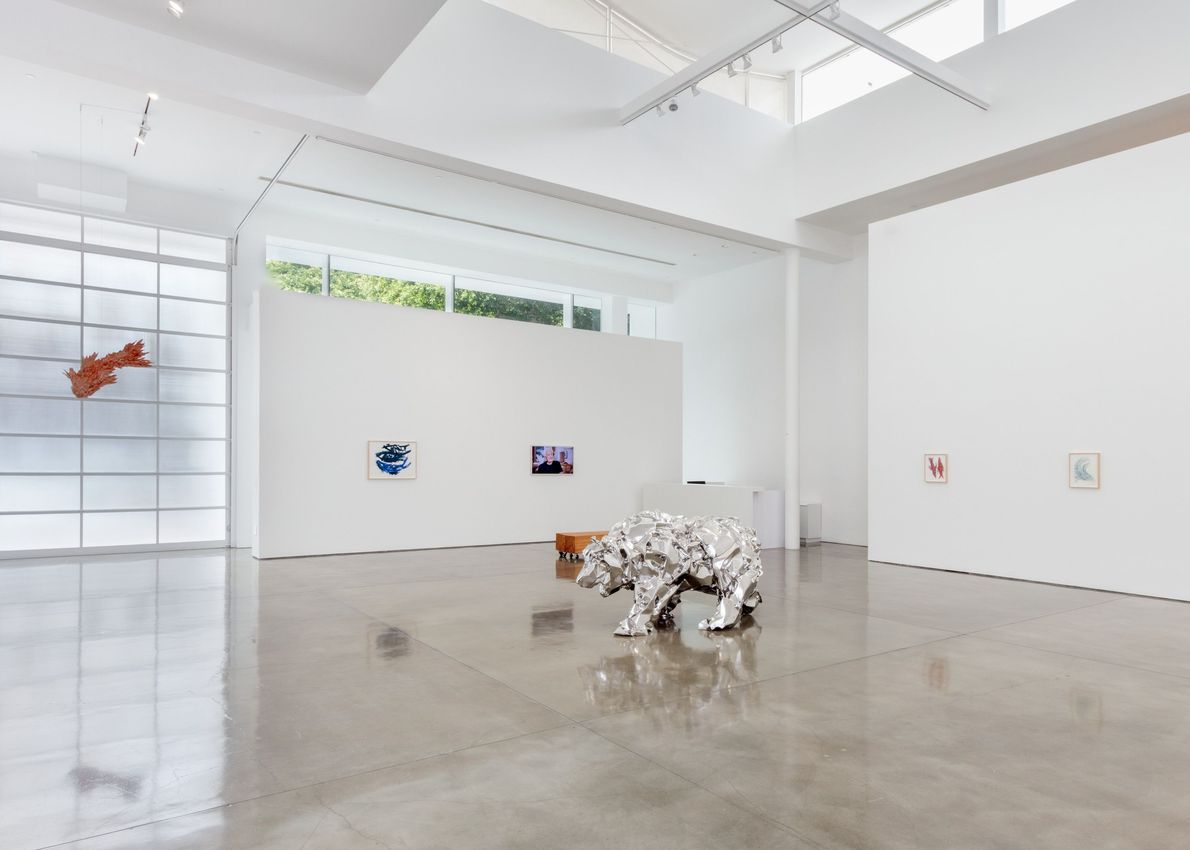
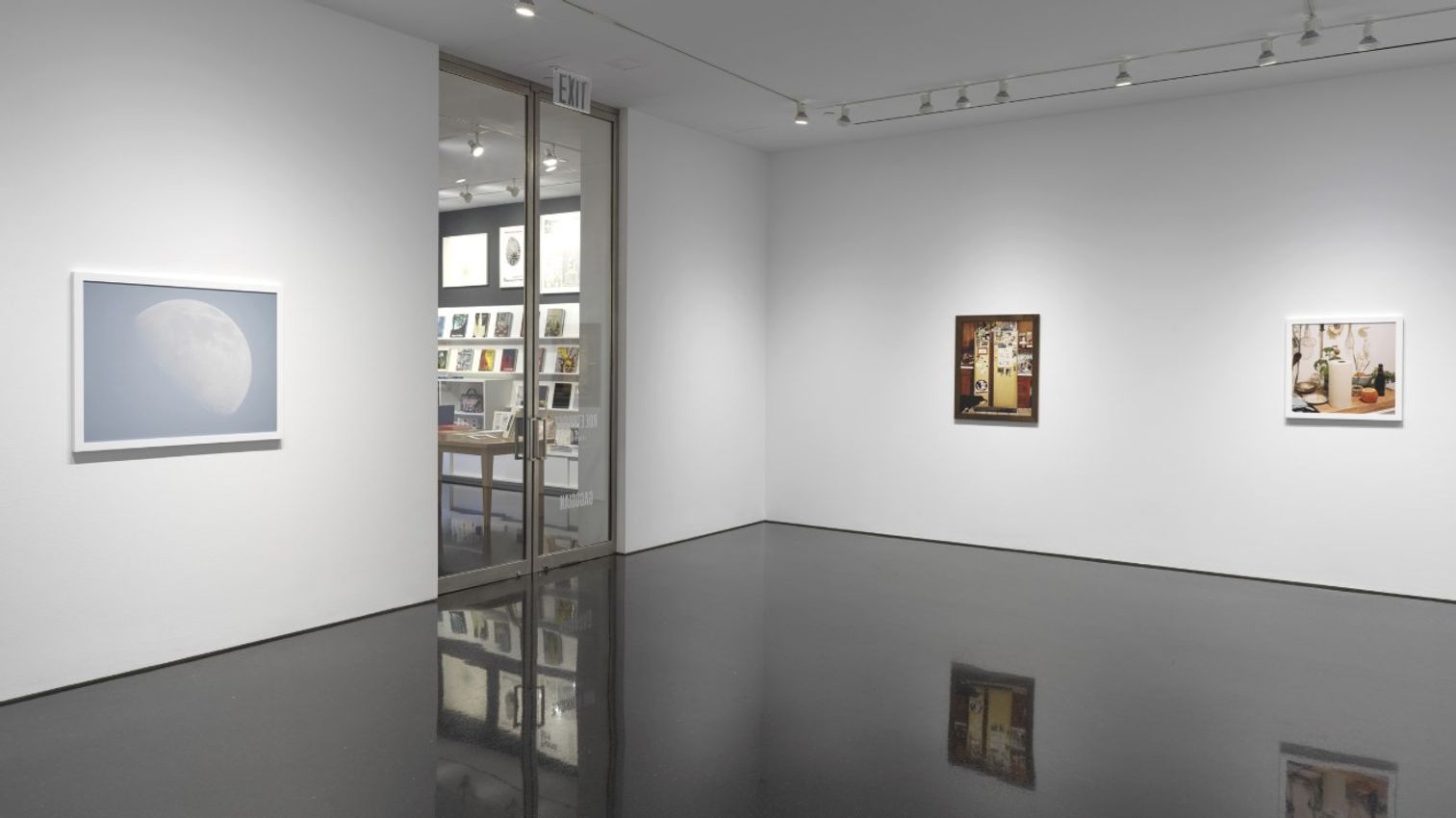
Gagosian is pleased to present Old Fruit, an exhibition of photographs by Roe Ethridge spanning the past twenty years. This is his first solo exhibition with the gallery in New York, following exhibitions in Beverly Hills, Hong Kong, and San Francisco.
Since the turn of the century, Ethridge has exercised a significant influence over young artists in particular, yet opportunities to see groupings of his early work have been rare. Old Fruit, which focuses primarily on his output from the early 2000s, offers a valuable chance to revisit many highly regarded and widely reproduced images that embody new ways of understanding the medium of photography in the context of emergent technological and social currents.
Expanding on the visual and critical syntaxes of photographers from Paul Outerbridge to Andreas Gursky, Ethridge strategically crisscrosses the zones of artistic, commercial, and vernacular imagery, encouraging the staged and the spontaneous to occupy the same space. Using outtakes from his own commercial and editorial shoots alongside other images, he subverts the residual authority of the portrait, landscape, and still life genres to match his own consciously ambiguous ends. While applying high production values and acknowledging the conventions of picture making, he introduces subtle conceptual twists and formal glitches that destabilise our ingrained faith in the function and authority of these elements. Courting a certain aesthetic discomfort, his interest is in producing images that are, as he puts it, ’‘right’ in their wrongness.’
The approach taken in Old Fruit is unusual for Ethridge insofar as the works are arranged typologically as well as formally. The exhibition’s earliest photograph is Refrigerator (1999), a key image in Ethridge’s oeuvre that echoes an earlier still life by William Eggleston. Shot at his parents’ home as a commission for an unpublished New York Times editorial assignment about vernacular decor, the work, along with others in the exhibition, encapsulates multiple genres, here in part by incorporating additional images in the form of postcards, snapshots, and decals affixed to the front of the appliance. Refrigerator is emblematic, too, of Ethridge’s ability to communicate a direct experience of the world while simultaneously maintaining a critical distance from it, blending the personal with the impersonal in a way that anticipates their continual overlap and confusion in the realm of social media.
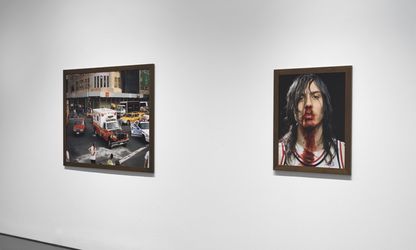
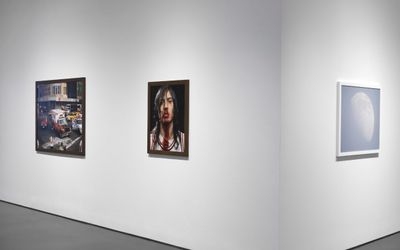
The photographs in the exhibition are also grouped to contrast the analytical detachment of the ‘Pigeon images’ (2001-2002) with the more emotive—yet still highly staged—look and feel of images such as the notorious 2000 portrait of a bloodied Andrew W.K. (reproduced on the cover of the singer’s 2001 album I Get Wet) and Ambulance Accident (2000). As well as offering a historical perspective, Old Fruit opens up new avenues of inquiry and dialogue within Ethridge’s media-savvy and now pervasive aesthetic, underscoring the value of his particular strains of appropriation, stylisation, and nonlinear juxtaposition.


Roe Ethridge’s photography emanates from his direct experience of the world. His oeuvre melds conceptual photography with commercial work, including outtakes from his own shoots and borrowed images already in circulation in other contexts. With this democratic attitude, Ethridge works to capture the vivid and intimate details of his shifting locales within photography’s classic genres of portrait, landscape, and still life. The diverse and sometimes abstruse nature of Ethridge’s imagery—vintage movie posters, fashion models, a pink rose, a mop bucket, a concrete mixer—oscillates between the spontaneous and the staged with such subtlety that it is often difficult to ascertain his elected approach with regard to individual images. Drawing upon photography’s descriptive power and its accessibility, he copies and recombines images, subverting their original status in order to regenerate their signifying possibilities, and in so doing, infuse them with a new sense of mysterious contingency.


A respected voice in contemporary art discourse.
Focusing on ambitious storytelling and insightful art-world commentary. Ocula Magazine publishes in-depth interviews, critical essays and timely analysis on the artists, exhibitions and ideas driving the global art world.
Learn more about Ocula Magazine
Showcasing the best of the art world.
Ocula partners with galleries from around the world to highlight their artists, artworks and exhibitions. Gallery membership is by application and invitation, with each member vetted by an independent panel.
Learn more about Ocula Membership

Specialises in the sale of major artworks.
Led by a team with deep ties to the world’s leading auction houses, galleries and collectors. Ocula’s advisory team offers bespoke services to high-net-worth clients from around the world who are looking to acquire the best of contemporary and modern art.
Learn more about our team and services