‘I think the origin of my work does lie in painting. My work doesn’t arise from sculpture; it comes out of the paintings of Pollock, Newman, Rothko.’ —Donald Judd
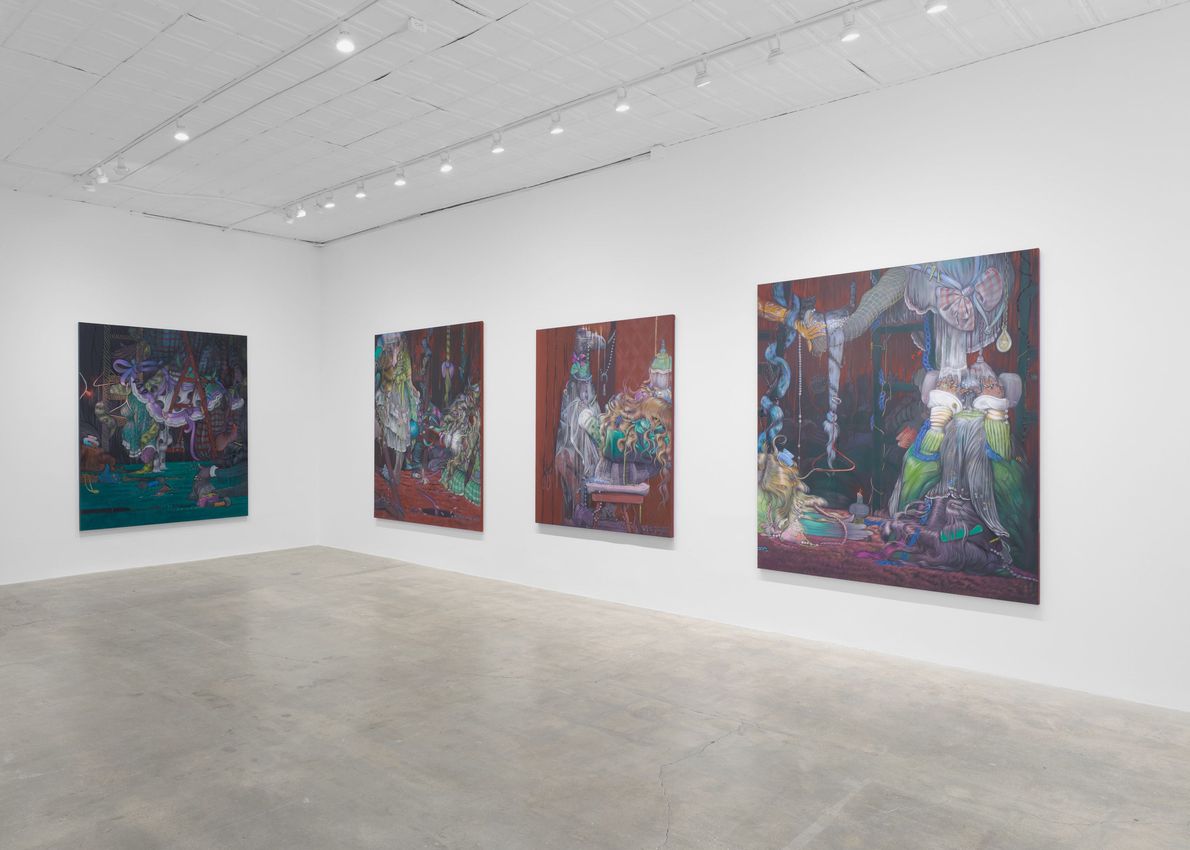
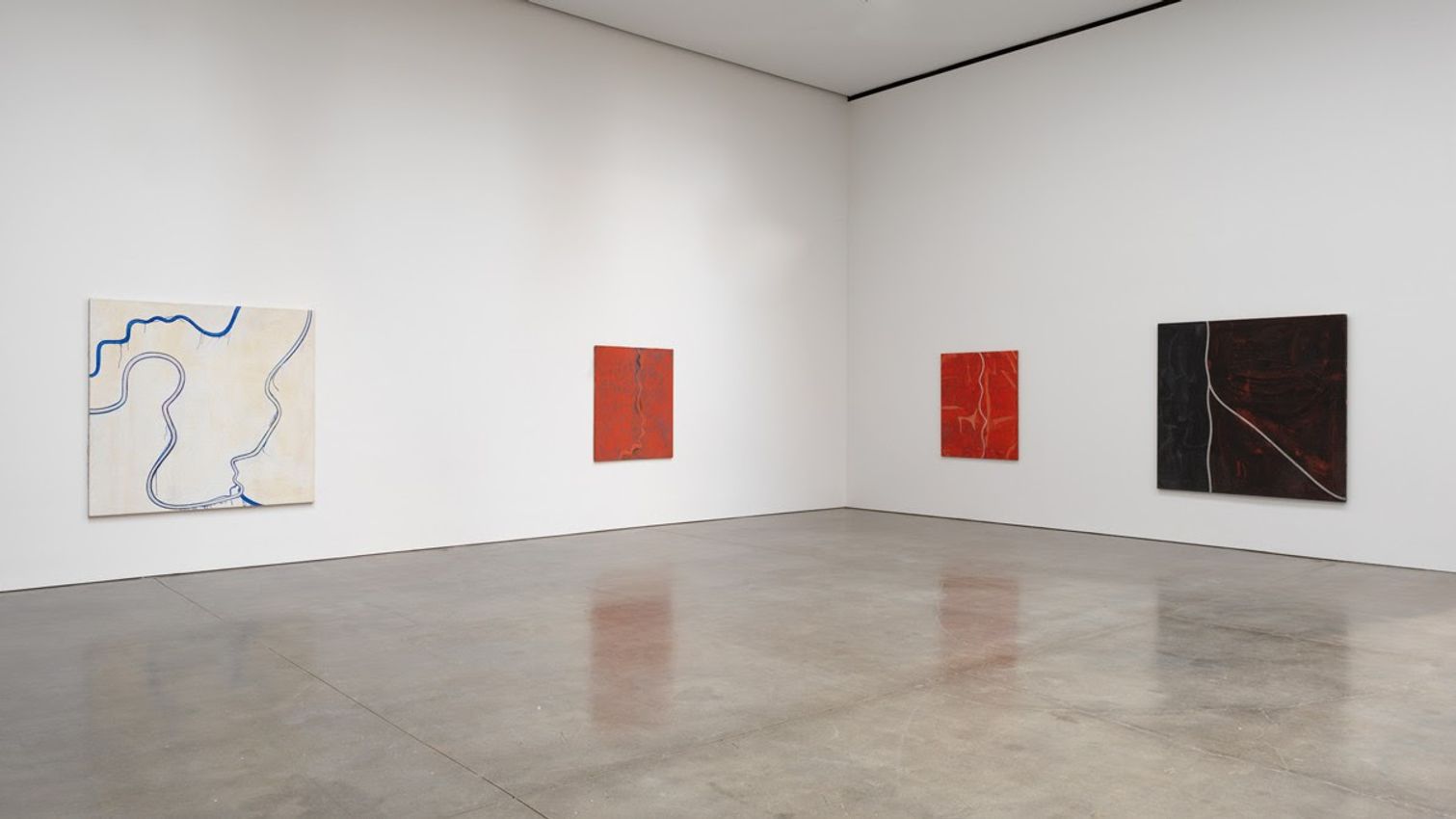
Gagosian is pleased to present the gallery’s first exhibition of work by Donald Judd (1928–1994) in New York since announcing its representation of the artist and Judd Foundation in September. The exhibition features fourteen paintings dating from 1959 through 1961.
While Judd’s oeuvre is defined principally though his three-dimensional work—which he conceived in opposition to the essential properties of both conventional painting and sculpture—he began his practice as a painter while also taking graduate courses in art history at Columbia University in New York. In addition, he supported himself as a critic: beginning in 1959, and continuing for the next five years, he wrote prolifically for Art News and Arts Magazine, publishing incisive essays and reviews of contemporary art during a momentous era. Judd’s paintings make manifest the understanding of postwar modernism that he articulated in his writing.
The paintings on view are nonrepresentational and reject spatial illusionism. They precede relief works made later in 1961 in which Judd incorporated found objects, while his concern with volumetric space led him to abandon painting altogether by the following year. Featuring biomorphic shapes in blue and purple, as well as fields of white, black, grey, and cadmium red, they reflect an exploratory approach to formal issues of structure, materiality, and colour. Their application ranges from dense impasto to thin wash, underpainting emerging at times through the layers of pigment.
Above all, these paintings are dominated by line, which, as Judd wrote of Joseph Stella’s paintings in a 1959 review, ‘exists independently as a vivifying, electric element.’ Judd placed increasing emphasis on line as his painting practice developed from 1959 through 1961, but rather than operating primarily to define shape, the interconnected lines in many of these paintings branch and meander across the canvas.
In an untitled work from 1960, the exhibition’s largest, a network of white lines divide the surface asymmetrically, demarcating a dark ground that is itself activated by layered directional brushstrokes. In a work from 1961, ribbons of blue and white arc across a white field, controlled drips emerging from their edges. Largely abandoning the curving lines that proliferate elsewhere, another painting from 1961 features a central square composed of parallel diagonal stripes, presaging the investigation of geometric form that would emerge as one of Judd’s primary concerns.
In 2020, Gagosian New York, in association with Judd Foundation, presented an exhibition of Judd’s largest single plywood construction, an untitled work from 1980 that spans 80 feet in length. Artwork: 1980 coincided with the first major museum survey of the artist’s work in the United States in three decades, at the Museum of Modern Art, New York. The first exhibition of Judd’s work in Hong Kong is on view at Gagosian Hong Kong from October 13 to November 13, 2021.
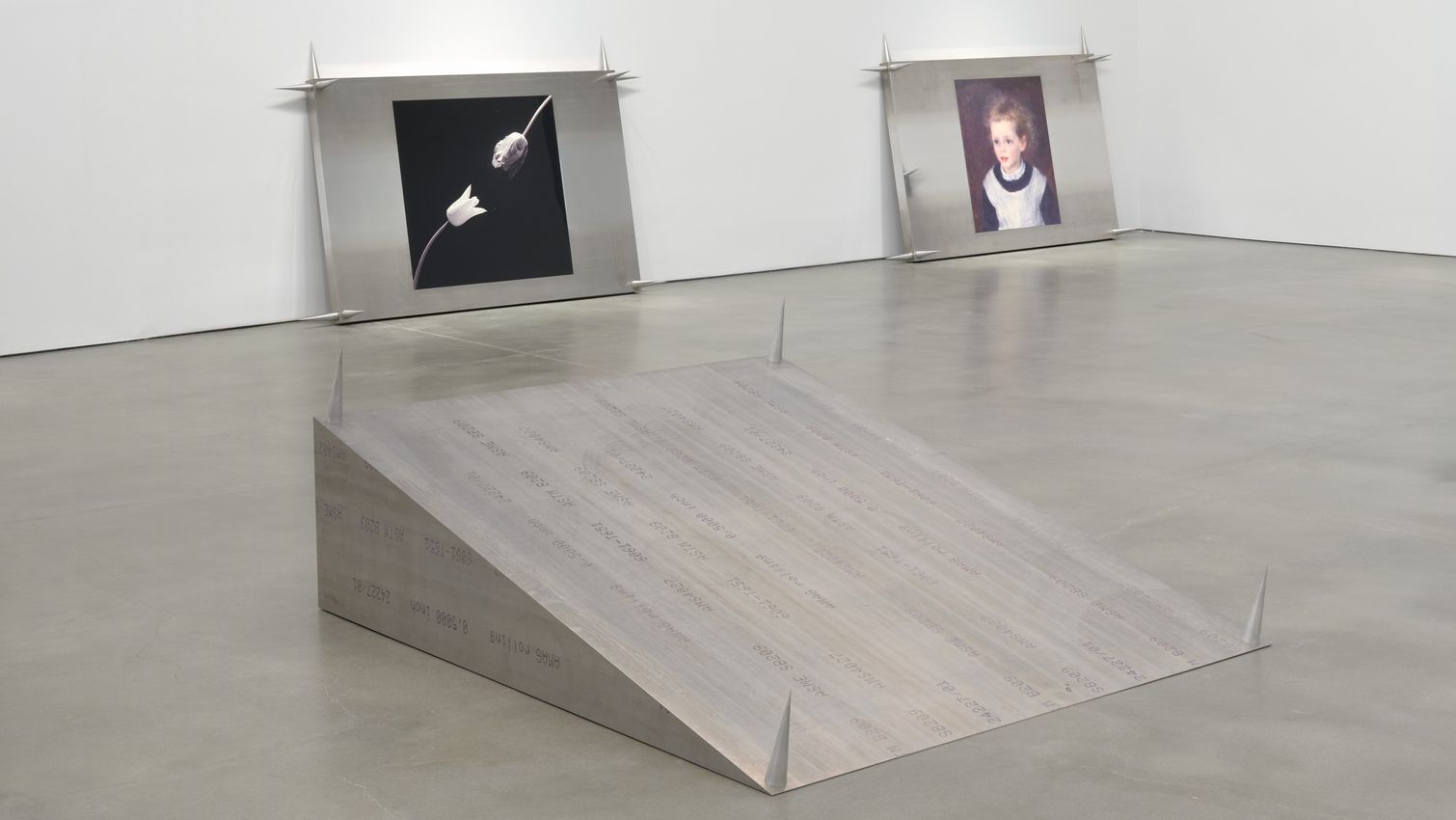
Donald Judd (1928–1994) produced visual and written work that shifted the course of modern art. Starting out as a painter in the 1950s, he began making three-dimensional works in the early 1960s, aiming to make objects that were free of the illusionism associated with painting. The aluminium, plexiglass, and plywood objects utilized the neutrality of their industrial mediums, and Judd’s production methods emphasized schematic variation and spatial definition through form. His interdisciplinary focus included architecture as well as furniture, and he was a prolific critic and essayist whose writing clarified his own artistic intentions as well as insightfully reflected on the work of his contemporaries.


A respected voice in contemporary art discourse.
Focusing on ambitious storytelling and insightful art-world commentary. Ocula Magazine publishes in-depth interviews, critical essays and timely analysis on the artists, exhibitions and ideas driving the global art world.
Learn more about Ocula Magazine
Showcasing the best of the art world.
Ocula partners with galleries from around the world to highlight their artists, artworks and exhibitions. Gallery membership is by application and invitation, with each member vetted by an independent panel.
Learn more about Ocula Membership

Specialises in the sale of major artworks.
Led by a team with deep ties to the world’s leading auction houses, galleries and collectors. Ocula’s advisory team offers bespoke services to high-net-worth clients from around the world who are looking to acquire the best of contemporary and modern art.
Learn more about our team and services