Sometimes when I walk into a gallery and I see someone’s work, I think to myself, ‘Gee, I wish I had done that.’—Richard Prince
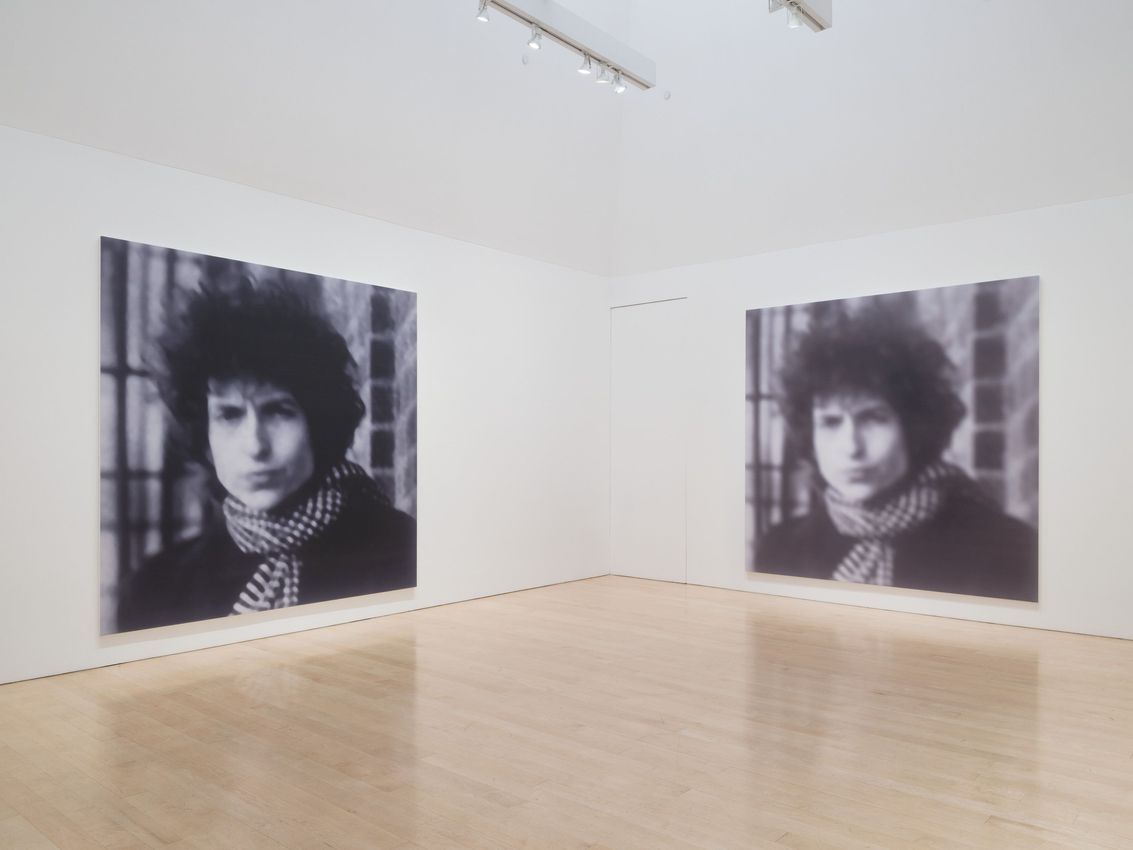
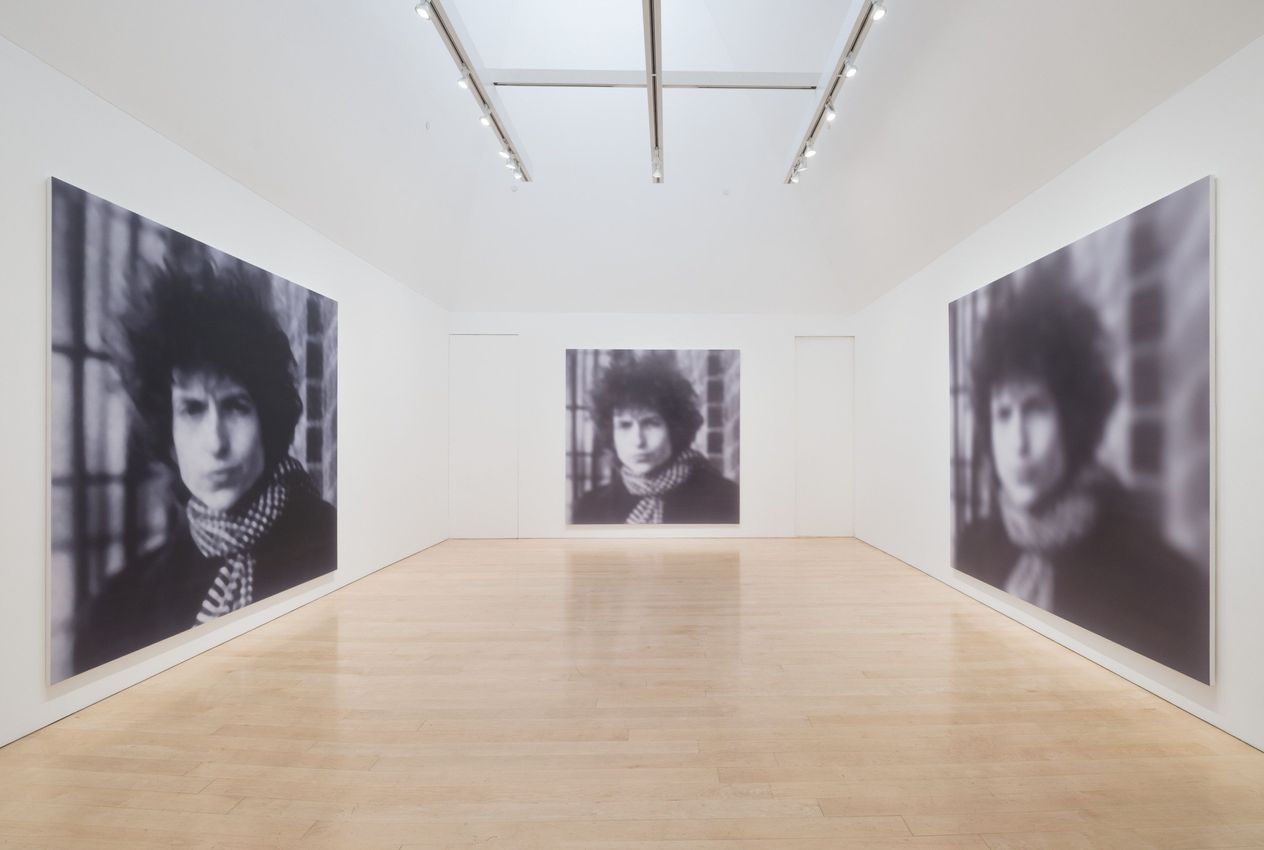
Gagosian is pleased to announce Bob Dylan, an exhibition by Richard Prince featuring a trio of large-scale paintings of the singer-songwriter, opening at the gallery in Beverly Hills on February 27. With Dylan’s popularity and influence again in ascendence following the theatrical release of James Mangold’s Oscar-nominated biopic A Complete Unknown (2024), Prince’s work casts a spotlight of a different kind on the Nobel Prize–winning musician by reflecting on the extraordinary resonance of his image.
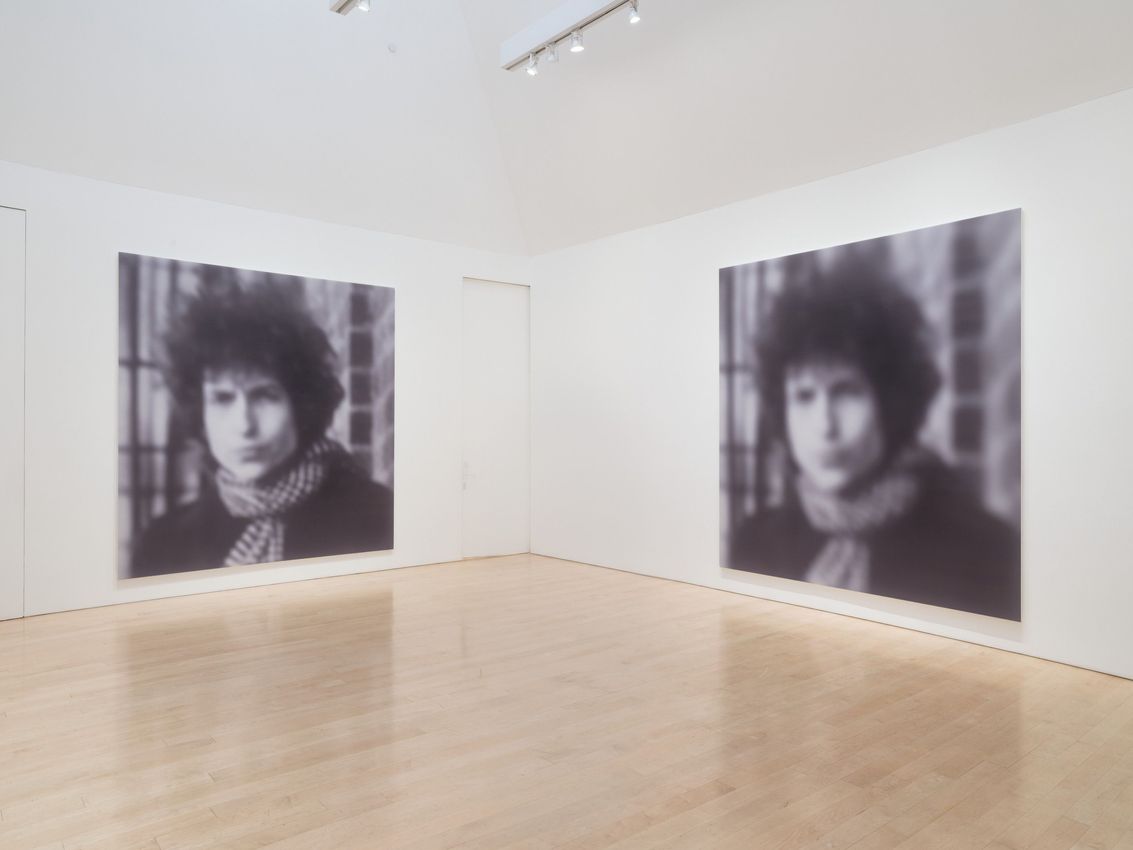
The three striking ten-foot-square paintings on view in Beverly Hills, which together make up Untitled (Dylan) (2014), show a detail of Jerry Schatzberg’s famous portrait shot of Dylan, which was reproduced on John Berg’s cover design for the 1966 double LP Blonde on Blonde. Dylan’s seventh studio album, the record combines an expansive musicality with a modernist lyrical style and is often ranked as among the greatest ever made. The cover image, which portrays its subject in a dark suede jacket and black-and-white checkered scarf looking directly at the photographer, was taken outside 375 West Street at Morton Street in Manhattan’s meatpacking district. In his interpretation, Prince presents the likeness, which was originally in naturalistic color, in gauzy black-and-white. He also manipulates its already shaky focus to varying degrees, further obscuring its fine detail.
Untitled (Dylan) exemplifies the process of “rephotography” that Prince began using in 1977 to appropriate shots from the commercial realm. A conscious elision of the aims and techniques of traditional image production, the method allows him to undermine the authority of a given visual referent, exposing its inherent fictions and redefining conventional concepts of authorship and originality. In the Dylan images, Prince builds on the slight blurriness of Schatzberg’s shot—reportedly a consequence of shivering brought on by freezing New York weather—by making each inkjet-printed canvas a bit fuzzier than the one that precedes it. This strategy recalls the deliberate indistinctness of Gerhard Richter’s photo-based paintings but was achieved by entirely technological means.
Prince’s manipulation of his well-known but still enigmatic subject embodies a combination of personal involvement and cool distance; while acknowledging the emotional and cultural significance of the original representation, he filters it through a destabilizing, even alienating layer of visual noise (akin, perhaps, to Dylan’s notoriously divisive “going electric” at the 1965 Newport Folk festival). The artist, a passionate collector of literary and pop-cultural artifacts, owns a stock of Dylan memorabilia alongside other items of comparable import, including photographs and flyers from the 1969 Woodstock festival that have informed other large-scale paintings. He is also an admirer of Dylan’s own artwork, writing after a 2011 studio visit: “I know he paints on the road. In hotel rooms. And there are a lot of hotel rooms—he goes all over the world. And when he isn’t playing music, he’s painting. That day he showed me twenty paintings. The first thing that hit me was how complete they were. And the fact that he knew what he was doing.”
A single panel from Untitled (Dylan) was shown in It’s a Free Concert, Prince’s major exhibition at Kunsthaus Bregenz, Austria, in 2014. The project also included images of and references to other foundational rock and pop acts including Jimi Hendrix and various 1950s doo-wop bands. Its title reinforced the work’s associations with the countercultural scene in which Dylan participated and functioned as a further reminder of the deep and ongoing interconnectedness of visual art and pop music.


Mining images from mass media, advertising and entertainment since the late 1970s, Richard Prince has redefined the concepts of authorship, ownership, and aura. Applying his understanding of the complex transactions of representation to the making of art, he evolved a unique signature filled with echoes of other signatures yet that is unquestionably his own. An avid collector and perceptive chronicler of American subcultures and vernaculars and their role in the construction of American identity, he has probed the depths of racism, sexism, and psychosis in mainstream humour; the mythical status of cowboys, bikers, customised cars, and celebrities; and most recently, the push-pull allure of pulp fiction and soft porn, producing such unlikely icons as the highly coveted Nurse paintings.


A respected voice in contemporary art discourse.
Focusing on ambitious storytelling and insightful art-world commentary. Ocula Magazine publishes in-depth interviews, critical essays and timely analysis on the artists, exhibitions and ideas driving the global art world.
Learn more about Ocula Magazine
Showcasing the best of the art world.
Ocula partners with galleries from around the world to highlight their artists, artworks and exhibitions. Gallery membership is by application and invitation, with each member vetted by an independent panel.
Learn more about Ocula Membership

Specialises in the sale of major artworks.
Led by a team with deep ties to the world’s leading auction houses, galleries and collectors. Ocula’s advisory team offers bespoke services to high-net-worth clients from around the world who are looking to acquire the best of contemporary and modern art.
Learn more about our team and services