Press Release

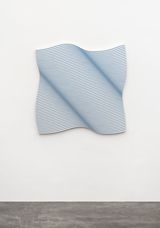
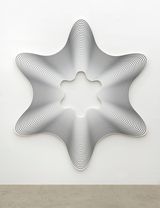
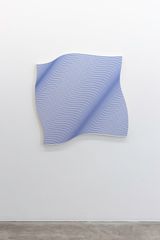
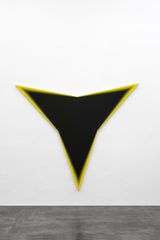
Nara Roesler Rio de Janeiro is pleased to present Soon all shades disappear, Philippe Decrauzat‘s third solo exhibition at the gallery. The show features around 20 works from the Screen and _Gradient_series, produced between 2024 and 2025, which further develop the artist’s ongoing research into the fundamental elements of visual communication, such as color, light, lines, and forms, and their relationship to visual perception. Works from these same series have previously been shown in exhibitions in Geneva, Madrid, and Austria, and are now being presented in Brazil for the first time.

The exhibition’s title is drawn from the studies conducted by Czech anatomist Jan Purkinje in the 1820s, one of the early pioneers in the field of visual perception. In these studies, Purkinje describes the images formed by the eye when closed and subjected to pressure on the eyelids. These images, resembling luminous spots—now known as phosphenes—are of particular interest to the artist, as they represent one of the most primary modes of visual perception.

Philippe Decrauzat‘s paintings engage critically with the history of modernism, establishing visual and conceptual dialogues with perceptual strategies associated with the historical avant-gardes and experimental practices. His references extend across fields such as graphic design, music, and science fiction. Through optical phenomena, his work challenges both the status of the image and the role of the author. His complex relationship to time and space—expanded, compressed, or cyclical—unsettles our understanding of both.

The Screen series, for instance, alludes to both digital screens and the virtual images that populate our daily lives, as well as to phosphenes themselves, treating the screen as a surface that emits light, whether a monitor or the human eye.

Another series featured in the exhibition is Gradient, developed by the artist in 2025. These works present regular geometries composed of alternating dark and light square grids. While the shapes are clearly delineated, the colors are not: faint grays and whites create an almost-vanishing composition that subtly fades as the viewer’s gaze moves across it.

This series establishes a dialogue with the artist’s 2021 film of the same name, Gradient, produced at Kanal Centre Pompidou in Brussels. The film is a reworking of a silent cinema classic: Sunrise: A Song of Two Humans (1927), by German filmmaker and master of expressionist cinema, Friedrich Wilhelm Murnau. Decrauzat re-edits the film entirely, restructuring it based on an algorithm. As curator Jonathan Pouthier explains, “The result is structured around the progressive gradation of whites, from darkest to brightest.” When projected, this new arrangement reveals the natural movement of light as a narrative principle in the original film. Each image is replaced with a sequence based on brightness, regardless of its narrative value. While it is impossible to entirely separate analog reproduction techniques from the film, here light is interpreted through a digital prism—as part of a continuous electrical stream, freed from spatiotemporal constraints.

On the day following the exhibition opening, April 30 at 6:30 PM, Gradient will be screened at the Cinematheque of the Museum of Modern Art in Rio de Janeiro. The one-time screening will include the presence of the artist, followed by a conversation with Jonathan Pouthier, curator in charge of the film collection and programming at Centre Pompidou.

Read More
About the Artist

Philippe Decrauzat é um dos principais nomes da nova geração da arte ótica e cinética do cenário contemporâneo. Sua produção múltipla, composta por pinturas murais, esculturas, instalações, site-specifics e obras audiovisuais, parte de uma reflexão crítica sobre o legado da arte ótica e cinética na história da arte, recuperando nocões próprias das vanguardas de começo do século XX—em especial, o construtivismo russo—, do movimento cinético e do minimalismo. Linhas, planos, sólidos e sons são articulados pelo artista no sentido de propor situações que visam o estabelecimento de um diálogo com o espectador, estimulando o olhar do público. Para tanto, Decrauzat apresenta uma revisão da herança moderna, mobilizando métodos e teorias presentes no contexto da cultura pop e nos campos da arquitetura, do design gráfico e do cinema experimental ou de ficção científica. A ênfase de seu trabalho reside sobretudo numa percepção sobre os modos modernos de ver. Além de considerar a lógica modernista da óptica, o artista direciona sua atenção para o olho como instrumento, retomando entendimentos sobre o mecanismo de visão que se encontram excluídos dos discursos artísticos em evidência na atualidade.

View Artist Profile

Also Exhibiting at Galeria Nara Roesler

About the Gallery

Founded in São Paulo in 1989, Galeria Nara Roesler is a leading Brazilian gallery dedicated to showing the work of contemporary Brazilian and international artists. The gallery established another branch in Rio de Janeiro in 2014, followed by its first international outpost in New York City in 2015.

View Gallery Profile
Address
Rua Redentor 241
Ipanema
Rio de Janeiro
Brazil
Opening Hours
Mon - Fri, 10am - 7pm, Sat, 2pm - 6pm
Book your visit via the link or by emailing agendamento.rj@nararoesler.art
(1)
Rio de Janeiro Rua Redentor 241
Galeria Nara Roesler
Rua Redentor 241, Ipanema, Rio de Janeiro, Brazil
+55 213 591 0052
http://www.nararoesler.art

Opening hours
Mon - Fri, 10am - 7pm, Sat, 2pm - 6pm
Book your visit via the link or by emailing agendamento.rj@nararoesler.art
The art world in focus