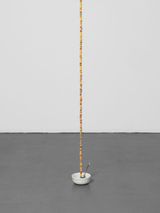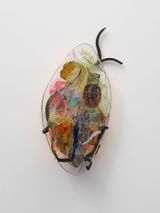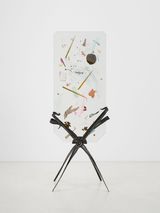
One day, I visited the Oude Kerk in Amsterdam. A foreign visitor approached me and asked — while standing directly in front of the monumental pipe organ — where the organ was. She was looking straight at it, yet somehow couldn’t see it. Since she didn’t speak English, I began explaining through gestures, movements and a few improvised words, trying to show her that each metal pipe was a flute from which sound emerged. Slowly, she began to recognise the whole. You could actually see it happening: the organ took shape in her gaze, as if it suddenly detached itself from the wall and revealed itself to her as a whole. She was startled by its sheer scale, called her family over, and what had been invisible just moments before suddenly became undeniably present.
What struck me about that moment was not only her reaction, but the realisation that even the most impressive thing only comes into existence when we are able to see it — and by seeing, I mean recognising, allowing, listening and wanting to understand. No work of art exists entirely on its own. We bring it to life through everything we carry with us: memory, expectation, culture, desire. It is not the object itself that holds meaning, but the interplay between what it is and what we project onto it.
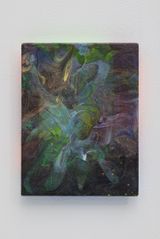
In a sense, I guided her gaze, offered her a key — but in doing so, I also gave her a framework. We do this constantly: creating meaning, assigning value, connecting stories to forms. This is how art comes into being, and how appreciation emerges. Just as we create art, we also bring its meaning into existence, again and again.And it is precisely here, in this act of bringing something into being, that I find the essence of painting. Not in reproducing existing forms or styles, but in building and dismantling what a painting can be in the first place. For me, the desire to paint is also a desire to discover what I do not yet know, what has not yet taken shape. To make visible, as with the organ, something that has always been there — but has not yet been called forth.For me, art only truly begins when it starts to carry this unknown form. Not out of recognition, but out of necessity.This is why I find myself thinking aloud through painting, asking questions that perhaps have no immediate answers, but that open up new possibilities for what painting might become.
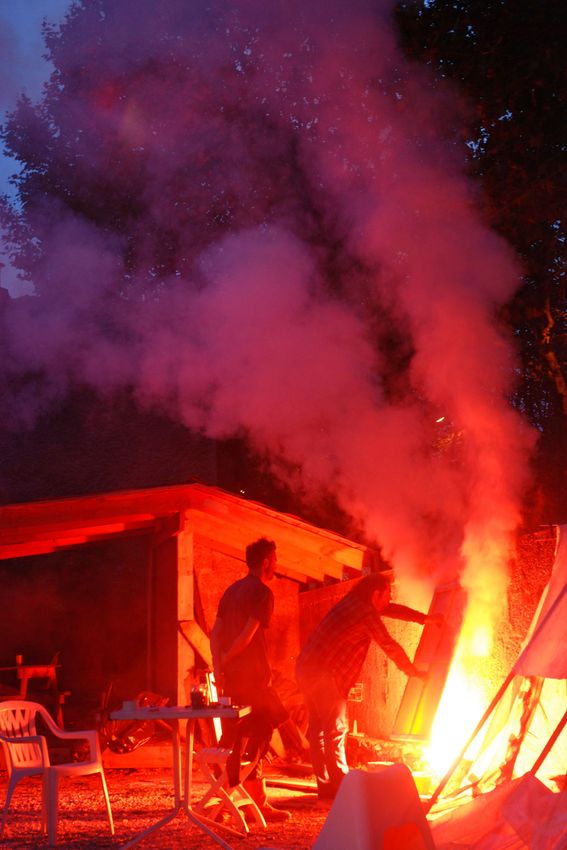
Could the light surrounding a painting — the very light that allows us to see it — somehow become the painting itself? What do we see with our eyes closed, and is it possible to look at that with our eyes open? Could a pigment travel by itself, finding its way towards the canvas, with me somehow involved in its journey? Could all the colours we have gathered be distilled into black, only to reveal themselves again through its inner expression?
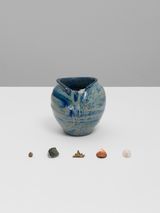
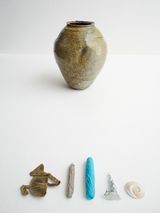
Isn’t craft sometimes a golden cage, keeping a skill like marbling imprisoned for centuries? And doesn’t that skill deserve to be set free, to escape the boundaries of its own tradition and become something else? Could we help a painter by re-enacting a colour from another dimension — not simply reproducing a colour, but bringing back something that belongs to a different way of seeing?
These questions are not merely about technique, material or experimentation. They are attempts to question the very conditions under which a painting comes into existence. To loosen what we think we know about pigment, light, colour, gesture and authorship. To allow materials to have their own agency, and to see whether painting can reveal something that neither the painter nor the material could have anticipated on their own.Perhaps painting begins precisely at that threshold: where intention meets the unknown, where control gives way to discovery, and where the material starts to speak a language that I have not yet learned.
Art is not something you make; art is something you proclaim.
Navid Nuur
Navid Nuur researches the way in which specific spaces and materials can engender new experiences, shifts in attention and perceptual thresholds.

Plan B was founded in 2005 in Cluj, Romania, on the initiative of Mihai Pop and Adrian Ghenie as a production and exhibition space for contemporary art. The gallery program focuses on researching Romanian art from the past 50 years, highlighting the work of remarkable artists who have had little to no international exposure.

A respected voice in contemporary art discourse.
Focusing on ambitious storytelling and insightful art-world commentary. Ocula Magazine publishes in-depth interviews, critical essays and timely analysis on the artists, exhibitions and ideas driving the global art world.
Learn more about Ocula Magazine
Showcasing the best of the art world.
Ocula partners with galleries from around the world to highlight their artists, artworks and exhibitions. Gallery membership is by application and invitation, with each member vetted by an independent panel.
Learn more about Ocula Membership
Specialises in the sale of major artworks.
Led by a team with deep ties to the world’s leading auction houses, galleries and collectors. Ocula’s advisory team offers bespoke services to high-net-worth clients from around the world who are looking to acquire the best of contemporary and modern art.
Learn more about our team and services