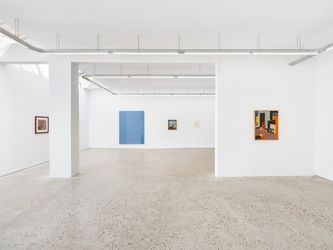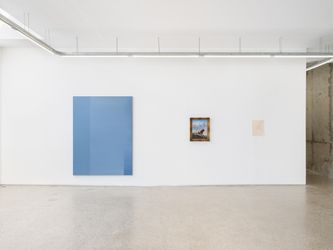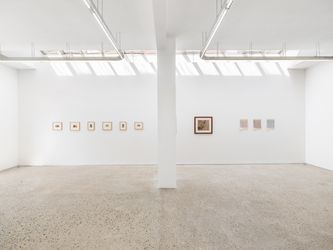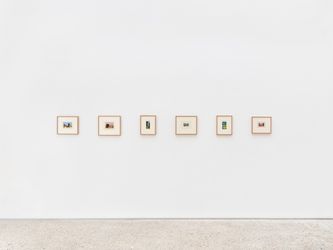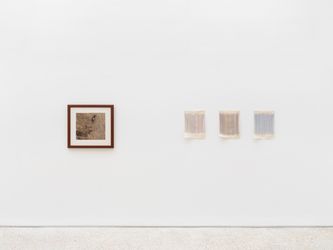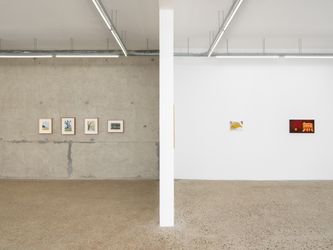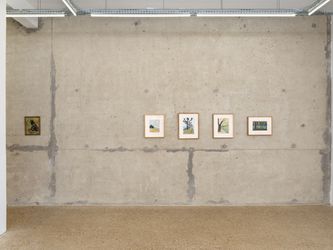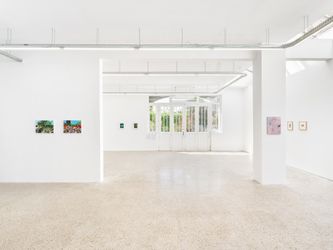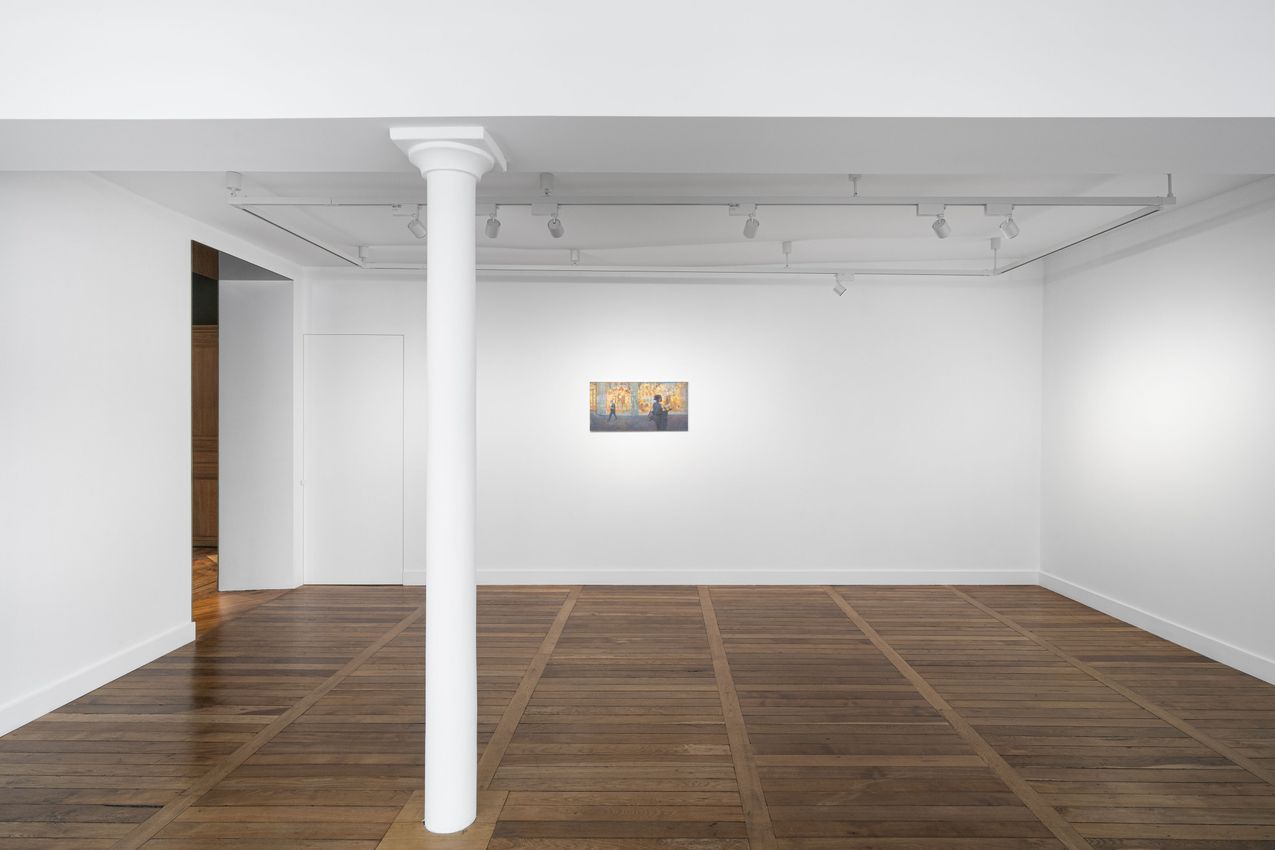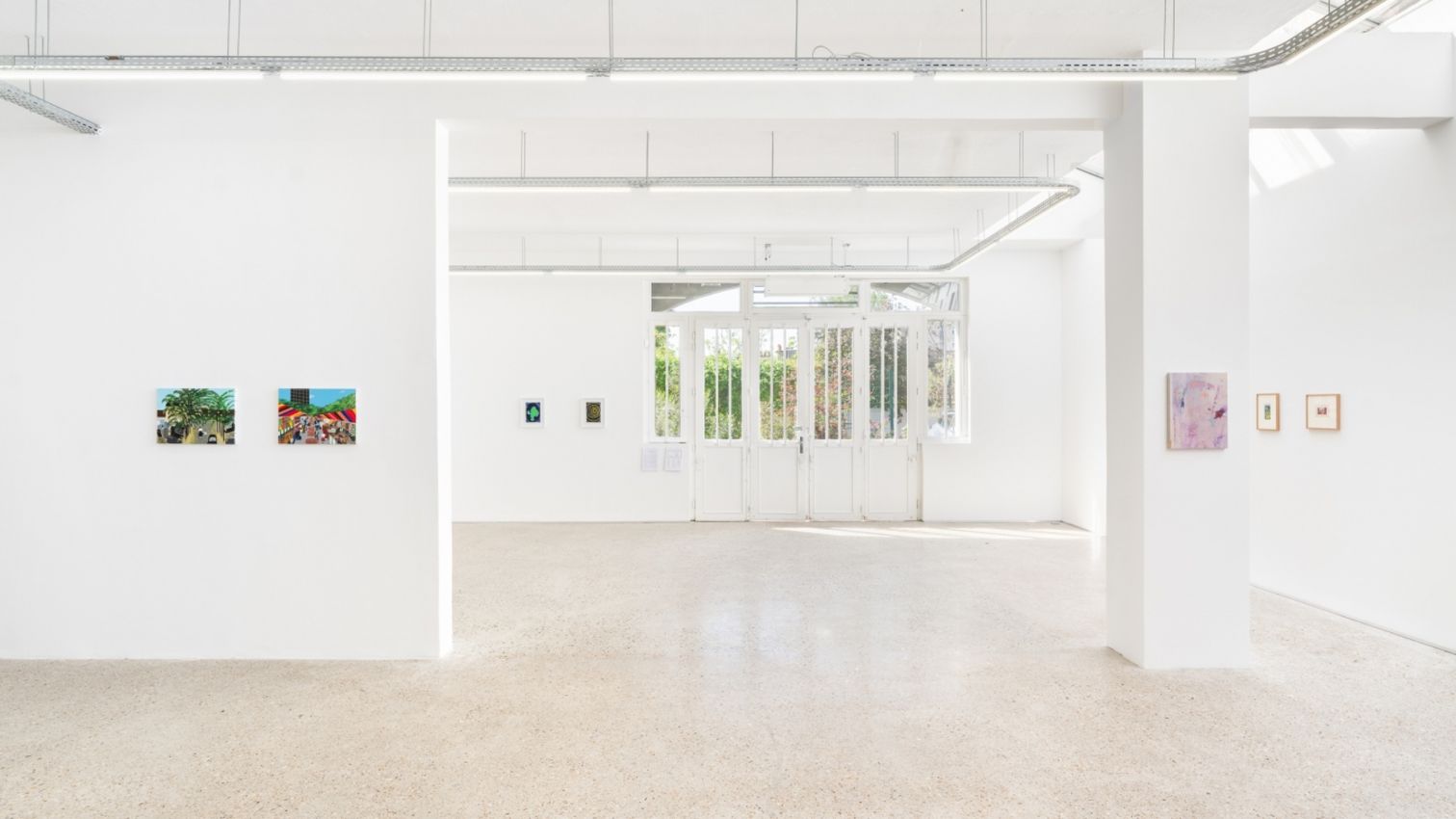
For someone who has undergone tedious art studies, there is something almost irritating about listening1 to Henry Miller brag about his incompetence as a painter, and how envious his painter friends are of him.
“Painters seem to be intrigued by my easygoing devices. Now and then, one will say to me: ‘I wish I had the courage to do that’, as if it had taken courage on my part. When I explained that it was because of sheer ignorance, sheer inability that I made the houses as I did, the answer usually is: ‘No matter, you had fun. It makes a picture just the same.’ “2
Fun is important. I can see that my own paintings become worthless when I’m not having fun, if the work becomes a chore instead of a happily devoted focus, a childlike absorption in the task.
“How many, many times I have tried to imitate or copy the work of a child! (...) Time and again someone has walked in on me during a painting jamboree and exclaim: ‘What joyous colors! What freedom! You must be having fun!’ But is the joy of a child like man? Never have I noticed a child at work expressing this sort of joy. The child is too intent on what he is doing to absorb, to be aware of any accompanying emotion. Whatever the child does, whether expressive of fear, horror or anguish, the effect on the spectator is one of joy. The work of a child never fails to make appeal to claim us because it is always honest and sincere, always imbued with that magic certitude, born of the direct, spontaneous approach.“3
Dubuffet is a good example of a painter attempting to get close to the quality of works produced by children — or wrongly-named “crazy” people, and even animals:
“All haunted by swift glides, by flashes of light in rushing water, how fascinating the work of a trout would be, if trout painted. And that of a snake — if snakes could bestow their works upon us — obsessed with burning-hot stone. And never mind the chosen subject, take for example an apple, the trout would express its cold movements, the snakeits stone (...). Humans, we are fascinated by works made by fellow humans, we avidly seek out in them traces of the spectacles that fill our gaze at every instant, of our obsessive everyday preocupations, of what, throughout our life, falls underneath our senses at every step. And it’s: a torn-up poster, a shining piece of sheet metal, rusted iron, a mud-encrusted path, a lid smeared with coal tar. (...) marks, trails, chance encounters, (...) that is what the painter must record as it goes; fixing, assimilating and reproducing it in his works, even when painting an apple.” 4
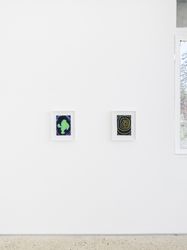
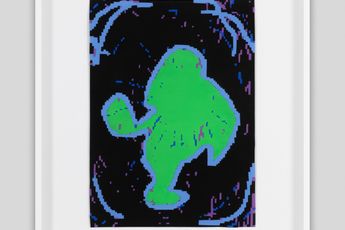
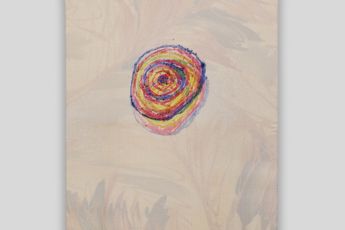
Whitney Clafin directly embeds these traces of human life in her paintings. A school notebook page, nails, a lost earring. When the canvas itself is a scrap of fabric, it evokes the old-fashioned armchair that the rest of the bolt was used for, and the entire lives of the people who sat in it. Her painting process is a game of discovery, and sometimes a very long one: a painting round she has started can linger months, or even a year in her studio before she finds the solution.Sadie Benning literally started making work with a toy: a camera for children that she was given as a teenager. In her paintings, play is still present: the works are puzzles made of wood and resin, or collages of paper coloured with gouache then cut-up like Matisse. When they work, I am sure that Whitney and Sadie have fun. Maybe not all the time, and the processes that lead to the playful aspect of their work are sometimes surprisingly long and technical, but joy is grasped for a moment and remains there. In the end, it’s about freedom. Naïve artists are free for “a naïve artist is actually someone who transgresses rules that they aren’t even aware of.”5
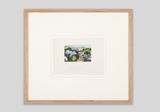
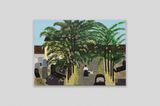
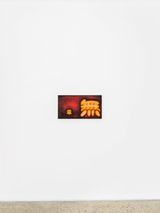
It is doubtful that Françoise Lapeyre is actually ignorant of the rules of art — she relatively respects the conventions of perspective — but having, like Miller, privileged writing, she is a proud “Sunday painter,” who hasn’t had to submit to formal training nor conventions, and like Miller she paints on and off, when it pleases her, before and after her career in publishing world.Li Shan is also self-taught and also put painting aside for thirty years or so, but her painting would only be thought of as “naïve” through a contemporary Western gaze. There was nothing naïve about painting still lives and landscapes in China in the 70s, or only dangerously so. Under the Cultural Revolution, these genres were considered to be bourgeois art, putting Li Shan and the other members of her painting group, the Wuming (No Name) Painting Association, at risk of being purged. They had to meet in up in secret to paint en plein air together.6 One couldn’t really say if their paintings are impressionist, shanshui, academic or avant-garde, or whether this really matters. No genre or style is subversive in and of itself anymore, it is now up to the context and the artist’s intention to make it so — or not.
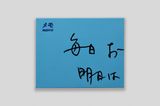
Continuing the Chinese-Japanese pictorial tradition where calligraphy and painting were once one and the same practice, Naoki Sutter Shudo uses kanji in his paintings, but given his self-taught background and his impertinence towards traditional rules, these paintings could be described as raw calligraphy. His choice of characters refers to notions or questions that are both rather simple or rather existential, and their style varies, sometimes being so nonchalant or mangled as to become illegible. The painting is like a portrait of an idea or concept that preoccupies him and of its name rather than an actual practice of calligraphy.Anne-Lise Coste also paints with text. Poems or repeated words are rudimentarily spray-painted, often over and over, sometimes until saturation. More recently, small works scribbled in pen are prayers addressed to the forest, to water, to the beloved, or simply lines traced meditatively by a steady hand, like Agnes Martin on an inspired day.
“You don’t have to be religious to have inspirations (...)Art restimulates inspirations and awakens sensibilitiesthat’s the function of art ” 7
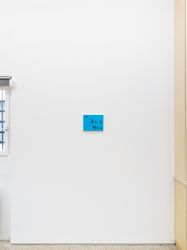
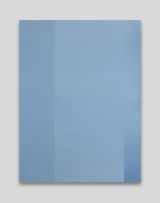
Geneviève Asses also didn’t work when inspiration didn’t come. It is usually just one or two lines that run perpendicular across her blue field, sometimes interrupted or intersecting. These canvases capture something of space and light, flowing on from the contemplative meditation sustained by the remote tranquility of her house in the Gulf of Morbihan.“The idea is independance and solitudenothing religious in my retirement.” 8
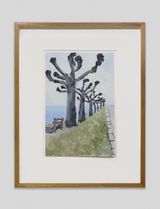
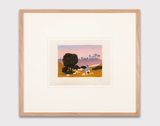
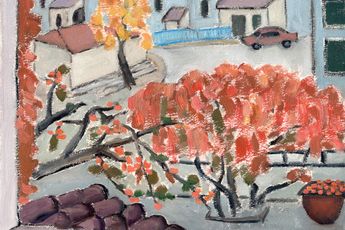
In the work of Jean Hugo, the need to withdraw, allowing for the slow passing of time, contemplation, to the point of devotion, is openly pious. He left Paris and the coolest people in town to go to the South and paint landscapes suffused with fervor. If some scenes use an explicitly Christian iconography, there is no real difference in the way that he treats a plate of fruit or a chair hanging around in his studio.On the apples and bottles of Cézanne, Rilke writes : “Out of these things he makes his ‘saints’; and he compels them to be beautiful, to signify the whole universe, all the happiness andmagnificence of the world.” 9
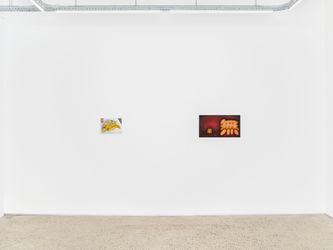
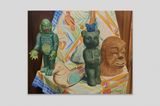
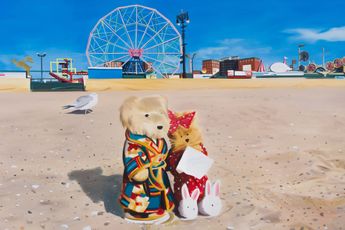
Maybe Ulala Imai makes saints out of the toys and stuffed animals that she arranges into small armies of paintings, or rather just spirits, according to the animist tradition.“It is said that children do not distinguish between living and inanimate objects; I believe they do. A child imparts a doll or tin soldier with magical life-breath. The artist animates his work as the child his toys.”10
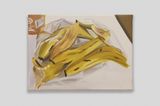
Or maybe it’s simply a tender homage made to a few banana skins, vestiges of morning chaos, after children have gone to school.
“To paint is to love again. It’s only when we look with eyes of love that we see as the painter sees. His is a love, moreover, which is free of possessiveness. What the painter sees he is duty-bound to share. Usually he makes us see and feel what ordinarily we ignore or are immune to. His manner of approaching the world tells us, in effect, that nothing is vile or hideous, nothing is stale, flat and unpalatable unless it be our own power of vision. ”11
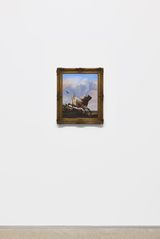
Rosa Bonheur never grew tired of the “minor” subject of painting animals, challenging the genre hierarchies within the medium, just as she was challenging gender hierarchies by reaping all the official accolades and commissions in a male dominated field. Her most conventional style of realism earned her the patronage of successive regimes of her tumultuous century, so Rosa Bonheur is a far cry from a Courbet toppling the Vendôme Column. But what part do chance parameters (milieu, temperament) play as to whether or not the intuitively developed style and taste of a painter might clash with that of their contemporaries?
“If man has something to give to art, it’s himself, and what he borrows from elsewhere, it must be reborn inside of himself. But if you neglect the divine spirit that must vibrate from within your canvas, then you haven’t felt a thing, leaving your work inert.” she says.12
Didn’t Van-Gogh write similar things albeit in a less professorial tone? Weren’t they doing the same thing, each with a temperament and vision that was differently compatible with their respective epochs? One can always decline awards and decorations. But that’s a question for later. In the studio, “the sanctuary”,13 something else plays out.
“To paint is to love again, and to love is to live to the fullest. But what kind of love, what sort of life can one hope to find in a vacuum cluttered with every conceivable gadget, every conceivable money maker, every last comfort, every useless luxury? To live and love, and to give expression to it in paint, one must also be a true believer. There must be something to worship. ” 14
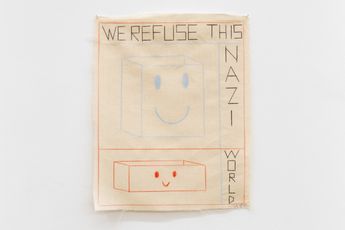
In an era when hatred is regaining so much ground, continuing to paint demands a certain kind of faith, and to paint with love is a real stance. The choice of subject is of little consequence and is each painter’s prerogative. The terms faith and religion have been corrupted by dogma and their rejection can be valid. But the existence of a certain sentiment precedes their invention and survives them, it gave rise to the first manifestations of what we now name “art,” and is perhaps more relevant that ever.
“Face to face with a world founded upon a brutal materialism where everything is evaluated according to material well-being and where religion, after having lost much ground, is no longer the biggest purveyor of spiritual value, [...] I believe that today more than ever the artist has a para-religious mission to accomplish: to keep the flame of one’s interior vision burning, one that the work of art seems to be the closest profane translation.”15
Text by Louise Sartor, Courtesy Crèvecœur, Paris.


Crèvecœur was founded in 2009 by Axel Dibie and Alix Dionot-Morani in Paris. Since its creation, the gallery has been supporting French and international artists whose different practices and visual language explore the most forefront topics and relate to the world’s social and political context.

A respected voice in contemporary art discourse.
Focusing on ambitious storytelling and insightful art-world commentary. Ocula Magazine publishes in-depth interviews, critical essays and timely analysis on the artists, exhibitions and ideas driving the global art world.
Learn more about Ocula Magazine
Showcasing the best of the art world.
Ocula partners with galleries from around the world to highlight their artists, artworks and exhibitions. Gallery membership is by application and invitation, with each member vetted by an independent panel.
Learn more about Ocula Membership

Specialises in the sale of major artworks.
Led by a team with deep ties to the world’s leading auction houses, galleries and collectors. Ocula’s advisory team offers bespoke services to high-net-worth clients from around the world who are looking to acquire the best of contemporary and modern art.
Learn more about our team and services