I’m not interested in architecture, but in space.
—Thomas Meyer
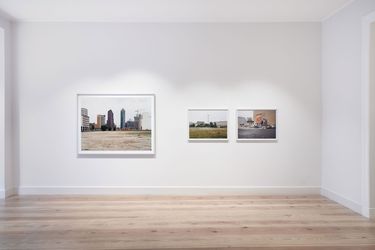
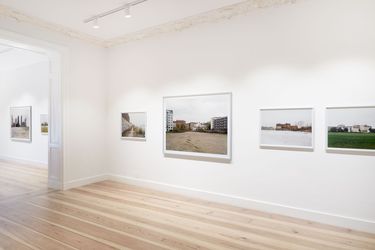
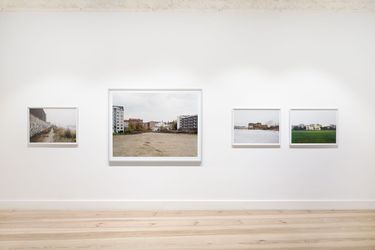
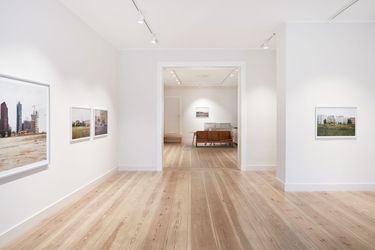
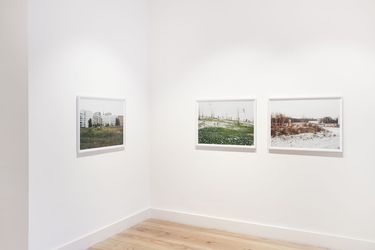
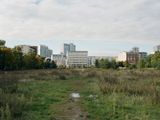
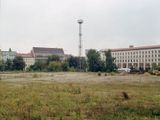
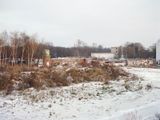
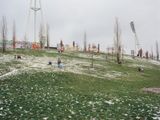
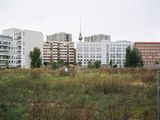
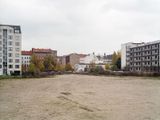
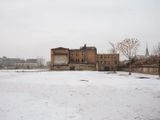
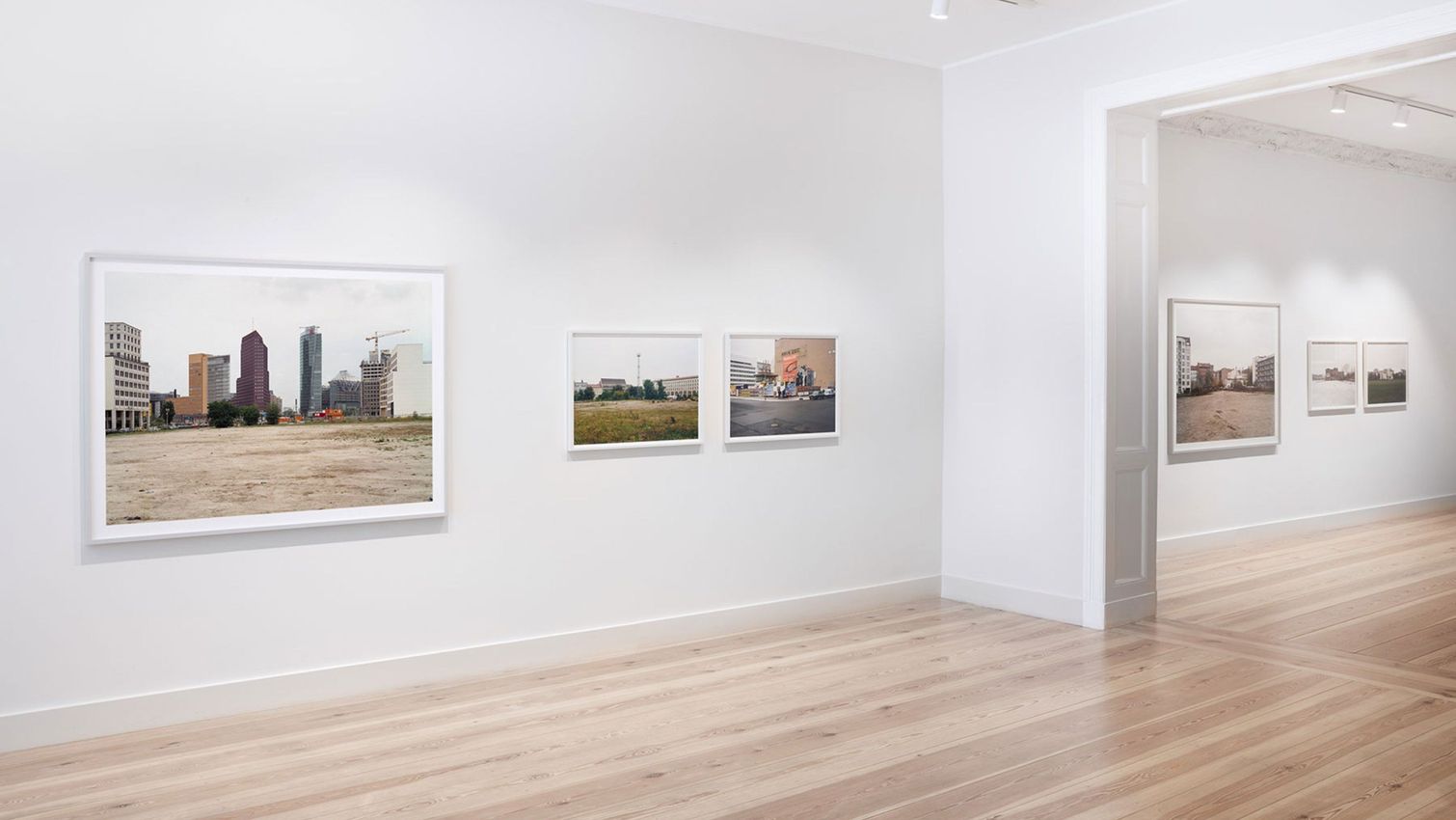
He found open, free spaces in the middle of Berlin where the Wall had been. Nature and abandoned, dilapidated buildings enter into a romantic symbiosis. As if stopped by an invisible hand, construction suddenly pauses. This unique situation: that there are no buildings in the middle of the city, that it is not crossed by streets and rails. Rather, it was an open space where humans have not intervened; it lasted only for a brief period, at the end of the 1990s and the early 2000s, after the Wall fell. The photographs remind us of how promising the situation was at the time: free open spaces offering numerous possibilities, and no longer marking any borders.
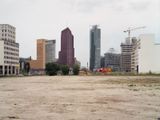
Open, free spaces have a glamorous quality, they are attractive. The camera supports their appearance, and keeps everything that might restrict or delimit at a distance. The view of Potsdamer Platz from afar in 2000, where the first new buildings reaching upwards towards the sky are already visible: the Deutsche Bahn glass tower, the pointed brick building by Kleihues, and in the background Renzo Piano’s building in ochre. They seem like a signal: Berlin is becoming once again a metropolis of global significance, and they stand for a sense of promise that came with the fall of the Berlin Wall.
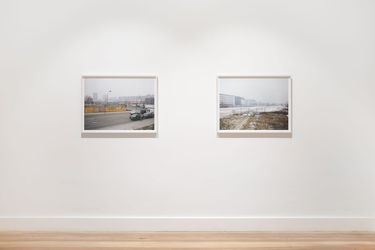
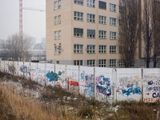
The photographs demonstrate that the western part of Berlin is thriving and active, seems superior to the poor, grey eastern part, and indeed feels that way, as developments after German unification show. Rubble and piles of soil behind a temporary fence around a construction site, or a graffiti-adorned wall, grey buildings and abandoned ruins on the one side, new dense construction painted in bright colours and with a modern appearance in the West. The eastern part can be recognized from the old GDR street lamps, which are now dismantled.
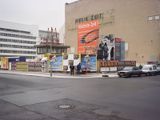
At Checkpoint Charlie, East and West meet without any separating open space. The new buildings of the West are a distance away, our eyes look at a dilapidated, broad building wall with bricked-up windows in the East. In a large, weathered black font, we read ‘Neue Zeit’(New Time); directly below, a large orange poster with white writing shouts ‘Höchste Zeit’(High Time). It is an advertisement for a telecommunications company – it would be difficult to imagine a more exemplary representation of unification.
Thomas Meyer (born in Delmenhorst in 1967) studied at Hochschule für Künste Bremen, graduating in 1996. His diploma project about shopping centres in East Germany was awarded the BFF Förderpreis. In Berlin, he began to work as a freelance photographer and attended Arno Fischer’s master class. In 2000, he became a member of the agency OSTKREUZ. He works for companies in the fields of business, the media, and advertising, and teaches regularly at Ostkreuzschule für Fotografie and HTW Berlin. His work has been shown in solo and group exhibitions. In the series Inside Stasi, which he has exhibited repeatedly, he traces remnants of the GDR security apparatus.


Thomas Meyer (born in Delmenhorst in 1967) studied at Hochschule für Künste Bremen, graduating in 1996. His diploma project about shopping centres in East Germany was awarded the BFF Förderpreis. In Berlin, he began to work as a freelance photographer and attended Arno Fischer’s master class. In 2000, he became a member of the agency OSTKREUZ. He works for companies in the fields of business, the media, and advertising, and teaches regularly at Ostkreuzschule für Fotografie and HTW Berlin. His work has been shown in solo and group exhibitions. In the series Inside Stasi, which he has exhibited repeatedly, he traces remnants of the GDR security apparatus.

Established by Susanne Albrecht in 1986 off the heels of her studies in philosophy, art history, and Italian philology at Freie Universität Berlin and Ludwig-Maximilians-Universität München, Galerie Albrecht represents young European and Asian artists as well as influential established European and American post-War and contemporary artists.

A respected voice in contemporary art discourse.
Focusing on ambitious storytelling and insightful art-world commentary. Ocula Magazine publishes in-depth interviews, critical essays and timely analysis on the artists, exhibitions and ideas driving the global art world.
Learn more about Ocula Magazine
Showcasing the best of the art world.
Ocula partners with galleries from around the world to highlight their artists, artworks and exhibitions. Gallery membership is by application and invitation, with each member vetted by an independent panel.
Learn more about Ocula Membership

Specialises in the sale of major artworks.
Led by a team with deep ties to the world’s leading auction houses, galleries and collectors. Ocula’s advisory team offers bespoke services to high-net-worth clients from around the world who are looking to acquire the best of contemporary and modern art.
Learn more about our team and services