



Press Release

‘The soil was a horizonless external gut—digestion and salvage everywhere—flocks of bacteria surfing on waves of electrical charge—chemical weather systems—subterranean highways—slimy infective embrace—seething intimate contact on all sides.’– Merlin Sheldrake, Entangled Lives

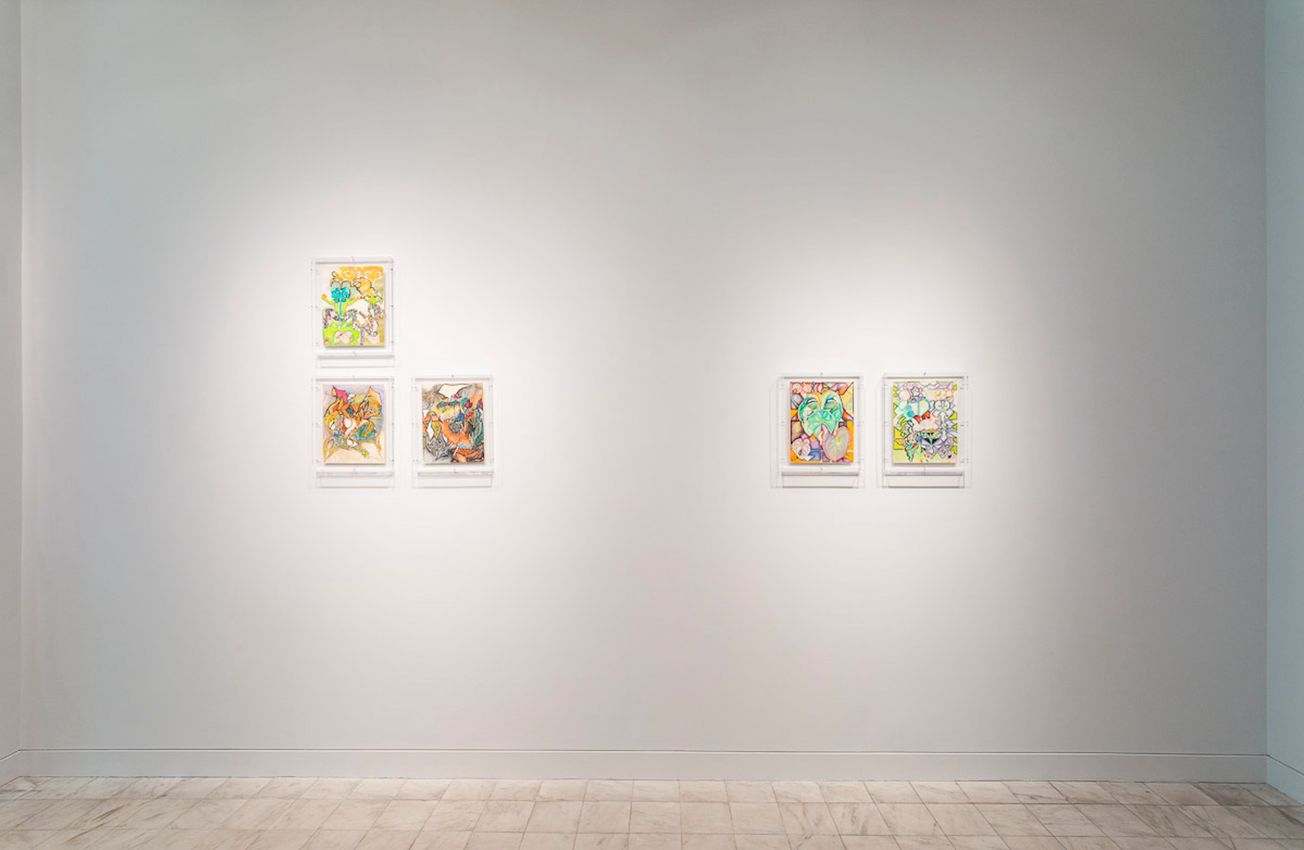
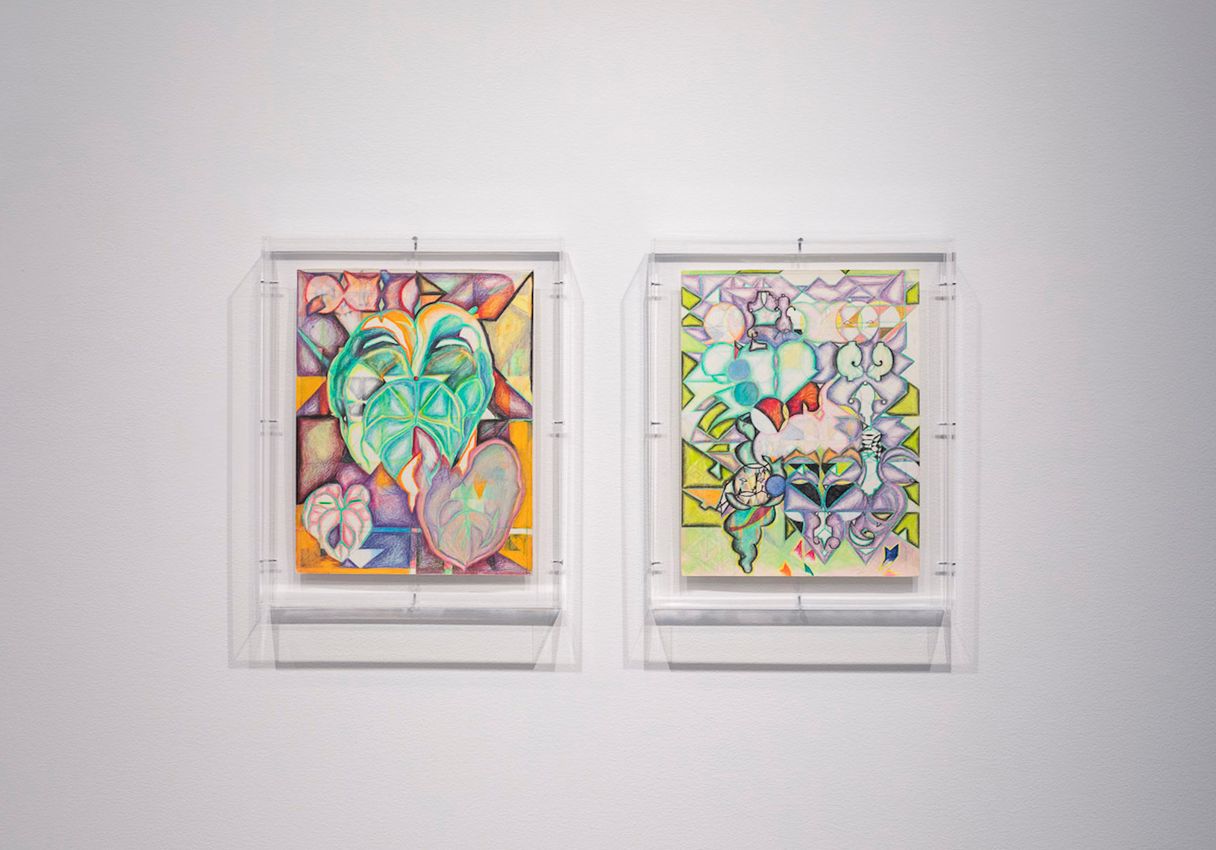
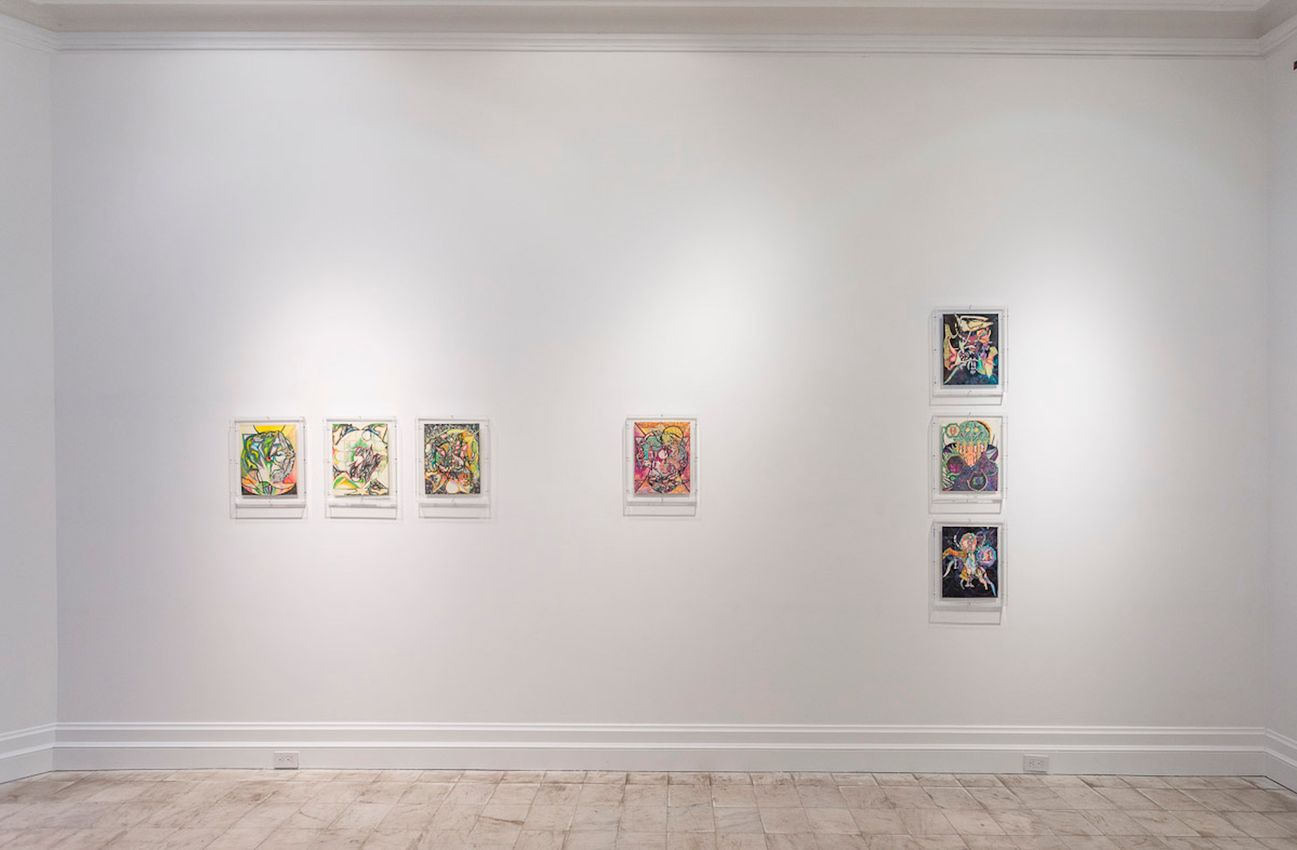
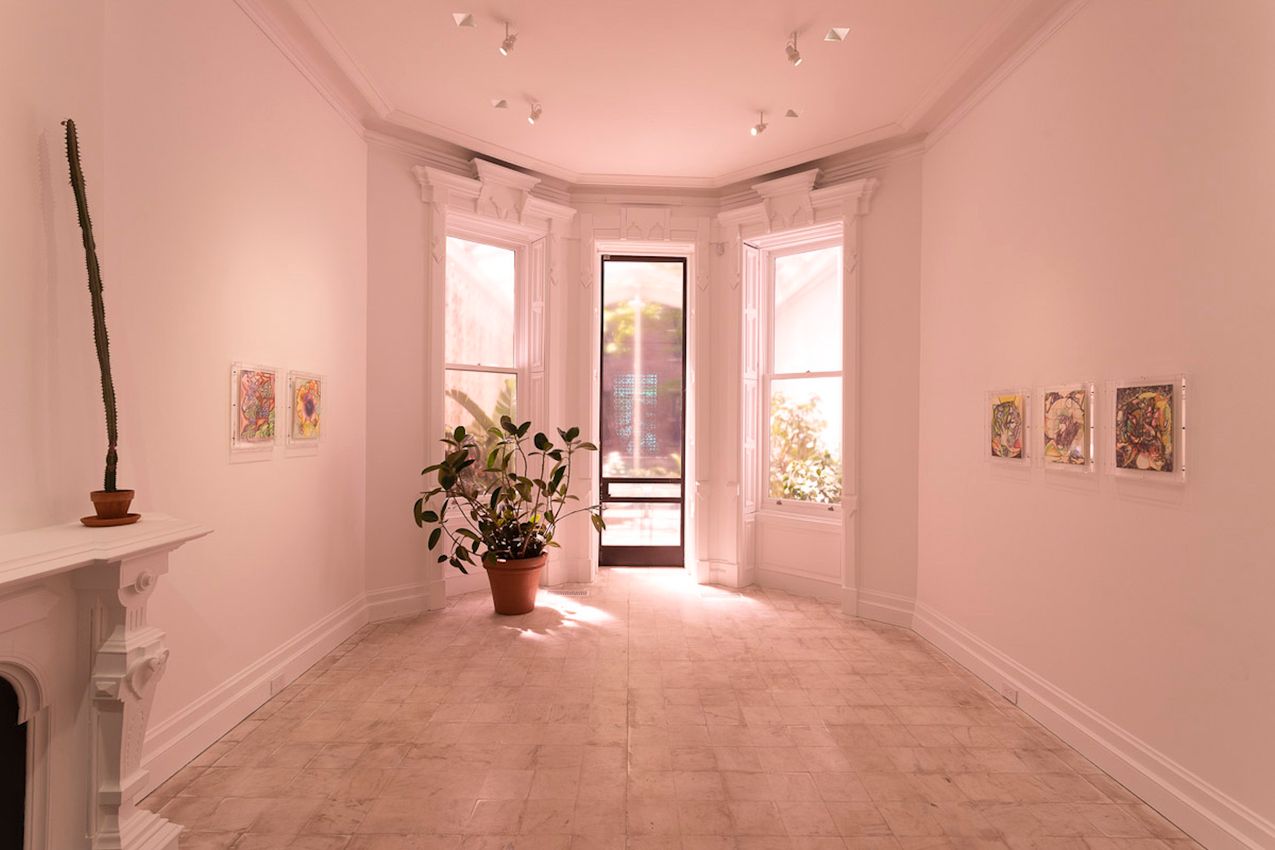
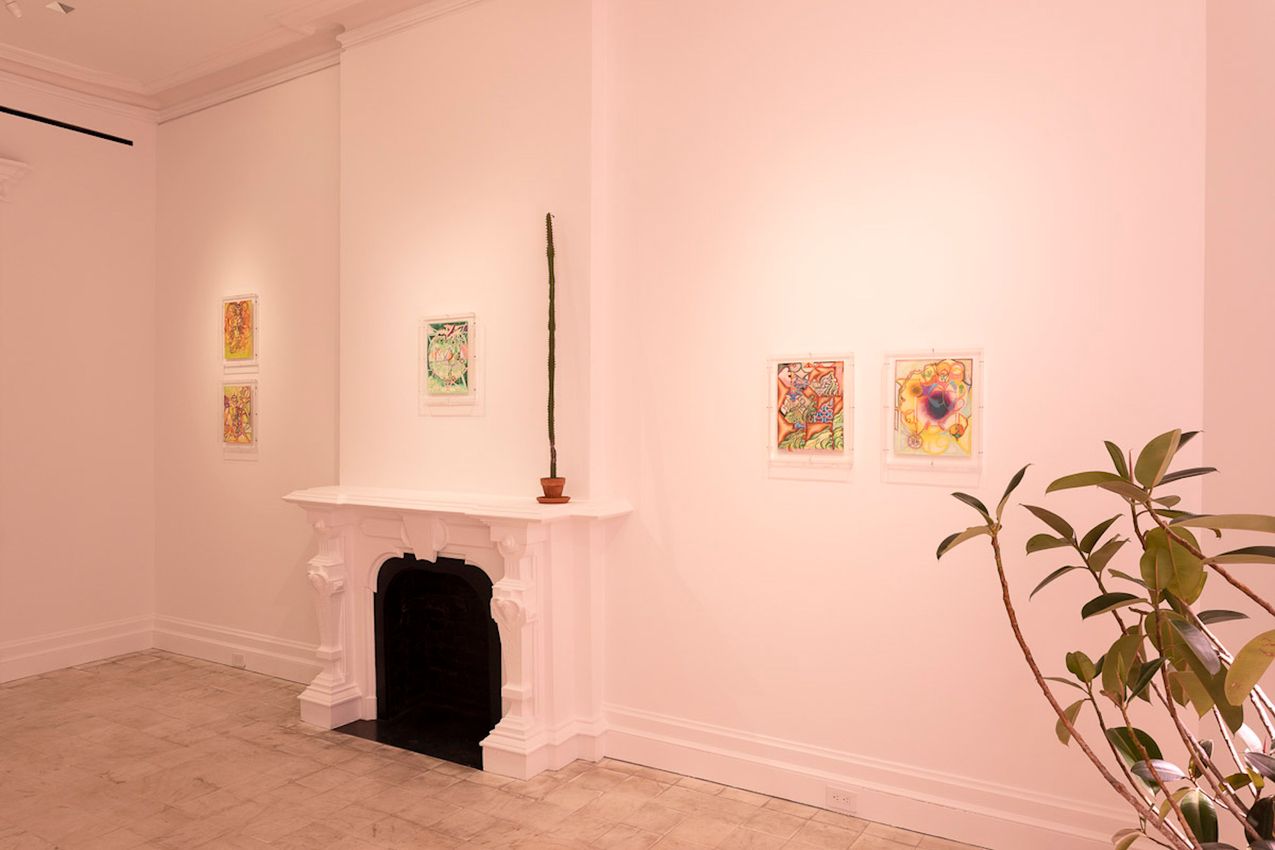
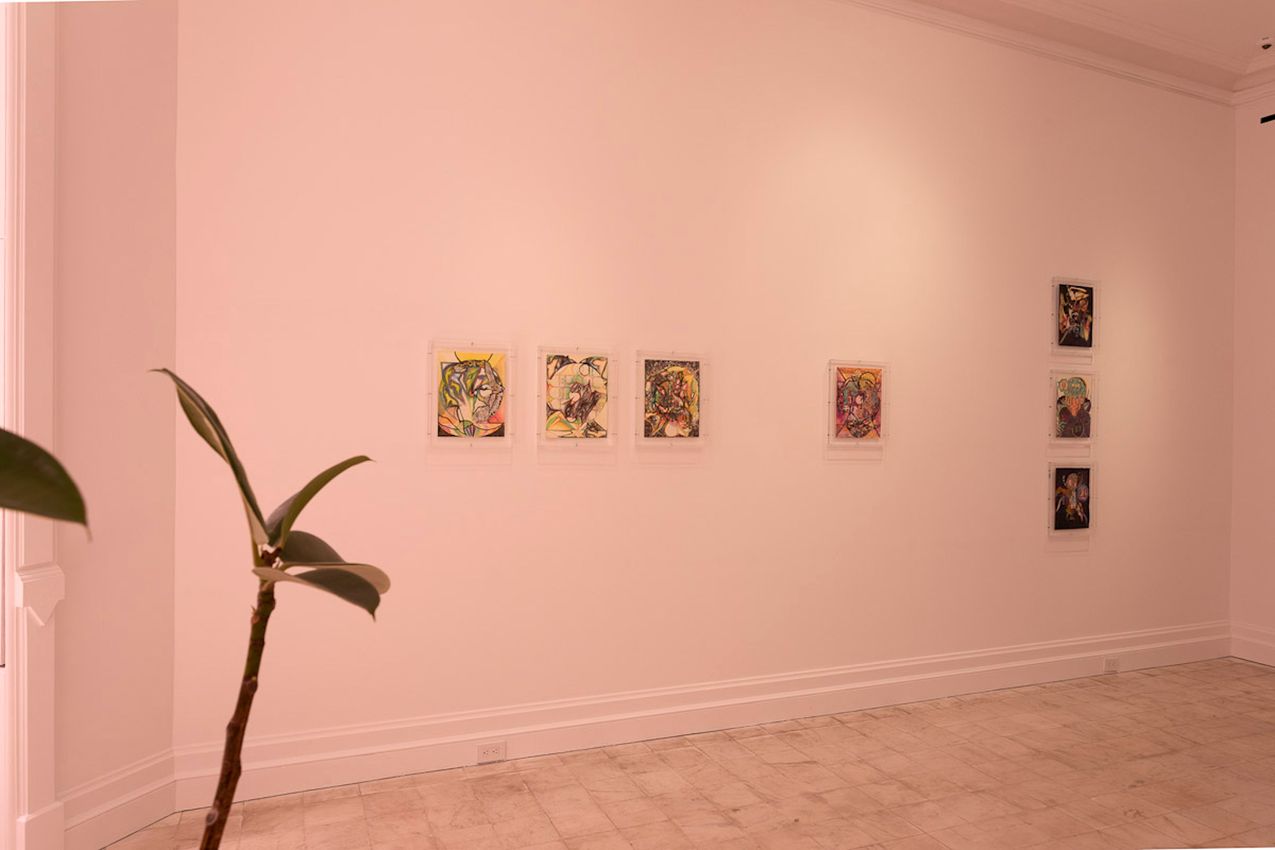
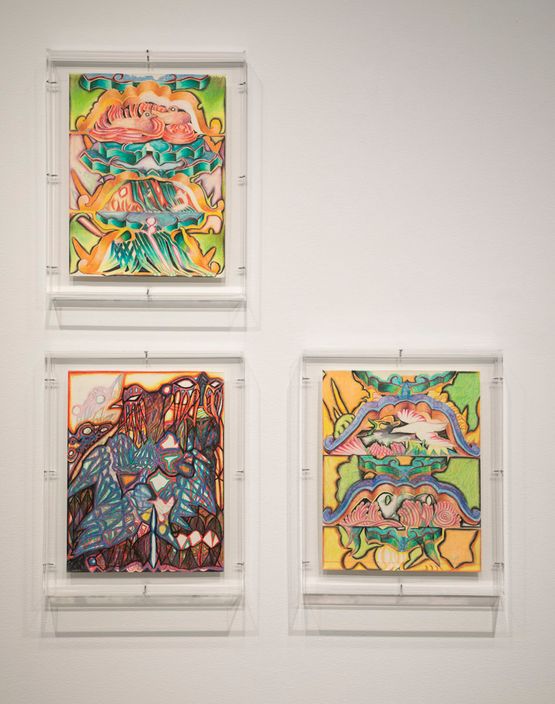
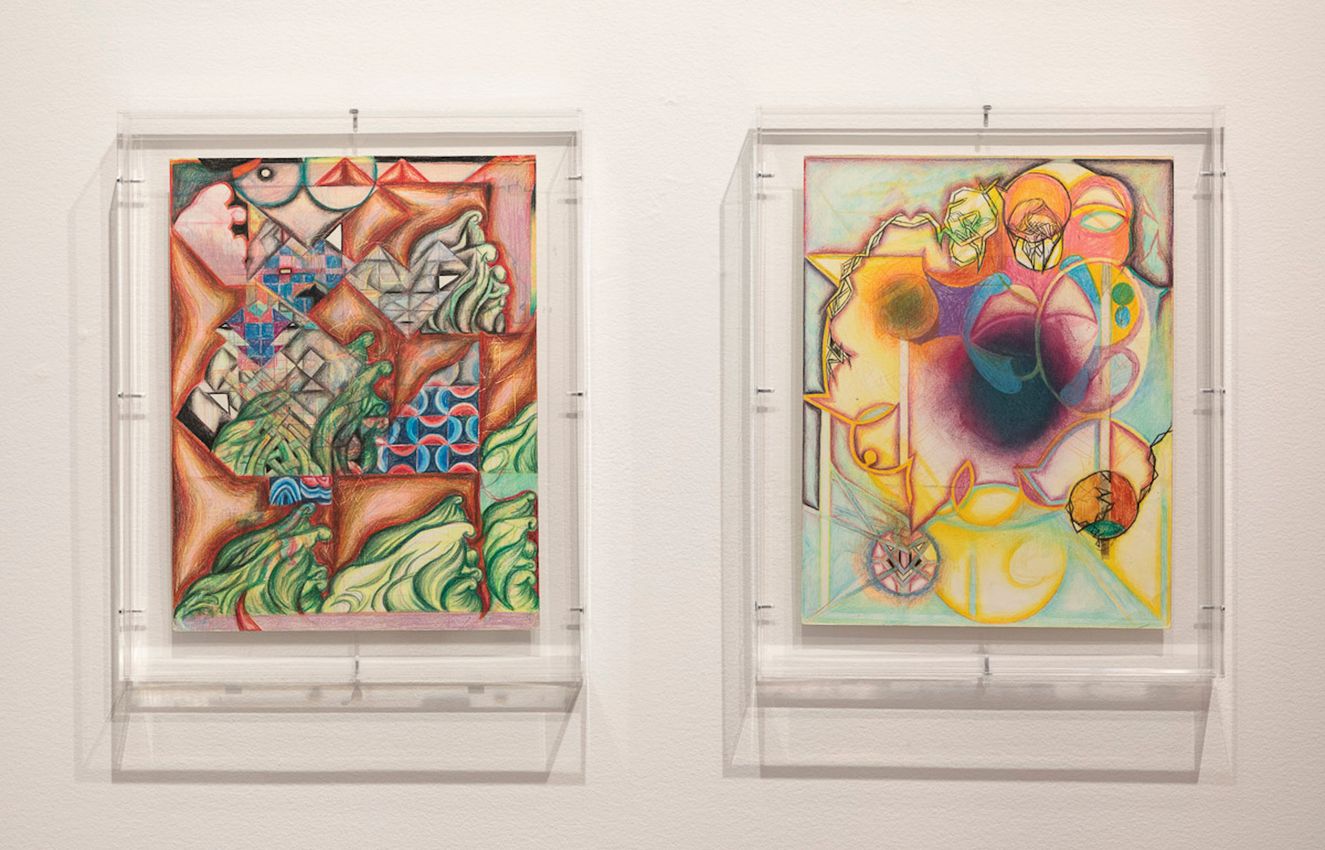
Kerstin Brätsch began making the Para-Psychics (2020–2021) during prolonged periods of self- isolation in which the artist committed to a daily ritual or diaristic routine of visualising one’s own psychic realm. A long-standing interest in the mediumistic directly links this series of drawings to her earlier Psychics (2006–2008). While visiting fortune tellers, Brätsch was simultaneously beginning to explore the medium of painting itself, which she has continued to channel through other art forms, artisanal techniques, and collaborations since. Missing those social bonds, the Para-Psychics nevertheless symbolises another form of clairvoyance, this time a move towards interiority.

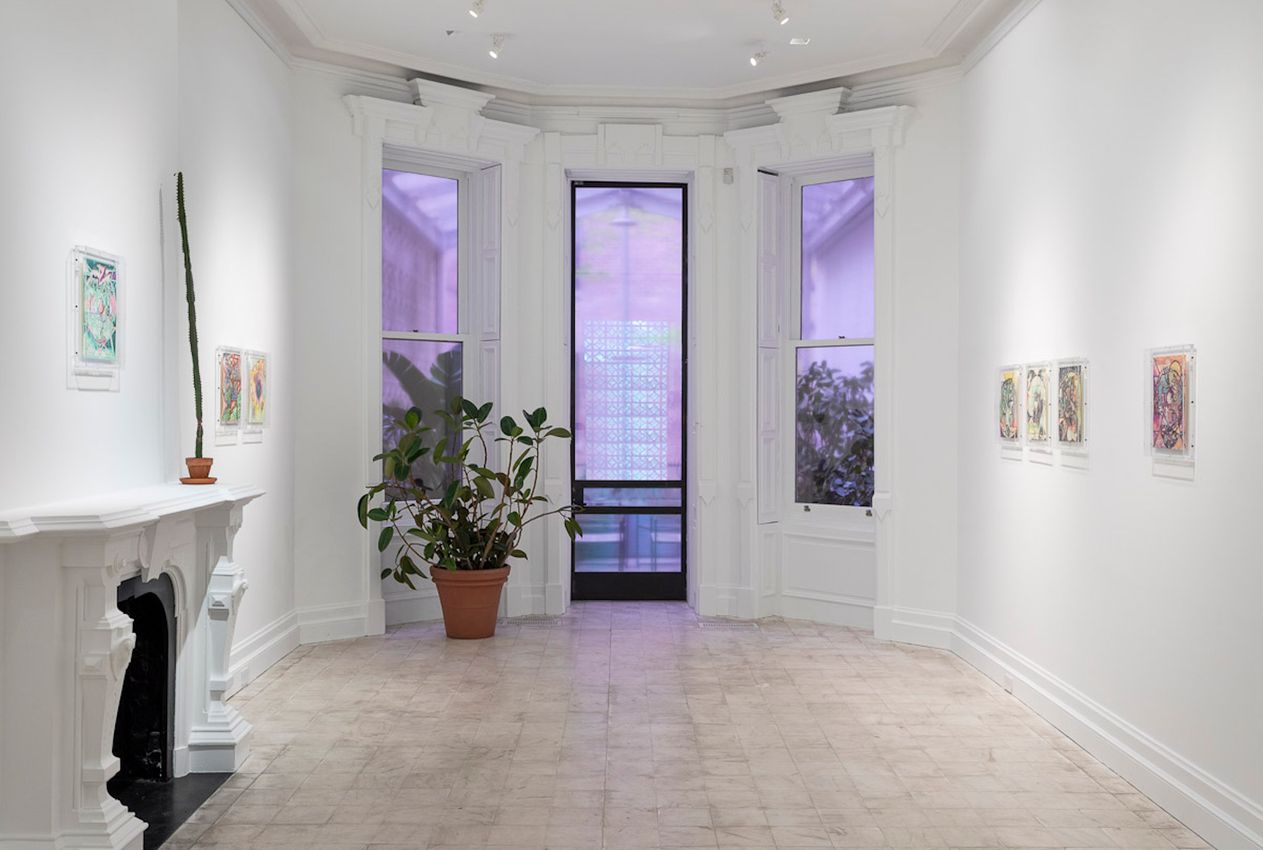
Rendered in simple coloured pencil, a kaleidoscopic array of softly shaded foliage-like forms, labyrinthine tubular tendrils, and angular, refracted shapes mutate, unfold, and coalesce on the surface of the paper. Here, the manifestation of inner, mental space is envisioned as a vividly baroque or ornamental metaphysics rather than, say, the artistic byproduct of the unconscious the result of psychic automatism. While there appears to be no discernable geometry, structure, or possible portraiture to these drawings, their composition could be thought of as perhaps akin to an ‘architecture of roots’ as described by Merlin Sheldrake in his study of Fungi, Entangled Lives. In this regard, Brätsch’s arrangements are suitably rhizomatic given they share attributes below ground.

‘For humans, identifying where one individual stops and another starts is not generally something we think about. It is usually taken for granted—within modern industrial societies, at least—that we start where our bodies begin and stop where our bodies end’, writes Sheldrake. The Para-Psychics reject this straightforward, progressive narrative as well. Yet, within the transference of the biological to an ecology of the self, there remains inevitable remnants of the past dragged forth like sediment on a seabed. Figures occasionally appear in various states of becoming or disintegrating into their surroundings. Depictions of human anatomy are repeatedly splayed apart, dissected, sprouting and vegetative, or drained and ghostly. Some manifest as spectral, bodiless bodies reduced to what looks like floating arteries and organs. ’[...] the grotesque image of the reordered body seems, on the surface, to be an extension of organic abstraction’, writes Mike Kelley in Foul Perfection: Thoughts on Caricature, in a reminder that grottesca were first found in subterranean grottos in Ancient Rome, once favoured by artists during the Renaissance.1

Writing about reduction as a form of distortion in modernism, Kelley uses the example of J.G Ballard’s 1966 novel The Crystal World in which an ecological phenomenon causes rapid crystallisation. This reduction is ‘deadening and ultimately apocalyptic’, leading to homogenisation as well as a common condition in the Ballard’s protagonists: the compulsion to depersonalise. Some of Brätsch’s imagery is tinged with the crystalline as if touched by a similar cataclysmic process that

was taking place outside concurrently. Yet the Para-Psychics resist inertia because they represent a collapsing of time rather than the linear procession of crystallisation that solidifies it. In this sense, the artist’s relationship to the exterior world is fundamentally diffuse like the network logic of Mycelium, ‘better thought of not as a thing but as a process: an exploratory, irregular tendency’, Brätsch channels hyper-connectivity with one’s surroundings.– Saim Demircan

1 Kelley, M., & Welchman, J. C. (2003). Foul perfection: Essays and criticism. MIT.

Press release courtesy Gladstone Gallery. Text: Saim Demircan

Read More

Installation Views

Also Exhibiting at Gladstone

About the Gallery
Gladstone is known for its commitment to artists whose prescient approaches and experimental practices have defined the contours of contemporary art. The gallery has long been an active partner in the cultivation of iconoclastic careers, fostering a roster of artists recognized for their ground-breaking contributions. Headquartered in New York and including outposts in both Brussels and Seoul, Gladstone’s impact extends globally, enabling both the presentation of new bodies of work, and an amplification of the international reach of its artists. Alongside its work with contemporary artists, the gallery is steward to the legacies of pivotal historical artists and serves as an advocate for the enduring power of art. Gladstone is led by a team of partners who spearhead its long-term vision and program, building on the values of its founder Barbara Gladstone.
View Gallery Profile
Address
130 East 64th Street
New York
United States
Opening Hours
Tuesday - Saturday
10am - 6pm
(1)
New York 130 East 64th Street
Gladstone
130 East 64th Street, New York, United States
+1 212 753 2200
http://gladstonegallery.com

Opening hours
Tuesday - Saturday
10am - 6pm
The art world in focus