Press Release

The law locks up the man or woman
Who steals the goose from off the common
But leaves the greater villain loose
Who steals the common from off the goose.

The law demands that we atone
When we take things we do not own
But leaves the lords and ladies fine
Who take things that are yours and mine.

The poor and wretched don’t escape
If they conspire the law to break;
This must be so but they endure
Those who conspire to make the law.

The law locks up the man or woman
Who steals the goose from off the common
And geese will still a common lack
Till they go and steal it back.

–17th-century folk poem

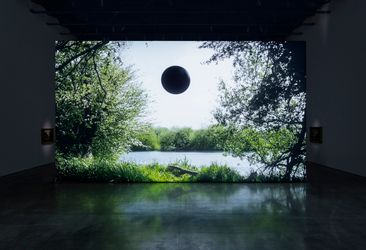
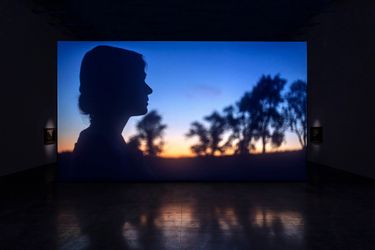
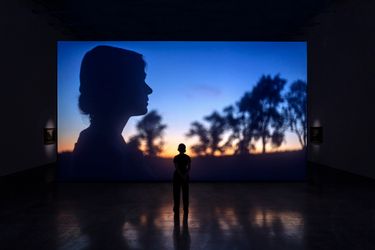
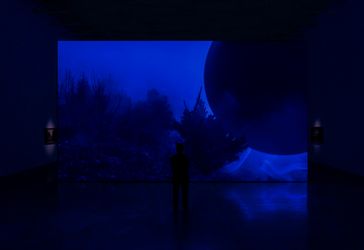
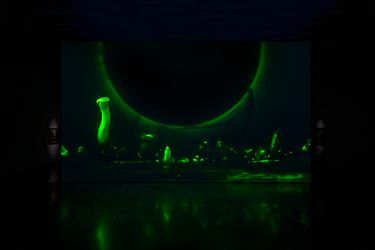
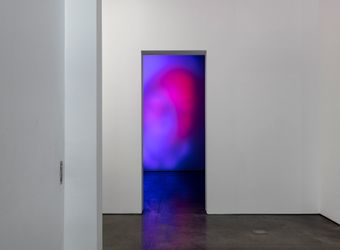
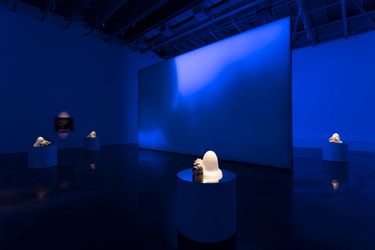
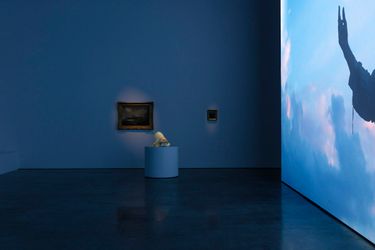
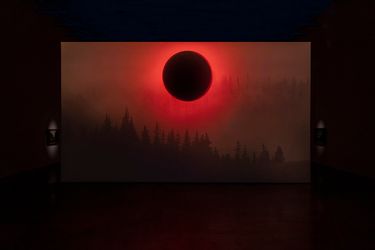
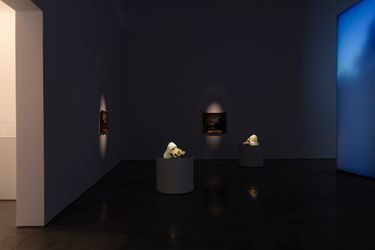
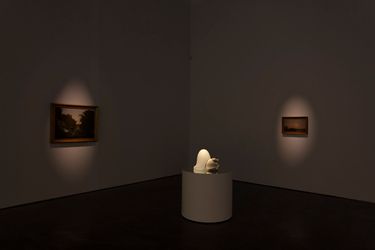
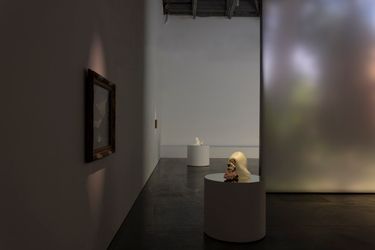
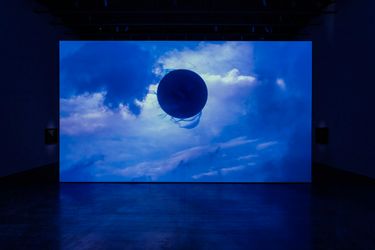
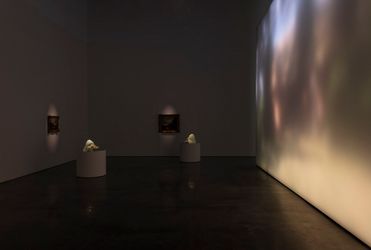
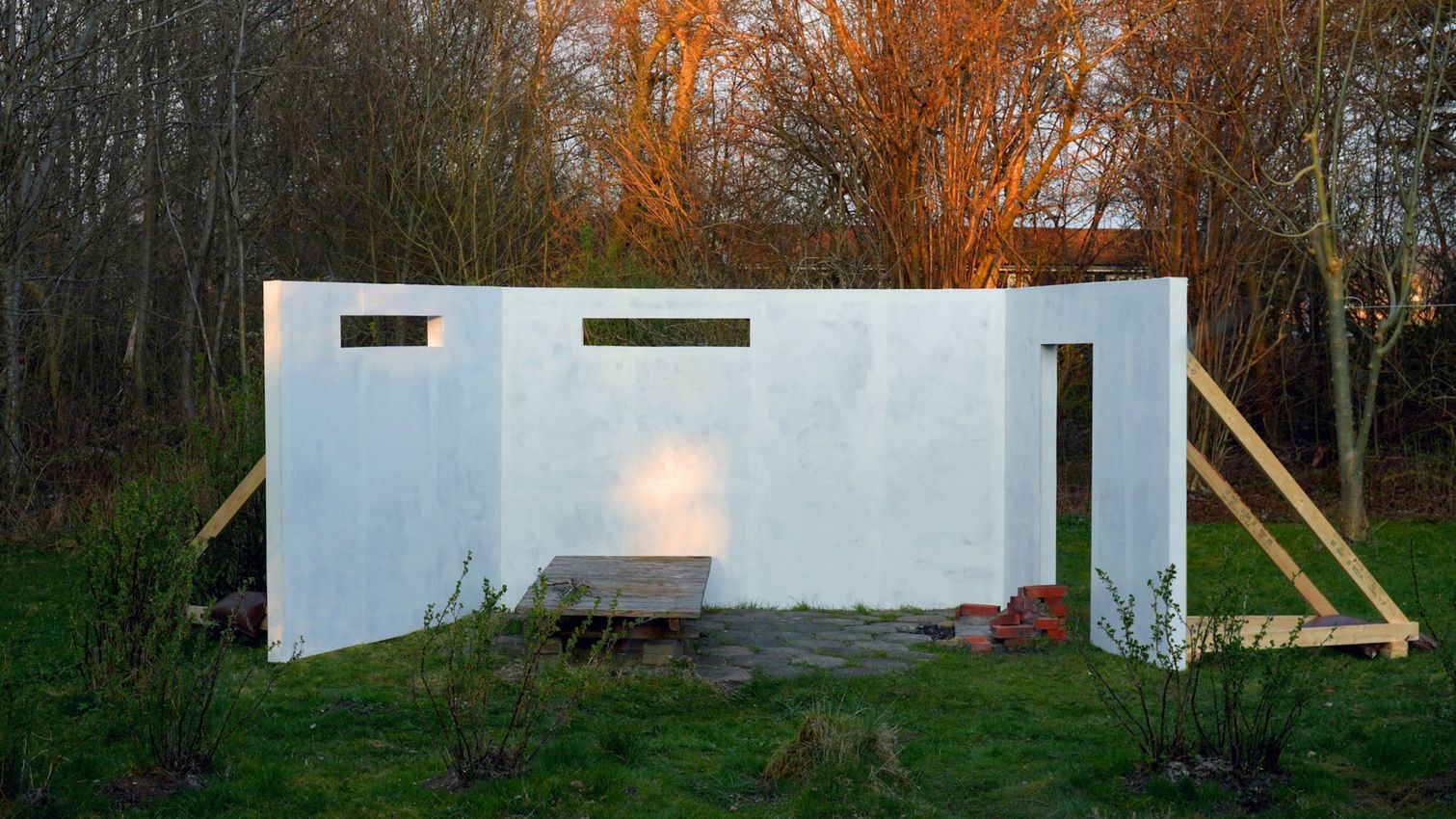
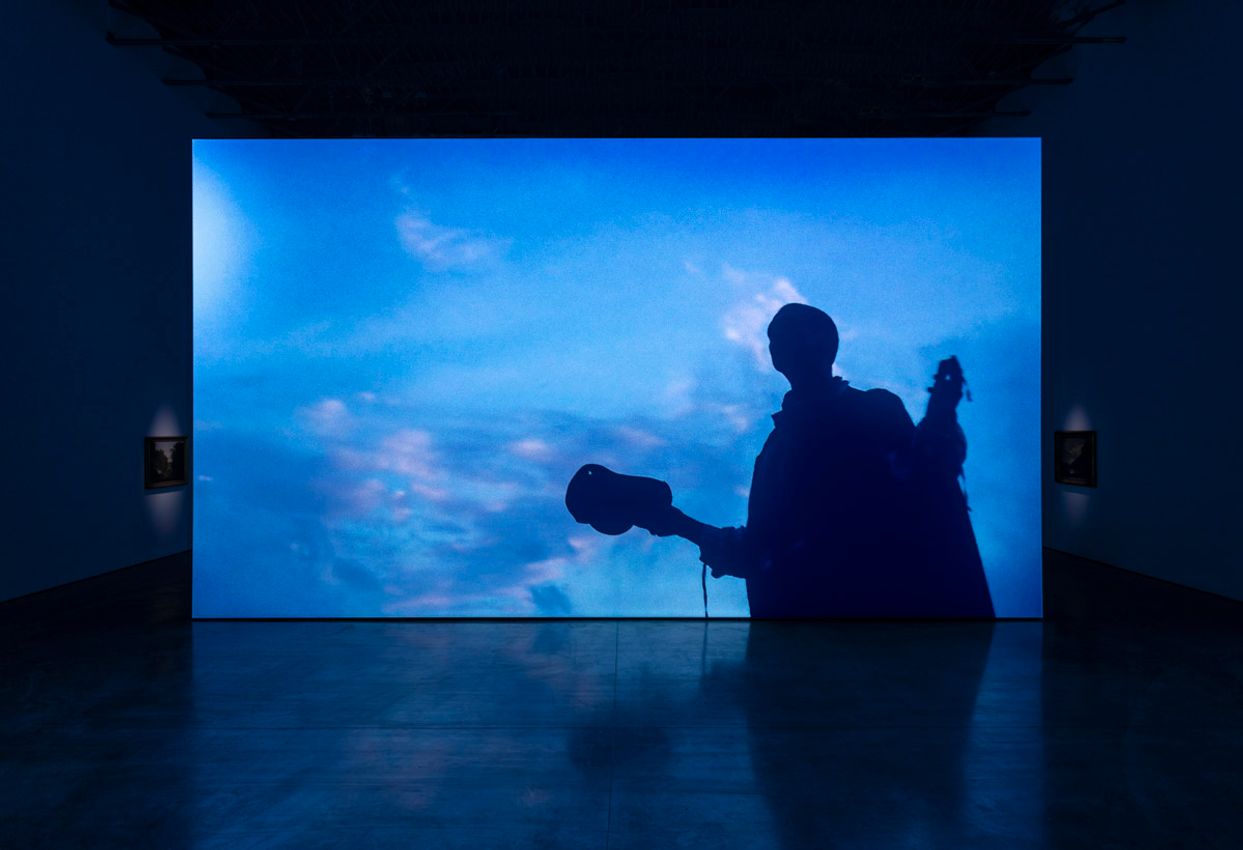
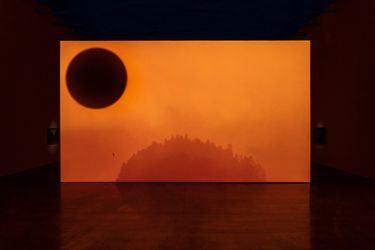
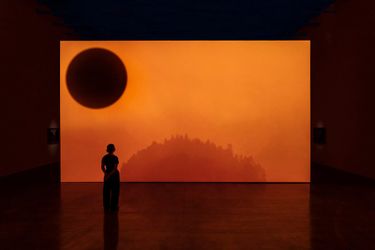
Gladstone Gallery is pleased to announce the New York premier of Enclosure, a film and installation by Rachel Rose originally co-commissioned by Luma Foundation and Park Avenue Armory. Unfolding against an agrarian community on the verge of obsolescence, Enclosure addresses the catastrophic psycho-social and ecological disturbances triggered by the advent of capitalism and industrialisation. This monumental project also includes a new publication and a suite of gravures by the artist. For this installation, the gallery will present a selection of paintings on loan from the Yale Center for British Art that inspired Rose’s vision for this expansive body of work.

Set in rural 17th-century England at the beginning of the Enclosure Acts, a series of legal manoeuvres that seized communally used farmlands and privatised property ownership, Enclosure follows a fictional group of purloining travellers who call themselves the Famlee. Led by an alchemist leader, Jaccko, the group scheme to attain land through the transfer of fraudulent paper currency, manipulating unsuspecting farmers into forfeiting their autonomy. The most valuable member of The Famlee is Recent, a teenage girl trained to learn the behaviours, rituals, and shibboleths of the community in order to exploit their anxieties. Recent’s meaning within the film is exaggerated by our contemporary understanding of the relationship between capitalism and gendered division of labor; accomplice to Jaccko’s trickery, the girl becomes co-conspirator in her own entrapment.

As the feudal farmers within Rose’s film become more vulnerable, forests are burned in resistance, people are torn from their homes, and animals are slaughtered. The compounding chaos wrought by disenfranchisement, displacement, and ecological destruction is met by the spectre of a nebulous orb that shadows the village with a promise of cosmic doom. Traveling through the atmosphere, the orb leaves inky trails in its wake, reflecting the alchemic notion of the relationship between metals and planets. At this moment in human history, belief in occult and magical forces was collective, and the concept of a coincidence did not exist. Rose’s depiction of the reshaped landscape directly influences an altered state of mind, and how our environment can condition our actions. The trials and tribulations of the characters set against these medieval scenes transport viewers into a historical and fantastical dimension of reality that reverberates still today.

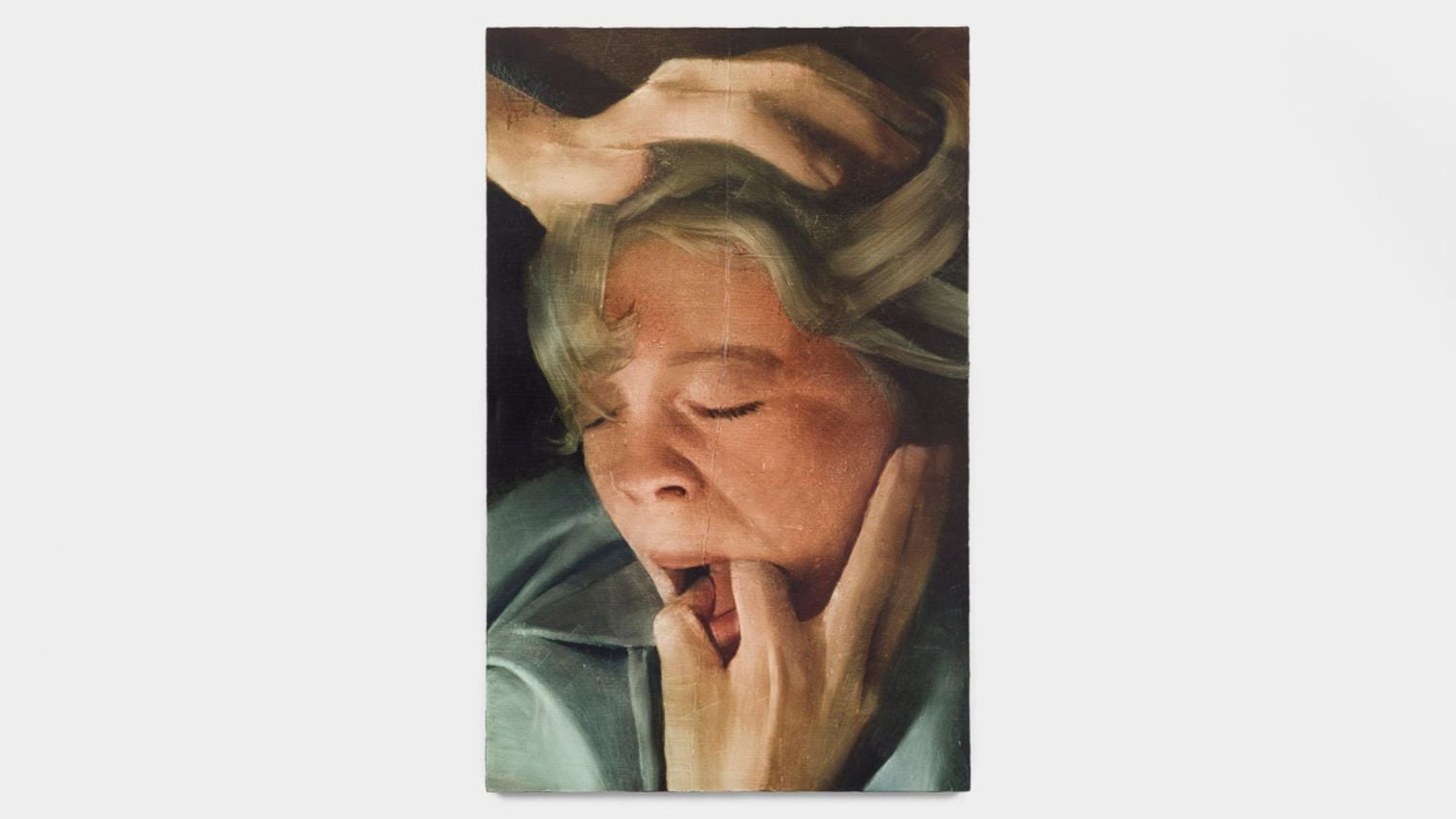
This expansive film continues upon the artist’s singular approach to filmmaking, which seamlessly merges abstracted forms and images with cinematographic and audial precision. Like all of Rose’s projects, a period of rigorous research guided the direction of this carefully crafted narrative, resulting in a powerful visual experience that tells a gripping story of madness, history, and cunning that teeters between reality and magical realism.Alongside the film, Rose offers a multitude of works that span painting and sculpture, continuing upon the historical and material-based research that comprises this intricate narrative. The ‘Colores’ works, a series of new paintings by Rose, take the landscapes that inspired Enclosure as a jumping off point. Photographs of 17th- and 18th- century paintings, from Samuel Palmer to Gainsbourough, are complicated by the application of paint matched to exact hues within the original paintings. In a technique developed by the artist, pigments, clear mediums, oils, metallic dusts and latex combine to suggest a process of alchemical manipulation, proposing surfaces that are vulnerable to both chance and invention.

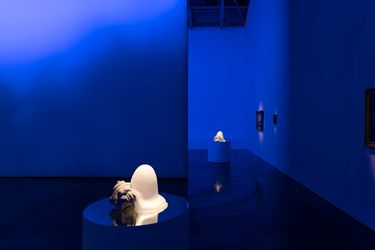
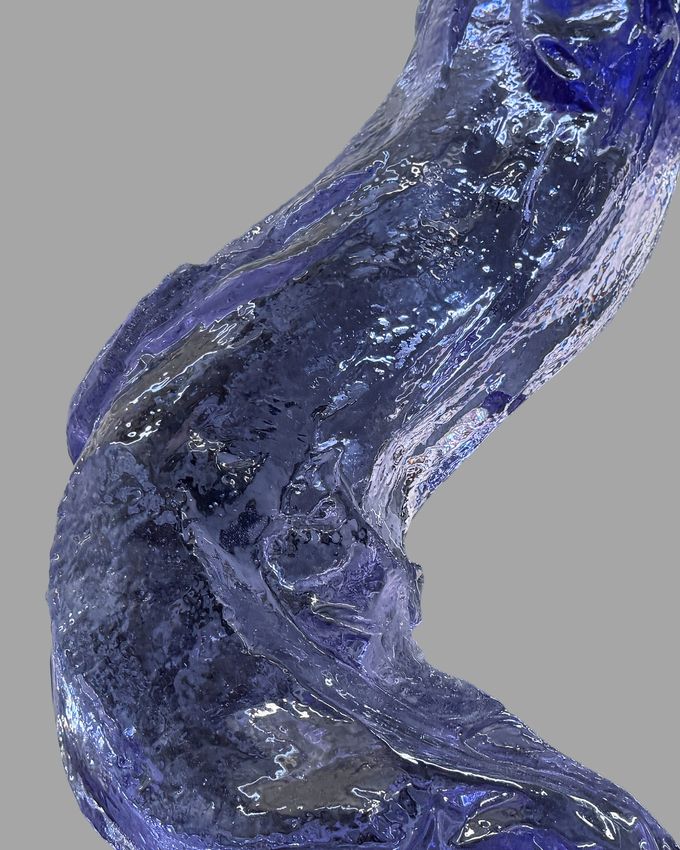
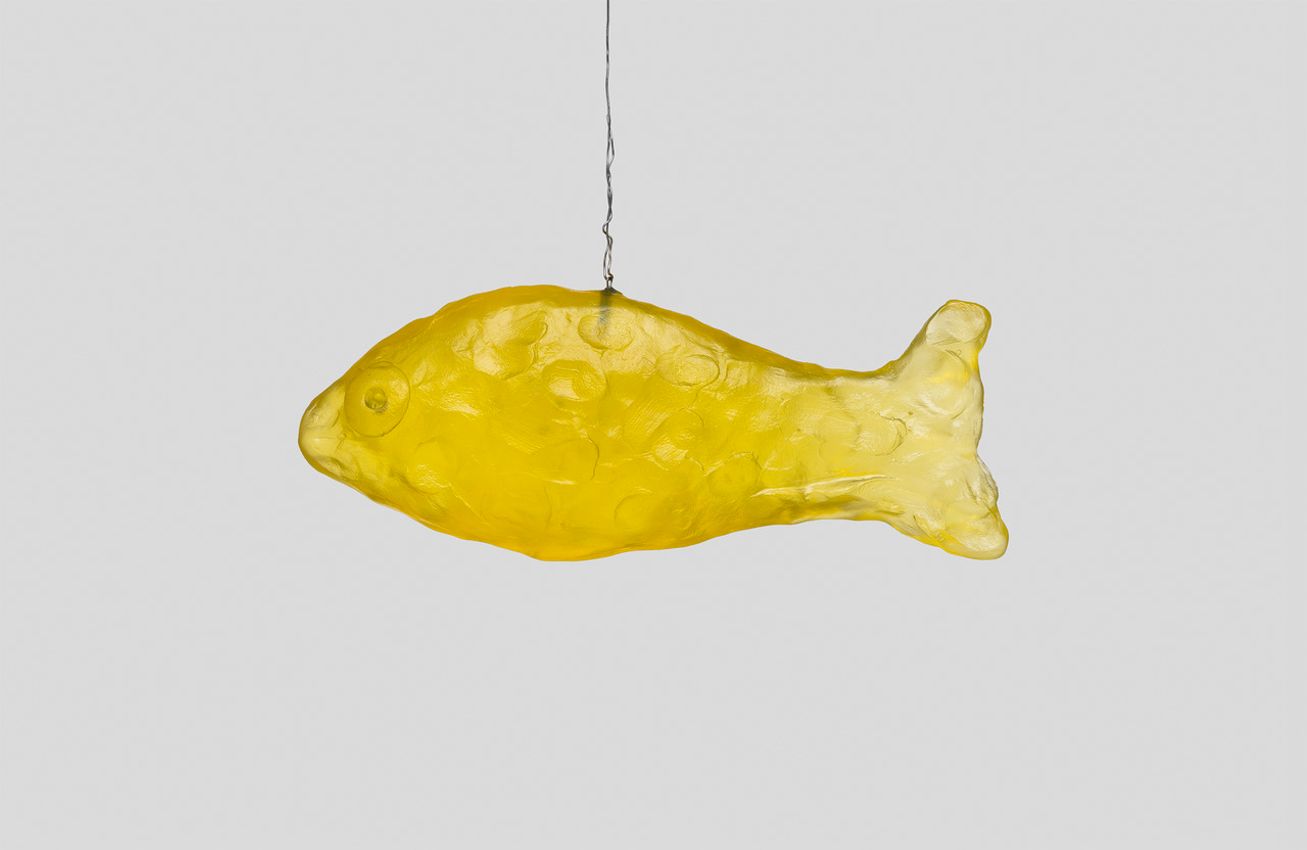
Accompanying these new paintings, Rose presents Loops, a series of hybridised sculptural forms comprised of rock and glass. Here, the artist juxtaposes the ways in which these two materials form in drastically different ways, while also highlighting their connectedness. Hot blown glass takes shape and then sets instantaneously, while rocks form over thousands of years. Rock pulverises over time into sand, glass is composed solely of sand. The subtext of this convergence calls forth moments of radical shift, as though we are witnessing something in the state of ‘becoming.’ Just as the orb in Rose’s film portends a world balanced on the precipice on change, the Loops memorialise moments of transformation.

Courtney J. Martin, Paul Mellon Director, Yale Center for British Art, notes, ‘Rachel is an exceptional artist able to productively understand the historic tether of the moment in which she is living. Enclosure gives texture to the way in which the dyad of the industrial revolution and the privatisation of common land frame twenty-first century concerns about ecology, gender, health, and worker’s rights. Lending a group of nineteenth-century paintings from the YCBA to this show proves the sustainability of art to speak over and through time, and underscores the ability of all artists to be in a shared conversation about art’s enduring message.’

Rachel Rose was born in 1986 and currently lives and works in New York. Rose has been the subject of many exhibitions at institutions including Pond Society Shanghai; Lafayette Anticipations, Paris; Fridericianum, Kassel, Germany; LUMA Foundation, Arles, France; Philadelphia Museum of Art, Pennsylvania; Fondazione Sandretto Re Rebaudengo, Italy; Kunsthaus Bregenz, Germany; Museu Serralves, Porto; The Aspen Art Museum, Colorado; The Whitney Museum of American Art, New York; Serpentine Gallery, London; and Castello di Rivoli, Turin, Italy. She is the recipient of the Future Fields Award and the Frieze Artist Award.

Read More

Installation Views

About the Artist

Rachel Rose is a contemporary artist whose immersive video installations and experimental films explore the intersections between history, ecology, mortality, and the evolution of human perception through time.

View Artist Profile

Also Exhibiting at Gladstone

About the Gallery
Gladstone is known for its commitment to artists whose prescient approaches and experimental practices have defined the contours of contemporary art. The gallery has long been an active partner in the cultivation of iconoclastic careers, fostering a roster of artists recognized for their ground-breaking contributions. Headquartered in New York and including outposts in both Brussels and Seoul, Gladstone’s impact extends globally, enabling both the presentation of new bodies of work, and an amplification of the international reach of its artists. Alongside its work with contemporary artists, the gallery is steward to the legacies of pivotal historical artists and serves as an advocate for the enduring power of art. Gladstone is led by a team of partners who spearhead its long-term vision and program, building on the values of its founder Barbara Gladstone.
View Gallery Profile
Address
530 West 21st Street, New York
New York
United States
Opening Hours
Tuesday - Saturday
10am - 6pm
(1)
New York 530 West 21st Street, New York
Gladstone
530 West 21st Street, New York, New York, United States
+1 212 206 7606
http://gladstonegallery.com

Opening hours
Tuesday - Saturday
10am - 6pm
The art world in focus