



Gladstone is pleased to present the first posthumous exhibition of works by Robert Bechtle, spanning nearly six decades of his practice. Highlighting important subjects he returned to throughout his lifetime, this expansive selection of paintings, watercolours, and drawings demonstrates the technical and conceptual ingenuity of his process that evolved over time and radically transformed approaches to realistic figurative painting in the United States. On the occasion of this exhibition, Gladstone is proud to announce its representation of the Robert Bechtle Estate after 16 years of working closely with Bechtle during his lifetime. The Gallery is honored to take on this responsibility to continue highlighting his remarkable work and life for future generations.
In Bechtle’s works, classic cars, urban and suburban streetscapes of his native Bay Area in California, and portraits of himself and those close to him are transposed with a candor and familiarity that allows the viewer to absorb quotidian scenes with a heightened and sharpened awareness. Formally flawless, the artist captures every detail, shadow, and reflection to further draw the viewer into each quiet scene. While many of his works are depicted with realist precision, others are portrayed by employing a looser, Impressionistic technique, demonstrating the artist’s fluid ability to memorialize moments in time without one set approach. Beyond these physical attributes, Bechtle has an astute aptitude for bringing to life the unseen facets of an instance in time: isolation, emptiness, contemplativeness, and the passage of time and light are transformed from invisible characters to palpable features that seem to become secondary subjects of the works. Through an unmatched ability to depict light and details with the exactitude of a Renaissance painter, subtle details, and textures, these overlooked, everyday vignettes are transformed into significant life moments that tell a deeply personal story of contemporary life.
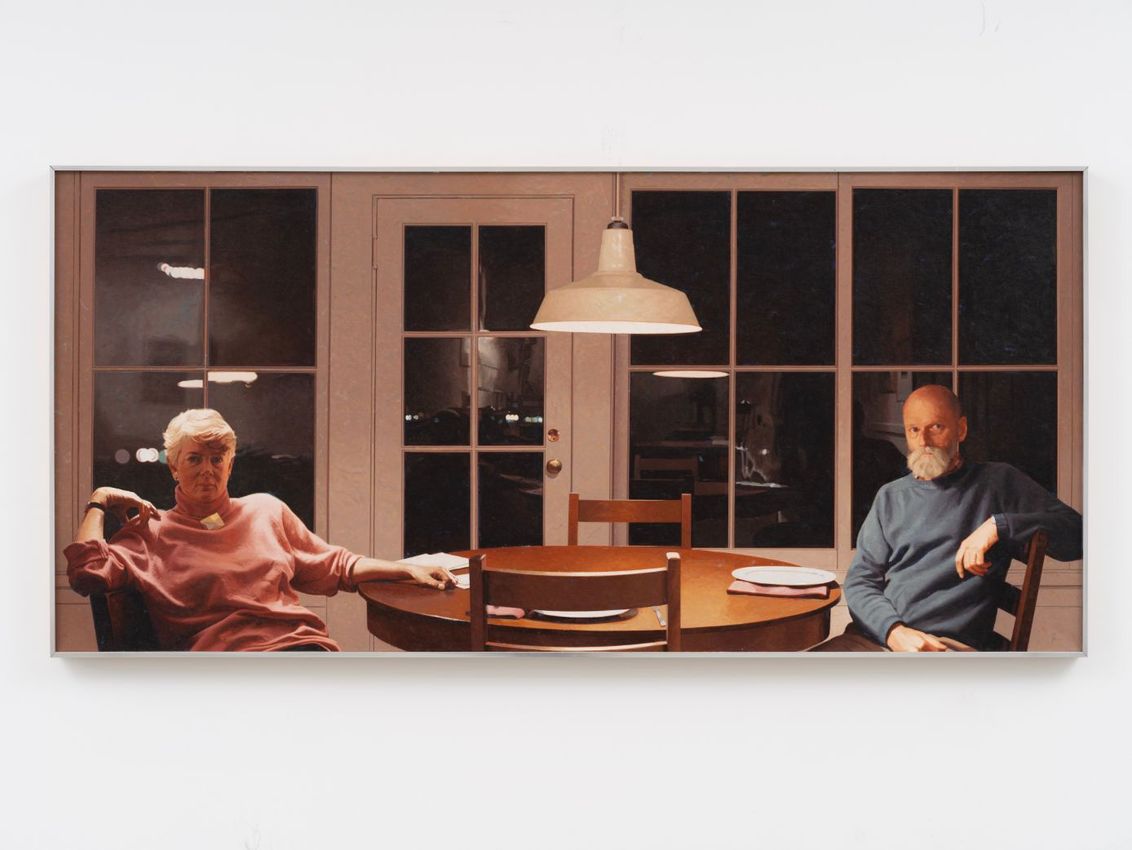
Another important component of this exhibition are a series of significant portraits and self-portraits made throughout his career. In Potrero Table (1994), Bechtle depicts himself and art historian Whitney Chadwick, his second wife of nearly 40 years, sitting at the dining table at their house in Potrero Hill. With astonishing clarity, the artist meticulously captures every detail of the late-night scene. Frequently turning the lens back onto himself for the entirety of his artistic practice, Bechtle’s self-portraits lay bare the process of aging, and the physical and psychological changes that come with the lived experience. These tender and honest chronicles are essential clues to understanding Bechtle’s overall artistic oeuvre, the care he had for Whitney, and highlight his ability to separate from the constantly moving and evolving world in order to pause and reflect on his surroundings with clarity and rigor. Through intense concentration and sensitivity, Bechtle’s wide-ranging body of work chronicles a remarkable life, filled with the beautiful, overlooked, and often discarded instances that make it so special.
Robert Bechtle was born in 1932 in San Francisco, where he continues to live and work. In 2004, the San Francisco Museum of Modern Art organised a lauded retrospective of his work that travelled to the Modern Art Museum of Fort Worth, Texas, and the Corcoran Gallery of Art in Washington, DC. His paintings have been included in major group exhibitions internationally since the 1960s, including America is Hard to See, Whitney Museum of American Art; The Artist as His Subject, Museum of Modern Art, New York; Documenta 5, Kassel, Germany; The American Century: Art and Culture, 1950-2000, Whitney Museum of American Art, New York; Les Anneés Pop, Centre Pompidou, Paris; and Infinite Painting, Villa Manin Centro d’Art Contemporanea, Codroipo, Italy. Bechtle was awarded the Francis J. Greenberger Award for continued excellence in painting in 2003.


Gladstone is known for its commitment to artists whose prescient approaches and experimental practices have defined the contours of contemporary art. The gallery has long been an active partner in the cultivation of iconoclastic careers, fostering a roster of artists recognied for their ground-breaking contributions. Headquartered in New York and including outposts in both Brussels and Seoul, Gladstone’s impact extends globally, enabling both the presentation of new bodies of work, and an amplification of the international reach of its artists. Alongside its work with contemporary artists, the gallery is steward to the legacies of pivotal historical artists and serves as an advocate for the enduring power of art. Gladstone is led by a team of partners who spearhead its long-term vision and program, building on the values of its founder Barbara Gladstone.

A respected voice in contemporary art discourse.
Focusing on ambitious storytelling and insightful art-world commentary. Ocula Magazine publishes in-depth interviews, critical essays and timely analysis on the artists, exhibitions and ideas driving the global art world.
Learn more about Ocula Magazine
Showcasing the best of the art world.
Ocula partners with galleries from around the world to highlight their artists, artworks and exhibitions. Gallery membership is by application and invitation, with each member vetted by an independent panel.
Learn more about Ocula Membership

Specialises in the sale of major artworks.
Led by a team with deep ties to the world’s leading auction houses, galleries and collectors. Ocula’s advisory team offers bespoke services to high-net-worth clients from around the world who are looking to acquire the best of contemporary and modern art.
Learn more about our team and services