




JACK WHITTEN
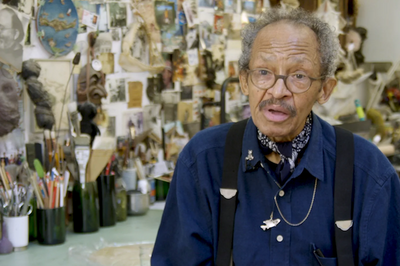
1939-2018, United StatesJack Whitten was a pioneering American artist renowned for his experimental processes and inventive use of materials, Whitten bridged Abstract Expressionism, process art, and a deeply personal response to history and technology. His work has been celebrated in major retrospectives, including Jack Whitten: The Messenger at the Museum of Modern Art, New York, and he was awarded the National Medal of Arts in 2016.
Early Years
Whitten was born in Bessemer, Alabama, and grew up in the segregated American South, experiences that would profoundly shape his art. He initially studied medicine at the Tuskegee Institute and Southern University in Baton Rouge, where he became involved in the Civil Rights Movement. In 1960, Whitten moved to New York City to study at The Cooper Union, earning his BFA in 1964. Immersed in the city’s vibrant art and jazz scenes, he encountered Abstract Expressionists such as Willem de Kooning and Norman Lewis, as well as musicians like John Coltrane, whose improvisational energy would become a touchstone for Whitten’s own practice.
Jack Whitten Artworks
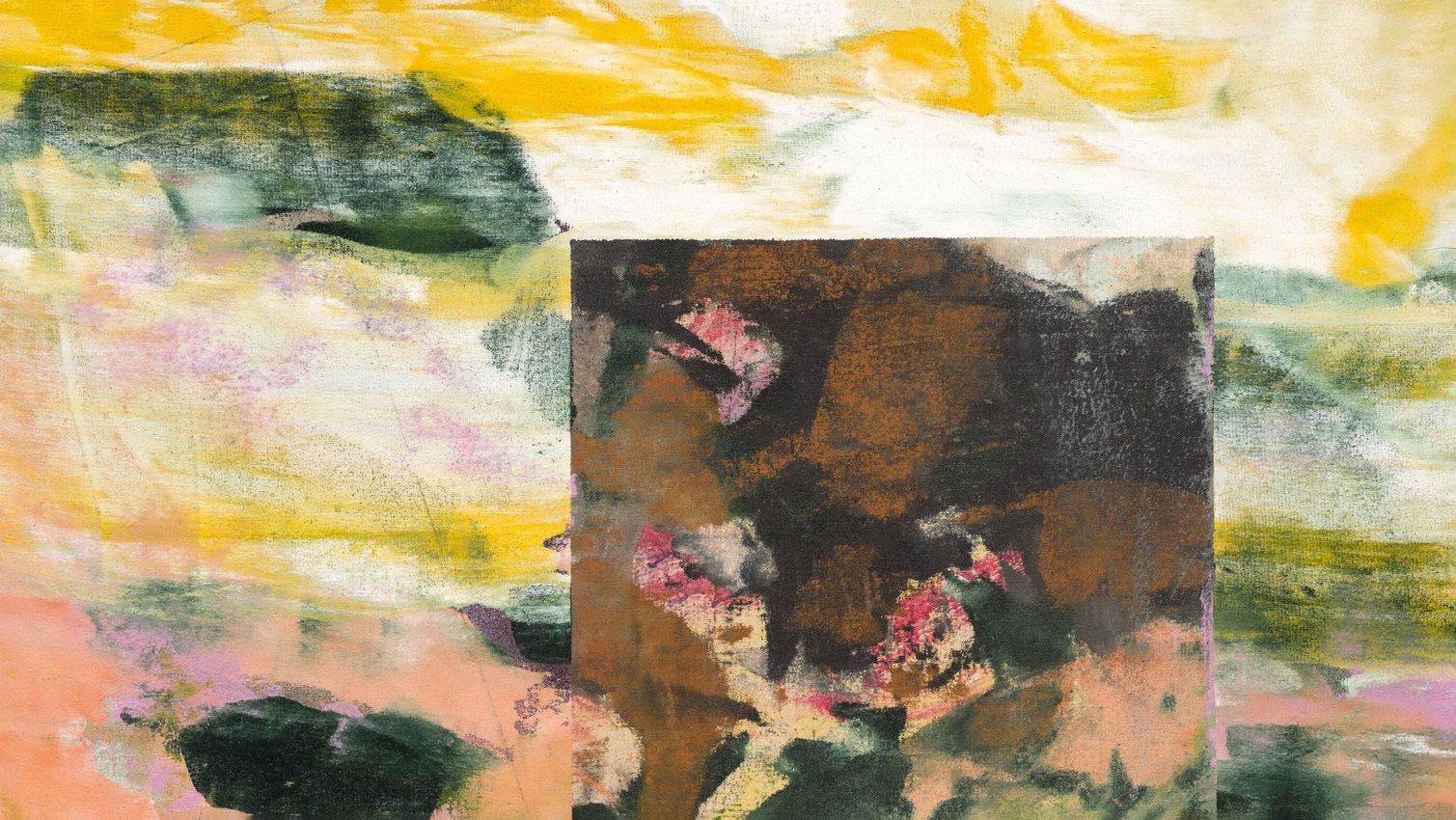
Whitten’s contemporary art practice is defined by relentless experimentation with the materiality of paint, the invention of new tools, and a commitment to abstraction as a vehicle for memory, history, and innovation. His artworks range from gestural canvases to mosaic-like paintings and carved wooden sculptures, often referencing Black history, science, and technology.
Early Abstraction and Civil Rights
In the 1960s, Whitten’s paintings combined figuration and abstraction, often responding to the turbulence of the era. Works such as NY Battle Ground (1967) evoke the violence of the Civil Rights Movement and the Vietnam War, using ambiguous forms and gestural brushwork to capture social upheaval.
Process Painting and the ‘Developer’
In the early 1970s, Whitten distanced himself from Abstract Expressionism, inventing tools like the ‘developer’—a twelve-foot wooden rake—to drag paint across the canvas in a single, sweeping gesture. This method produced his “slab” paintings, luminous fields of colour that concealed the artist’s hand and introduced a new sense of automation and rhythm, inspired in part by Coltrane’s music.
Tesserae and Mosaic Paintings
From the 1990s, Whitten pioneered the use of tesserae—small cubes or tiles cut from slabs of acrylic paint and adhered to the canvas. These mosaic-like surfaces, as seen in the Black Monolith series, pay tribute to Black artists, writers, and leaders such as Ralph Ellison and W.E.B. Du Bois. The process alludes to both ancient mosaics and digital pixels, merging history and technology in a single surface.
Sculpture and the Influence of Greece
Whitten’s sculptural practice, developed during summers in Crete, drew on African, Mediterranean, and American sources. His carved wooden totems, often incorporating found materials, reflect themes of migration, memory, and cosmopolitanism. The 2018–2019 exhibition Odyssey: Jack Whitten Sculpture, 1963–2017 at The Met and Baltimore Museum of Art, brought these works to wider attention.
Awards and Accolades
- National Medal of Arts (2016)
- Solomon R. Guggenheim Fellowship (1976)
- Skowhegan Medal for Painting (2017)
Exhibitions
Jack Whitten has been the subject of both solo and group exhibitions at important institutions. Below is a selection of important exhibitions.
Solo Exhibitions
- Jack Whitten: The Messenger, Museum of Modern Art, New York (2025)
- Odyssey: Jack Whitten Sculpture, 1963–2017, The Met and Baltimore Museum of Art (2018–2019)
- Jack’s Jacks, Hamburger Bahnhof, Berlin (2019)
- Jack Whitten: Speedchaser, Hauser & Wirth, London (2024)
- Jack Whitten, Hauser & Wirth, Hong Kong (2021)
Group Exhibitions
- Soul of a Nation: Art in the Age of Black Power, Tate Modern, London (2017)
- Black: Color, Material, Concept, Studio Museum in Harlem, New York (2015)
- The Bearden Project, Studio Museum in Harlem, New York (2011)
Jack Whitten FAQs
What is Jack Whitten best known for?
Jack Whitten is best known for his innovative abstraction, including his use of custom tools and acrylic tesserae, and for works that reflect on Black history, science, and technology.
Where can I see Jack Whitten’s art?
What inspired Jack Whitten’s techniques?
Whitten was inspired by jazz, especially John Coltrane, and by science and technology. He constantly invented new tools and processes to push the limits of painting.
What is the significance of the ‘Black Monolith’ series?
The Black Monolith paintings are abstract tributes to Black artists, musicians, and public figures, using mosaic-like surfaces to honour their legacy and contributions.
How do you pronounce Jack Whitten?
It is pronounced “WIT-ten”.
Are there any interesting facts about Jack Whitten?
Whitten spent nearly five decades summering in Crete, Greece, where he created many of his sculptures. He was also deeply engaged with philosophy, science, and the Civil Rights Movement, and he saw art as a means of transmitting spirit and history.
Ocula | 2025


















Explore and Follow Artists Shaping Contemporary Art
A respected voice in contemporary art discourse.
Focusing on ambitious storytelling and insightful art-world commentary. Ocula Magazine publishes in-depth interviews, critical essays and timely analysis on the artists, exhibitions and ideas driving the global art world.
Learn more about Ocula Magazine
Showcasing the best of the art world.
Ocula partners with galleries from around the world to highlight their artists, artworks and exhibitions. Gallery membership is by application and invitation, with each member vetted by an independent panel.
Learn more about Ocula Membership
Specialises in the sale of major artworks.
Led by a team with deep ties to the world’s leading auction houses, galleries and collectors. Ocula’s advisory team offers bespoke services to high-net-worth clients from around the world who are looking to acquire the best of contemporary and modern art.
Learn more about our team and services