Greene Naftali is pleased to present Paul Chan’s Automa Mon Amour, featuring kinetic sculptures, models, and works on paper in the artist’s seventh solo exhibition at the gallery.
From the artist:
The philosopher and polymath Gottfried Leibniz used automa to describe an immaterial and self-movingsubstance. Words such as “automation” and the like are derived from this Latin term. But whereas modernautomation suggests a mindless, mechanical process—and now, increasingly, the slop from AI bots and agents—Leibniz’s automa captures the idea that what is genuinely self-propelling and spontaneous is both mindful andspiritual in nature.
In his writings, Leibniz speculated that the soul is empowered like “a spiritual machine,” since it acts and changeson its own, directing the motion and behavior of all that it comes in contact with. Leibniz was not the onlyphilosopher who viewed the “soul” or “spirit” as mechanisms: He was just the most forward-thinking. The notionof a “ghost in the machine” is part of this intellectual legacy. As is, I would argue, the insufferable idea that theliving must toil endlessly and mindlessly like machinery if they are to move through life at all.
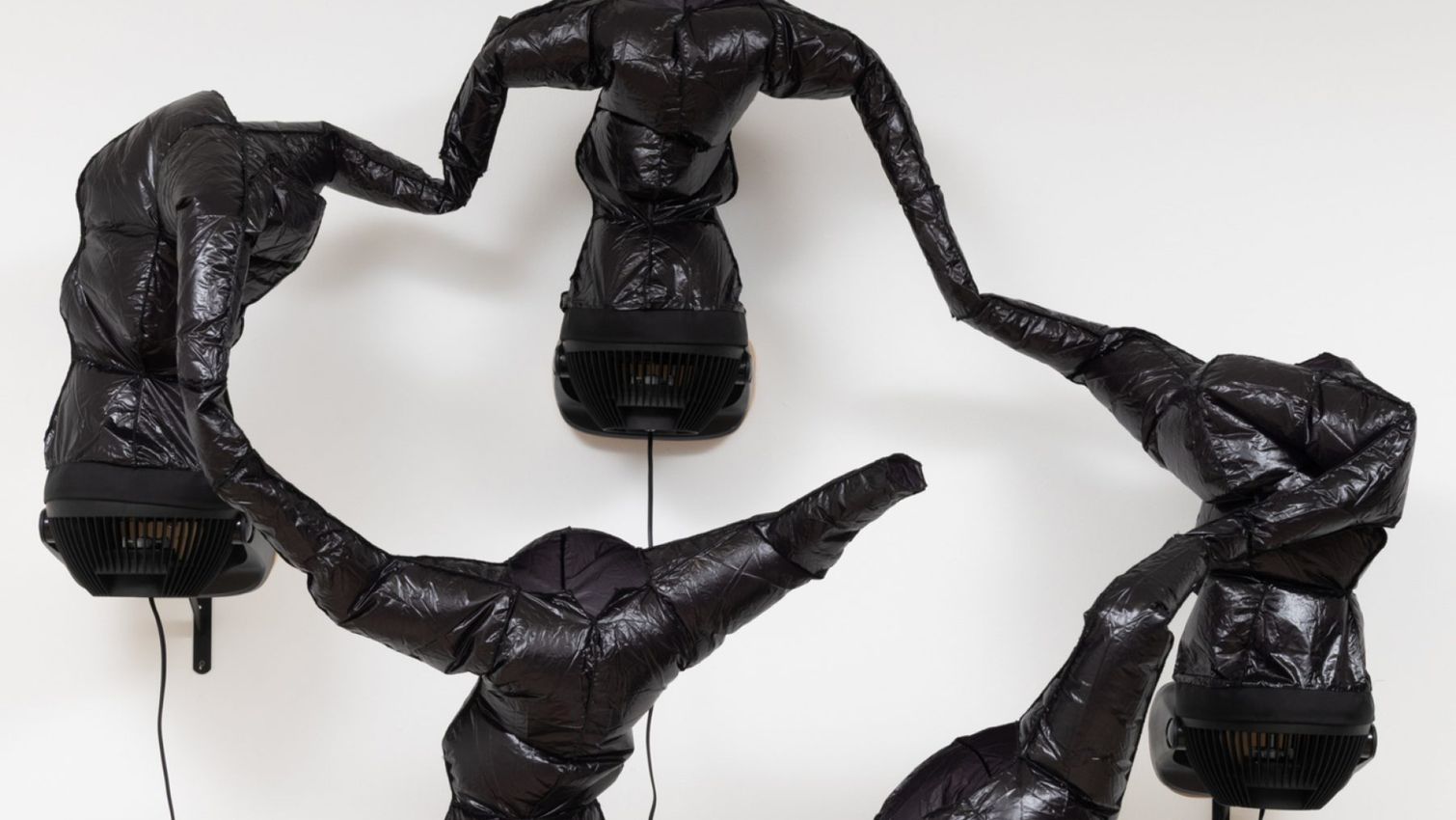
For over ten years I have been at work on a series called the Breathers, which draws heavily from thecontradictions born from this line of thinking. These latest Breathers collapse art historical differences betweenfiguration and abstraction, positing what a work that makes no distinction between sculpture, performance, andthe moving image might look like. I’ve described them as “clothing for spirits,” and they have led me to reflecton the relationships that bind animation, senses of enlivenment, and visual art. Automa Mon Amour is a loveletter to these questions.
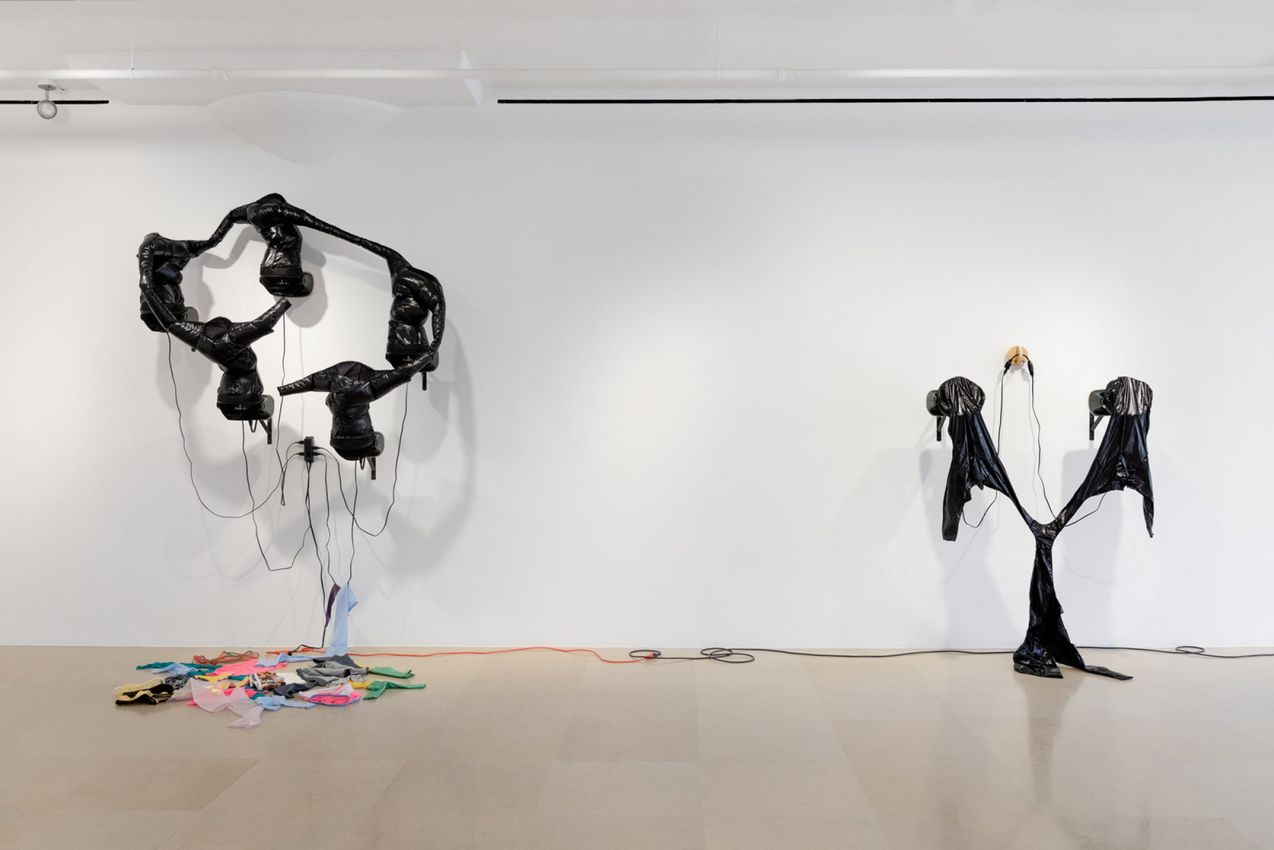
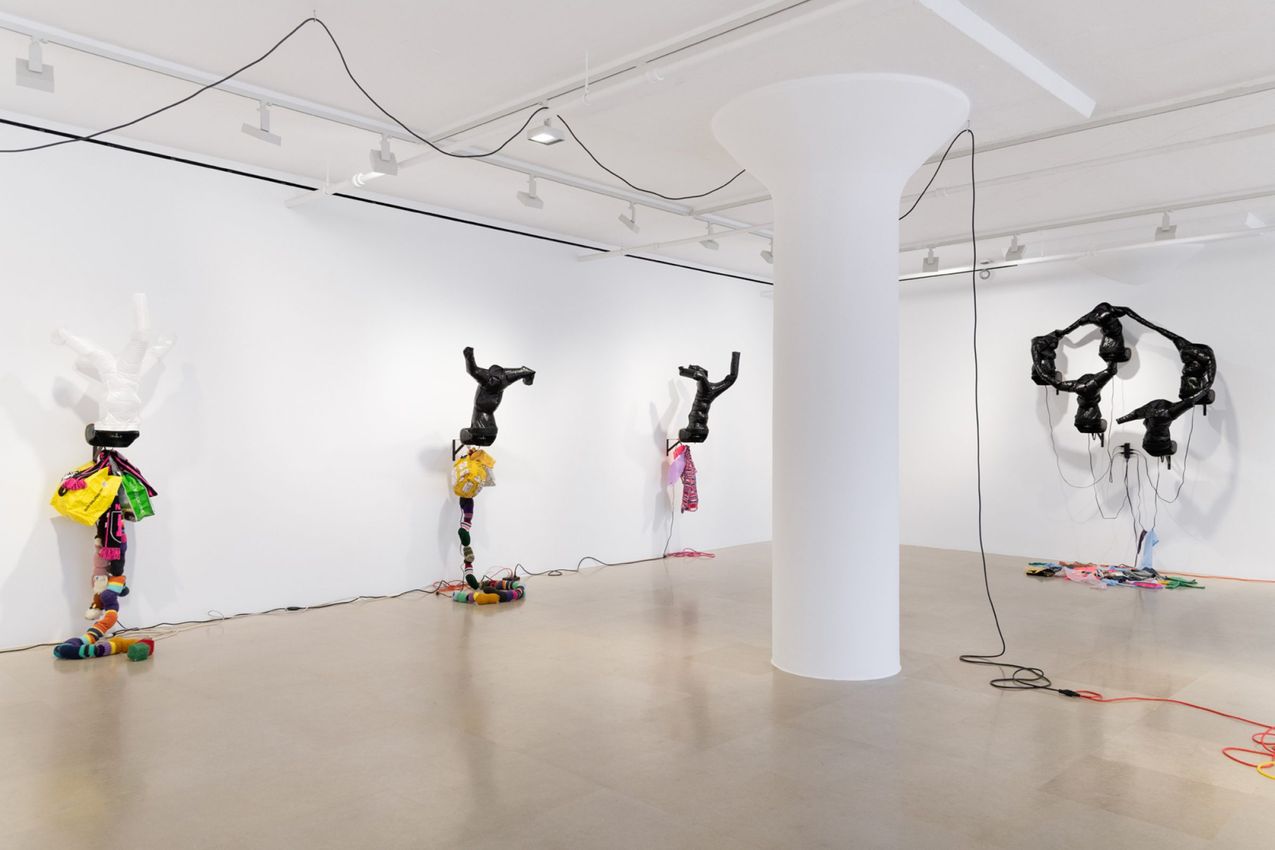
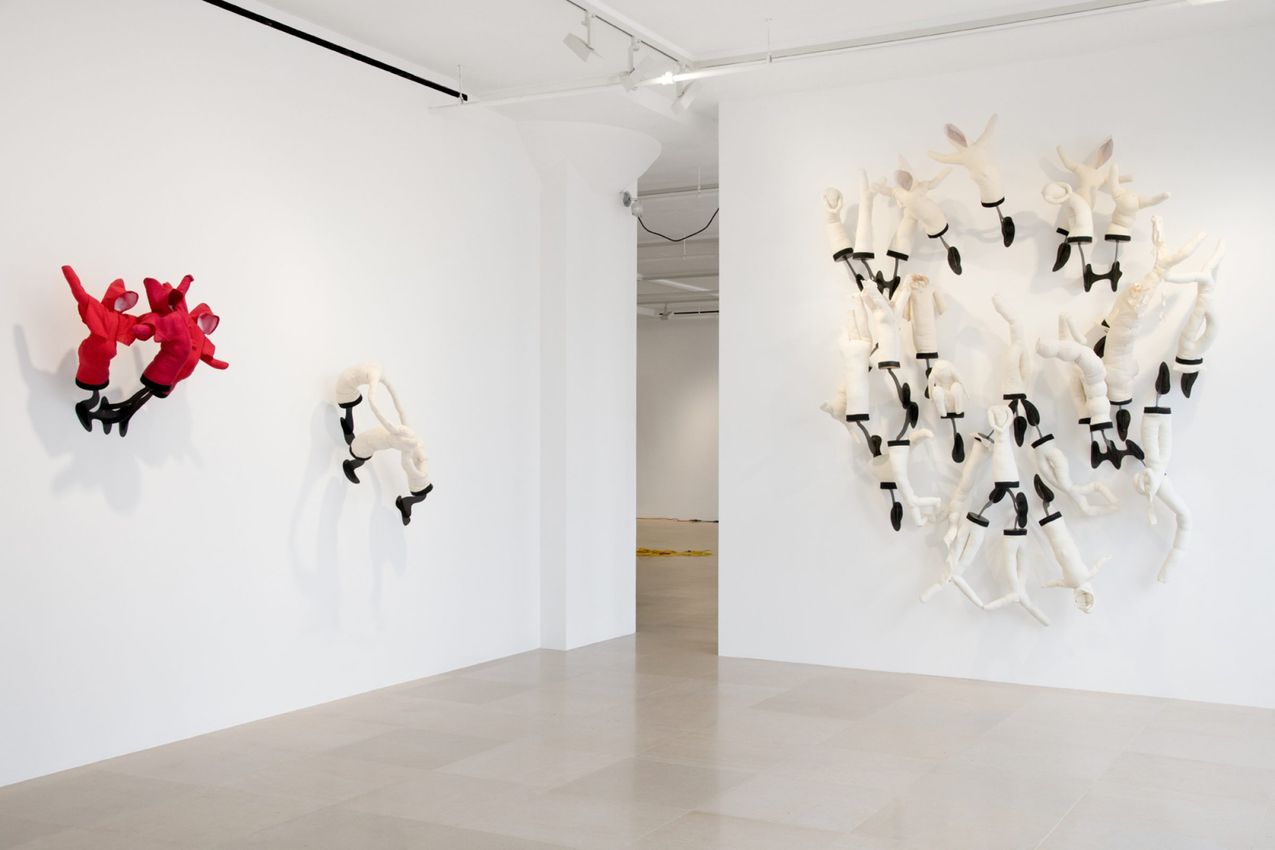
At the gallery’s center, five figures form a loosely circular configuration that recalls dancers or partygoers holdinghands. The shape of each figure reacts to airflow differently, which creates sometimes subtle, sometimes dramaticvariations in how each one can move. Mounted on the wall at eye level, Tokener Ecstasis behaves like a scenefrom a picture that has literally come alive, with the brashly colored garments custom-fit to each figure strewnacross the floor—as if the performers decided to mog viewers and let it all hang out.
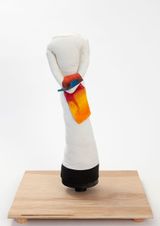
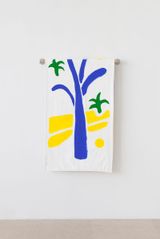
That idea of a “living picture” runs throughout the exhibition. Other sculptures pair single moving figures withknitted forms inspired by the work of Mike Kelley, who has been an enduring influence. In Hex 1, the trunk andfour arm-like appendages sway like a tree from an alien planet. In Hex 4, the body resembles a headless figuresashaying mindlessly, as if looking for someone to pay some attention.
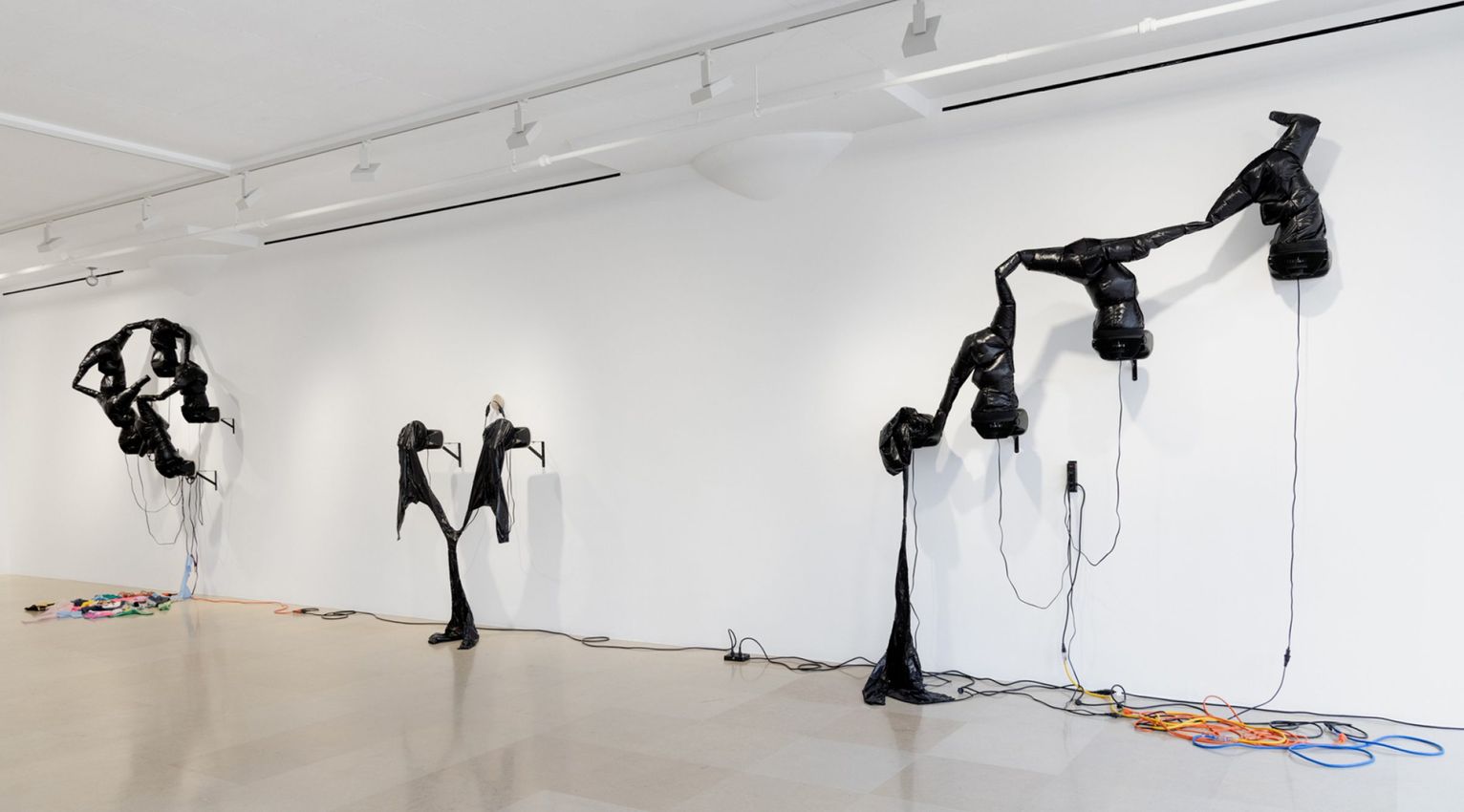
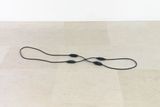
The Breathers’ inherent contrast between movement and stillness is heightened in Tokener Gradient 1. Here fiveinterconnected figures are aligned in a rising diagonal up the wall. Only three figures are moving; the other two are deflated and one dangles lifelessly onto the floor, where it lays alongside electrical cords arrayed in loose patterns, likethe pencil marks of a drawing. This direct linking of static figures to moving ones toys with my own assumptions aboutwhat defines a Breather—most explicitly in Tokener Stasis, where there is no movement at all.
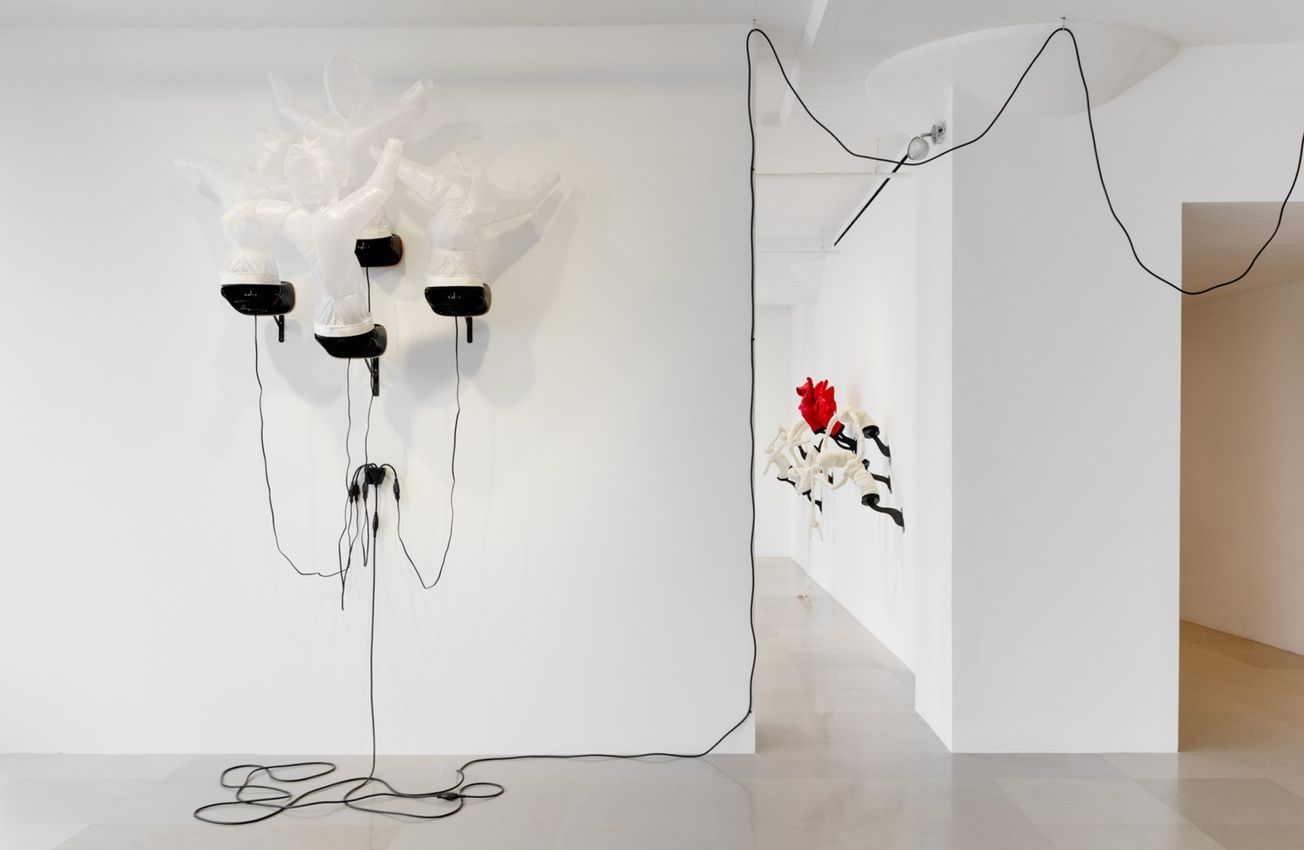
Automa Mon Amour also features models that eventually became (or have yet to become) “living,” movingBreathers. Virtually all the models on display were created before 2018, to experiment with the silhouette andshape of the figures before imbuing them with the capacity for movement. They are shown here for the first timeas works in their own right. Made of muslin and other cotton fabrics and installed on specially designed wallmounts, these models draw inspiration from a variety of sources: from medieval religious carvings to the figuralcompositions of Michelangelo and Raphael, to biological organisms and the sewn works of Louise Bourgeois.
In Untitled (Wheel of Synth Life), models in various stages of development congregate in clusters that echoscenes of living and dying from second-century Buddhist murals. Directly opposite is Untitled (Wounder in Black),a lone black hooded figure with a subtly twisted torso and raised arms, as if ascending or surrendering. A gashmade of red thread is hand-stitched on the side of the body. This model was the basis for a number of extantBreathers, and was inspired by garments from early monastic communities and by Michael Brown, who wasmurdered by the police in Ferguson, Missouri in 2014.
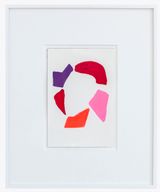
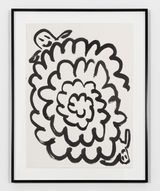
Drawing has been a consistent practice in my work. Here, I’ve tried to create portraits of the invisible and nearlyimmaterial substance that animates the Breathers: air. The pleasure of making the Breathers comes from theradically abstract nature of the work—creating geometric shapes and curvilinear pathways that influence airflowto make figures stiffen, sway, or gesticulate. These new drawings, with their undulating lines and arrows, visualizehow flow brings the Breathers to life.
Courtesy Greene Naftali.


From video to drawing, writing to publishing, to kinetic objects and beyond, the Hong Kong-born, New York-based artist Paul Chan has found ever-new means by which to realize a sprawling set of artistic, philosophical, and political positions. Well-versed in Classics and critical theory, modernist literature and ‘90s hip-hop, Chan has, since the turn of the 21st century, infused his art with a Homeric quality: cunning, which the artist describes as “twofold or dialectical.” The figure of Odysseus “illustrates in emphatic fashion what I think we intuitively understand,” Chan has said: “that reasoning is discursive and compelling when it is also aesthetical.” Drawing on a disparate array of visual and textual references, his early net-based projects and video installations like _My birds... trash... the future _(2004) illustrated Chan’s own cunning—his commitment to advancing discourse and aesthetics, each through the other. The 7 Lights (2005) would distill animation further—just light and shadow—immersing the viewer in an interpretation of the Old Testament creation story.


A respected voice in contemporary art discourse.
Focusing on ambitious storytelling and insightful art-world commentary. Ocula Magazine publishes in-depth interviews, critical essays and timely analysis on the artists, exhibitions and ideas driving the global art world.
Learn more about Ocula Magazine
Showcasing the best of the art world.
Ocula partners with galleries from around the world to highlight their artists, artworks and exhibitions. Gallery membership is by application and invitation, with each member vetted by an independent panel.
Learn more about Ocula Membership

Specialises in the sale of major artworks.
Led by a team with deep ties to the world’s leading auction houses, galleries and collectors. Ocula’s advisory team offers bespoke services to high-net-worth clients from around the world who are looking to acquire the best of contemporary and modern art.
Learn more about our team and services