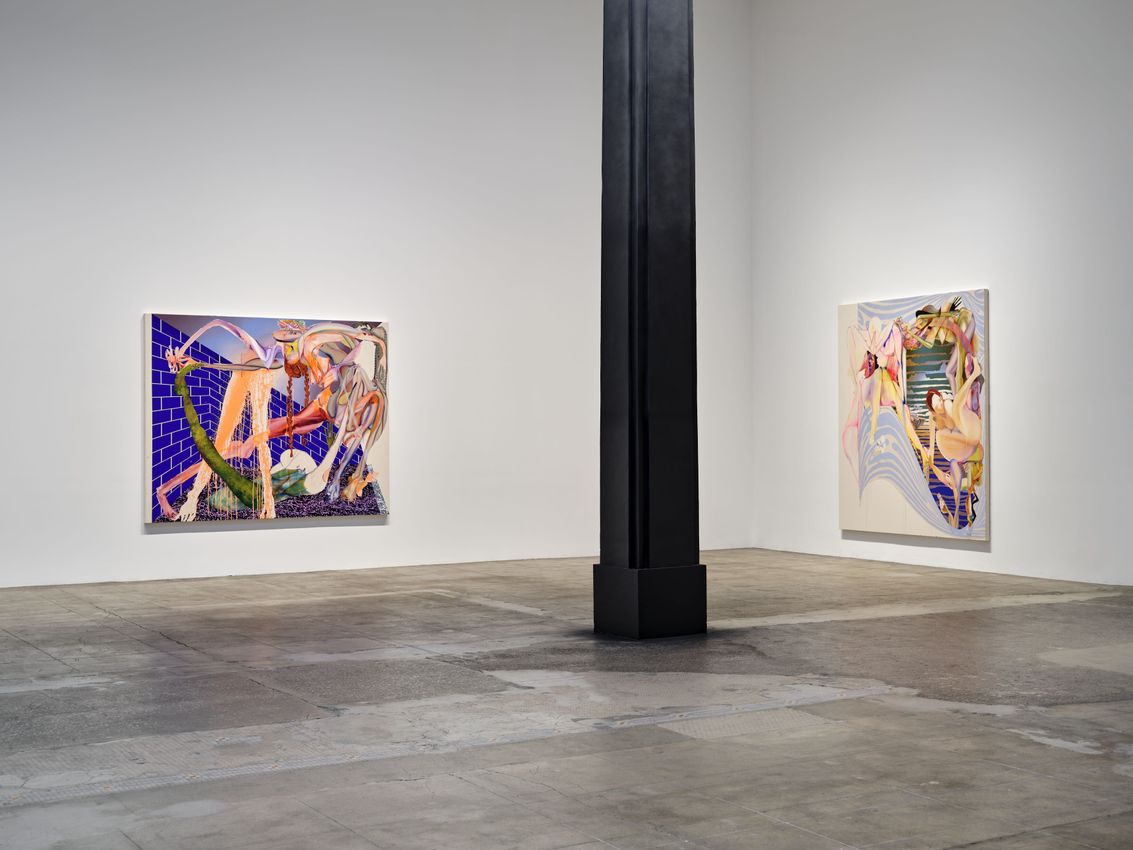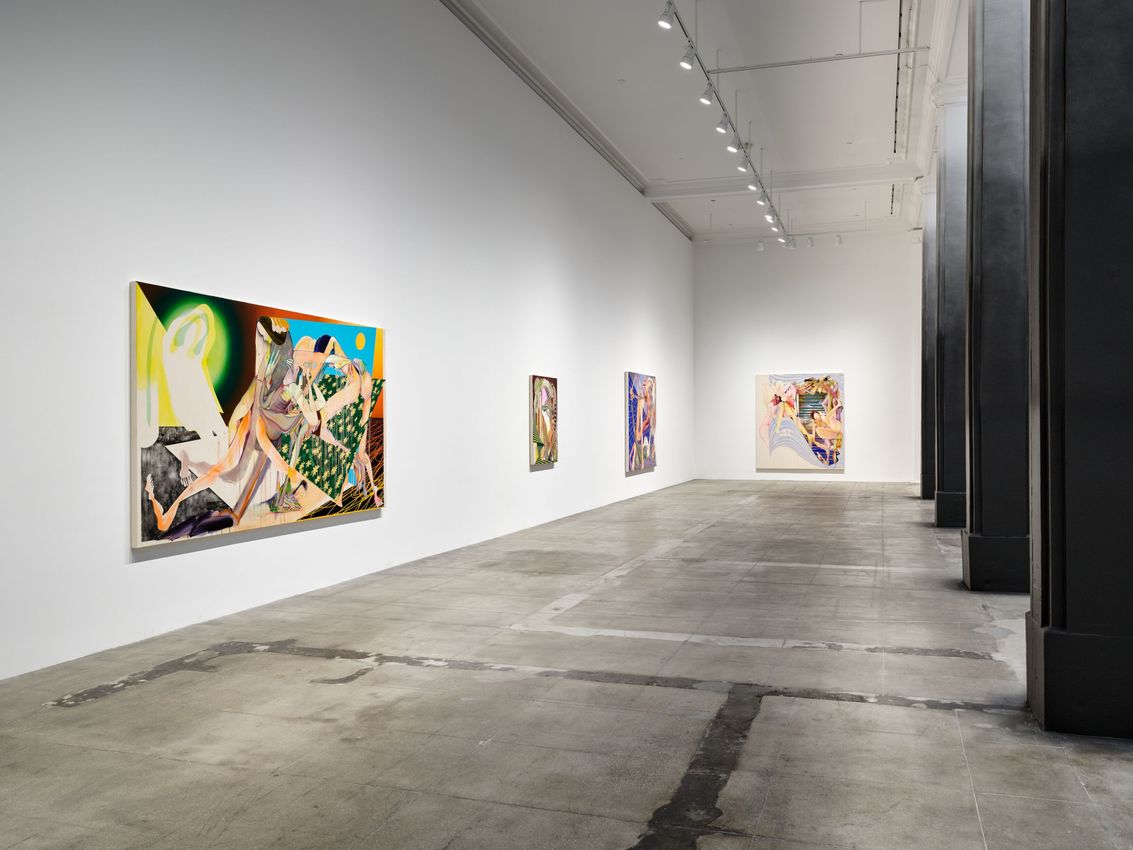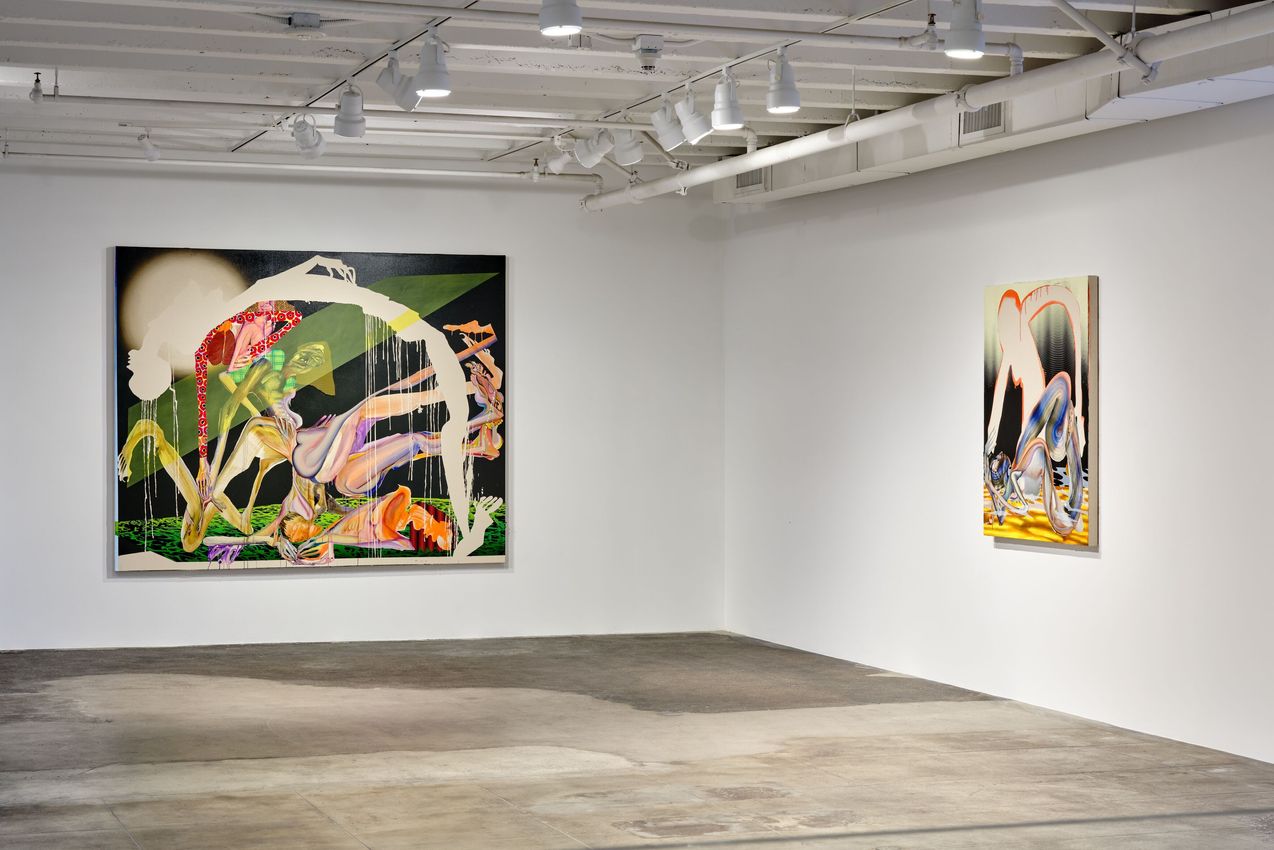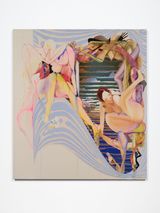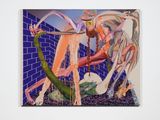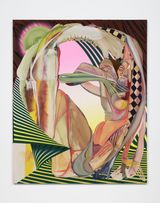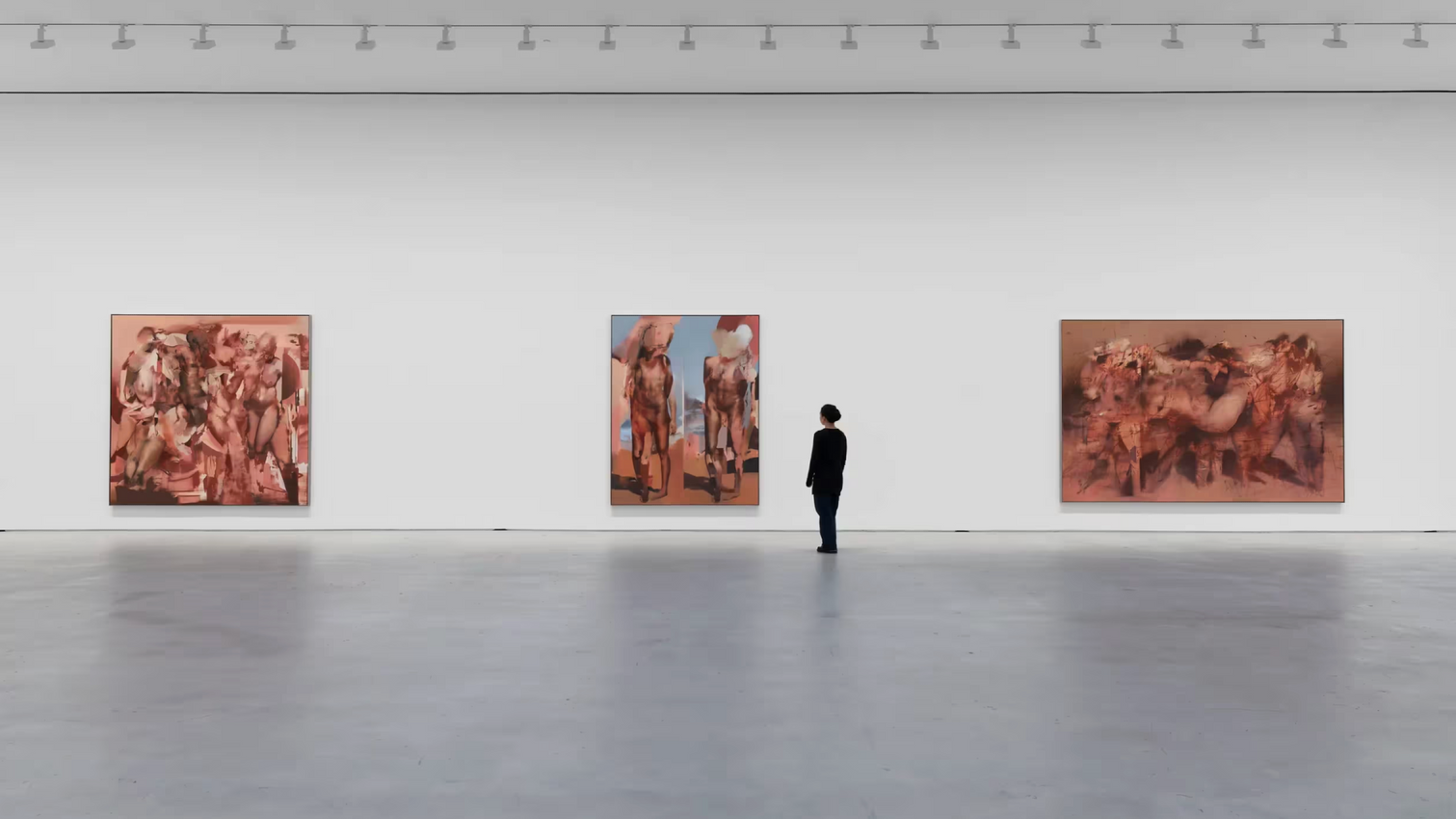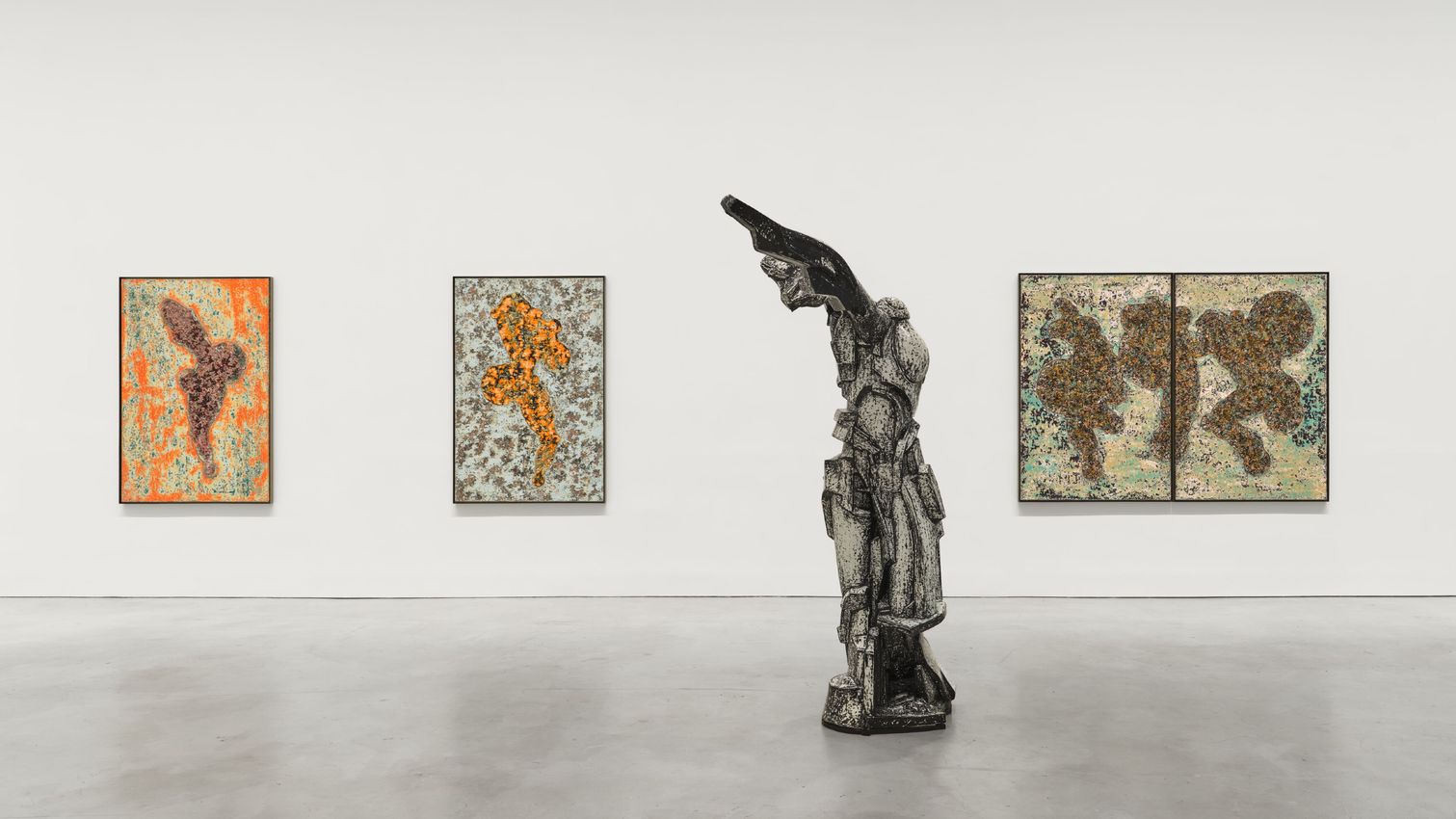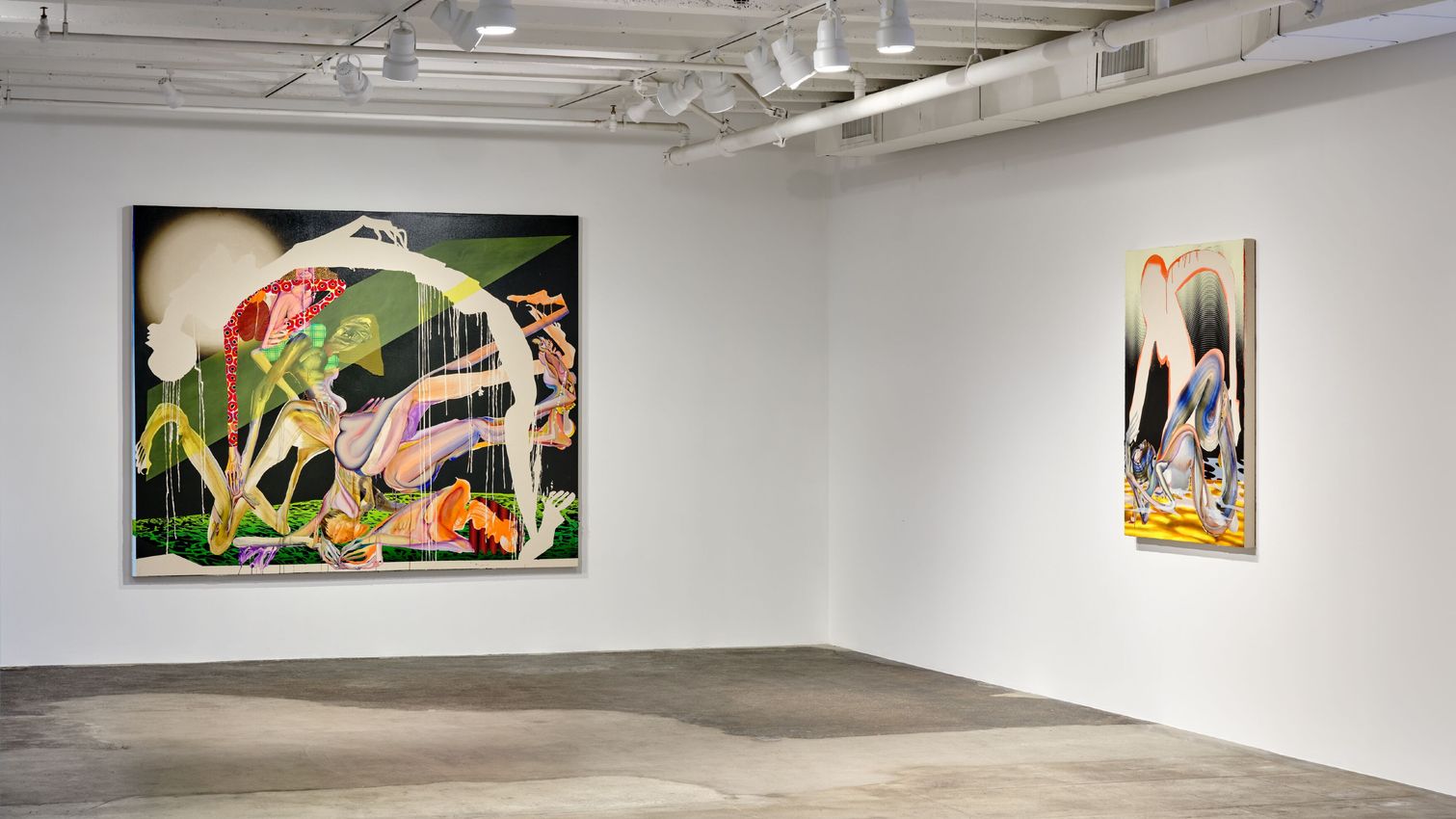
Los Angeles...Christina Quarles’ latest body of work reflects the acute sense of displacement she experienced inthe wake of the historic Los Angeles wildfires that consumed her home in early 2025. Quarles is already admired internationally for the dexterity and assertiveness with which she manipulates paint. With the new works on view in ‘The Ground Glows Black,’ she pushes that expressive and physical power to new limits, conveying the impact of the fires on her inner landscape.
Kinetic planes of color, texture and pattern evoke architectural and digital realms where human forms jolt and bend in response to unseen forces. Denser and more frenetic than Quarles’ earlier works, these paintings feel newly urgent while hewing to the artist’s core pursuit: to show how instability and resilience coexist, creating spaces where multiple realities can overlap.
Quarles approaches each canvas with no predetermined composition, beginning with improvisatory marks that evolve into fluid lines resembling human forms. By working in acrylic paint, she maintains the immediacy of drawing, building up layers and textures while suspending moments in time. Midway through a painting, Quarles shifts to a systematic stenciling process. She photographs the work and uses Adobe Illustrator to view her initial marks against various backdrops. The patterns and planes she creates digitally are printed on a vinyl plotter and used in a multi-layered masking process. This back-and-forth relationship between the computer and the canvas lays the groundwork for seemingly impossible scenarios.
Quarles plays with interiority and exteriority throughout the exhibition, folding domestic and cosmic spaces into one another and allowing daylight and moonlight to coexist within a single frame. By refusing any one definitive narrative or perspective, her paintings generate a preternatural simultaneity—one that evokes the disorientation of trauma and transition. This sense of instability is exemplified in ‘Glow, After’ (2026), the artist’s largest stretched painting to date, comprising two modular panels whose components are devised to rotate. Over the course of the exhibition, a series of reconfigurations will invite ongoing reinterpretation.
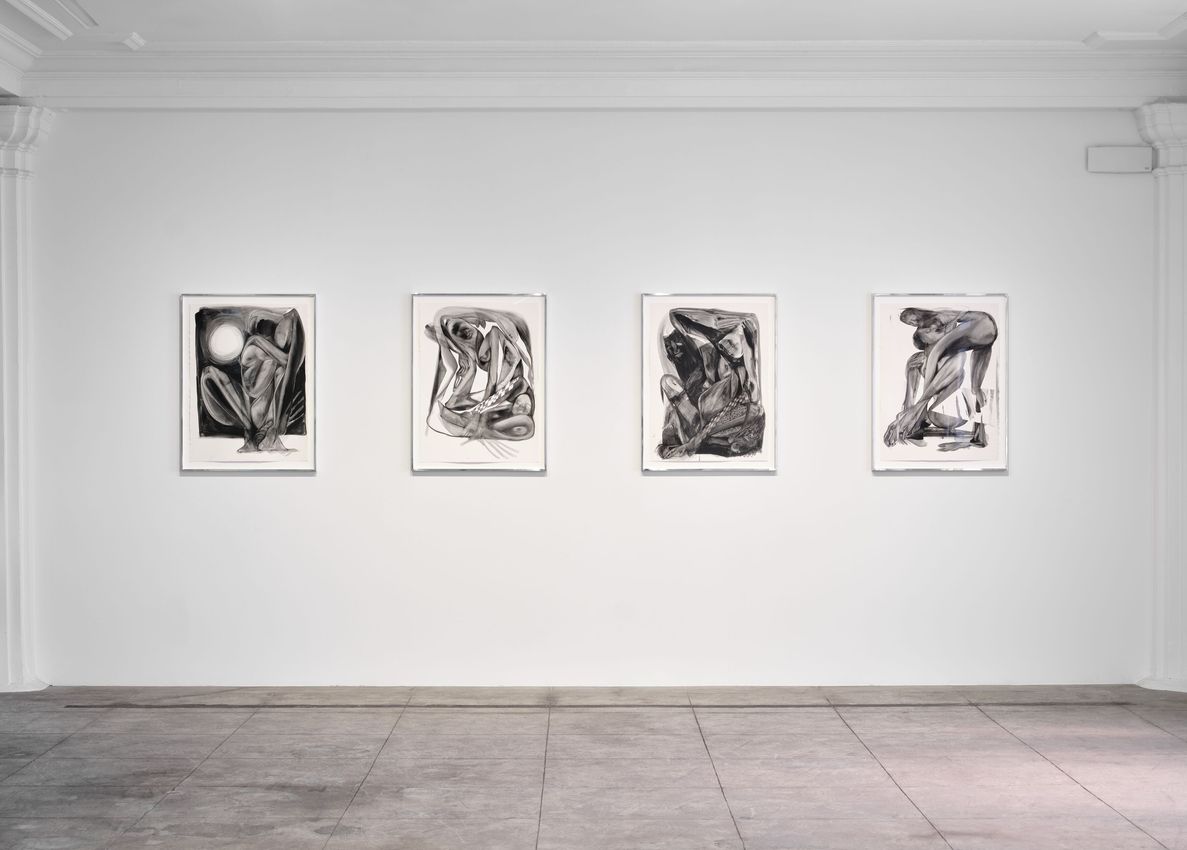
The exhibition will also debut a new series of five charcoal works on paper. Unlike acrylic paint, charcoal imposes tighter constraints. These new works are made through erasure rather than addition: forms emerge as the material is removed, with sections of paper carefully cut away and surfaces peeled back using an X-Acto knife.Because stenciling is so central to her practice—creating order through sharp edges and layered forms—Quarles developed a way to invert that process in charcoal.
The gallery windows have been covered in white film to heighten the contrast of exterior shadows, echoing the black-and-white gradients of drawings and the black pigment that has been sprayed onto the surface of theSouth Gallery columns—a reference to the blackened trees of Quarles’ former neighborhood. Like ash building up on a surface, the columns bear cumulative residue: layers of pigment that reveal imperfections and texture.Just as foreground and background oscillate within her canvases, so does the relationship between her work and the surrounding architecture.
As Quarles notes: ‘We aren’t fixed beings; we adapt to and are shaped by the environments and social structures we’re part of.’ In ‘The Ground Glows Black,’ this idea plays out as an ongoing exchange between the body, the built environment and our simultaneous, subjective realities—a nexus where meaning emerges from context, movement and change rather than from a single, fixed position.
Courtesy Hauser & Wirth.


Christina Quarles (b. 1985) is a Los Angeles-based artist, whose practice works to dismantle and question assumptions and ingrained beliefs surrounding identity and the human figure. Born in Chicago and raised by her mother in Los Angeles, Quarles took art classes from an early age. She developed a solid foundation for a lifelong drawing practice through after- school programs and figure drawing classes at the Los Angeles County High School for the Arts.


Hauser & Wirth was founded in 1992 in Zurich by Iwan Wirth, Manuela Wirth and Ursula Hauser, who were joined in 2000 by Partner and Vice President Marc Payot. A family business with a global outlook, Hauser & Wirth has expanded over the past 26 years to include outposts in Hong Kong, London, New York, Los Angeles, Somerset and Gstaad. The gallery represents over 70 artists and estates who have been instrumental in shaping its identity over the past quarter century, and who are the inspiration for Hauser & Wirth’s diverse range of activities that engage with art, education, conservation and sustainability.

A respected voice in contemporary art discourse.
Focusing on ambitious storytelling and insightful art-world commentary. Ocula Magazine publishes in-depth interviews, critical essays and timely analysis on the artists, exhibitions and ideas driving the global art world.
Learn more about Ocula Magazine
Showcasing the best of the art world.
Ocula partners with galleries from around the world to highlight their artists, artworks and exhibitions. Gallery membership is by application and invitation, with each member vetted by an independent panel.
Learn more about Ocula Membership

Specialises in the sale of major artworks.
Led by a team with deep ties to the world’s leading auction houses, galleries and collectors. Ocula’s advisory team offers bespoke services to high-net-worth clients from around the world who are looking to acquire the best of contemporary and modern art.
Learn more about our team and services