


As part of our ongoing series of online exhibitions, Hauser & Wirth presents a special selection of works by American conceptual artist Zoe Leonard (b. 1961). Included in her landmark survey at the Whitney Museum of American Art, New York and the Museum of Contemporary Art, Los Angeles in 2018, the sculpture and photography brought together for the exhibition explore especially resonant themes of confinement and liberation, solitude and togetherness.
Known for her lyrical observations of daily life, over the last three decades Leonard has made photographs, sculptures, and installations that call our attention to the politics and conditions of image-making and display. Zoe Leonard. The ties that bind features works from the artist’s key photographic series, all of which ask us to reconsider the act of looking itself, pointing to observation as a complex, ongoing process.
Trees show up in my work over and over again. I think I use them so much because they are such an essential symbol. Trees represent home, shelter, seasons, change and stability, life and endurance. …We speak of having roots, of bearing fruit, of family trees.—Zoe Leonard
Leonard’s Urban Landscape series documents the resilience of the natural world. Photographs such as Tree + Fence, S. 3rd St. (1998) feature trees that continue to grow amidst the man-made fences that surround them. The sculpture on view, Tree (1997), is composed of a once living tree that has been cut into segments, only to be stitched together with metal wires, bolts, and plates. In Chastity Belt (1990–1993), an earlier work, some of the same visual themes are on display. Here Leonard contemplates confinement most literally in a work that relates to her longtime exploration of the institutional and cultural control of female bodies.
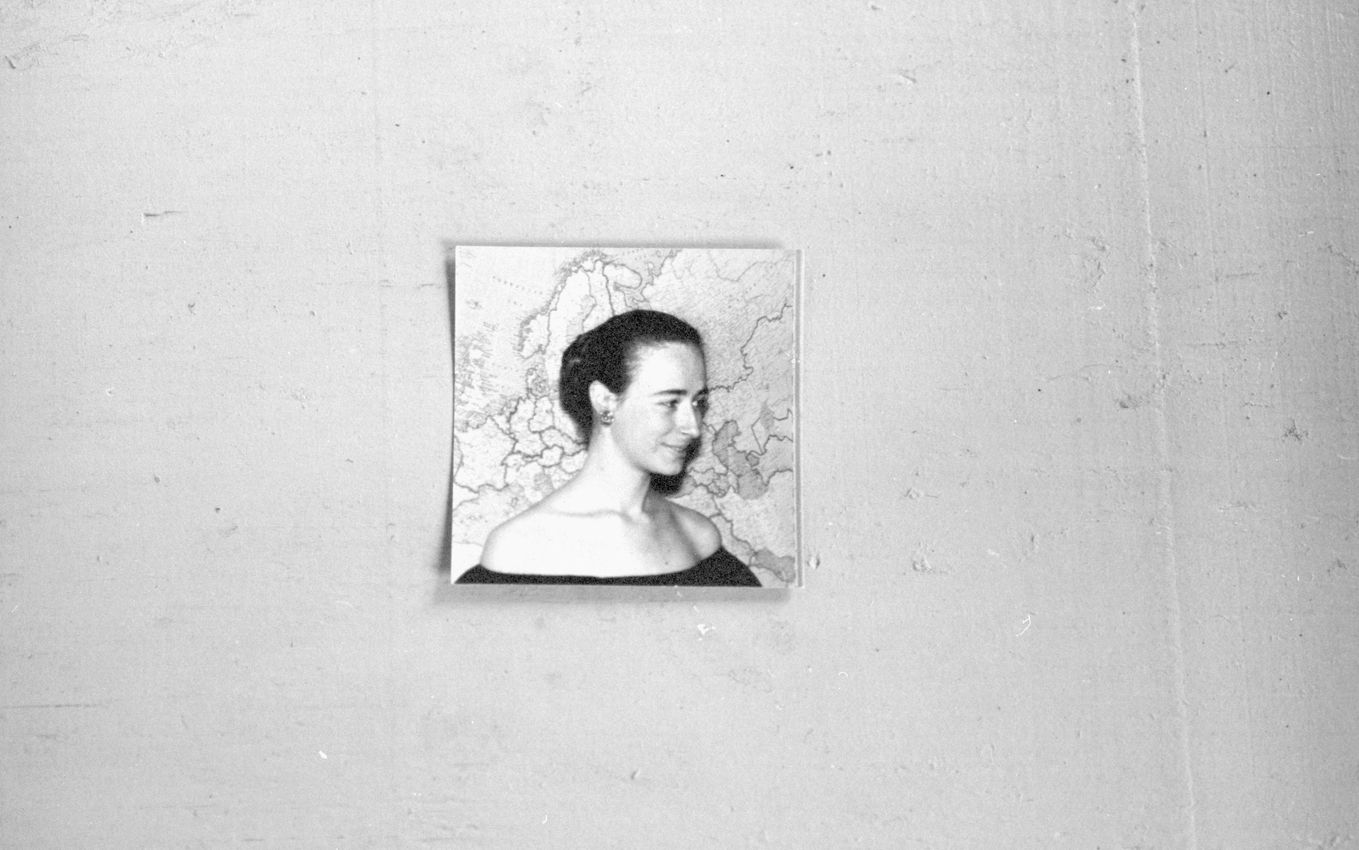
As a starting point for her series, ‘In the Wake’, Leonard uses old snapshots of her family from the years after World War II. These family snapshots can be understood as a form of self-representation and a mode of describing and sharing lived experience, an alternative to official representations of history. Considered together with works from the Urban Landscape series, these works unite the symbolism of the physical tree with the concept of the family tree and the ties that bind.
In her ‘Aerials’ series, created in the mid to late 1980s, Leonard employs a birds-eye perspective to underline the position of the artist and the role of the viewer in the photographic process. Untitled Aerial (1988/2008) and Untitled (1989/2008) record landscape and infrastructure, drastically different environments captured from similar viewpoints. Leonard’s vantage point provides distance and context to consider the socio-economic structures that underpin and shape our urban and suburban landscape. These intersections between the natural world and human impact are timely and important to engage in at this moment of pause.
Zoe Leonard. The ties that bind is part of ‘Dispatches,’ Hauser & Wirth’s new series of original video, online features, and experiences that connects our audiences with the gallery’s artists as we continue to navigate our shared reality together.
Leonard’s Tree + Fence photos were also recently on view in London’s Hayward Gallery Among the Trees, a group exhibition that reexamined our vision of the natural world.
New York-based artist Zoe Leonard balances rigorous conceptualism with a distinctly personal vision in her work, which merges photography, sculpture, and installation. By employing strategies of repetition, shifting perspectives, and a multitude of printing processes, Leonard’s practice probes the politics of representation and display. Leonard explores themes such as gender and sexuality, loss and mourning, migration, displacement, and the urban landscape. Her photography specifically invites us to contemplate the role that the medium plays in constructing history, and to consider the roots of contemporary photographic culture. More than its focus on any particular subject, however, Leonard’s work encourages the viewer to reconsider the act of looking itself, drawing attention to observation as a complex, ongoing process.


Hauser & Wirth was founded in 1992 in Zurich by Iwan Wirth, Manuela Wirth and Ursula Hauser, who were joined in 2000 by Partner and Vice President Marc Payot. A family business with a global outlook, Hauser & Wirth has expanded over the past 26 years to include outposts in Hong Kong, London, New York, Los Angeles, Somerset and Gstaad. The gallery represents over 70 artists and estates who have been instrumental in shaping its identity over the past quarter century, and who are the inspiration for Hauser & Wirth’s diverse range of activities that engage with art, education, conservation and sustainability.

A respected voice in contemporary art discourse.
Focusing on ambitious storytelling and insightful art-world commentary. Ocula Magazine publishes in-depth interviews, critical essays and timely analysis on the artists, exhibitions and ideas driving the global art world.
Learn more about Ocula Magazine
Showcasing the best of the art world.
Ocula partners with galleries from around the world to highlight their artists, artworks and exhibitions. Gallery membership is by application and invitation, with each member vetted by an independent panel.
Learn more about Ocula Membership

Specialises in the sale of major artworks.
Led by a team with deep ties to the world’s leading auction houses, galleries and collectors. Ocula’s advisory team offers bespoke services to high-net-worth clients from around the world who are looking to acquire the best of contemporary and modern art.
Learn more about our team and services