Press Release

Being an artist is not always fun. Making a name for oneself is hard enough; finding a language of one’s own, in a world already drowning in images and convinced it has seen it all, is harder still. Today, the job can look suspiciously like what corporate people call branding: producing a self that is recognisable, desirable, repeatable – something people can follow, believe in, purchase and project themselves onto. To borrow Schopenhauer rather loosely, the artist’s life may be said to swing like a pendulum between the struggle of finding a language and the boredom of having to repeat it indefinitely, just to remain legible to the market that keeps the whole thing afloat.

The same cannot be said of Charlie Oscar Patterson. The body of work presented at JARILAGER Gallery looks nothing like what he was expected to make. Until now, these paintings had been kept largely out of sight. Not because they were unfinished, but because they made him nervous. Apart from a few Instagram stories, where he shared fragments of the process and his own reluctance to let it out, they are shown here to the public for the first time. Hence the title: both a promise and an act of self-soothing.

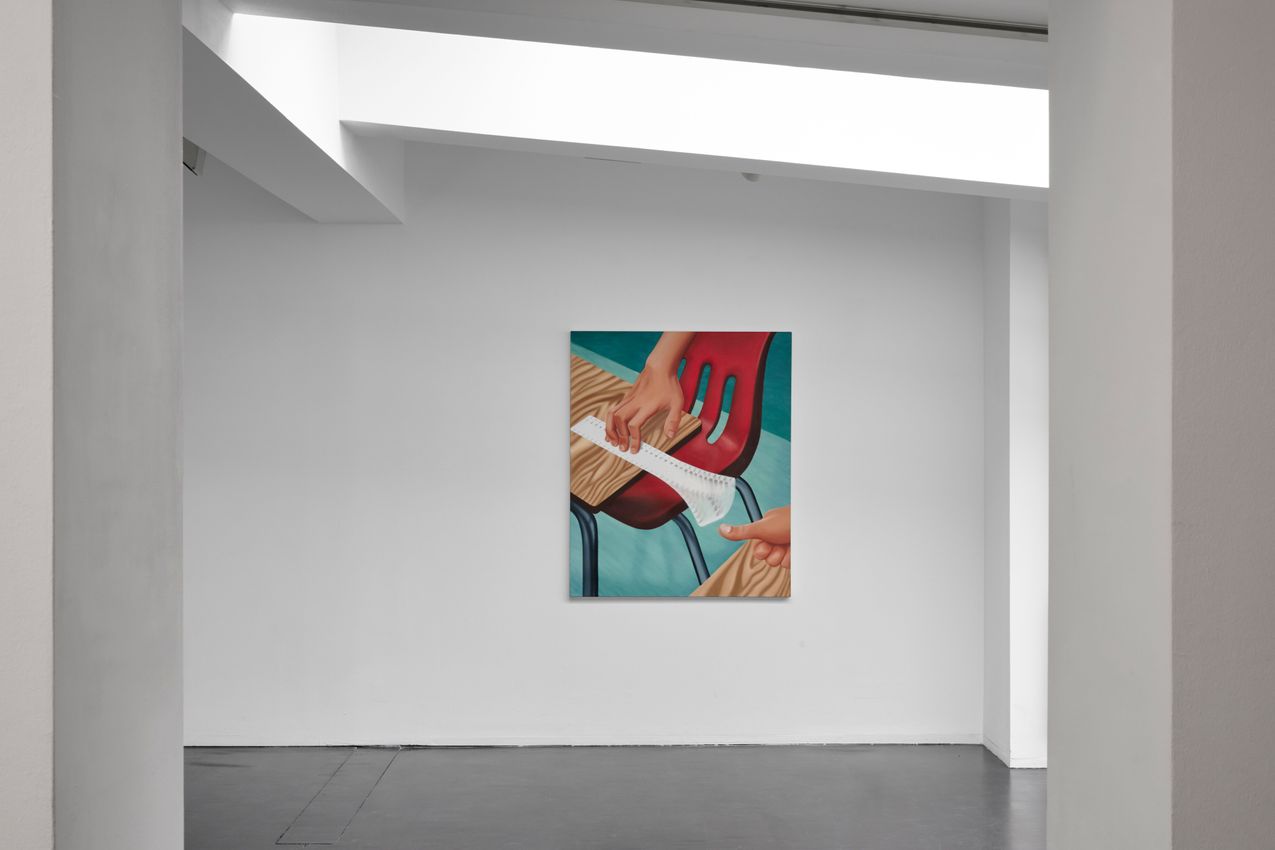
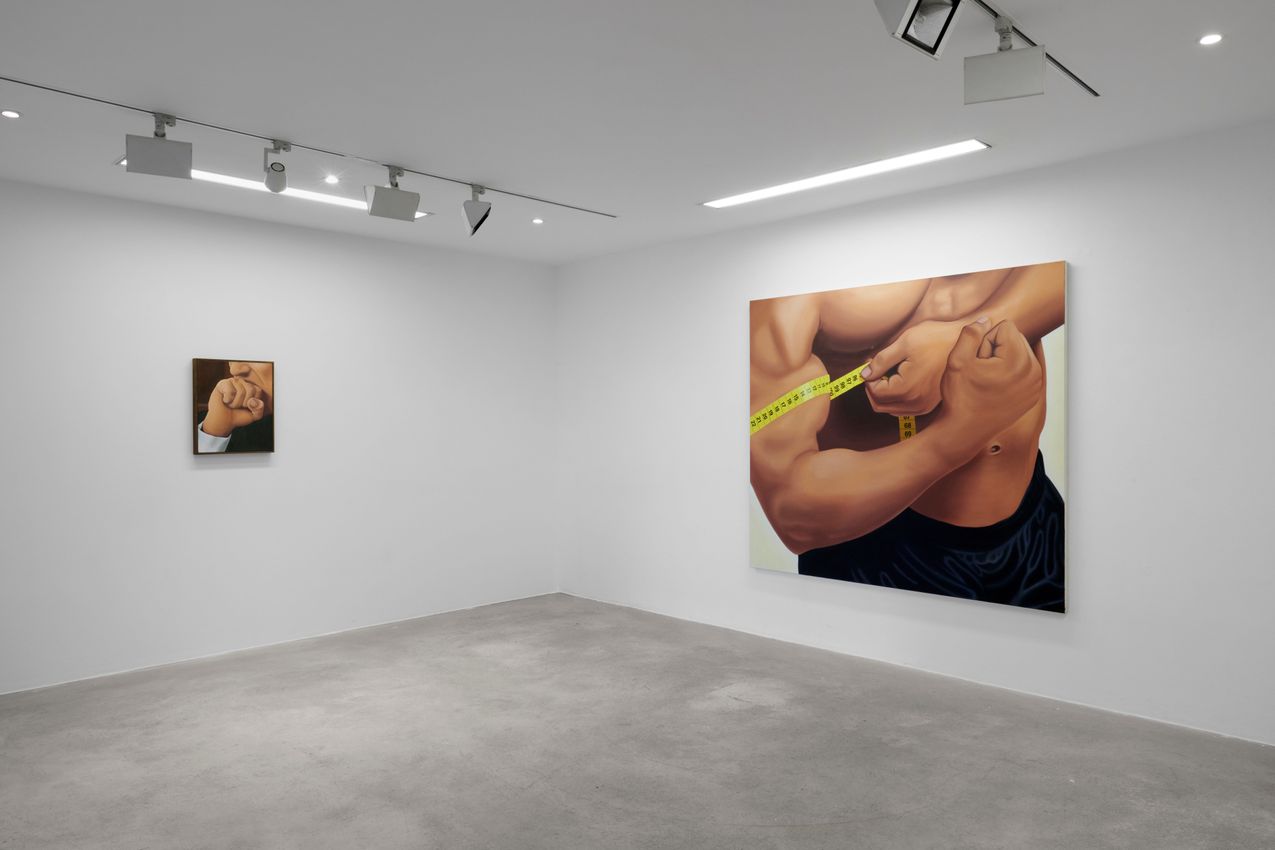
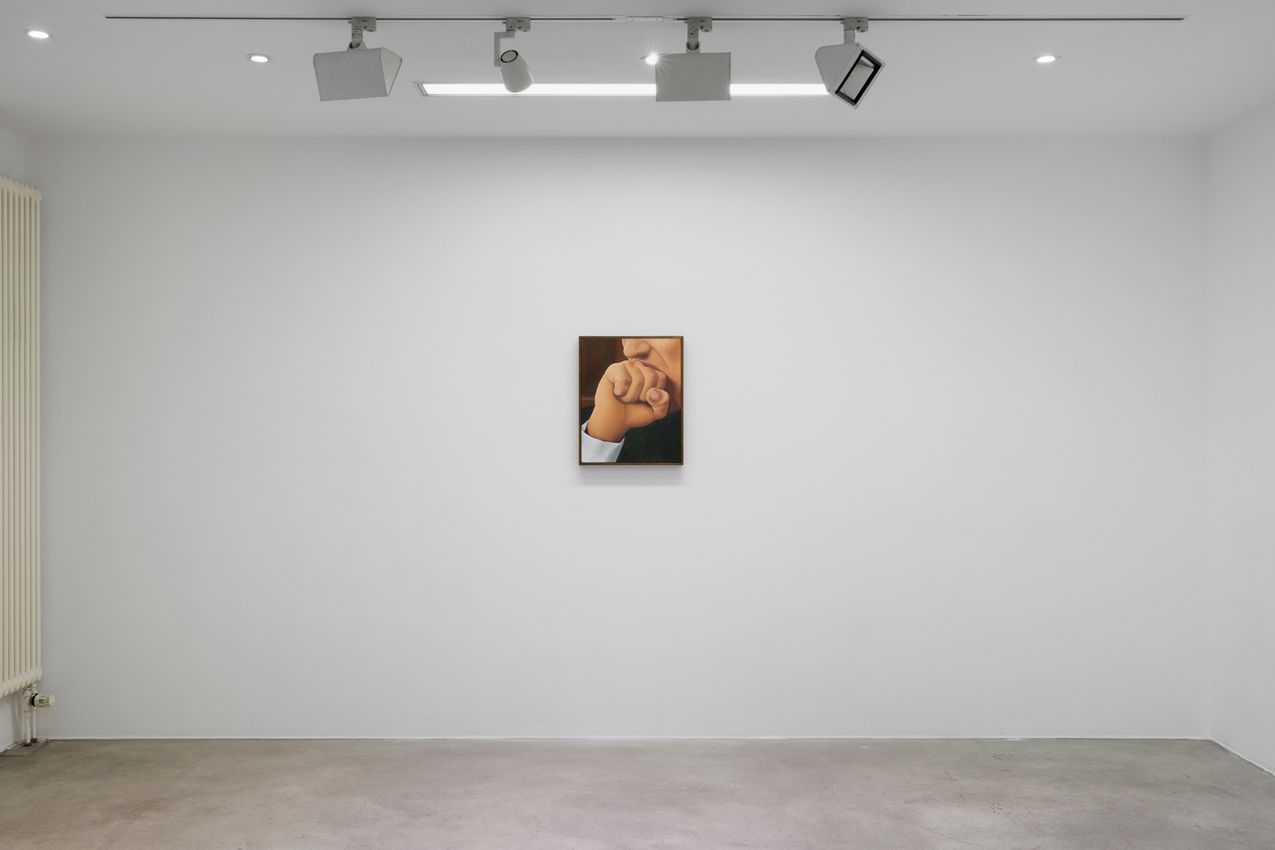
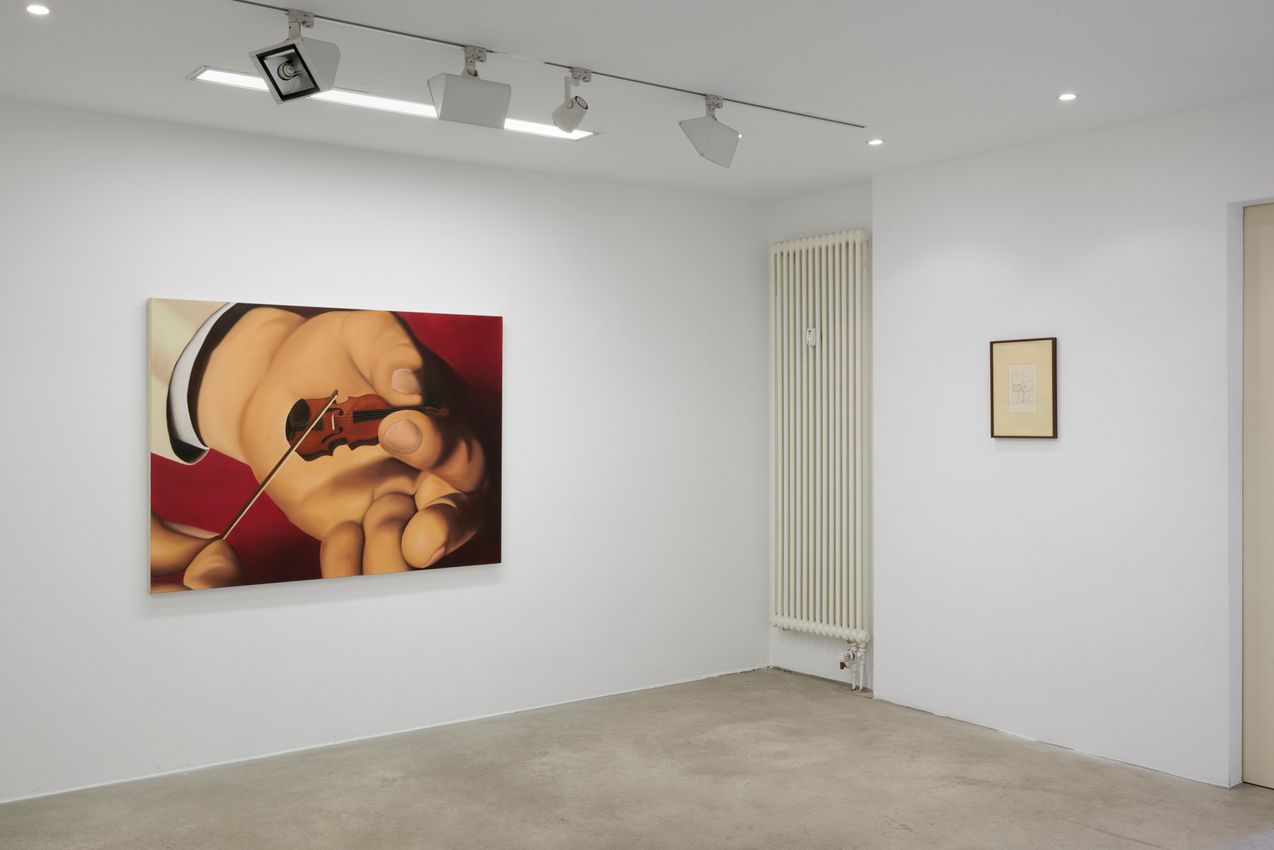
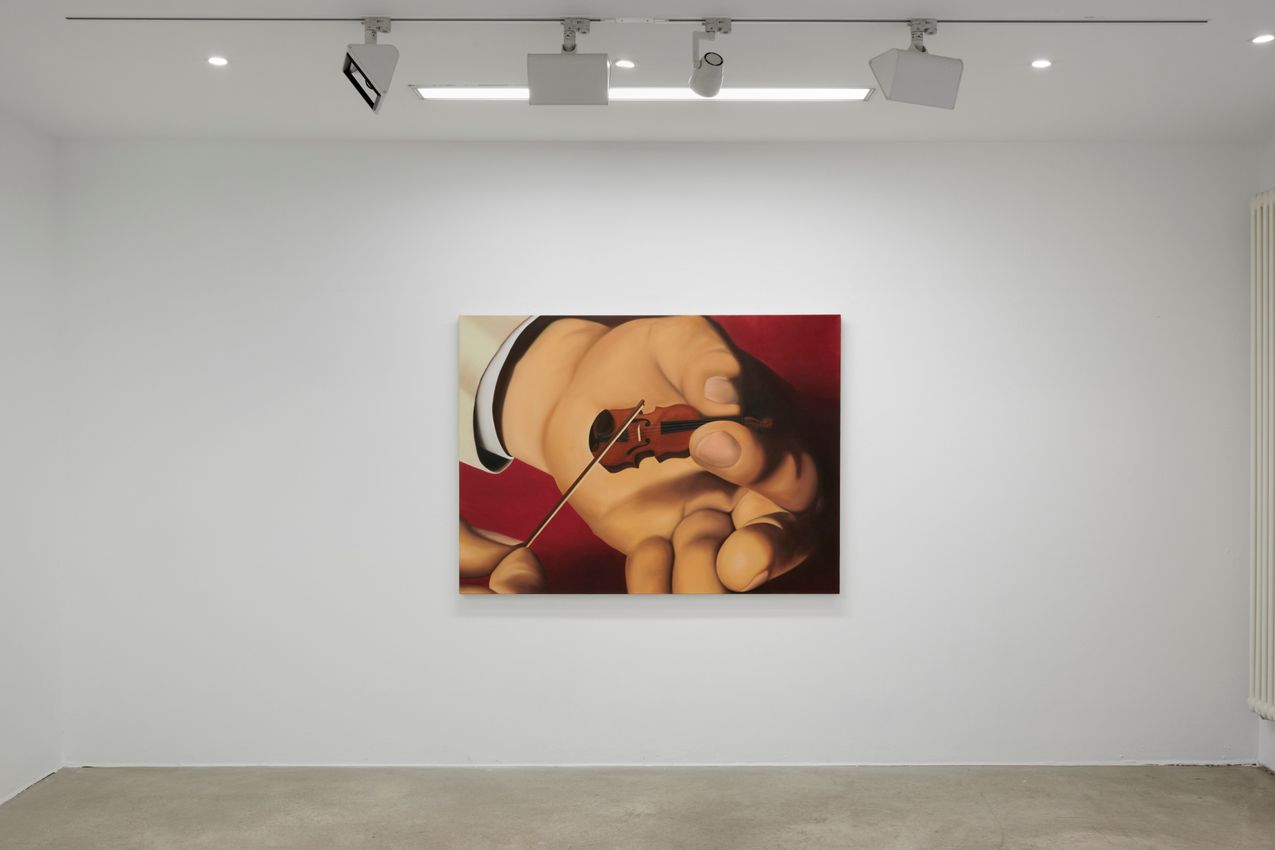
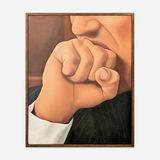
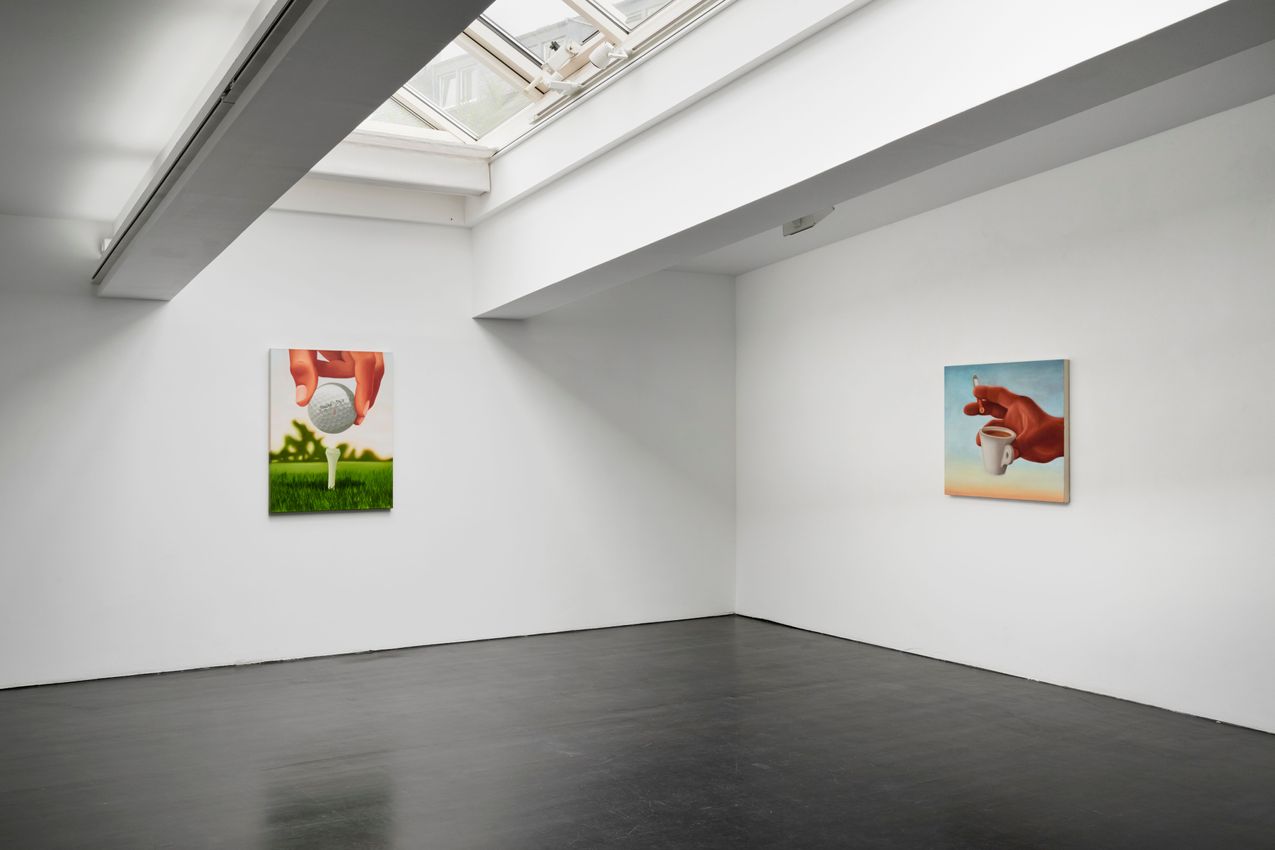
Patterson’s work has long been associated with abstract, minimalistic, object-based pieces in which colour, light and rhythm shape the viewer’s experience of space. Built up through dense layers of oil paint, these works treated the canvas as a musical instrument: a three-dimensional structure able to play a specific “sound”, namely a unique interplay of light, shadow and movement. The new paintings move in a completely different direction. Patterson turns to a form of post-pop figuration, where advertising hyperrealism meets close-up fetishism, camp and visual satire. Abstraction’s spatial pulse is replaced by images that are blunt and oddly theatrical. The iconography belongs to the visual grammar of performance and desire: sport, glamour, physical power, romance, self-display. But the images do not simply reproduce these codes, they exaggerate them. Bodies, hands and objects are cropped, enlarged and pushed to the foreground, as if lifted from a poster, a film still or a piece of aspirational advertising. Skin, fabric, grass, metal and polished props are rendered with a smooth, almost airbrushed precision, producing surfaces that feel seductive, yet artificial and faintly over-rehearsed. If earlier works played with light, these ones play with us, with our laminated dreams, fantasies and clichés.

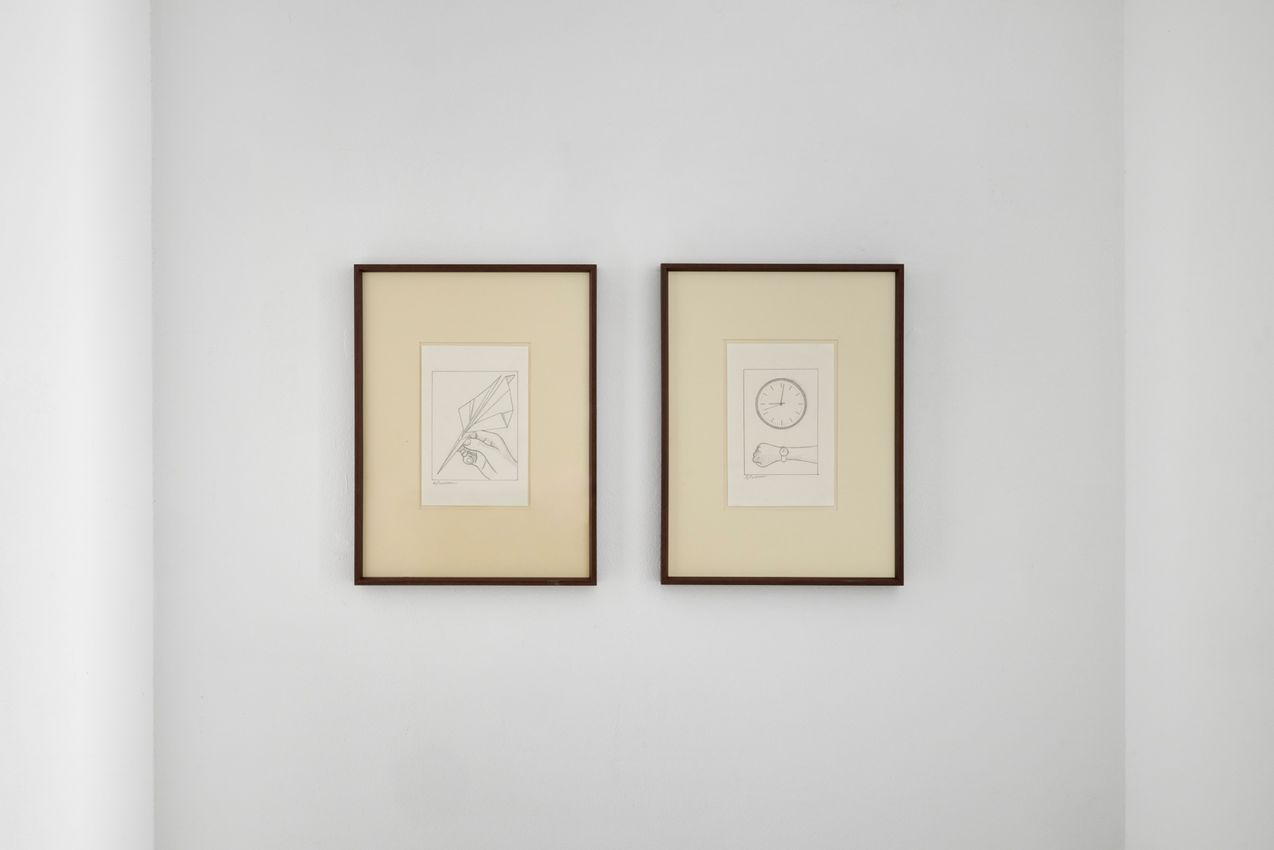
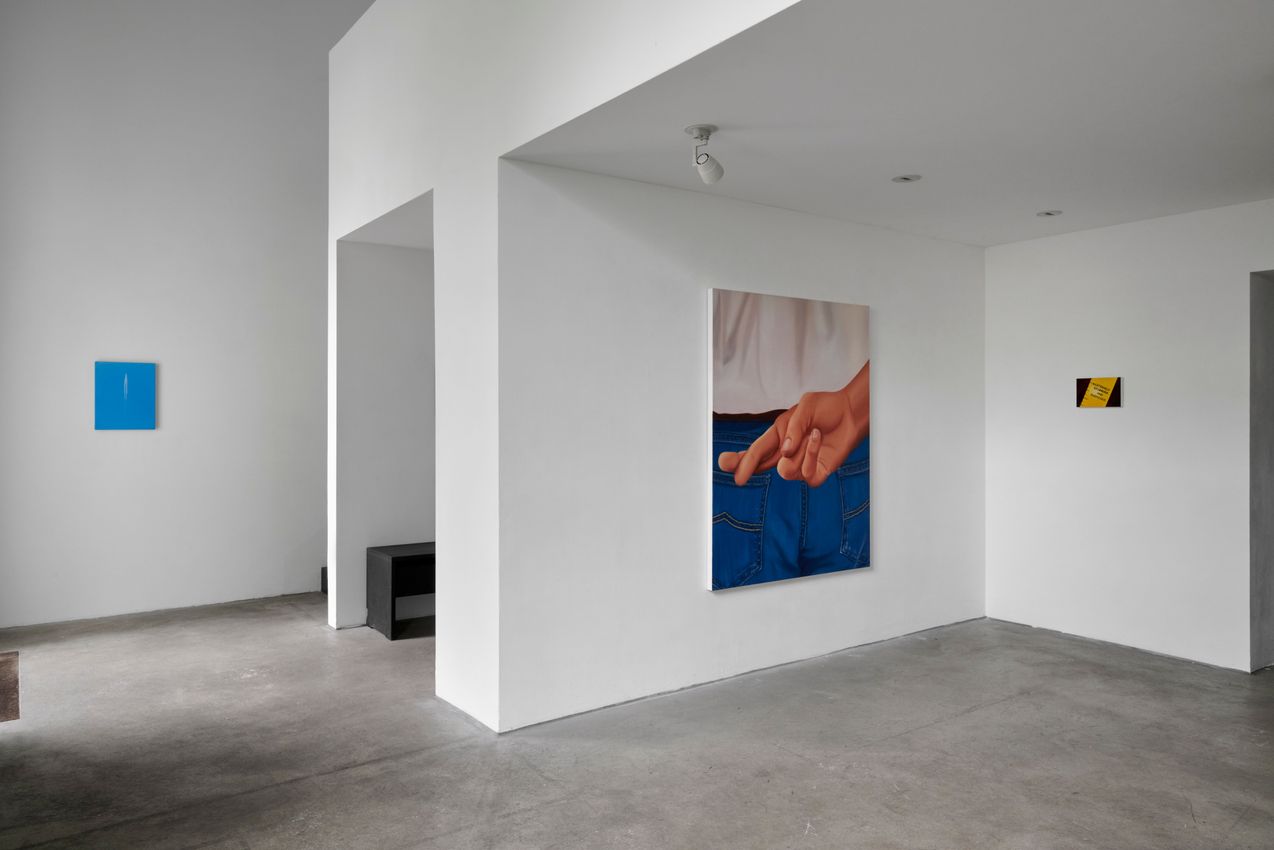
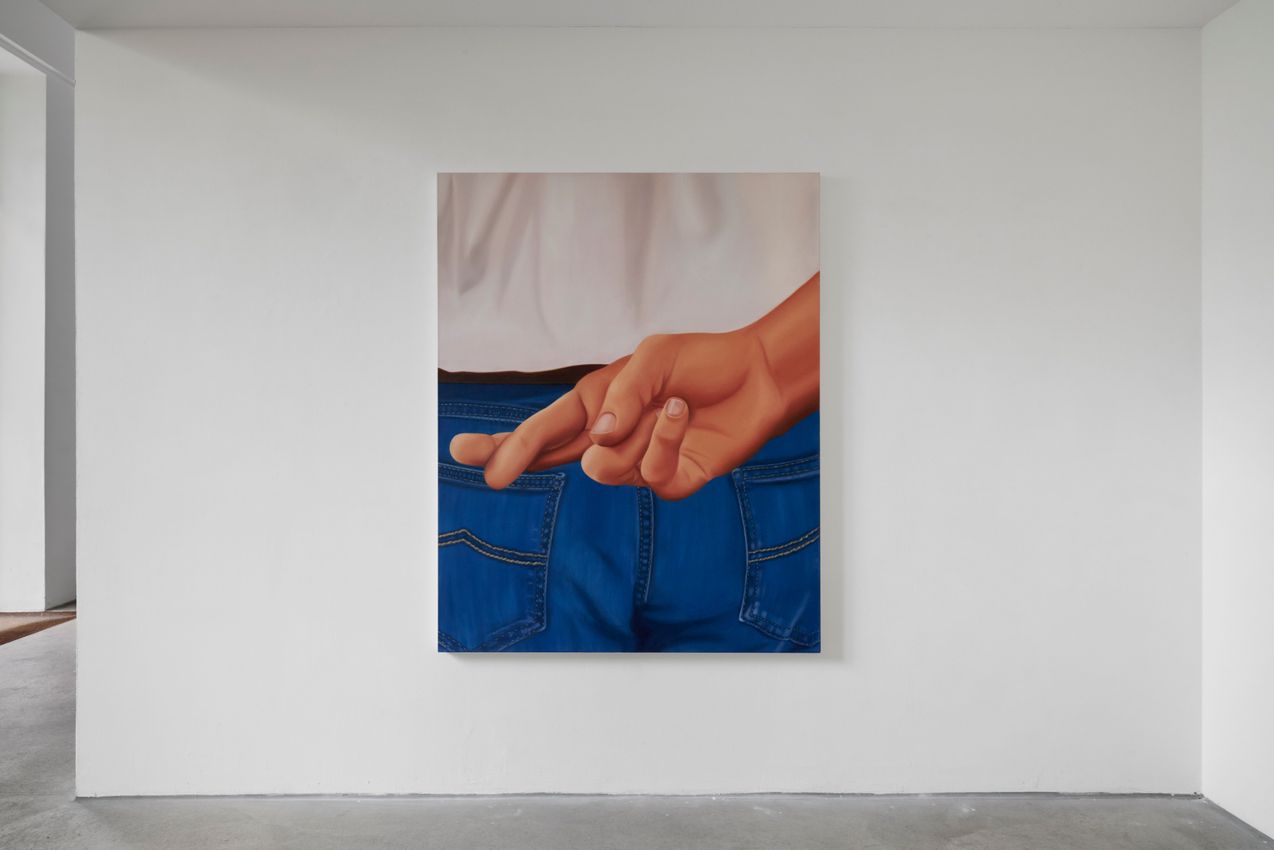
The shift in Patterson’s work begins, quite simply, with the wish to tell stories. Yet his way of doing so still carries something of the minimalism that has long shaped his practice. These paintings do not over-explain. They build narrative with the smallest possible number of clues. This may also explain the recurring presence of hands. In Patterson’s new paintings, hands condense entire situations into a single gesture. They lie, mock, seduce, measure, perform. In Fingers Crossed, for instance, the image is almost brutally economical: the back pockets of a pair of blue jeans, a fold in a white shirt, two crossed fingers. Nothing more is needed. We understand at once that someone is lying, or at least hoping to get away with it. The story is there before we have to work it out. The same economy is at play in Woe Be You, where a tiny violin stands in for a familiar gesture of irony: a sarcastic performance of sympathy for a sob story no one believes.

These stories are also clear because they rely on images so culturally fluent that they need no translation. In Massive, for example, the measured bicep becomes a direct shorthand for masculine pressure: the idea that to feel like a man one must be “big, have big muscles and be strong”. Patterson links the painting to a familiar misunderstanding of desire – what he describes, with some precision, as “a male power fantasy” mistaken for “the woman’s gaze”. The point is not made solemnly. His subjects often begin with sharp observations of wider cultural habits, then pass through something more personal: an anecdote, a joke, an embarrassment, a memory. I Found Your Ball Mate works in this way. On the surface, it seems to belong in a posh lifestyle magazine; in Patterson’s account, it comes from a childhood stretch of pitch-and-putt, bad aim, injured kneecaps, lost balls in the bushes and the first piece of printed porn he ever saw.

In the end, it always comes down to having the right stories. This, not the market’s petty little rules, is what Patterson cares about. That is why he wins.

Read More

Installation Views

Selected Works

Loading...
About the Gallery

The beginning of the JARILAGER Gallery traces back to 1998 when Jari Lager first opened his artist run space VTO in the East End of London, while also working at the LISSON Gallery, this was followed with the opening of UNION Gallery in 2003 on Union Street at Bankside near the Tate Gallery.

View Gallery Profile
Address
Wormserstrasse 23
Cologne
Germany
Opening Hours
Wednesday–Friday
1pm–6pm

Sunday
11am–2pm
And by appointment
(1)
Cologne Wormserstrasse 23
JARILAGER Gallery
Wormserstrasse 23, Cologne, Germany
+49 221 169 925 40
http://www.jarilagergallery.com

Opening hours
Wednesday–Friday
1pm–6pm

Sunday
11am–2pm
And by appointment
The art world in focus