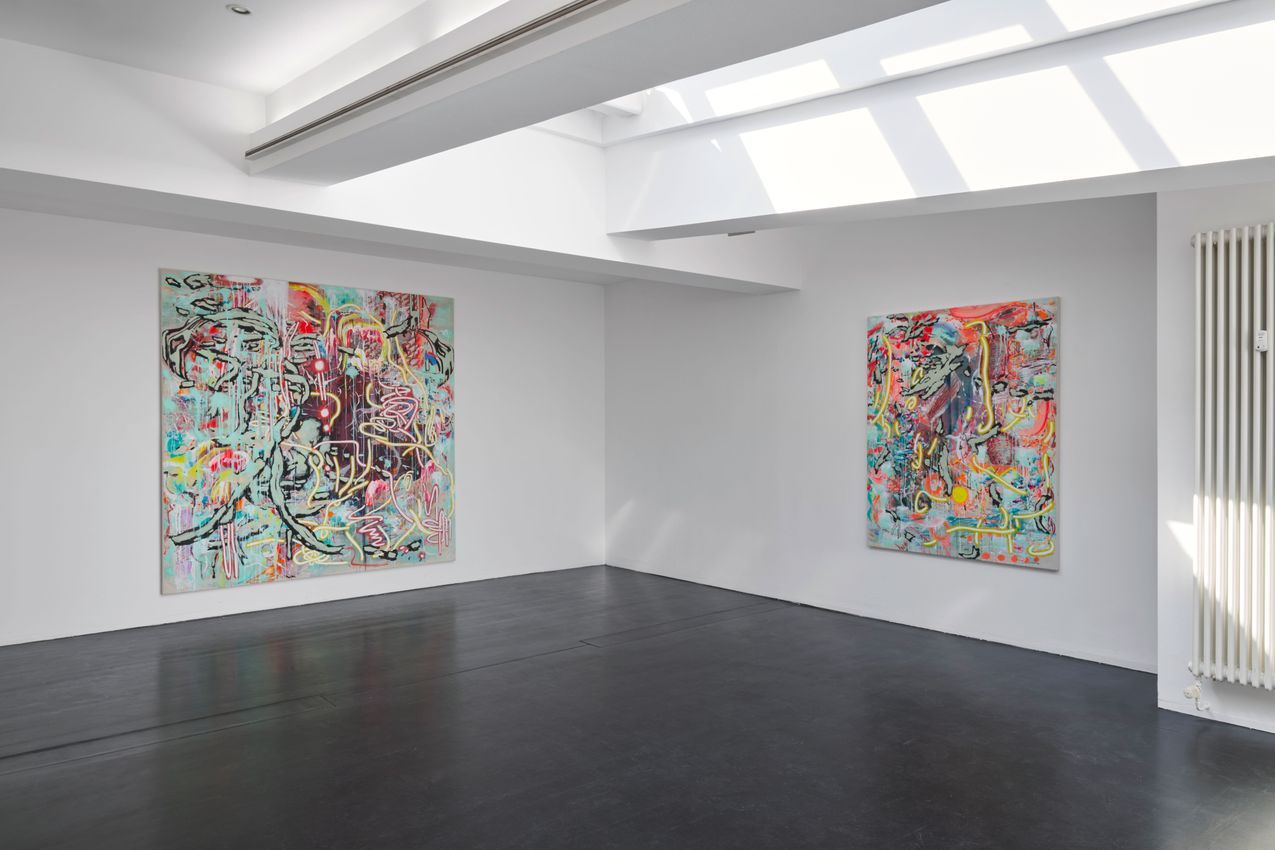
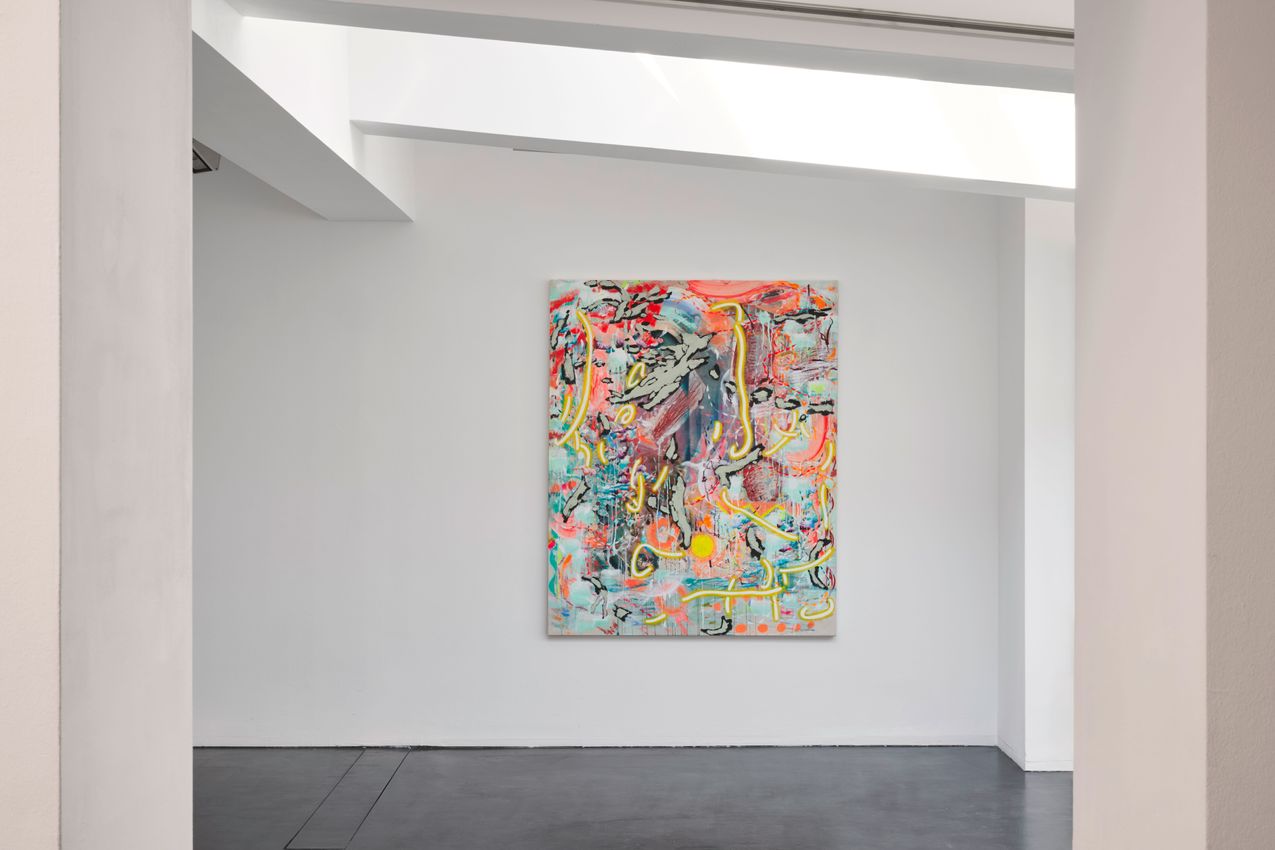
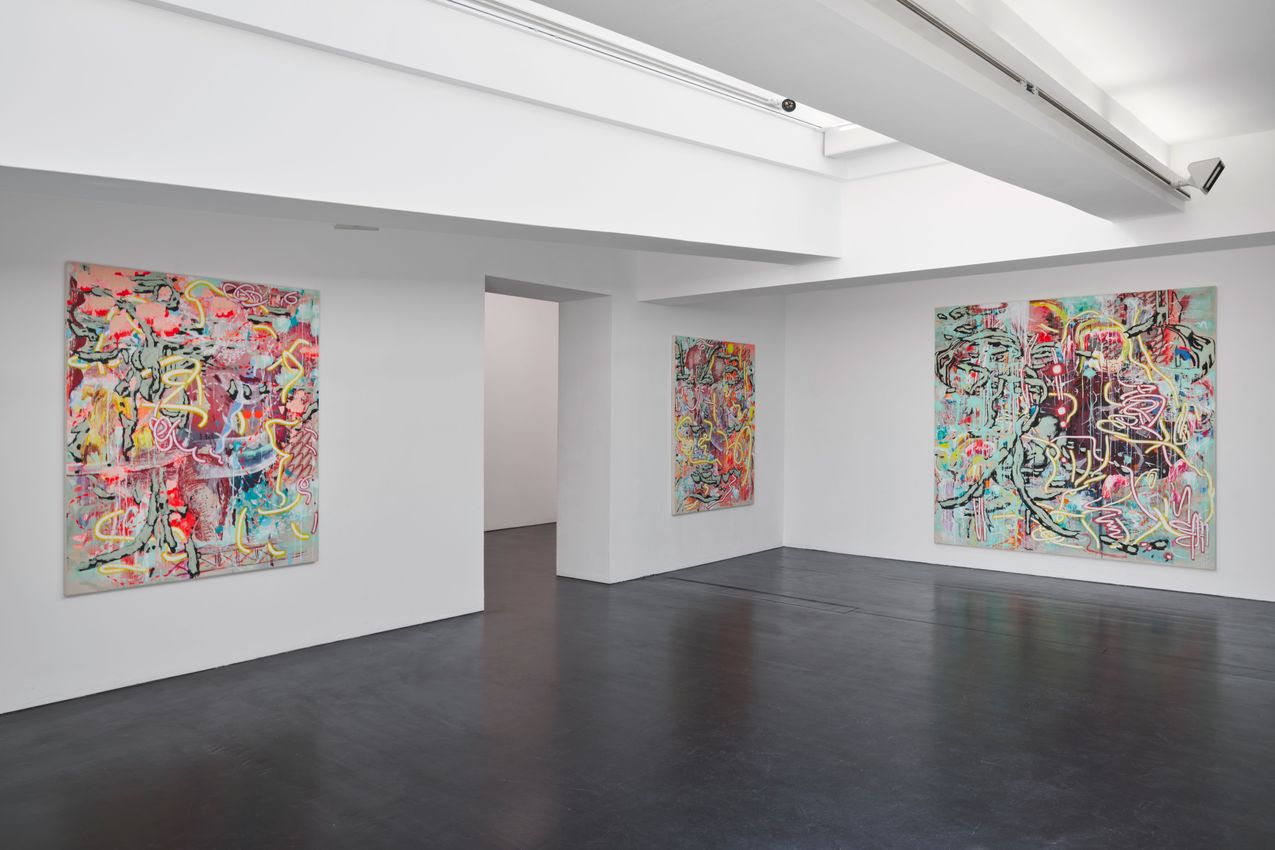
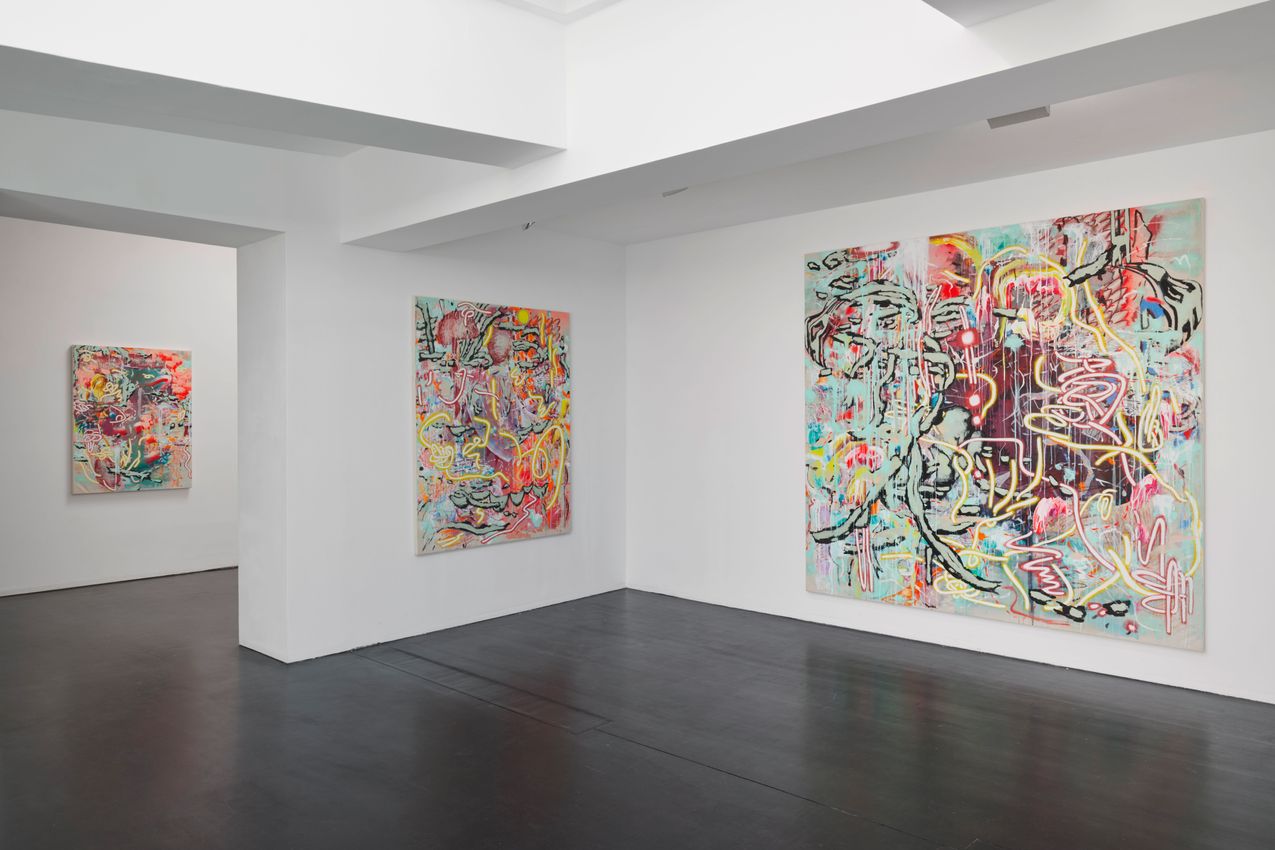
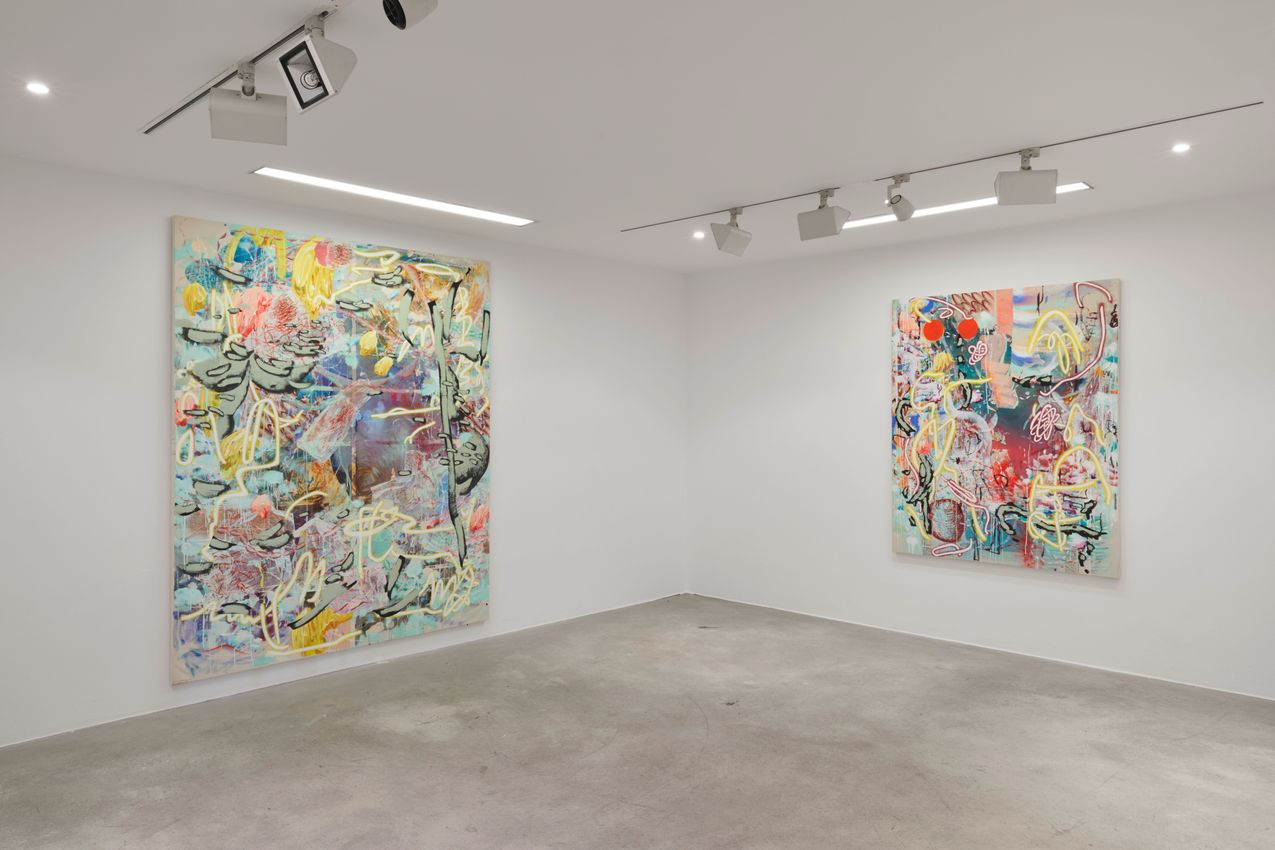
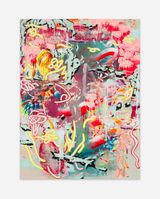
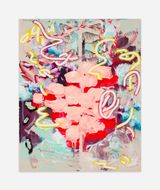
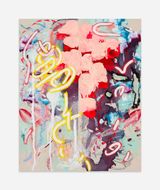
Yun-Kyung Jeong is a Korean painter largely educated in the UK. She received her BA from the College of Art & Design at Ewha Womans University in 2006 and completed her MFA at the Slade School of Fine Art in 2008. She now lives and works in Seoul. Quotidian Fever is her first solo exhibition at JARILAGER Gallery Cologne.
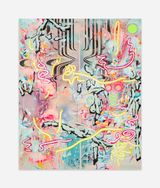
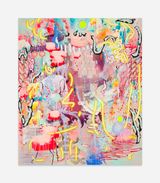
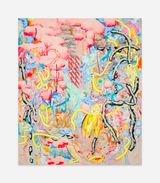
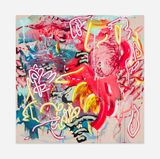
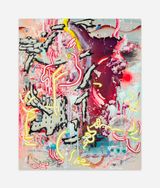
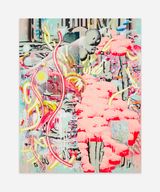
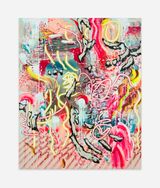
Jeong describes the inspiration behind her paintings as a sensorial return to the night, often evoked as a subaqueous world: the feeling of sea salt on moist skin, deep underwater breathing, silence, tidal visions flickering between darkness and light. She translates these impressions into vibrant colours and a complex abstract language of layered patterns and organic growth. Her landscapes resemble amniotic ecosystems—ancestral places in her memory and imagination to which she returns to find impulses to move forward. Here, her body finds space to recover, and what has been lost, injured or cut can begin to grow again.
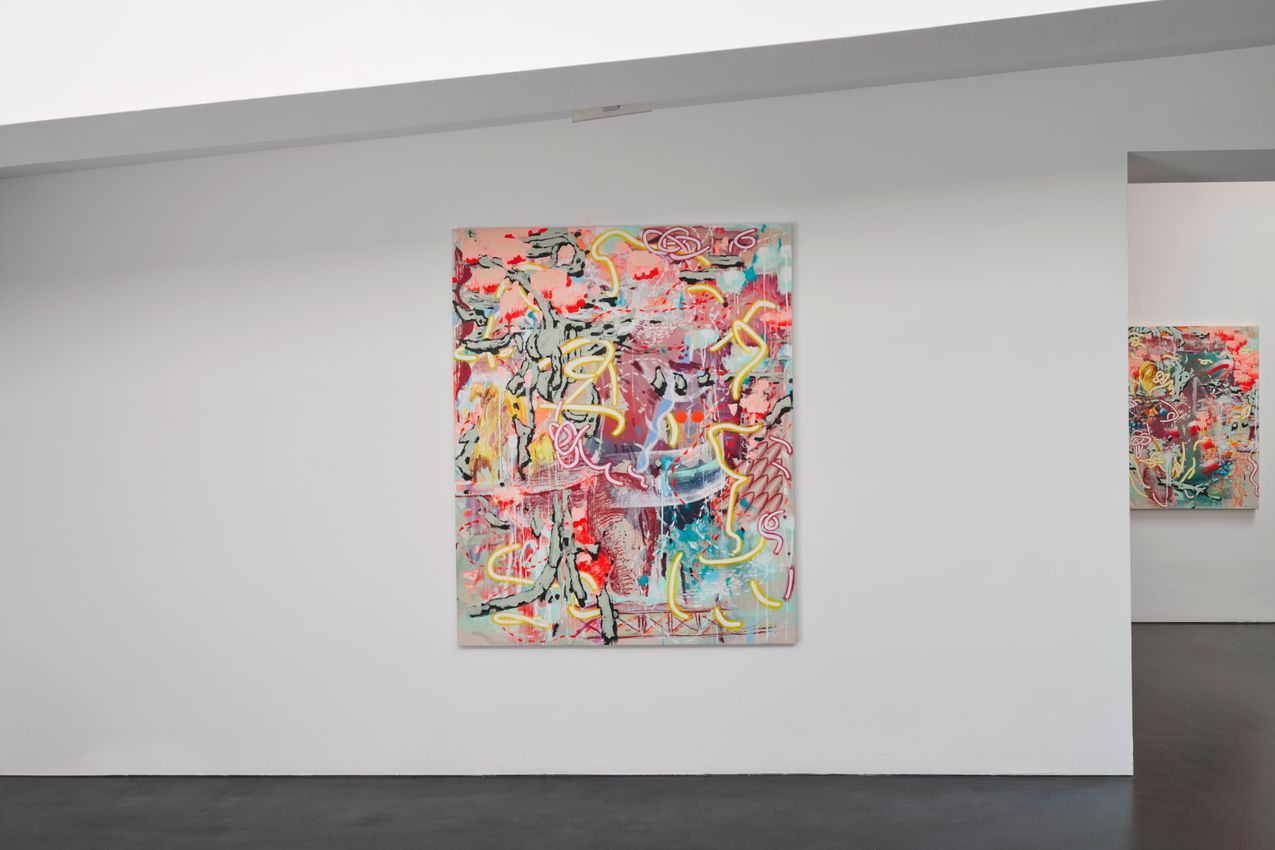
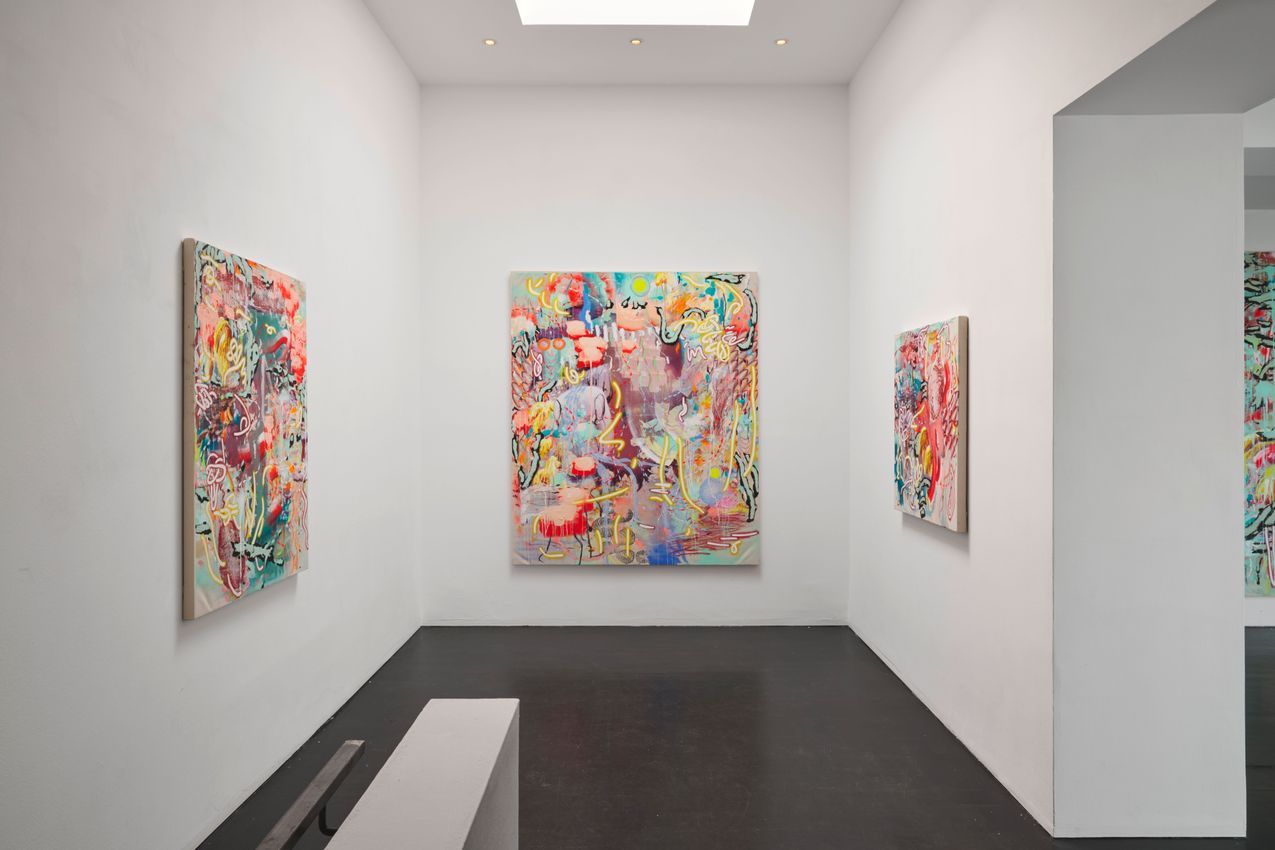
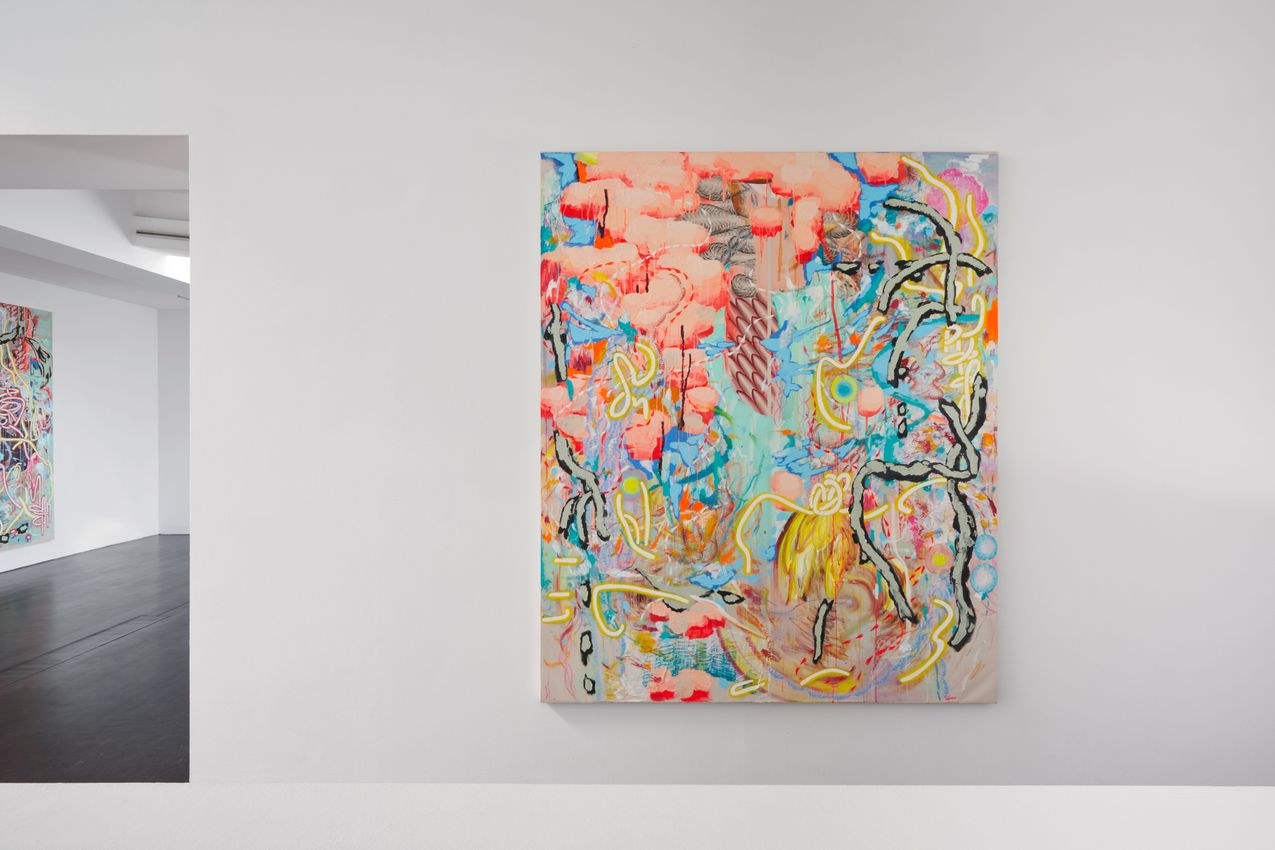
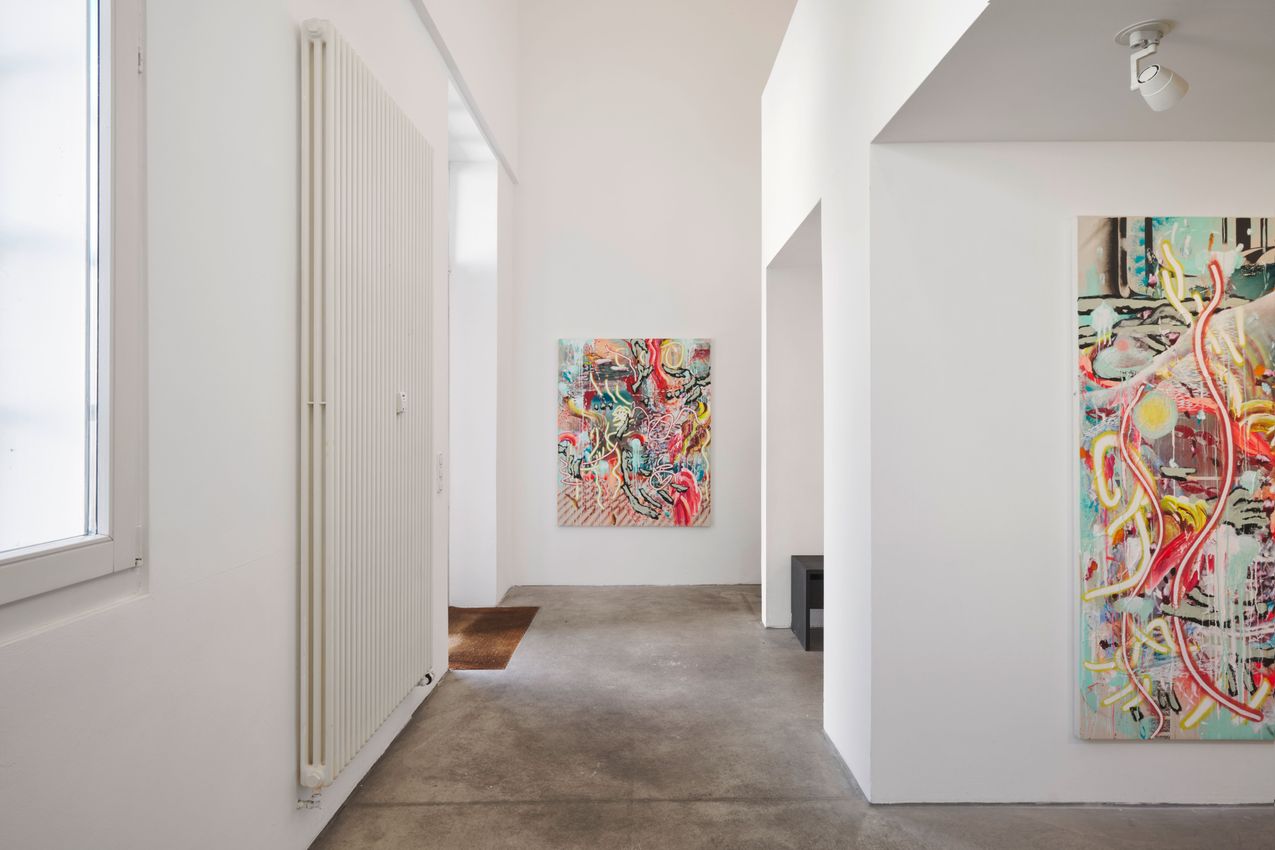
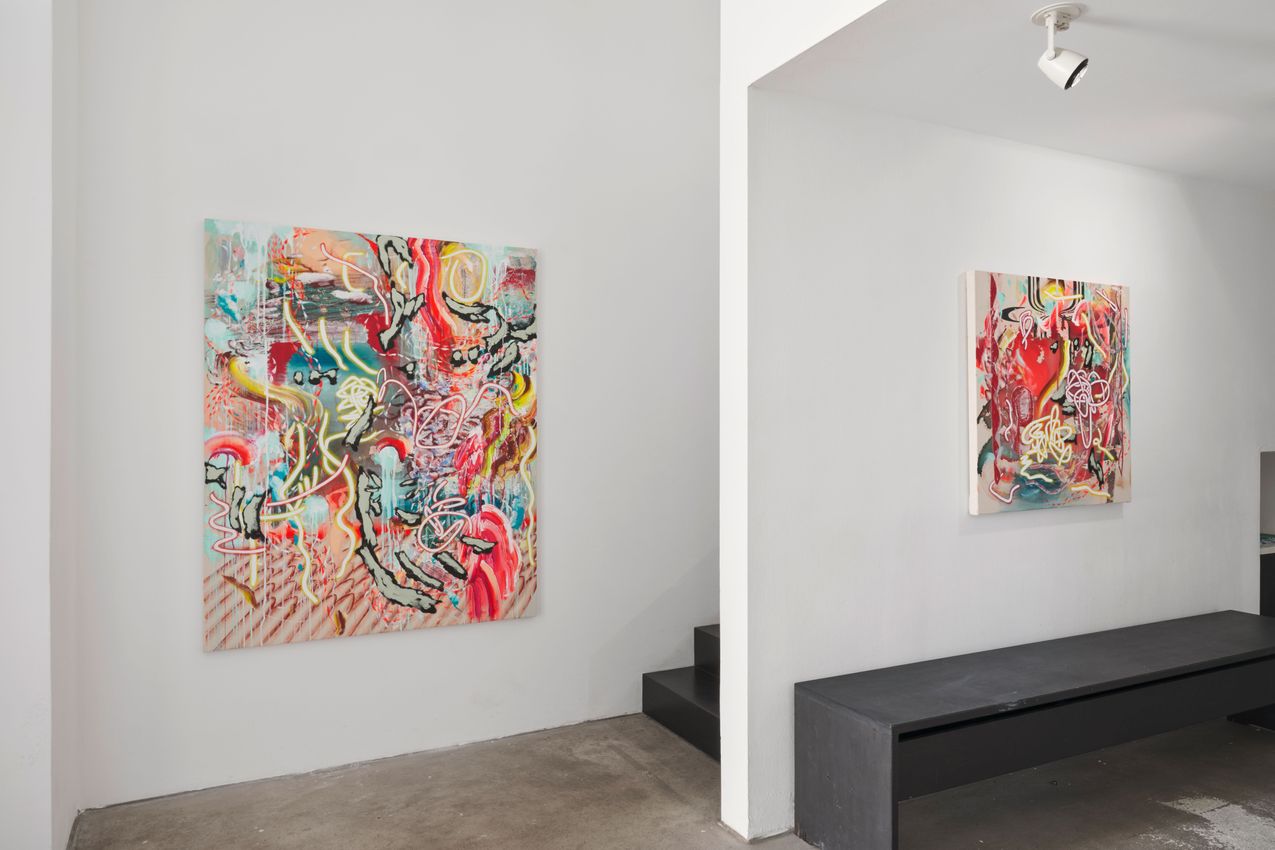
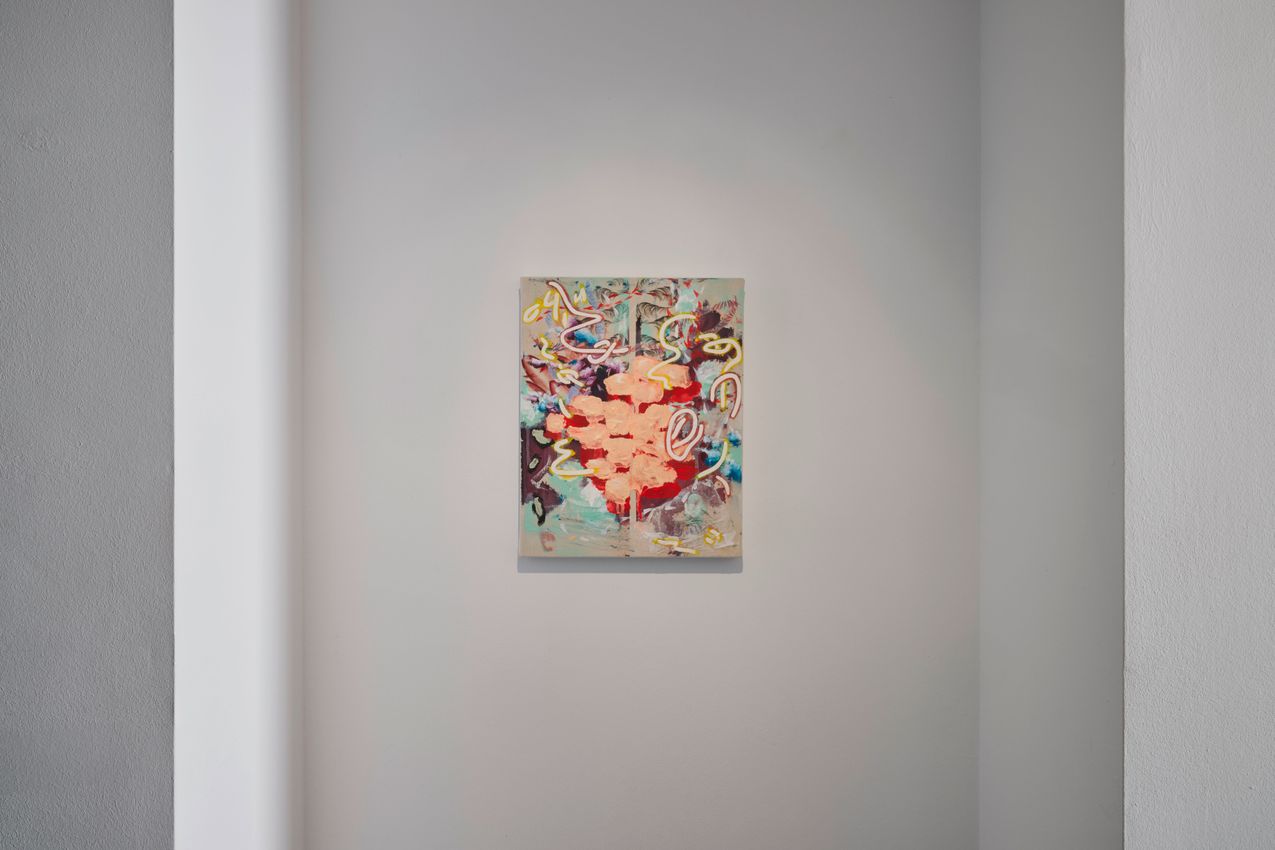
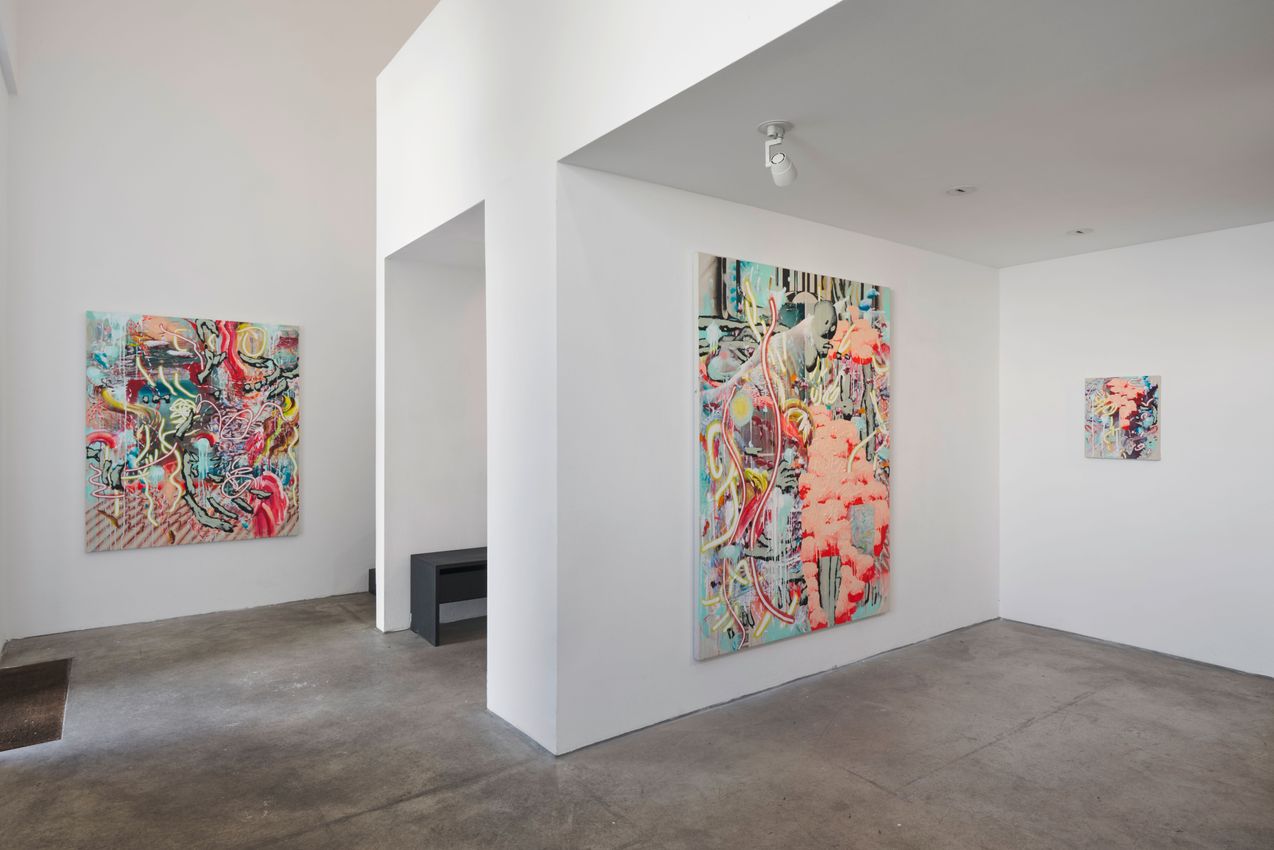
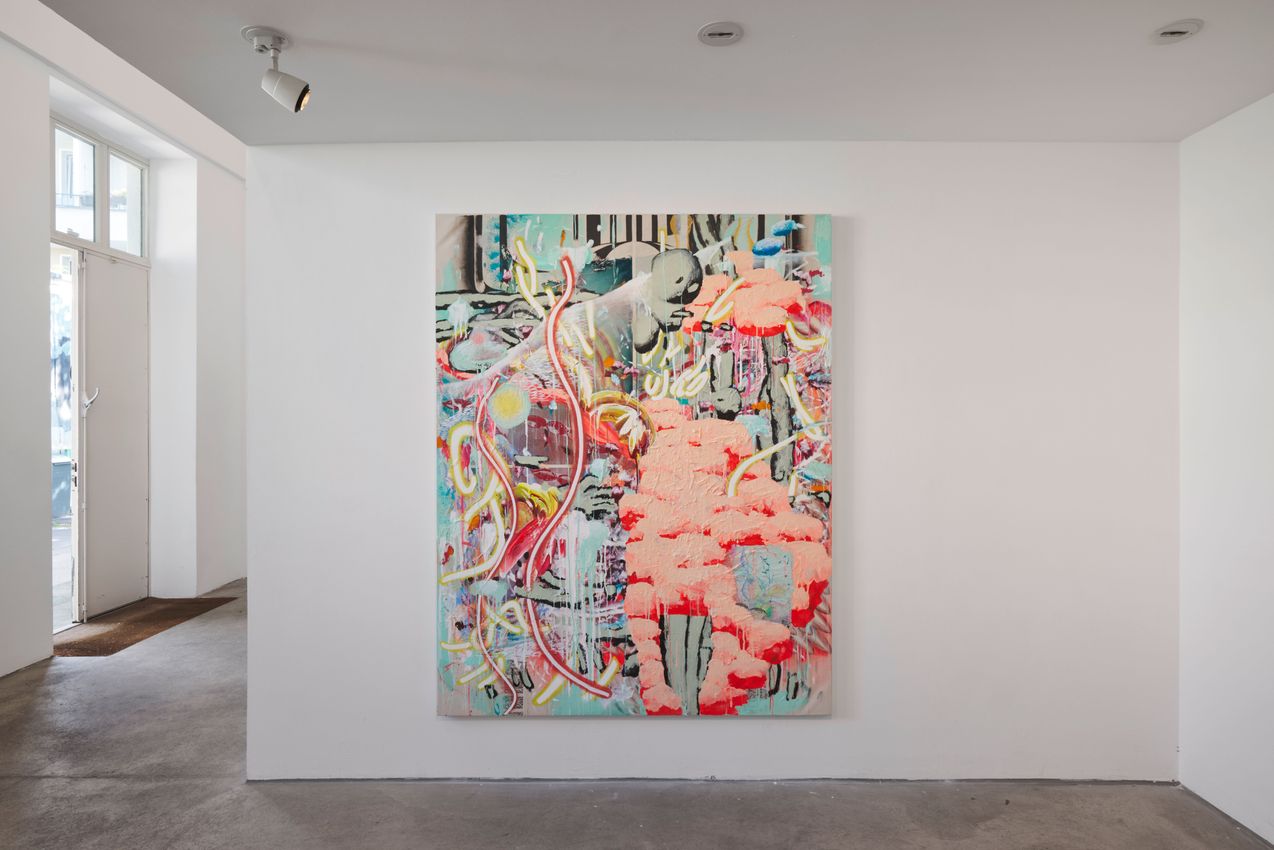
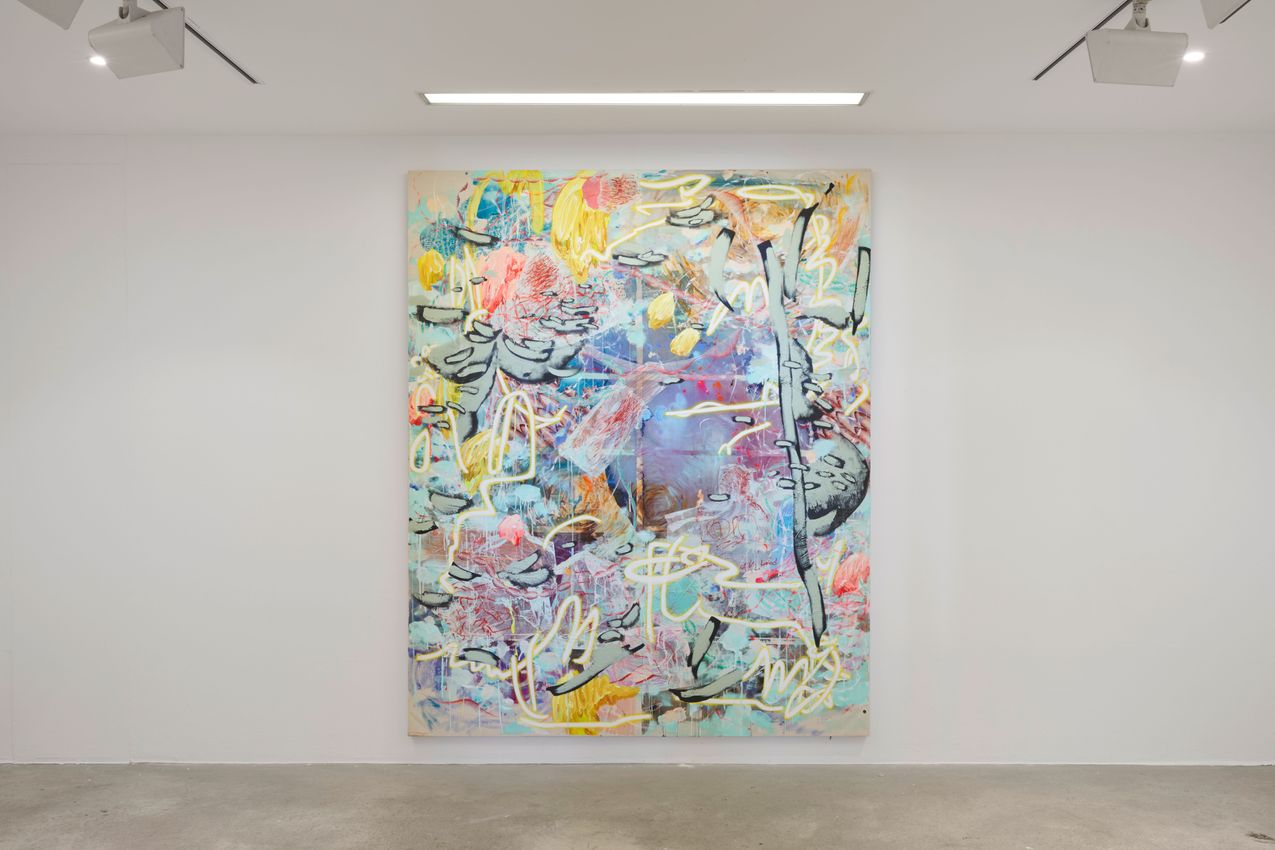
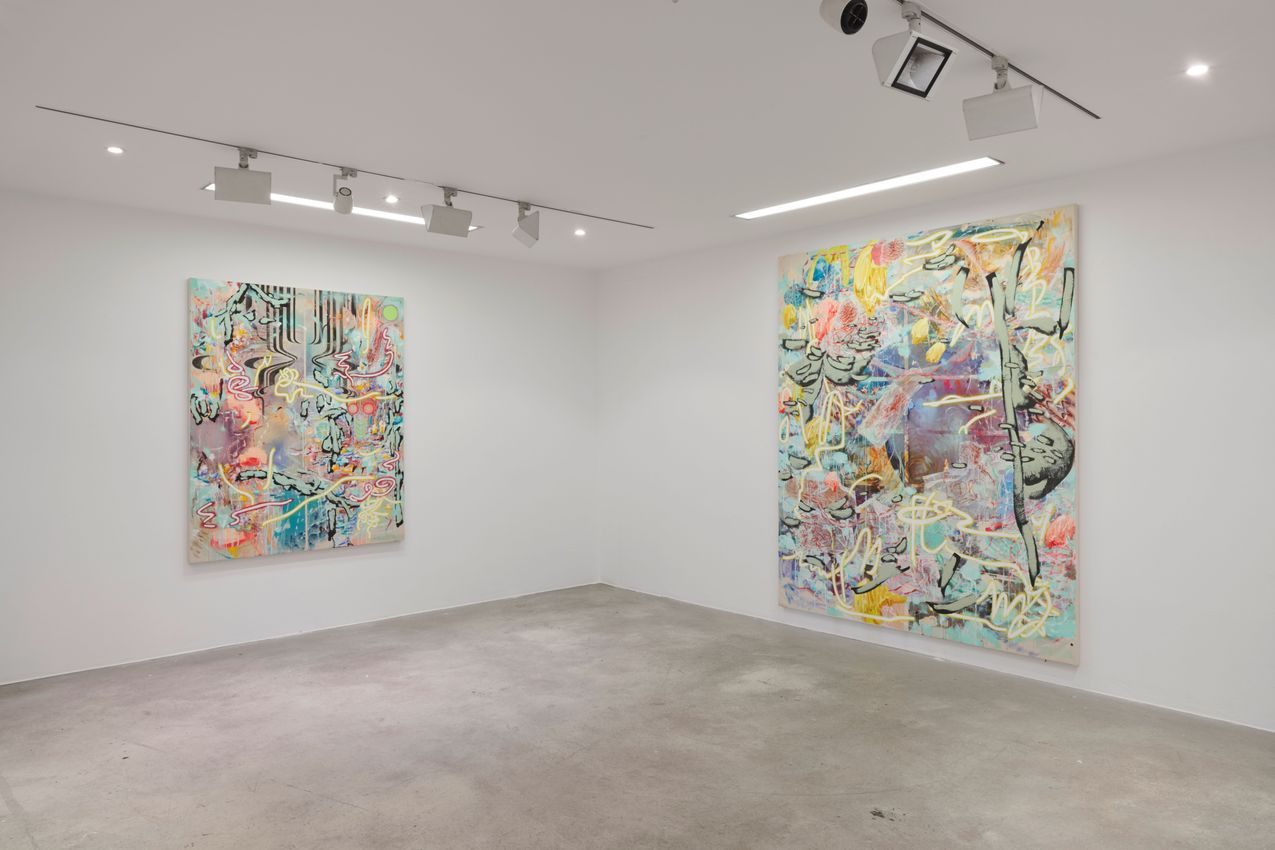
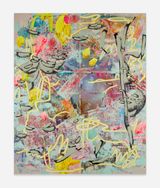
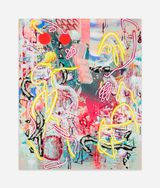
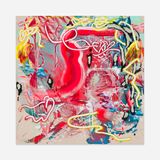
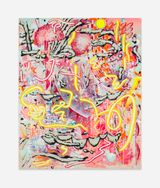
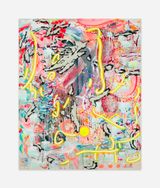
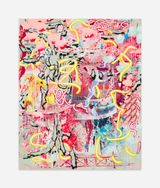
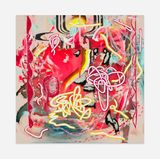
Jeong’s painting routine changed profoundly after getting married and becoming a mother. She now paints during the day, while the night, once a space of intimacy and reflection, has become distant. Day after day, she tries to gather the pieces of her lost nights and hold them together through painting. In her technique, this process takes shape as a delicate negotiation between balance and imbalance – a tension at the heart of much Eastern spirituality, where opposing forces are seen not as contradictions, but as vital components of human nature. At first glance, Jeong’s compositions may appear chaotic, like a body in constant flux, swallowing, digesting, transforming. Membranes and lines ripple across the surface, pulsing like micro-organisms under a microscope. And yet, harmony is central. The artist works to visualise how things might come together, how memories might turn into recognitions. For over a decade, she has been refining her own repertoire of patterns, layering them with precision to generate fresh perspectival effects each time. This formal complexity is sustained by a versatile approach to materials: acrylic paint, oil sticks, charcoal, pencil and ultra-thin collaged paper. All elements coexist in a shifting equilibrium – one she has to explore daily, testing the conditions under which a painting might begin to breathe autonomously. Usually, she draws a vertical line down the centre of the canvas to support symmetry, a diaphragm that holds tension and release.
Jeong’s paintings echo the organic rhythms that have shaped her, both as a woman and as a body. The canvas feels like a living skin, unprimed, thus exposed as it is, scattered by waves of colour. The visual language is rooted in the natural cycles of birth, expansion and decay. Mountains, plants, seawater, the sky – nature as a whole stretches and ruptures, swells and recedes, flourishes and fades, much like the human body growing older. Fine layers of paper, like translucent pellicles over pools of paint, their edges dented or frayed, suggest fragile thresholds between the inside and the outside. Each form seems to break through the breathing hole of a blue-green night. In one painting, a gentle fall of camellia (sandawha) petals scatters mid-air, transforming into a flock of birds. In another, black waterfalls flow inwards, drawn to a magnetic core where energy turns dense.
Though fully abstract, Jeong’s paintings hold onto traces of the world with a sensorial force that absorbs even the darkest natural phenomena. Illness, for instance, is never named, but it lingers. This sensorial charge intensifies in the recurring bands of yellow neon light that cut across her works. The motif was born during the Covid pandemic, translating the compulsive movement of fingers across screens—our only link to the outside world—still warm with the memory of touch. Handled with rare delicacy, her aesthetics turn a time of crisis into a gesture of presence and care, a way to remain close despite the distance. Her works, in this light, always invite quiet reconstruction: unfamiliar feelings and painful symptoms rise from the deep waters of the night to be acknowledged, accepted and slowly reassembled into something whole.
The beginning of the JARILAGER Gallery traces back to 1998 when Jari Lager first opened his artist run space VTO in the East End of London, while also working at the LISSON Gallery, this was followed with the opening of UNION Gallery in 2003 on Union Street at Bankside near the Tate Gallery.

A respected voice in contemporary art discourse.
Focusing on ambitious storytelling and insightful art-world commentary. Ocula Magazine publishes in-depth interviews, critical essays and timely analysis on the artists, exhibitions and ideas driving the global art world.
Learn more about Ocula Magazine
Showcasing the best of the art world.
Ocula partners with galleries from around the world to highlight their artists, artworks and exhibitions. Gallery membership is by application and invitation, with each member vetted by an independent panel.
Learn more about Ocula Membership

Specialises in the sale of major artworks.
Led by a team with deep ties to the world’s leading auction houses, galleries and collectors. Ocula’s advisory team offers bespoke services to high-net-worth clients from around the world who are looking to acquire the best of contemporary and modern art.
Learn more about our team and services