



VIVIAN SUTER
b. 1949, ArgentinaWorking from her open-air studio in the Guatemalan rainforest, artist Vivian Suter creates immersive, intuitive paintings that blur the boundaries between art and nature.
Early Years
Born in Buenos Aires in 1949, Vivian Suter emigrated with her family to Switzerland in the early 1960s. She studied at Basel‘s School of Design but found the institutional framework stifling, eventually leaving the city in pursuit of an unbounded, self-directed practice. In the early 1980s, she settled permanently in Panajachel, a remote town on Lake Atitlán in Guatemala, where she still lives and works.
Suter’s relocation marked a decisive turn in her life and art. Surrounded by dense tropical vegetation and fluctuating weather systems, she developed a deep dialogue with her environment—both conceptually and materially. Her dog-named paintings, use of natural substances like volcanic matter and rainwater, and the process of hanging unstretched canvases from trees reflect this symbiosis.
Artworks
Vivian Suter’s works are immersive, process-based paintings that embrace environmental contingency and reject the pristine logic of the white cube.
Rainforest Studio Practice
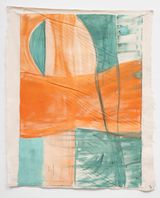
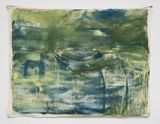
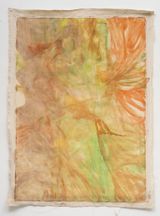
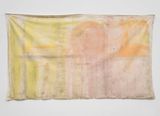
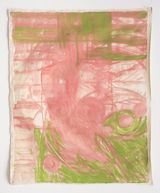
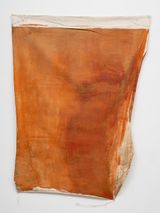
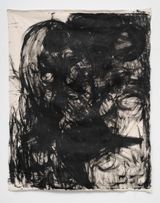
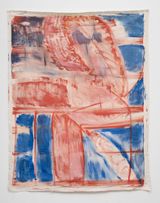
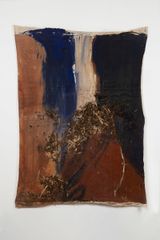
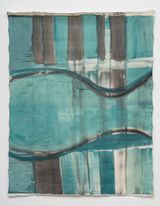
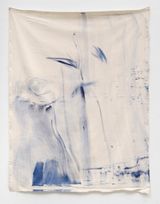
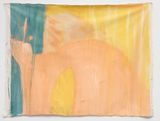
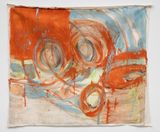
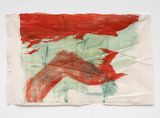
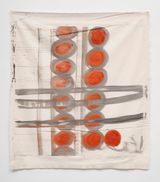
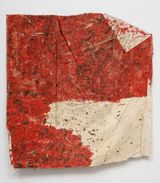
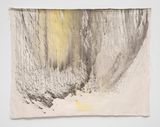
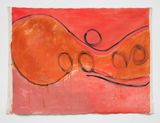
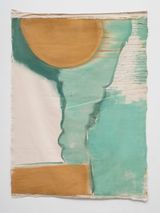
Since the 1980s, Vivian Suter has worked outdoors in the rainforest surrounding her home in Panajachel, Guatemala. She hangs large, unstretched canvases from trees and lets them absorb the surrounding conditions—mud, tropical rain, fallen leaves, insects, even her dogs’ paw prints. Her intuitive mark-making with acrylics, organic matter, and gestural brushstrokes merges with these unpredictable environmental interventions. Rather than isolating the act of painting in a studio, Suter integrates it with a living ecosystem. This immersive process results in contemporary artworks that feel alive, weathered, and in direct conversation with place, time, and decay.
Documenta and Institutional Rediscovery
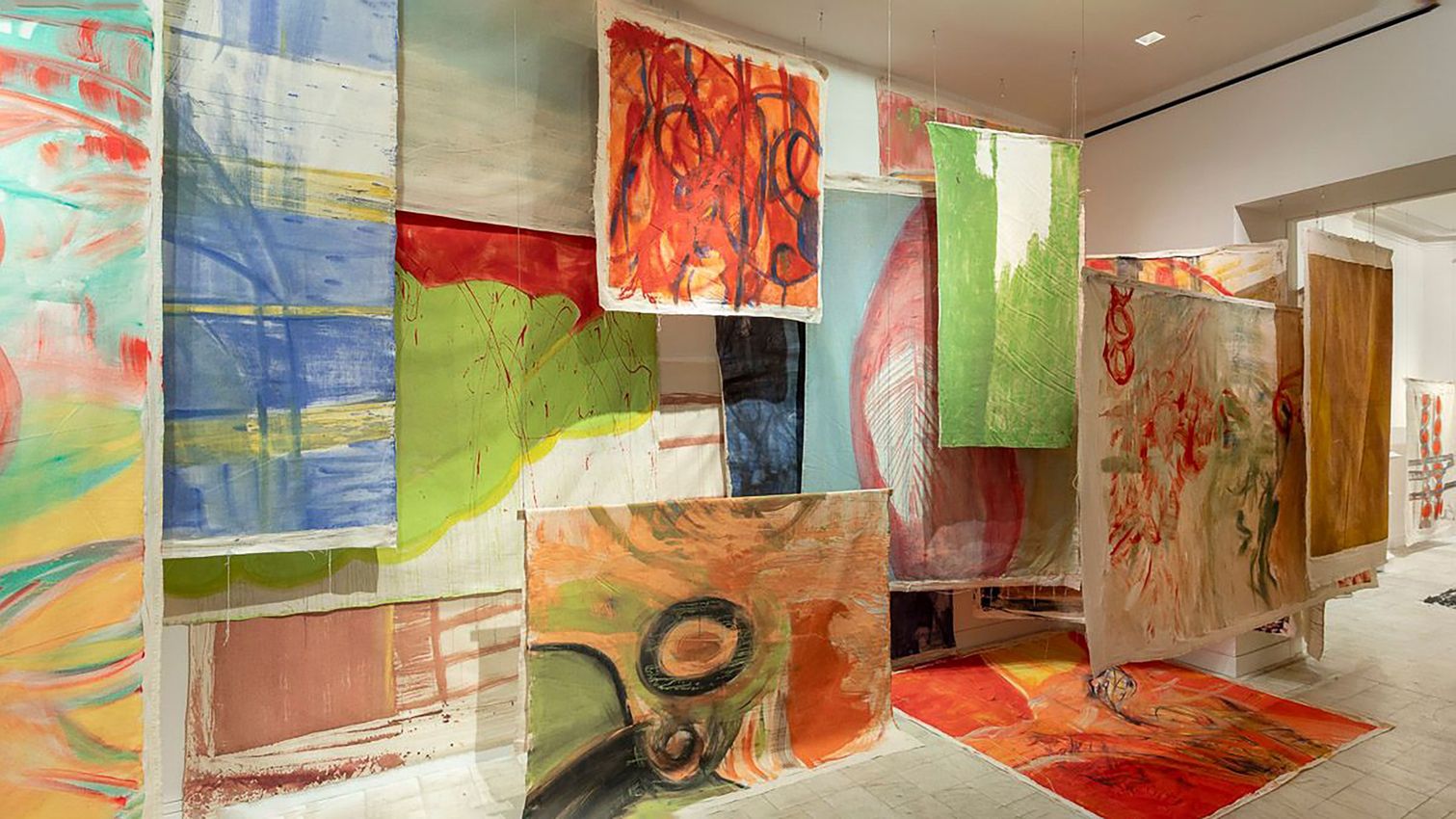
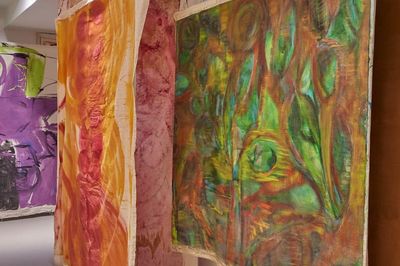
Although Suter painted in near-total seclusion for decades, her inclusion in documenta 14 (2017) in Athens and Kassel catalysed a major reevaluation of her practice. There, her raw, abstract paintings were presented in dense hanging installations that mirrored her jungle studio—unstretched canvases suspended like curtains or vines. These works invited viewers to navigate between and around the paintings, which retained the scents, stains, and fragility of their forested origin. Critics responded to the material honesty of her art, positioning her as an essential figure in discussions of contemporary painting, eco-feminism, and non-Western-centric narratives of artistic development.
Collaboration with Elisabeth Wild
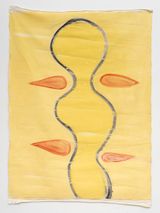
The intertwined practices of Vivian Suter and her mother, artist Elisabeth Wild, formed a unique intergenerational dialogue that spanned decades. Wild’s precise, vividly coloured collage works contrasted and complemented Suter’s sprawling, abstract expressions. Their home in Guatemala functioned as a shared sanctuary of artistic production. This familial collaboration gained institutional recognition with Elisabeth Wild & Vivian Suter: Madre Selva at The Power Plant, Toronto in 2020. Installed together, their works formed a layered conversation on memory, identity, and cohabitation. Suter’s art, deeply shaped by this maternal bond, continues to carry the imprint of their shared life and studio in the jungle.
Exhibitions
Vivian Suter has been the subject of both solo exhibition and group exhibitions. A selection of important exhibitions are provided below.
Solo Exhibitions
- Home, curated by Lorenzo Giusti, Galleria d’Arte Moderna e Contemporanea di Bergamo (GAMeC), Bergamo (2023)
- soft and fluffy is my soul − my tommy juices don’t worry − are sweet like a liquorice roll, Kunstmuseum Basel Gegenwart, Basel (2022)
- Vivian Suter, Museo Nacional Centro de Arte Reina Sofía, Madrid (2021)
- Vivian Suter: Tin Tin’s Sofa, Camden Arts Centre, London (2020)
- Vivian Suter, Tate Liverpool, United Kingdom (2019)
- Vivian Suter, Institute of Contemporary Art, Boston (2019)
- _Vivian Suter: el bosque interio_r, Art Institute of Chicago, Chicago (2018)
Group Exhibition
- EVERYBODY TALKS ABOUT THE WEATHER, curated by Dieter Roelstraete, Fondazione Prada, Venice (2023)
- Sensory Poetics: Collecting Abstraction, Solomon R. Guggenheim Museum, New York (2022)
- Post Nature: A Museum as an Ecosystem, Taipei Biennial, Taipei Fine Arts Museum, Taipei (2018)
- Documenta 14, Athens, Greece and Kassel, Germany (2017)
- 31st São Paulo Biennial, São Paulo, Brazil (2014)
- 6 Künstler aus Basel x2, Kunsthalle Basel, Basel (2011)
Critical Reception
Vivian Suter’s practice has been widely reviewed in leading publications including Art Basel, ArtReview, and Frieze.
Vivian Suter FAQs
What materials does Vivian Suter use in her art?
Vivian Suter’s contemporary artworks are made with acrylic paint on large, unstretched canvas, but her material palette extends far beyond the conventional. She frequently incorporates organic substances such as volcanic ash, soil, coffee grounds, leaves, and even fruit juice. These elements are introduced deliberately or arrive through exposure to the environment. Suter’s paintings absorb rainfall, sun, humidity, and debris, becoming deeply embedded with traces of the Guatemalan jungle. The result is a richly textured surface where abstraction and natural forces collide.
Why does Vivian Suter work in the jungle?
Vivian Suter’s rainforest home in Panajachel, Guatemala, is not just her studio—it’s her primary collaborator. By working outdoors, surrounded by the natural world, Suter relinquishes control and invites environmental phenomena into the process of making art. Her decision to settle in the jungle reflects a desire to reject the constraints of urban art scenes and studio conventions. In this remote setting, her artworks absorb the changing weather, light, and landscape, resulting in paintings that are shaped as much by nature as by her own hand.
How is Vivian Suter’s work installed in exhibitions?
Vivian Suter’s contemporary art installations echo the way she works in the rainforest. Rather than framing or stretching her canvases, she presents them loosely suspended from walls, ceilings, or freestanding structures. This mode of installation invites movement and interaction—viewers often navigate between the paintings, which hang like foliage or fabric in space. The works may flutter, overlap, or reveal their reverse sides. This fluid, immersive presentation mirrors the organic environment in which the artworks were created, dissolving boundaries between painting, sculpture, and spatial experience.
Ocula | 2025


View Vivian Suter's Artworks



























Explore and Follow Artists Shaping Contemporary Art
A respected voice in contemporary art discourse.
Focusing on ambitious storytelling and insightful art-world commentary. Ocula Magazine publishes in-depth interviews, critical essays and timely analysis on the artists, exhibitions and ideas driving the global art world.
Learn more about Ocula Magazine
Showcasing the best of the art world.
Ocula partners with galleries from around the world to highlight their artists, artworks and exhibitions. Gallery membership is by application and invitation, with each member vetted by an independent panel.
Learn more about Ocula Membership
Specialises in the sale of major artworks.
Led by a team with deep ties to the world’s leading auction houses, galleries and collectors. Ocula’s advisory team offers bespoke services to high-net-worth clients from around the world who are looking to acquire the best of contemporary and modern art.
Learn more about our team and services