



Press Release

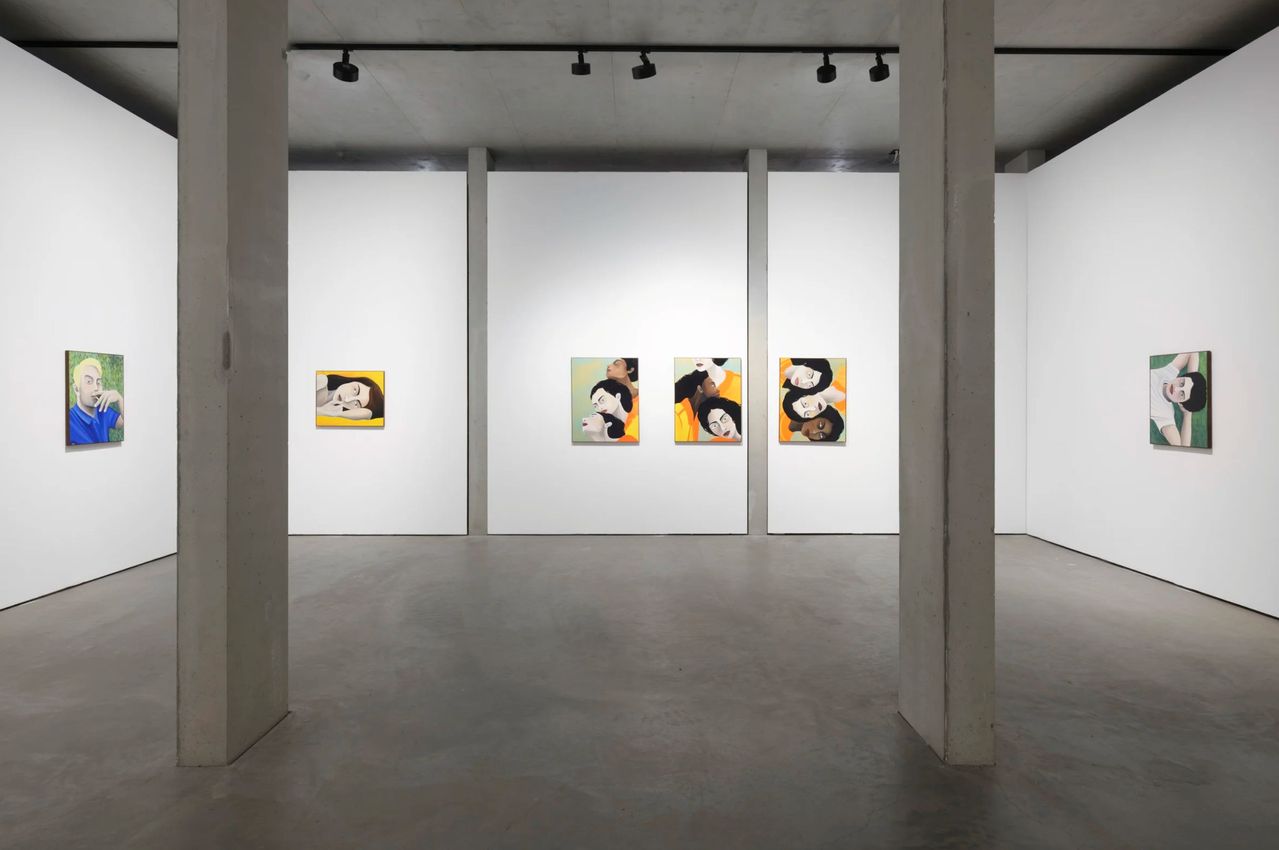
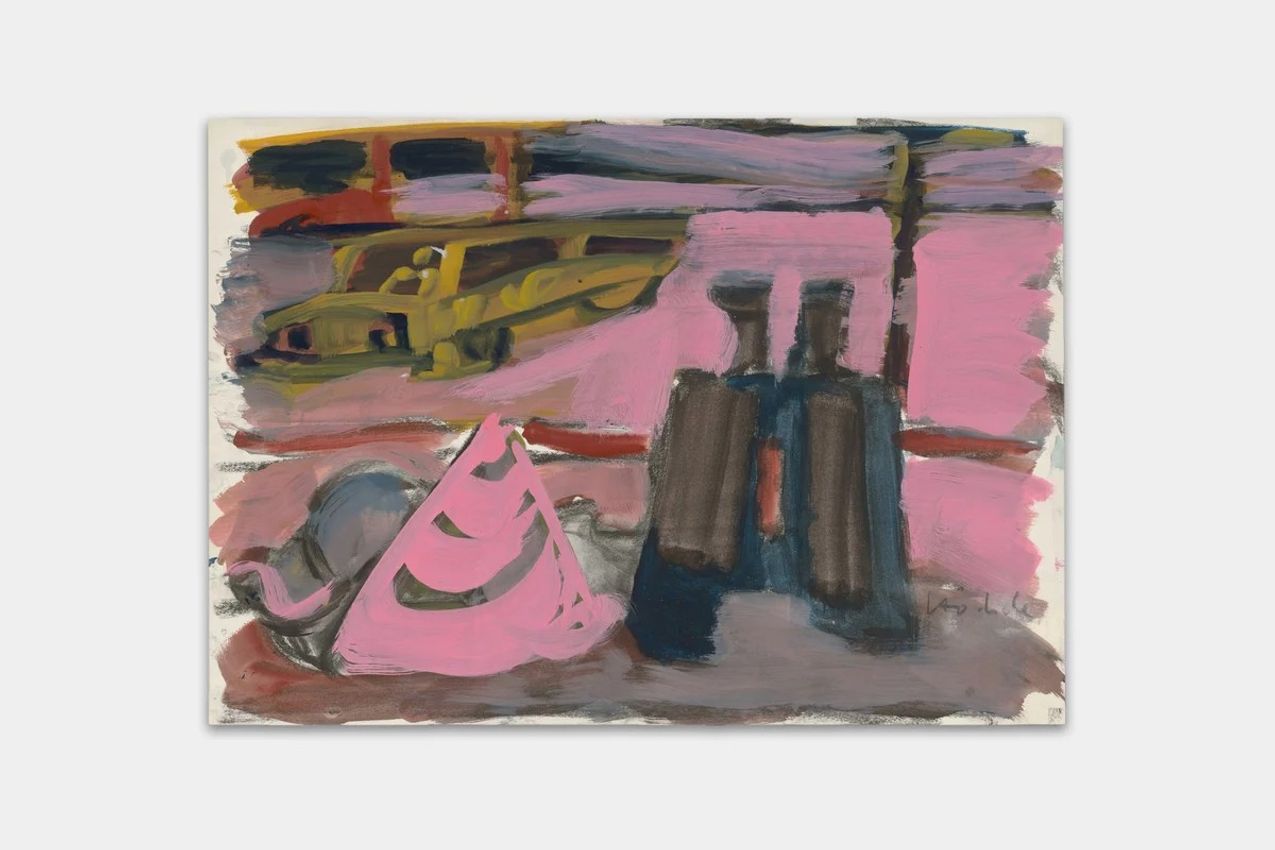
KÖNIG GALERIE presents FROM STUDIES TO PAINTINGS, an exhibition of works by Belgian artist Evelyne Axell.

Over the course of her all-too-brief career, Evelyne Axell (1935–1972) took inspiration from the more radical currents flowing through the culture of the 1960s. Responding to a political climate that came to a head in 1968, Axell realised a quiet revolution of her own, focused on feminine identity and the institution of a female gaze. Working across paintings, drawings, happenings, and film, the diversity of Axell’s output found its locus in Pop Art. Today, her oeuvre stands out not only as an encomium to radical feminism, but as a key for deciphering the revolutionary significance of Pop Art.

Without eschewing Pop Art’s fixation on celebrity and mediated life in all its forms (television, films, editorial photos), Axell’s work openly displays feminine sexuality in a way that puts her at odds with more mainstream (and male) Pop artists of the time. Often troubling the boundary between eroticism and pornography, Axell’s grasp of the lexicon of Pop Art insisted on a specifically feminine gaze—a way of seeing that subverted the male-dominated voyeurism which translated women’s bodies to the status of a consumer good. Even in her unfinished studies, Axell’s work presents a cross-section of psychedelic fantasy and erotic self-possession. She playfully disfigures the social forces that reduce women to objects, creating a context where the personalities of the women she admires can become foregrounded.

A Happening she organized in 1969 at Foncke Gallery in Ghent, Belgium, for instance, inserted a young woman wearing nothing but an astronaut helmet into a crowd of shocked onlookers. Axell then performed a ‘reverse striptease’ with the woman, seductively dressing her in a way which tantalszed the audience. Axell later drew on the photo documentation of the performance for motifs in her paintings.

In a similar vein, Axell’s sketch titled BLACK IS BEAUTIFUL, while being a preparatory drawing for a painting that was never realised, preserves the personality of her subject as much as her appearance. While the woman Axell sketched never sat for her portrait, this mediated recreation of her face, modelled on a picture featured in a French magazine, already brings out the woman’s eyes, the shapeliness of her face.

Another sketch from this period, CAMPUS 1 (1972), openly showcases Axell’s working methods. Here, the facial features of a student witnessing the Kent State shootings become less a spectacle adorning the cover of Time Magazine (from where the image was originally sourced), and more a symbol of a collectively shared horror. The colours added to the original black and white image have a psychedelic feel, tacitly recreating the singular vividness of police and military violence.

Evelyne Axell’s pioneering work can be appreciated only retrospectively. Enthralled by the speed and immediacy of the contemporary world, her life was tragically cut short by a car accident in 1972. Today, even her unfinished studies radiate a continual vitality that stems from a moment when popular uprisings almost changed the course of history. Enamoured by the conventions of Pop Art, Axell delved into the ritualistic undertones still coursing through Western society, recreating moments of love and intimacy in full defiance of the secondary status to which women—even in the midst of sexual revolution—are often relegated.

Axell’s work was shown in numerous solo and group exhibitions, among others at Kunsthalle zu Kiel, Kiel, Germany (2022); MAMAC, Nice, France (2021); Muzeum Susch, Susch, Switzerland (2020); Le Delta, Namur, Belgium (2019); KIOSK Art Center, Ghent (2017); at Tate Modern, London (2016); Warsaw Museum of Modern Art, Warsaw (2017); the Philadelphia Museum of Art, Philadelphia (2016); Walker Art Center, Minneapolis (2015); the Dallas Museum of Modern Art, Dallas (2015); LENTOS Kunstmuseum, Linz (2013); the Barbican Art Gallery, London (2013); Tate Liverpool (2013); Schirn Kunsthalle, Frankfurt (2013); at Kunstverein, Hamburg (2011); Museum Abteiberg, Mönchengladbach (2011); at Kunsthalle Wien, Vienna (2010); the Centre Pompidou, Paris (2009); or the Fernsehturm, Berlin, Germany (2006).

Her work is part of renowned public collections such as the Tate Modern, London; MoMA, New York; MUMOK, Vienna; the Centre Pompidou, Paris; the Pinault Collection, Venice; the Musées Royaux des Beaux-Arts, Brussels; Museu Coleção Berardo, Lisbon; the Musée d’Ixelles, Brussels; Mu.ZEE - Kunstmuseum aan Zee, Ostend; S.M.A.K. - Stedelijk Museum voor Actuele Kunst, Ghent; or the Design Museum Brussels, Brussels.

Read More

Also Exhibiting at König Galerie

About the Gallery

KÖNIG GALERIE, founded in 2002, has evolved into a dynamic platform for contemporary art in Berlin and beyond. The gallery specializes in showcasing the work of both emerging and established international artists, with a particular emphasis on younger generations. Its program is characterized by interdisciplinary, concept-driven approaches, encompassing a wide array of artistic media, from sculpture and painting to video, installation, printmaking, photography, and performance.

View Gallery Profile
Address
St. Agnes
Alexandrinenstrasse 118-121
Berlin
Germany
Opening Hours
Tuesday - Sunday
11am - 6pm

or by appointment
(1)
Berlin St. Agnes, Alexandrinenstrasse 118-121
König Galerie
St. Agnes, Alexandrinenstrasse 118-121, Berlin, Germany
+49 30 261 030 80
https://www.koeniggalerie.com/

Opening hours
Tuesday - Sunday
11am - 6pm

or by appointment
The art world in focus