





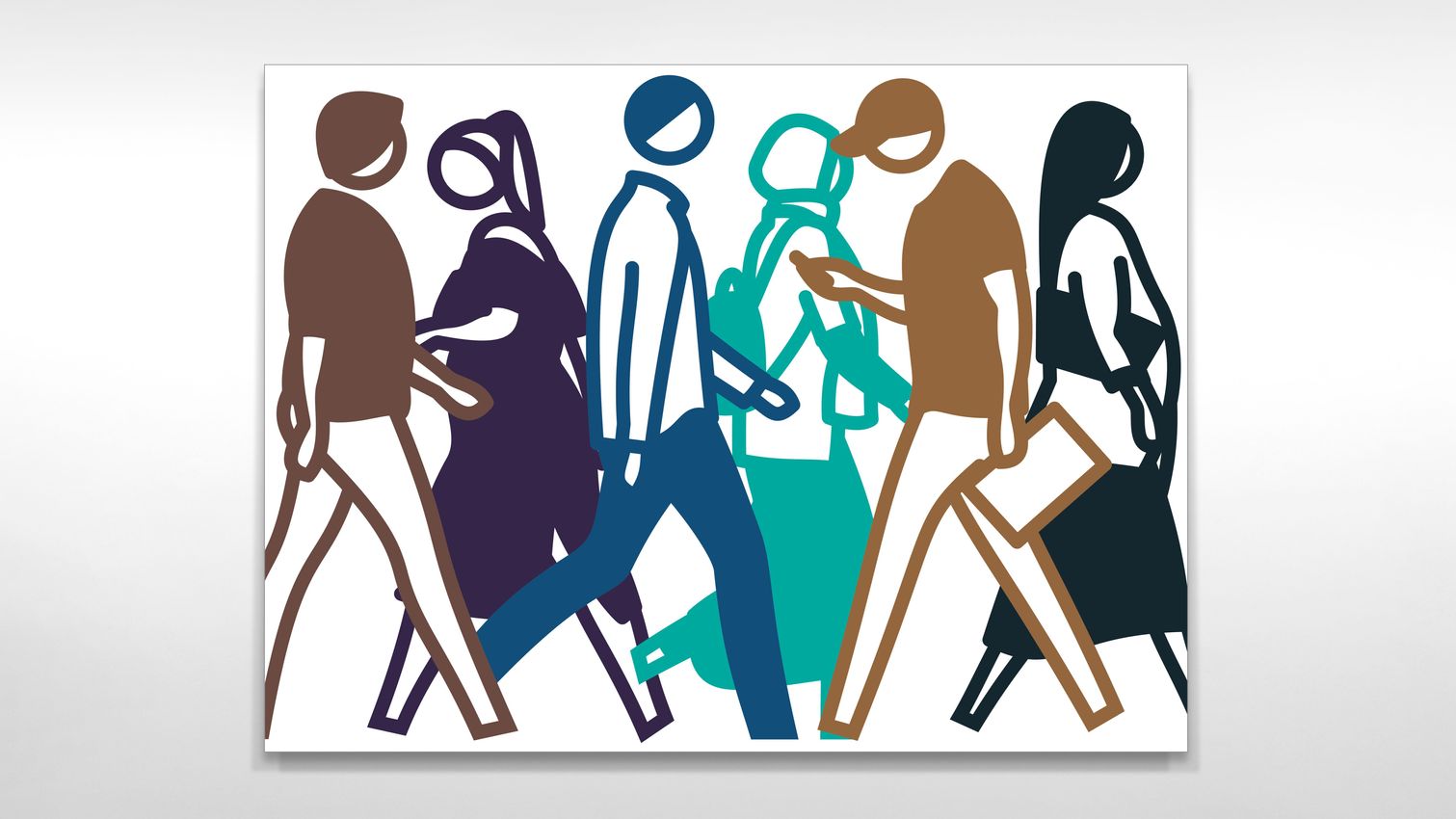
JULIAN OPIE
b. 1958, United KingdomJulian Opie’s style is among the most recognisable in British art—a pared-back visual language that blends portraiture and graphic design, thick outlines and flat panels of colour, notably in his paintings and sculptures of moving figures. Opie works across many media, including vinyl, canvas and aluminium.
Julian Opie: Early Years
Julian Opie was born in London in 1958 and grew up in Oxford, where he remembers “wandering the amazing and famous local art museums” and imagining himself in the spaces portrayed in the pictures on the walls of his parents’ home. He graduated from Goldsmiths in London, where his tutor was the conceptual artist and painter Michael Craig-Martin, in 1982 and was associated with the New British Sculpture movement.
His early practice focused on everyday objects but then he started to look for a way of representing human figures, drawing inspiration from Egyptian hieroglyphics and male and female lavatory signs. Opie overlayed images of people (often his friends) on to the loo signs and adjusted these familiar symbols into recognisable versions of particular individuals.
Julian Opie: Artworks
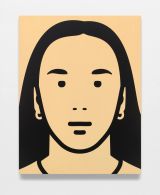
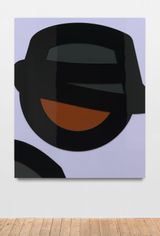
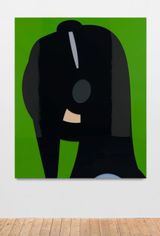
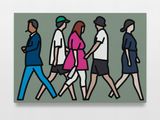
Opie’s minimalist visual language uses flat planes of colour and bold lines to create landscapes, portraits and sculptures, taking inspiration from universally recognisable urban signage. His human figures combine apparent simplicity of style with a realistic representation of movement and rhythm. As viewers come close to his large multi-panel murals, the works become more abstract. Opie’s sculptures and LED displays have been installed in cities and spaces throughout the world.
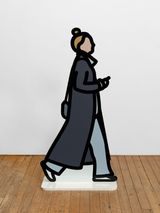
- Opie’s animated sculpture Shaida Walking was installed near Carnaby Street in London in 2015. He filmed a model walking on a treadmill and then drew the figure’s essential lines. These became an animated film, shown on an LED display.
- New York Couples (2019) was a series of eight screenprints based on photographs Opie took of people walking through New York City. The figures in the prints are not actually couples but people in close proximity, absorbed in their own lives, raising questions about what it means to be anonymous in a big city.
- The Busan Walkers series in 2023 came about when Opie studied people by the seaside in Busan, Korea. Using car body paint on aluminium, Opie created freestanding walking silhouettes mounted on concrete blocks. Red phone and Yellow phone show humans totally absorbed with their cellphones, asking viewers to consider how we exist simultaneously physically and in the online world.
Julian Opie: Select Exhibitions
Select Solo Exhibitions
- Julian Opie, Cristea Roberts Gallery, London (2026)
- Julian Opie, Lisson Gallery, New York City (2025)
- The Life of the Fields, St Barbe Museum, Lymington (2025)
- Venice Transformed, 19th Architectural Biennial Venice, (2025)
- Sculpture in the City, London (2024)
- Walking in Milan, Piazza del Quadrilatero, Milan (2024)
- _Collected Works/Works Collected, Newlands House Gallery, Petworth (2021)
- Julian Opie after Van Dyck, National Portrait Gallery, London (2017)
- Face to Face, Bob Van Orsouw, Zurich (2015)
- Collected Works, The Holburne Museum, Bath (2014)
- Winter, and other seasons: Landscapes by Julian Opie, British Council, London (2013)
- Watch Me Move: The Animation Show, Barbican Art Gallery, London (2011)
- Walking on O’Connell Street, Dublin City Gallery, Dublin (2009)
- Institute of Contemporary Art, Boston (2005)
- Formula 1 Racing, Milan Railway Station (2003)
- Barbara Krakow Gallery, Boston (1999)
- Hayward Gallery, London (1993)
Select Group Exhibitions
- Almost Spring, Whitestone Gallery, Seoul (2026)
- YBA & Beyond: British Art in the 90s from the Tate Collection, National Gallery Tokyo (and touring) (2026)
- British Art: Convergence, Calouste Gulbenkian Foundation, Lisbon (2025)
- Remastered, Cristea Roberts Gallery, London (2024)
- Jing’an International Sculpture Project, Shanghai (2020)
- What Does Art Do In Hospitals?, Museum For Art In Public Spaces, Koeg (2017) *Summer Exhibition, Royal Academy of Arts, London (2013)
- What is Beautiful, Deutches Hygiene-Museum Dresden (2010)
- The Secret Public: The Last Days of the British Underground 1978–1988, ICA. London (2007)
- Saved, 100 Years of the National Art Collections Fund, Hayward Gallery, London (2003)
- A Salon for the 21st Century, John Weber Gallery, New York City (2000)
- Then and Now, Lisson Gallery, London (1998)
- It’s Only Rock and Roll: Rock and Roll Currents in Contemporary Art”, Contemporary Arts Centre, Cincinnati (and touring)
- Centenary Exhibition, Goldsmith Gallery, London (1991)
- British Sculpture 1960–1988, Museum van Hedendaagse Kunst, Antwerp (1989)
- documenta 8, Kassel (1987)
- Three British Sculptors: Richard Deacon, Julian Opie and Richard Wentworth, The Israel Museum, Jerusalem (1985)
- The Sculpture Show, Hayward and Serpentine Galleries, London (1983)
Further Reading
- Julian Opie’s official website
- Julian Opie’s Instagram
- Interview from artplugged
- 2025 interview in Observer
Julian Opie FAQs
Did Julian Opie design a Blur album cover?
Yes, Julian Opie designed the cover for Blur: The Best Of (2000). Alex James and Graham Coxon from the band were art students at Goldsmith’s College in London. Opie created four “digital drawings of the band members by sketching on to photographs and creating block colour images. Three sizes of the prints were made—the “small” set now belongs to the band and the “medium” are on display at the National Portrait Gallery in London.
Did Julian Opie work with Bryan Adams and U2?
Yes, Opie has worked with U2 and Bryan Adams. In 2005 he made a huge LED display of a walking figure that formed the backdrop to U2’s Vertigo world tour, while during the early 2000s he painted several images of Canadian rocker Adams, which he later turned into a large illuminated sculpture.
Has Julian Opie made sculptures of cars?
Yes, in 1996 he made plywood-and-gloss-paint life-sized sculptures of a white Ford Cortina, a red VW Polo, a blue Subaru, a red Peugeot 205 and a white Volvo 440. The latter, You are driving a Volvo, is part of the Tate’s collection.
Does Julian Opie collect art?
Yes, he collects a variety of pieces from Japanese woodblocks to Indonesian beading. In 2021, Collected Works/Works Collected exhibited items from his collection alongside his own artwork at Newlands House.
Ocula


View Julian Opie's Artworks




























Explore and Follow Artists Shaping Contemporary Art
A respected voice in contemporary art discourse.
Focusing on ambitious storytelling and insightful art-world commentary. Ocula Magazine publishes in-depth interviews, critical essays and timely analysis on the artists, exhibitions and ideas driving the global art world.
Learn more about Ocula Magazine
Showcasing the best of the art world.
Ocula partners with galleries from around the world to highlight their artists, artworks and exhibitions. Gallery membership is by application and invitation, with each member vetted by an independent panel.
Learn more about Ocula Membership
Specialises in the sale of major artworks.
Led by a team with deep ties to the world’s leading auction houses, galleries and collectors. Ocula’s advisory team offers bespoke services to high-net-worth clients from around the world who are looking to acquire the best of contemporary and modern art.
Learn more about our team and services