Lehmann Maupin is pleased to announce Souls, an exhibition featuring three video installations by Los Angeles-based artist Jennifer Steinkamp. A pioneer in the field of 3-D animation, Steinkamp works exclusively in digital media, using cutting-edge technology to render organic and abstract forms in motion that give deeper insight into the often unseen complexities of the natural environment. Her immersive installations are projected at a large scale in response to the architectural interiors in which they appear. Each work alters the viewer’s typical experience of an object within a gallery and invites a more comprehensive understanding of space and time.
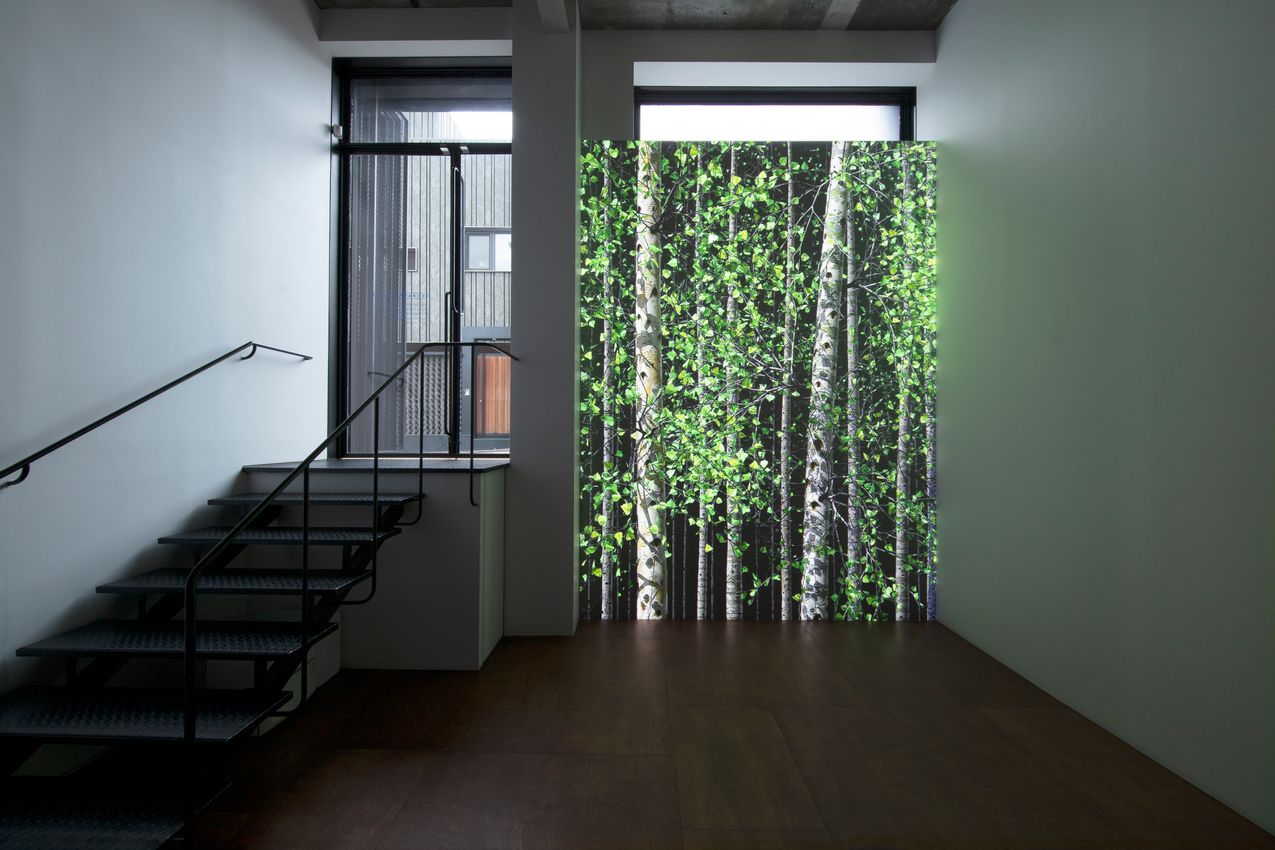
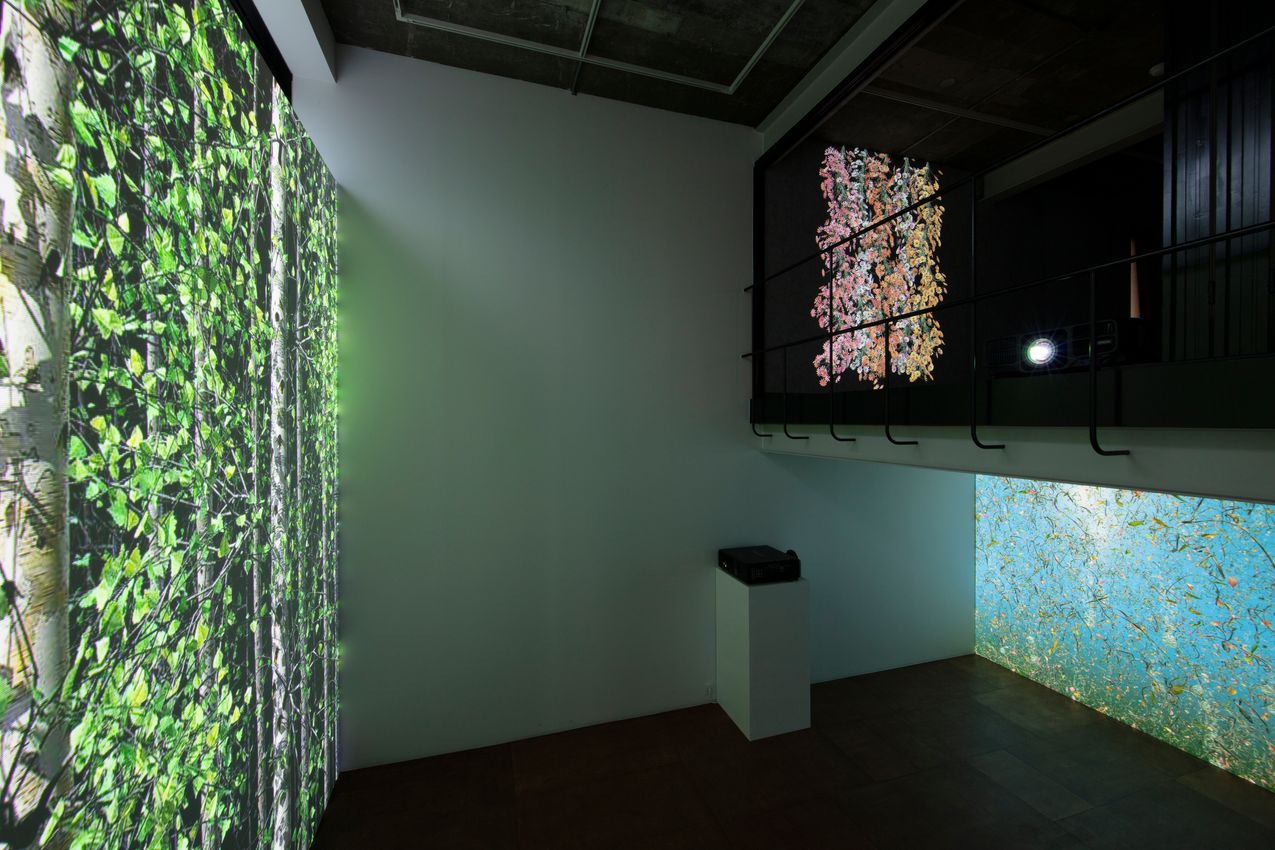
The centrepiece of the exhibition is Blind Eye, 4 (2019). One of a suite of animations inspired by the landscape that surrounds the Clark Art Institute in Williamstown, Massachusetts—the site of a major exhibition of Steinkamp’s work in 2018—life size projection depicts a monocular frontal view of a dense forest of birch trees. The title references the characteristic dark spots that punctuate the pale bark of these trees, which for Steinkamp resemble blank, staring eyes. As the trees sway—sometimes quite violently—the leaves fall like a gentle rain. However, as is the case in all Steinkamp’s works, this process unfolds without beginning or end. While the allusion to the changing seasons is clear, Blind Eye, 4 exists outside of a linear narrative—it is a moment removed from its temporal context.
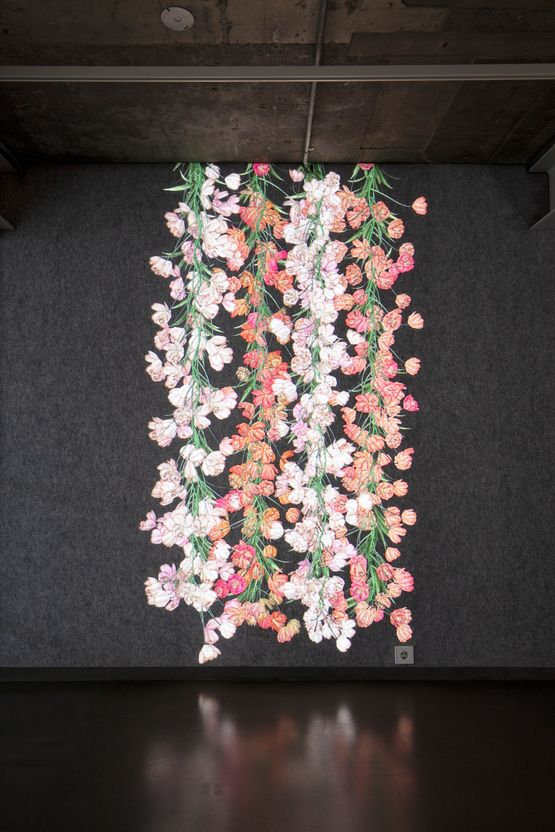
Also featured in this exhibition is Primordial (2020), a new animated installation set underwater that depicts symbiosis and the early beginnings of life on earth. In Primordial, Steinkamp imagines a lively underwater ecosystem where organisms and plant life drift down from above as oxygen bubbles upward. Bursts of light flash in the background, further animating the life forms that move and collide in a poetic dance that celebrates life and regeneration through the natural environment. The third work, Daisy Chain Twist (2004), presents a hanging garland of woven flowers swaying lazily in an unfelt breeze. The curtain of daisies appear to wriggle and writhe under their own power, carefully choreographed to mesmerise the viewer.
Souls offers a sanctuary that invites a close, even microscopic look at the natural environment and exemplifies the breadth and ambition of Steinkamp’s practice. These works highlight the important historical position she holds as a leader in digital animation and as one of the first to experiment with constructing imagery—including colour, texture, and movement—by wholly digital means. By simulating natural movement in cycles that are at once familiar-seeming yet entirely unique, Steinkamp conjures the uncanny impression of artificial life that is both rooted in past modes of representation while looking, with optimism, towards the future.
Jennifer Steinkamp (b. 1958, Denver, CO; lives and works in Los Angeles) uses 3-D computer animation and new media to create video installations that activate architectural space and alter phenomenological perception. She designs and digitally simulates movement of organic and abstract forms such as trees, flowers, and floating fabrics. Her works are displayed as site-specific projections that amplify the architectural setting by blurring the boundary between real and illusionistic space. These animated environments, while visually alluring, often carry subtle ominous references such as Daisy Bell, which features an array of beautiful yet poisonous flowers. Time plays a significant role in Steinkamp’s work, often depicting cyclical occurrences such as changing seasons and life cycles. These cycles do not typically have a beginning, middle, or end, but rather are working with non-narrative concepts of change. In this sense, her work is more aligned with artists who prioritised sensorial experience, like James Turrell, Mary Corse, and others of the Light and Space movement of the 1960s, than with film or other such time/media-based art.


Rachel Lehmann and David Maupin founded Lehmann Maupin in 1996. The gallery represents a diverse range of American artists, as well as artists and estates from across Europe, Asia, Africa, South America, and the Middle East. It has been instrumental in introducing numerous artists from around the world in their first New York exhibitions.

A respected voice in contemporary art discourse.
Focusing on ambitious storytelling and insightful art-world commentary. Ocula Magazine publishes in-depth interviews, critical essays and timely analysis on the artists, exhibitions and ideas driving the global art world.
Learn more about Ocula Magazine
Showcasing the best of the art world.
Ocula partners with galleries from around the world to highlight their artists, artworks and exhibitions. Gallery membership is by application and invitation, with each member vetted by an independent panel.
Learn more about Ocula Membership

Specialises in the sale of major artworks.
Led by a team with deep ties to the world’s leading auction houses, galleries and collectors. Ocula’s advisory team offers bespoke services to high-net-worth clients from around the world who are looking to acquire the best of contemporary and modern art.
Learn more about our team and services