Press Release

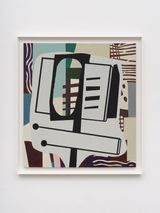
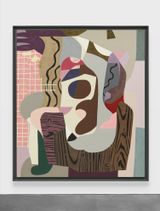
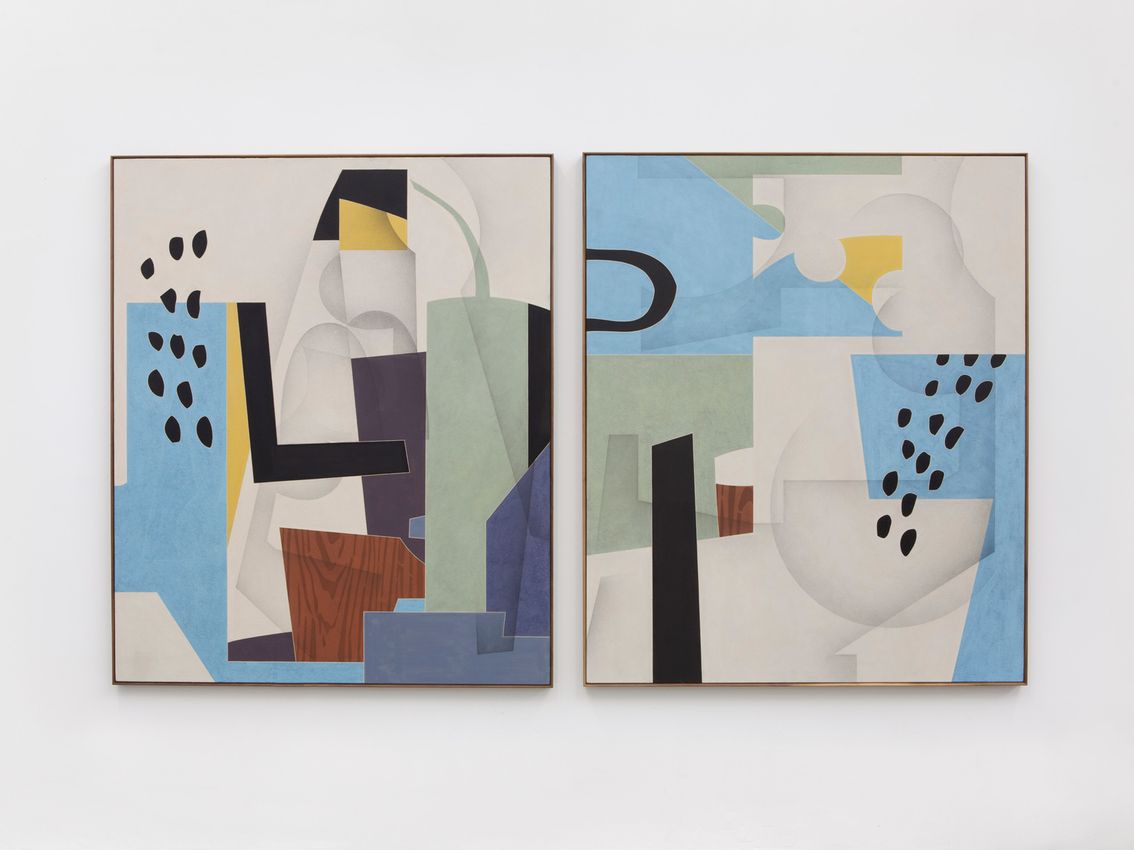
In this new series of works, Rodney Graham continues to play as a modernist painter. Drawing on the vocabulary of 20th century art, he splices together different styles, from Braque and Picasso, to Rodchenko and Fontana.

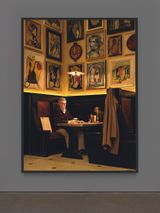
The works on view evolved out of the paintings created by Graham for his lightbox, Vacuuming the Gallery, 1949 (2018). Each of Graham’s lightboxes involve a meticulously curated stage-set, with every prop, costume or backdrop carefully designed and produced. This four-panelled work, exhibited at Lisson Gallery during Frieze London 2018, depicts a pipe-smoking mid-century art dealer vacuuming his gallery, perhaps before an opening. Surrounding the dealer in his faux-gallery are a series of paintings that make up his new exhibition. These works were created by Graham to represent the abstract paintings that would have been radical, and represented by such an art dealer at the time, post-World War II. Graham even commissioned individual frames appropriate for the era. The language of these paintings was inspired by a single drawing from 1940 by Rodchenko, painted on canvas with gesso and sand, referencing this use by modernist artists from Picasso to Dubuffet, but layering the paint to create new textures.

Previous and recent painting series by Graham are also referenced throughout, including Possible Abstractions, based on a 1950s cartoon from a men’s magazine lampooning modern art; the Psychomania Variations, variants on a prop modernist painting in one of the sets of a 1970s British biker movie; the Inverted Drip Paintings that evolved from The Gifted Amateur lightbox, picturing an amateur painter inspired by a Morris Louis exhibition in 1962; and a series of recent polka dot relief paintings. Sampling aspects of these paintings, Graham has created a new style, with various new modernist compositions.

Watch a video of Graham in the studio discussing this body of work here.

Read More
About the Artist

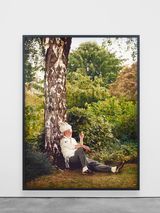
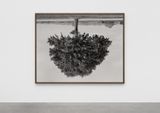
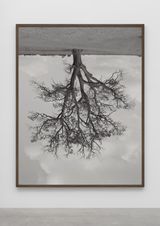
Rodney Graham pulls at the threads of cultural and intellectual history through photography, film, music, performance and painting. He presents cyclical narratives that pop with puns and references to literature and philosophy, from Lewis Carroll to Sigmund Freud to Kurt Cobain, with a sense of humour that betrays Graham’s footing in the post-punk scene of late 1970s Vancouver. The nine-minute loop Vexation Island, 1997, presents the artist as a 17th-century sailor, lying unconscious under a coconut tree with a bruise on his head; after eight and a half minutes he gets up and shakes the tree inducing a coconut to fall and knock him out, and for the sequence to start again. Graham returns as a cowboy in How I Became a Ramblin’ Man, 1999, and as both city dandy and country bumpkin in City Self/Country Self, 2001 – fictional characters all engaged in an endless loop of activity. Such dream states and the ramblings of the unconscious are rooted in Graham’s earlier upside-down photographs of oak trees. Inversion, Graham explains, has a logic: ‘You don’t have to delve very deeply into modern physics to realise that the scientific view holds that the world is really not as it appears. Before the brain rights it, the eye sees a tree upside down in the same way it appears on the glass back of the large format field camera I use,’ 2005.

View Artist Profile

Also Exhibiting at Lisson Gallery

About the Gallery

Established in 1967 in London, Lisson Gallery is one of the most well-known galleries operating globally. Boasting an influential and continuing legacy, including playing a pivotal role in the careers of many pioneers of historically important art movements, the gallery works with some of the most significant contemporary artists today.

View Gallery Profile
Address
67 Lisson Street
London
United Kingdom
Opening Hours
Tuesday – Saturday
11am – 6pm
(1)
London 67 Lisson Street
Lisson Gallery
67 Lisson Street, London, United Kingdom
+ 44 207 724 2739
http://www.lissongallery.com

Opening hours
Tuesday – Saturday
11am – 6pm
The art world in focus