Press Release

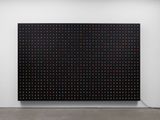
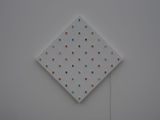
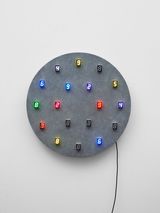
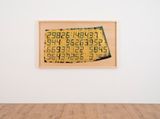
Lisson Gallery presents the first U.S. solo exhibition in over five years by Tatsuo Miyajima, one of Japan’s most celebrated sculptors and installation artists. Known for his innovative use of LED technology to explore Buddhist philosophy, Miyajima’s work investigates themes of time, existence, and the cycles of life and death. The exhibition introduces three new series – Many Lives, Changing Life with Changing Circumstance, MUL.APIN, and Hundred Changes in Life – which build on explorations of ‘Seimei’, a Japanese concept encompassing life, being and consciousness.

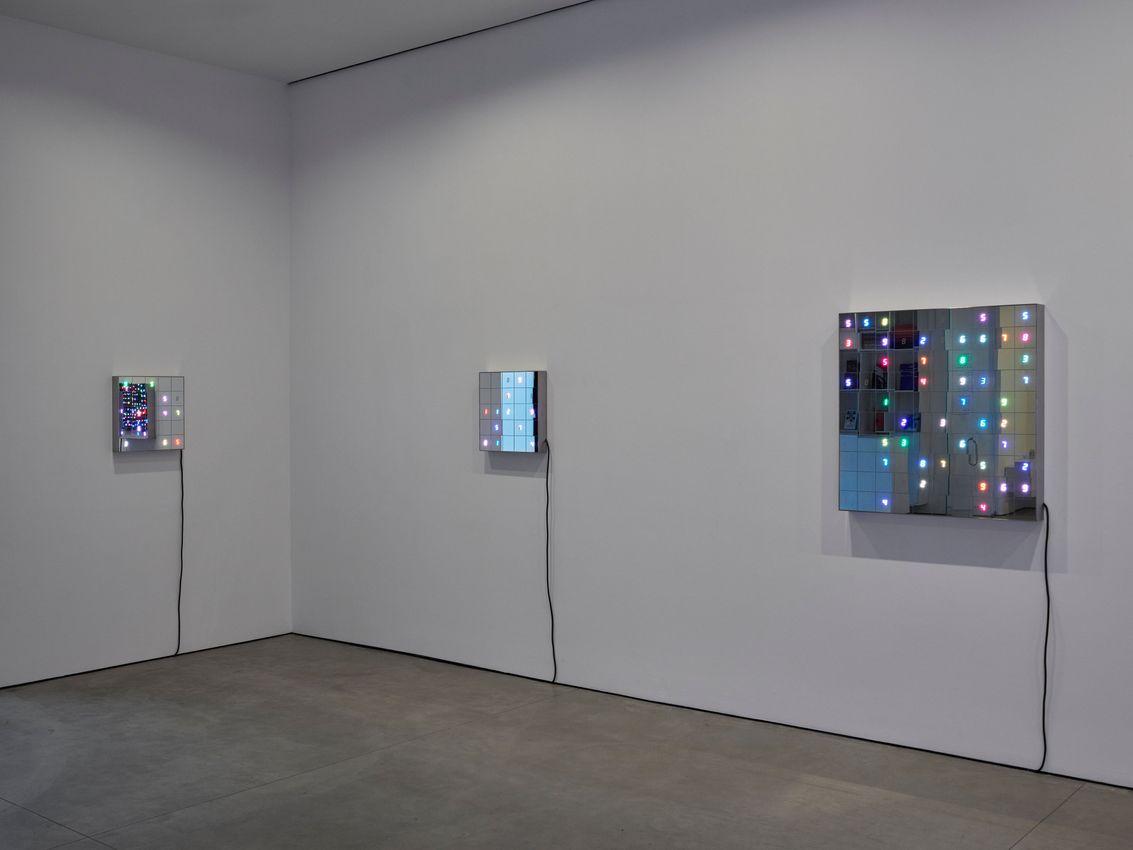
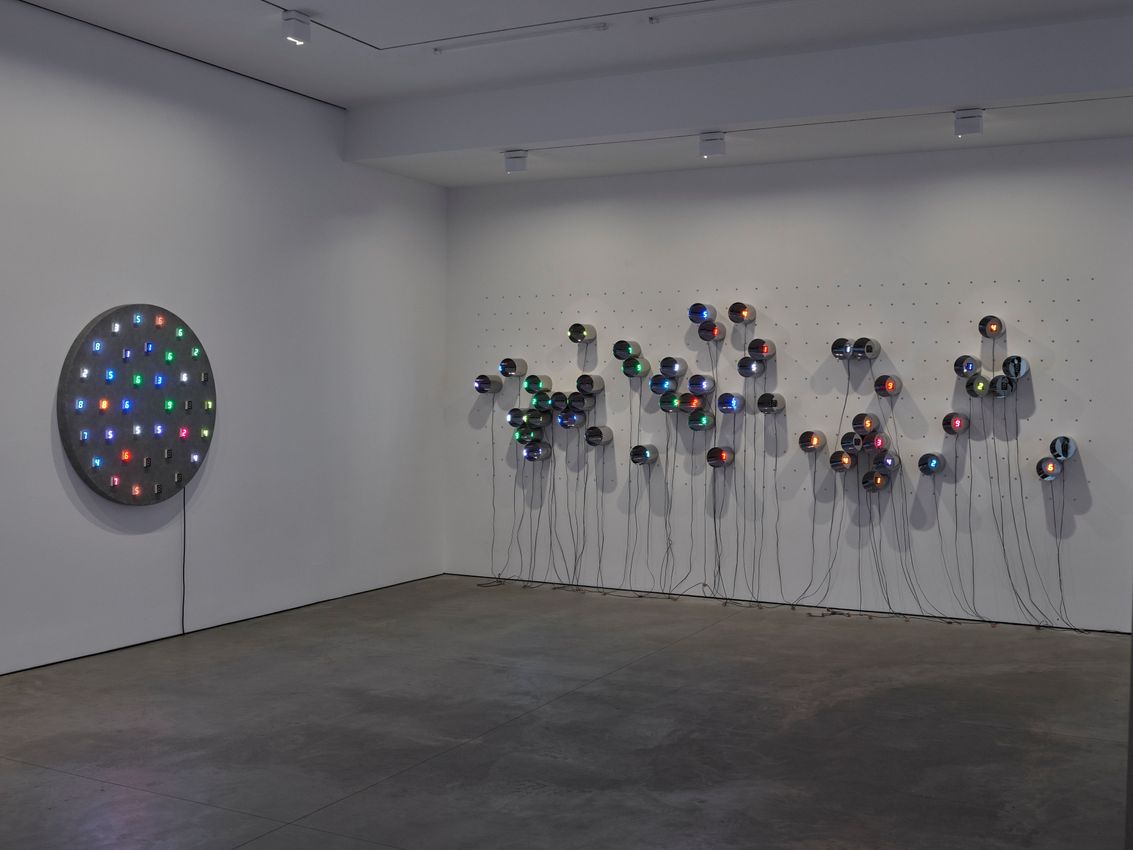
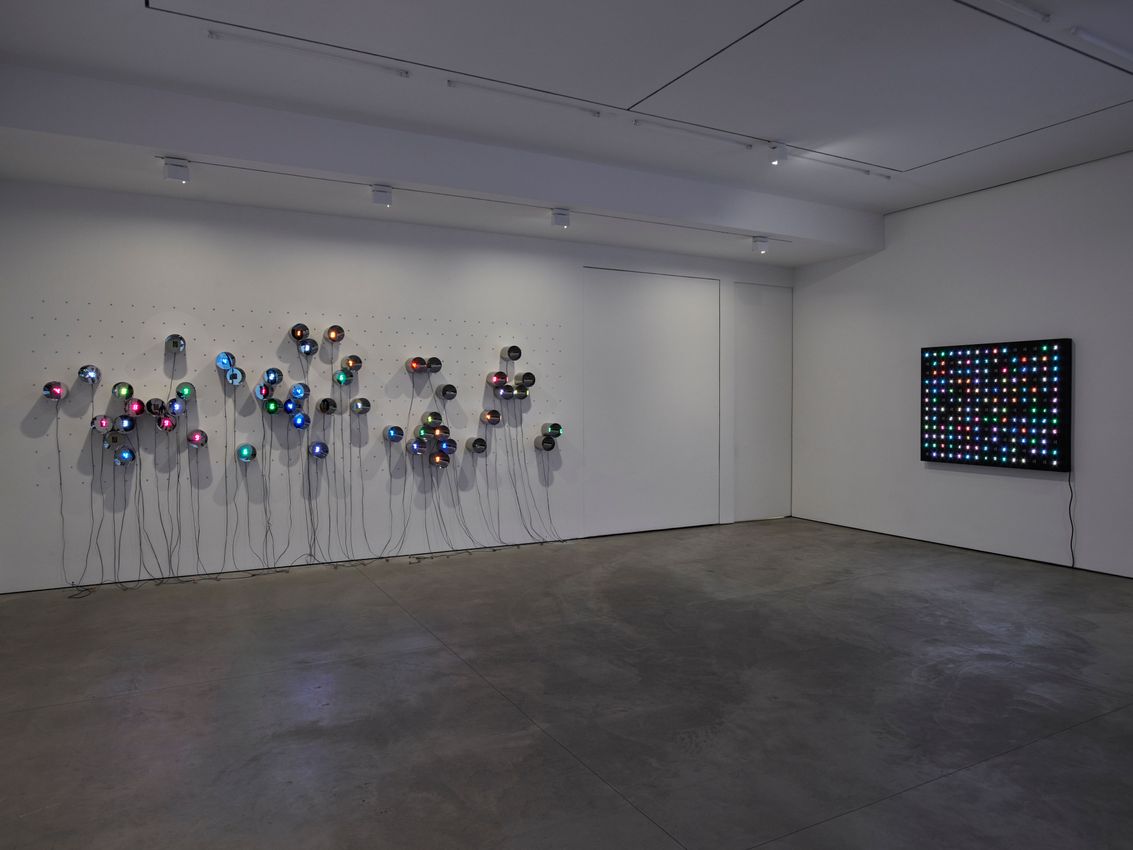
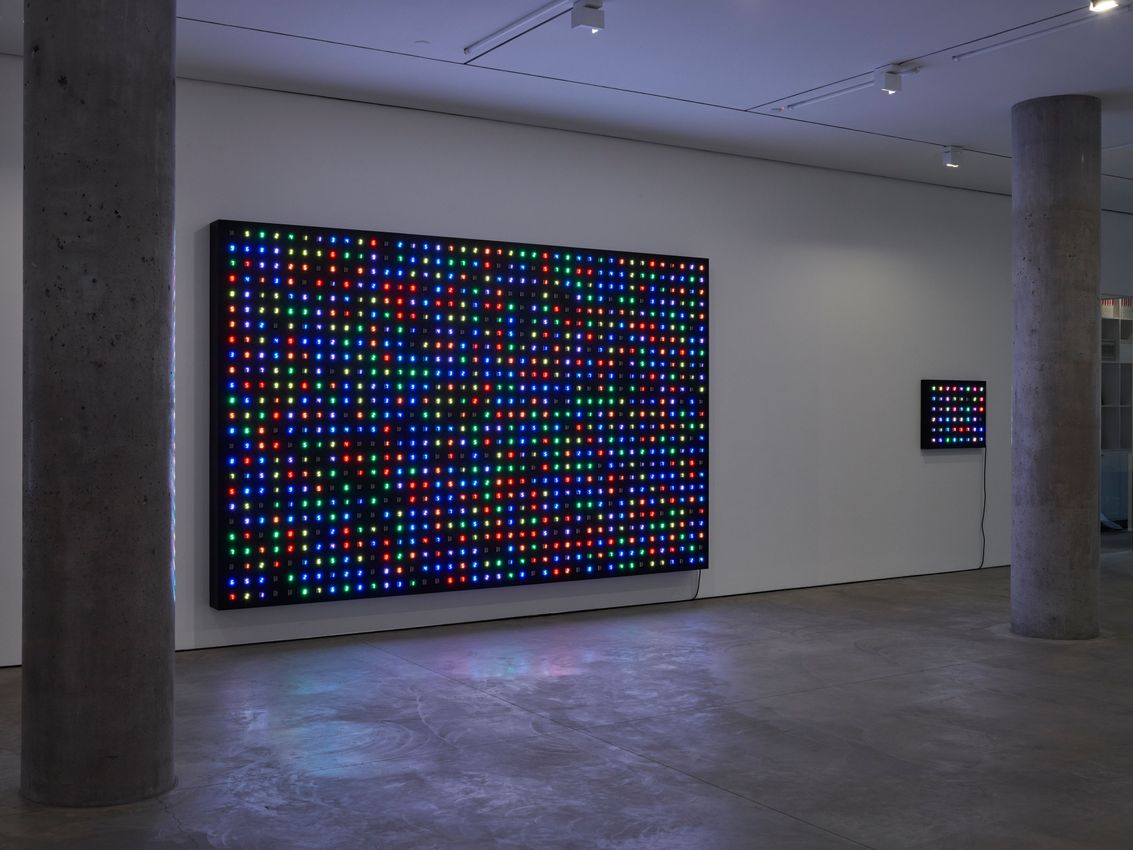
These new works continue Miyajima’s signature use of LED countdowns that omit 0, positioning death not as an endpoint but as a moment of transformation. In Many Lives, Miyajima employs full-colour LEDs that count down from 9 to 1 before resetting to 9 in evolving colours and speeds. Each LED represents an individual ‘Seimei’ with its own rhythm and identity, symbolising the cycle of life and death as an endless process of rebirth. Together, these elements form a larger interconnected world, evoking the Buddhist concept of samsara and reinforcing the idea that every life, visible or invisible, has value.

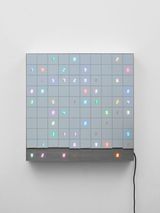
Miyajima understands his Changing Life with Changing Circumstance works as representations of quantum theory. This theory suggests that on the minute sub-atomic scale of the quantum, computational predications cannot hold, and instead, chance and probability dominate. This embrace of unpredictability, change and flux is integral to Miyajima’s practice, and represented in the Changing Life with Changing Circumstance works by the colours of the LEDs which are in constant shift, and the timings of the LEDs, which differ from unit to unit, ungoverned by the whole. As in quantum physics, it is impossible to predict when and where the different colours will occur and how they will appear in relation to the whole.

MUL.APIN, named after ancient Babylonian clay tablets used for astronomy, links Buddhist philosophy with ancient cosmological systems. This series reflects the cycles of life and death through the sexagesimal (base-60) system of Babylonian timekeeping, using LEDs arranged to evoke celestial movements. As the LEDs reset from 0, their random colour changes symbolise the dispersion and renewal of life across the cosmos. Through this synthesis of ancient and modern, earthly and universal, the MUL.APIN works situate human existence within the vast, interconnected framework of time and space.

In the Hundred Changes in Life series, Miyajima draws on the ‘Ten Worlds of Buddhism’ states of existence, ranging from Hell to Buddhahood, to represent life’s constant transformations. Encased within mirrored cylinders, the LED numbers continuously shift in color, speed and sequence, creating an interplay between the viewer’s reflection and the artwork. This interaction embodies En, the Buddhist concept of causality and interconnectedness, illustrating how individual states of existence influence and are influenced by external forces. The work’s dynamic configurations suggest the endless potential for evolution and renewal, both within the self and the larger world.

While these new series reflect a bold evolution in Miyajima’s practice, they are rooted in his foundational principles: Keep Changing, Connect with Everything, and Continue Forever. By merging cutting-edge technology with spiritual inquiry, Miyajima’s work invites contemplation of life’s impermanence and interconnectedness, offering a vision of continuity that transcends the boundaries of time, space and individuality.

Read More

Installation Views

About the Artist

Tatsuo Miyajima is one of Japan’s foremost sculptors and installation artists. Employing contemporary materials such as electric circuits, video, and computers, Miyajima’s supremely technological works have centred on his use of digital light-emitting diode (LED) counters, or ‘gadgets’ as he calls them, since the late 1980s. These numbers, flashing in continual and repetitious – though not necessarily sequential – cycles from 1 to 9, represent the journey from life to death, the finality of which is symbolized by ‘0’ or the zero point, which consequently never appears in his work. This theory derives partially from humanist ideas, the teachings of Buddhism, as well as from his core artistic concepts: ‘Keep Changing’, ‘Connect with All’, and ‘Goes on Forever’. Miyajima’s LED numerals have been presented in grids, towers, complex integrated groupings or circuits and as simple digital counters, but are all aligned with his interests in continuity, connection and eternity, as well as with the flow and span of time and space. ‘Time connects everything’, says Miyajima. ‘I want people to think about the universe and the human spirit.’

View Artist Profile

Also Exhibiting at Lisson Gallery

Address
508 West 24th Street
New York
United States
Opening Hours
Tuesday – Saturday
10am – 6pm
(1)
New York 508 West 24th Street
Lisson Gallery
508 West 24th Street, New York, United States

Opening hours
Tuesday – Saturday
10am – 6pm
The art world in focus