



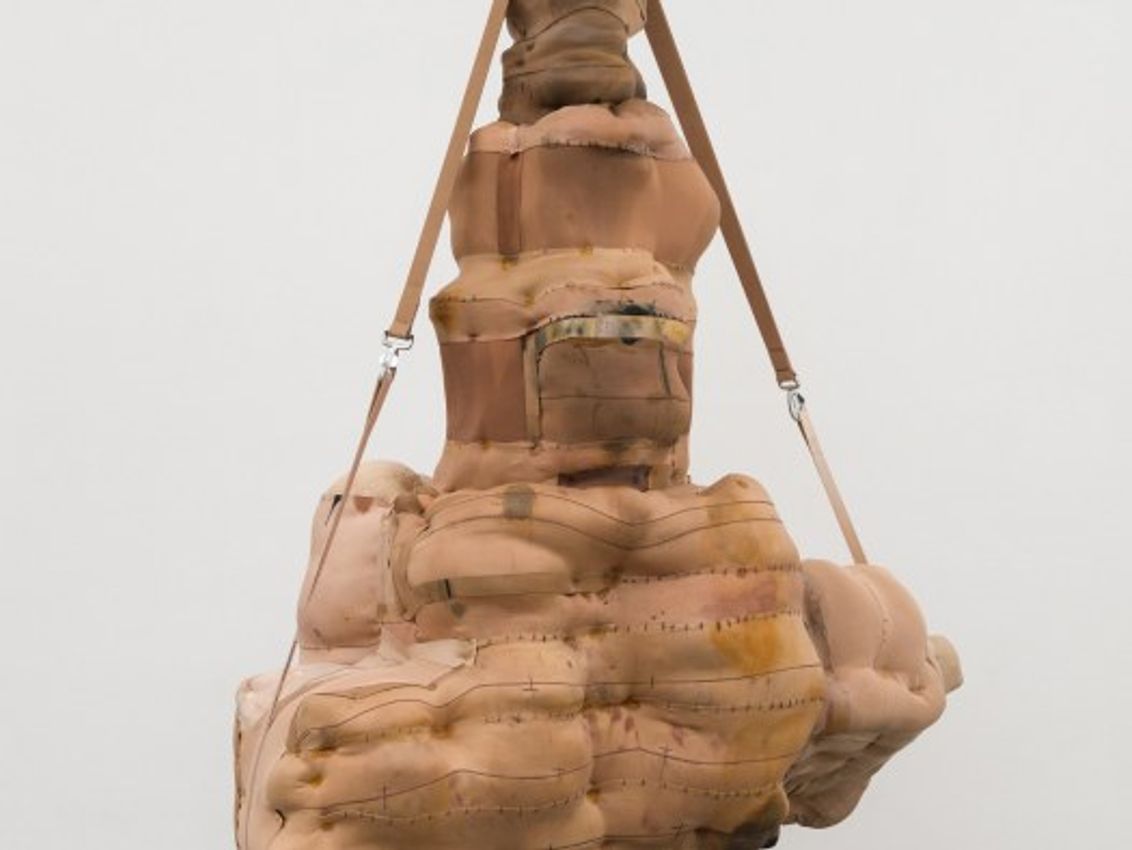
Articles of the Estranged is a compendium of counterpoints, a proposal of movement fixed and transposed onto cross-stitched aberrations. The exhibition’s distinctive elements of suspension and tension, along with intermingling infrastructure and interiors, represent a point of departure. These sculptures function as facsimiles from a purgatorial pendulum, a psychological embodiment of a constricted condition. In this questioning of the concordat¹, these personified parturitions ask where the individual fits into the equation of church and state.
Incrementally, the seepage of architecture has become more pronounced in Ayres’ work. It is ever-present in the appropriation of the 14th-century chapel of St. Nicholas, built on a bridge binding papal territories and lands of the French monarchy. Her sutured saint’s scale segues beyond the parameters of a body or bust and, in doing so, presents a paradoxical purview, situating the sculpture as a container of inquiry. One can fathom that all the other articles in this exhibition were once inhabitants of the behemoth—this issues a dual proposition concerning the motifs of constraint and expulsion as well as salvation and condemnation. The articles dispersed in the gallery become a catalog of a catastrophe, revealing a comparison between Ayres’ saint and Walter Benjamin’s analysis of Angelus Novus.
Aborted from their host, propagating appendages take on unworldly characteristics while maintaining an uncannily familiar objecthood. Defying gravity’s convictions, crucifix-like cadavers seem to be propelling themselves away from the wall. Burls on the busts and tops of totems insinuate a sort of forced replication. Segmented stains sit as signifiers of societal segregation. When intimately examined, these formidable figurations reveal the fragility of their fabrication. Flaws are filled with gunk, cleansed with wine, stitched shut, and painted over, then pushed forward.
This precession of production is eerily emblematic of processing seen within the prison system. Ayres’ interest in the conditioning of the corporally confined is a plea for introspection. Can a sinner be saved? Can the saved be sinners? Is there sanctimony for those who sentence others to social death?³ Sewn shut, these subjugated semblances are hooked in suspended judgment, tethered taut with institutional hardware, and stand silent as markers of our Absurdist reality.
—Tyler Christopher Brown
Press release courtesy Matthew Brown
Founded in 2019, the gallery presents ambitious projects by emerging and mid-career artists. The gallery opened its first space in 2019 with a solo exhibition of Los Angeles based artist Kenturah Davis, and opened its second Los Angeles location in 2021 with the debut solo exhibition of New York based artist Sasha Gordon.

A respected voice in contemporary art discourse.
Focusing on ambitious storytelling and insightful art-world commentary. Ocula Magazine publishes in-depth interviews, critical essays and timely analysis on the artists, exhibitions and ideas driving the global art world.
Learn more about Ocula Magazine
Showcasing the best of the art world.
Ocula partners with galleries from around the world to highlight their artists, artworks and exhibitions. Gallery membership is by application and invitation, with each member vetted by an independent panel.
Learn more about Ocula Membership

Specialises in the sale of major artworks.
Led by a team with deep ties to the world’s leading auction houses, galleries and collectors. Ocula’s advisory team offers bespoke services to high-net-worth clients from around the world who are looking to acquire the best of contemporary and modern art.
Learn more about our team and services