Vojtěch Kovařík’s worlds. On Eyes and Eyes of the Storm
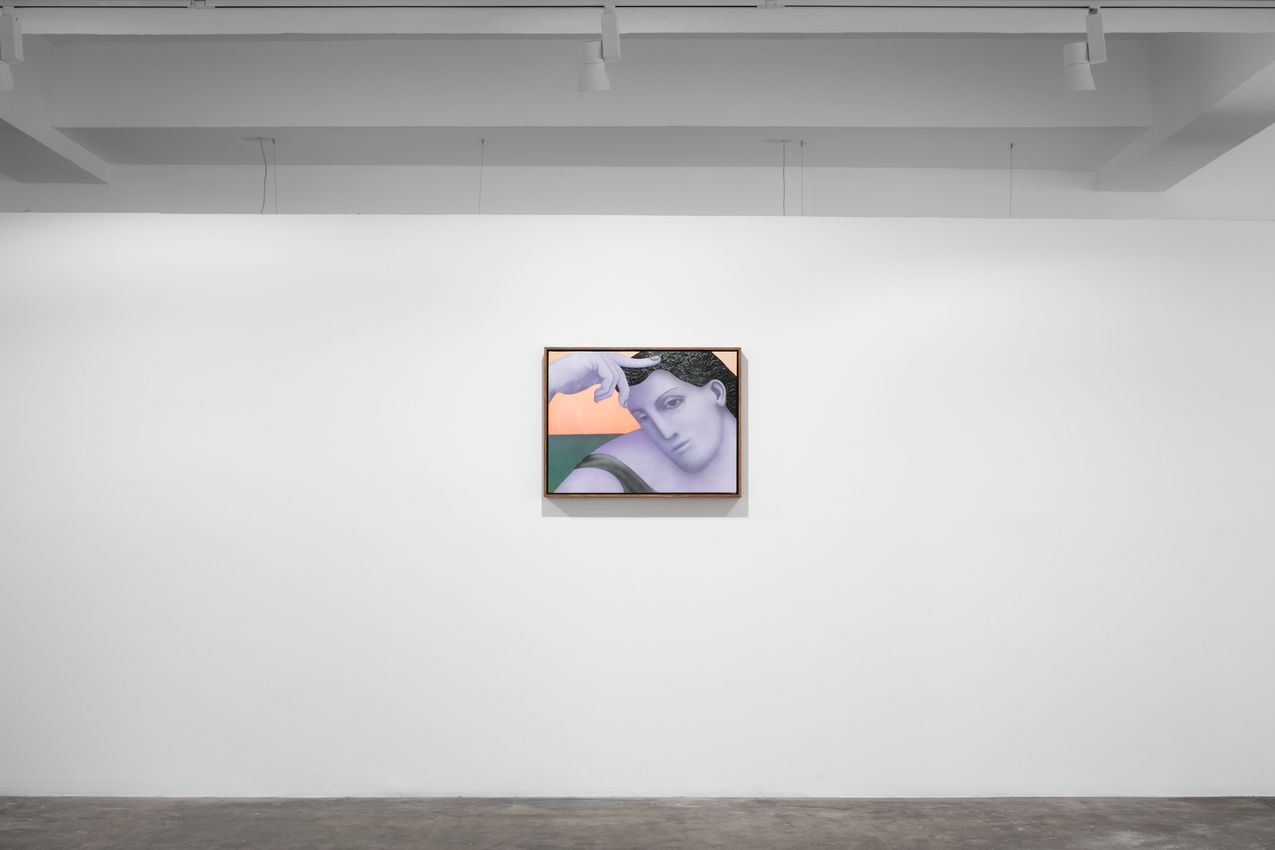
A single eye sparks from a black visage. The climate of that half-sight profile changes the acrylic brushes from wet to dry and dry to moist, according to one’s mental weather. The surface of Lost in Time (2024) is cloudily embossed. The prevailing conditions of a lonesome star in a sandy sky affect how that gaze is aligned to a destiny. And its cosmos. This small-scale portrait can foresee the calm of a storm or a spasm but can hedge its outer spaces. And it expands the viewer’s sight to the mind’s eyes.
We have already forecasted too much through visions and visuality but not much about how portrayed eyes may turn painting into forms of perturbations and temporalities. In front of the windy hairs of Lost in Time’s face, the viewer is subject to the brain and eye climatology. Paint itself appears to be the field for liquefaction of statuses. The representation of unity no longer mediates the humanity of a man but is now a mist carved into an image. And such a wet, white eye actuates melting, dissolving, and soaking surfaces that give illusions at times of tending toward a gaseousness, atomization, or, in its end, fogginess of the sand mixed with oil and acrylics. This watery syntax is at times related to how Vojtěch Kovařík densifies the canvas and how the gazes he places in his paintings become wider limits of our visibility: a repository of ancestral history and collective memory accumulated over time.
The eyes are certainly one of the essential elements, affirms the artist, and in the smaller formats of my work, it only confirms that they are dominant and decisive. In practice, I always start with the head and the gaze - it opens the curtain for me, then the story unfolds.
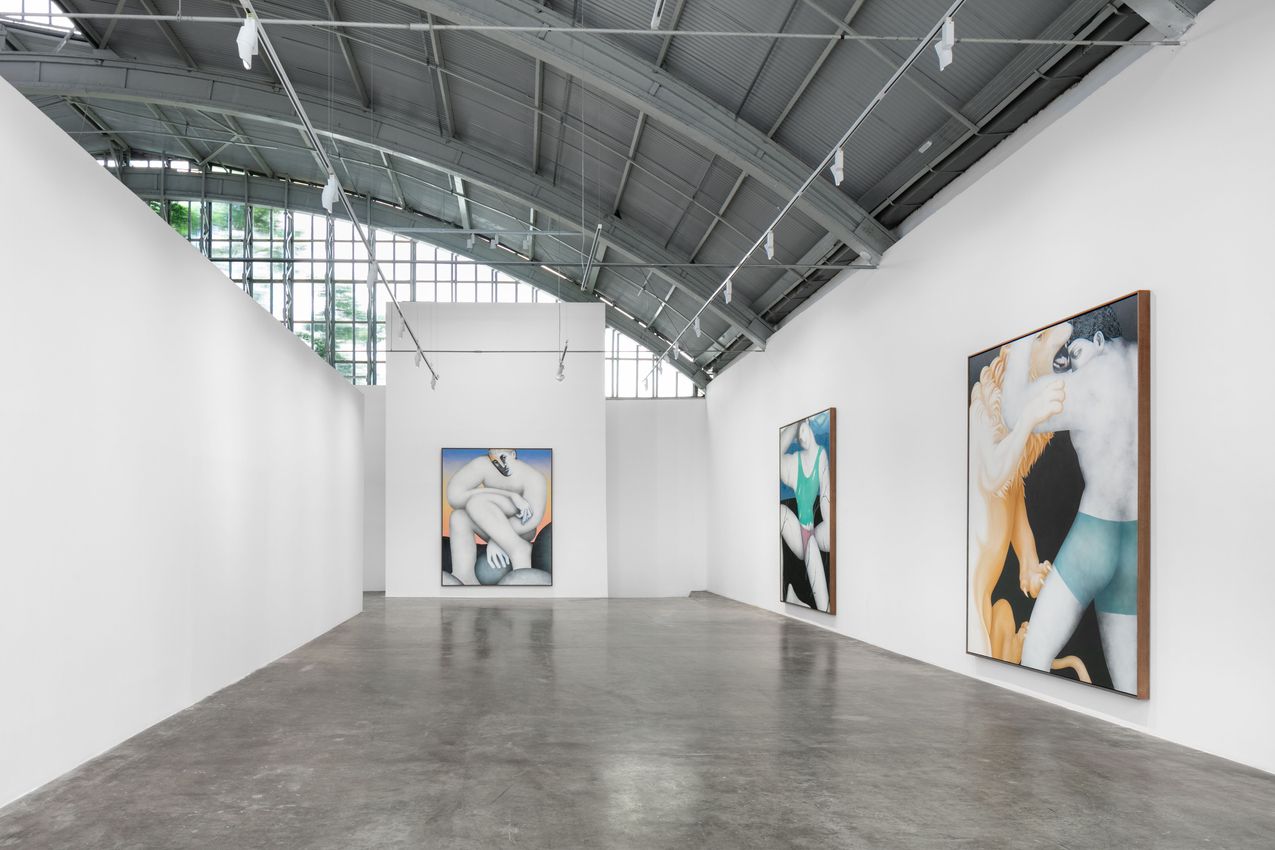
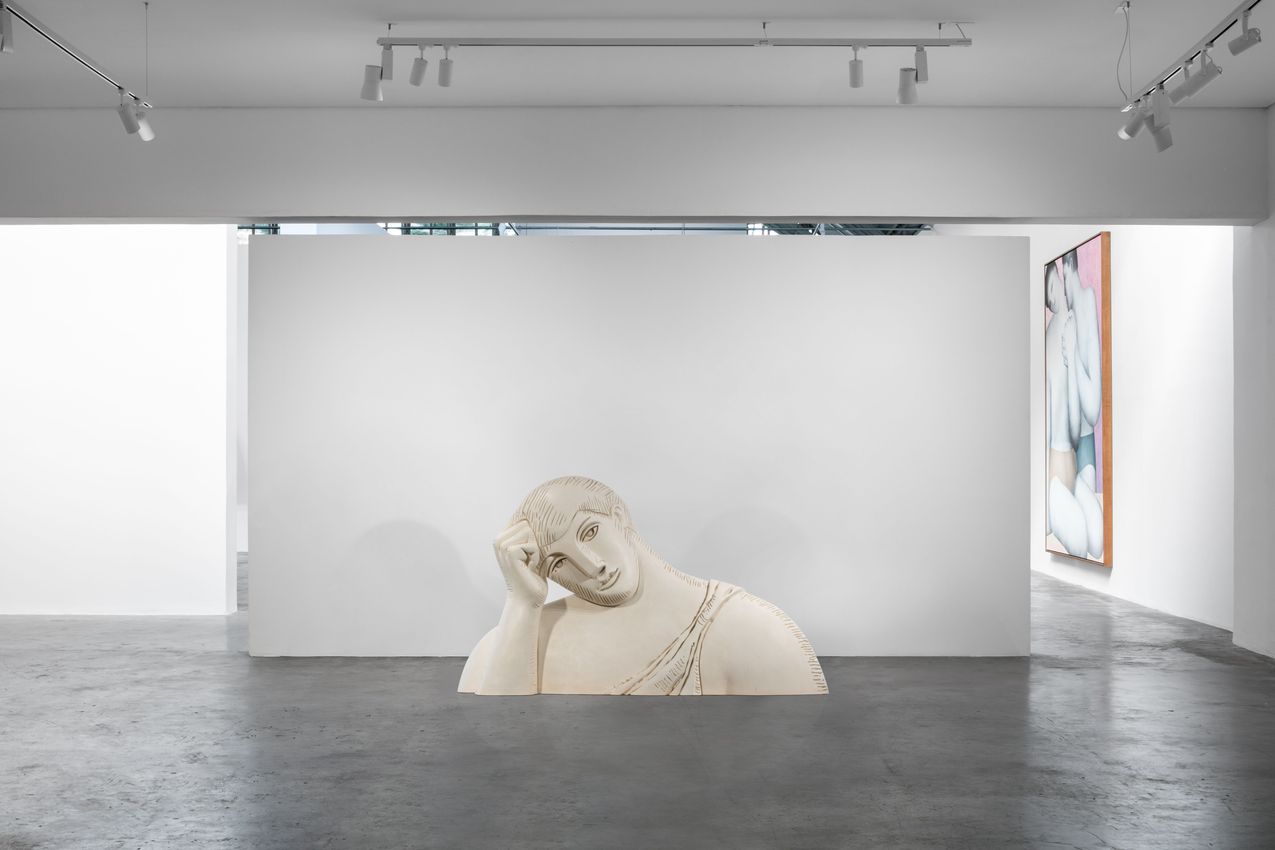
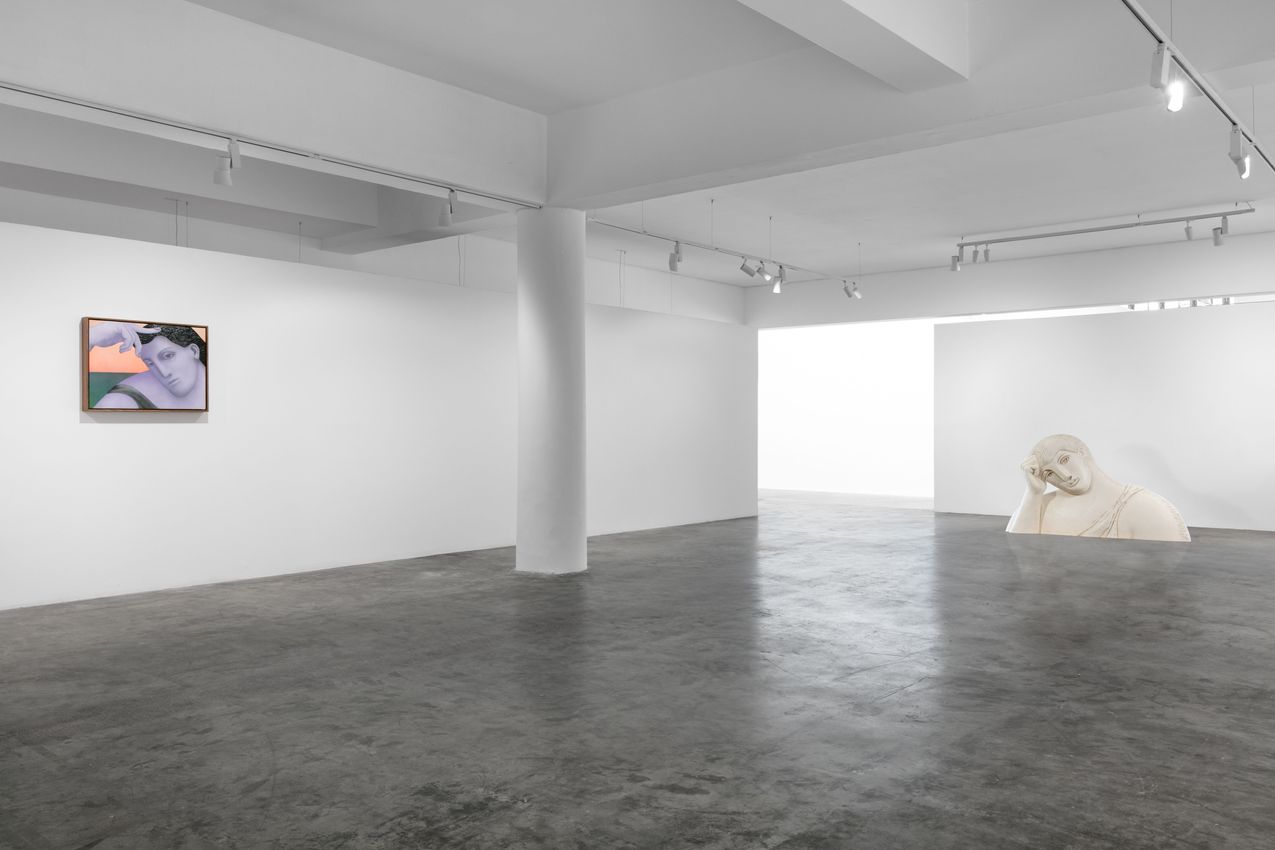
In the artist’s second Brazilian solo show, titled Inner World, the gaze, as an inner, indirect invitation from the viewer to the subjects and vice versa, is a form of enlightenment. It exists as a fragment of primal fragmentation and clarification. It is a three-dimensional perspective densified in space before any surface starts. Before any three-quarter profiles, even in wood-carved silhouettes (Judgement of Paris, Paris, 2024), perturb the ether. As the artist defined it, the monumental intimacy of the character breaks away from the whole while containing the lack of its containment. There are no mysteries, no tempests in these vestiges, no traces of an end or a beginning (Trapped [Narcissus and the self-love trap], 2024).
At the core of Kovařík’s practice is the symbolization of the retina into a gaze, projected there from an outside world – the tiny retinal image that the artist supposedly attempts to transcribe onto his canvas, as a blue, mythological haze (Thread of Time, 2024). Epic mirages, physiology, and neural optics have all complicated perspectival figures in which the original picture was seen to gather itself together and, along the geometrical lines of the perspective, to focus on a point behind the observer’s eye (Portrait of Ariadne, 2024). Kovařík has fed these sight waveforms into his model: an eyewitness principle. Kovařík’s eyes, which he constructs around this model, arise from the long series of interpolations between eye and brush, the rigidifying baffles of convention and method, and the distractions of conceptual, legendary weathers towards a radical reformulation of viewers’ thoughts on visuality and, consequently, our thoughts on painting. The line of thinking that passes from the subjects to the beholders remains in a conceptual enclosure, where vision is still theorized from the standpoint of a subject placed at and as the center of a world
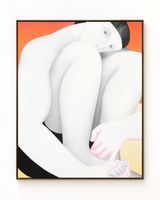
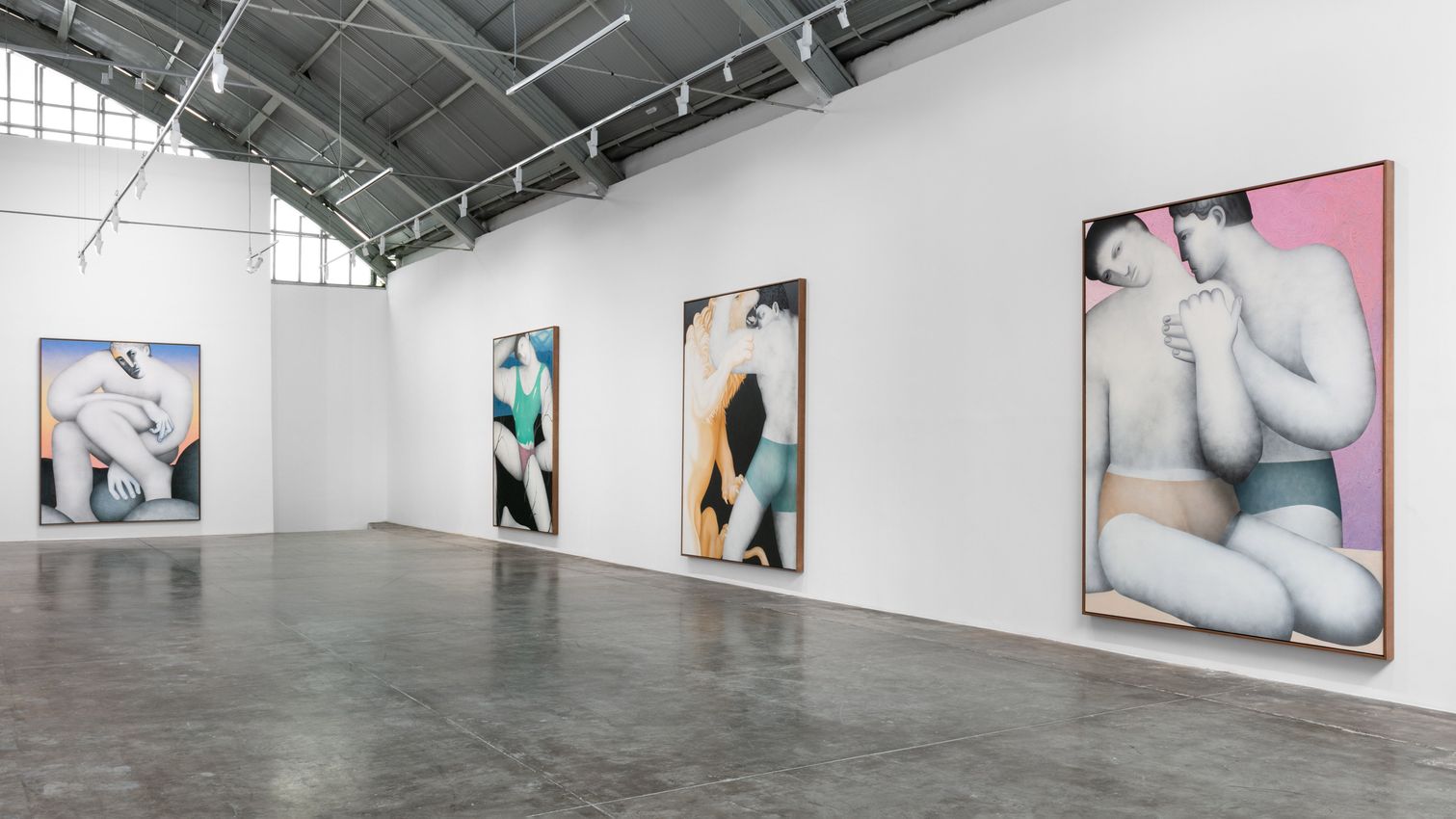
For Czech artist, Vojtěch Kovařík, iconography and mythology are fundamental to his work. His large-format, forceful and vividly colored compositions result in impactful paintings that evoke the strength of sculpture. His herculean figures are contorted, seemingly defeated by the frame of the canvas, flaunting their blue, green, and yellow flesh amongst vegetal backgrounds. Kovařík was first trained in ceramics and sculpture and started painting later as an autodidact. This self-taught formation led him to mix oil, acrylic, and spray paint suggesting relief in a plane surface.


Intellectually rigorous, politically active, and highly conceptual, the programme of contemporary art gallery Mendes Wood DM places an emphasis on critical conversation, working to embrace the individuality of each artist while also supporting the discovery of intersections between practices that might initially seem disparate.

A respected voice in contemporary art discourse.
Focusing on ambitious storytelling and insightful art-world commentary. Ocula Magazine publishes in-depth interviews, critical essays and timely analysis on the artists, exhibitions and ideas driving the global art world.
Learn more about Ocula Magazine
Showcasing the best of the art world.
Ocula partners with galleries from around the world to highlight their artists, artworks and exhibitions. Gallery membership is by application and invitation, with each member vetted by an independent panel.
Learn more about Ocula Membership

Specialises in the sale of major artworks.
Led by a team with deep ties to the world’s leading auction houses, galleries and collectors. Ocula’s advisory team offers bespoke services to high-net-worth clients from around the world who are looking to acquire the best of contemporary and modern art.
Learn more about our team and services