




ALIA AHMAD
b. 1996, Saudi ArabiaBlending Islamic art traditions with dreamlike figuration, Alia Ahmad creates contemporary artworks that explore cultural identity, spirituality, and the poetics of everyday life.
Early Years
Born in Jeddah in 1986, Alia Ahmad grew up in a family deeply engaged with both the visual and literary arts. Her early exposure to Persian miniatures, Islamic geometry, and contemporary Arab poetry laid the groundwork for her distinct visual lexicon. Ahmad pursued a BA in Fine Art at Dar Al-Hekma University in Jeddah, followed by an MFA from the School of the Art Institute of Chicago.
The artist currently lives and works between Jeddah and London, where she continues to develop a practice that draws on diasporic memory and mystical symbolism. Ahmad’s multicultural upbringing and exposure to diverse religious and artistic histories have shaped her singular visual language.
Artworks
Alia Ahmad’s art practice bridges the visual language of Islamic art with contemporary approaches to storytelling, symbolism, and feminism, resulting in richly detailed paintings and drawings that reflect on personal and collective memory, myth, and mysticism.
Spiritual Architectures
Ahmad’s earlier artworks are rooted in architectural motifs and sacred geometries. Works such as Whispering Domes (2012) and Gate of the Listening Heart (2014) reveal a preoccupation with the meditative possibilities of symmetry, repetition, and abstraction. These paintings reference mosque ornamentation and Persian manuscript painting while remaining unbound by historical accuracy. Ahmad uses gouache and pigment on paper to create luminous, layered surfaces that appear suspended in time—part devotion, part dream. Across these works, Ahmad integrates vegetal patterns, calligraphic flourishes, and decorative borders that mimic religious texts. However, she destabilises these traditional forms by fragmenting the architecture or inserting ghostly outlines of female figures. The result is a delicate tension between reverence and subversion, inviting viewers to consider the spiritual significance of space and memory.
Symbols and Storytelling
Beginning around 2016, Ahmad’s work shifted towards more overtly narrative compositions. In paintings such as Desert Oracle (2018) and The Sleepwalker’s Garden (2019), symbolic imagery—crescent moons, serpents, hands, birds, and desert flora—populate twilight landscapes inhabited by androgynous figures. These artworks are often described as visual parables, blending folklore, mysticism, and autobiography. Here, Ahmad’s use of colour deepens: rich indigos, ochres, and vermilions recall night skies and desert sand, while gold leaf is used sparingly to mark the divine or hidden. The female form becomes central—not objectified, but rather presented as prophet, witness, or scribe. These figures often lack facial features, lending them an archetypal quality while maintaining intimacy and mystery.
Ahmad’s storytelling also draws upon Arabic poetry, particularly the ghazal form, which informs her fragmented yet lyrical compositions. In some works, she embeds script or invented alphabets that resist legibility, heightening the aura of secrecy and enchantment.
Feminised Cosmologies
Ahmad’s most recent body of work, including the Moon Letters (2020–2022) and She Who Watches the Stars (2023–2024) series, expands her vocabulary into a distinctly cosmological terrain. Here, the artist imagines a universe structured by feminine knowledge systems, where celestial cycles, emotional states, and ancestral memory converge.
In Moon Letters, Ahmad creates intimate gouache and ink drawings on handmade paper. These works are characterised by intricate patterning, moon phases, floating text, and dreamlike landscapes. Repeating motifs—mirrors, veils, ladders, and planetary bodies—appear across the series, forming a kind of visual grammar through which the artist constructs her own mythopoetics.
In She Who Watches the Stars, a digital tapestry installation commissioned by the Jameel Arts Centre in 2024, Ahmad combines textile traditions with animated light and sound. The viewer is enveloped in a cosmic narrative of creation, exile, and return, told through a matrix of embroidered constellations. This work signals a move into expanded media while remaining faithful to Ahmad’s core concerns: the mystical, the maternal, and the migratory.
Exhibitions
Alia Ahmad has been the subject of both solo exhibitions and group exhibitions at important institutions and blue-chip galleries. A selection of important exhibitions are provided below.
Solo Exhibitions
- Fields / ﻣ ﯾ ﺎ د ﯾ ن , White Cube, Mason’s Yard, London (2025)
- _Aspects [ ﻣ ظ ﺎ ھ ر,_ White Cube, Lawrie Shabibi, Dubai (2024)
- With Time, Pièce Unique, MASSIMODECARLO, Paris (2023)
- A meadow ... from a dream, Kohn Gallery, Los Angeles (2022)
- From Our Paths, Gallery BAWA, Kuwait City, Kuwait (2021)
Group Exhibitions
- Alien Shores, White Cube, London (2025)
- AIR, Aspen Art Museum, Colorada (2025)
- ALCHEMISTS, Pond Society, Shanghai, China (2024)
- After Rain, Diriyah Contemporary Art Biennale 2024, Diriyah-Riyadh, Saudi Arabia (2024)
- Considering Female Abstraction, Green Family Art Foundation, Dallas, Texas (2023)
- Memory Deposit, Fenaa Al-Awwal, Riyadh, Saudi Arabia (2022)
Website and Instagram
Alia Ahmad’s website can be found here, and Alia Ahmad’s Instagram can be found here.
Critical Reception
Alia Ahmad’s work has been featured in international publications such asArab News, Galerie Magazine, and Ocula. In a 2023 interview with Ocula Magazine, Ahmad remarked: ‘I grew up around Arabic calligraphy, Arabic modernist paintings, and Islamic art, and the balance they portray has fed into my work today. For me, it’s about how well different elements balance.’
Alia Ahmad FAQs
Where can I see Alia Ahmad’s artworks in person?
Alia Ahmad’s contemporary art has been exhibited internationally at major galleries and institutions. Her solo exhibitions include Aspects [مظاهر] at Lawrie Shabibi, Dubai (2024), Albion Jeune, London (2024), White Cube, Paris (2024), Massimo de Carlo, Paris (2023), Michael Kohn Gallery, Los Angeles (2022), Hafez Gallery, Jeddah (2022), and Gallery Bawa, Kuwait City (2021). Her work has also featured in group exhibitions at the Diriyah Contemporary Art Biennale in Riyadh (2024), NYUAD Art Gallery in Abu Dhabi (2024), White Cube, London (2023), and the Green Family Art Foundation in Dallas (2023).
What themes and influences are central to Alia Ahmad’s artworks?
Alia Ahmad’s paintings are shaped by her upbringing in Riyadh’s industrial and desert landscape, blending local Saudi cultural traditions with contemporary art and digital influences. Her art explores the tension between emptiness and lushness, often referencing local flora, urban development, and motifs from Bedouin weaving and Arabic calligraphy. Ahmad’s practice frequently investigates memory, place, and the evolving Saudi environment, using a vivid colour palette and layered compositions to evoke both tradition and modernity.
How does Alia Ahmad’s background inform her contemporary art practice?
Born in Riyadh in 1996, Alia Ahmad studied Digital Culture at King’s College London before earning a Master’s in Fine Art from the Royal College of Art. Her cross-cultural education and experiences in both Saudi Arabia and the UK inform her unique approach, blending digital aesthetics with traditional Saudi motifs. Ahmad’s work reflects her personal observations of Riyadh’s rapid transformation and her desire to bridge heritage with innovation in contemporary art.
What techniques and materials does Alia Ahmad use in her paintings?
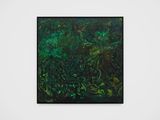
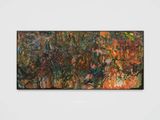
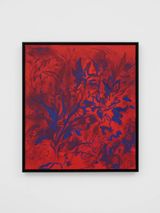
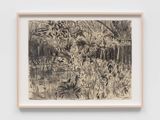
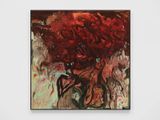
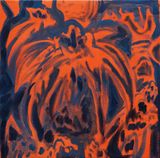
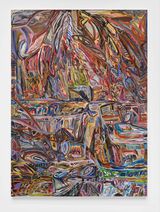
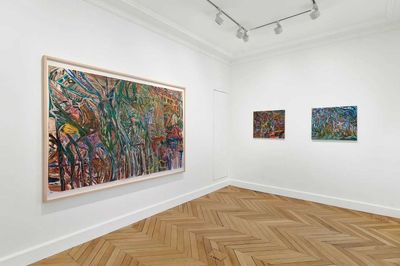
Alia Ahmad primarily works in painting but incorporates a variety of media, including pastel, charcoal, ink, and textiles. Her technique is intuitive and process-driven, often beginning with drawings made on site and evolving through layers of paint, mark-making, and collage. She draws inspiration from the colours and patterns of traditional woven textiles and calligraphy, integrating these elements to create dynamic, abstracted landscapes.
What makes Alia Ahmad’s artworks unique in the contemporary art world?
Alia Ahmad’s art stands out for its synthesis of Saudi cultural heritage with global contemporary art practices. Her paintings are recognised for their vibrant colour, layered sense of time and memory, and the interplay between abstraction and specificity. Ahmad’s works often serve as visual “blueprints” of evolving landscapes, capturing the ongoing dialogue between tradition and modernisation in Saudi Arabia. She is also noted for being the first artist from the Arab Gulf region to join White Cube gallery.
Are there any random and interesting facts about Alia Ahmad?
Alia Ahmad’s paintings are deeply influenced by the textures and colours of her home city, Riyadh, and she often references the city’s grid-like infrastructure in her compositions. Her debut at Phillips London saw her work achieve a six-figure auction result, and she describes her paintings as ‘siblings’, each with a unique configuration but connected through process and palette.
How do you pronounce Alia Ahmad’s name?
Alia Ahmad is pronounced: ‘Ah-LEE-uh AH-mad’, with emphasis on the second syllable of ‘Alia’ and the first syllable of ‘Ahmad’.
Ocula | 2025

















Explore and Follow Artists Shaping Contemporary Art
A respected voice in contemporary art discourse.
Focusing on ambitious storytelling and insightful art-world commentary. Ocula Magazine publishes in-depth interviews, critical essays and timely analysis on the artists, exhibitions and ideas driving the global art world.
Learn more about Ocula Magazine
Showcasing the best of the art world.
Ocula partners with galleries from around the world to highlight their artists, artworks and exhibitions. Gallery membership is by application and invitation, with each member vetted by an independent panel.
Learn more about Ocula Membership
Specialises in the sale of major artworks.
Led by a team with deep ties to the world’s leading auction houses, galleries and collectors. Ocula’s advisory team offers bespoke services to high-net-worth clients from around the world who are looking to acquire the best of contemporary and modern art.
Learn more about our team and services