




SAM GILLIAM
1933-2022, United StatesSam Gilliam was a pioneering American abstractionist whose experiments with color, support, and scale transformed postwar painting and helped redefine abstraction in three dimensions. Associated with the Washington Color School yet always testing its limits, he is best known for his unstretched Drape paintings and later beveled-edge works that blur boundaries between painting, sculpture, and architecture. His series from the late 1960s onward, including large-scale draped installations and dense late tondos shown at Dia Beacon and the Hirshhorn Museum and Sculpture Garden, secured his status as a central figure in American abstraction and Black avant-garde art.
Early Life and Career
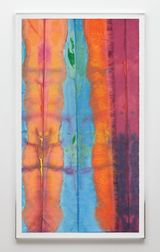
Born in Tupelo, Mississippi, in 1933 and raised in Louisville, Kentucky, Gilliam earned a BA (1955) and MA in painting (1961) from the University of Louisville. After teaching in Louisville, he moved to Washington, D.C. in the early 1960s, where contact with Washington Color School artists such as Morris Louis and Kenneth Noland led him to work with thinned acrylics on unprimed canvas, extending Color Field stain techniques. While often grouped with the Washington Color School, he soon departed from its flatness, experimenting with cutting, folding, and suspending canvases to create new spatial and sculptural effects.
Works, Series and Methods
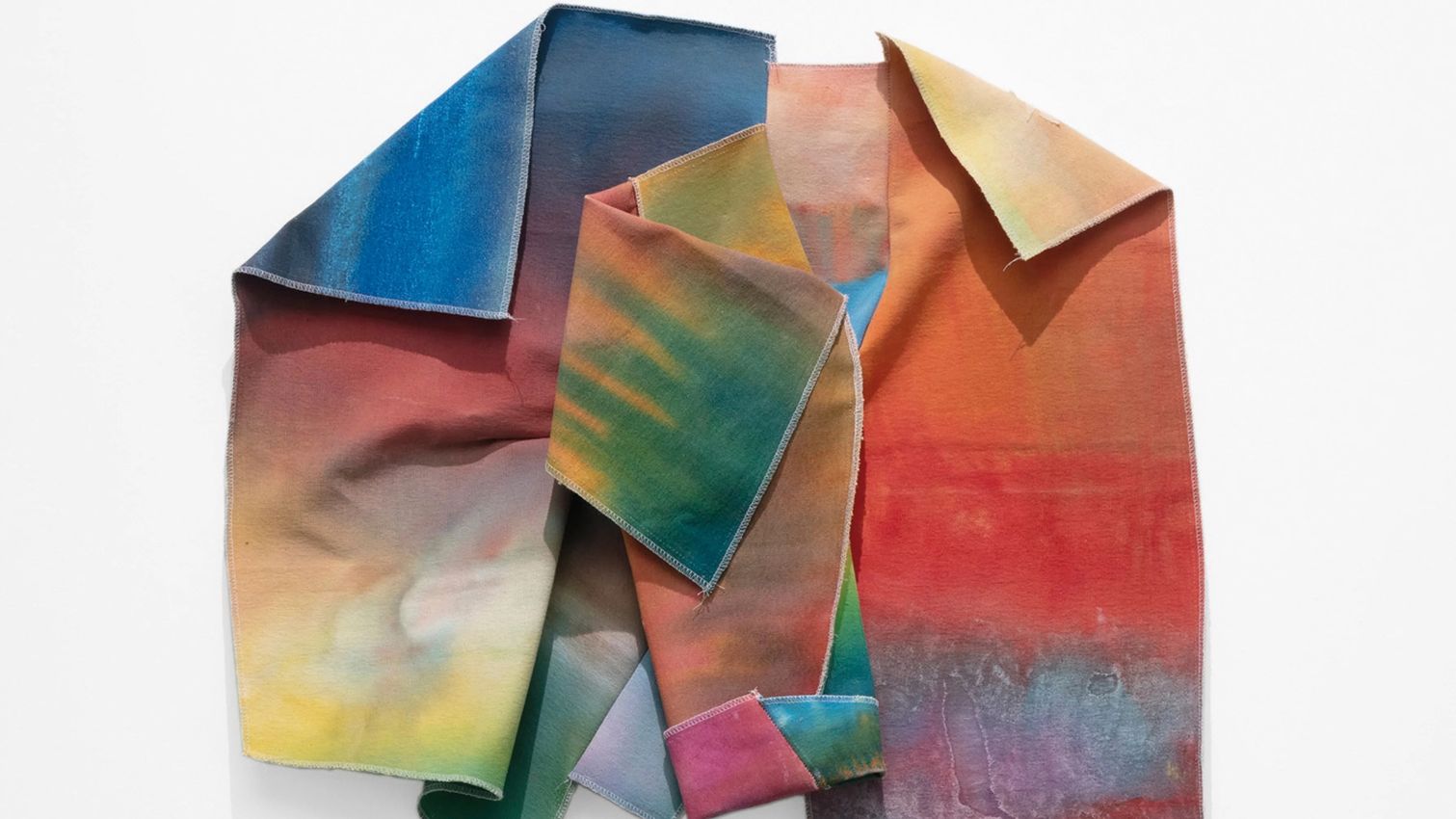
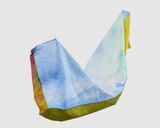
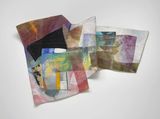
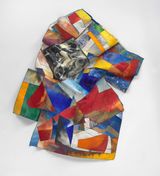
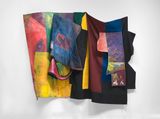
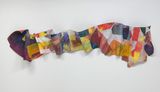
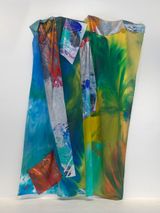
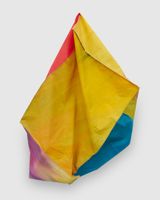
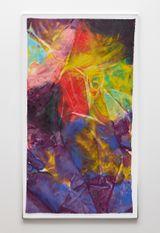
Gilliam’s early expansions of Color Field painting included staining and folding canvases while the paint was still wet, creating internal diagonals and structural lines within fields of color. These investigations led to his influential Drape paintings of the late 1960s and 1970s, in which large, painted canvases were removed from stretchers and hung from ceilings and walls so they cascaded and pooled in soft folds, turning painting into an immersive, site-responsive installation.
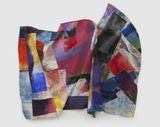
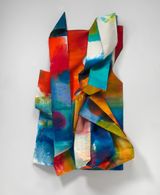
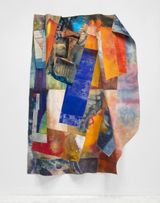
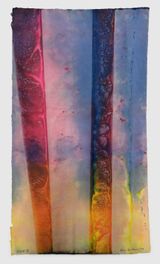
From the late 1960s he also developed beveled-edge paintings, mounting canvases on angled supports that made them appear to project from the wall. In these works, he cut and collaged painted canvas into geometric and irregular configurations, often likened to jazz improvisation or quilt-making, as in works such as Spread (1973) and Rail (1977). Over subsequent decades he expanded his materials to include wood, paper, metal, and plastics, thickening paint with additives like sawdust and studio debris, then scraping and abrading the surface to reveal underlying strata of color.
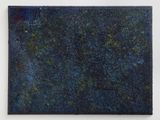
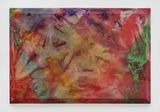
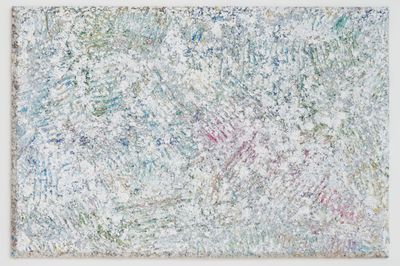
In the 2010s and early 2020s Gilliam focused on round paintings, or tondos, often on beveled wood panels whose dense, layered surfaces he scored and scraped with metal tools. The exhibition Sam Gilliam: Full Circle at the Hirshhorn Museum (2022) foregrounded these circular works, many produced during the pandemic, whose seemingly pale surfaces reveal intricate networks of scratches and chromatic bursts when seen up close. A related body of textured, beveled-edge works shown at Pace Gallery, Seoul, in 2021 extended this “raked” approach, merging staining, collage, and relief in compact yet intensely worked forms.
Themes and Context
Gilliam’s work is anchored in Colour Field painting and the Washington Color School, but he used those frameworks to explore how colour, gravity, and unconventional supports could transform the experience of painting. His abstractions have been linked to jazz, quilting, and architecture, with rhythm, improvisation, and layered structure recurring as key concerns. As a leading figure in Black abstraction, he challenged expectations that African American artists should primarily produce figurative or overtly narrative work, demonstrating instead how non-figurative painting could register cultural and historical experience through form and process.
Exhibitions and Recognition
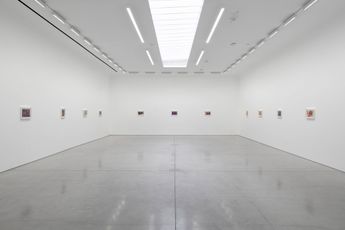
Gilliam’s work has been widely exhibited in the United States and abroad, including a 1971 exhibition at the Museum of Modern Art, New York; a major retrospective at the Corcoran Gallery of Art, Washington, D.C. (2005); The Music of Color: Sam Gilliam, 1967–1973 at Kunstmuseum Basel (2018); a long-term installation at Dia Beacon (from 2019); and Sam Gilliam: Full Circle at the Hirshhorn Museum and Sculpture Garden (2022). His work appears in significant surveys of Colour Field painting and African American art at institutions such as the Smithsonian American Art Museum and Tate Modern, and is held in major public collections including the Smithsonian American Art Museum and the Hirshhorn Museum.
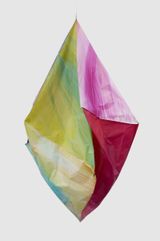
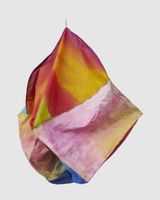
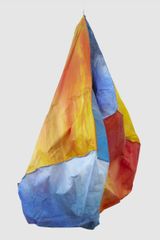
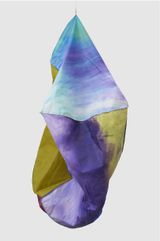
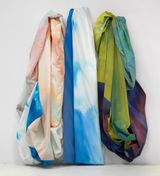
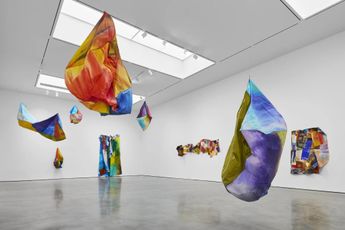
In 2026, Sam Gilliam’s work was the focus of Sam Gilliam: STITCHED at Pace Gallery, New York (13 March–25 April 2026), an estate exhibition that revisited the artist’s long-running investigations into sewn, pieced, and suspended canvas. Bringing together stitched paintings first developed in the 1990s, many of which were recently seen in Sam Gilliam: Sewing Fields at the Irish Museum of Modern Art (13 June 2025–25 January 2026), the show also introduced balloon-like, volumetric hanging sculptures to U.S. audiences, underscoring how Gilliam continued to test the limits of abstraction, gravity, and the picture plane late in his career.
Among various honors, Gilliam received a Guggenheim Foundation fellowship, the Mississippi Governor’s Award for Excellence in the Visual Arts (2007), the U.S. Department of State’s Medal of Arts (2015), the Archives of American Art Medal (2018), and a Distinguished Honor Award at Washington, D.C.‘s Mayor’s Arts Awards in 2021. Gilliam continued to work in Washington, D.C. until his death on 25 June 2022.
Sam Gilliam FAQs
What is Sam Gilliam best known for?
Sam Gilliam is best known for his Drape paintings, large unstretched canvases stained with color and suspended from ceilings and walls so they hang in cascading folds. These works broke away from the traditional framed canvas and helped redefine painting as a three-dimensional, site-responsive medium.
How did Sam Gilliam change the Washington Color School?
Sam Gilliam extended Washington Color School stain painting by folding, cutting, and suspending canvases rather than keeping them flat on stretchers. In doing so, he preserved a focus on color while radically altering painting’s relationship to space, architecture, and the viewer.americanart.
What themes does Sam Gilliam explore in his work?
Sam Gilliam’s work explores color, improvisation, and spatial experience, often drawing analogies to jazz, quilting, and architecture. His commitment to abstraction also engages questions of race and representation, positioning Black abstraction as a vital part of American modernism.
Where can I see Sam Gilliam’s work?
Major works by Sam Gilliam can be seen at institutions such as the Smithsonian American Art Museum, the Hirshhorn Museum and Sculpture Garden, and Dia Beacon, among others. His work is also regularly exhibited by galleries including Pace Gallery and appears in museum surveys of Color Field painting and African American art.
Ocula | 2026

View Sam Gilliam's Artworks




















Explore Sam Gilliam's Exhibitions




Sam Gilliam in Ocula Magazine








Explore and Follow Artists Shaping Contemporary Art
A respected voice in contemporary art discourse.
Focusing on ambitious storytelling and insightful art-world commentary. Ocula Magazine publishes in-depth interviews, critical essays and timely analysis on the artists, exhibitions and ideas driving the global art world.
Learn more about Ocula Magazine
Showcasing the best of the art world.
Ocula partners with galleries from around the world to highlight their artists, artworks and exhibitions. Gallery membership is by application and invitation, with each member vetted by an independent panel.
Learn more about Ocula Membership
Specialises in the sale of major artworks.
Led by a team with deep ties to the world’s leading auction houses, galleries and collectors. Ocula’s advisory team offers bespoke services to high-net-worth clients from around the world who are looking to acquire the best of contemporary and modern art.
Learn more about our team and services