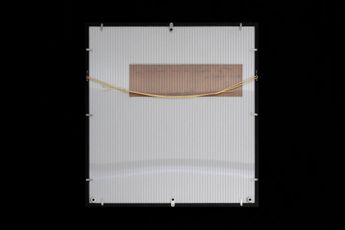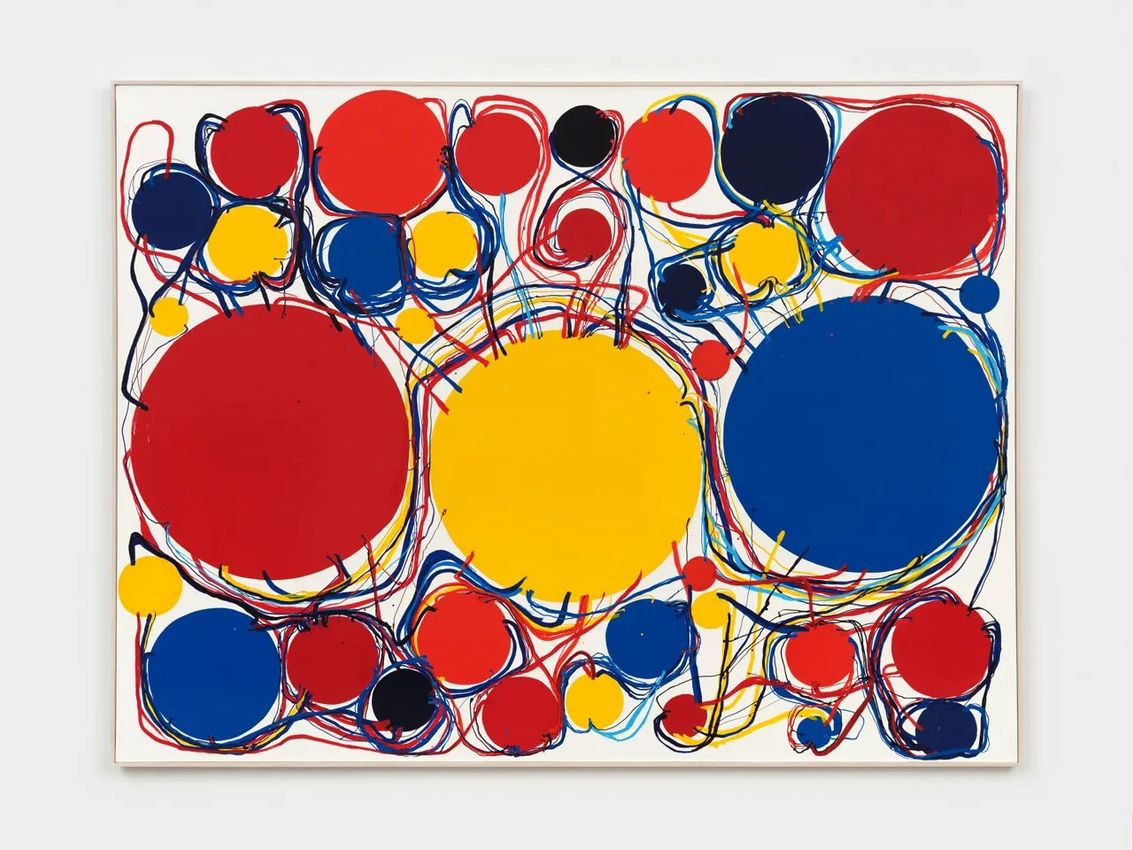
Nonaka-Hill Kyoto is pleased to present Chimeras, a two-person exhibition featuring multimedia artistSawako Goda and porcelain sculptor Kentaro Kawabata. Chimeras indulges in an uncanny dialogue ofpraxis, focusing on the artist’s aesthetic symbiosis of corporeal, ornamental, and abstract form.
Sawako Goda
Born in Kochi City in 1940, Sawako Goda spent her wartime childhood moving between Kure inHiroshima, Dan-no-ike in Kagawa, and Ibusuki in Kagoshima, before returning to Kochi at the end of thewar. She moved to Tokyo in 1958 and, in 1965, held her first solo exhibition at Ginbōdō in Ginza with theencouragement of Shuzo Takiguchi. With critical support from the poet Kazuko Shiraishi and through hercollaboration with Shuji Terayama and his experimental theater troupe Tenjo Sajiki, Goda established herpresence as an iconic figure, continuing to work actively until her passing in 2016.
Recurring motifs in Goda’s work—molten glass and metal, scavenged junk and stolen goods, skeletons,and at times deformed human figures—are inseparable from her formative memories. As she herselfrecalled, the postwar ruins and scattered bones imprinted her imagination with a sense of “flamboyantsplendor.”
“I once flattened ten-sen aluminum coins and nails on the railway tracks, then made a cross out of thenails, encircled it with the coins, and strung beads on wire to fashion a necklace. I was so proud of it thatI wore it secretly under my sweater until another student discovered it, and the teachers confiscated it inthe staff room. The sense of loss was unbearable. That necklace, made at such risk, grew more beautifuland spectral with each passing day, until I could almost see it shimmering outside the classroom windowin broad daylight.”
“The ruins of the glass shops and hardware stores were a treasure trove like no other. Emeralds, rubies,and gold seemed to melt dreamily, congealing with the sand and soil. Every day, I frantically dug up thefragments, wrapped them in my skirt, carried them to the fields or riverbanks, and drew treasure maps. Iwould wedge the maps into the cracks of fences, letting them weather so they looked authentic.”
“On the riverbank strewn with dog bones, after watching the blazing sunset, I reluctantly headed home asbats swooped overhead. Under the dim glow of a bare lightbulb, we ate simmered locusts, edible frogs,boiled sour dock, and dumplings in thin broth. “Before I die, I’d like to eat grilled yellowtail with shiny white rice,” the adults would say. Whenever I heard “shiny rice,” I immediately thought of the gold and silvertreasures I had secretly buried along the riverbank. Even now, when I pass by someone digging into agravel road, I sometimes feel the strange illusion that something glittering might roll out from beneath, andI find myself momentarily transfixed.”
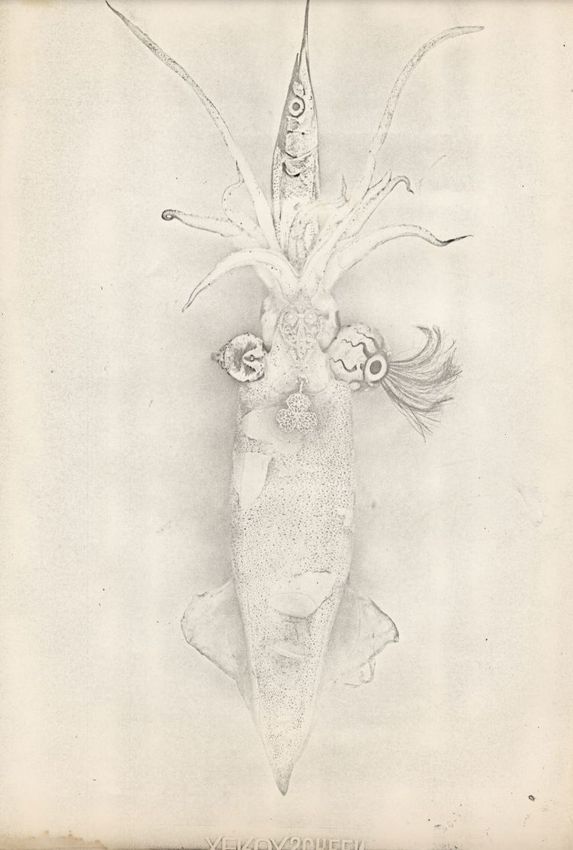
The work on view here, A Merry-go-round at the Ruins of a Fire (1970), was created during a live artproduction once held at the Sony Building in Ginza, organized by Fuji Xerox. The composition centers onfish and jewelry: raw fish were placed directly on the copy machine, then adorned, almost like a costume,with scattered jewels, metal mesh, combs, and prosthetic eyes. A fish gripping a glass eye, a horse’s skullentwined with chains, a squid and gobies paired with rings—the combinations are at once grotesque andopulent, encapsulating Goda’s unique poetics of postwar ruin and baroque fantasy.
Kentaro Kawabata
Born in Saitama Prefecture in 1976, Kawabata graduated from the ceramics program at Tokyo DesignerGakuin in 1998 and completed his training at the Tajimi City Pottery Design and Technical Center in 2000.He held solo exhibitions at Nonaka-Hill Los Angeles in 2018 and 2021, and in 2025 was awarded the JapanCeramic Society Prize. Kawabata is currently based in Mizunami, Gifu Prefecture. While it is notuncommon for ceramic artists to establish themselves in rural areas for the sake of production, Kawabatahas chosen to live in a location even more remote, devoting himself entirely to his practice.
Before pursuing ceramics, Kawabata worked as an electrician while attending night school. He recallsthat, when entrusted with wiring work, he would spend an inordinate amount of time creatingidiosyncratic, overly meticulous arrangements—an experience through which he came to recognizehimself as somehow “unsuited.” This anecdote reveals much about his temperament and artisticapproach. His path to ceramics was equally singular. As a schoolboy, he once joined a class trip toMashiko, where, pressed for time, he was unable to complete the workshop assignment; later, a simpleglazed teacup from the kiln arrived at his home, leaving a lasting impression. Years later, whileconsidering his future, he happened to see a late-night television segment featuring a local izakaya wherepatrons relieved their stress by throwing plates. These two seemingly disparate memories fused in hismind, guiding him—almost by accident—toward ceramics, as he recalls with a smile.
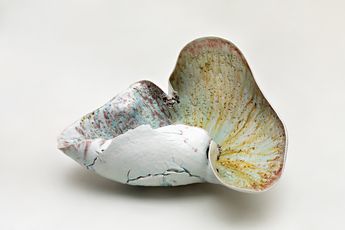
Kawabata’s works are distinguished by the incorporation of pulverized glass shards, feldspar, cullet, sandcollected during his travels, and even crushed Sprite bottles mixed into the clay body. The resultingmarbled colors—like pigments intentionally left unmixed—form surfaces that ripple with abstractmovement, exuding both freshness and unease, as though dissected organs had been laid bare. In workssuch as Batista and Spoon, this visceral quality is heightened by his deliberate use of oxblood (cinnabar)glaze, which conjures the presence of blood and amplifies a sense of raw immediacy.
His new monochrome work Abandonment employs silver, a material that darkens over time through thechemical reaction of sulfur with sweat and oils from the artist’s hands. Kawabata emphasizes this gradualprocess of transformation, allowing the passage of time and the trace of his own gestures to emergevisibly on the surface. He locates an aesthetic in halting a work at the very point where it still feels”unfinished,” and he acknowledges a resonance between his practice and that of artists such as PaulThek and Sterling Ruby.
In recent years, his works have been increasingly presented within the framework of contemporary art,and in 2025, he was awarded the Japan Ceramic Society Prize. Kawabata, however, downplays suchrecognition, remarking that it is “nothing more than a matter of zeitgeist.” Behind this remark lies thesense of “alienation” that has accompanied his career. Yet his stance also reflects a profound respect forearlier generations of ceramicists, coupled with a determination to bring about change within theestablished order—patiently, and in his own way.


A respected voice in contemporary art discourse.
Focusing on ambitious storytelling and insightful art-world commentary. Ocula Magazine publishes in-depth interviews, critical essays and timely analysis on the artists, exhibitions and ideas driving the global art world.
Learn more about Ocula Magazine
Showcasing the best of the art world.
Ocula partners with galleries from around the world to highlight their artists, artworks and exhibitions. Gallery membership is by application and invitation, with each member vetted by an independent panel.
Learn more about Ocula Membership

Specialises in the sale of major artworks.
Led by a team with deep ties to the world’s leading auction houses, galleries and collectors. Ocula’s advisory team offers bespoke services to high-net-worth clients from around the world who are looking to acquire the best of contemporary and modern art.
Learn more about our team and services