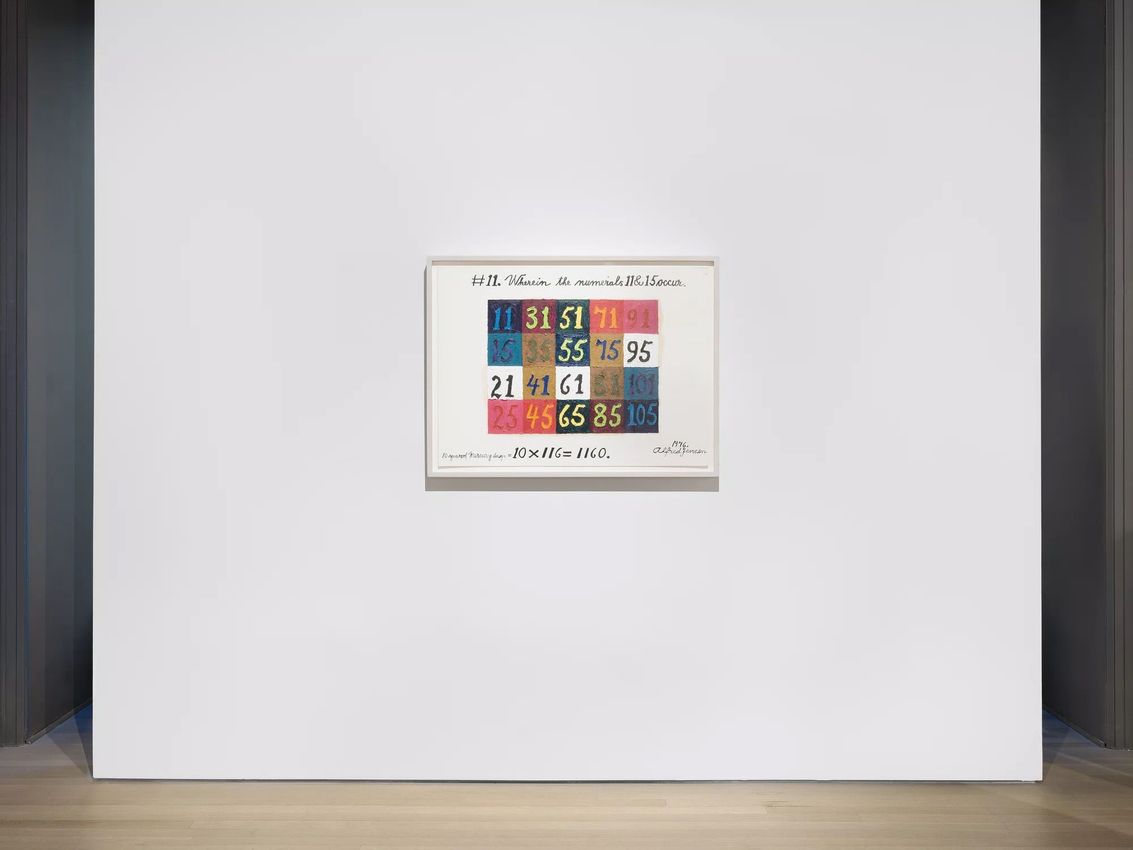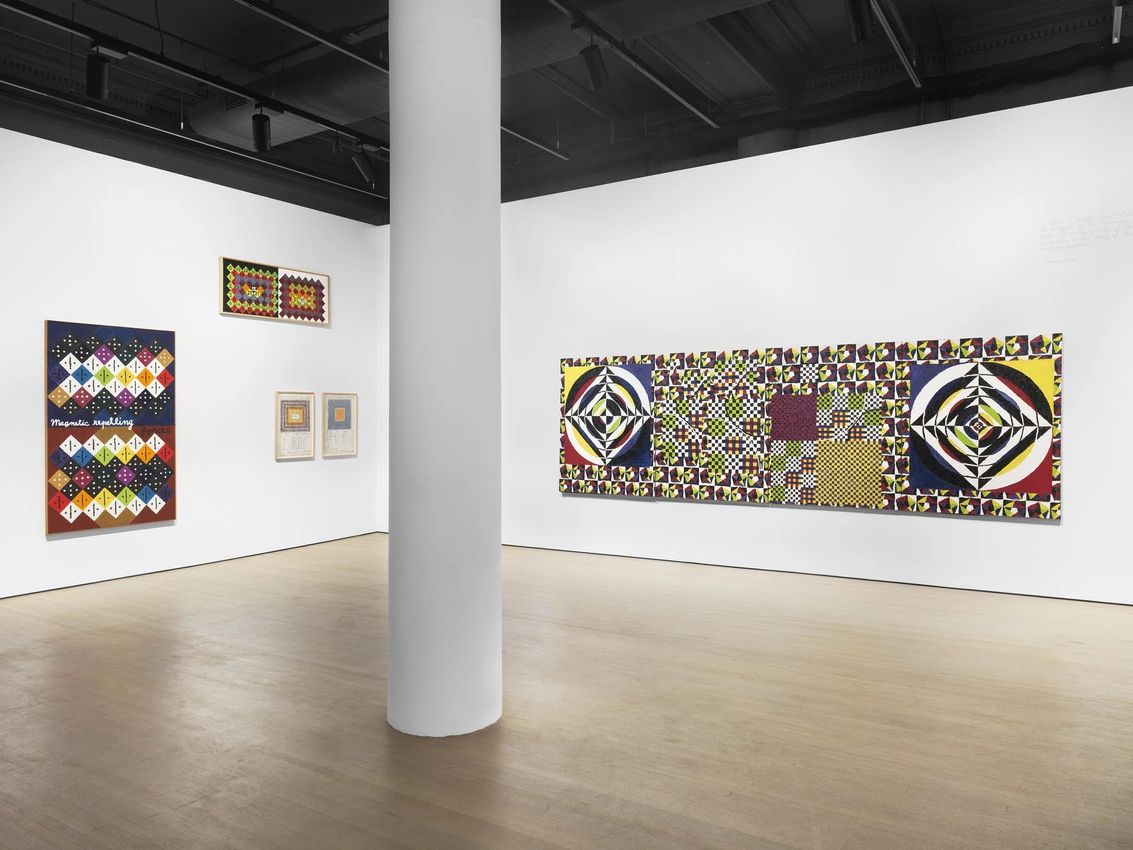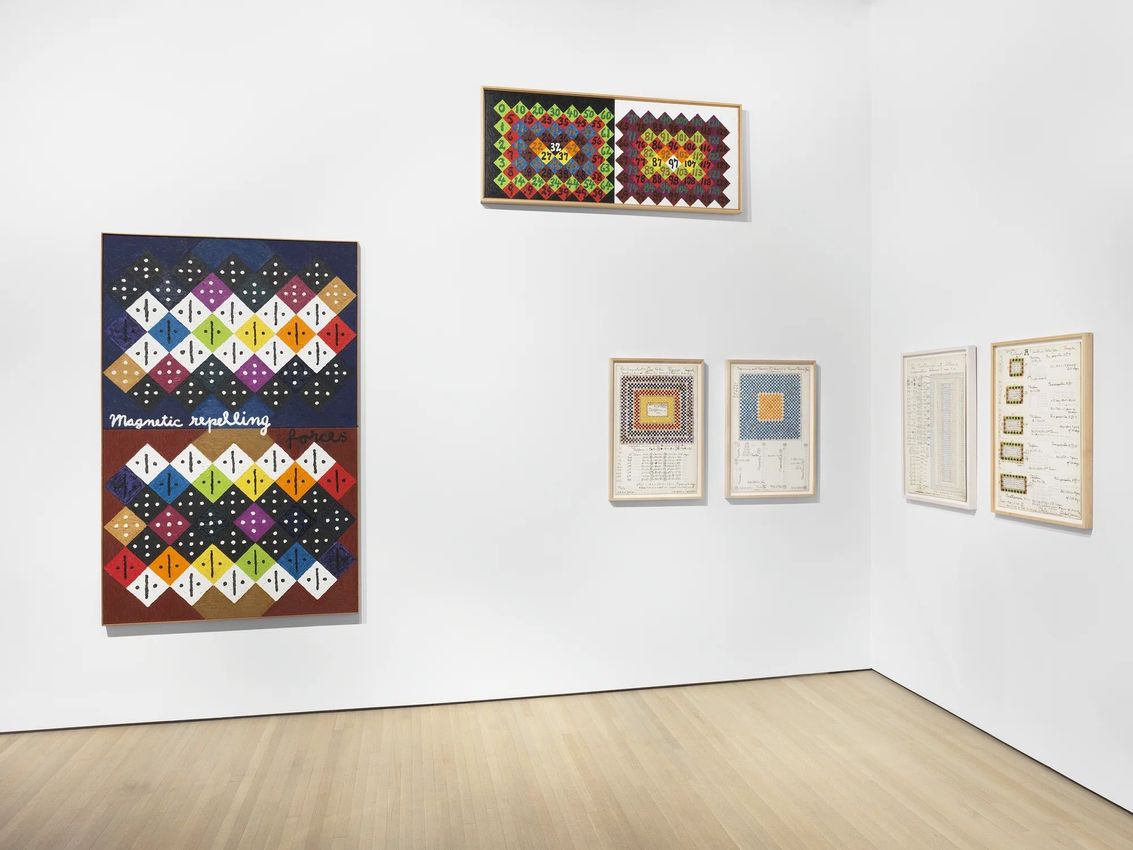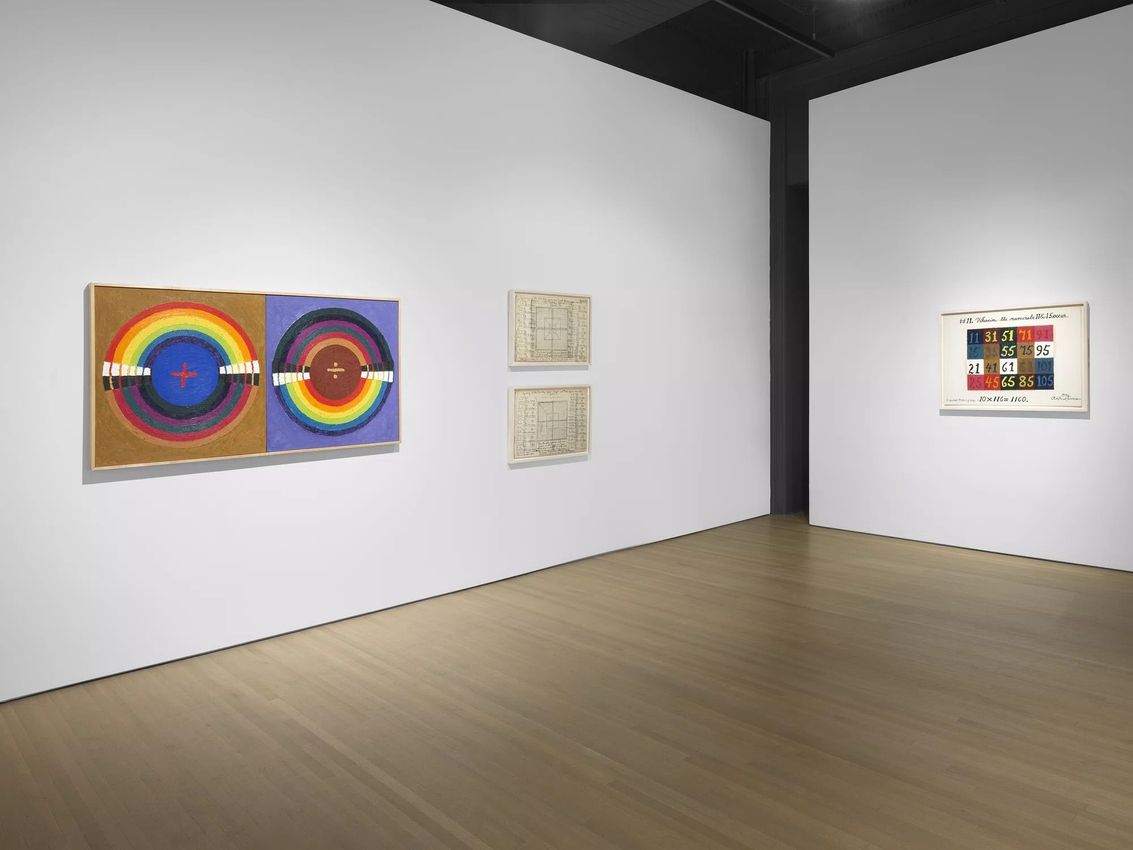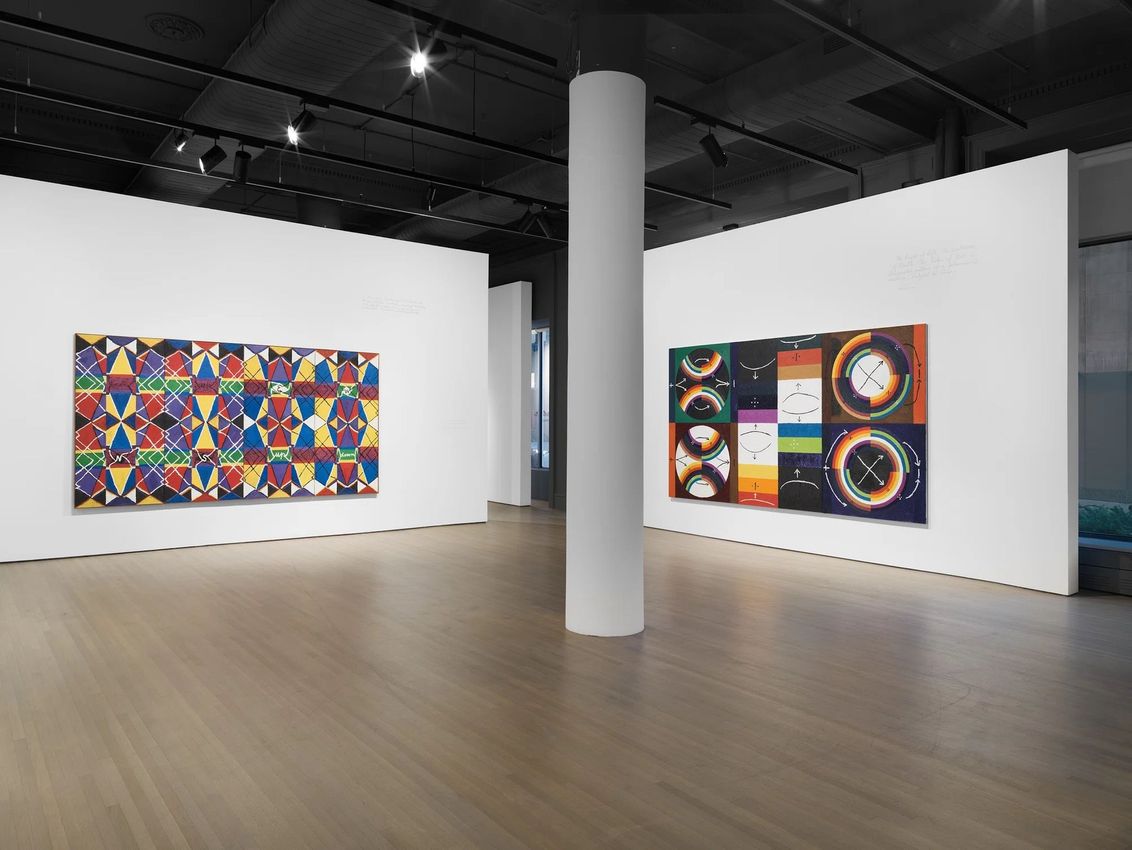
125 Newbury will present Alfred Jensen: Diagrammatic Mysteries, an exhibition of paintings, studies, and works on paper by the influential Expressionist painter Alfred Jensen, from January 16 to February 28. Selected from the collection of the Estate of Alfred Jensen, many of the works on view will be publicly exhibited for the first time.
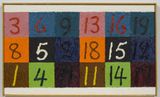
Born in 1903, the same year as his close friend Mark Rothko, Jensen is recognized for his enigmatic universe of grids, diagrams, and fantastic calculations rendered in brilliant, prismatic color. Before settling in New York in the early 1950s, Jensen spent much of his young adult life moving from place to place. He lived in Guatemala until his mother’s death when he was seven years old and moved to Denmark to complete his education. Following many years traveling as an itinerant worker of odd jobs on ships and farms, he found his calling studying art in Munich under Hans Hofmann and later at the Académie Scandinave in Paris. These experiences informed his lifelong interest in the philosophies, systems, and aesthetics of cultures around the world, which became basic to his art.
Strongly influenced by Guatemalan textiles and pre-Columbian art, Jensen also drew inspiration from sources ranging from the intuitive to the theoretical and scientific. James Clerk Maxwell’s formulation of electromagnetism and foundational texts like the I Ching, Johann Wolfgang von Goethe’s Theory of Color (Zur Farbenlehre) (1810), and J. Eric S. Thompson’s Maya Hieroglyphic Writing (1960) were key to his art. The Mayan calendar and the Chinese alphabet held special meaning for Jensen and appear in many of his paintings.
Though Jensen’s grids often take on the familiar appearance of games secreting solutions, these works do not serve as maps toward any unified meaning or objective endpoint. While many of the works in Diagrammatic Mysteries have titles that point to their origins, like The Pythagorean Theorem (1964), or symbols with recognizable meanings, as with the arrows in Physical Optics (1975), these psychic footholds only go so far in orienting us within the compositions, which are ultimately guided by essential mystery. As Donald Judd, who himself was inspired by Jensen, observed in 1963, “The theories are important to him and completely irrelevant to the viewer.” Jensen’s place in contemporary art is perplexing, and, in many ways, he can be viewed as a link between Abstract Expressionism and Pop art. Generationally, he was working in the arena of Abstract Expressionism and was a part of that community. Unlike the Abstract Expressionist’s rejection of Pop art, Jensen developed strong friendships with the next generation. He attended the Happenings and was a fixture at the Pop openings and parties that took over the scene in the early 1960s. The toy store colors and formats suggesting games in his paintings link him to this scene. However, the Pop artists’ denial of surface was completely opposite to Jensen’s embrace of pigment as thick as frosting on cupcakes. His paintings are as comfortable juxtaposed with Adolph Gottlieb’s Pictographs as they would easily blend into their place on the shelves of Claes Oldenburg’s Store. These challenging works, at once accessible and secret, make us realize that Jensen himself is his greatest mystery.
Diagnosed with terminal brain cancer in the late 1970s, Jensen, then one of the stars of the contemporary art world, went into seclusion, and his work disappeared from the scene for decades after his death. Alfred Jensen: Diagrammatic Mysteries is a reawakening of his extraordinary contributions.


Alfred Jensen (b. 1903, Guatemala City; d. 1981, Livingston, New Jersey) studied painting at the San Diego Fine Arts School and in Munich under Hans Hoffman. After moving to the United States in 1934, his patron Saidie Alder May encouraged him to pursue his interest in color theory and pattern. Jensen’s intricately organized diagrams reflect his distinctive conceptual approach, begun in the late 1950s when he started to refine his wide-ranging studies of systems and philosophies—from theories of color and light, mathematics, and the Mayan calendar, to scientific formulations—into multicolored checkerboards. He used mathematical systems to construct two-dimensional grid paintings and demonstrate color theories, but the work itself is metaphorical, referencing pre-Colombian and Asian cultures, textiles, and divination. Pace Gallery has represented Jensen’s estate since 1977.


A respected voice in contemporary art discourse.
Focusing on ambitious storytelling and insightful art-world commentary. Ocula Magazine publishes in-depth interviews, critical essays and timely analysis on the artists, exhibitions and ideas driving the global art world.
Learn more about Ocula Magazine
Showcasing the best of the art world.
Ocula partners with galleries from around the world to highlight their artists, artworks and exhibitions. Gallery membership is by application and invitation, with each member vetted by an independent panel.
Learn more about Ocula Membership

Specialises in the sale of major artworks.
Led by a team with deep ties to the world’s leading auction houses, galleries and collectors. Ocula’s advisory team offers bespoke services to high-net-worth clients from around the world who are looking to acquire the best of contemporary and modern art.
Learn more about our team and services