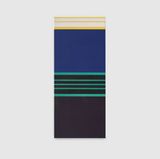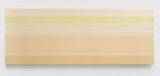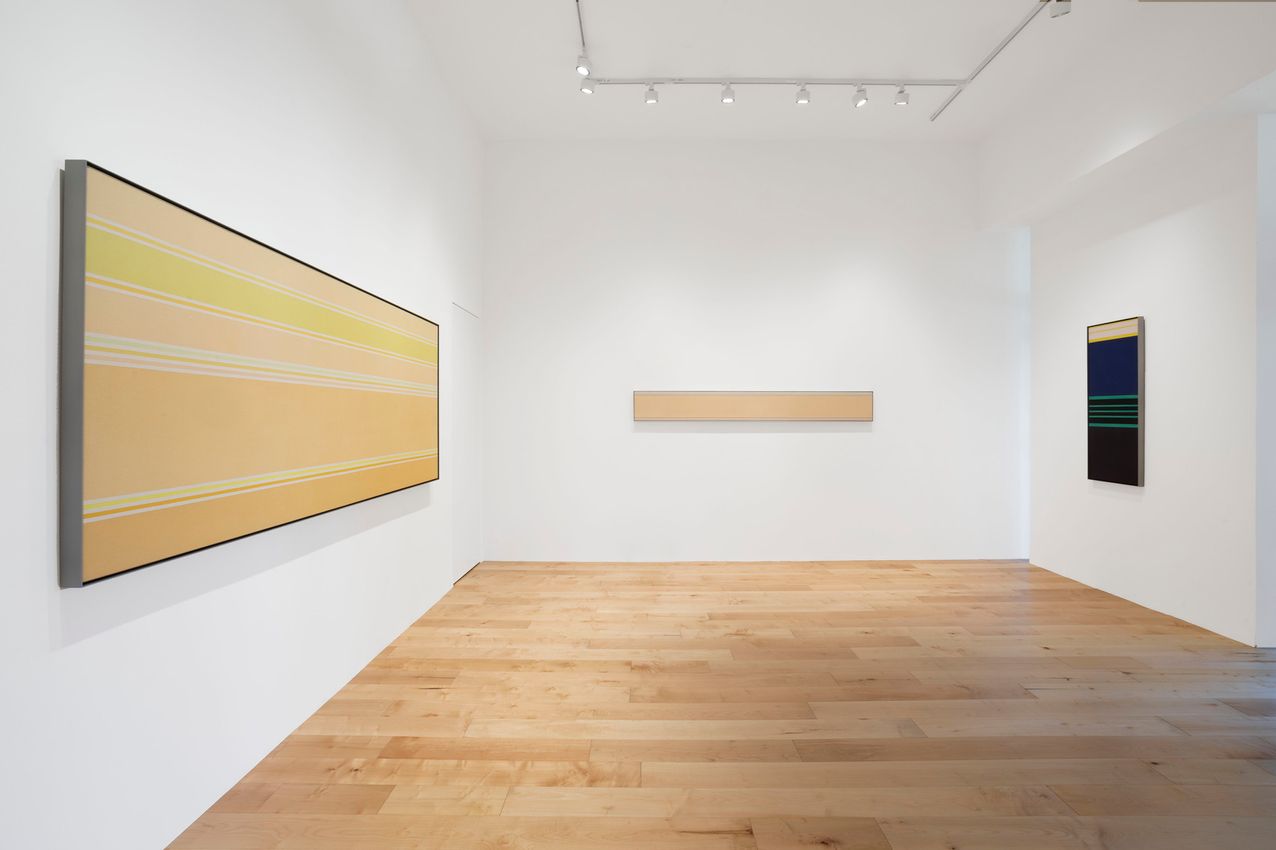
Palm Beach—Pace Gallery is pleased to present a solo exhibition by Kenneth Noland at the gallery’s seasonal location in Palm Beach. A key figure in the development of postwar art, Noland is regarded as one of the foremost American abstract painters. Featuring a selection of Noland’s Stripe paintings from the late 1960s to early ‘80s, the presentation will be on view from February 25 through March 14, 2021.
A founding member of the Washington Color School, Noland’s career can be largely defined by his tireless exploration of colour and form. The artist attended Black Mountain College, in his hometown of Asheville, North Carolina, intermittently from 1946 to 1950. While there he was exposed to some of the most influential artists of the time, ranging from Josef Albers to John Cage, and developed an early interest in the expressive potential of colour and chance. His mature style would come to render colour a resonant force and built a visual language that included chevrons, diamonds, circles, and horizontal bands. Often adhering to a compositional format, Noland would work methodically within a series to explore colour, material, and method.
For his Stripe paintings, Noland proportioned bands of colours in relation to the whole work and used various methods to apply paint, which resulted in a range of surface textures. These groupings of horizontal stripes utilise colour combinations to explore mood and light, often suggesting landscape imagery. Via Mojave (1968), on view in this presentation, features horizontal stripes of muted oranges, yellows, pinks, and blues. The colours, though separated into bands, flow together to create an image evocative of nature.
This exhibition builds on Noland’s presence in the Palm Beach area where the artist is part of permanent collections at the Pérez Art Museum and Vero Beach Museum.
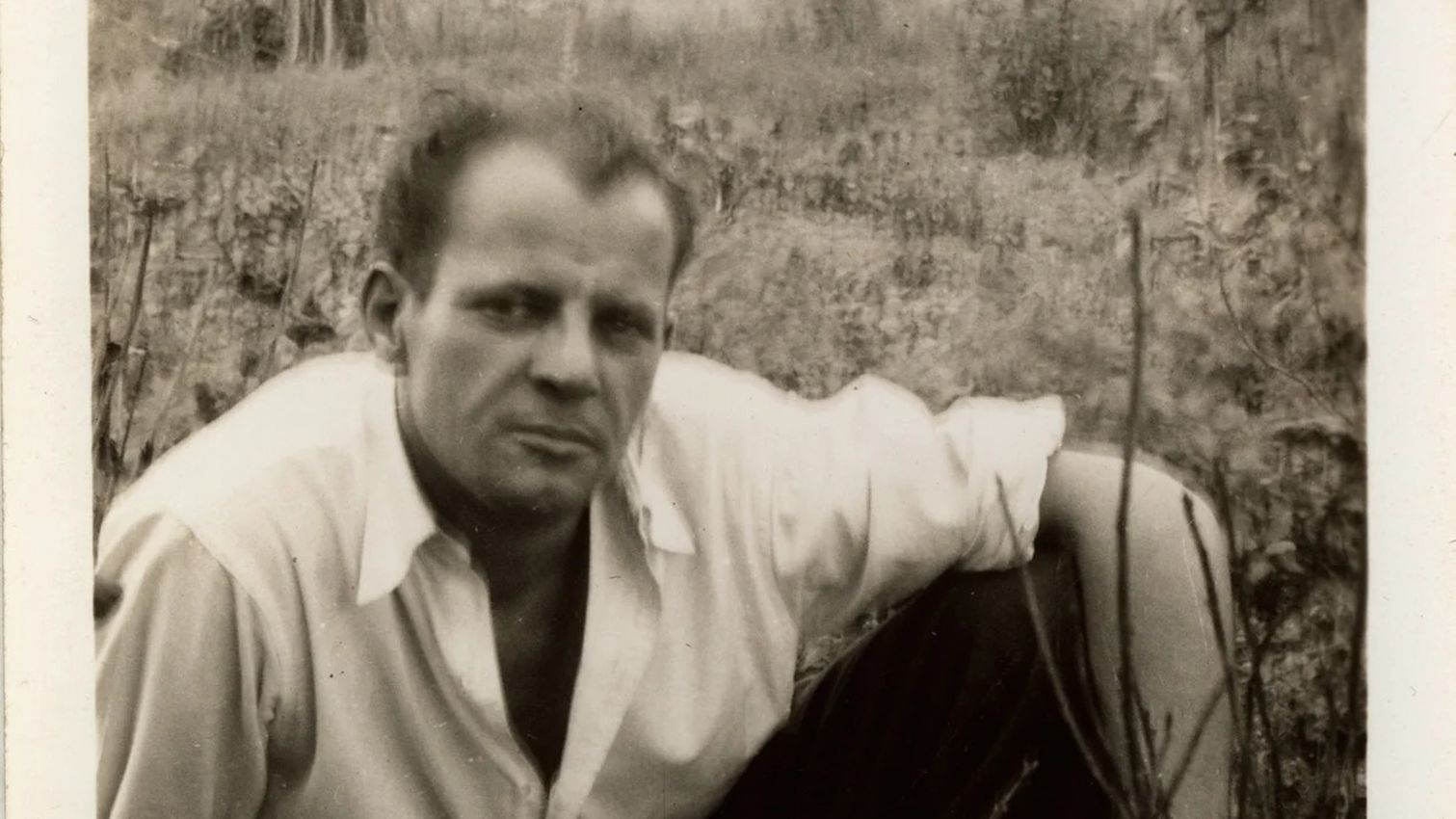
Kenneth Noland (b. 1924, Asheville, North Carolina; d. 2010, Port Clyde, Maine) attended Black Mountain College in the mid-1940s after serving in the US Air Force during World War II. There he learned about Neoplasticism, Bauhaus theories, and the work of Paul Klee, thus developing an early interest in the emotional effects of colour and geometric forms. In the 1950s, while living in Washington DC, Noland frequently travelled to New York to meet with Clement Greenberg, who introduced him to Abstract Expressionism as well as the stained paintings of Helen Frankenthaler. These encounters sparked an experimental period, during which Noland developed a new genre of abstraction known as Color Field. His exploration of line, colour, and shape unfolds across discrete series, from his ‘Circle’ and ‘Chevron’ paintings to his horizontal bands and shaped canvases. In 1977, a major travelling retrospective of the artist’s work was presented by the Solomon R. Guggenheim Museum in New York. Memorial retrospectives of his work were presented in 2010 by the Museum of Fine Arts, Houston, and the Solomon R. Guggenheim Museum, New York.
Kenneth Noland (b. 1924, Asheville, North Carolina; d. 2010, Port Clyde, Maine) attended Black Mountain College in the late forties and developed an early interest in the emotional effects of colour and geometric forms. He taught at various art schools including the Institute of Contemporary Art, Washington, D.C., Catholic University, Washington, D.C., Washington Workshop Center of the Arts and Bard College, Annandale-on-Hudson, New York. In 1977 a major traveling retrospective of the artist’s work was presented by the Solomon R. Guggenheim Museum in New York. In response, late art critic of The New York Times Hilton Kramer wrote, ‘An art of this sort places a very heavy burden on the artist’s sensibility for colour, of course—on his ability to come up, again and again, with fresh and striking combinations that both capture and sustain our attention, and provide the requisite pleasures...Mr. Noland is unquestionably a master.’ The first in-depth survey of Noland’s career was written by Kenworth Moffet and published by Abrams in 1977.


Pace is a global art gallery of and for the future, modeled on a set of core values established during its founding in 1960 and designed to serve its artists, estates, and collectors in a way that is focused, responsive, and aligned with its enduring mission.
Mon, by appointment
Tues - Sat, 10am - 6pm
Sun, 11pm - 4pm
The Royal Poinciana Plaza
340 Royal Poinciana Way, Suite M333
Palm Beach, FL
+1 561 444 3922

A respected voice in contemporary art discourse.
Focusing on ambitious storytelling and insightful art-world commentary. Ocula Magazine publishes in-depth interviews, critical essays and timely analysis on the artists, exhibitions and ideas driving the global art world.
Learn more about Ocula Magazine
Showcasing the best of the art world.
Ocula partners with galleries from around the world to highlight their artists, artworks and exhibitions. Gallery membership is by application and invitation, with each member vetted by an independent panel.
Learn more about Ocula Membership

Specialises in the sale of major artworks.
Led by a team with deep ties to the world’s leading auction houses, galleries and collectors. Ocula’s advisory team offers bespoke services to high-net-worth clients from around the world who are looking to acquire the best of contemporary and modern art.
Learn more about our team and services