Press Release

Perrotin Tokyo is pleased to announce Cherries Bloom in April —the first solo exhibition in Japan by German artist GregorHildebrandt. The following is an essay authored by artist and curator Andreas Schlaegel on the occasion of this exhibition.

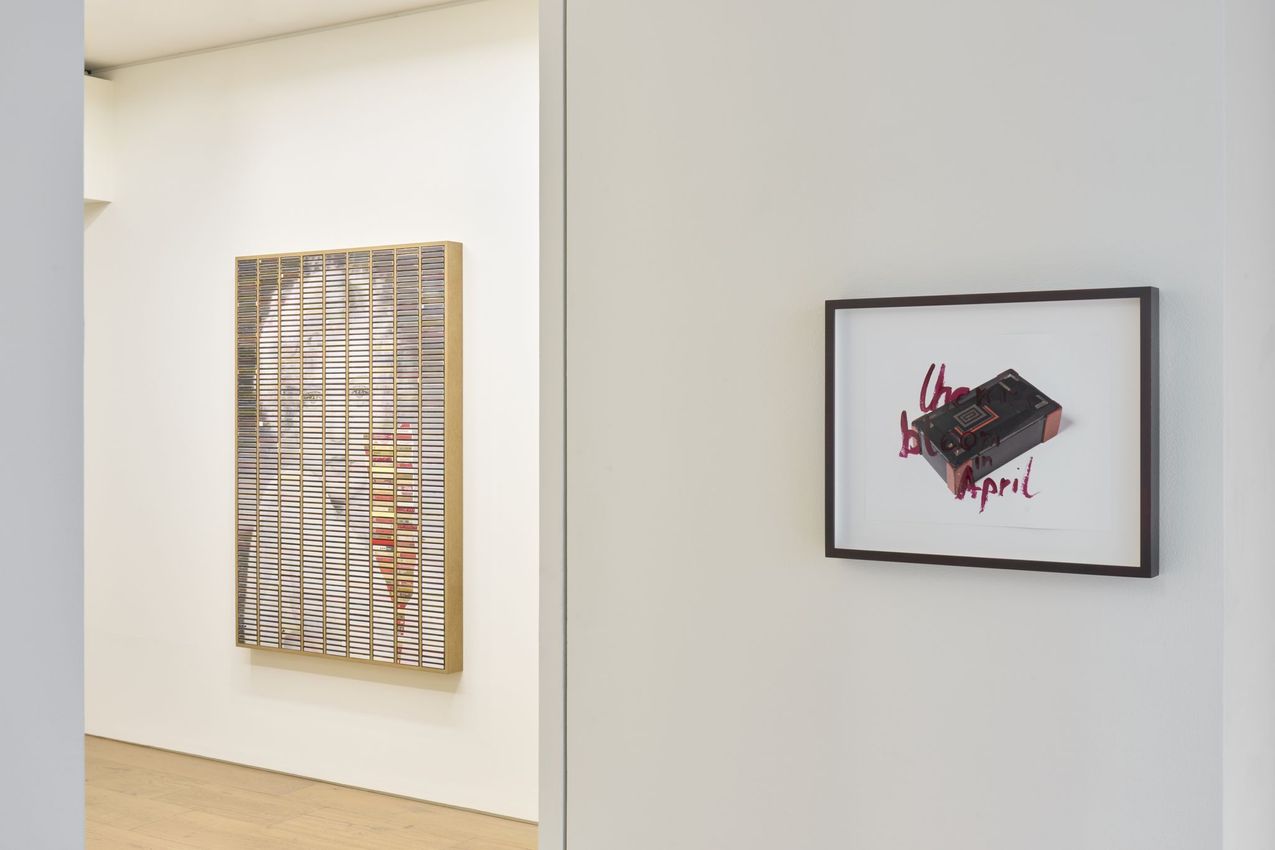
”...And Yet Something Makes Cherries Blossom in April” is the full line which inspired Gregor Hildebrandt’s title for his first exhibition in Japan. It comes from a rather obscure early-eighties song byGerman singersongwriter Konstantin Wecker, in which the singervoices petty grievances that keep him from thinking outside thebox and venturing into the realm of his imagination. But then, with emotional piano flourishes, the song takes an unexpected turn:suddenly, cherries blossom, rekindling a sense of life and opening a window for change, creativity, and new dreams.

Gregor Hildebrandt’s passion for art, poetry, and music is asextensive as it is infectious. His ability to internalize and contextualize what he sees, reads, and hears informs the connections he draws in precise and distinct material form – poetic and open-ended, inviting viewers’ reflections.

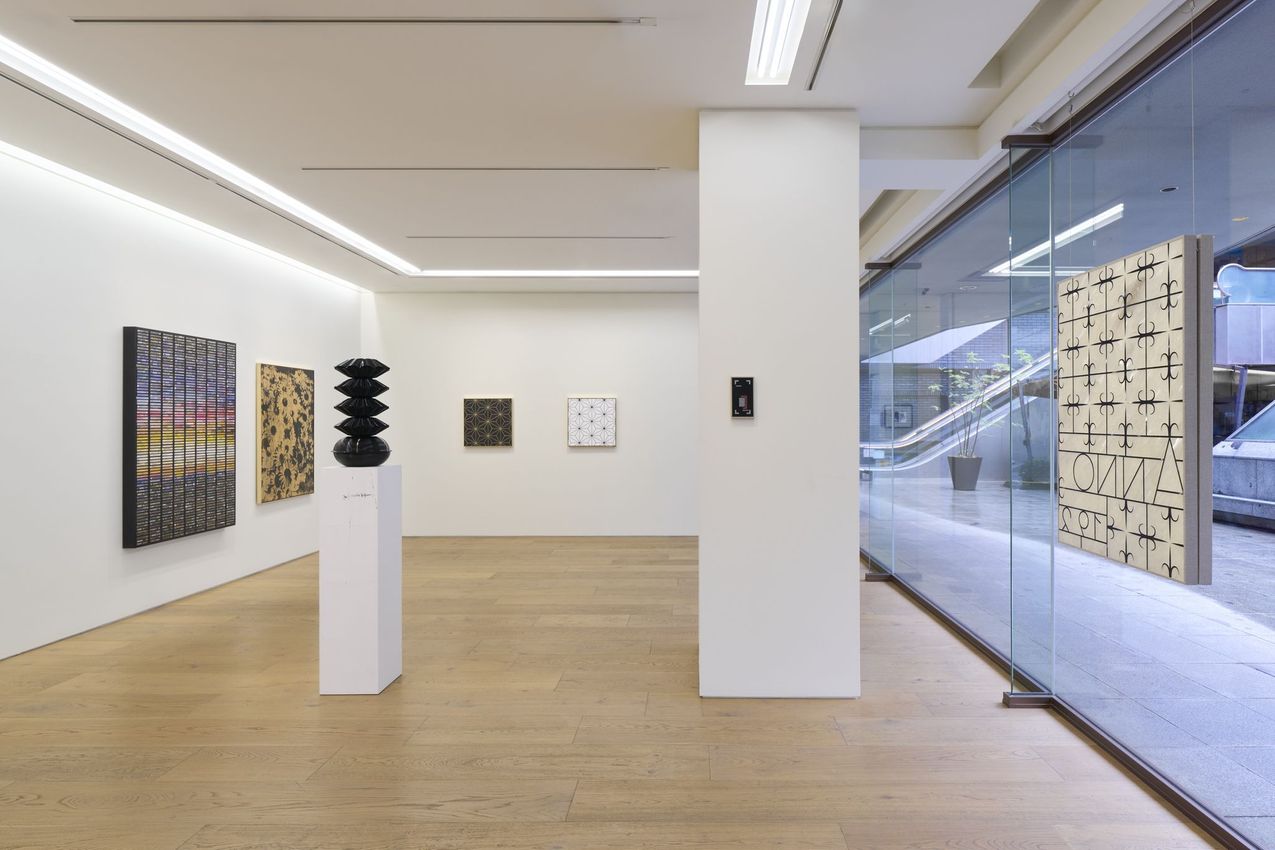
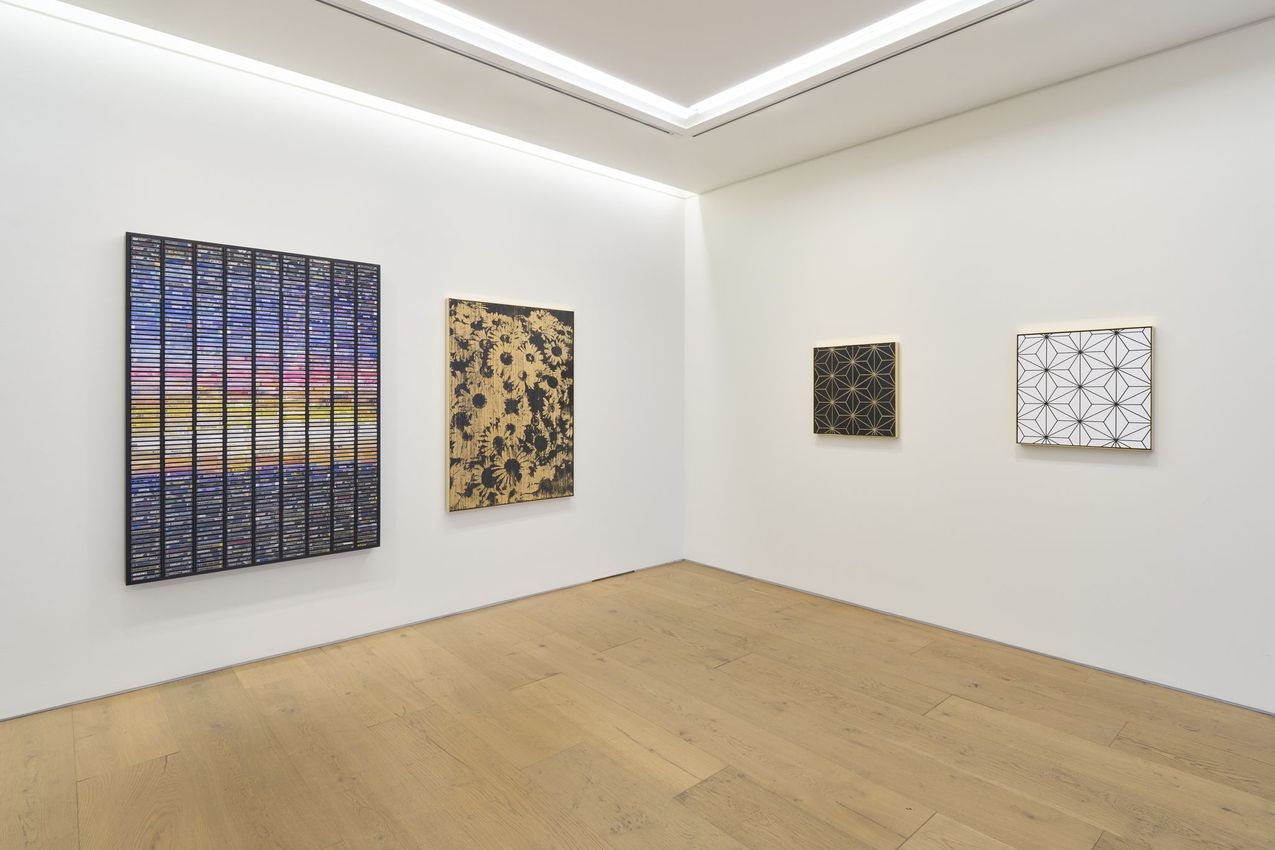
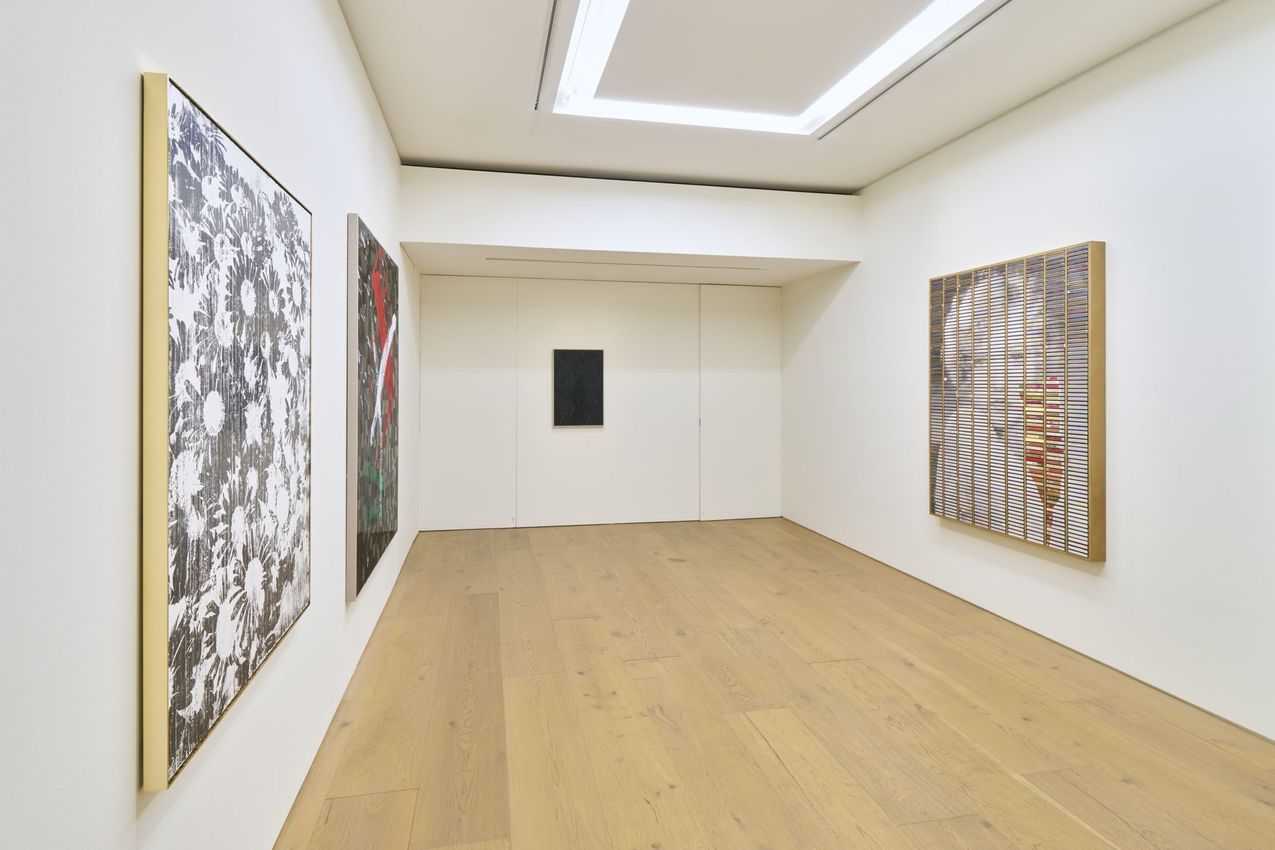
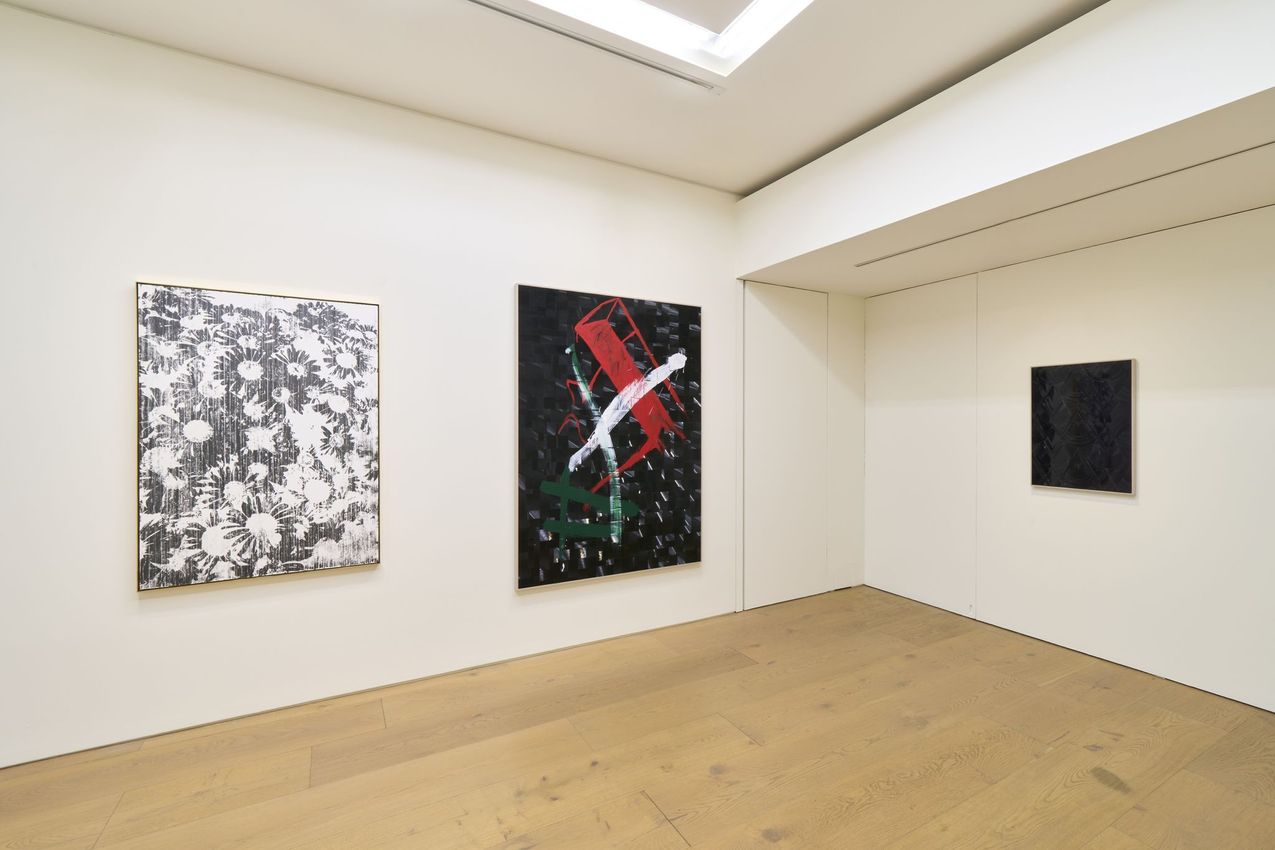
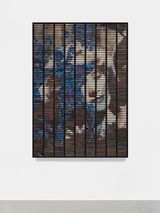
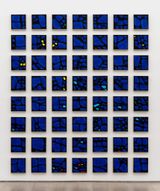
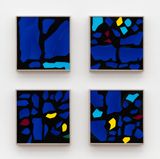
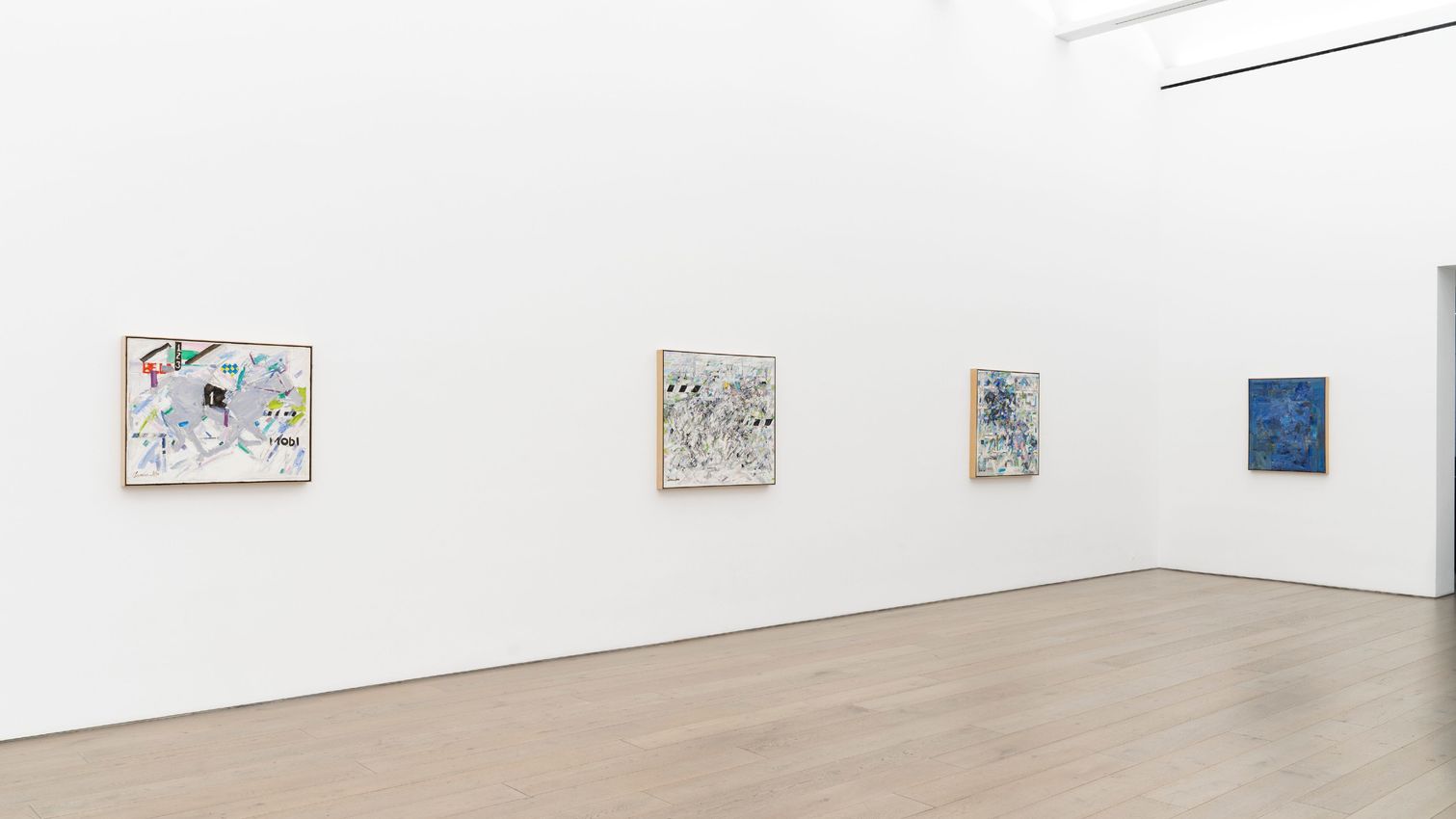
The images we encounter in Gregor Hildebrandt’s work are nearly always created in an intense dialogue with music, striking a balance between heightened presence and notable absence. He refrains from offering mere illustrations or direct visual translations of music. Instead, he presents images created from the very materials music recordings are made of – be it tape or vinyl. Fully embracing their materiality, texture, and colours, he also integrates the connotations of the music contained within them. Es ist Juli (It’s July, 2024) and Sommernächte fliegen ohne Hast (Summer Nights Fly Without Haste, 2024) are the first two lines of a song by another German singer-songwriter, Klaus Hoffmann, describing the emotions and fantasies of an exuberant village party. The canvases show a remarkably detailed field of daisies in Hildebrandt’s trademark style, where individual strands of tape are applied to a canvas partially coated with adhesive. Once removed, the magnetised layers adhere to the glue-coated areas, forming a negative image, which is then mounted onto another canvas to create its matching positive counterpart. What is absent in one canvas is present in the other.

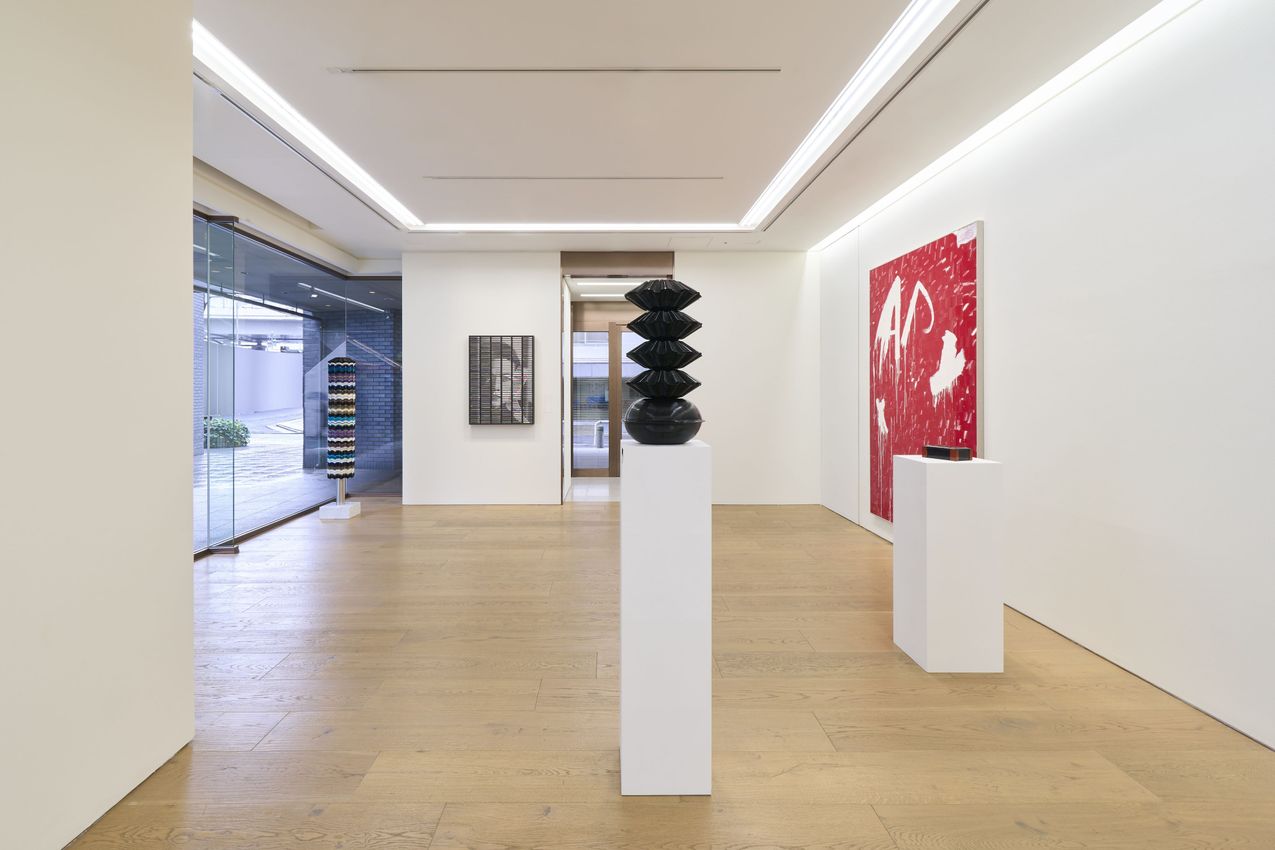
Personal references often find their way into his works, such as a column of stacked compression-molded records from the back catalog of his label, Grzegorzki Records. Inspired by the colours and patterns of a Missoni bathrobe he received, Bonjour Monsieur Grzegorzki (2025) is a self-portrait that pays homage to a classic painting from art history, Gustave Courbet’s The Meeting orBonjour Monsieur Courbet (1854). Courbet shocked his contemporaries by portraying himself at eye level with his patron, asserting the artist’s independence. In Hildebrandt’s column, it is”his” artists who give him cover.

A fresh body of work fills an entire room in the exhibition, reflecting the theme of cherry blossoms suggested by the title: a series of seven or eight tape paintings in various smaller formats, no longer black or brown, but a surprisingly bright red. Unlike his other tape paintings, they stand alone, lacking positive or negative counterparts. Together, as an ensemble, the red tape paintings perform a Reigen, a circular dance.

The artist created these from the red tape that, in compact cassettes, precedes the magnetised tape onto which sound can be recorded. Collected over many years, they are rare and precious remnants from previous work (only a few centimetres of lead-intape exist in every cassette, and red ones are particularly rare). The series experiments with different shades of red, punctuated rhythmically by the end markers. Inside a cassette, the red tape embodies the silence before the music begins – akin to the moment of focus when the conductor raises the baton before the orchestra plays.

But these works also suggest a sense of renewal. The smallest painting, The Red Studio (2025), is a homage to Henri Matisse’s 1911 eponymous modernist masterpiece. But given its modest size, it could also be interpreted as a self-deprecating or tongue-in-cheek tribute to Gregor Hildebrandt’s own studio practice and team. Another work reveals the cyclical nature of the series in its title: Das Ende der A-Seite ist der Beginn der B-Seite (The End of Side A is the Beginning of Side B, 2025). The end of one thing marks the beginning of something new.A dance of silences from various origins, moments of anticipation, and moments of calm after the deep emotional engagement that only music can inspire—or the blossoming of cherries in April.

Read More

Installation Views

About the Artist

Gregor Hildebrandt’s signature mediums are cassette tape and vinyl, which he collages and assembles into apparently minimalist yet latently romantic paintings, sculptures and installations. Resting in silence behind the glossy surface of his analog aesthetics, which verges on black-and-white monochrome, music and cinema haunt his practice. Whether pictorial or sculptural, all his works contain pre-recorded materials, which are referenced in the titles. Usually a single song, these pop-cultural sources are meant to trigger both collective and personal memories. Like analog storage mediums, his distinctive rip-off technique is a metaphor for the mnestic process itself: it consists in rubbing magnetic coating against double-sided adhesive tape glued on canvas to trace intricate and elusive powdery patterns. Further relating to architectural Gesamtkunstwerk, Gregor Hildebrandt’s monumental sonic barriers made of stacked, bowl-shaped records, as well as his sensual wall curtains made of unreeled tapes, draw and envelop wandering paths for the visitors of his shows.

View Artist Profile

Also Exhibiting at Perrotin

About the Gallery
Emmanuel Perrotin founded his first gallery in 1989 at the age of 21. He has opened since then over 17 different spaces, with the aim of continuing to offer increasingly vibrant and creative environments to experience artists work. He has worked closely with his roster of artists, some since more than 25 years, to help fulfill their ambitious dreams and projects. The gallery is now based in New York, Paris, Hong Kong, Seoul, Tokyo, and participates in all the significant worldwide art fairs each year (Art Basel (Hong Kong, Miami, Basel), Frieze (London, New York), FIAC (Paris), Dallas Art Fair, Art Cologne, Art Stage Jakarta, Expo Chicago, Art021 & West Bund Art & Design, Shanghai, Zona Maco Mexico, amongst others).
View Gallery Profile
Address
Piramide Building 1F
6-6-9 Roppongi
Minato-Ku
Tokyo
Japan
Opening Hours
Tuesday – Saturday
11am – 7pm
(1)
Tokyo Piramide Building 1F, 6-6-9 Roppongi
Perrotin
Piramide Building 1F, 6-6-9 Roppongi, Minato-Ku, Tokyo, Japan
+81 367 210 687
http://www.perrotin.com

Opening hours
Tuesday – Saturday
11am – 7pm
The art world in focus