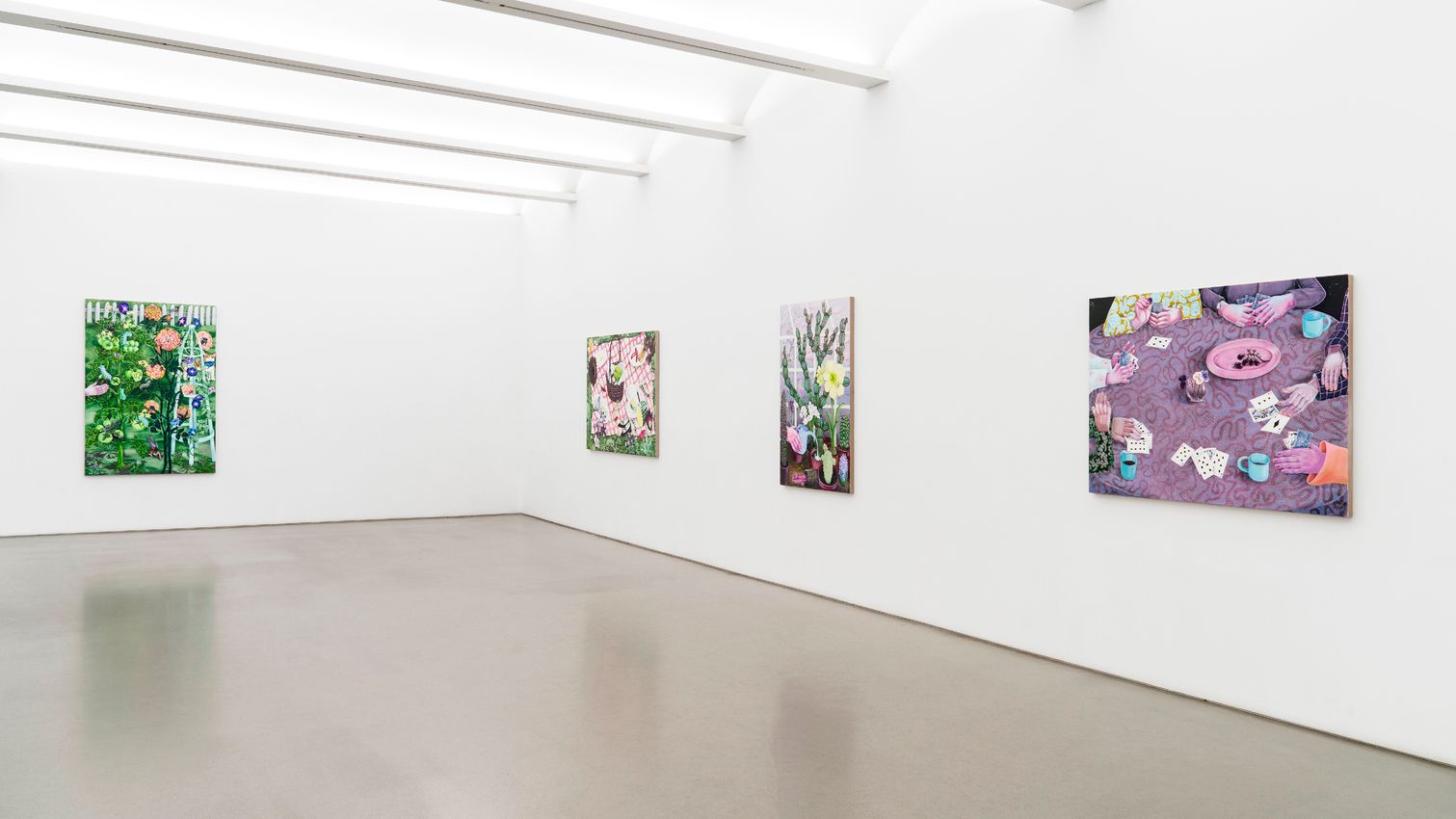
A few years ago, Emily Mae Smith selected an unexpected yet inexhaustible muse: a simple straw broom, dually anthropomorphic and gendered (the artist applies the pronoun ‘she’).
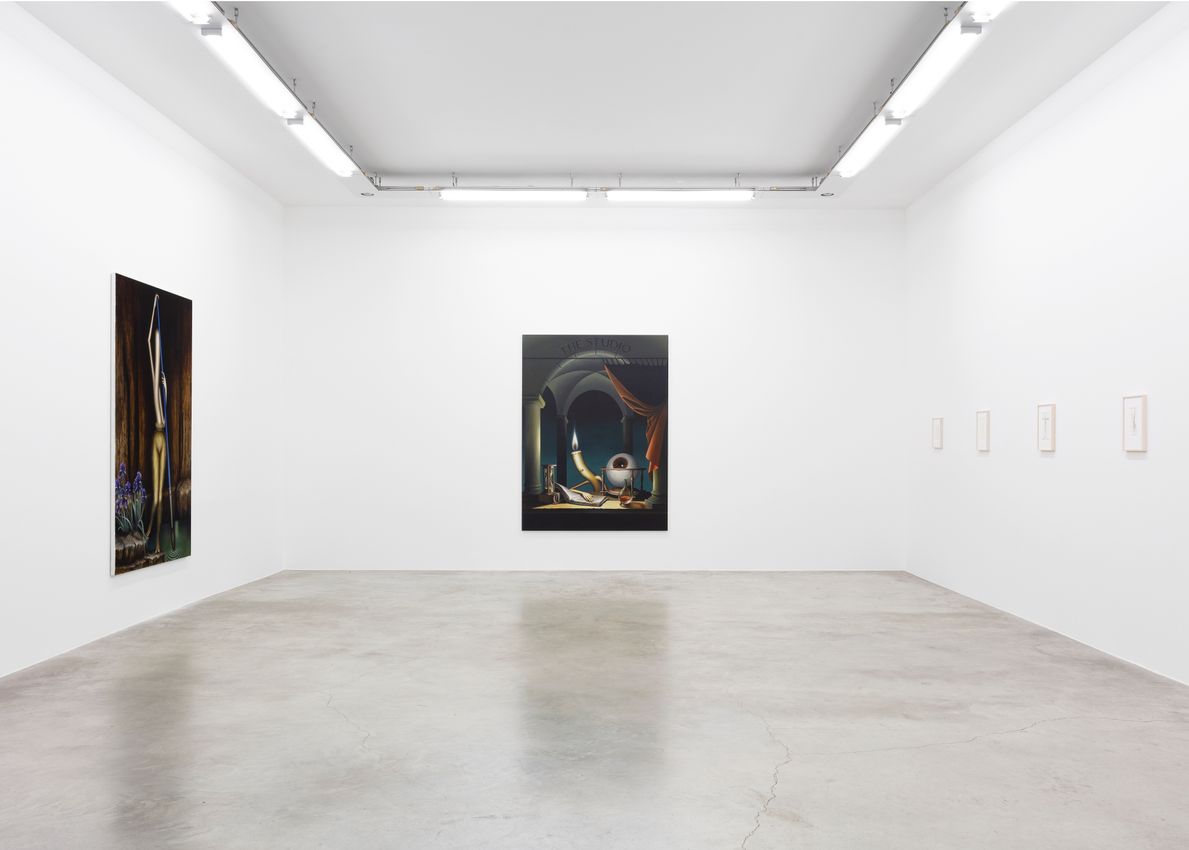
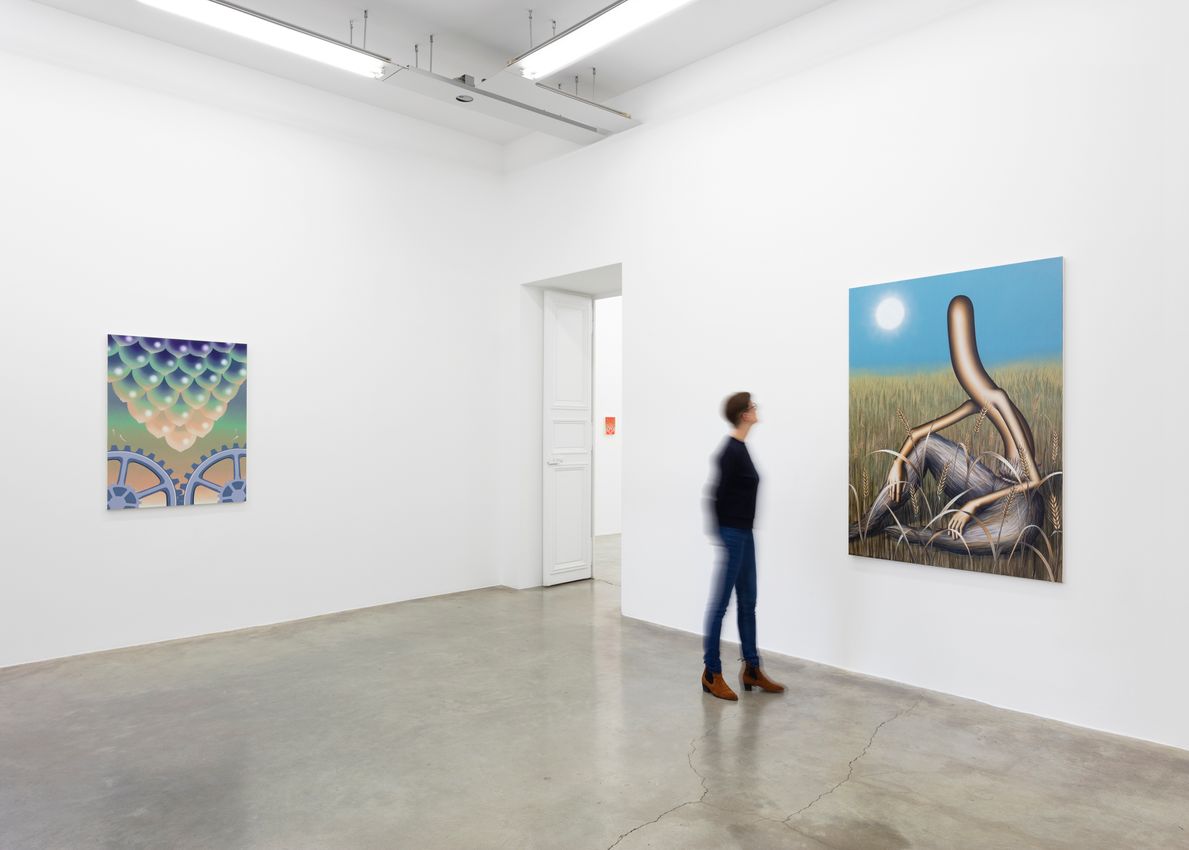
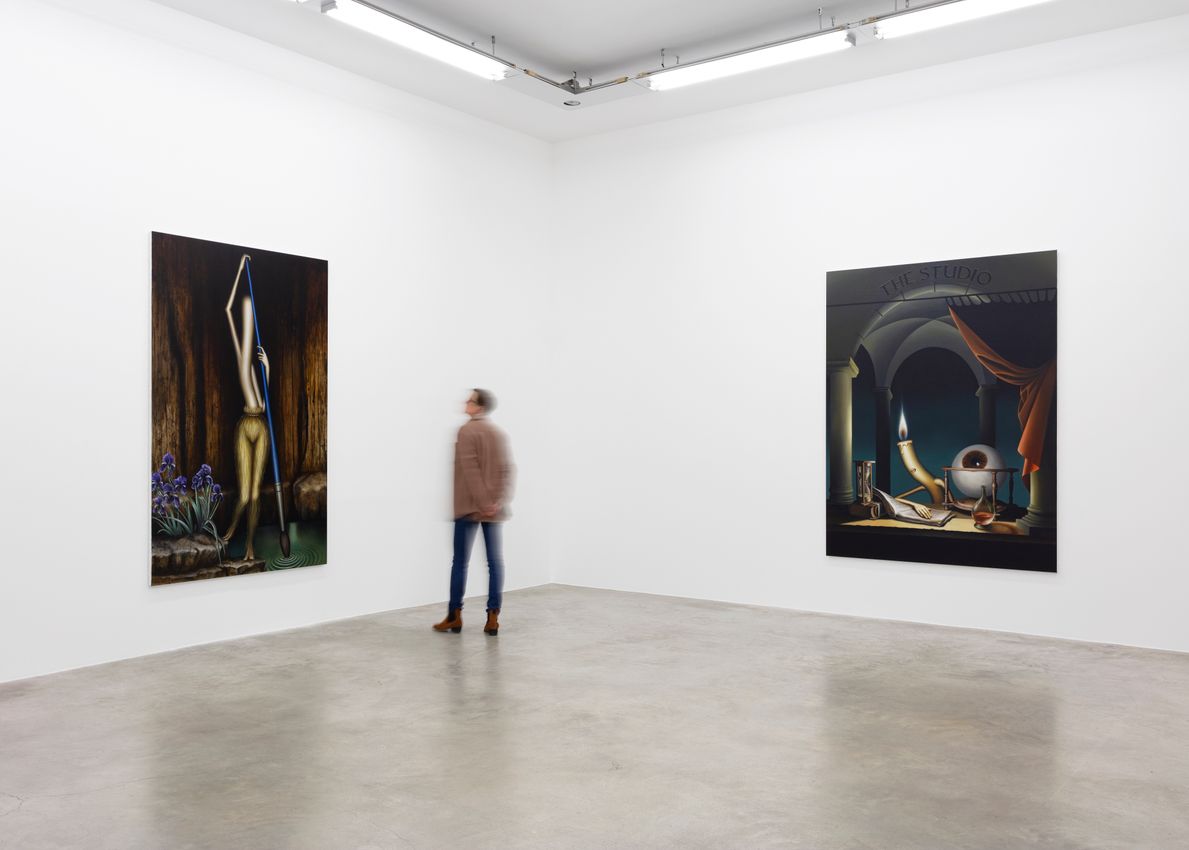
In the exhibition Harvesters, we find ‘her’ without the round glasses the artist frequently accessorised her in, and is seen either disguised as a scholar-candle and burning down while reading a book of spells (The Alchemist), resting languidly in a wheat field (Harvester), feasting (or rather attempting to) in a Flemish interior (The Wooden Spoon), standing in a damp cave with a paintbrush in hand (The Grotto), carrying a message in the street (The Messenger) or hidden behind a wall of ginkgo biloba leaves (Blush). She is proud or overwhelmed, weeping or focused on a task—even crucified.
This omnipresent figure shouldn’t be viewed as a character switching between costumes or settings, returning from one season to the next to parade before our eyes. Emily Mae Smith’s paintings work on a symbolic, rather than narrative level. Her images evoke mythology, still life, and even those lovely allegories so common among Belle Epoque masters. Unlike Baldessari’s mocking message circa 1968 (‘no ideas have entered this work’ proclaimed of one his paintings1 at the time), the images here are loaded with ideas, values and symbols.
Let’s try to sweep (!) its spectrum. The broom is an instrument for cleaning. It is also a substitute for the female body: passive, denuded and almost constantly objectified within the Western art tradition (recall John Berger in Ways of Seeing: ‘Men act and women appear. Men look at women. Women watch themselves being looked at’). It connotes the power of labour, the domestic domain (re: women) and domesticity. It’s a pop culture gearshift, to draw from Disney’s The Sorcerer’s Apprentice, which evokes those female figures we have recently begun to celebrate again: witches. In the exhibition, the broom also carries a set of metaphors regarding its origins, with wheat fields as the source of its bundled straw bristles.
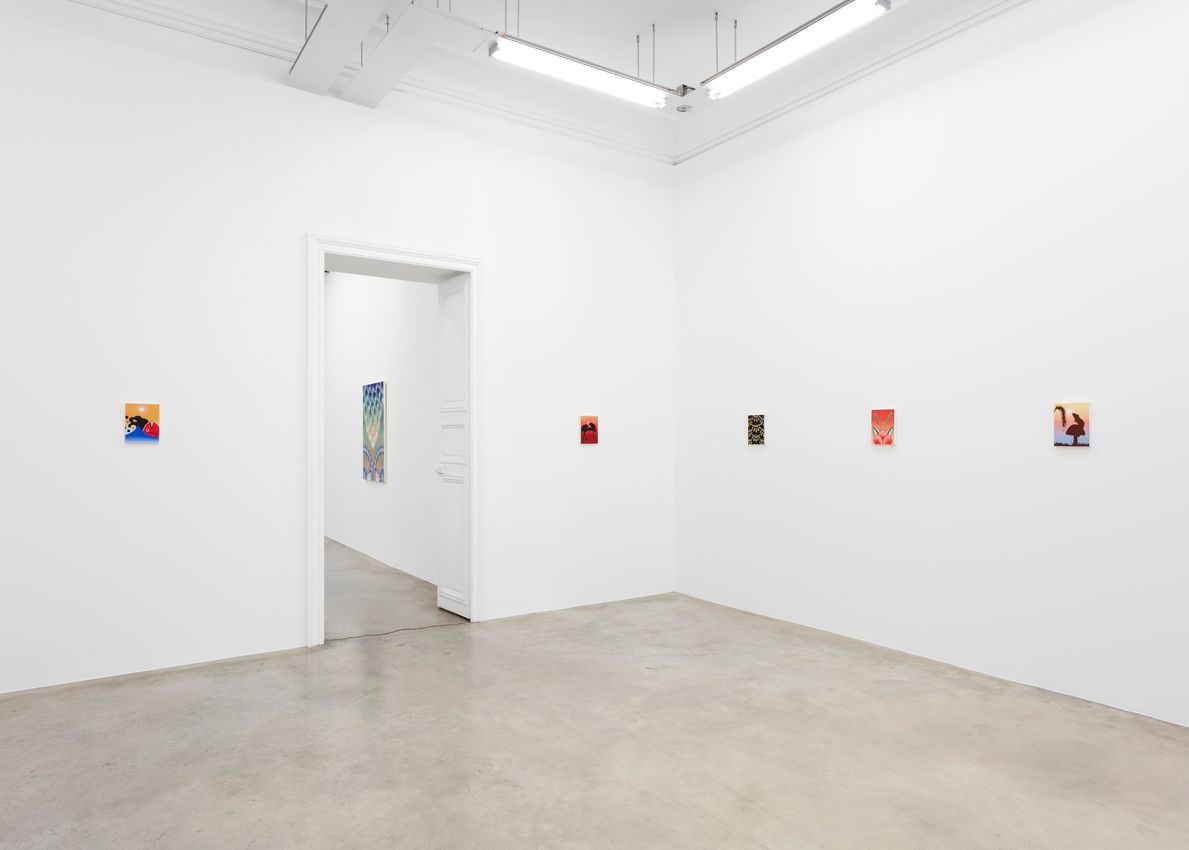
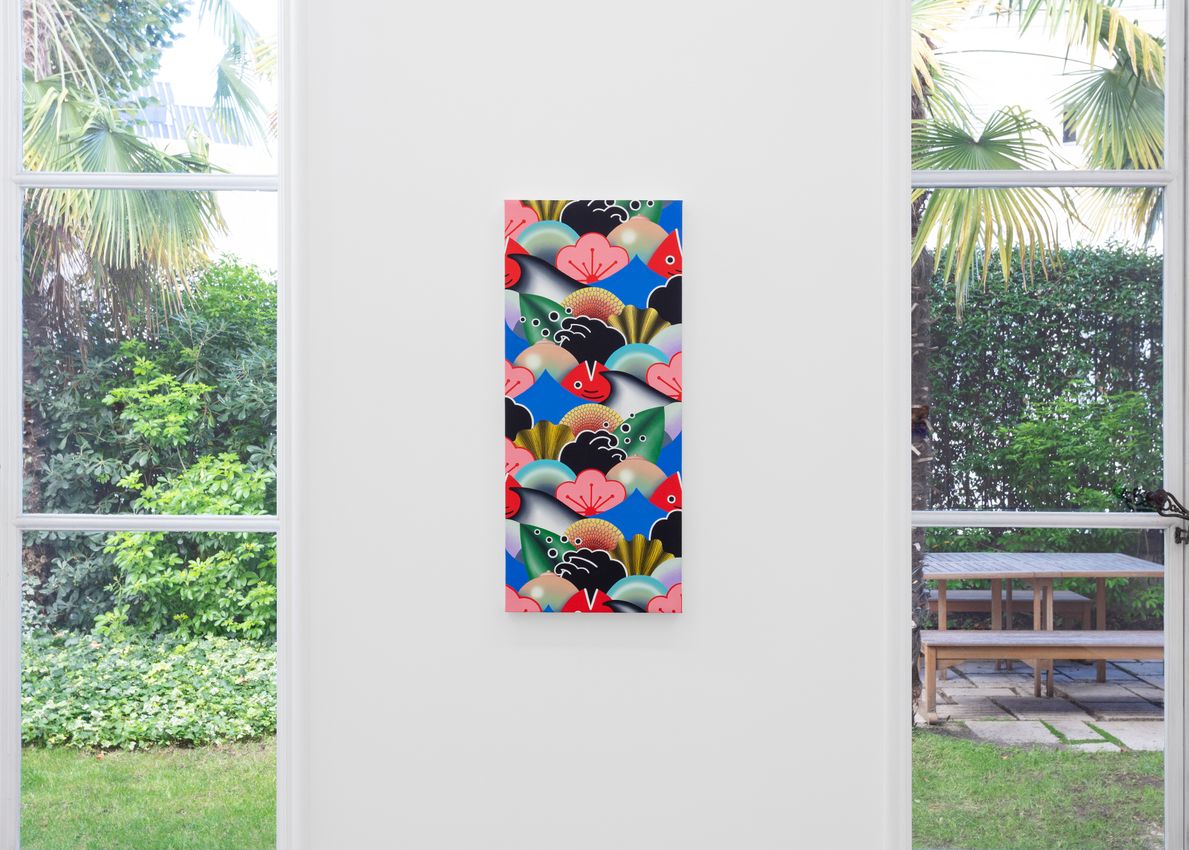
A perfect analogue to the paintbrush, the broom is, in fact, a gleaner gathering crumbs: gleaning those morsels still available from the mostly male-dominated history of art, in an attempt to make something new: a cartoonish figure of late postmodernism. Flat Pop painting, Flemish painting (including an emphatic homage to Brueghel the Elder and one to the genre of collector’s cabinet painting), plus the Symbolist tradition, all make forays into the exhibition. The Grotto, for example, is a remake of La Vérité by Jules-Joseph Lefebvre (1870), itself a remake of La Source by Ingres (1856). ‘Painters always paint in reference to other painters. In recent years, as my practice evolved, I began to wonder if the subject of my work was not just the world of painting itself,’ the artist explained, who here methodically reverses the symbolic order by painting with Marxist as well as feminist accents. Humour replaces the Great Seriousness. Rest and retirement figure in rather than labor, and the relationship between work/power is rendered visible. The patriarchal order of the gaze is upended (‘she gazes back,’ notes the artist about The Alchemist‘s eye). A simple tool for the dirty work of cleaning, erected amidst a cavern of irises, becomes a glorious feminised allegory for creation. By the same logic, the artist reframes the rat in a positive light. This intrusive and harmful pest, an insult commonly thrown at women, occupies a prominent place in two of the most attractive paintings of the exhibition—which couldjust as easily have been titled ‘the contemporary condition of the female painter facing the aggressively masculine history of art.’ Note that the great mastery of painting techniques joins avid erudition, with Tidal Animal Vegetable constituting a sort of archive of all those employed for the production of the show (grisaille, clear line).
That a simple broom can synthesise so many pictorial and political questions is quite magical. We start wondering about artists who might have invested an unexpected motif with as much determination. There’s the egg in Kippenberger’s work (‘In painting you have to be on the lookout: what windfall is still left for you to paint. Justice hasn’t been done to the egg, justice hasn’t been done to the fried egg,’ the German artist told Daniel Bauman when questioned about his strange choice of motif in 1996). The bowtie by Belgian painter René Daniëls is also worth citing, again perfectly synthesising in its ability to bring social and institutional criticism together, to evoke art’s high-society frivolities as well as a thousand subtleties of configuring exhibition spaces.
However, a proper history of incongruity in art has yet to be written. Illustrious artists and strangers coming straight out of the burial ground—where ‘lazy condemnations’2 got them thrown in, in the first place—would encounter one another, and the strangeness of the metaphor would reign. Gaetano Pesce would rub shoulders with Hieronymus Bosch, Rosa Bonheur and Meret Oppenheim, in a setting inspired by Frank Gehry’s Chiat/Day Building and Magritte’s Vache period. Medieval and Symbolist fantasies would happily flow. And Emily Mae Smith’s comic, dreamlike paintings would have their rightful place there. In the meantime, traditional history—which has always had a bit of trouble with anomalies—continues to unfurl and to consign everything that breaches decorum into oblivion.
Text by Jill Gasparina. Courtesy Perrotin.
Emily Mae Smith creates lively compositions that offer sly social and political commentary, with a nod to distinct historical painting movements, such as symbolism, surrealism, and pop art. Her lexicon of signs and symbols begins with her avatar, an anthropomorphic broomstick figure. Simultaneously referencing the painter’s brush, a domestic tool associated with women’s work, and the phallus, the figure continually transforms across Smith’s body of work. By adopting a variety of guises, the broom and other symbols speak to contemporary subjects, including gender, sexuality, capitalism, and violence.
Emmanuel Perrotin founded his first gallery in 1989 at the age of 21. He has opened since then over 17 different spaces, with the aim of continuing to offer increasingly vibrant and creative environments to experience artists work. He has worked closely with his roster of artists, some since more than 25 years, to help fulfil their ambitious dreams and projects.

A respected voice in contemporary art discourse.
Focusing on ambitious storytelling and insightful art-world commentary. Ocula Magazine publishes in-depth interviews, critical essays and timely analysis on the artists, exhibitions and ideas driving the global art world.
Learn more about Ocula Magazine
Showcasing the best of the art world.
Ocula partners with galleries from around the world to highlight their artists, artworks and exhibitions. Gallery membership is by application and invitation, with each member vetted by an independent panel.
Learn more about Ocula Membership

Specialises in the sale of major artworks.
Led by a team with deep ties to the world’s leading auction houses, galleries and collectors. Ocula’s advisory team offers bespoke services to high-net-worth clients from around the world who are looking to acquire the best of contemporary and modern art.
Learn more about our team and services