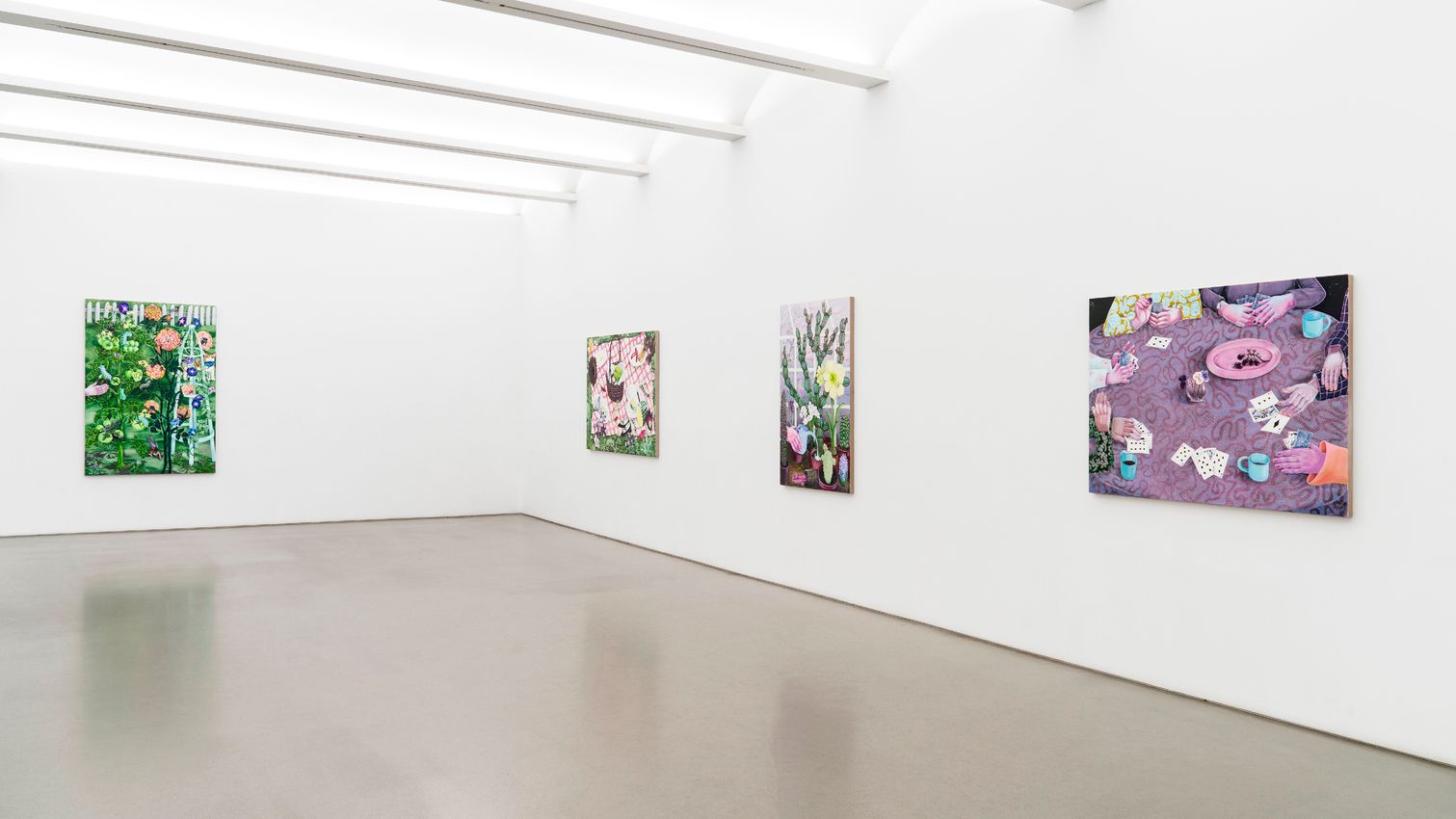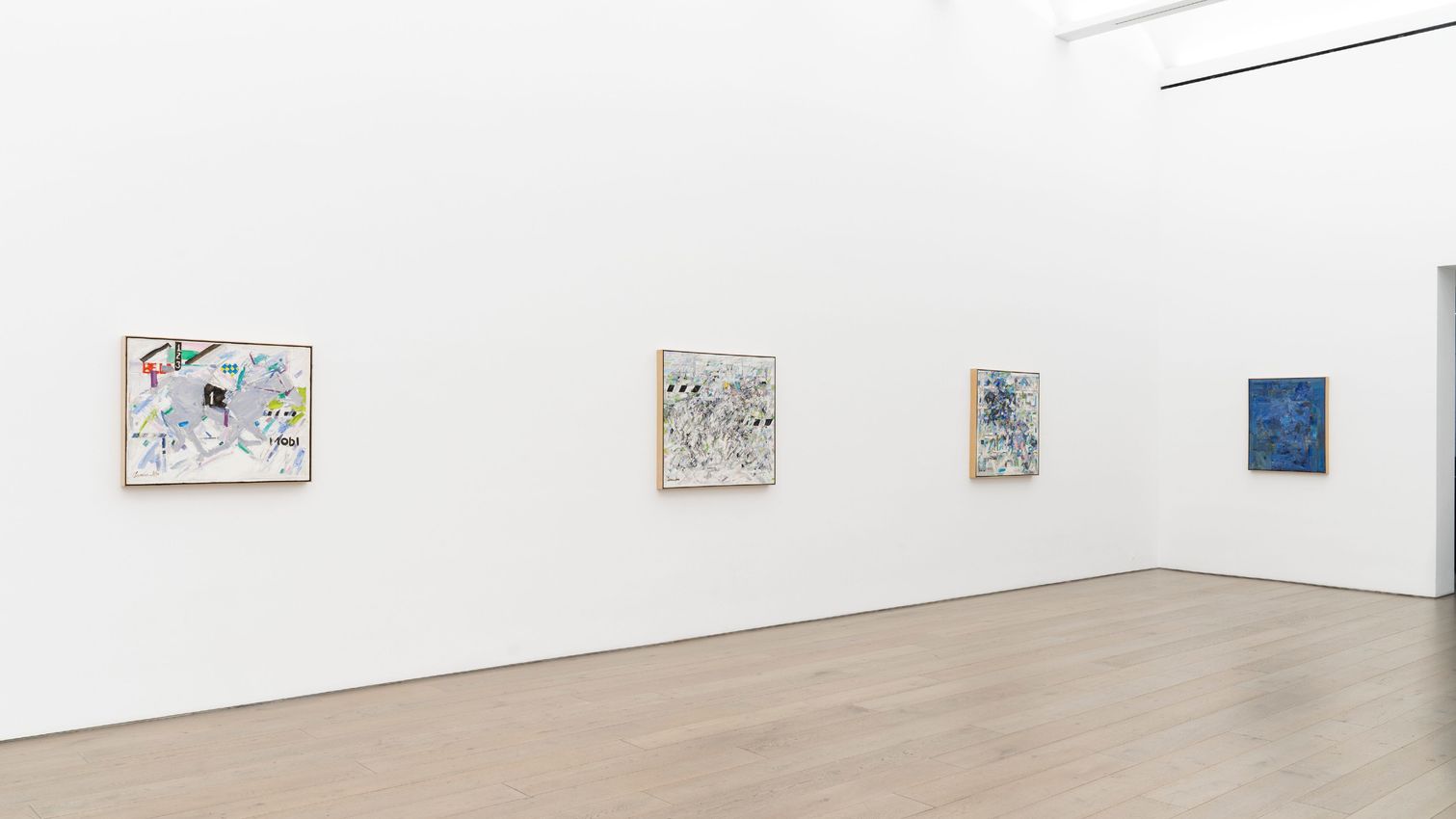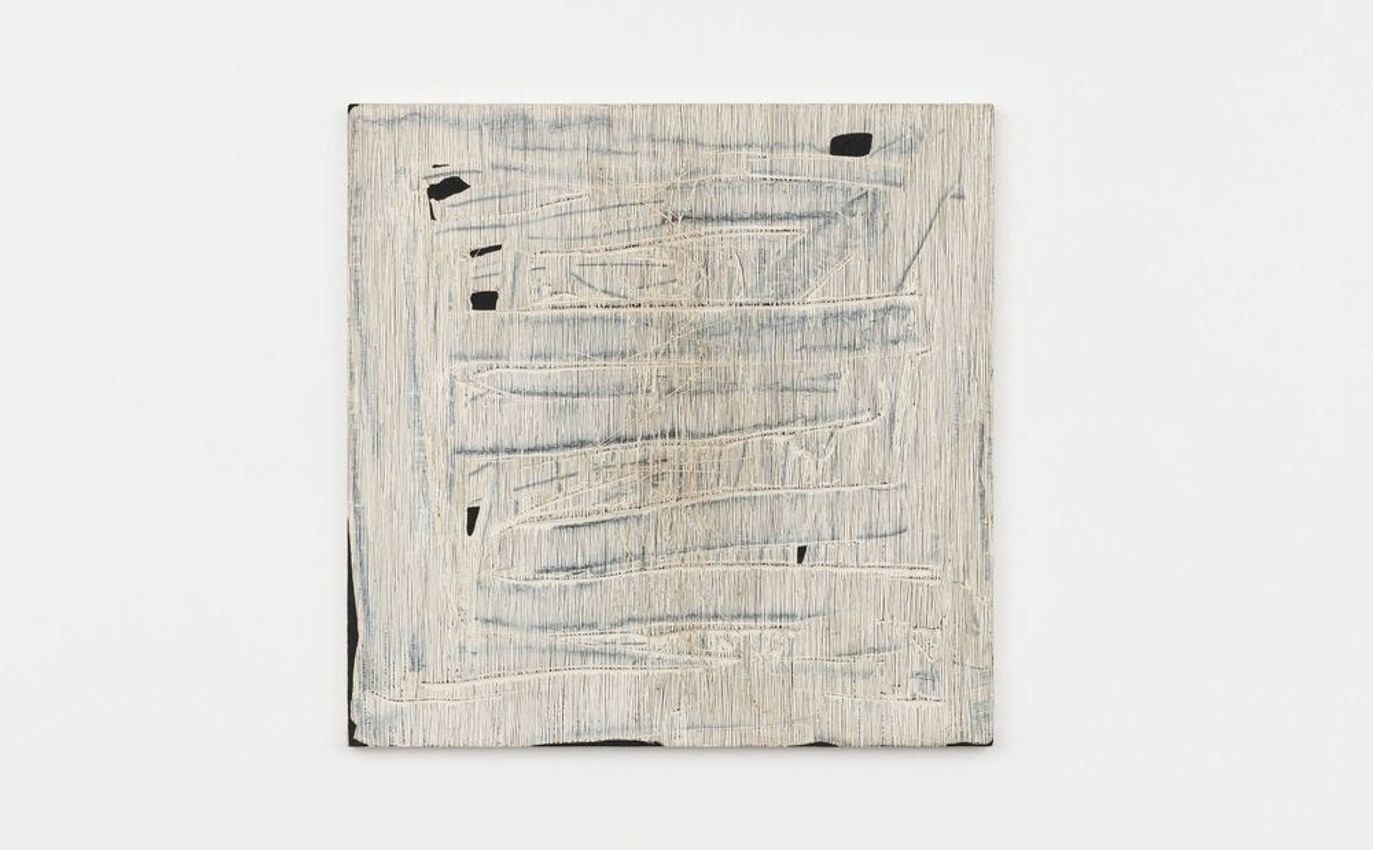
Perrotin is pleased to present an exhibition of historic works by the late pioneer of Kinetic art, Jesús Rafael Soto. Opening on March 5 in New York, Perrotin will present a survey of works from 1956–1974, when Soto was at the heart of the art scene both in Europe and the Americas, and leading up to his groundbreaking ‘Penetrables’ series.
The following essay is an excerpt from Soto’s Multidimensionality: From Dematerialization to Relationality, written by curator JesúsFuenmayor for a catalogue published alongside Materia y Vibración,1956–1974
’... Times change, and notions of time and space change with them. In the notion of space-time we experience today, we speak not onlyof the fourth dimension, but also of multidimensionality—that is thelegacy we will leave the future. ’— Jesús Soto1
In some experimental contemporary art practices, a path can be traced from the dematerialisation of the 1960s to the relationality, or ‘relational aesthetics,’ of the turn of the twenty-first century. Followingthat path both illustrates the centrality of kinetic artist Jesús RafaelSoto’s work to the international art scene and attests to its currentnessas it has regained the historical weight it is due.
On the basis of the works exhibited here—works produced by Soto during the years he was at the heart of the art scene in Europe and in theAmericas (1956–1974)—that path between the term dematerialisationand the term relationality offers, in my view, a way for us to beginto grapple with why we need not only to revisit Soto’s work today, but alsoto do so moving forward. In this brief introduction, I will provide a conciseoverview of how those terms developed and their intersections withSoto’s work in order to better understand some of his most importantachievements.
Each term has its specific history. Dematerialisation is generally used to refer to the intangible aspects of a work of art or materiality’s(relative) loss of importance to it. The term always operates on asymbolic level: absolute dematerialisation is impossible. Although inthe United States, the point of reference for dematerialisation asunderstood in contemporary art is Lucy Lippard’s S_ix Years: TheDematerialization of the Art Object from 1966 to 1972_, published in1973, the term was widely used as early as the 1960s. One strikingexample is the text After Pop, We Dematerialize written by Argentineartist Oscar Masotta in 1967, the same year that some eminent critics,among them Frank Popper and Jean Clay, used it in relation to Soto’swork.2 Already in the 1950s, Yves Klein used dematerialisation toexplain his work, The Specialization of Sensibility in the Raw MaterialState into Stabilized Pictorial Sensibility, “The Void.” And, of course,Lászlo Moholy-Nagy—a major influence on Soto—envisioned a futureof ever greater dematerialisation.3 Though he sometimes employed theterm immateriality instead of dematerialisation, Soto himself used it ininterviews, texts, and even in titles to shows, including the 2005retrospective held at the Centro Cultural Banco do Brasil, Rio deJaneiro: Soto – A Construção da Immaterialidade.4 What matters hereis that, from his first experiments with vibration, Soto’s aim was ‘the methodical destruction of all stable form, the molecularfragmentation of solids, the dilution of volumes.’5
The concept of relationality in art produced at the turn of this century was developed by Nicolas Bourriaud in his book Relational Aesthetics,published in French in 1998 and in English in 2002. The concept hasbeen seen as a means to underscore the importance of viewerparticipation in the works of certain artists associated with the secondavant-gardes, among them those, like kinetic artists, interested inbringing movement into their work. Art historian and critic ClaireBishop, who has studied the participative in art extensively, holds thatthe art that meets Bourriaud’s definition of relational aesthetics is ‘open-ended, interactive, and resistant to closure, often appearing tobe ‘work-in-progress’ rather than a completed object.’6 There isunquestionably an affinity between that definition and the concept ofthe open work introduced by Umberto Eco on the basis of his readingsof kinetic art7. As he explains in his book, Bourriaud seeks to politicisethat definition, claiming that relational artists operate in ‘the realm ofhuman interactions and its social context, rather than the assertion ofan independent and private symbolic space.’8 Bourriaud’s analysis islike Guy Debord’s critique of kinetic artists;9 to the latter, Soto repliedthat the political uprising of the time, in reference to May 1968, “didnot represent anything decisive for my work because, like others, I hadbeen toying for some time with the idea of taking my art into the street,of making it more popular.10
Soto’s formula was nearly infallible: first, destroy form and, with it, composition by means of seriality; next, dematerialise the art objectand turn it into vibration; finally, leave viewers open space in which toreinvent themselves. Of course, that formula can only be postulated inretrospect; the artist had to spend many years experimenting, facingchallenges regarding both what he had already done and where hewas going, before he was able to articulate what now seems like theimpeccable, indeed almost mathematical, development of an art thatwas at the forefront of the avant-garde in Europe for a full two decades.To look at Soto through the lens of our times, I wanted to begin with adescription of what was at play in those first works in which he wasable to create the ‘illusion’ of shattering form through analysis and dissection of perception. Consider how today Alexander Alberro describes Espiral, one of Soto’s fundamental works from that time:
‘Materiality and immateriality are in tension, but in a purely visual manner. Soto has no evident interest in the inherent physical properties of thematerials. Moreover, the fragile and dematerialised optical effects thatchallenge the eye’s power to control what it sees intensify and decreasedepending on the spectator’s position. As the spectator ambulateslaterally across the work, the lines of the spirals seen against the luminouswhite ground join and separate, and the two layers alternately contractand expand. The incessant rippling effect of this work differs significantlyfrom the optical effects obtained by the mere repetition of elements on aflat surface in Soto’s art of the previous two or three years..’11
That work ushered in a series to which Soto’s interest in dematerialisation and relationality would be central. In the words of the always-eloquentartist:
‘I am not interested in the connections between things, only in their relationships. I am not interested in how colours or lines are connected.Relationships are worth more than connections. ... My work is essentiallyrelationship. Not between two elements of the work itself, but betweenthe principle that governs the work—for instance, dematerialisation—anda general law of the universe that determines everything.’12
This was one of the most ambitious programs of the period. It encompassed ‘fundamental concepts like fugacity, dematerialisation,instability, the invisible, the environment, permutation, undulation, ubiquityand randomness’13 concepts paradigmatic to Soto’s research as a wholeand reflected in a work from 1956 featured in this exhibition, a work fromthe series called Estructuras Cinéticas de Elementos Geométricos.
Produced after his first kinetic structures from the late 1950s, the Vibraciones series is unquestionably a milestone in Soto’s research.No piece could better represent it than Vibración pura, a work from 1960 featured in this exhibition. In this work, the feverish activity of the extremely irregular support in the background becomes something likea camouflage for the twisted metal rods suspended in front of it. In theunique vibration produced, the rods seem to emerge from the support,as if they had been dug out of it, rather than floating in front of it. Sotospoke of these pieces in terms different from the culminationconnotations used by legions of his followers and experts in his work.It is perhaps because of their greater affinity with works by majorfigures in the French New Realism and the Informalist movements, ledby artists very close to Soto (Yves Klein, Jean Tinguely, and LucioFontana, among others), that this series of early vibrations has beenparticularly coveted by collectors and museums alike. In an interviewwith the most important art magazine of the time in the country of hisbirth, Soto spoke of those artists, also known as Neorealists:
‘The destruction of form imposed by the Informalists was of great interest to me, in a way, but I realised that what they were proposingwas the destruction of form as a solid body, by liquefying it. I, on theother hand, was attempting to destroy matter in order to transform it intoenergy. I did not wish to extol natural elements like branches, or netsand ropes, but to prove that their matter could be transformed intoenergy. Energy not in the scientific sense, but as I conceived it: a stateof sensibility.’14
Soto thus distanced himself from these artists and explained that his concerns differed from those of the Informalists.
Throughout his career, Soto was able to put into practice this idea of the transformation of matter into energy thanks, fundamentally, to thegroundbreaking discovery of vibration that makes his workunmistakable. Vibration was his identifying stamp to such an extentthat Soto himself considered this phase a singular period in all hiswork. ‘All I cared about [at that time],’ Soto said, ‘was to show tomyself that my idea did not depend on a certain way of doing things.... I felt the need to prove to myself that I could make use of anythingat all in my work. The idea was to incorporate things very mundane butalso highly formal (scraps of wood, pieces of wire, needles, bars, andtubes), to disintegrate them entirely through pure vibration.’15 In short,his mastery, his virtuosity was such, by this phase, that he could makeanything vibrate.
The dematerialisation of the object and the relativisation of perception are among the radical advances embraced by the contemporary artagenda to which Soto left an invaluable legacy. He unquestionablycontributed to the constant reinvention and transformation of acceptednotions of how to experience a work of art, an enormous challenge tothe different visions of the world and our relationships with what’s mostentrenched in that world. Perhaps it is best, in closing, to put it as theartist did: ‘The immaterial is the sensible reality of the universe. Art isthe sensible knowledge of the immaterial. Becoming aware of theimmaterial at the state of pure structure is to make the final steptowards the absolute.’16
1 Rafael Pereira and Jesús Soto, La experiencia del viejo matador: entrevista a Jesús Soto por Rafael Pereira, Kalathos, no. 4 (October–November 2000).
2 In this article, Masotta makes reference to El Lissitsky’s 1926 essay The Future of the Book, which uses the term dematerialisation as we do today. See Oscar Masotta, ‘After Pop, We Dematerialize,’ in Listen, Here, Now! Argentine Art of the 1960s: Writings of the Avant-Garde, ed. Inés Katzenstein(New York: The Museum of Modern Art, 2004), p. 216. See as well Frank Popper, Introduction toLumière et Mouvement (exh. cat. Paris: Musée d’Art Moderne de la Ville de Paris, 1967) and JeanClay, ‘Le cinétisme est-il un académisme ?’ Robho, no. 2 (November–December 1967).
3 According to Antonio Somaini, ‘This idea [that light is the fundamental artistic ‘medium’] led Moholy-Nagy to formulate the thesis according to which all art forms—painting, sculpture, photography, cinema, design, stage design or architecture—develop according to a teleologically oriented tendency that leads from stasis to motion, from opaqueness to transparency, and from differentconcrete materials towards a state of progressive dematerialization.’ The Surface Becomes a Part ofthe Atmosphere’: Light as Medium in László Moholy-Nagy’s Aesthetics of Dematerialization, Screen61, issue 2 (Summer 2020): p. 289
4 ‘Everything will be painted white to receive the pictorial climate of the sensibility of dematerialised blue’. Excerpt from ‘Preparation and Presentation of the Exhibition on April 28, 1958at the Iris Clert Gallery, 3 rue des Beaux-Arts, Paris,’ in Overcoming the Problematics of Art: TheWritings of Yves Klein, trans. Klaus Ottmann (Thompson, CT: Spring Publications, 2007), p. 47. Sotospeaks of immateriality in Soto (exh. cat. Amsterdam: Stedelijk Museum, 1969), and of dematerialisation in ‘Statements by Kinetic Artists,’ Studio International 173, no. 886 (February 1967): p. 60.
5 Jean Clay, Soto, de l’art optique à l’art cinétique, Soto (exh. cat. Paris: Galerie Denise René, 1967), quoted in Arnauld Pierre, ‘Chronology,’ in Jesús Rafael Soto, trans. Martin Back and Thierry Noujaim(exh. cat. Perrotin: Paris, 2014), p. 156.
6 Claire Bishop, ‘Antagonism and Relational Aesthetics,’ October 110 (Fall 2004): p. 52.
7 Ibid., p. 62.
8 Nicolas Bourriaud, Relational Aesthetics, trans. Simon Pleasance and Fronza Woods (Dijon: Les presses du réel, 2002), p. 14.
9 See Mónica Amor, ‘La beauté est dans la rue ! Jesús Rafael Soto’s 1969 Public and Exceptional Foray,’ in Soto. The Fourth Dimension (exh. cat. Bilbao: Guggenheim Museum, 2020), pp. 39–43.
10 Soto, quoted by Miyó Vestrini in ‘Jesús Soto: Venezuela es Uno de los Raros Paises de America Latina Donde Existe la Necesidad de Crear un Arte Nuevo,’ El Nacional, July 24, 1971, p. 8, quotedin Pierre, ‘Chronology,’ in Jesús Rafael Soto, p. 166.
11 Alexander Alberro, Abstraction in Reverse: The Reconfigured Spectator in Mid-Twentieth-Century Latin American Art (Chicago, IL: The University of Chicago Press, 2017), p. 118.
12 Soto, Statements by Kinetic Artists, p. 60.
13 Clay, ‘Le cinétisme est-il un académisme ?’ quoted in Pierre, ‘Chronology,’ in Jesús Rafael Soto, p. 165
14 Soto, interview with Iván González, ‘Soto: liberar el material hasta que se vuelva tan libre como la música,’ Imagen, no. 32 (September 1–15, 1968), p. 10, quoted in Pierre, ‘Chronology,’ in JesúsRafael Soto, p. 159
15 Ariel Jiménez, Conversaciones con Jesús Soto (Caracas: Fundación Cisneros, 2001), p. 62
16 Soto in Soto, 1969, p. 56, quoted in Pierre, ‘Chronology,’ in Jesús Rafael Soto, p. 166.
Venezuelan-born artist Jesús Rafael Soto trained at an art school in Caracas. In 1950 he moved to Paris, which remained his base until his death in 2005. In 1955 Soto participated in Le Mouvement (The Movement) at Galerie Denise René, the exhibition that effectively launched kinetic art. During the same decade, he began making linear, kinetic constructions using industrial and synthetic materials such as nylon, Perspex, steel, and industrial paint.


A respected voice in contemporary art discourse.
Focusing on ambitious storytelling and insightful art-world commentary. Ocula Magazine publishes in-depth interviews, critical essays and timely analysis on the artists, exhibitions and ideas driving the global art world.
Learn more about Ocula Magazine
Showcasing the best of the art world.
Ocula partners with galleries from around the world to highlight their artists, artworks and exhibitions. Gallery membership is by application and invitation, with each member vetted by an independent panel.
Learn more about Ocula Membership

Specialises in the sale of major artworks.
Led by a team with deep ties to the world’s leading auction houses, galleries and collectors. Ocula’s advisory team offers bespoke services to high-net-worth clients from around the world who are looking to acquire the best of contemporary and modern art.
Learn more about our team and services